Saved Bookmarks
This section includes 7 InterviewSolutions, each offering curated multiple-choice questions to sharpen your Current Affairs knowledge and support exam preparation. Choose a topic below to get started.
| 1. |
oxidation of toluene with chromyl chloridefollowed by hydrolysis gives benzaldehyde. |
|
Answer» |
|
| 2. |
Oxidation of thiosulphate (S_(2) O_(3) ^(2-) ) ions by iodine gives |
|
Answer» `S_(2) O_(8)^(2-)` |
|
| 3. |
Oxidation of thiosulphate with iodine gives |
|
Answer» SULPHATE ION |
|
| 4. |
Oxidation of thiosulphate by iodine gives |
|
Answer» TETRATHIONATE ion |
|
| 5. |
Oxidation ofpropane isprepresented as C_(3) H_(8(g))+ 5O_(2(g)) to3CO_(2(g))+ 4H_(2)O_((g))Delta H^(@)= -2043 kJ Howmuchpressurevolumework isdone andwhat isthevalueof Delta Uat constantpressureof 1 atmwhen thevolumechange is + 22.4 L |
| Answer» SOLUTION :`W=-2.27 KJ, DELTA U = -2045 .27 kJ` | |
| 6. |
Oxidation ofpropane isrepresented as C_(3)H_(8_((g))) + 50_(2_((g))) to 3CO_(2_((g)))+ 4H_(2)O_((g)) DeltaH^(@) =- 2043 kJ How muchpressurevolumework is doneand whatis thevaluneof DeltaU at constantpressureof 1 atmwhen thevolumechangeis +22.4 L |
|
Answer» Change in volume`= Delta V = + 22.4 L` `Delta U = ?` `C_(3)H_(8_((g)) + 5O _(2_((g))) to3CO_(2_((g)))+ 4H_(2)O_((g))` `Delta n =(n_(2))_("gaseous products ") - (n_(1))_("gaseous reactants ")` `= (3 + 4)- (1+5)` `= 1"mol" ` Sincethere is theanincrease in NUMBEROF moles the workwill beofexpansion . `W=- P xx Delta V` `=- 1 xx 22.4 L atm` `=-1 xx 22.4 xx 101.3 J` `=- 2270 J` `=- 2.27 kJ` `Delta H = Delta U + PDelta V` `:.Delta U = Delta H- P Delta V` `=- 2043- (2.27 )` `=- 2045 .27 kJ` |
|
| 7. |
Oxidation ofpropylbenzene in the presenceofoxidsing agent like potassiumpermanganatgegives : |
|
Answer»
|
|
| 8. |
Oxidation of propene with Baeyer's reagent gives : |
|
Answer» GLYCOL |
|
| 9. |
Oxidation of o-xylene with alkaline KMnO_(4) followed by acidification gives_____. |
| Answer» SOLUTION :PHTHALIC ACID. | |
| 10. |
Oxidation of primary Alcohols finally gives |
|
Answer» Aldehydes |
|
| 13. |
Oxidation of oxalic acid by acidified KMnO_(4) is an example of auto catalysis. It is due to which of the following ? |
| Answer» Answer :C | |
| 15. |
Oxidation of methyl phenyl ketone with conc. HNO_(3) gievs |
|
Answer»

|
|
| 16. |
Oxidation of ketones involves carbon carbon bond cleavage. Name the products formed on oxidation of 2,5-dimethylhexan-3-one. |
|
Answer» SOLUTION :`CH_(3)-OVERSET(CH_(3))overset(|)(CH)-overset(O)overset(||)(C)-CH_(2)-overset(CH_(3))overset(|)(CH)-CH_(3)overset(O)(to)CH_(3)-underset(2-"Methylpropanoic acid")overset(CH_(3))overset(|)(CH)-COOH+CH_(3)-underset(3-"Methylbutnoic acid")overset(CH_(3)overset(|)(CH)-CH_(2)-COOH` `underset("ETHANOIC acid")(CH_(3)COOH)+underset("Methanoic acid")(HCOOH)larrCH_(3)-underset("Propan-2-one")underset(O)underset(||)(C)-CH_(3)` |
|
| 17. |
Oxidation of glycerol with Fenton reagent gives …………………… . |
|
Answer» Glyceraldehyde + DIHYDROXY ACETONE |
|
| 18. |
Oxidation of metals by HNO_3 does not dependon: |
|
Answer» NATURE of metal |
|
| 19. |
Oxidation of glycerol with Fenton's reagent gives……………………. . |
| Answer» SOLUTION :GLYCEROSE (or) a mixture of GLYCERALDEHYDE and DIHYDROXY ACETONE | |
| 20. |
Oxidation of ketones involves carbon-carbon bond cleavage. Name the products formed on oxidation of 2,5-dimethylhexan-3-one. |
Answer» Solution :Being an unsymmetrical ketone, oxidation occurs o either side of the C=O group giving a MIXTURE of 2-methylpropanoic acid, 3-methylbutanoic acid and propan-2-one. Propan-2-one on further oxidation GIVES a mixture of ethanoic acid and methanoic acid. subsequent oxidation of methanoic acid gives `CO_(2)` and `H_(2)O` 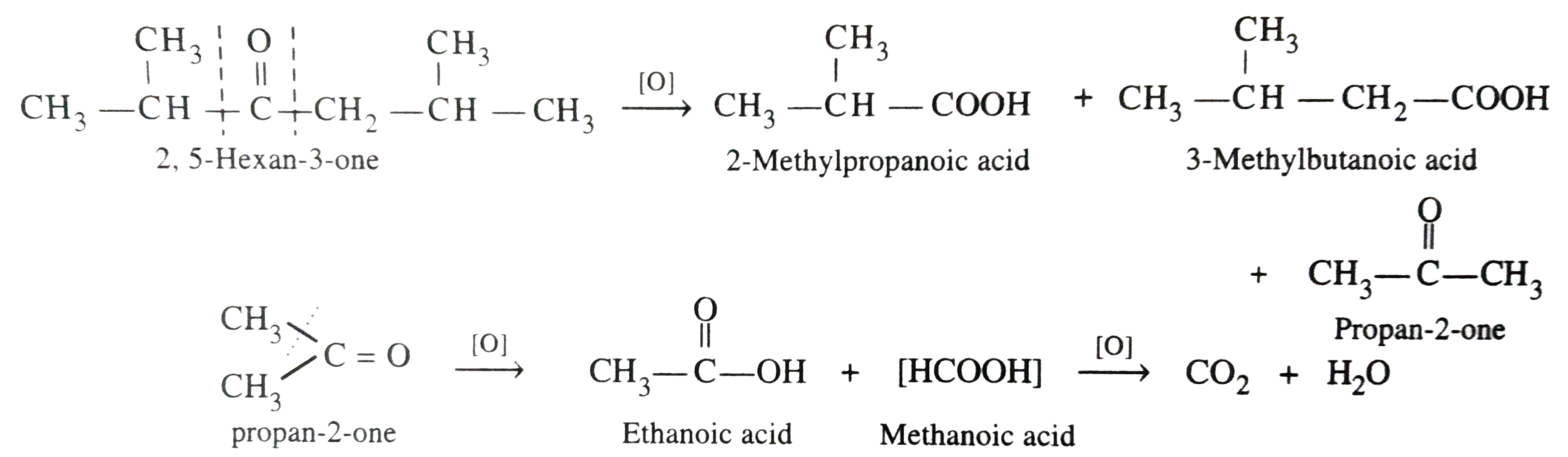 . .
|
|
| 21. |
Oxidation of glycerol with dilute nitric acid gives ……………………………and ……………………. . |
| Answer» SOLUTION : GLYCERIC ACID, Tartronic acid | |
| 22. |
Oxidation of isobutane with potassium |
|
Answer» `CO_(2) and H_(2)O` 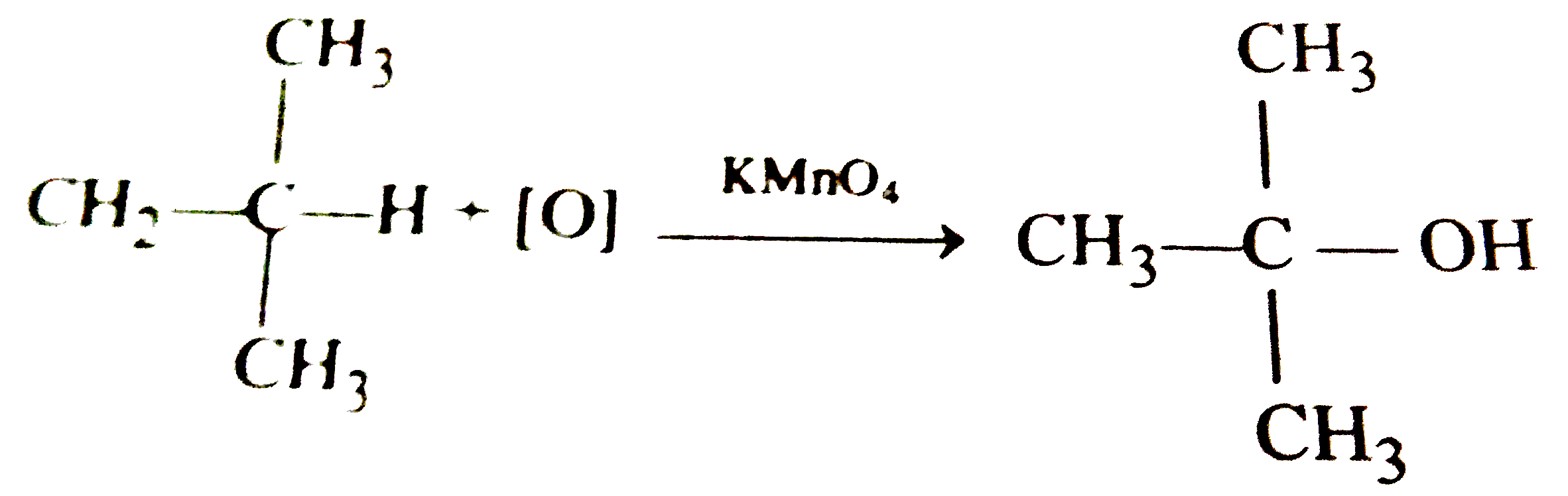
|
|
| 23. |
Oxidation of glycerol with dil. HNO_3 gives ……………… . |
|
Answer» MESO oxalic ACID |
|
| 24. |
Oxidation of glucose with bromine water and nitnic acid yields respectively |
|
Answer» GLUCONIC ACID and Saccharic acid |
|
| 27. |
Oxidation of glycerol with bismuth nitrate gives ________ |
|
Answer» meso-oxalic ACID |
|
| 28. |
Oxidation of glucose with Ag_(2)O gives |
|
Answer» D-Gluconic ACID |
|
| 29. |
Oxidation of glucose is one of the most important reacations in a living cell. What is the number of ATP molecules generated in cells from one molecules of glucose |
|
Answer» 38 |
|
| 30. |
Oxidation of gluconic acid with nitric acid gives _______. |
|
Answer» saccharic ACID |
|
| 31. |
Oxidation of glucose by dil.HNO_3 gives saccharic acid.This reaction suggest that the presence of |
|
Answer» ALDEHYDE group |
|
| 32. |
Oxidation of ethanol by chromic acid forms |
|
Answer» ethanal |
|
| 33. |
Oxidation of ethanol with acidifiedKMN O_4, gives acetic acid. |
|
Answer» |
|
| 34. |
Oxidation of by KMnO_(4) yields: |
|
Answer» `CH_(3)COCH_(2)CH_(2)COOH` CH_(3) COCH_(2)CH_(2)COOH`, <br> Double bond breaks up to yield `CO` and `COOH` group.)
|
|
| 35. |
Oxidation of benzene with air at 725 Kin presence ofV_(2)O_(5)as catalyst gives |
|
Answer» maleic ACID 
|
|
| 36. |
Oxidation of ____________ by chromic acid yieldsbenzoquinone. |
|
Answer» BENZENE |
|
| 37. |
Oxidation of benzene with air at 725 K in presence of V_(2)O_(5) as catalyst gives |
|
Answer» maleic ACID |
|
| 38. |
Oxidation of aniline with manganese dioxide and sulphuric acid produces |
|
Answer» <P>Phenylhydorxylamine 
|
|
| 39. |
Oxidation of aniline with acidified potassium dichromate gives X as one of the porduct X can be |
|
Answer» <P>BENZOIC acid 
|
|
| 40. |
Oxidation of aniline with manganese dioxide and sulphuric acid gives : |
|
Answer» Phenol 
|
|
| 41. |
Oxidation of aniline with acidified potassium dichromate gives |
|
Answer» p-benzo quinone |
|
| 42. |
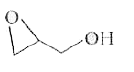
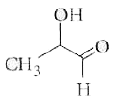
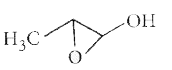
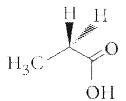
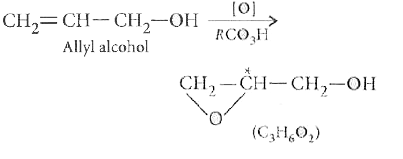
Oxidation of allyl alcohol with a peracid gives a compound of molecular formula C_(3)H_(6)O_(2) which contains an asymmetric carbon atom. The structure of the compound is |
|
Answer»
|
|
| 43. |
Oxidation of ammonia by CuO yields: |
|
Answer» `N_2` |
|
| 44. |
Oxidation of allyl alcohol, (CH_2=CH-CH_2OH) gives a mixture of oxalic acid and formic acid. If this oxidation is done in presence of bromine. One would expect only : |
|
Answer» OXALIC acid |
|
| 45. |
Oxidation of allyl alcohol, (CH_ 2 -= CH-CH_2 OH) gives a mixture of oxalic acid and formic acid. If this oxidation is done in presence of bromine one would expect only |
|
Answer» ACRYLIC acid |
|
| 46. |
Oxidation of a 1^@ alcohol with PCC gives an aldehyde. |
|
Answer» |
|
| 47. |
Oxidation of a 1^@ alcohol with chromic anhydride gives a ketone. |
|
Answer» |
|
| 48. |
Oxidation of 2-propanol by K_2Cr_2O_7 and dilute H_2SO_4 leads to the formation of : |
| Answer» Answer :D | |
| 49. |
Oxidation of 2-pentanone mainly produces |
|
Answer» butyric ACID and `CO_2+H_2O` |
|