Saved Bookmarks
This section includes 7 InterviewSolutions, each offering curated multiple-choice questions to sharpen your Current Affairs knowledge and support exam preparation. Choose a topic below to get started.
| 1. |
Movement of dispersion medium under the influence of electric field is - |
|
Answer» ELECTRO`-` osmosis |
|
| 2. |
Moulds formation in flour confectionery is prevented by using |
| Answer» Answer :A | |
| 3. |
Mosth appropriate method to distingussh two optical isomers will be |
|
Answer» USE of polarimeter |
|
| 4. |
Most viscous among the following is : |
|
Answer» Propan-1-ol |
|
| 5. |
Most viruses are composed of: |
|
Answer» Proteins |
|
| 6. |
Most unstable among the following is |
|
Answer» `ClO_(4)^(-)` |
|
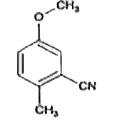
| 9. |
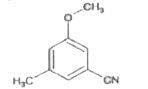
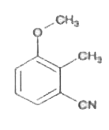
Most stable radical among the following is |
|
Answer»
|
|
| 10. |
Most stable oxide of chlorine is: |
|
Answer» `Cl_2O` |
|
| 11. |
Most stable oxidation state of Thallium is +n. What is the value of n. |
|
Answer» |
|
| 12. |
Most stable oxideof chlorine is |
|
Answer» `Cl_2O_7` |
|
| 18. |
Most stable configuration exists for: |
|
Answer» ALKALI metals |
|
| 19. |
Most stable carbanion is :- |
|
Answer» `HC-=C^(-)` |
|
| 20. |
Most readily hydrolysed halide is : |
|
Answer» `C_2H_5Cl` |
|
| 21. |
Most reactive towards nucleophilic addition reaction is- |
|
Answer»

|
|
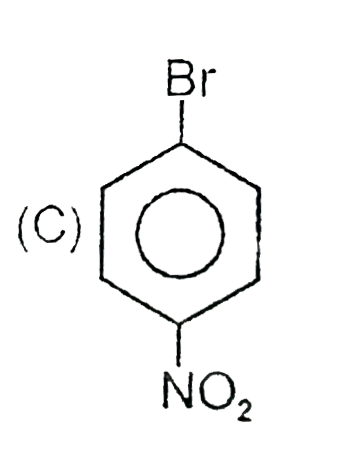
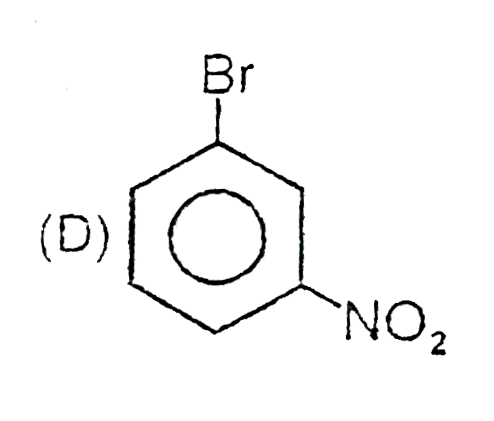
| 22. |
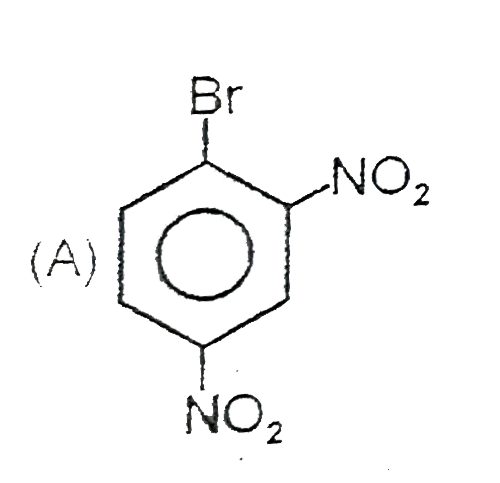
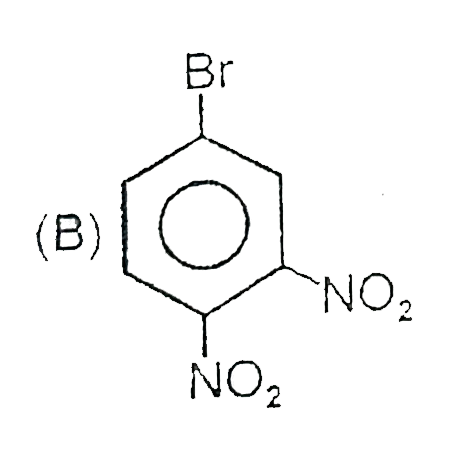
Most reactive towards SN-Ar (Nucleophilic Aromatic Substitution) |
|
Answer»
|
|
| 23. |
MostreactivehalidetowardsS_(N^1) reactionis |
|
Answer» N - Butyl CHLORIDE |
|
| 24. |
Most reactive towards nucleophilic addition is |
|
Answer» p-tolualdehyde |
|
| 25. |
Most reactive towards electrophillic substitution is |
|
Answer» ANILINE hydrochloride |
|
| 26. |
Most reactive metal among the following is: |
|
Answer» K |
|
| 27. |
Most reactive towards acid-catalyzed hydrolysis is |
|
Answer»
|
|
| 30. |
Most probable speed, average speed and rms speed are related as : |
|
Answer» 1:1.128:1.224 |
|
| 32. |
Most poisonous pollutant in water is : |
|
Answer» Zinc |
|
| 33. |
Most of the transition metals do not displace hydrogen from dilute acids. Why ? |
| Answer» SOLUTION :This is because most of the transition metals have NEGATIVE OXIDATION POTENTIALS. | |
| 34. |
The transition elements are paramagnetic due to the presence of ….. . |
|
Answer» COMPLETED d-orbitals |
|
| 35. |
Most of the transition metals act as catalyst. Justify this statement. |
|
Answer» SOLUTION :(i) Many industrial processes USE transition metals or their compounds as catalysts. Transition metal has energetically available d orbitals that can accept electrons from reactant MOLECULE or metal can form BOND with reactant molecule using its .d. electrons. (II) For example, in the catalytic hydrogenation of an alkene, the alkene bonds to an active site by using its n electrons with an empty d orbital of the catalyst. |
|
| 36. |
Mostof thetransitionmetal ionsare colouredbecauseof the |
|
Answer» presenceof unpairedelectrons |
|
| 37. |
Most of the transition metal ions are ............... and........ in nature. |
| Answer» SOLUTION :COLOURE, PARAMAGNETIC | |
| 38. |
Most of the transition metal complexes are coloured . Justify this statement. |
|
Answer» Solution :`(i)` A substance exhibits colour when it absorbs the light of a particular wave length in the visible REGION and transmit the rest of the visible light. `(ii)` When this transmitted light enters our eye, our brain recognises its colour. The colour of the transmitted light is given by the complementary colour of the absorbed light. `(III)` For e.g., the hydrate copper (II) ion is BLUE in colour as it absorbs orange light and transmit its complementary colour, blue. |
|
| 39. |
most of the transition metal compounds are paramagnetic. Why? |
| Answer» SOLUTION :They are PARAMAGNETIC because they CONTAIN ONE or more UNPAIRED d-electrons. | |
| 40. |
Most of the reactions of F_2 are endothermic due to small and strong bond formed by it with other elements. |
| Answer» SOLUTION :FALSE | |
| 41. |
Most of the reactions of fluorine are exothermic. Give reasons. |
| Answer» Solution :Due to (i) LOW bond DISSOCIATION energy of `F_(2)` and (II) strong BONDS formed between FLUORINE and most of the elements, most of the reactions of fluorine are exothermic. | |
| 42. |
Most of the plants contain : |
|
Answer» Fe |
|
| 43. |
Most of the organic chlorides, bromides and iodides react with certain metals to give compounds containing carbon - metal bonds. How will you prepare the above compound ? |
| Answer» SOLUTION :`CH_3Cl + Mg OVERSET(dry ether)RARR CH_3MgCl` | |
| 44. |
Most of the naturally occuring sugars have ...........configuration while most of the naturally occuring .........have L-configuration. |
| Answer» SOLUTION :`D-, ALPHA`-AMINO ACIDS | |
| 45. |
Most of the organic chlorides, bromides and iodides react with certain metals to give compounds containing carbon - metal bonds. Give one example for such compound. |
| Answer» SOLUTION :GRIGNARD REAGENT , `CH_3MgCl` | |
| 46. |
Most of the noble gas compounds are formed by xenon-why? |
| Answer» Solution :XENON has the second LARGEST atomic SIZE in group- 18 (next to radon). This leads to a MUCH lower ionisation enthalpy of Xe as compared to other members of the group. So, highly electronegative elements like `O_(2)` and `F_(2)` form COVALENT bonds with Xe by transferring its p -electrons to its vacant d -orbital. Hence, most of the noble gas compounds are formed by Xe. | |
| 47. |
Most of the metals which occur in native state. |
|
Answer» are very REACTIVE |
|
| 48. |
Most of the known elements are : |
|
Answer» METALS |
|
| 49. |
Most of the ions of lanthanide and actinide series have unpaired electrons in (n-2f) orbitals and hence they are |
|
Answer» DIAMAGNETIC |
|
| 50. |
Most of the hydrocarbons from petroleum are obtained by |
|
Answer» Fractional DISTILLATION |
|