Saved Bookmarks
This section includes 7 InterviewSolutions, each offering curated multiple-choice questions to sharpen your Current Affairs knowledge and support exam preparation. Choose a topic below to get started.
| 1. |
Monosaccharides containg an aldehyde group are called aldoses while those containing a keto group are called ketoses. The aldehyde group is usually present at C_1 while the keto group is usually present at C_2. All monosaccharides containing five ans six carbon atoms have cyclic structures , furanose (five membered) and pyranose (six membered). During ring formation. C_1 in aldoses and C_2 in ketoses becomes chiral and hence all these monosaccharides exist in two steroismeric forms called the alpha-anomer and the beta-anomer while C_1 and C_2 are called glycosidic or anomeric carbon atoms. In contrast, steroisomers , which differ in configuration at any other chiral carbon other than the glycosidic carbon are called epimers. Two molecules of the same or different monosaccharides combine together through glycosidic linkage to form dissacharides. All monosaccharides (aldoses and ketoses) and disacchardies expect sucrose reduce Tollens' reagent and Fehling's solution , undergo mutarotation and form osazones. Two forms of D-glucopyranose are called |
|
Answer» enantiomers |
|
| 2. |
Monosaccharides containg an aldehyde group are called aldoses while those containing a keto group are called ketoses. The aldehyde group is usually present at C_1 while the keto group is usually present at C_2. All monosaccharides containing five ans six carbon atoms have cyclic structures , furanose (five membered) and pyranose (six membered). During ring formation. C_1 in aldoses and C_2 in ketoses becomes chiral and hence all these monosaccharides exist in two steroismeric forms called the alpha-anomer and the beta-anomer while C_1 and C_2 are called glycosidic or anomeric carbon atoms. In contrast, steroisomers , which differ in configuration at any other chiral carbon other than the glycosidic carbon are called epimers. Two molecules of the same or different monosaccharides combine together through glycosidic linkage to form dissacharides. All monosaccharides (aldoses and ketoses) and disacchardies expect sucrose reduce Tollens' reagent and Fehling's solution , undergo mutarotation and form osazones. In disaccharides , the linkage connecting monosaccharide units is called. |
|
Answer» GLYCOSIDE LINKAGE |
|
| 3. |
Monosaccharides contain carbonyl group hence are classified , as aldose or ketose . The number of carbon atoms present in the monosaccharide |
| Answer» SOLUTION :SINCE FURCTOSE has six carbon atoms contains a keto group , therefore , foructose is called a KETOHEXOSE. | |
| 4. |
Monosaccharides contain carbonyl group hence are classified, as aldose or ketose. The number of carbon atoms present in the monosaccharide molecule are also considered for classification. In which cless of monosaccharide will you place fructose ? |
| Answer» Solution :Fructose is a ketohexose. Fructose is a ketohexose. It has six CARBON ATOMS with ketone as principal FUNCTIONAL GROUP. | |
| 5. |
Monosaccharides contain a carbonyl group and hence are classified as aldose or ketose. The number of carbon atoms present in the monosaccharide molecule are also considered for classification. In which class of monosaccharide will you place fructose ? |
| Answer» SOLUTION :FRUCTOSE is a KETOHEXOSE. | |
| 6. |
Monosaccharides contain |
|
Answer» SIX CARBON ATOMS only |
|
| 8. |
Mononitration of aniline yields a mixture of three isomeric nitroanilines. The yield of these isomeric nitroanilines is in the order |
|
Answer» `p gt o gt m` `p(51%) gt m (47%) gt o (2%)` Large yields of m-nitroaniline is due to the fact that aniline gets protonated to `m`-directing and deactivating `.^(+)NH_(3)` group |
|
| 9. |
Monomers used in making polymer are |
|
Answer» MELAMINE + PHENOL |
|
| 10. |
Monomers used to prepare superglue are |
|
Answer» VINYL CHLORIDE |
|
| 11. |
Monomers of which one of the following biodegradable polymer are amino acids |
| Answer» Answer :D | |
| 12. |
Monomers are simple molecules, which combine with each other to form polymers. Each polymer has a repeating structural unit. Polymers formed the same type of monomers are called homopolymers and if two or more different repeating units (monomers) make up the polymer, it is known as a copolymer. Both homopolymers and copolymers may be formed either by addition or condensation reactions. Alkenes and diense polymerize by addition (chain growth) mechanism involving carbocations, carbanions or free radical intermediates. Diense (Chloroprene, isoprene, etc) polymerize by 1,4-addition mechanism to give cis- or trans- polymers. Natural rubber is, however, cis- polyisoprene. Natural rubber is quite soft and flexible but these properties can be improved by a process called vulcanization. In contrast, bifunctional monomer molecules undergo condensation or step-growth polymerization. Polymers which can be heated and reshaped as many times as desired are called thermoplastics (polythene, polystyrene, PVC teflon, etc.) while those which can be heated only once to give a particular shape are called thermosetting polymers (Bakelite, Melmac, etc). Which of the following are examples of homopolymers? |
|
Answer» SBR, GLYPTAL, nylon-6,6 |
|
| 13. |
Monomers are simple molecules, which combine with each other to form polymers. Each polymer has a repeating structural unit. Polymers formed the same type of monomers are called homopolymers and if two or more different repeating units (monomers) make up the polymer, it is known as a copolymer. Both homopolymers and copolymers may be formed either by addition or condensation reactions. Alkenes and diense polymerize by addition (chain growth) mechanism involving carbocations, carbanions or free radical intermediates. Diense (Chloroprene, isoprene, etc) polymerize by 1,4-addition mechanism to give cis- or trans- polymers. Natural rubber is, however, cis- polyisoprene. Natural rubber is quite soft and flexible but these properties can be improved by a process called vulcanization. In contrast, bifunctional monomer molecules undergo condensation or step-growth polymerization. Polymers which can be heated and reshaped as many times as desired are called thermoplastics (polythene, polystyrene, PVC teflon, etc.) while those which can be heated only once to give a particular shape are called thermosetting polymers (Bakelite, Melmac, etc). Which of the following, are example of thermoplastics? |
|
Answer» Polyethen, BAKELITE, nylon-6 |
|
| 14. |
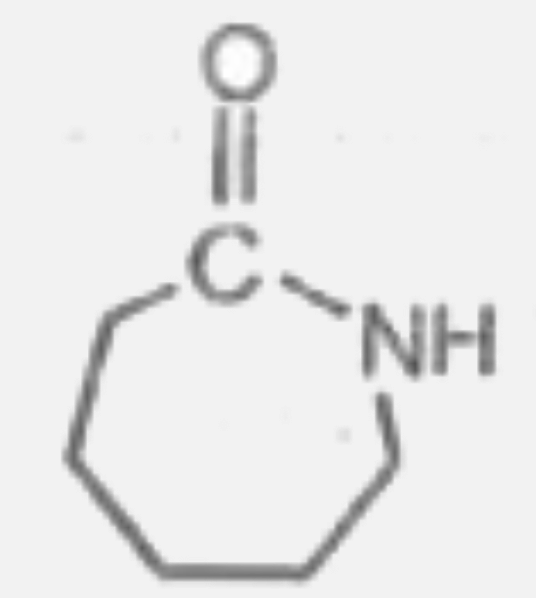
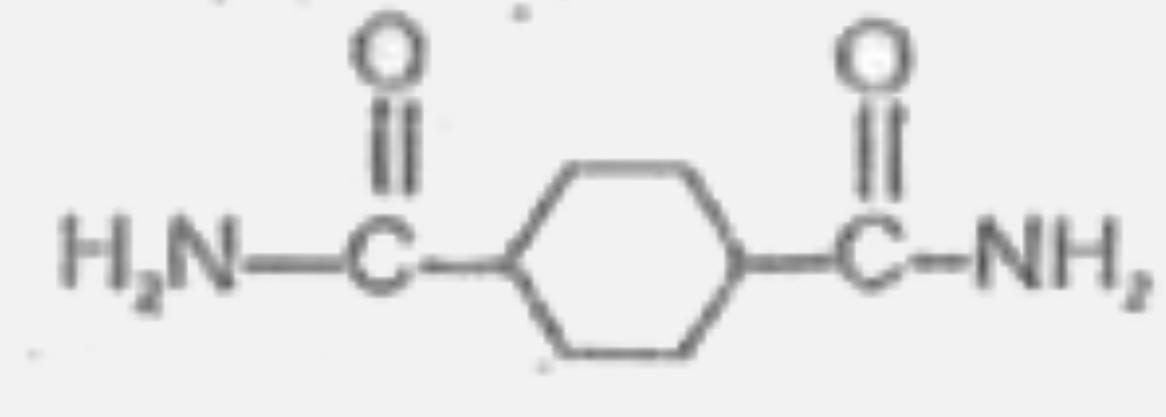
Monomers of nylon 6,6 are ...............and ................ |
|
Answer» |
|
| 15. |
Monomers of bakelite are |
|
Answer» PHENOL and FORMALDEHYDE. |
|
| 16. |
Monomers are simple molecules, which combine with each other to form polymers. Each polymer has a repeating structural unit. Polymers formed the same type of monomers are called homopolymers and if two or more different repeating units (monomers) make up the polymer, it is known as a copolymer. Both homopolymers and copolymers may be formed either by addition or condensation reactions. Alkenes and diense polymerize by addition (chain growth) mechanism involving carbocations, carbanions or free radical intermediates. Diense (Chloroprene, isoprene, etc) polymerize by 1,4-addition mechanism to give cis- or trans- polymers. Natural rubber is, however, cis- polyisoprene. Natural rubber is quite soft and flexible but these properties can be improved by a process called vulcanization. In contrast, bifunctional monomer molecules undergo condensation or step-growth polymerization. Polymers which can be heated and reshaped as many times as desired are called thermoplastics (polythene, polystyrene, PVC teflon, etc.) while those which can be heated only once to give a particular shape are called thermosetting polymers (Bakelite, Melmac, etc). Which of the following is not a natural polymer? |
|
Answer» DNA |
|
| 18. |
Monomers are converted to polymers by |
|
Answer» Hydrolysis of MONOMERS |
|
| 20. |
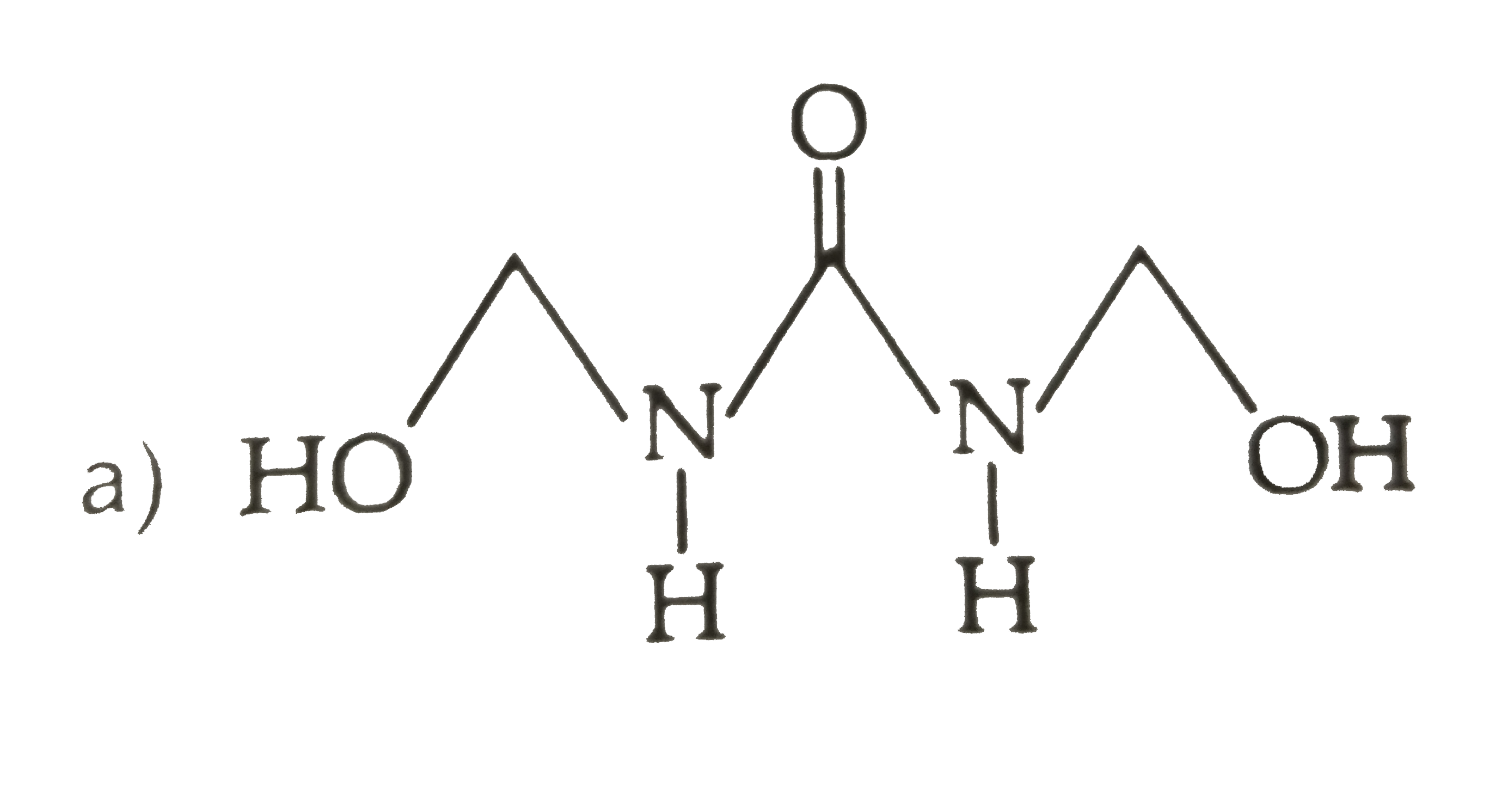
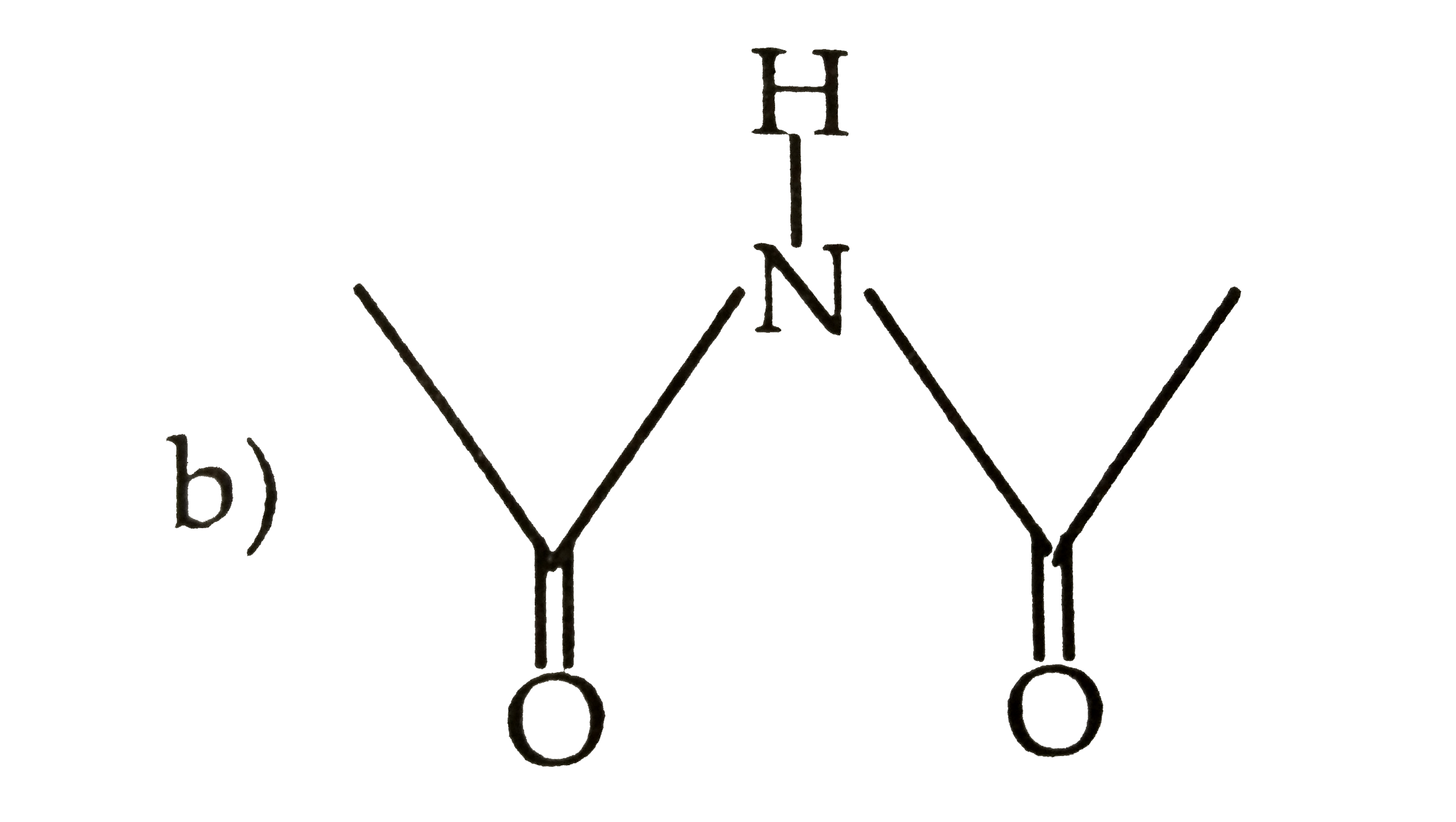
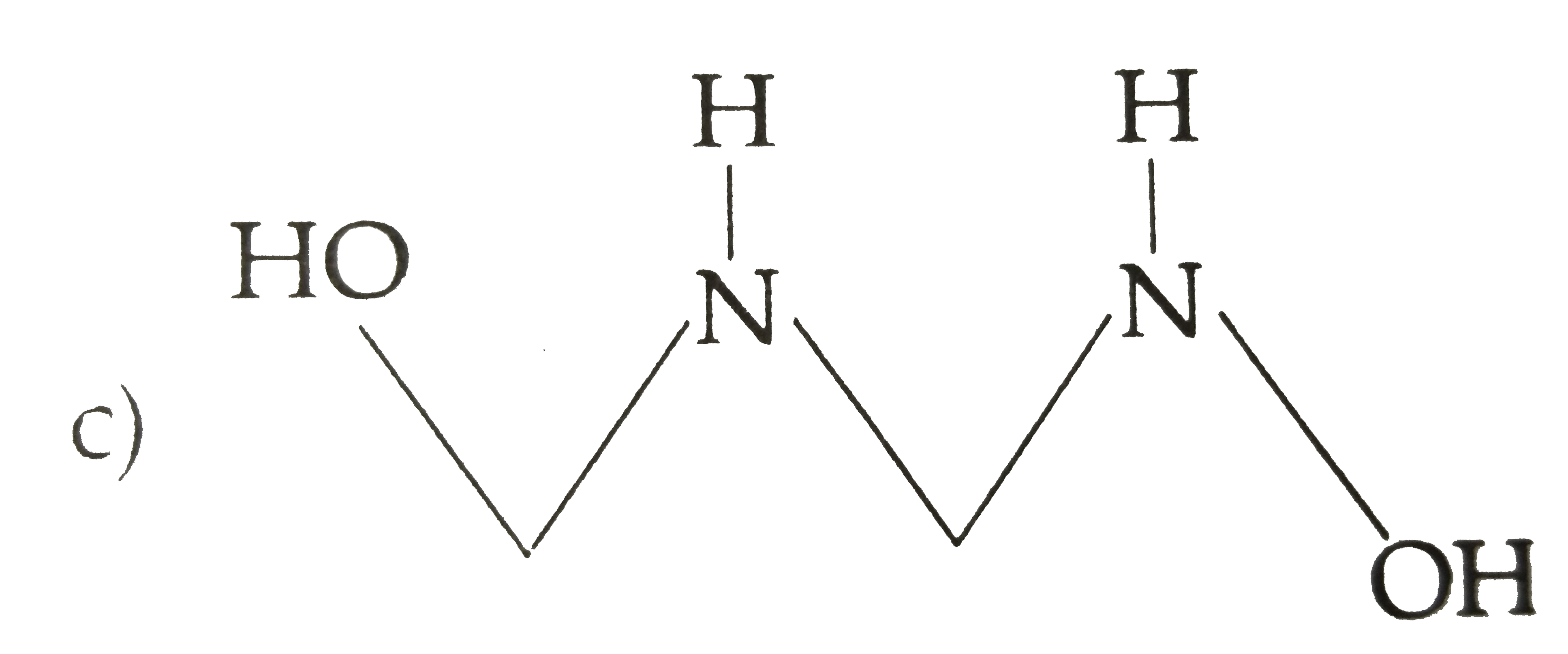
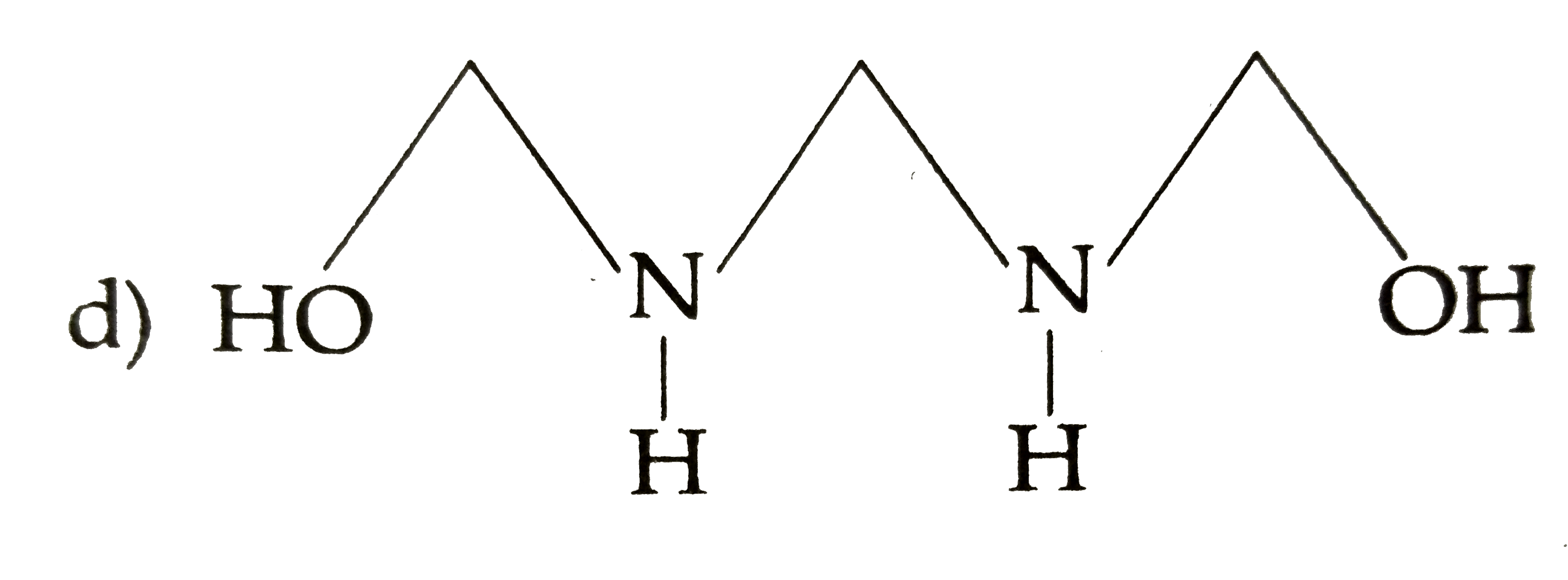
Monomer unit in urea -formaldehyde polymer is |
|
Answer»
|
|
| 21. |
Monomer of [--underset(CH_3)underset(|)overset(CH_3)overset(|)C-CH_2 --]_n is |
|
Answer» 2-methylpropene |
|
| 22. |
Monomer of [-underset(CH_3)underset(|)overset(CH_3)overset(|)C-CH_2-]_n is |
| Answer» Answer :A | |
| 23. |
Monomer of [-underset(CH_3)underset|overset(CH_3)overset|C-CH_2-] is |
|
Answer» 2-Methylpropene |
|
| 24. |
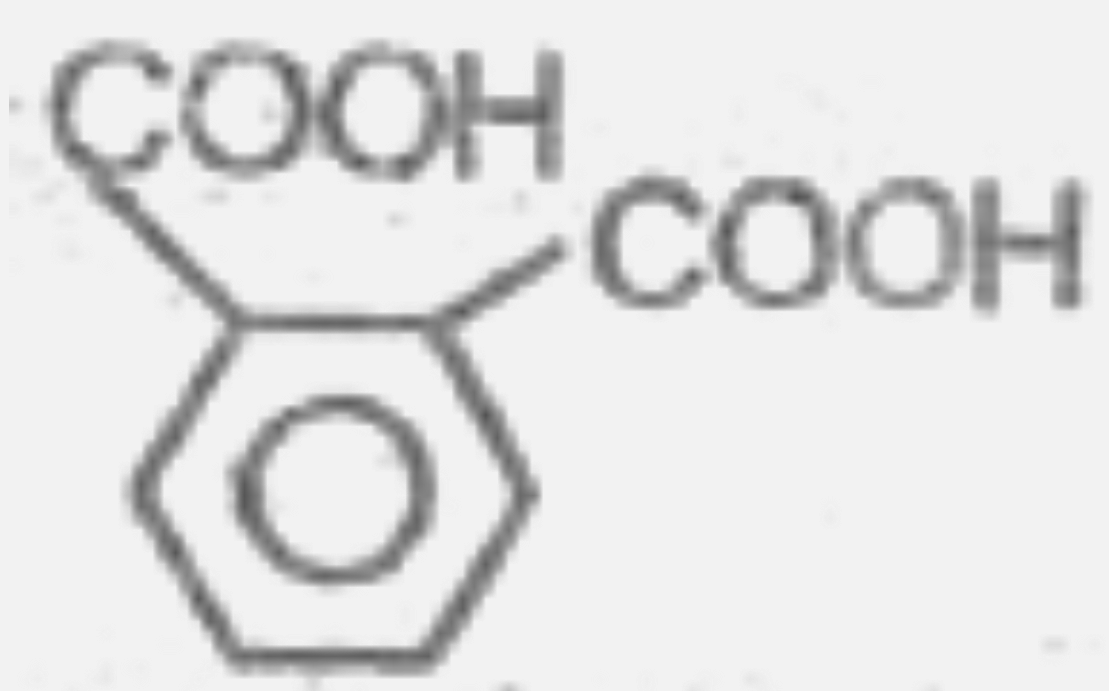
Monomer of terylene is |
|
Answer» dihydroxy DIMETHYL terephthalate |
|
| 25. |
Monomer of Teflon is : |
|
Answer» Ethylene |
|
| 27. |
Monomer of (-overset(CH_(3))overset("|")underset(CH_(3))underset("|")"C "-CH_(2))_(n) is |
| Answer» Answer :A | |
| 28. |
Monomer of Nylon -6 is : |
|
Answer» ADIPIC ACID |
|
| 31. |
Monomer of is: |
|
Answer» `2`-Methylpropene |
|
| 32. |
Monomer of cellulose is ……………. . |
| Answer» Solution :D- glucose | |
| 33. |
Monomer of acrilan is |
|
Answer» vinyl chloride |
|
| 34. |
Monohalides of selenium are dimeric in nature. Selenium monochloride undergoes disproportionation to give Se and another compound X. The Geometry of X is : |
|
Answer» Octachedral |
|
| 35. |
Monoclinic sulphur is stable between 96^(@) and 119^(@)C and slowly changes into ……….. |
| Answer» SOLUTION :]RHOMBIC SULPHUR | |
| 36. |
Monohalogen derivative of alkanes with alcoholic KOH gives: |
|
Answer» ALKANE |
|
| 37. |
Monocarboxylic acids (saturated) are regarded as .. ... ... .. . . . oxidation products of paraffins |
| Answer» Answer :C | |
| 38. |
Monochlorination of toluene in sunlight followed by hydrolysis with aq. NaOH yields |
|
Answer» o-Cresol |
|
| 39. |
Monochlorination of toluene in sunlight followed by hydroysis with aq. NaOH yiedls |
|
Answer» OCRESOL |
|
| 40. |
Monocarboxylic acids are the funtional isomer of - |
|
Answer» Esters |
|
| 41. |
Monocarboxylic acid (saturated ) are regarded as… oxidation products of paraffins: |
| Answer» Answer :C | |
| 43. |
Monocarboxlic acid shows functional isomerism with (1) Ester(2) aldehydes (3) ketones(4) ethers |
|
Answer» `1,2` |
|
| 44. |
Monocarboxylic acid are regarded as ………. Oxidation product of aldehyde |
| Answer» ANSWER :A | |
| 45. |
Monobrominaton of 2-methylbutane gives how many distinct isomers ? |
| Answer» ANSWER :D | |
| 46. |
Monocarbonyl Compound X underset("Clemmensen Reduction")overset(Zn-Hg//HCl)to How many isomers of X can be taken for the reduction to obtain the given products ? |
Answer» 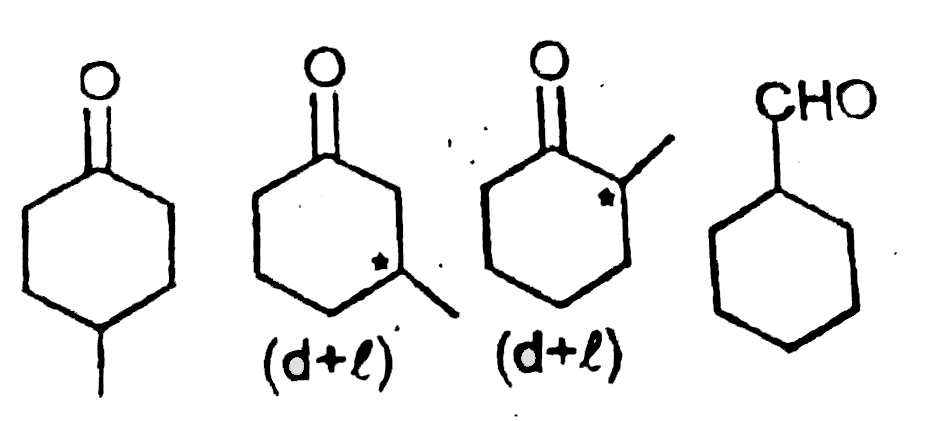
|
|
| 47. |
Monoatomic element in VA group is: |
|
Answer» Bismuth |
|
| 48. |
Mono sodium salt of oxalic acid is titrated with NaOH Solution : In the second titration it is titrated with KMnO_(4) Solution : The ratio of equivalnet of monosodium oxalate with NaOH and KMnO_(4) is |
| Answer» SOLUTION :N/A | |
| 49. |
Mono-chlorination of toluene in a sunlight followed by hydrolysis with aq. NaOH yields ….. |
|
Answer» o-Cresol 
|
|
| 50. |
Monmer of PVC is : |
|
Answer» Ethene |
|