Saved Bookmarks
This section includes 7 InterviewSolutions, each offering curated multiple-choice questions to sharpen your Current Affairs knowledge and support exam preparation. Choose a topic below to get started.
| 3. |
Most abundant element in the earth's crust by weight is |
|
Answer» Oxygen |
|
| 4. |
The most abundant VA group element in the earth's crust is |
|
Answer» O |
|
| 6. |
Mosley's name is connected with the discovery of: |
|
Answer» Protons |
|
| 8. |
Mortar ios a mixture of slaked lime and sand in the ratio |
|
Answer» 0.12569444444444 |
|
| 9. |
Mortar is a mixture of : |
|
Answer» `CaCO_3` and CaO |
|
| 10. |
Morphine that used as a pain killer suppress the .................... that causes pain. |
| Answer» SOLUTION :NEURO TRANSMITTERS | |
| 12. |
Morphine , Methadone , Aspirin , Heroin , Codeine among them how many drugs are pain killer. |
|
Answer» |
|
| 13. |
Morphine is used as an |
|
Answer» Antipyritic |
|
| 14. |
Morphine, heroin, hydrocodone, codeine, ibuprofen. |
| Answer» SOLUTION :IBUPROFEN. It is a non NARCOTIC analgesic whereas others are narcotic ANALGESICS. | |
| 15. |
Morphine diacetatea is commonly known as |
| Answer» Answer :A | |
| 16. |
Morphine is |
|
Answer» an ALKALOID |
|
| 18. |
Moreover, the salt 'A' on heating with solid K_(2)Cr_(2)O_(7) and concentrated H_(2)SO_(4) produces deep red vapours which dissolve in sodium hydroxide solution forming a yellow solution. This yellow solution gives yellow precipitate with Ba((NO)_(3))_(2) solution. On the basis of the aforesaid characteristic informations answer the following question : Reaction involved in comprehension : 2Bi^(3+) (A)+3H_(2)S overset(H+) to Bi_(2)S_(3) darr ("black") (B) + 6H^(+) Bi_(2)S_(3)+8HNO_(3) to 2Bi (NO_(3))_(3) (C) +2NO +3S +4H_(2)O Bi^(3+) + 3OH^(-) overset(NaOH) to Bi(OH)_(3) darr ("white"), 2Bi(OH)_(3) ("white")+3[Sn(OH)_(4)]^(2-) to 2Bi darr (D) +3 [Sn(OH)_(6)]^(2-) Bi^(3+) + 3OH^(-) overset(Na_(4)OH) to Bi(OH)_(3) darr ("white"), Bi(OH)_(3)daar ("white")+3HCl to BiCl_(3)+3H_(2)O BiCl_(3)+H_(2)OtoBiOCl darr ("bismuth oxychloride") (E)+2HCl 4NaCl + K_(2)Cr_(2)O_(7)+3H_(2)SO_(4) ("conc.") to 2CrO_(2) Cl_(2) ("deep red vapours") + 2Na_(2)SO_(4)+K_(2)SO_(4)+3H_(2)O CrO_(2)Cl_(2) + 4OH^(-) to CrO_(4)^(2-) + 2Cl^(-) + 2H_(2)O CrO_(4)^(2-) +BaCrO_(4) darr (yellow) Which of the following statements is incorrect ? |
|
Answer» The black precipitate `'D'` is of bismuth. (B)is not correct as `'D'` is precipitate of bismuth. (C ) `Bi^(3+) + C_(6)H_(3)(OH)_(3) to Bi(C_(6)H_(3)O_(3))darr ("yellow")+3H^(+)` (D)`Bi^(3+)+C_(9)H_(7)ON + H^(+) +4I^(-) to C_(9)H_(7)ON.HBil_(4) darr` (red) |
|
| 19. |
Moreover, the salt 'A' on heating with solid K_(2)Cr_(2)O_(7) and concentrated H_(2)SO_(4) produces deep red vapours which dissolve in sodium hydroxide solution forming a yellow solution. This yellow solution gives yellow precipitate with Ba((NO)_(3))_(2) solution. On the basis of the aforesaid characteristic informations answer the following question : Reaction involved in comprehension : 2Bi^(3+) (A)+3H_(2)S overset(H+) to Bi_(2)S_(3) darr ("black") (B) + 6H^(+) Bi_(2)S_(3)+8HNO_(3) to 2Bi (NO_(3))_(3) (C) +2NO +3S +4H_(2)O Bi^(3+) + 3OH^(-) overset(NaOH) to Bi(OH)_(3) darr ("white"), 2Bi(OH)_(3) ("white")+3[Sn(OH)_(4)]^(2-) to 2Bi darr (D) +3 [Sn(OH)_(6)]^(2-) Bi^(3+) + 3OH^(-) overset(Na_(4)OH) to Bi(OH)_(3) darr ("white"), Bi(OH)_(3)daar ("white")+3HCl to BiCl_(3)+3H_(2)O BiCl_(3)+H_(2)OtoBiOCl darr ("bismuth oxychloride") (E)+2HCl 4NaCl + K_(2)Cr_(2)O_(7)+3H_(2)SO_(4) ("conc.") to 2CrO_(2) Cl_(2) ("deep red vapours") + 2Na_(2)SO_(4)+K_(2)SO_(4)+3H_(2)O CrO_(2)Cl_(2) + 4OH^(-) to CrO_(4)^(2-) + 2Cl^(-) + 2H_(2)O CrO_(4)^(2-) +BaCrO_(4) darr (yellow) The black precipitate 'F' on heating with water produces : |
|
Answer» `HG(OH)_(2)` |
|
| 20. |
Morphine an alkaloid is : |
|
Answer» ANTIMALARIA |
|
| 21. |
Morphin is used as an |
|
Answer» antipyretic |
|
| 23. |
Moreover, the salt 'A' on heating with solid K_(2)Cr_(2)O_(7) and concentrated H_(2)SO_(4) produces deep red vapours which dissolve in sodium hydroxide solution forming a yellow solution. This yellow solution gives yellow precipitate with Ba((NO)_(3))_(2) solution. On the basis of the aforesaid characteristic informations answer the following question : Reaction involved in comprehension : 2Bi^(3+) (A)+3H_(2)S overset(H+) to Bi_(2)S_(3) darr ("black") (B) + 6H^(+) Bi_(2)S_(3)+8HNO_(3) to 2Bi (NO_(3))_(3) (C) +2NO +3S +4H_(2)O Bi^(3+) + 3OH^(-) overset(NaOH) to Bi(OH)_(3) darr ("white"), 2Bi(OH)_(3) ("white")+3[Sn(OH)_(4)]^(2-) to 2Bi darr (D) +3 [Sn(OH)_(6)]^(2-) Bi^(3+) + 3OH^(-) overset(Na_(4)OH) to Bi(OH)_(3) darr ("white"), Bi(OH)_(3)daar ("white")+3HCl to BiCl_(3)+3H_(2)O BiCl_(3)+H_(2)OtoBiOCl darr ("bismuth oxychloride") (E)+2HCl 4NaCl + K_(2)Cr_(2)O_(7)+3H_(2)SO_(4) ("conc.") to 2CrO_(2) Cl_(2) ("deep red vapours") + 2Na_(2)SO_(4)+K_(2)SO_(4)+3H_(2)O CrO_(2)Cl_(2) + 4OH^(-) to CrO_(4)^(2-) + 2Cl^(-) + 2H_(2)O CrO_(4)^(2-) +BaCrO_(4) darr (yellow) Acidified solution of 'A' on treatment with Kl gives black precipitate 'F' which dissolves in excess of reagent forming the coloured compound 'G'.The chemical composition of 'F' and 'G' are respectively: |
|
Answer» `Hgl_(2)` and `[Hgl_(4)]^(2-)` |
|
| 24. |
More toxic element in boron family is …………. . |
|
Answer» BORON |
|
| 25. |
More volatile hydride is |
|
Answer» `PH_(3)` |
|
| 27. |
More reactive element is ………………….. . |
|
Answer» FLUORINE |
|
| 28. |
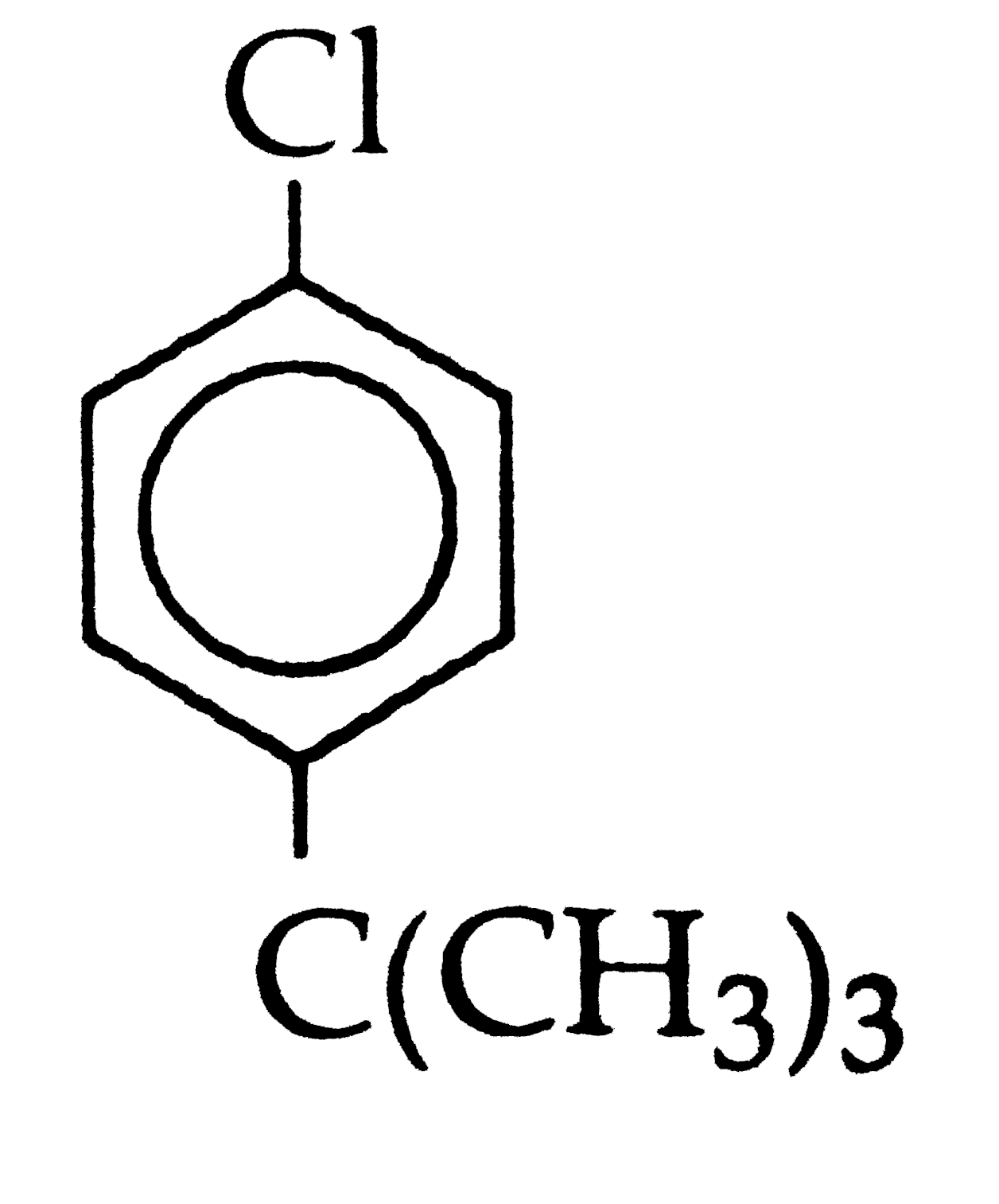
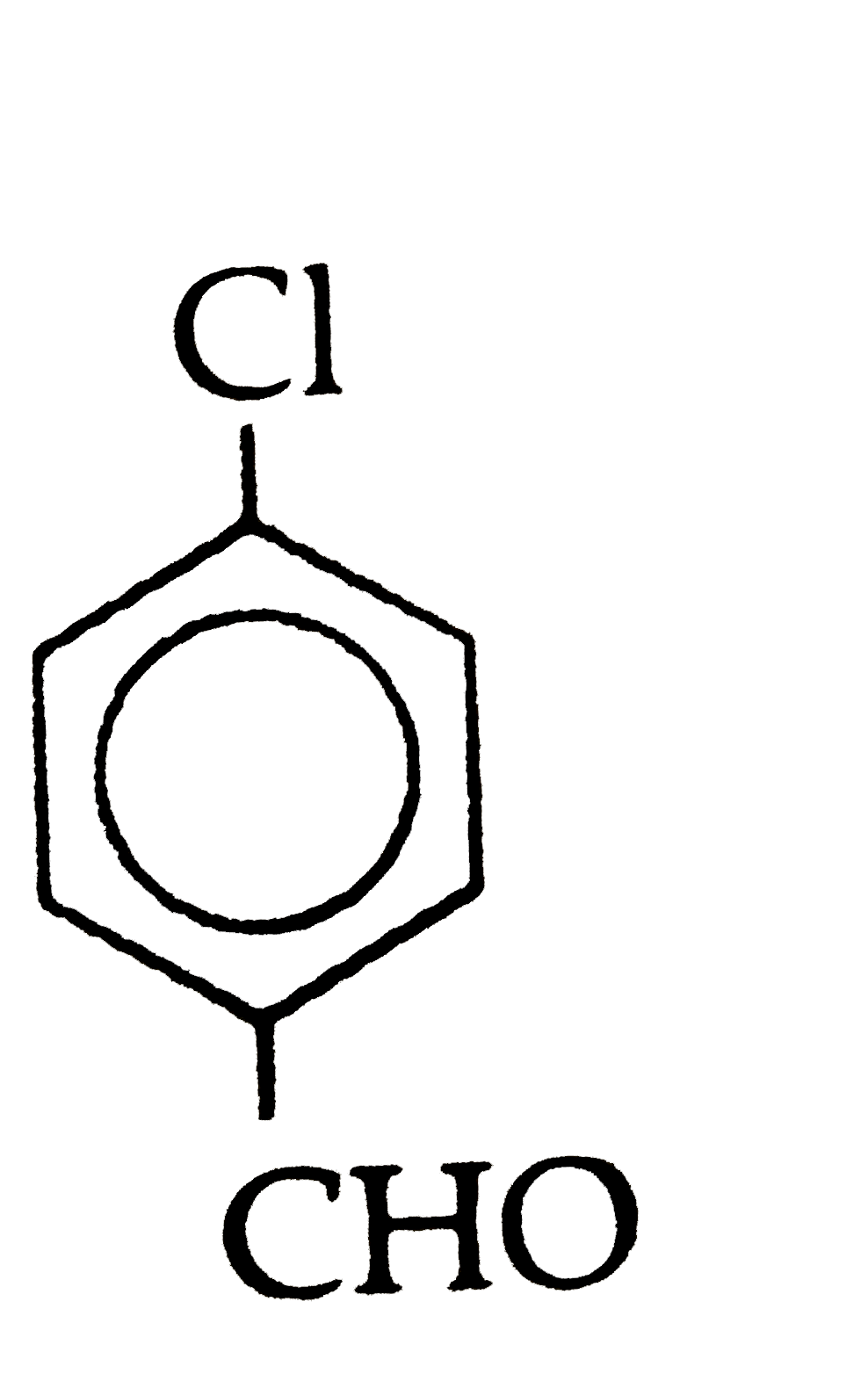
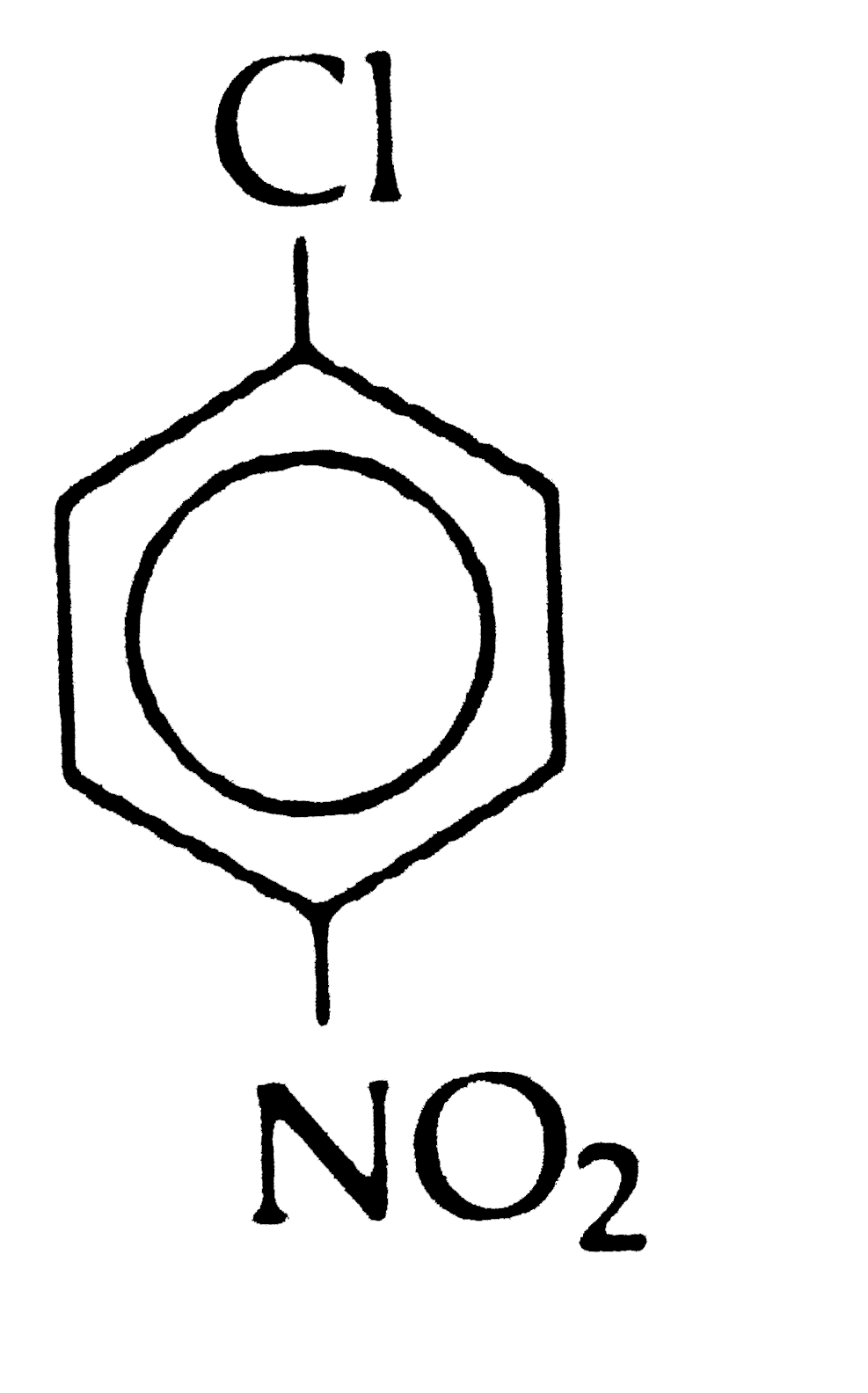
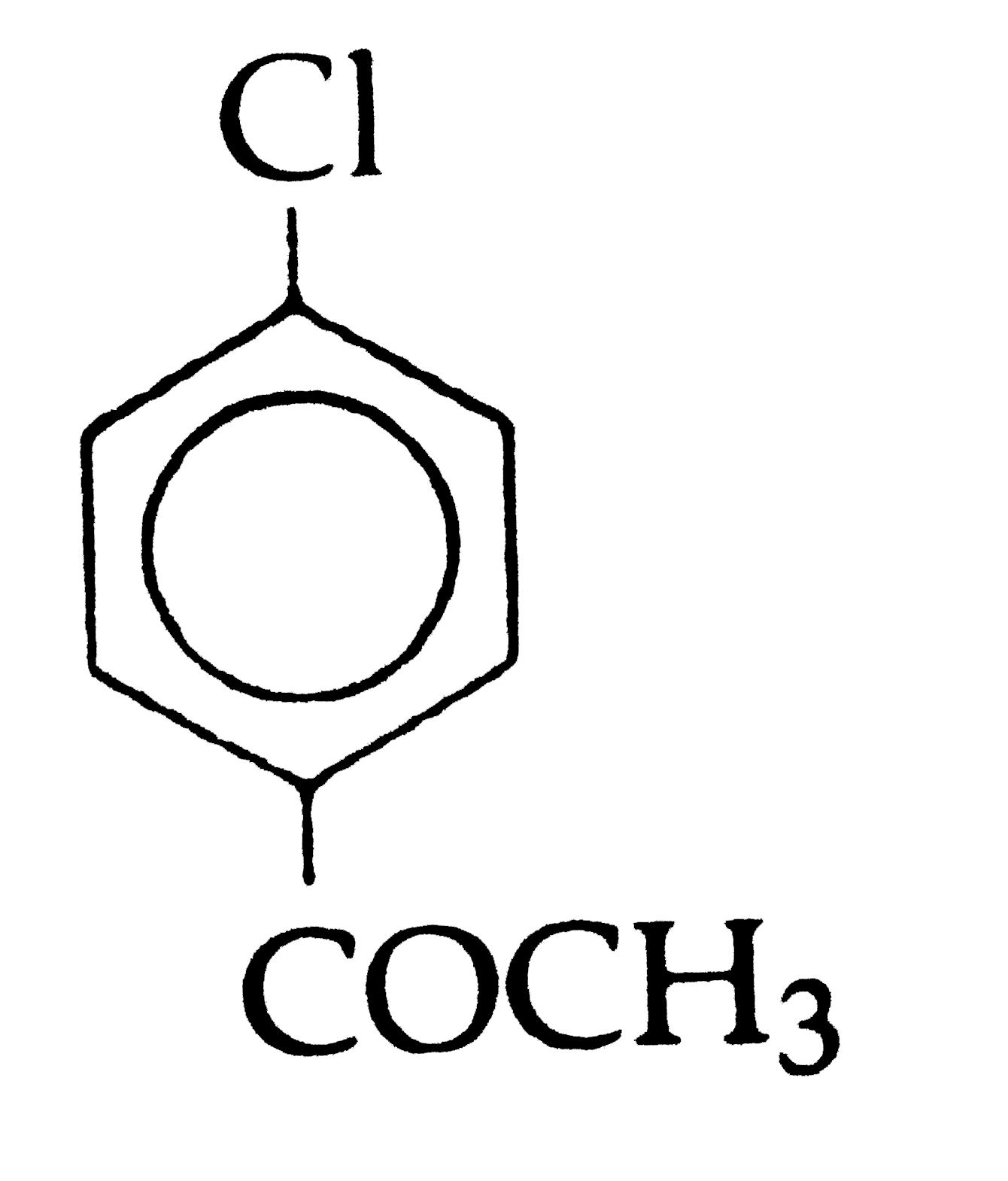
More reactive haloarenes in electrophilic substitution reaction is |
|
Answer»
|
|
| 29. |
More number of peptide bonds are present in |
|
Answer» alitame |
|
| 30. |
More number of oxidation states are exhibited by the actinoids than by the lanthanoids. The main reason for this is |
|
Answer» Greater METALLIC character of the lanthanoids then that of the corresponding actinoids |
|
| 31. |
More electropositive elements have |
|
Answer» positive reduction potential |
|
| 32. |
More metal fluorides are ionic in nature than metal chlorides. Assign appropriate reasons. |
| Answer» Solution :According to Fajan rules, a bigger anion is more easily POLARIZED than a smaller anion. THUS, the same metal can POLARIZE bigger `Cl^(-)` ion more easily than the smaller `F^(-)` ion. In other words, for the same metal, the metal fluoride is more ionic than metal chloride. Therefore, in GENERAL, we can easily SAY that more metal fluorides are ionic than metal chlorides. | |
| 33. |
More electropositive have more |
|
Answer» negative REDUCTION potential `therefore -E_("red")^(0)` |
|
| 34. |
More electropositive elements have : |
|
Answer» POSTIVE REDUCTION potential |
|
| 36. |
More alkylated alkene is formed in greater proportion compared with less alkylated alkene. Justify. |
| Answer» SOLUTION :RELATIVE STABILITY of alkenes is explained on the basis of hyper conjugation of `CH_(3)` groups. | |
| 37. |
Molality of expressed in |
|
Answer» `gram//litre` |
|
| 38. |
Mood elevators pepills are |
|
Answer» ANALGESICS |
|
| 39. |
^^_(m)^(oo) is more for |
|
Answer» 0.1 M NaCl |
|
| 40. |
Molarity of expressed in |
|
Answer» `gram//litre` |
|
| 41. |
Montreal Protocol which calls for appropriate action to protect the ozone layer from human activities was passed in the year |
|
Answer» 1988 |
|
| 42. |
Monoterpene contain how many carbon atoms? |
|
Answer» 10 |
|
| 43. |
Monosodium glutamate (MSG) is salt of one of the most abundant naturally occuring non-essential amino acid which is commonly used in food products like in "MAGGI" having structural formula as {:(""O""H""O),(""||""|""||),(HO-C-CH_(2)-CH_(2)-C-C-overset(Ө)Ooverset(" "o+)(Na)),(""|),(""NH_(2)):} Mass % of Na in MSG is- |
|
Answer» 14.8 |
|
| 44. |
Monosaccharides usually contains.. Carbon atoms |
|
Answer» `C_3` to `C_(10)` |
|
| 45. |
Monosaccharides usually contain : |
|
Answer» 3 to 8 CARBON atoms |
|
| 46. |
Monosaccharides containing ketonic group are called : |
|
Answer» Aldoses |
|
| 47. |
Monosaccharides containg an aldehyde group are called aldoses while those containing a keto group are called ketoses. The aldehyde group is usually present at C_1 while the keto group is usually present at C_2. All monosaccharides containing five ans six carbon atoms have cyclic structures , furanose (five membered) and pyranose (six membered). During ring formation. C_1 in aldoses and C_2 in ketoses becomes chiral and hence all these monosaccharides exist in two steroismeric forms called the alpha-anomer and the beta-anomer while C_1 and C_2 are called glycosidic or anomeric carbon atoms. In contrast, steroisomers , which differ in configuration at any other chiral carbon other than the glycosidic carbon are called epimers. Two molecules of the same or different monosaccharides combine together through glycosidic linkage to form dissacharides. All monosaccharides (aldoses and ketoses) and disacchardies expect sucrose reduce Tollens' reagent and Fehling's solution , undergo mutarotation and form osazones. Mutarotation does not occur in |
|
Answer» SUCROSE |
|
| 48. |
Monosaccharides containg an aldehyde group are called aldoses while those containing a keto group are called ketoses. The aldehyde group is usually present at C_1 while the keto group is usually present at C_2. All monosaccharides containing five ans six carbon atoms have cyclic structures , furanose (five membered) and pyranose (six membered). During ring formation. C_1 in aldoses and C_2 in ketoses becomes chiral and hence all these monosaccharides exist in two steroismeric forms called the alpha-anomer and the beta-anomer while C_1 and C_2 are called glycosidic or anomeric carbon atoms. In contrast, steroisomers , which differ in configuration at any other chiral carbon other than the glycosidic carbon are called epimers. Two molecules of the same or different monosaccharides combine together through glycosidic linkage to form dissacharides. All monosaccharides (aldoses and ketoses) and disacchardies expect sucrose reduce Tollens' reagent and Fehling's solution , undergo mutarotation and form osazones. Which of the following pairs give the same osazone ? |
|
Answer» GLUCOSE , Fructose |
|
| 49. |
Monosaccharides containg an aldehyde group are called aldoses while those containing a keto group are called ketoses. The aldehyde group is usually present at C_1 while the keto group is usually present at C_2. All monosaccharides containing five ans six carbon atoms have cyclic structures , furanose (five membered) and pyranose (six membered). During ring formation. C_1 in aldoses and C_2 in ketoses becomes chiral and hence all these monosaccharides exist in two steroismeric forms called the alpha-anomer and the beta-anomer while C_1 and C_2 are called glycosidic or anomeric carbon atoms. In contrast, steroisomers , which differ in configuration at any other chiral carbon other than the glycosidic carbon are called epimers. Two molecules of the same or different monosaccharides combine together through glycosidic linkage to form dissacharides. All monosaccharides (aldoses and ketoses) and disacchardies expect sucrose reduce Tollens' reagent and Fehling's solution , undergo mutarotation and form osazones. Which of the following pairs give positive Tollens' test ? |
|
Answer» GLUCOSE , sucrose |
|
| 50. |
Monosaccharides containing aldehyde group are called : |
|
Answer» Aldoses |
|