Saved Bookmarks
This section includes 7 InterviewSolutions, each offering curated multiple-choice questions to sharpen your Current Affairs knowledge and support exam preparation. Choose a topic below to get started.
| 1. |
Assertion Molar conductance of an electrolyte increases with dilution Reason Ions move fast in dilute solutions. |
| Answer» Solution :Since the DISSOCIATION of a weak electrolyte increases with DILUTION giving more IONS, its molar CONDUCTANCE increases with dilution. | |
| 2. |
Molar conductance of a 1.5 M solution of an electrolyte is found to 138.9 siemen cm^(2). What would be the specific conductance of this reaction? |
|
Answer» |
|
| 3. |
Molar conductance Lambda_(m) is plotted against sqrt(C) ("mol L"^(-1)) for three electrolytes (NaCl, HCl, NH_(4)OH). Which one of the following is correct? |
|
Answer» `{:(I,II,III),(NaCl,HCl,NH_(4)OH):}` |
|
| 5. |
Molar conductance for weak electrolyte on dilution decreases slowly. Is it true or false? |
| Answer» SOLUTION :INCREASES RAPIDLY | |
| 8. |
Molality of pure gas A is (50)/(1.2)m. Then molar mass (in gm/mol) of gas will be: |
|
Answer» SOLUTION :`m=(n_(A)xx1000)/(W_(A)(gm))=(W_(A))/(M.Wt._(A))XX(1000)/(W_(A))=(1000)/(M.Wt._(A))` `(50)/(12)=(1000)/(M.Wt._(A))=(24)/(3)=8` |
|
| 9. |
Molality of pure ethyl alcohol (density 0.92 g ml) is : |
|
Answer» 15 m `=1000xx0.92=920g` Molality `=(920)/(46)=20m` (Molecular mass of `C_(2)H_(5)OH=46`). |
|
| 10. |
Molality : It is defined as the number of moles of the solute present in 1 kg of the solvent. It is denoted by 'm'. Molality(m)="Number of moles of solute"/"Number of kilo-grams of the solvent" Let w_A grams of the solute of molecular mass m_A be present in w_a grams of the solvent, then Molality (m)=w_A/(m_Axxw_B)xx100 Realtion between mole fraction and Molality : X_A=n/(N+n) and X_B=N/(N+n) X_A/X_B=n/N="Moles of solute"/"Moles of solvent"=(w_Axxm_B)/(w_Bxxm_A) (X_Axx1000)/(X_Bxxm_B)=(w_Axx1000)/(w_Bxxm_A)=m or (X_Axx1000)/((1-X_A)m_B)=m What is the molality of final solution obtained in the above problem |
|
Answer» 1.422 MASS of solvent=800-290=510 MOLALITY`=7.25/510xx1000=14.22` |
|
| 11. |
Molality of an aqueous solution that produces an elevation of boiling point of 1.00K at 1 atm pressure (K_(b) for water =0.512K.kg." mol"^(-1)) |
|
Answer» `0.512m` |
|
| 12. |
Molality is defined as the number of moles of the solute per kg of the solvent. |
|
Answer» |
|
| 13. |
Molality and mole fraction of the solutions are not affected by change in temperature while and normality change. Explain. |
| Answer» SOLUTION :VOLUME isnot involed in case of molaltiy and mole FRACTION but is CONSIDERD for EXPRESSING molarity and normality. | |
| 14. |
Molaliry of a solution is …………..of the solute in …………………..of the …………… . |
| Answer» SOLUTION :no. of MOLES, 100 g (1kg ), SOLVENT | |
| 15. |
Molality 30% w/w aqueous solution of NaOH is ……………….. |
|
Answer» 10.71 m |
|
| 16. |
Molal elevation constant of chloroform is 3.88, 0.3g of camphor added to 25.2g of chloroform raised the boiling point of the solvent by 0.299^(@)C. Calculate the molecular weight of camphor. |
|
Answer» |
|
| 17. |
Molal elevation constant of a liquid is : |
|
Answer» The elevation in b.pt. which would be produced by dissolving ONE MOLE of SOLUTE in 100 g of solvent |
|
| 18. |
Molal elevation constant and molal depresion constant for water respectively ("in" ^.(@)C//m) are |
|
Answer» 0.52,1.86 |
|
| 19. |
Molal depression of freezing point of water is 1.86^(@) per 100 g of water. 0.02 mole of urea dissolved in 100 g of water will produce a lowering of temperature of : |
|
Answer» `0.186^(@)` |
|
| 20. |
Molal depression of freezing point of water is 1.86^@C per 1000 g of water. 0.02 mole of urea dissolved in 100 g of water will produce a lowering of temperature of: |
|
Answer» `0.186^@` |
|
| 21. |
Molal depression constant is given by the expression: |
|
Answer» `DeltaT_f XX m` |
|
| 22. |
Molal depression constant for water is 1.86^(@)C kg/mole. The freezing point of a 0.05 molal solution of a non-electrolyte in water is |
|
Answer» `-1.86^(@)C` Thus FREEZING point `=0-0.093=-0.093^(@)C`. |
|
| 23. |
Molal depression constant for water is 1.86^@C. The freezing point of a 0.05 molal solution of a non electrolyte in water is: |
|
Answer» `-1.86^@C` |
|
| 24. |
Molal depression constant for water is 1.86 K.Kg."mole"^(-1). The freezing point of a 0.05 molal solution of a non electrolyte in water is |
|
Answer» `-1.86^@C` |
|
| 25. |
Molal depression constant for solvent is 30 K. kg" mol"^(-1)The depressionin the freezingpoint of the solvent for 0.04 molKg^(-1)solution of N_2SO_4is :(Assume complete dissociations of the electrolyte) |
|
Answer» `0.18 K` |
|
| 26. |
Mojar product is : |
|
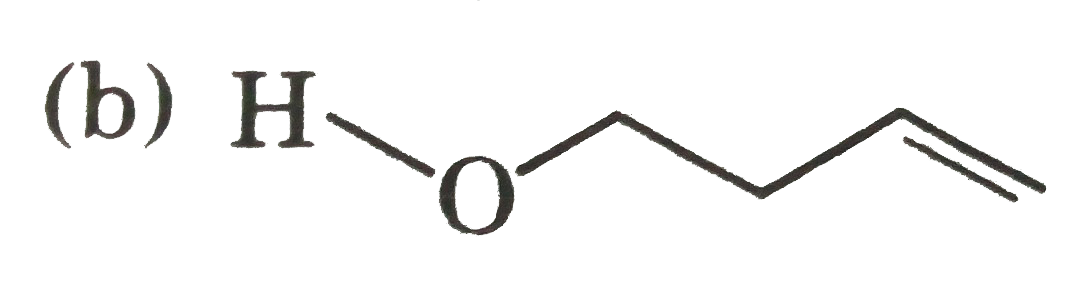
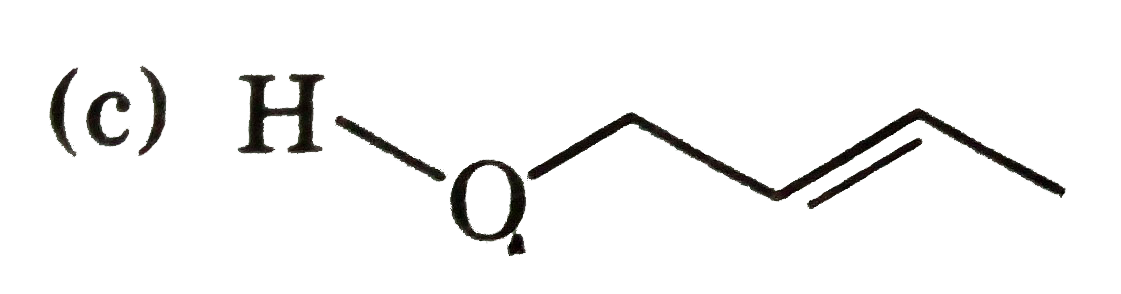
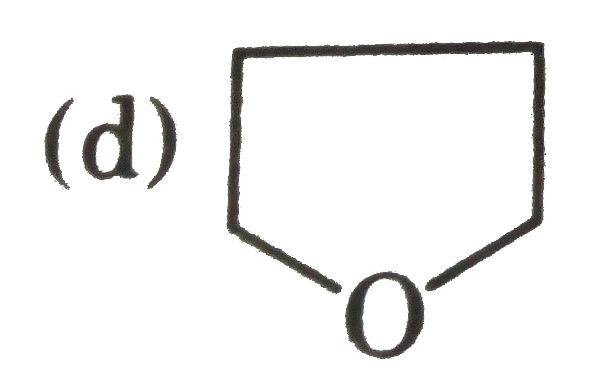
Answer»
|
|
| 27. |
Moist SO_(2)decolourises KMnO_(4) solution . |
|
Answer» Solution :Moist `SO_(2)` decolourises `KMnO_(4)` solution . Moist `SO_(2)` BEHAVES as a rediucing GENT and reduces `MnO_(4)^(-)` to `Mn^(2+)` `5SO_(3)^(2-)+2MnO_(4)^(-)+6H^(+)rightarrow2Mn^(2+)+3H_(2)O+5SO_(4)^(2-)` |
|
| 28. |
Moistuer in food is removed by |
|
Answer» vaccum DRYING |
|
| 30. |
Moist hydrogen cannot be dried over concentrated H_2SO_4 because: |
|
Answer» It can CATCH fire |
|
| 31. |
Mohr's salt on dissociation in water gives |
|
Answer» POSITIVE test for `FE^(2+)` |
|
| 32. |
Mohr's salt is dissolved in dil. H_(2)SO_(4) instead of distilled water to |
|
Answer» ENHANCE the RATE of dissolution |
|
| 33. |
Mohr's salt is a |
|
Answer» Normal SALT |
|
| 34. |
Mohr's salt is a: |
|
Answer» NORMAL salt |
|
| 37. |
Mohr's salt answers the presence ofFe^(2+)NH^(4+)and SO_4^(2-)ions . Whereas the potssium ferrithiocyanate will not answerFe^(3+)and SCN ions give reason. |
| Answer» Solution :If we perform a qualitative analysis to identify the constituentions present in both the compounds , MOHR's salt answers the presence of ` FE^(2+)NH_4^(+) ` and `SO_4^(2-)`IONS whereas the potassium ferrithiocyanate will not answer `Fe^(3+) ` and SCN ions . We can INFER that the double salts loose their identity and DISSOCIATES into their constiuent simple ions in solutions whereas the complex ion in coordination compound , does not loose is identity and never dissociate to give simple ions. | |
| 38. |
Mohit and Rohan are good friends. They sit in the class room side by side but Rohan has a bad breath. Mohit took him to the dentist. The denstist after examining said that Rohan suffers from the dental disease pyorrhea. The doctor cleaned his teeth ad asked Rohan to brush the teeth at least twice a day and use mouthwash after very meal. (i) what are the main constituents for mouthwashes? (ii) Name the solvent used to dissolve these constituents. (iii) What values are displayed by Mohit? |
|
Answer» Solution :(i) Phenols and ALCOHOLS derived from PLANTS are used as antiseptic agents in mouthwashes such as Listerine. The main phenolic constituents are: thymol (found in thyme and mist), eugenol (found in cloves), methyl salicylate and the monoterpenoid, eucalyptol. (ii) alcohol water mixture is used to dissolve all these constituents. alcohol also ACTS as an antiseptic and kills bacteria. (III) Mohit displayed values of awareness regarding HEALTH and hygiene of felow beings. |
|
| 39. |
Mohr's salt is- |
|
Answer» FERROUS AMMONIUM SULPHATE |
|
| 40. |
Mofe of hybridization affects |
|
Answer» s' character of a bond pair electron |
|
| 41. |
Mohr's salt is : |
|
Answer» `FeS_(2).7H_2O` |
|
| 42. |
Modern peroidic table helps classify elements according to their similarities.Consider the columns mentioning certain details about elements with comments on their important features. Answer the question that follow : The appropriate combination for Lanthanum is : |
|
Answer» (I)(ii)(S) last `e^(-)` enters d,f subshall. |
|
| 43. |
Modern peroidic table helps classify elements according to their similarities.Consider the columns mentioning certain details about elements with comments on their important features. Answer the question that follow : Which of the following combinations is correct for Chromium but not for Zinc ? |
|
Answer» (II)(ii)(Q) |
|
| 44. |
Modern theory of heterogeneous catalysis is: |
|
Answer» INTERMEDIATE compound FORMATION theory |
|
| 45. |
Modern peroidic table helps classify elements according to their similarities.Consider the columns mentioning certain details about elements with comments on their important features. Answer the question that follow : Which of the following combinations is appropriate for Beryllium ? |
|
Answer» (IV)(i)(P) |
|
| 46. |
Modern periodic table is based on the atomic number of the elements. The experiment which proved the significance of the atomic number was |
|
Answer» Mullikan's oil DROP experiment |
|
| 47. |
Modern periodic table is based on atomic no. experiments which proved importance of at no. was |
|
Answer» Braggs work on X-ray diffraction |
|
| 48. |
Modern method of steel manufacturing is: |
|
Answer» OPEN HEATH PROCESS |
|
| 49. |
Modern method of steel manufacturing is : |
|
Answer» OPEN HEARTH PROCESS |
|
| 50. |
Moderator is a material which is used to slow down the neutrons produced during nuclear fission. The neutrons from the source are of high speed and energy. Heavy water or graphite moderators slow down the speed of the neutrons. The energy of fast moving neutrons decreases from 2MeV to 0.02535 eV, it corresponds to the velocity of 220 m "sec"^(-1). At this velocity, the neutrons are in thermal equilibrium with the moderator. such neutrons are called thermal neutrons. Thermal neutrons cause further fission reaction. The essential characterstices of moderators are: (i) Its molar mass must be low, (ii) It should not absorb neutrons. (iii) It should undergo elastic collisions with neutrons. Which among the following characters make graphite a good moderator? |
|
Answer» Cross-sectional area of graphite is very high |
|