

Saved Bookmarks
This section includes 7 InterviewSolutions, each offering curated multiple-choice questions to sharpen your Current Affairs knowledge and support exam preparation. Choose a topic below to get started.
| 1. |
Maximum covalency of nitrogen is............. |
|
Answer» 3 |
|
| 2. |
Maximum bond energy of C-H bonds is found in the compound |
|
Answer» Ethane |
|
| 3. |
Maximum bond angle at nitrogen is present in which of the following ? |
|
Answer» `NO_(2)` `(NO_(2)^(-) lt NO_(3)^(-) lt NO_(2) lt NO_(2)^(+))/("bond angle"uarr)` |
|
| 4. |
Maximum amount of a solid solute that can be dissolved in a specified amount of a given liquid solvent does not depend upon ….. |
|
Answer» TEMPERATURE |
|
| 5. |
Maximum amount of a substance that can be dissolved in a specified amount of a solvent ata specified temperature is called. |
| Answer» SOLUTION :SOLUBILITY | |
| 6. |
Maximum amount of a solid solute that can be dissolved in a specified amount of a given liquid solvent does not depend upon ………….. . |
|
Answer» TEMPERAURE |
|
| 7. |
Max. number of moles of electrons taken up byone mole of NO_(3)^(-) when it is reduced to |
|
Answer» `NH_(3)` |
|
| 8. |
Max no.of unpaired e^- in ground state of Gadolinium (Gd, Z =64) |
|
Answer» |
|
| 9. |
Maximum amount of a solid aolute that can be dissolved in a specified amount of a given liquid solvent does not depend upon……….. |
|
Answer» Temperature |
|
| 10. |
Matter around us can exist in three different states , namely , solids , liquid and gas . The correct order of their compressibility is |
|
Answer» Liquid `lt` Gas `lt` SOLID |
|
| 11. |
Matte is obtained after this step- |
|
Answer» Froth FLOATATION |
|
| 12. |
Matte is a mixture of.... |
|
Answer» `Cu_2S_2 + FES` |
|
| 13. |
''Matte'' is a mixture of ........ |
|
Answer» `Cu_2S + ZNS` |
|
| 16. |
Matrix : |
Answer» 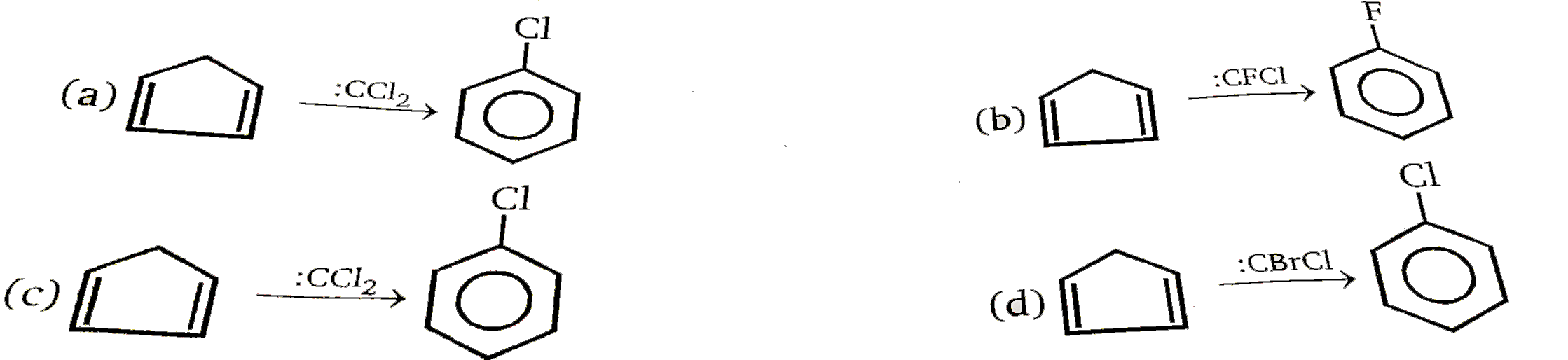
|
|
| 17. |
Mathematical expression for t_(1//4) i.e., when (1//4)^(th) reaction is over following first order kinetics can be given by: |
|
Answer» `t_(1//4)=2.303/Klog4` |
|
| 18. |
Math the carbohydrate in Column I with its characteristic given in Column II |
|
Answer» <P>A-p, B-Q, C-s, D-R |
|
| 19. |
Math the carbohydrate in Column I with its characteristic given in Column II |
|
Answer» <P>A-s, B-R, C-p , D-Q |
|
| 20. |
Mathc the solutions given in Column I and the coloures given in Column II. {:(,"Column I (Aqueous solution of salt)",,"Column II (Colour)"),((i),FeSO_(4).7H_(2)O,(a),"Green"),((ii),NiCl_(2).4H_(2)O,(b),"Light pank"),((iii),MnCl_(2).4H_(2)O,(c ) ,"Blue"),((iv),CoCl_(2).6H_(2)O,(d) ,"Pale green"),((v),Cu_(2)Cl_(2),(e ),"Pink"),(,,(f ),"Colourless"):} |
|
Answer» |
|
| 21. |
Material used in solar cells contains : |
|
Answer» Si |
|
| 22. |
Matct the following : {:("Column-I","Column-II"),((A)"Working concentration cell", (p)H_2+1/2 O_2toH_2O + "electrical energy"),((B)"Spontaneous cell reaction",(q)E_(cell)^@=0),((C )"Non-working Daniel cell",(r)E_(cell) gt 0),((D)"Working fuel cell",(s)"Galvanic cell"),((t)"For working of concentration cell, concentration of cation in anodic compartment should be less than the cathodic compartment"):} |
|
Answer» B: spontaneous cell reaction `E_("cell")^@ gt 0` C: DANIELL cell : Galvanic cell D: Fuel cell `H_2+1//2 O_2 to H_2O+`Electrical ENERGY |
|
| 23. |
Matching Type questions |
| Answer» SOLUTION :A-q, B-q , C-s , D-r | |
| 24. |
Matching Type Questions |
Answer» 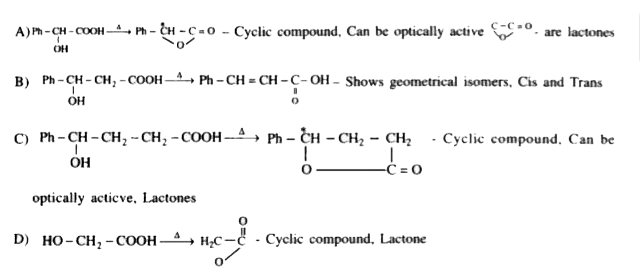
|
|
| 25. |
Matching Type questions |
| Answer» SOLUTION :A-r , B-q, C-p, D-s ,E-t | |
| 26. |
Matching the information given in the three columns of the following table. [Note: Atomic Number of Cr=24,V=23,Pt=78)] Correct combination for [PtCl_(2)(NH_(3))_(2)] is : |
| Answer» Answer :C | |
| 28. |
Matching Type Questions |
Answer» 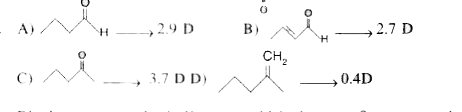 DIPOLE MOMENT order is Ketone `GT ` ALDEHYDE` gt ALPHA , beta` unsaturated , Aldehyde `gt ` Alkenes |
|
| 29. |
Matching the information given in the three columns of the following table. [Note: Atomic Number of Cr=24,V=23,Pt=78)] Correct combination for [VCl_(2)(NO_(2))_(2)(NH_(3))_(2)]^(-) |
|
Answer» <P>(II),(i),P |
|
| 30. |
Matching the information given in the three columns of the following table. [Note: Atomic Number of Cr=24,V=23,Pt=78)] About (CrCl_(3)(NH_(3))_(3)) which of following combination is correct ? |
| Answer» Answer :A | |
| 31. |
Matching the information given in the three columns of the following table . For the sheet silicate the only CORRECT combinatin is :- |
| Answer» Answer :A | |
| 32. |
Matching the information given in the three columns of the following table . For single chain silicate the only CORRECT combination is :- |
| Answer» Answer :A | |
| 33. |
Matching the information given in the three columns of the following table . For 3D silicate (silica) the only CORRECT combination is :- |
|
Answer» (II) ,(ii),(Q) |
|
| 34. |
Matching the imformation given in the three columns of the following table. {:("Column 1","Column 2","Column 3"),("(Reaction)","(Process)","Ores(Reactant)"),((I)PbS rarr PbO,(i) "Roasting","(P) Zinc blende (ZnS)"),((II)CaCO_(3) rarr CaO,(ii)"Calcination","(Q) Galna (PbS)"),((III) ZnS rarr Zn,(iii) "Carbon reduction","(R) Pyrit"),((IV) CuFeS_(2) rarr Ca,(iv) "Salt reduction",(S) "Limestone"):} Which of the following combination is correct option ? |
|
Answer» <P>(II) (ii) (S) |
|
| 35. |
Matching the imformation given in the three columns of the following table. {:("Column 1","Column 2","Column 3"),("(Reaction)","(Process)","Ores(Reactant)"),((I)PbS rarr PbO,(i) "Roasting","(P) Zinc blende (ZnS)"),((II)CaCO_(3) rarr CaO,(ii)"Calcination","(Q) Galna (PbS)"),((III) ZnS rarr Zn,(iii) "Carbon reduction","(R) Pyrit"),((IV) CuFeS_(2) rarr Ca,(iv) "Salt reduction",(S) "Limestone"):} Which of the following option is incorrect ? |
|
Answer» (III) (ii) (P) |
|
| 36. |
Matching the imformation given in the three columns of the following table. {:("Column 1","Column 2","Column 3"),("(Reaction)","(Process)","Ores(Reactant)"),((I)PbS rarr PbO,(i) "Roasting","(P) Zinc blende (ZnS)"),((II)CaCO_(3) rarr CaO,(ii)"Calcination","(Q) Galna (PbS)"),((III) ZnS rarr Zn,(iii) "Carbon reduction","(R) Pyrit"),((IV) CuFeS_(2) rarr Ca,(iv) "Salt reduction",(S) "Limestone"):} Which of the following option is correct ? |
| Answer» Answer :A | |
| 37. |
Matching the imformation given in the three columns of the following table. {:("Column 1"," ""Column 2","""Column 3"),("(Metals)","(Name of Ore)","Name of compositon of Ore"),("(I) Cu","(i) Glauberite","(P) Nitre"),("(II) K","(ii) Chlororgyrite","(Q) Glauber's salt"),("(III) Ag","(iii) Indian salt petre","(R) Fool's gold"),("(IV) Na","(iv) Chalcopyrite","(S) Horn silver"):} Which of the following combination is correct option ? |
| Answer» Answer :A | |
| 38. |
Matching list type: |
|
Answer» <P>`{:(P,Q,R,S),(3,4,1,2):}` |
|
| 39. |
Matching the imformation given in the three columns of the following table. {:("Column 1"," ""Column 2","""Column 3"),("(Metals)","(Name of Ore)","Name of compositon of Ore"),("(I) Cu","(i) Glauberite","(P) Nitre"),("(II) K","(ii) Chlororgyrite","(Q) Glauber's salt"),("(III) Ag","(iii) Indian salt petre","(R) Fool's gold"),("(IV) Na","(iv) Chalcopyrite","(S) Horn silver"):} Which of the following option is incorrect ? |
|
Answer» (II) (III) (P) |
|
| 40. |
Matching the imformation given in the three columns of the following table. {:("Column 1"," ""Column 2","""Column 3"),("(Metals)","(Name of Ore)","Name of compositon of Ore"),("(I) Cu","(i) Glauberite","(P) Nitre"),("(II) K","(ii) Chlororgyrite","(Q) Glauber's salt"),("(III) Ag","(iii) Indian salt petre","(R) Fool's gold"),("(IV) Na","(iv) Chalcopyrite","(S) Horn silver"):} Which of the following option is correct ? |
|
Answer» <P>(I) (i) (S) |
|
| 41. |
Matching {:("List - I","List - II"),("A) Adding excess KI to "AgNO_3(aq),"p) +ve mobile layer"),("B) Adding excess "AgNO_3 "to aq.KI ","q) -ve mobile layer"),("C) Adding excess NaCl to Gold Sol ","r) Flocculation"),("D) Removing excess electrolyte from a sol","s) Stabilisation of sol"):} |
|
Answer» Adding excess of `AgNO_3` to AQ KI -ve mobile layer Adding excess NaCl to Gold SOL - Flocculation Removing excess electrolyte from a sol - Stabilisation of sol |
|
| 42. |
Match type Questions |
Answer» 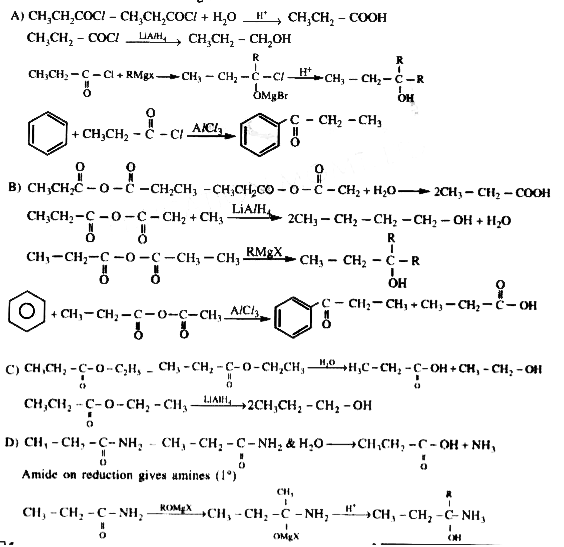
|
|
| 43. |
Match this list I with list II and then select the answer from the codes given below the lists- |
|
Answer» |
|
| 44. |
Match the values of ionization energy and electron gain enthalpy listed in column I with characteristic(s) of elements listed in column II. {:("Column-I","Column-II"),((A)"2372 5251 +48",(p)"Element which acts as a strong reducing agent"),((B)"4193051-48",(q)"Element which exists as a monoatomic molecule"),((C )"16813374-333",(r)"Least reactive non-metal"),((D)"10081846-295",(s)"Element which acts as a strong oxidising agent"),(,(t)"Element which oxides is a stronger basic in nature"):} |
|
Answer» (B)Alkali metal -`IE_1` is low because of bigger size of atom and `IE_2` is high due to noble gas configuration . As it has low `IE_1` it can lose one electron easily and THUS more electropositive .So it acts as strong reducing agents and their oxides are basic in nature.They have low negative value of `DeltaH_(eg)` because of large size. (C )`IE_1 and IE_2` both high and negative value of electron gain ENTHALPY is very high because of high nuclear charge and small size of atoms, so it has a greater tendency to accept an ADDITIONAL electron.So it (F) act as a strong oxidising agent. (D)As it has less negative value for `DeltaH_(eg)` than (C )thus it will be least reactive non-metal (I) |
|
| 45. |
Match the types of colloidal systems given in Column I with the name given in Column II. |
|
Answer» |
|
| 46. |
Match the transformation in Column I with appropriate options is Column II{:(,"Column I",,"Column II"),((A),CO_(2)(s)rarrCO_(2)(g),(p),"Phase transition"),((B),CaCO_(3)(s)rarrCaO(s)+CO_(2),(q),"Allotropic change"),((C),2H• rarrH_(2)(g),(r),DeltaH" is positive"),((D),P_(("white,solid"))rarrP_(("red,solid")),(s),DeltaS" is positive"),(,,(t),DeltaS " is negative"):} |
|
Answer» It is phase TRANSITION. The process is ENDOTHERMIC (sublimation). Gas is produced, so entropy increases. (B) On heating `CaCO_(3)` decomposes, So, process is endothermic. The entropy increases as gaseous product is FORMED. (C) `2H•rarrH_(2)(g)` Entropy decreases as number of gaseous particles decreases. (D) It is phase transition White and RED P are allotropes Red P is more stable than white ,brgt So `DeltaG` is -ve |
|
| 47. |
Match the transformation in column I with appropriate option in column II {:(,"Column I",,"Column II"),((A),CO_(2)(s) rarr CO_(2) (g),(p),"phase transition"),((B),CaCO_(3)(s) rarr CaO(s)+CO_(2)(g),(q),"allotropic change"),((C),2H^(*) rarr H_(2)(g),(r),DeltaH" is positive"),((D),P_("(white, solid)") rarr P_("(red, solid)"),(s),DeltaS" is positive"),(,,(t),DeltaS" is negative"):} |
|
Answer» |
|
| 48. |
Match the type of arrangment in column I with the characteristic feature mentioned in column II. |
|
Answer» |
|
| 49. |
Match the times of Column In and Column II. |
|
Answer» |
|