

Saved Bookmarks
This section includes 7 InterviewSolutions, each offering curated multiple-choice questions to sharpen your Current Affairs knowledge and support exam preparation. Choose a topic below to get started.
| 1. |
Match the following columns : |
Answer» 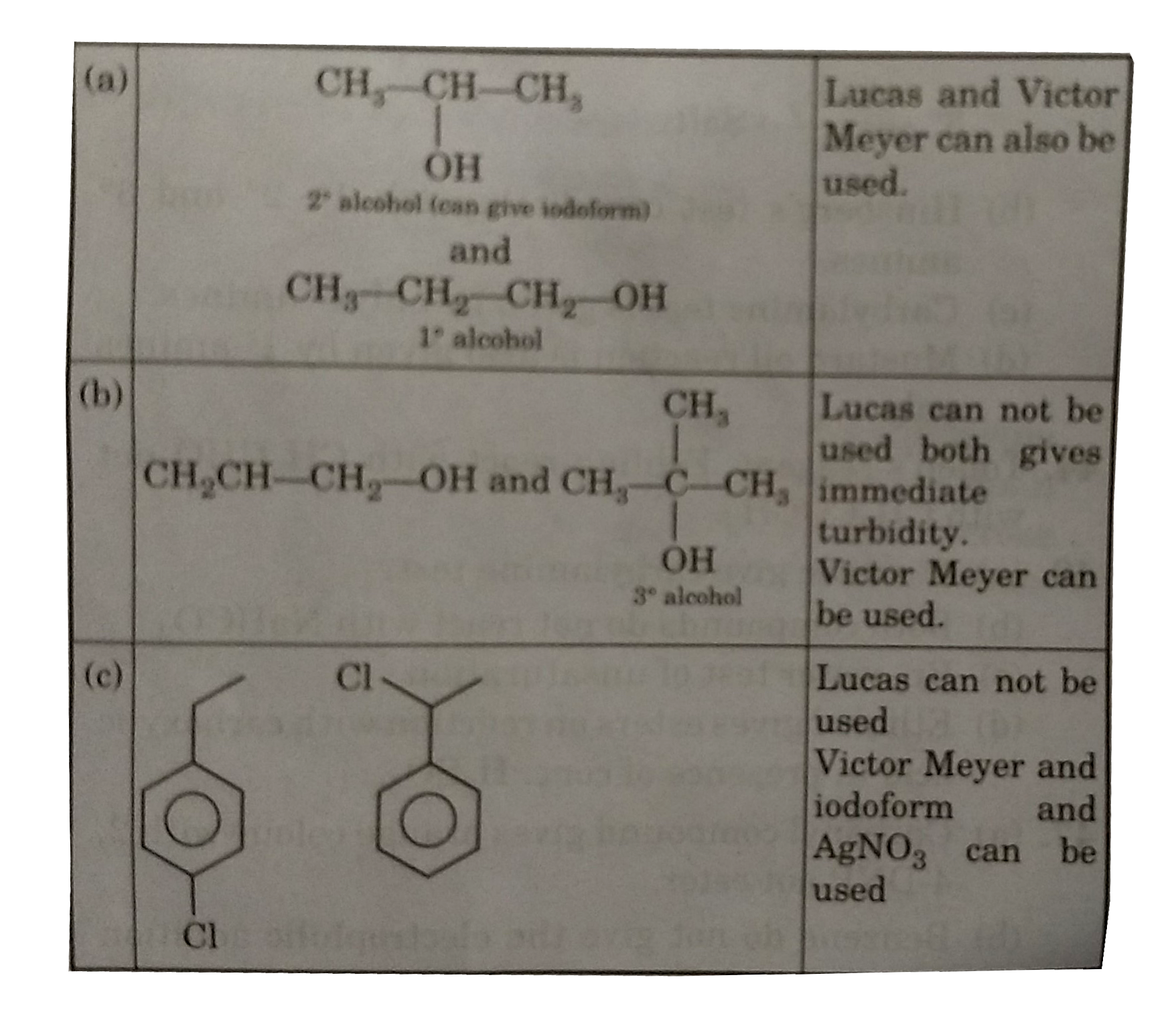
|
|
| 2. |
Match the following columns : |
|
Answer» |
|
| 3. |
Match the following columns : |
|
Answer» |
|
| 4. |
Match the following columns : |
|
Answer» |
|
| 5. |
Match the following columns : |
|
Answer» |
|
| 6. |
Match the following columns : |
Answer»  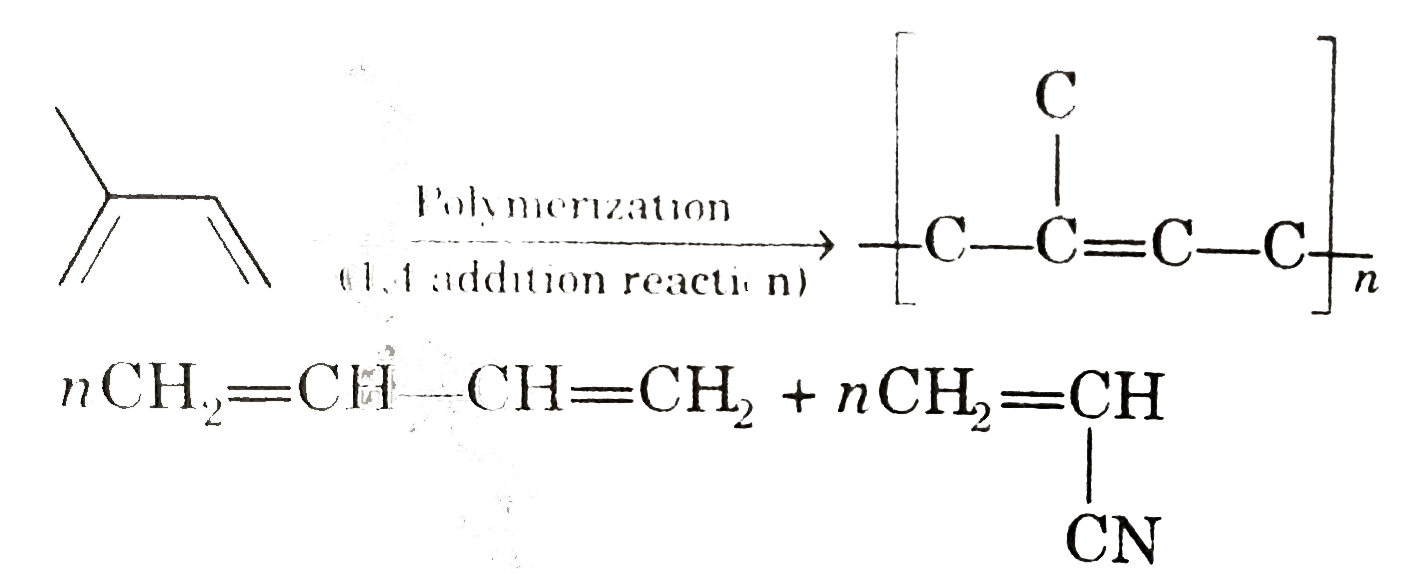
|
|
| 7. |
Match the following columns : |
|
Answer» |
|
| 8. |
Match the following columns : |
|
Answer» |
|
| 9. |
Match the following columns : |
|
Answer» |
|
| 10. |
Match the following columns : |
|
Answer» |
|
| 11. |
Match the following columns : |
|
Answer» |
|
| 12. |
Match the following columns : |
|
Answer» |
|
| 13. |
Match the following column of precipitate/mass listed in Column I with the reagent (s) listed in Column II: |
|
Answer» `Pb^(2+)+K_(2)CrO_(4)tounderset("Yellow")(PbCrO_(4))darr+2K^(+)` `AG^(+): 2Ag^(+)+2NaOHto underset("Brown")(Ag_(2)O)darr+H_(2)O+2Na^(+)` `2Ag^(+)+H_(2)Stounderset("Black")(Ag_(2)Odarr+2H^(+)` `Hg_(2)^(2+):H_(2)^(2+)+2NaOHtounderset("Black")(Hg_(2)O)+H_(2)O+2Na^(+)` `Hg_(2)^(2+)+H_(2)Sto underset("Black")ubrace(HG darr+HgSdarr)+2H^(+)` `Hg_(2)^(2+)+2Kl to Hg_(2)l_(2)+2K^(+)` `Hg_(2)l_(2)+2Kl to K_(2)[Hgl_(4)]+underset("Black")(Hg)darr` |
|
| 14. |
Match the following column with column |
| Answer» SOLUTION :1-c, 2-a, 3-b | |
| 15. |
Match the following: Column I(reaction) (a) H_(2)O_(2)+underset("2moles")(ClSO_(3)H) rarr (b)SO_(3)+HClrarr c) SO_(3)+HBr rarr (d) underset(("conc"))(H_(2)SO_(4))+underset"(2moles)"(PCl_(5))rarr Column II: P) Halogen is obtained q) sp^(3) hybridisation in any of the product molecules r) Marshalls acid s) Sulphuryl chloride t)Hydrogen halide is obtained as the product. |
|
Answer» |
|
| 16. |
Match the following : {:("Column-I","Column-II"),("Species","Characteristics of central atom"),((A)IBr_2^(-),(p)sp^3d^2",2 lone pairs"),((B)XeF_5^(-),(q)sp^3d",1 lone pair"),((C )ICl_4^(-),(r)sp^3d^3",1 lone pair "),((D )IF_6^(-),(s)sp^3d^3", 2 lone pair"),(,(t)sp^3d",3 lone pairs"):} |
|
Answer» |
|
| 17. |
Match the following: {:("Column-I","Column-II"),((P)" R.M.S",(1) (2)/(3)NKT),((Q)" PV",(2) KT ),((R)" Average K.E.",(3) sqrt((3PV)/(M))),((S)" Most probable speed" ,(4) sqrt((2RT)/(M))):} |
|
Answer» `{:("P","Q","R","S"),(1,2,4,3):}` `Pb(NO_(3))_(2) +2HCl rarr underset("(white PPT)")(PbCl_(2)darr) + 2HNO_(3)` (B) `Pb(NO_(3))_(2)+CuSO_(4) rarr underset("(white ppt)")(PbSO_(4)darr)+Cu(NO_(3))_(2)& SO_(4)^(2-)" is "sp^(3)` hybridised (C) Bottle (2) + Bottle (3) `2HCl +Na_(2)CO_(3) rarr 2NaCl +H_(2)O + underset("(colourless gass)")(CO_(2)(g))` (D) Bottle (2) + Bottle (4) `HCl +CuSO_(4) rarr` no reaction |
|
| 18. |
Match the following |{:("column I",,"column II"),(Cr_(2)O_(7)^(2+) +H^(+),,"(p)Aldehydes "),((B) SOCI_(2),,"(q) Alkene "),(( c) H_(2)SO_(4)Delta,,"(r ) Carboxylic acid "),((D) PCC ,,"(s ) Chloroalkene"):}| |
|
Answer» |
|
| 19. |
Matchthe following {:(,"Column I","Column II"),(,"(compound)","(monohalohenatedproduct)"),((A),"2-Methybutane ",(p)1),((b),"2-3- dimethylbutane ",(q)2),(( C), "2-Methypropane ",(r ) 3),((d),"Toluane ","(s)4"),(,,(t)"optically active product"):} |
|
Answer» |
|
| 20. |
Match the following : {:("Column I","Column II",),("C(Compounds)",("Reagents and reactions of response"),),((a) "Isopropl alcohol",(p) "Victor Meyer's reagent",),((b)"Ethyl alcohol",(q)"Ceric ammonium nitrate",),((c ) "Benzyl alcohol",(r ) "Haloform test",),((d) "tert-Butyl alcohol",(s) "Lucas reagent",):} |
|
Answer» |
|
| 21. |
Match the following {:("Column -I","Column-II"),((A)"Occlusion",(P )CaCI_(2)+H_(2)O),((B) "Sorption" ,(q)"Hydrated chabazite"+H_(2)O"vapour"),((C) "Persorption", (r) "Dil.KCI solution + Blood charcoal"),((E)"Absorption",(t)H_(2)"on palladium surface "):} |
|
Answer» A-t , B-r, C-q, D-s, E-p |
|
| 22. |
Match the following : {:("Column-I","Column-II"),((A)H_2(a=0.244 "litre"^(2)"atm mole"^(-2), b=0.02 "litre mole"^(-1)),(p)"Maximum boiling point"),((B)He(a=0.03412 "litre"^(2)"atm mole"^(-2), b=0.02370 "litre mole"^(-1)),(q)"Minimum boiling point"),((C )CO_2(a=3.592 "litre"^(2)"atm mole"^(-2), b=0.0426 "litre mole"^(-1)),(r)"Crictial temperature lt Boyle temp."),((D)H_2O(a=5.464 "litre"^(2)"atm mole"^(-2), b=0.03049 "litre mole"^(-1)),(s)"Minimum critical temperature"),(,(t)"Minimum Boyle temperature"):} |
|
Answer» `T_c=(8A)/(27Rb), "" T_b=a/(Rb)implies T_c lt T_b` |
|
| 23. |
Match the following: {:(,"Column I",,"Column II"),((a),CH_(6)H_(5)CHO,(p),"Haloform reaction"),((b),HCHO,(q),"Fehling's solution"),((c),CH_(3)CHO,(r),"Cannizzaro reaction"),((d),CH_(3)-CO-CH_(3),(s),"Knoevenagel reaction"):} |
|
Answer» |
|
| 24. |
Match the following : {:(,"Column I",,"Column II"),((a),C_(6)H_(5)-CHO,(p),"positive iodoform test"),((b),CH_(3)-CHO,(q),"reduces Fehling's solution"),((c),H-CH=O,(e),"positive Tollens' test"),((d), CH_(3)-overset(OH)overset(|)(CH)-overset(O)overset(||)C-CH_(3),(s),"Brady's reagent turns red"):} |
|
Answer» |
|
| 25. |
Match the following : {:("Column-I","Column-II"),((A)"4.5 m solution of"CaCO_3"density 1.45 gm/ml",(p)"Mole fraction of solute is 0.2"),((B)"3 M 100 ml" H_2SO_4 "mixed with 1 M 300 ml"H_2SO_4"solution",(q)"Mass of the solute is 360 gm"),(( C)"14.5 m solution of Ca",(r)"Molarity=4.5"),((D)"In 2 litre solution of 4 M NaOH, 40 gm NaOH is added",(s)"Molarity 1.5"),((E)"5m (molal)NaOH solution",(t)"16.66%(w/w) of NaOH solution"):} |
|
Answer» mass of solute =4.5x100=450 g mass of solution =1450 g. So, volume of solution =`1450/1.45=1000 ml` Hence MOLARITY=4.5 M (B)RESULTANT molarity =`(3xx100+1xx300)/400=3/2=1.5 M` ( C)MOLE fraction `=14.5/(14.5+55.5)=0.2` (D)moles of NAOH in 2 ltr =4x2=8 mole moles of NaOH added `=40/40=1` mole `:.` Molarity =`9/2=4.5` M mass of NaOH=9x40=360 g (E) % (w/w) NaOH `=(5xx40)/(5xx40+1000)xx100=16.66%` |
|
| 26. |
Match the following :{:(,"Column-I",,"Column-II"),((A),3d_(xy),(p),Psi=0[zx "plan"]),((B),2p_(y),(q),Psi=0[yz "plane"]),((C ) , 2s,(r ),Psi= "max"["yz plane"]),((D),2s,(s),Psi="max[zx plane]"),(,,(t),Psi"versus r graph has wo maximas"):} |
|
Answer» <P>A(Q,r), B(s,t), C(q,s) ,D(q,p) |
|
| 27. |
Match the following: {:("Column-I","Column-II"),((A)" Root mean square velocity",(p) sqrt((3P)/(d))),((B)" Average velocity",(q) sqrt((3RT)/(m))),((C)" Most probable velocity",(r) sqrt((8P)/(pid))),((D)" Velocity possessed by maximum fraction of molecules",(s) sqrt((2RT)/(m))):} |
| Answer» SOLUTION :`A RARR (p,q) B rarr (r ) C rarr (s) D rarr (s)` | |
| 28. |
Match the following . {:("Column I","Column II"),("A. Phenyl hydroxyl amine","1. "C_(6)H_(5)-N=O),("B. Azo benzene","2. "C_(6)H_(5)NH-NHC_(6)H_(5)),("C. Hydrazo benzene","3. "C_(6)H_(5)NHOH),("D. Nitroso benzene","4. "C_(6)H_(5)N=NC_(6)H_(5)):} |
|
Answer» `{:(A,B,C,D),(3,4,2,1):}` |
|
| 29. |
Match the following {:("COLUMN-I","COLUMN-II"),("A)" F_(2)O,"p)" SP^(2)-"Hybridisation"),("B)" ClO_(2),"q)" SP^(3)-"Hybridisation"),("C)"BrF_(3),"r)" SP^(3)d^(2)-"Hybridisation"),("D)"IF_(5),"s)" SP^(3)d-"Hybridisation"):} |
|
Answer» B) `ClO_(2)^(+)` Central atom is `e : Cl - 7th` group element , Cl - 7 valency electronsBut `Cl+` is 6 valency electron , So, `sp^(2)` hybridisation C) `BrF_(3)` Central atom is Br, 7 - valency electron 2 - lone pair, 3-bond pair, `sp^(3)d`- Hybridisation D) `IF_(5)` Central atom is I, 7 -valency electrons5- bond pairds , I-lone pair, `sp^(3)d^(2)` hybridisation |
|
| 30. |
Match the following {:("COLUMN-I","COLUMN-II"),("A) Euchlorine","p) Berthelot's salt"),("B)" KClO_(3),"q) Oxidiser"),("C) Anhydrone","r)" Cl_(2)O + Cl_(2)),("D) Desiccant","s)"mg(ClO_(4))_(2)):} |
|
Answer» B ) `KClO_(3)` is also called Berthelots salts C ) Anhydrone means without water COMPOUND is `Mg(ClO_(4))_(2)` D) Descicant is `Mg(ClO_(4))_(2)` |
|
| 31. |
Match the following : {:("Column I","Column II",),((a) "Denatured spirit contains",(p) CH_(3)OH,),((b)"Absolute alcohol contains",(q)C_(2)H_(5)OH,),((c ) "Rectified spirit contains",(r ) "Petrol",),((d) "Power alcohol contains",(s) 4.5% "water",):} |
|
Answer» |
|
| 32. |
Match the following {:("Column-I",,"Column II"),("(A) Cetyltrimethyl",,"p. Hormone"),(" ammonium chloride",,),("(B) Norepinephrine",,"q. Neutrotransmitter"),("(C) Acetyl choline",, "r. Germicide"),("(D) Adrenaline",,"s. Cationic detergent"):} |
|
Answer» |
|
| 33. |
Match the following : {:("Column I","Column II"),(1. "Reimer-Tiemann reaction",(A) "Phenyl benzoate"),(2."Kolbe's schmidt reaction",(B)"Phenol"),(3."Gattermann's reaction of phenol",(C ) "Isopropyl benzene"),(5. "Schotten-Baumann's reaction ",(D) o^(-) "and" p-"Hydroxy acetophenone"),("Fries rearrangement",(E ) C_(6)H_(5)OH+CHCl_(3)+NaOH underset(340K)overset(Delta)(rarr)),(6."Carbolic acid",(F) "2,4,6-Trinitrophenol"),(7."Aspirin",(G)C_(6)H_(5)OH+HCl+HCNoverset(AlCl_(3))(rarr)),(8."Picric acid",(H)"p-Hydroxy azonbenzene"),(9. "Cumene",(I)C_(6)H_(5)ONa+CO_(2)underset(6 atm)overset(413K)(rarr)),(10. "Orange-red dye",(J) "Acetyl salicylic acid"):} |
| Answer» | |
| 34. |
Matchthe following {:(,"Column I","Column II"), ((A),C_(8)H_(18)"(n-octane)",(p)"Require 25/2mole of "),(,,"oxygen for combustion "),(,,"of a mole"),((b),C_(8)H_(18)"(iso-octane)",(q)"Highest boilingpoint "),(( C), C_(8)H_(18)"(2,2,3,3-Tetra)",(r )"Lowestboilingpoint " ),((d),"Hexadecane (Cetane)",(s)"Grading thediesel oils "):} |
|
Answer» |
|
| 35. |
Match the following : {:("Column I(Assume only reactant were present initially)","Column II"),((A)"For the equilibrium" NH_4I(s)hArr NH_3(g)+HI(g)",""If pressure is increased at equilibrium",(p)"Forward shift"),((B)"For the equilibrium" N_2(g)+3H_2(g)hArr 2NH_3(g)"volume is increased at equilibrium",(q)"No shift in equilibrium"),((C )"For the equilibrium" H_2O(g)+CO(g)hArr H_2(g)+CO_2(g)"inert gas is added at constant pressure at equilibrium",(r)"Backward shift"),((D)"For the equilibrium" PCl_5hArr PCl_3+Cl_2Cl_2"is removed at equilibrium",(s)"Final pressure is more than initial pressure "):} |
|
Answer» (B)`Deltan_g` is -ve so as V is increased, backward shifting will take place. But `P_("final")ltP_("Initial")` ( C)No change but `P_("final")ltP_("Initial")` as volume has increased. (D)Forward shifting will take place and `P_("final")ltP_("Initial")` |
|
| 36. |
Match the following {:("Column I","Column II"),("(A)"FeSO_(4)overset(Delta)rarr,"(p)A gas which gives green colour with acidified "K_(2)Cr_(2)O_(7)),("(B)"NaNO_(2)overset(dil)rarrA"(gas)" overset(air)rarrB" (gas)","(q)A gas which form oleum with "H_(2)SO_(4)),("(C)"Na_(2)SO_(3)overset(dil(HCl))rarrP" (gas)","(r)A gas which is mixed anhydride of "HNO_(2) and NHO_(3)),("(D)"NaCl overset(conc. H_(2)SO_(4))rarrP" (gas)","(s)A gas which is also given by "AlCl_(3)" in moist air"),(,"(t)Green colour"):} |
|
Answer» |
|
| 37. |
Match the following :{:(,"Column - I (Crystal System)",,"Column - II"),((A),"Cubic",(p),"Number of space lattices are 2"),((B),"Orthorhombic",(q),"Number of space lattices are 3"),((C ),"Tetragonal",(r ),"Number of space lattices are 4"),((D),"Monoclinic",(s),"Possible lattice type can be body centred"),(,,(t),"Possible lattice type can be face centred"):} |
|
Answer» <P> SOLUTION :(A) `to` (q,s,t), (B) `to` (R,s,t), (C ) `to` (p,s), (D)`to` (p) |
|
| 38. |
Match the following {:(,"column I",, "column II"),((A) ,wedge_(c )"versus" sqrt(c )"(for KCI solution)", (p),"Positive slope"),((B) , E_(Cu^(2+)//Cu) "versus" log_(10)_(10)[Cu^(2+)](for Cu^(2+)+2e^(-)rarrCu),(q),"Negative intercept on y axis"),((C ), E_(cell) "versus temperature (in K) (temperature coefficent lt 0)",(r),"Positive intercept on y axis "),((D) , E_(Au//Au^(3+))"Versus" log_(10)[Au^(3+)] ("for" Au rarr Au^(3+)+3e^(-)),(s),"Negative slope"),(,,(t),"parameter on y axis varies with temperature"):} |
|
Answer» A(R,s,Q),B(q,r,p),C(s,t), D(p,r,s) |
|
| 39. |
Match the following {:(,"column I",,, "column II"),((A) ,Au|AuCI_(4)^(-)|Li^(+)|Li,, (p),"Spontaneous cell" ),((B) , Zn|Zn^(2+)||AI^(3+)|AI,,(q),Non spontaneous cell),((C ), Cu|Cu^(2+)||Cu^(2+)|CuC_(1)gtC_(2),,(r),E_(cell)^(@)lt0),((D) , Ni|Ni^(2+)||Cu^(2+)Cu,,(s),E_(cell)^(@)lt0):} |
|
Answer» <P>A(p,Q) ,B(q,r) ,C(s,p), D(q,r,s) |
|
| 40. |
Match the following : Column I (A) CH_(3)-CHBr-CD_(3) on treatment with alc. KOH gives CH_(2)=CH-CD_(3) as a major Product (B) Ph—CHBr—CH_(3) reacts faster than Ph-CHBr-CD_(3). Ph-CH_(2)-CH_(2) Br on treatment with C_(2)H_(5)OD//C_(2)H_(5)O- gives Ph-CD=CH_(2) as the product. (D) PhCH_(2)CH_(2)Br and PhCD_(2)CH_(2)Br react with same rate Column II (P) E1 reaction KOH gives CH_(2)=CH-CD_(3) as a major product (Q) E2 reaction (R) E1 cb reaction gives Ph-CD=CH_(2) as the product. (S) First order reaction |
| Answer» SOLUTION :`A to Q , B to Q , C to R ,S, D to R,S` | |
| 41. |
Match the following column-I and Column-II {:("Column-I","Column-II"),((A)" Density of a gas",(p)"directly proportional to pressure at constant T and V."),((B)"Kinetic energy of a gas",(q)" Inversely proportional to square root of molar mass of the gas"),((C)"Rate of diffusion of a gas",(r)"directly proportional to temperature (K) at constant pressure"),((D)"Most probable speed of a gas",(s)"directly proportional to square root of temperature"),("",(f)"Inveresly proportional to square root of density of gas at constant temperature and pressure"):} |
|
Answer» <P> SOLUTION :`(A rarrp), (Brarrp, r),(C rarr p, Q, s,t) (D rarr q,s,t)` |
|
| 42. |
Match the following column: {:("Column-I","Column-II"),((A)" Plot of log P vs log V at const T",(p)" Linear with ve slope"),((B)" Plot of log V vs log T at const P",(q)" Linear with negative slope"),((C)" Plot of V "prop"T at const T",(r)" Parabola"),((D)" Plot of volume vs pressure at const temp",(s)" Linear passing through origin"),("", (t)" Rectangular hyperbola") :} |
|
Answer» <P> Solution :`(A RARR Q), (B rarr p), (C rarr s), (D rarr t)` |
|
| 43. |
Match the following column : Codes : |
|
Answer» <P>`{:(P,Q,R,S),(2,2,1,1):}` |
|
| 44. |
Match the following: {:("Column-1", "Column-2"),((A) K_(P) gt Q_(P),(p)"Non-spontaneous"),((B) DeltaG^(@) lt Rtlog_(e)Q_(p),(q)"Equilibrium"),(( C)K_(p)=Q_(p),( r) "Spontaneous and endothermic"),( (D) T gt (DeltaH)/(DeltaS), (s) "Spontaneous"),(,(t)"Spontanous and exothermic"):} |
|
Answer» Solution :`A to s, B to p, C to q, D to q` (A) `K_(p) gt Q` the reaction will PROCEED in FORWARD direction SPONTANEOUSLY. (B) `DeltaG^(@) lt Rtlog_(E)Q` then `DeltaG=+ve` then NON spontaneous. ( C) `K_(P) =Q to` equilibrium ( D) `DeltaG = DeltaH - TDeltaS` |
|
| 45. |
Match the following : Codes : {:((a),q,r,p,s),((b),r,q,p,s),((c ),q,r,s,p),((d),r,q,s,p):} |
|
Answer» |
|
| 46. |
Match the following : Choose the correct answer : |
|
Answer» <P>`{:("(1) D,Q,U,W",,"(2) A,P,T,V,W",,),("(3)B,R,T,V,W",,"(4) C,S,T,V",,):}` |
|
| 47. |
Match the following : Codes : |
|
Answer» `{:(a,B,C,d),(3,2,1,4):}` |
|
| 48. |
Match the following : Choose the correct answer : |
|
Answer» |
|
| 49. |
Match the following {:((A),"vapour density ",(p),"unit cells"),((B),"1 mol ",(q),6.023xx 10^(23)"electrons"),((C),"12 g carbon",(r),6.023 xx 10^(23)"atoms"),((D),96500 C,(s),1/2 xx "Molecular mass "),(,,(t),22.4 " litre at STP"):} |
|
Answer» |
|
| 50. |
Match the following : Answer the following qeustions by appropriately matching the information given in the three columns of the following table. Columns, 1,2 and 3 containing starting materials, reaction conditions and type of reactions,respectively. The only correct combination in which the reaction proceeds through radical mechanism is : |
|
Answer» (I),(II),(R) |
|