Saved Bookmarks
This section includes 7 InterviewSolutions, each offering curated multiple-choice questions to sharpen your Current Affairs knowledge and support exam preparation. Choose a topic below to get started.
| 1. |
Limestone is present in the blast furnance production of iron in order to: (I) provide a source of CaO (II) remove some impurities (III) supply CO_(2) |
|
Answer» I, II, III |
|
| 2. |
Like O_(2), S_(2) vapours are.............due to the presence of two unpaired electrons in the ..................orbitals. |
| Answer» SOLUTION :PARAMAGNETIC, antibonding MOS | |
| 3. |
Like heterogeneous catalyst ........... can be recovered and recycled. |
| Answer» SOLUTION :NANO CATALYST | |
| 4. |
Like ammonia, amines combine with metal ions to form coordination compounds. Discuss. |
Answer» Solution :Like AMMONIA, AMINES combine with metal ions like `AG^(+)`and `Cu^(2+)` to form coordination compounds. It is due to the presence of a lone pair of electrons on the nitrogen atom of the amines which can form a coordinate BOND with the metal ion. For EXAMPLE,
|
|
| 7. |
Lightest transition element is : |
|
Answer» Fe |
|
| 8. |
Lightest construction metal in industry is |
|
Answer» Lithium |
|
| 9. |
Light with a wavelength 310 nm fell on strontium surface, the electrons were ejected. If maximum kinetic energy of an ejected electron is 1.5 eV. Then [Given : lambda_(e) = sqrt((150)/(DeltaV)) Å where Delta V= Voltage difference of battery] |
|
Answer» de-Broglie wavelength of electron is `10 Å` `(KE_("max"))_(e) = 1.5 eV = q Delta V` `Delta V = 1.5 V` (A) `lambda_(e) = sqrt((150)/(Delta V))Å = sqrt((150)/(1.5)) Å = 10 Å` (B) `Delta E = KE_(e) + w.f` `3 = 1.5 + w.f.` WF `= 2.5 eV` (C) `lambda = (1240)/(w.f.) nm = (1240)/(2.5) nm = 496 nm` |
|
| 10. |
Light of wavelength lamda shines on a metal surface with intensity x and the metal emits y electrons per second of average energy, z. What will happen to y and z if x is doubled ? |
|
Answer» y will be DOUBLED and Z will become half |
|
| 11. |
Light scattering method is used |
|
Answer» to find CONCENTRATION |
|
| 12. |
Lightof wavelenght lamda shines oinlametal surface with intensity x and the metal emits y electrons per second of average energy, z. What will happen to y and z if x is doubled? |
|
Answer» y will be DOUBLED and Z will BECOME half |
|
| 13. |
Light is an electromagnetic phenomenon. A beam of light consists of_______mutuall perpendicular oscillating fields |
|
Answer» three |
|
| 14. |
Light green (Compund A) overset(Delta)rarr White Reside (B) overset("High")underset("Temperature")rarrC+D+E i) D & E are two acidic gases ii) D is pased through HgCl_2 solution to give yellow ppt iii) E is passed through water first and then H_2S is passed, whith turbidity is obtained (iv) A is wter soluble and addition of HgCl_2 in it, white pp it obtained but white ppt does no turn into grey on addition of excess solution of A 'C' is soluble. In |
|
Answer» DIL HCl 
|
|
| 15. |
Light green solution of (A)does not give bluecoloured ppt . With K_(4)[Fe(CN)_(4)] but on adding a drop of HNO_(3) blue ppt .(B) appears .However (A) gives blue colour (C ) with K_(4)[Fe(CN)_(6)] Example the formation of (B) and (C ) identify (A) if (A) also gives while ppt , with AgNO_(3) solution |
|
Answer» Solution :(A) `FeCI_(2)` (B) `Kfe^(III)[Fe^(II)(CN)_(6)]` prassian blue (C ) `KFe^(II) [Fe^(II)(CN)_(6)]` Turnull's blue |
|
| 16. |
Liquid hydrocarbon can be converted to a mixture of gaseous hydrocarbon by |
|
Answer» Hydrolysis |
|
| 17. |
Light green (compound 'A')overset(Delta)(to)"white Residue(B)"overset("high")underset("Temp.")C+D+E (i)'D' and 'E' are two acidic gas. (ii) 'D' is passed through HgCl_(2) solution to give yellow ppt. (iii) 'E' is passed through water first and then H_(2)S is passed, white turbidity is obtained. (iv) A is water soluble and addition of HgCl_(2) in it, yellow ppt. is obtained but white ppt does not turn into grey on addition of excess solution of 'A' Q. The no. of water crystallisation in 'A' is : |
| Answer» Answer :C | |
| 18. |
Light green (Compund A) overset(Delta)rarr White Reside (B) overset("High")underset("Temperature")rarrC+D+E i) D & E are two acidic gases ii) D is pased through HgCl_2 solution to give yellow ppt iii) E is passed through water first and then H_2S is passed, whith turbidity is obtained (iv) A is wter soluble and addition of HgCl_2 in it, white pp it obtained but white ppt does no turn into grey on addition of excess solution of A Yellow ppt in the above observation is |
|
Answer» MERCURIC oxide 
|
|
| 19. |
Light green (compound 'A')overset(Delta)(to)"white Residue(B)"overset("high")underset("Temp.")C+D+E (i)'D' and 'E' are two acidic gas. (ii) 'D' is passed through HgCl_(2) solution to give yellow ppt. (iii) 'E' is passed through water first and then H_(2)S is passed, white turbidity is obtained. (iv) A is water soluble and addition of HgCl_(2) in it, yellow ppt. is obtained but white ppt does not turn into grey on addition of excess solution of 'A' Q. 'C' is soluble in : |
| Answer» Answer :D | |
| 20. |
Light green (Compund A) overset(Delta)rarr White Reside (B) overset("High")underset("Temperature")rarrC+D+E i) D & E are two acidic gases ii) D is pased through HgCl_2 solution to give yellow ppt iii) E is passed through water first and then H_2S is passed, whith turbidity is obtained (iv) A is wter soluble and addition of HgCl_2 in it, white pp it obtained but white ppt does no turn into grey on addition of excess solution of A 'D' & 'E' are |
|
Answer» `SO_2 & SO_3` 
|
|
| 21. |
Light green (compound 'A')overset(Delta)(to)"white Residue(B)"overset("high")underset("Temp.")C+D+E (i)'D' and 'E' are two acidic gas. (ii) 'D' is passed through HgCl_(2) solution to give yellow ppt. (iii) 'E' is passed through water first and then H_(2)S is passed, white turbidity is obtained. (iv) A is water soluble and addition of HgCl_(2) in it, yellow ppt. is obtained but white ppt does not turn into grey on addition of excess solution of 'A' Q.Yellow ppt in the above observation is : |
|
Answer» MERCURIC oxide |
|
| 22. |
Light green (compound 'A')overset(Delta)(to)"white Residue(B)"overset("high")underset("Temp.")C+D+E (i)'D' and 'E' are two acidic gas. (ii) 'D' is passed through HgCl_(2) solution to give yellow ppt. (iii) 'E' is passed through water first and then H_(2)S is passed, white turbidity is obtained. (iv) A is water soluble and addition of HgCl_(2) in it, yellow ppt. is obtained but white ppt does not turn into grey on addition of excess solution of 'A' Q.'D' and 'E' are respectively. |
|
Answer» `SO_(2) and SO_(3)` |
|
| 23. |
Light blue colour of nitrous acid is due to dissolved: |
|
Answer» `O_2` |
|
| 24. |
Ligands with which linkage isomerism is possible A) NO_(2) B) CN^(-) C) SCN^(-) |
| Answer» ANSWER :D | |
| 25. |
Ligands in a complex salt are : |
|
Answer» Anions linked by COORDINATE bonds to a CENTRAL METAL atom or ion |
|
| 26. |
Ligands for which Delta_(0) < P are known as weak field ligands and form high spin complexes. |
|
Answer» |
|
| 27. |
Ligands contains : |
|
Answer» Ione PAIR of electrons |
|
| 28. |
Ligands can be classified by various ways, based upon charges, denticity and interaction between ligand and central atom. Which of the following ligand is unsymmetrical bidentate ligand as well as having chiral centre which cannot be made symmetrical at all giving rotation around any single bond ? |
| Answer» ANSWER :A | |
| 29. |
Ligands can be classified by various ways, based upon charges, denticity and interaction between ligand and central atom. Which of the following ligand is of ambidentate type ? |
|
Answer» `NO_(3)^(-)` |
|
| 30. |
Ligands can be arranged in a series called ______ in order of increasing field strength. |
|
Answer» |
|
| 31. |
Ligands can be arranged in a series in order of increasing field strength. What is that series called ? |
| Answer» SOLUTION :SPECTROCHEMICAL | |
| 32. |
Ligands are electron pair donor groups. Ambidentate ligands are those ligands where two different atoms can donate electron pair. The complex where ambidentate ligands are present shows linkage isomerism. Total possible linkage isomers of K_(4)[Fe(CN)_(5)(NO_(2))] is : |
|
Answer» 12 `6xx2=12` |
|
| 33. |
Ligands are electron pair donor groups. Ambidentate ligands are those ligands where two different atoms can donate electron pair. The complex where ambidentate ligands are present shows linkage isomerism. The correct name of linkage isomer of [Co(NH_(3))_(5)(SCN)]SO_(4) |
|
Answer» Pentaamminethiocyanato-S-cobalt (III) sulphate |
|
| 34. |
Ligands are electron pair donor groups. Ambidentate ligands are those ligands where two different atoms can donate electron pair. The complex where ambidentate ligands are present shows linkage isomerism. Total number of linkage isomers that are present in Na_(4)[Fe(CN)_(5)NOS] is : |
|
Answer» 18 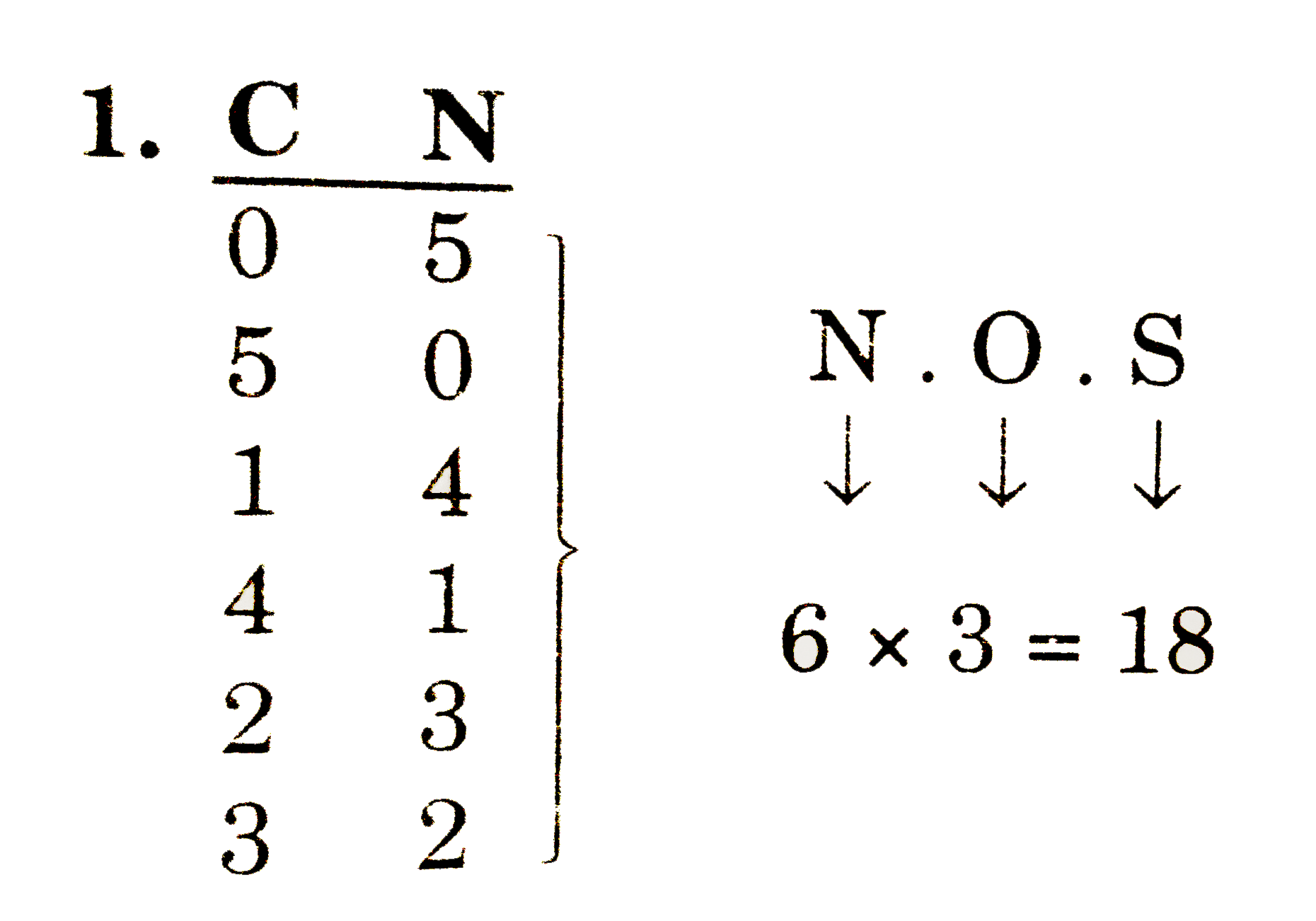
|
|
| 35. |
Ligands are broadly classified into two classes classical and non-classical ligands, depending on their donor annd acceptor ability. Classical ligands form classical complexes while non-classical ligands form non-classical complex. Bonding mechanism in non-classical is called synergic bonding. Q. In compound [M(CO)_(n)]^(x), the correct match for highest 'M-C' bond length for given M, n and z respectively: |
|
Answer» M-Cr, n-6, z-0 |
|
| 36. |
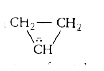
Ligands are broadly classified into two classes classical and non-classical ligands, depending on their donor annd acceptor ability. Classical ligands form classical complexes while non-classical ligands form non-classical complex. Bonding mechanism in non-classical is called synergic bonding. Q. Which is not pi-acceptor ligand? |
|
Answer»
|
|
| 37. |
Ligands are broadly classified into two classes classical and non-classical ligands, depending on their donor annd acceptor ability. Classical ligands form classical complexes while non-classical ligands form non-classical complex. Bonding mechanism in non-classical is called synergic bonding. Q. Synergic bonding is absent in: |
|
Answer» `[Mo(CO)_(6)]` |
|
| 39. |
Ligand to form a complex which is used to treat hard water |
|
Answer» `NH_(3)` |
|
| 40. |
Ligand NO is named as : |
|
Answer» Nitrosonium |
|
| 41. |
Ligand in the complex [FeCN)_6]^(3-) ion is: |
|
Answer» `CN^-` |
|
| 43. |
Life Saving drug(s) used in cancer therapy are- ( a )Cisplatin ,( b ) AZT , ( c ) Taxol |
|
Answer» ( a ) & ( C ) |
|
| 47. |
liebermann nitroso reaction is used for the detetion of _____amines. |
| Answer» SOLUTION :SECONDARY. | |
| 48. |
Liebermann's test is answered by |
|
Answer» Aniline |
|
| 49. |
Lichens do not like to grow in cities |
|
Answer» because of absence of the right type of algae and ftmgi |
|