Saved Bookmarks
This section includes 7 InterviewSolutions, each offering curated multiple-choice questions to sharpen your Current Affairs knowledge and support exam preparation. Choose a topic below to get started.
| 1. |
In the reaction 4A+2B+3CrarrA_(4)B_(2)C_(3). What will be the number of moles of product formed, starting from one of |
|
Answer» 0.25 1MOL 0.6mol 0.72 MOL |
|
| 2. |
In the reaction 4A + 2B + 3C to A_4B_2C_3, the number of moles of product formed will be if starting from 2 moles of A, 1.2 moles of B and 1.44 moles of C |
|
Answer» 0.48 |
|
| 3. |
In the reaction : ""_(4)^(9)Be+Xto""_(5)^(10)B+gamma X is: |
|
Answer» proton |
|
| 4. |
In the reaction : 3CuO+2NH_(3)toN_(2)+3H_(2)O+3Cuthe change of NH_(3) to N_(2) involve |
|
Answer» Loss of 6 ELECTRONS per mol of `N_(2)` 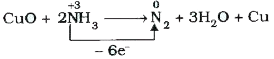
|
|
| 5. |
In the reaction : 3BrO^(-)toBrO_(3)^(-)+2Br^(-) (aqueous alkaline medium at 80^(@)C) the value of the rate constant in the rate law in terms of -(d)/(dt)[BrO^(-)] is 0.056 Lmol^(-)s^(-1). What will be the rate constant when the rate law is stated in terms of (d)/(dt)[BrO_(3)^(-)] ? |
|
Answer» `18.7xx10^(-3)Lmol^(-1)s^(-1)` |
|
| 6. |
In the reaction : 3Br_(2)+6CO_(3)^(2-)+3H_(2)Oto5Br^(-)+BrO_(3)^(-)+6HCO_(3)^(-) |
|
Answer» Bromine is oxidised and CARBONATE is reduced `Zn(s)+2H^(+)(aq)toZn^(2+)(aq)+H_(2)(g)` `E=E^(@)-(RT)/(nF)"in "([Zn^(2+)](pH))/([H^(+)]^(2))` On adding `H_(2)SO_(4)`, the `[H^(+)]`increases . This will increases the value of E and , therefore reaction PROCEEDS more to the right. |
|
| 7. |
In the reaction :3Br_(2)+6CO_(3)^(2-)+3H_(2)Oto5Br^(-)+BrO_(3)^(-)+6HCO_(3)^(-) |
|
Answer» `Br_(2)`is oxidised and carbonate is reduced.<BR>Bromine is reduced and water is oxidised. |
|
| 8. |
In the reaction , 3Br_2 +6CO_3^(2-) +3H_2O rarr5Br^(-)+BrO_3^(-)+6HCO_3^- which statement is correct ? |
|
Answer» `Br_2`is oxidised |
|
| 9. |
In the reaction, 3A rarr 2B rate of reaction, +(d[B])/(dt) is equal to |
|
Answer» `-1/3(d[A])/(dt)` `3Ararr2B` RATE of reaction =`-1/3(d[A])/(dt)=+1/2(d[B])/(dt)` `therefore (d[B])/(dt)=-2/3(d[A])/(dt)` |
|
| 10. |
In the reaction |
|
Answer» `H_(3)PO_(2)` and `H_(2)O` |
|
| 11. |
In the reaction 3 Mg+N_(2) rarr Mg_(3)N_(2) |
|
Answer» Magnesium is reduced |
|
| 12. |
In the reaction 2X+B_(2)H_(6)to[BH_(2)(x)_(2)]^(4)][BH_(4)]^(-) the amine(s) X are ) |
|
Answer» `NH_(3)` |
|
| 13. |
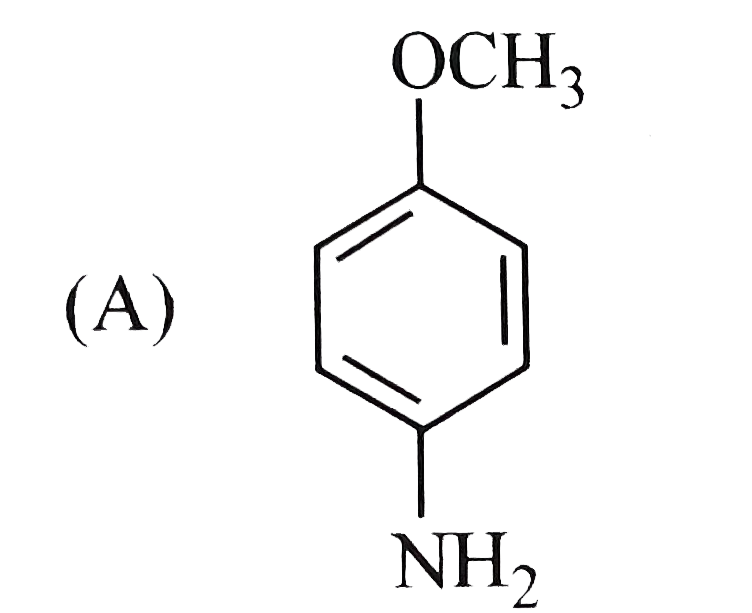
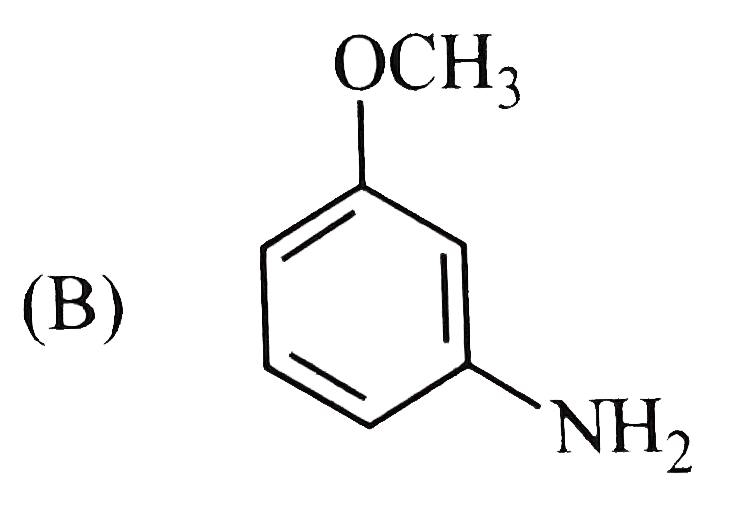
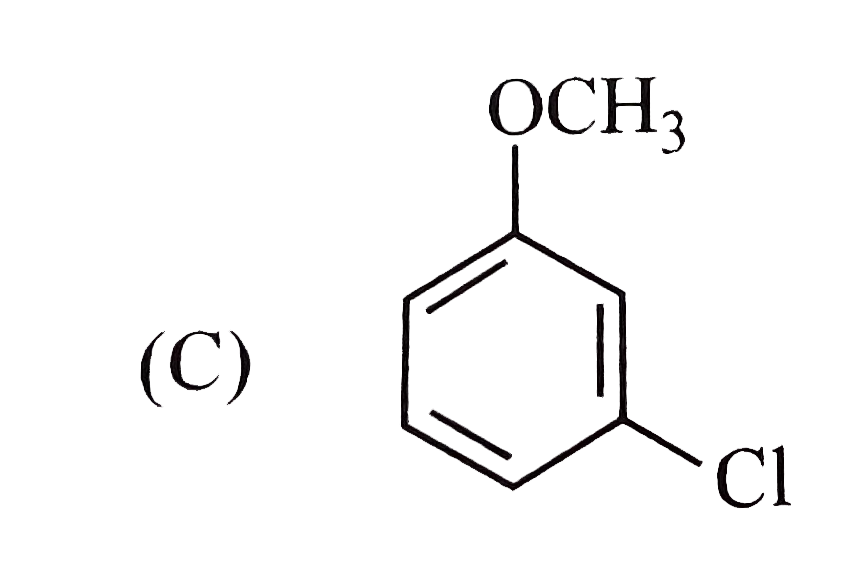
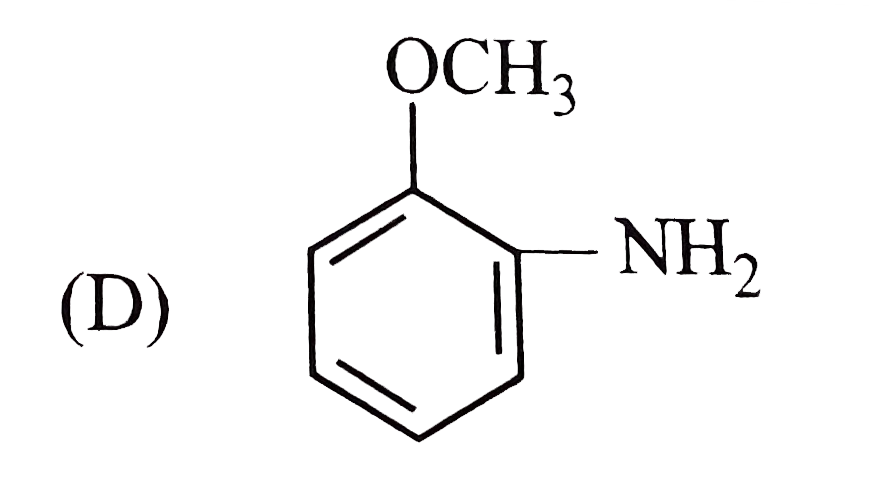
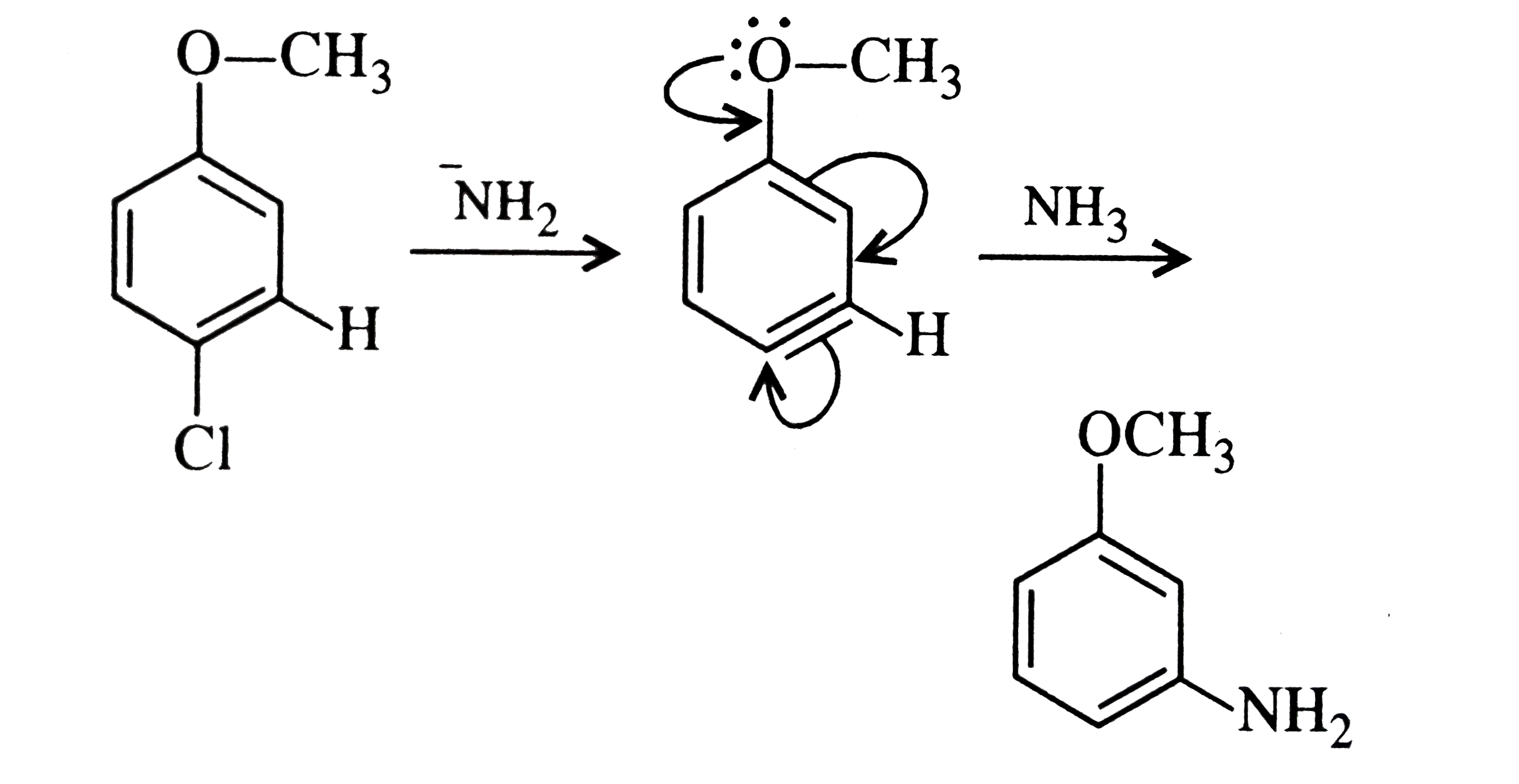
In the reaction |
|
Answer»
|
|
| 14. |
In the reaction 2S_(2)O_(3)^(2-)+I_(2)to S_(4)O_(6)^(2-)+2I^(-) the eq. wt of Na_(2)S_(2)O_(3) is equal to its |
|
Answer» MOL .WT |
|
| 15. |
In the reaction 2NO_((g))+O_(2(g))rarr2NO_(2(g)) , the order of the reaction with respect to O_2is .......... |
|
Answer» ZERO order |
|
| 16. |
In the reaction 2NO_((g))+O_(2(g))rarr2NO_(2(g)) , the order of the reaction with respect to NO is .......... |
| Answer» Answer :B | |
| 17. |
In the reaction 2NO_((g))+O_(2(g))rarr 2NO_(2(g)), the order of the reaction with respect to NO is ……………. |
| Answer» Solution :second order | |
| 18. |
In the reaction 2NO+O_(2)to2NO_(2), if the rate of disappearance of O_(2) is 16 "gm min"^(-1), then the rate of appearance of NO_(2) is |
|
Answer» `"90 gm. MIN"^(-1)` |
|
| 19. |
In the reaction 2NO+Cl_2 to 2NOCl, it has been found that doubling the concentration of both the reactants increases the rate by a factor of eight but doubling the chlorine concentration alone only doubles the rate. Which of the following statements is incorrect? |
|
Answer» The reaction is first ORDER in ` Cl_2` (ii) `8 r_(2) = k [ 2NO]^(x) [2Cl _(2)]^(y)` (III) `2r_(3)= k [NO]^(x) [2Cl_(2) ]^(y)` Dividing (ii) by (iii) , `4 = 2^(x)` or x = 2 Dividing (iii) by (i) , 2 = `2^(y)` or y = 1 . Overall order x+ y = 2 + 1= 3. |
|
| 20. |
IN the reaction,2NO + CI_(2) to2NOCI it has been found that doubling the concentration of both the reactants increases the rate by a factor of eight butdoubling the chlorine concentration alone only doubles the rate. Which of the following statements is incorrect ? |
|
Answer» The reaction is FIRST order in ` CI_(2)` |
|
| 21. |
In the reaction 2N_(2)O_(5) to 4 NO_(2) + O_(2) , initial pressure is 500 atm and rate constant K is 3.38 xx 10^(-5) "sec"^(-1) . After 10 minutes the final pressure of N_(2)O_(5) is |
|
Answer» 490 atm `3.38 xx 10^(-5) = (2.303)/(10 xx 60) "log" (500)/(p_(t))` or `0.00880 `= log `(500)/(p_(t)) implies (500)/(1.02) = 490` atm . |
|
| 22. |
In the reaction :2Na_2S_2O_3 + I_2 rarr Na_2S_4O_6 +2NaIthe equivalent weight of Na_2S_2O_3 is equal to : |
|
Answer» M |
|
| 23. |
In the reaction 2NaOH+H_3PO_4 to Na_2HPO_4 + 2H_2O, the Equivalent weight of the acid is |
|
Answer» 49 |
|
| 24. |
In thereaction 2KMnO_4 +16 HCIto 5CI_2+2MnCI_2 +2KCI+8H_2 O thereducedproductis |
|
Answer» `CI_2` thusdecreases ) HENCETHE reducedto`MnCI_2`( becauseO.Nof Mndecreases)hencethe reducesproductis `MnCI_2 ` |
|
| 25. |
In the reaction, 2H_(2)S+SO_(2) to 3S+2H_(2)O, H_(2)S is |
| Answer» Answer :A | |
| 26. |
In the reaction, 2KMnO_4 + 16 HCI rarr 2KCI +2MnCI_2 + 8H_2O + 5CI_2,the reduction product is : |
|
Answer» `CI_2` |
|
| 27. |
In the reaction, 2KI + H_2O + O_3 rarr 2KOH + O_2 + A |
|
Answer» `KIO_3` |
|
| 28. |
In the reaction 2H_(2)O hArr H_(3)O^(+) + OH^(-), water is |
|
Answer» A weak base |
|
| 29. |
In the reaction2H_2 + O_2 to 2H_2O acts as a catalytic poison for Pt catalyst . |
| Answer» SOLUTION :Co | |
| 30. |
In the reaction, 2FeSO_(4)+H_(2)SO_(4)+H_(2)O_(2)toFe_(2)(SO_(4))_(3)+2H_(2)O. The oxidizing agent is : |
|
Answer» `FeSO_(4)` |
|
| 31. |
In the reaction 2FeCI_3+H_2S to2FECI_2 +2HCI +S |
|
Answer» ` FeCl_3` acts as an OXIDISING agent here`FeCI_3`actsas anoxidating AGENTAND OXIDISES`H_2S `toS . |
|
| 32. |
In the reaction: 2CuCl_2 + 2H_2O + SO_2 to A + H_2SO_4 + 2HCl, A is: |
| Answer» ANSWER :A | |
| 33. |
In the reaction 2Ca_(3)[PO_(4)]_(2)+6SiO_(2) overset(Delta)to6CaSiO_(3) +P_(4)O_(10) |
|
Answer» <P>a weaker acid anhydride replaces a stronger one |
|
| 34. |
In the reaction 2CuCl_2 + 2H_2O + SO_2 rarr A + H_2SO_4 + 2HCl, A is |
|
Answer» `CuCl_2` |
|
| 35. |
In the reaction 2(CH_3)_2CO overset(OH^(-))to X underset((ii) H_3O^(+))overset((i)I_2NaOH)to Y, the product Y is : |
|
Answer» `CH_3CH = CHCOOH` |
|
| 36. |
In the reaction 2Br^(-) + X_2 toBr_2 + 2X^(-) ,X_2 is |
|
Answer» `Cl_(2)`<BR>`Br_(2)` |
|
| 37. |
In the reaction, 2Al_(s) + 6hCl_(aq) to 2Al_(aq)^(3+) + 6Cl_(aq)^(-) + 3H_(2)(g) |
|
Answer» 11.2 L `H_(2)(g)` at STP is produced for every mole `HCl_(aq)` consumed At STP, 6 moles of HCl produce 3 moles of `H_(2) = 3 xx 22.4 L` of `H_(2)` Against at STP, 2 moles of Al produce 3 moles of `H_(2) = 3 xx 22.4` L of `H_(2)` `THEREFORE 1` mole of Al produce `=(3 xx 22.4)/2 = 33.6` L of `H_(2)` at STP. |
|
| 38. |
In the reaction : 2Al(s) + 6HCl(aq) rarr 2 Al^(3+)(aq) + 6 Cl^(-)(aq) + 3H_(2)(g) |
|
Answer» <P> Solution :`2Al(s) + 6HCL(AQ) rarr 2Al^(3+)(aq) + 6Cl^(-)(aq) + 3H_(2)(G) ``:' 6 "mol es of HCl produce = 3 mol es of" H_(2) = 3 xx 22.4 L of H_(2) at S.T.P.` `:'1 mol es of HCl p r o d u c e = 3 xx 22.4/6 Lof H_(2)at S.T.P. = 11.2 Lof H_(2) at S.T.P.` |
|
| 39. |
In the reaction : 2Al (s) + 6HCl(aq) to 2Al^(3+) (aq) + 6Cl^(-) (aq) + 3H_2O(g) |
|
Answer» 33.6L `H_2`(G) is produced regardless of temperature and PRESSURE for every mole Al that reacts. |
|
| 40. |
In the reaction, 2Ag + H_2SO_4 rarr Ag_2SO_4 + 2H_2O + SO_2, H_2SO_4 is: |
|
Answer» REDUCING agent |
|
| 41. |
In the reaction: 2Ag+2H_2SO_4 rarrAg_2SO_4 +2H_2O +SO_2,H_2SO_4 acts : |
|
Answer» OXIDISING agent |
|
| 42. |
In the following reaction, H_2 SO_4 acts as 2 Ag + H_2 SO_5 rarr Ag_2 SO_4 + 2 H_2 O + SO_2. |
|
Answer» REDUCING AGENT |
|
| 43. |
In the reaction 2A+Bto2C+D, 5 mol/lt of A are allowed to react with 2 mol/lt of B. After 5 seconds the concentration of A was found to be 4 molar. What is the rate of reaction in tems of A? |
|
Answer» `0.1 M"SEC"^(-1)` `(5-2x)(3-x)2XX,x=1//2,r_(A)=(5-4)/5=1/5=0.2` M/sec `, r=1/2xx(-d[A])/(DT)=0.2/2=0.1` M/sec |
|
| 44. |
In the reaction, 2A+Bto2C+D, the rate of disappearance of 'A' is 2.6xx10^(-2)"M-S"^(-1). Then the rate of disappearance of B and the rate of appearance of C and D are respectively |
|
Answer» `5.2xx10^(-2),5.2xx10^(-2),2.6xx10^(-2)` |
|
| 45. |
In the reaction 2A + B to Products, the order w.r.t. A is found to be one and w.r.t. B equal to 2. Concentration of A is doubled and that of B is halved, the rate of reaction will be |
|
Answer» DOUBLED `R_(2) = k [2A] [ (1)/(2) B]^(2) "" … (ii)` `therefore (R_(2))/(R_(1)) = (k[2A] [(1)/(2) B]^(2))/(k [A] [B]^(2))= 2 XX (1)/(4) = (1)/(2)` `therefore R_(2) = (1)/(2) R_(1)` |
|
| 46. |
In thereaction2A +Btoproducts theorderw.r.tA isfoundto beoneandw.r.tB equalto2 .ConcentrationofAisdoubledand thatof Bishalved, therateof reactionwillbe |
|
Answer» double |
|
| 47. |
In thereaction2A+ B toA_(2)Bthe rateofconsumptionof reactant A is |
|
Answer» HALFOF theconsumptionrateof B |
|
| 48. |
In the reaction 2A+Bto Products the order w.r.t A is found toi be 1 and w.r.tequal to 2. Concentration of A is doubled and that of B is halved, the rate of reaction will be |
|
Answer» Doubled |
|
| 49. |
In the reaction 2A + B to A_2B, if the concentration of A is doubled and of B is halved, then the rate of the reaction will: |
|
Answer» Increase by four times |
|
| 50. |
In the reaction 2 S_(2) O_(3)^(2-) + I_(2) toS_(4) O_(6)^(2-) + 2I^(-) . The eq. wt. of Na_2 S_(2) O_(3) is equal to its |
| Answer» Answer :D | |