

Saved Bookmarks
This section includes 7 InterviewSolutions, each offering curated multiple-choice questions to sharpen your Current Affairs knowledge and support exam preparation. Choose a topic below to get started.
| 1. |
In presence of which compound, benzene reacts with I_(2) to give iodo benzene ? |
|
Answer» `HNO_(3)` |
|
| 2. |
In presence of sodium ethoxide two molecules of ethyl acetate interact to from acetoacetic ester. This process is known as : |
|
Answer» ALDOL CONDENSATION |
|
| 3. |
In presence of NaOH, phenol react with CHCl_(3) to form o-hydroxy benzaldehyde.This reaction is called |
|
Answer» Riemer-Tiemann reaction |
|
| 4. |
In presence of moisture, SO_2 can: |
|
Answer» LOSE electron |
|
| 5. |
In presence of light & heat toluene chlorinated & react with aqueous NaOH give |
|
Answer» o-CRESOL 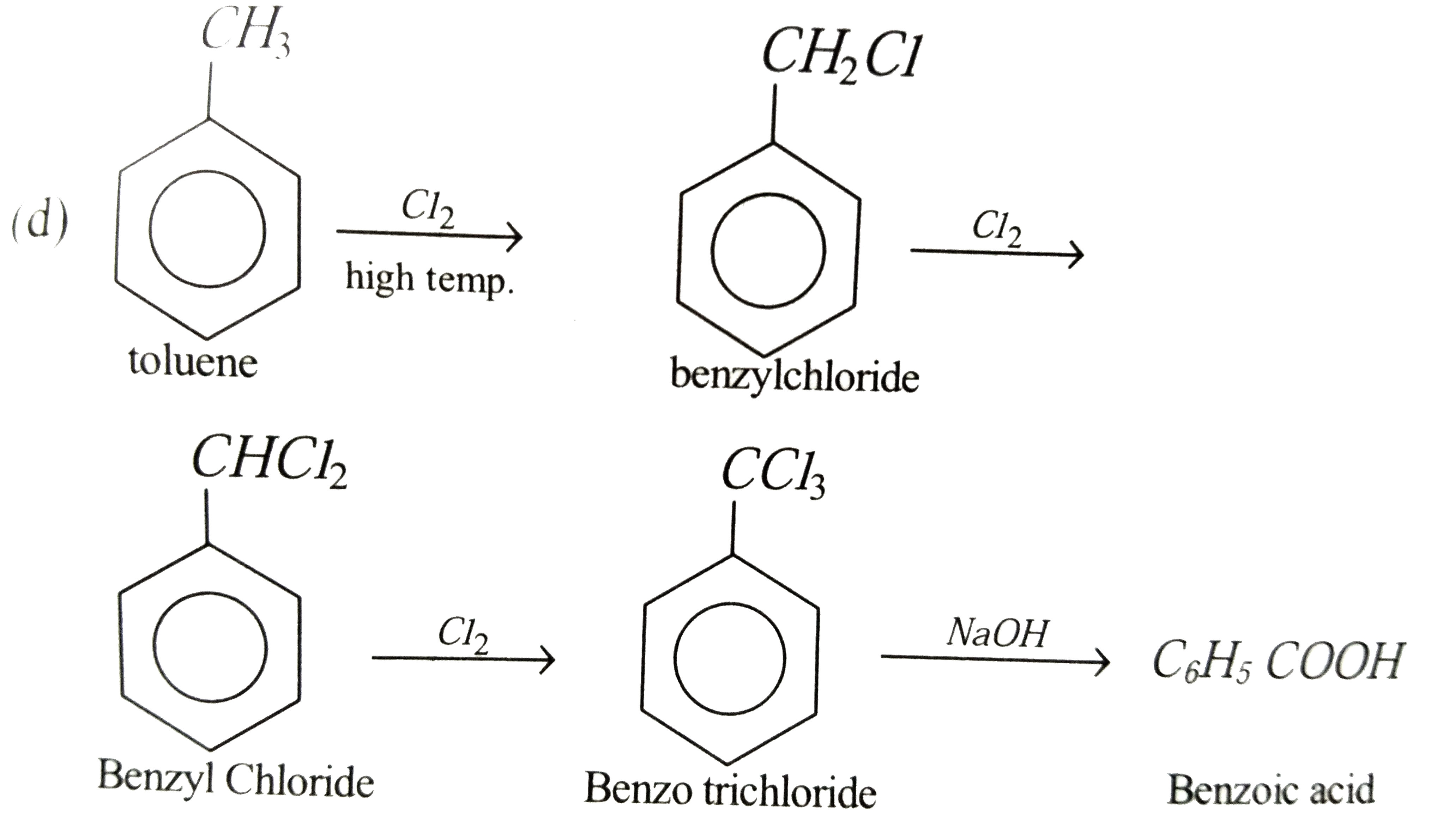
|
|
| 6. |
In presenceof moisture, SO_(2) can |
|
Answer» LOSE ELECTRONS |
|
| 7. |
In presence of ligands |
|
Answer» The FIVE d-orbitals of metal atomorion have same energy |
|
| 8. |
In presence of HCl ,sucrose gets hydrolysed into glucose and fructose . The concentration of sucrose was found to reduce form 0.4 M to 0.2 M in 1 hour and 0.1 M in 2 hours . The order of the reaction is |
|
Answer» Zero |
|
| 9. |
In presence of Lewis acid, which Xenon compound is an excellent fluorinating agent ? |
|
Answer» `XeOF_(2)` |
|
| 10. |
In presence of HCl, sucrose gets hydrolysed into glucose and fructose. The concentration of sucrose was found to reduce from 0.4 M to 0.2 M in 1 hour and to 0.1 M in total of 2 hours. The order of the reaction is : |
|
Answer» zero |
|
| 11. |
In presence of HCl, H_2S results the precipitatiion of Group-2 elements but not Group -4 elements during qualitative analysis. If is due to |
|
Answer» LOWER concentration of `H^(+)` |
|
| 12. |
in presence of external magnetic field, f subshell is |
|
Answer» 5 FOLD degenerate |
|
| 13. |
In presence of excess water, hydrolysis of methyl acetate in basic or alkaline medium, is second order reaction. Explain. |
| Answer» Solution : In alkaline MEDIUM , both the reactions, i.e., methyl acetate and alkaliare present in more or less similar concentration. During the reaction, the concentrations of both change appreciably, IMPLYING that bothreactants affect the reaction- rate. It is observed that the reaction- rate is DIRECTLY proportional to the the first power of concentration of both reactants. THUS, the overall order of the reaction is TWO. | |
| 14. |
In presence of dry HCl gas, CH_3CHO condenses with C_2H_5OH to give: |
|
Answer» Aldol |
|
| 15. |
In presence of Ba(OH)_(2), two molecules of acetone condense together to form_______ |
| Answer» SOLUTION :DIACETONE ALCOHOL. | |
| 16. |
In presence of air , fermentation of ethyl alcohol by azotobactor bacteria forms |
| Answer» Solution :`C_(2)H_(5)OH underset("Acetobacteracetii")overset("air")to CH_(3)COOH` | |
| 17. |
In presence of concentrated alkalie (OH^(-)), trimethyl acetaldehyde undergoes the |
|
Answer» ALDOL condensation |
|
| 18. |
In presence of acidic medium, KMnO_(4) converts H_(2)S into …. |
|
Answer» MN only |
|
| 19. |
In presence of air, fermentation of ethyl alcohol by azotobactorbacteria forms: |
| Answer» Answer :D | |
| 20. |
In Preparation of sulphuric acid from sulphur dioxide in lead chamber process. What substance is used as a catalyst? |
|
Answer» Manganese DIOXIDE The different steps are (i) `2H_(2)O + NO to HNO_(3) + 3H^(+)` (ii) `S + O_(2) to SO_(2)` (iii) `2HNO_(3)+ 2SO_(2) to H_(2)O + NO + NO_(2) + 2SO_(3)` (IV) `SO_(3) + H_(2)O to H_(2)SO_(4)` Net reaction: `2SO_(2)+ 2H_(2)O + O_(2) overset(NO) to 2H_(2)SO_(4)` |
|
| 21. |
In presence of acid, hydrolysis of methyl cyanide gives |
|
Answer» Acetic ACID |
|
| 22. |
In preparationof sulphuricacid from sulphurdioxidein leadchamber process. What substance is usedas a catalyst? |
|
Answer» Manganese dioxide `2SO_(2) + UNDERSET("from AIR")(O_(2)) + 2H_(2)O + underset("Catalyst")([NO] rarr 2H_(2)SO_(4) + underset("Catalyst")([NO])` |
|
| 23. |
In preparation of CHCl_(3) from ethanol and bleaching powder, the latter provides : |
| Answer» Answer :3 | |
| 24. |
In practice, detergent is more used than soap because... |
|
Answer» detergent is easily available. |
|
| 25. |
In poly nuclear metal carbonyls, the hybridisation of 'C' in terminal carbonyl is 'sp' where as that in bridged carbonyl is 'sp'^(2) II) In all mono nuclear metal carbonyl, the carbonyls are non bridged III) Fe(CO)_(5) is diamagnetic and Fe' is dsp^(3) hybridised IV) Metal carbonyls are more stable due to more nucleophilic nature of carbon monoxide The correct statements are |
|
Answer» I, II, III  .C. atoms in bridging CO molecules have `3sigmma` bonds each `(sp^(2))`. The terminal CO molecules have C atoms with `2sigma` bonds each (sp) synergic effect in METAL CARBONYLS is responsible for their stability. |
|
| 26. |
In plot of mass of the gas adsorbed per gram of the adsorbent versus temperature at constant pressure is called ……….. |
| Answer» SOLUTION :ADSORPTION ISOBAR | |
| 27. |
In PO_(4)^(3-) the formal charge on the each oxygen atom and the P-O bond order respectively are |
|
Answer» `-0.75, 0.6` total no. of valence electrons in FREE atom - total no.of non - BONDING ELECTONS `-1/2` total no of bonding electrons Formal charge on oxygen `=6-[6+1/2xx2]=-1` There are total 3 oxygen atom, therefore charge=-3 Formal charge on each O-atom `=("total charge")/("number of atoms")=(-3)/4=-0.75` and P-O bond order `=("total no. of bonds")/("total no of resonating structures")=5/4=1.25` |
|
| 28. |
In planar square closepacking, eachsphereissurrounded by ______. |
|
Answer» SIX triangularholes |
|
| 29. |
In plant glycolipids sugar is |
|
Answer» glucose |
|
| 30. |
In place of tetrachlorethene in dry-cleaning we use |
|
Answer» Sodium lauryl SULPHATE |
|
| 31. |
In physulphurous acid oxidation state of sulphur is |
|
Answer» only +2 |
|
| 32. |
In physisorption the adsorbate is held to the adsorbent by weak_______ forces. |
| Answer» SOLUTION :VAN DER Waal.s | |
| 33. |
In physisorption, adsorbent doesnot show specificity for any particular gas because |
|
Answer» INVOLVED van der Waals' force are universal |
|
| 34. |
In physisorption, adsorbent does not show specificity for any particular gas because……….. |
|
Answer» INVOLVED van der WAALS FORCES are universal |
|
| 35. |
In physisorption adsorbent does not show specificity for any particular gas because …….. |
|
Answer» involved van DER Waals' forces are UNIVERSAL |
|
| 36. |
In physisorption, adsorbent does not show specificity for any particular gas because |
|
Answer» INVOLVED VAN der Waals' FORCES are universal |
|
| 37. |
In physical adsorption ........... exist between adsorbent and adsorbate |
| Answer» Solution :VAN DER Waals forces of ATTRACTION | |
| 39. |
In physical adsorption |
|
Answer» the extent of adsorption increases with INCREASE in surface area. |
|
| 40. |
In photography, undecomposed AgBr forms a soluble complex called............ |
|
Answer» |
|
| 41. |
In photography silver bromide dissolves in hypo to give |
|
Answer» `Na_2[AG(S_2O_3)_2]` |
|
| 42. |
In photography, hypo is used in the reduction of |
|
Answer» AG from AGBR |
|
| 43. |
In phosphorus acid, the number of OH group present is/are …………….. |
| Answer» Answer :B | |
| 44. |
In phenol, the hybrid state of C and O are respectively …… |
|
Answer» `SP^(3), sp^(2)` |
|
| 45. |
In phenols |
|
Answer» The ortho , meta and PARA positionall are activated 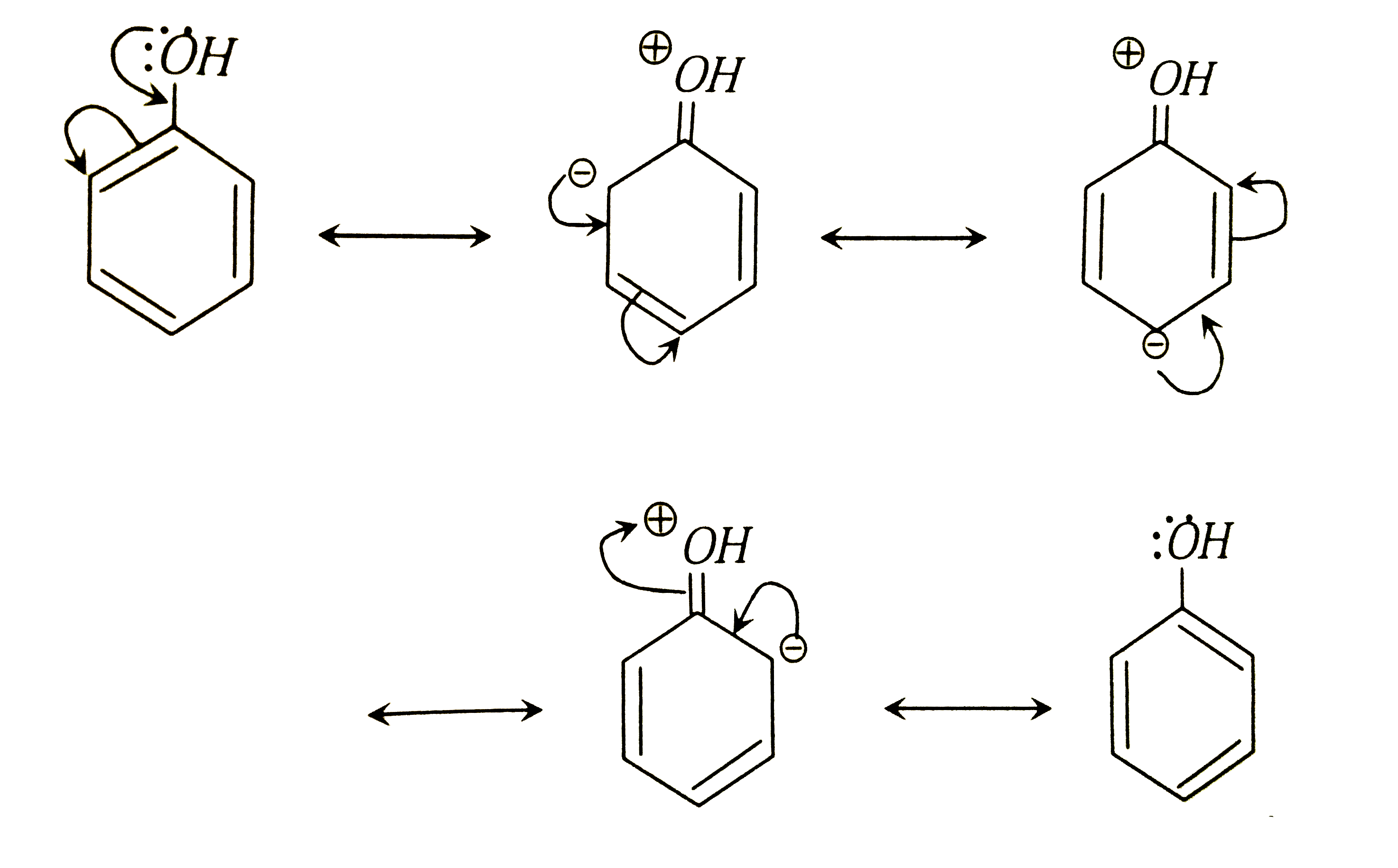 Hence,when electrons are pushed inside the benzene ring, all the positions in the benzene ring are activated. Also ortho and para positions are most activated Hence choices (a) and (C) are CORRECT while (b) and (d) are incorrect. |
|
| 46. |
In phenol carbon atom attached to -OH undergoes…………………… |
|
Answer» `SP^(3)` HYBRIDISATION |
|
| 47. |
In phenol carbal atom attached to -OH group undergoes : |
|
Answer» `sp^(3)` hybridisation |
|
| 48. |
In petrochemical industry alcohols are directly converted to gasoline by passing over heated |
|
Answer» Platinum |
|
| 49. |
In permanganate titrations, potassium pemanganats is used an an oxidizing agent in acidic medium. The medium is maintained acidic by the use of dilute sulphuric acid. Potassium permanganate acts as self indicator . The potential equation, when potassium permanganate acts as an oxidizing agent is 2KMnO_(4) + 3H_(2)SO_(4) to K_(2)SO_(4) + 2MnSO_(4) + 3H_(2)O + 5[O] or MnO_(4)^(-) + 8H^(+) + 5e^(-) to Mn^(2+) + 4H_(2)O Before the end point, the solution remains colourless but after teh equivalence point only one extra drop of KMnO_(4) solution imparts pink colour , i.e. appearance of pink colour indicates end point. These titrations are used for estimation of ferrous salts, oxalic acid, oxalates, hydrogen peroxide, As_(2)O_(3) etc. 10 ml of NaHC_(2)O_(4) solution is neutralized by 10 ml of 0.1 M NaOH . 10 of same NaHC_(2)O_(4) solution is oxidized by 10 ml of KMnO_(4) solution in acidic medium . Hence, molarity of KMnO_(4) is |
|
Answer» `0.1` M |
|
| 50. |
In permanganate titrations, potassium pemanganats is used an an oxidizing agent in acidic medium. The medium is maintained acidic by the use of dilute sulphuric acid. Potassium permanganate acts as self indicator . The potential equation, when potassium permanganate acts as an oxidizing agent is 2KMnO_(4) + 3H_(2)SO_(4) to K_(2)SO_(4) + 2MnSO_(4) + 3H_(2)O + 5[O] or MnO_(4)^(-) + 8H^(+) + 5e^(-) to Mn^(2+) + 4H_(2)O Before the end point, the solution remains colourless but after teh equivalence point only one extra drop of KMnO_(4) solution imparts pink colour , i.e. appearance of pink colour indicates end point. These titrations are used for estimation of ferrous salts, oxalic acid, oxalates, hydrogen peroxide, As_(2)O_(3) etc. Inalkaline condition, KMnO_(4) reacts as follows : 2KMnO_(4) + 2KOH to 2K_(2)MnO_(4) + H_(2)O + [O] Therefore , its equivalent mass will be |
|
Answer» `31.6` |
|