Saved Bookmarks
This section includes 7 InterviewSolutions, each offering curated multiple-choice questions to sharpen your Current Affairs knowledge and support exam preparation. Choose a topic below to get started.
| 1. |
In a chemical reaction if all reactants and products are in liquid state then: |
|
Answer» `triangleHgttriangleU` |
|
| 2. |
In a chemical reaction K_2Cr_2O_7+xH_2SO_4+ySO_2 to K_2SO_4+Cr_2(SO_4)_3+zH_2O the values of x,y and z are |
|
Answer» `1,3,1` |
|
| 3. |
Equivalent weight of Cr2 O72−(mol. wt. = M) in the following reaction is :Cr2 O72− +6I− +14H+ →2Cr3+ +3I2 +7H2 O |
|
Answer» M |
|
| 4. |
If the flame of a gas stove burns with yellow tips, the burner must be adjusted to provide: |
|
Answer» More gas |
|
| 5. |
In a chemical reaction DeltaH is 150 k J and DeltaS is 100 J K^(-1) at 300 K, then DeltaG is |
|
Answer» Solution :`DeltaG=DeltaH-TDeltaS` `=150-300(100xx10^(-3))=150-30=120 KJ`. |
|
| 6. |
If the flame of a gas stove burns with yellow tips,the burner must be adjusted to provide |
| Answer» Answer :A | |
| 7. |
In a chemical reaction equilibrium is established when |
|
Answer» Opposing REACTION cases |
|
| 8. |
In a chemical reaction catalyst |
|
Answer» increase proportion of products. |
|
| 9. |
For the reaction A+B→ products. The rate becomes doubled when concentration of only A is increased by two times, the rate is increased by four times, when the concentration of B alone is doubled what is the order of the reaction? |
|
Answer» 1 |
|
| 10. |
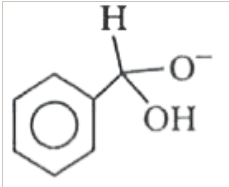
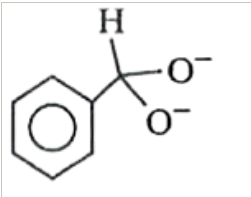
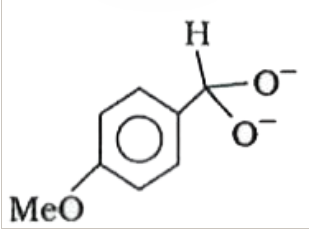
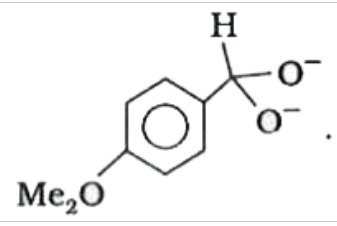
In a chemical equilibrium, the rate constant of the backward reaction is 7.5xx10^(-4) and the equilibrium constant is 1.5. So the rate constant of the forward reaction is |
|
Answer» `5xx10^(-4)` `K_(f)=K_(c)xxK_(b)=1.5xx7.5xx10^(-4)=1.125xx10^(-3)` |
|
| 11. |
If the first order reaction involves gaseous reactants and gaseous-products the units of its rate are: |
|
Answer» ATM |
|
| 12. |
In a chemical equilibrium, the rate constants of the forward and backward reactions are respectively 3.2 xx 10^-4 and 1.2 xx 10^-5 , the equilibrium constant is : |
|
Answer» 0.37 |
|
| 13. |
If the first order reaction involves gaseous reactant & gaseous products, the units of its rate are |
|
Answer» ATM |
|
| 14. |
In a chemical equilibrium, the equilibrium constant is found to be 2.5. If the rate constant of backward reaction is 3.2x×10^(-2), the rate constant of forward reaction is - |
|
Answer» `8.0xx10^(-2)` |
|
| 15. |
If the first order rate constants for the decomposition of enthy 1 iodide at 600 K and 700 K are 2.0xx10^(-5) s^(-1) and 2.0xx10^(-4) s^(-1) respectively, the activation energy for this reaction in kJ mol^(-1) is |
|
Answer» `80.4` |
|
| 16. |
In a certainreaction B^(n+) is getting converted to B^((n+4)+) in solution. The rate constant of this reaction is measured by titrating a volume of the solution with a ruducing agent which reacts only with B^(n+) and B^((n+4)+). In this process, it converts B^(n+) to B^((n-2)+) and B^((n+4)+) to B_((n-1)+). At t=0, the volume of reacgent consumed is 25 mL and t=10 min, the volume used is 32 mL. Calculate the rate constant of the conversion of B^(n+) to B^((n+4)+) assuming it to be a first-order reaction. |
|
Answer» |
|
| 17. |
In a chain reaction, uranium atom gets fissioned forming two different materials. The total weight of these put together is |
|
Answer» More than the weight of PARENT uranium atom |
|
| 18. |
If the equilibrium constants of the following equilibria SO_(2)+(1)/(2)O_(2)iffSO_(3) and 2SO_(3)iff2SO_(2)+O_(2) are given by K_(1)andK_(2) respectively, which of the following relation is correct? |
|
Answer» `K_(2)=((1)/(K_(1)))^(2)` Therefore, `K_(1)=([SO_(3)])/([SO_(2)][O_(2)]^(1//2))` `2SO_(3)iff2SO_(2)+O_(2)""...(ii)` Thus, `K_(2)=([SO_(2)]^(2)[O_(2)])/([SO_(3)]^(2))` `K_(2)=(1)/(K_(1)^(2))orK_(2)=((1)/(K_(1)))^(2)` |
|
| 19. |
In a certain reactionB^(n+)is getting converted toB^((n+4)+) in solution. The rate constant for the reaction is measured by titrating a volume of the solution with a reducing agent which reacts only with B^(n+)andB^((n+4)+) . In this process it converts.B^(n+)" to "B^((n-2)+)andB^((n+4)+)" to "B^((n-1)+). Att = 0 ,the volume of reagent consumed is 25mL and at t = 10min , the volume used is 32mL. Calculate the rateconstant for conversion ofB^((n)+)" to "B^((n+4)+)assuming it to be first order reaction. |
|
Answer» Solution :According to the given data `B^((N)+)+2erarrB^((n-2)+)""...[1]` `B((n+n)+)+5erarrB^((n-1)+)""...[2]` `""B^(n+)RARRB^((n+4)+)` `{:("Initial number of moles:",a,0),("Number of moles at time":,(a-x),x):}` From reaction [1] , 1 MOL of `B^(n+)-=2xx1 " EQUIVALENT of "B^(n+)` `a" mol of "B^(n+)-=2xxa " equivalent of "B^(n+)` and ( a-x) mol of `B^(n+)-=2xx(a -x)" equivalent of "B^(n+)` Let the normality of the reducing AGENT be N. Hence , for reaction [1], `axx2=Nxx25[thereforeN_(1)V_(1)=N_(2)V_(2)]` or,`2a=25N thereforea (25)/(2)(N)` From reaction [2] : `1"mol of "B^(n+4)-=5xx1"equiv. of "B^((n+4)+)` `thereforex"mol of "B^(n+4)-=5x" equivalent of"B^((n+4)+)` Hence , for reaction [2] ,`(a-x)xx2+5x=32xx(N)` or,`2a+3x=32(N)` or,25(N) +3x=32N[ putting 2a = 25 (N)] or, 3x = 7 (N)or,`x=(7)/(3)(N)` For a first order reaction , rate constant `k=(2.303)/(t)log.([A]_(0))/([A])` or, `k =(2.303)/(10)log.(a)/(a-x) " or, " k = (2.303)/(10)log.((25)/(2)(N))/(((25)/(2)-(7)/(3))(N))` `thereforek = 2.07xx10^(-2)"min"^(-1)` `therefore`The rate constant of the reaction`= 2.07xx10^(-2)"min"^(-1)` |
|
| 20. |
If the equivalent mass of a metal (M) is x and the formula of its oxide is M_(m)O_(n), then show that the atomic mass of M is (2xn)/(m) |
|
Answer» SOLUTION :m atoms of M combine with n atoms of oxygen 1 atom of M combines with `(n)/(m)` atoms of oxygen Hence, valencey`=(2N)/(m)` ATOMIC mass=Equivalent mass `xx` Valency. `X xx(2n)/(m)=(2nx)/(m)` |
|
| 21. |
In a certain sample of gas at 25^@ C , the number of molecules having speeds between 4 km s^(-1) and 4.1 km s^(-1) is N. If the total number of gas molecules at the same temperature are doubled, then |
|
Answer» Value of most probable VELOCITY will change |
|
| 22. |
If the equilibrium for reaction of HCN with NaOH is 10^(10) then calculate pH of 10^(-3)MNaCN solution of 25^(@)C |
|
Answer» Solution :`{:(,HCN+NaOH,HARR,H_(2)O,+,NaCN,K=10^(10)),(rArr,CN^(-)+ H_(2)O,hArr,HCN,+,OH^(-),K=10^(10)),(t=0,10^(-3)M,,0,,0,),(at eq.,10^(-3)(1-h),,10^(-3)h,,10^(-3)h,):}` `K_(h)=10^(-10)=(10^(-3)hxx10^(-3)h)/(10^(-3)(1-h))rArrsqrt(K_(h)/(c ))=sqrt(10^(-7))( lt0.1)` `pH=7-(1)/(2)log10^(-10)+(1)/(2)log10^(-10)=7+5-(3)/(2)=10.5` |
|
| 23. |
If the equivalent weight of a tri- valent metal is 32.7. the molecular weight of its chloride is , |
|
Answer» 68.2 |
|
| 24. |
If the equilibrium constant of the reaction 2HIhArrH_(2)+I_(2)is 0.25, then the equlibrium constnat of the reaction H_(2)+I_(2)hArr2HI would be |
|
Answer» `1.0` |
|
| 25. |
If the equilibrium constants of following reactions are 2A hArr B is K_(1) and B hArr2A is K_(2), then |
|
Answer» `K_(1)=2K_(2)` |
|
| 26. |
In a cell that utilizes the reaction Zn(s)+2H^(+)(aq)toZn^(2+)(aq)+H_(2)(g) addition of H_(2)SO_(4) to the cathode compartment will |
|
Answer» Lower the E and shift equilibrium to the left On adding `H_(2)SO_(4),[H^(+)]` will increase, therefore `E_(cell)` will increase. The equilibrium `Zn+2H^(+)hArrZn^(2+)+H_(2)` will shift TOWARDS right on increasing the concentration of `H^(+)` IONS. |
|
| 27. |
If the equilibrium constant of the reaction of weak acid HA with strong base is 10^(9) then what is the pH? . |
|
Answer» |
|
| 28. |
In a cell that utilises the reaction Zn_((s))+2H_((aq))^(+)toZn_((aq))^(2+)+H_(2(g)) addition of H_(2)SO_(4) to cathode compartment, will |
|
Answer» Increase the E and SHIFT EQUILIBRIUM to the right `E_(CELL)=E_(cell)^(o)-(0.059)/(2)"log"([Zn^(2+)])/([H^(+)]^(2))` When `H_(2)SO_(4)` is ADDED then `[H^(+)]` will increase therefore `E_(cell)` will also increase and equilibrium will shift towards right. |
|
| 29. |
If the equilibrium constant for the reaction N_(2)(g)+3H_(2)(g)hArr2NH_(3)(g) at 750 K is 49, then the equilibrium constant for the reaction NH_(3)(g)hArr1/2N_(3)(g)+3/2H_(2)(g) at the same temperaturee is |
| Answer» | |
| 30. |
In a cell that utilises the reaction. Zn(s) +2H^(+)(aq) rarr Zn^(2+) (aq) +H_(2)(s) addition of H_(2)SO_(4) to cathode compartement, will: (1) increase the E_(Cell) and shift equilibrium to the right (2) lower the E_(cell) and shift equilibrium to the right (3) lower the E_(cell) and shift equilibrium to the left (4) increase the E_(cell) and shift equilibrium to the left |
|
Answer» On adding `H_(2)SP_(4),[H^(+)]` will increase therefore `E_(cell)` will also increase and the equilibrium will shift TOWARDS right. |
|
| 31. |
If the equilibrium constant for N_(2)(g)+O_(2)(g) hArr 2NO(g) is K, the equilibrium constant for (1)/(2)N_(2)(g)+(1)/(2)O_(2)(g) hArr NO(g) will be : |
|
Answer» `K^((1)/(2))` `K * ([NO]^(2))/([N_(2)][O_(2)])` `(1)/(2)N_(2)* (1)/(2)O_(2)hArr NO` `K** ([NO])/([N_(2)]^(1//2)[O_(2)]^(1//2))* K^(1//2)` |
|
| 32. |
In a cell that has the reaction Zn(s) + 2H^(+) (aq) rarr Zn^(2+) (aq) + H_(2) (g), addition of H_(2) SO_(4) to cathode compartment, will: |
|
Answer» INCREASE the `E_(CELL)` and SHIFT the EQUILIBRIUM to the left |
|
| 33. |
If the equilibrium constant for N_(2)(g)+O_(2)(g)hArr2NO(g) is K, the equilibrium constant for 1/2N_(2)(g)+1/2O_(2)(g)hArr NO(g) will be |
|
Answer» SOLUTION :`K=([NO]^(2))/([N_(2)][O_(2)])` `K'=(NO)/([N_(2)]^(1//2)[O_(2)]^(1//2))` `thereforeK'=sqrtK` |
|
| 34. |
In a cell that utilises the reaction Zn_((s)) + 2H_((aq))^(+) to Zn_((aq))^(2+) + H_(2(g)) addition of H_2 SO_4 to cathode compartment, will |
|
Answer» LOWER the E and SHIFT equilibrium to the LEFT |
|
| 35. |
If the equation of state for 1 mole of a gas is (p+(a)/(V^(2)))V=RT prove that p is a state function and hence dpis an exact differential. |
|
Answer» <P> SOLUTION :`DP` would be an exact differential if `(del^(2)p)/(delVdelV)` as `p=f(V,T)`Given that `(p+(a)/(V^(2)))=RT` or `p=(RT).(V)=(a)/(V^(2))`…………….(1) DIFFERENTIATING w.R.t V at constant T, we get `((del p)/(del V))_(T)=-(RT)/(V^(2))+(2a)/(V^(3))` Differentiating w.r.t T at constant V, we get `(del^(2) p)/(del T del V)=-(R )/(V^(2))`............(2) Again differenitiating Eqn. (1) first w.r.t T at constant V and then w.r.t V at constant T, we get `(del^(2))/(del V del T)=-(R )/(V^(2))`...........(3) From Eqns. (2) and (3) we have `(del^(2)p)/(del Tdel V)=(del^(2)p)/(del V del T)` Thus dp is an exact differential and p is a state function. |
|
| 36. |
In a cell of NHE (Normal Standard hydrogen electrode) and calomel electrode, the reaction taking place at calomel electrode wil be |
|
Answer» `Hg_(2)Cl_(2)+2e^(-) to 2HG+2Cl^(-)` |
|
| 37. |
If the enthalpy of vapourisation of water is 186.5 Jmol^(-1), the entropy of its vaporisation will be - |
|
Answer» `0.5JK^(-1)MOL^(-1)` |
|
| 38. |
In a cell containing zinc electrode and standard hydrogen electrode(SHE),the zinc electrode acts as : |
| Answer» Answer :A | |
| 39. |
If the enthalpy of formation of HCl (g) and Cl^(- ) (aq) are –92.3 kJ/mole and –167.44 kJ/mol, find the enthalpy of solution of hydrogen chloride gas. |
| Answer» SOLUTION :`-75.14` kJ/mol | |
| 40. |
In a cell containing zinc electrode and hydrogen electrode,If the reduction potential of zinc is -0.74 V, the zinc electrode acts as |
|
Answer» anode |
|
| 41. |
In a Carius tube, 0.25 g of an organic compound gave 0.699 g of barium sulphate. What is the percentage of sulphur in the compound? (Atomic weight of Ba = 137) |
|
Answer» 0.425 |
|
| 42. |
If the enthalpy of vaporization of water at 100^(@) C is 186.5 J. "mol"^(1), the entropy of vaporization will be:- |
|
Answer» 4.0 J. `K^(-1). "MOL"^(-1)` |
|
| 43. |
In a ccp arrangement, atoms A are present at corners and B are at face-centred. If two atoms from the corners are missing, the formula of the compound will be .......... |
|
Answer» `A_7B_6` Number of B-atoms at face-centres = `(6 xx 1/2)` RATIO of A-atoms to B-atoms in a compound `A: B = 2 : 3 IMPLIES AB_4 ` |
|
| 44. |
In a carbocation, the central carbon atom involved is |
|
Answer» sp-hybridized |
|
| 45. |
If the enthalpy of B is greater than of A, the reaction A rarr B is |
|
Answer» <P>ENDOTHERMIC For endothermic reaction `H_(p) GT H_(R)`. |
|
| 46. |
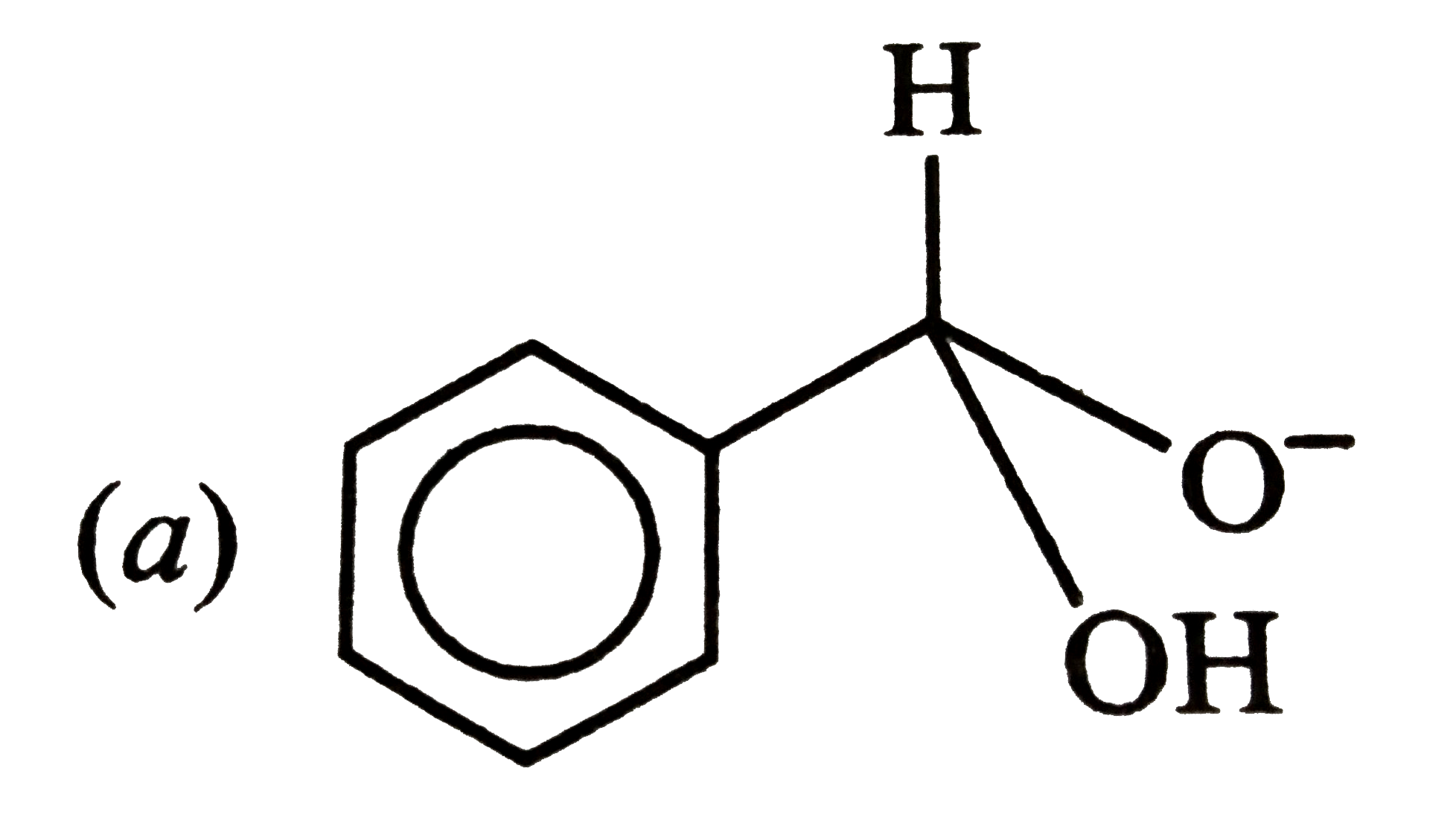
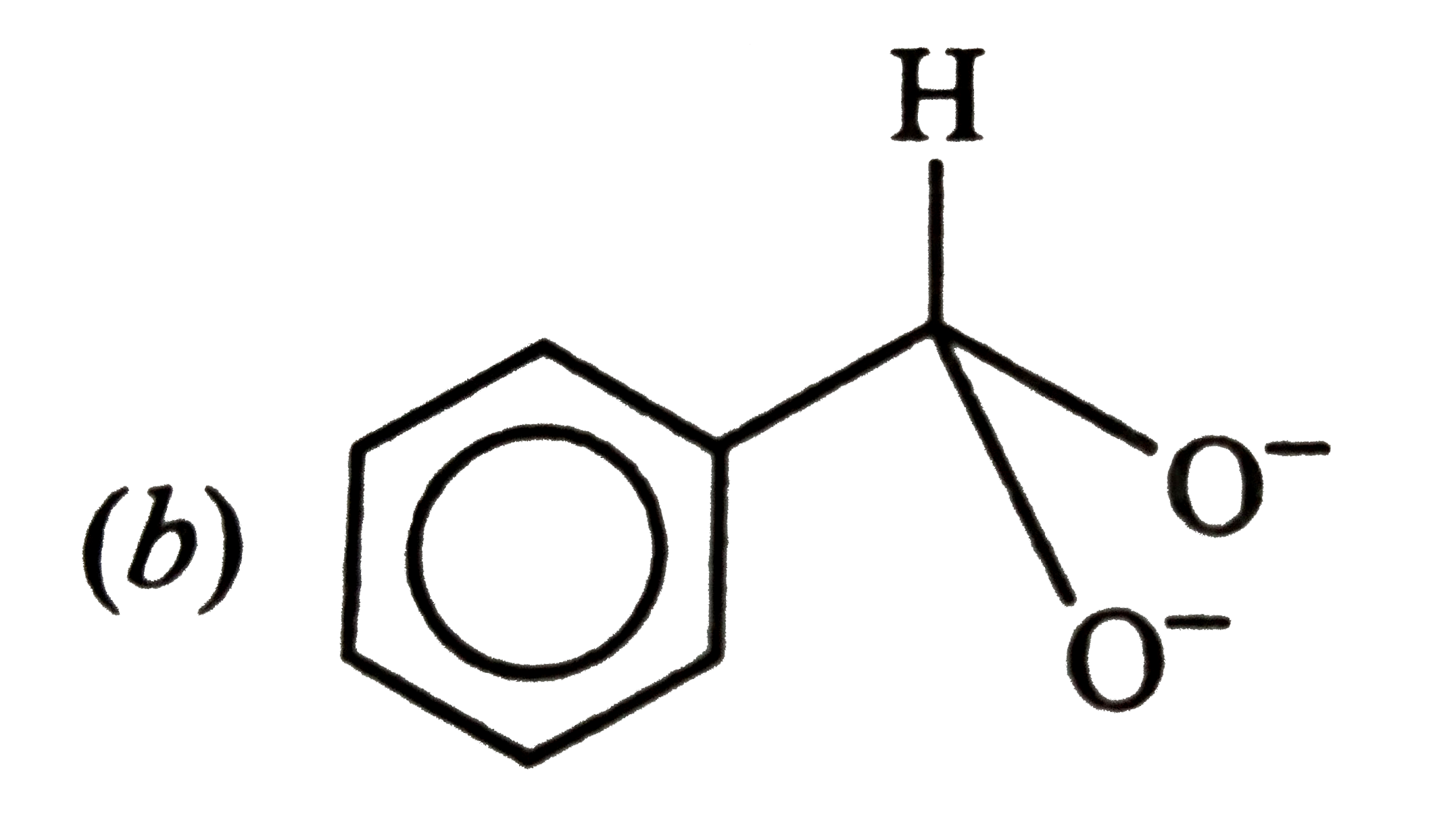
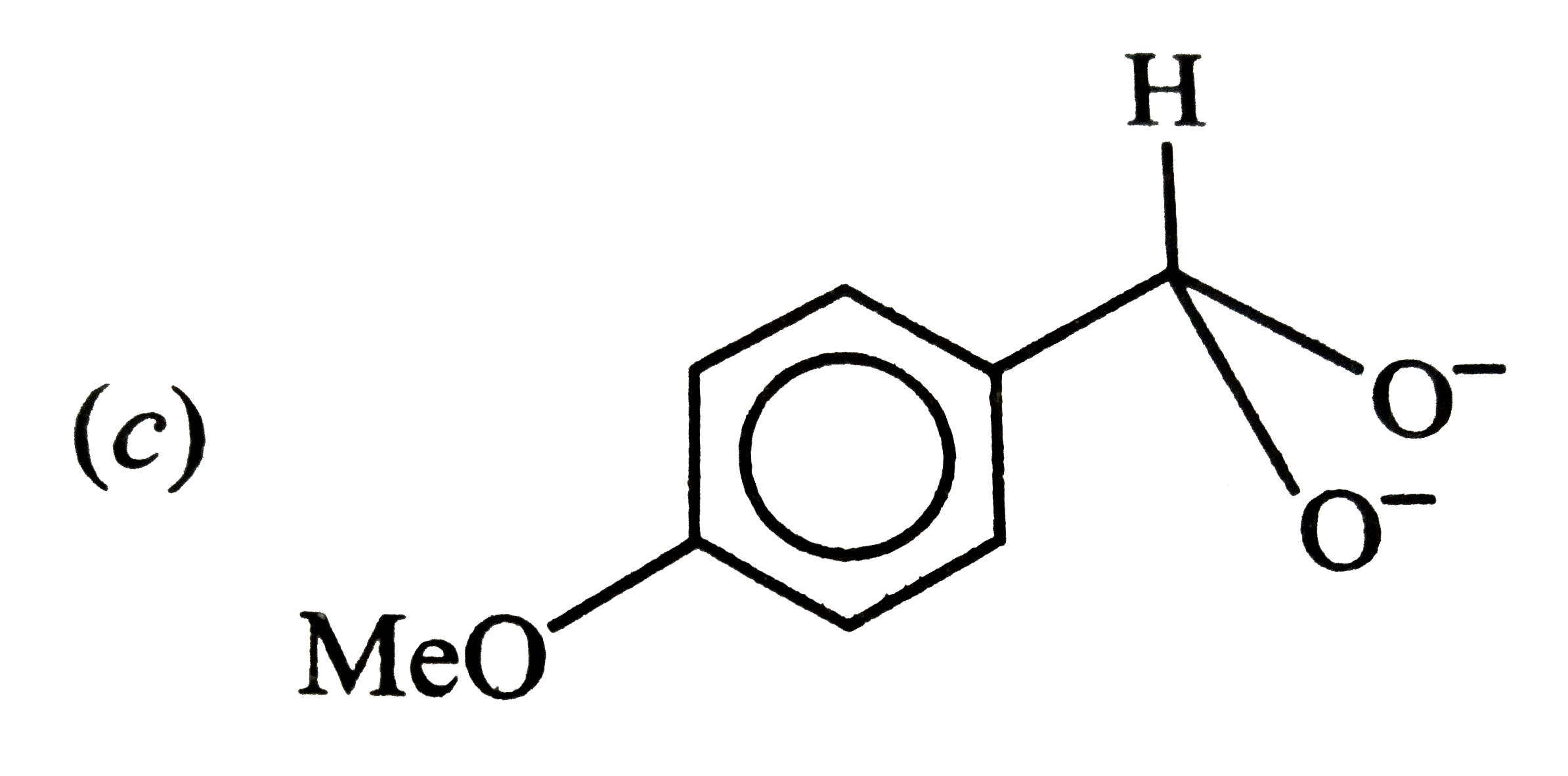
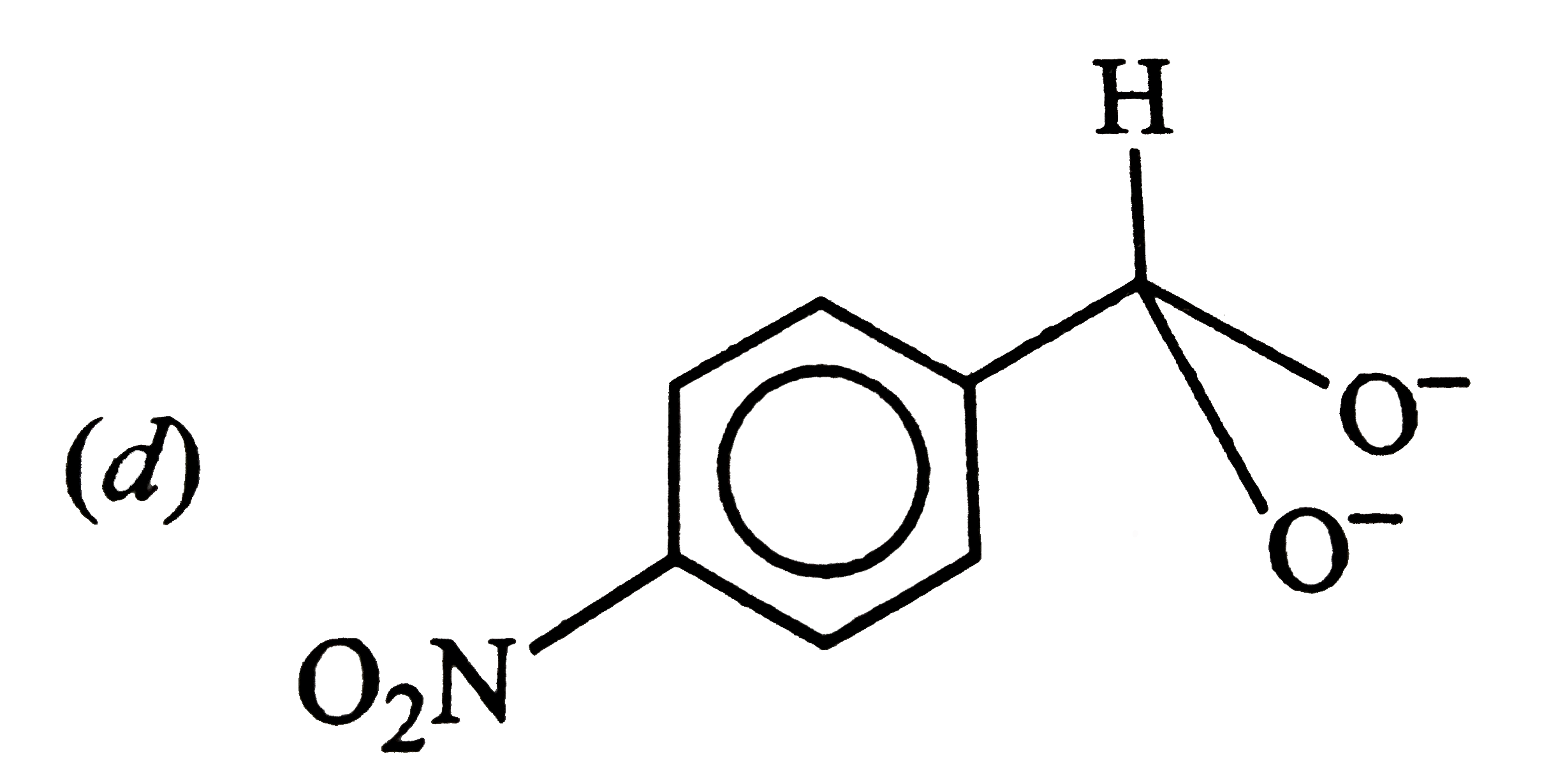
In a Cannizzaro's reaction , the intermediate which is best hydride donor is : |
|
Answer»
|
|
| 47. |
If the enthalpy change for the transition of liquid water to steam is 30 kJmol^(-1) at 27^(@)C, the entropy change for the process would be |
|
Answer» `100 J MOL^(-1) K^(-1)` |
|
| 48. |
In a Cannizzaro.s reaction, the intermediate that will be best hydride donor is : |
|
Answer»
|
|
| 49. |
In a Cannizzaro reaction, the intermediate that will be best hydride donor is |
|
Answer»
|
|
| 50. |
If the enthalpy change for the transition of liquid water to steam is 30 kJ mol^(-1) at 27^(@)C, the entropy change for the process would be : |
|
Answer» `10 J mol^(-1) K^(-1)` `Delta S = (Delta H_("vap"))/(T) = (30 xx 10^(3) J mol^(-1))/(300 K)` `= 100 J mol^(-1) K^(-1)` |
|