Saved Bookmarks
This section includes 7 InterviewSolutions, each offering curated multiple-choice questions to sharpen your Current Affairs knowledge and support exam preparation. Choose a topic below to get started.
| 1. |
Identify the correct statement for change of Gibb's energy for a system (Delta G_(system)) at constant temperature and pressure : |
|
Answer» If `Delta G_(SYSTEM) = 0`, the system has ATTAINED equilibrium |
|
| 2. |
Identify the correct statement about the reaction - |
|
Answer» it is a SYN - eliminiation reaction and GIVES cis alkene |
|
| 3. |
Identify the correct statement about reaction and products |
|
Answer» Product A and C are isomers. |
|
| 4. |
Identify the correct set of stereochemical relationships amongst the following monosaccharides I-IV |
|
Answer» I and II are anomers, III and IV are EPIMERS (I) and (II) are epimers because they have change of configuration at a carbon other than anomeric. |
|
| 5. |
Identify the correct sequence of increasing number of pi-bonds in the structure of the following molecules: (I)H_(2)S_(2)O_(6)(II)H_(2)S_(2)O_(3)(III)H_(2)S_(2)S_(5) |
|
Answer» I, II and III |
|
| 6. |
Identify the correct sequence of increasing number of pi- bonds in the structures of the following molecules. I. H _(2) S_(2) O_(6) II. H_(2)SO_(3) III. H_(2)S_(2) O_(5) |
|
Answer» I, II, III |
|
| 7. |
Identifythe correctreasonforlanthanidecontraction |
|
Answer» Decreasingnuclearcharge |
|
| 8. |
Identify the correct reactivity order of S_(N)1 reaction : |
|
Answer» `(iii)gt(ii)gt(i)` |
|
| 9. |
Identify the correct rate of hydrolysis. |
|
Answer» igtiigtiii |
|
| 10. |
Identify the correct pathway to convert propanoic acid to ethylamine. The reagent represented by A, B and C are CH_(3)CH_(2)COOH overset(A)rarr X overset(B)rarr Y overset(C )rarr CH_(2)CH_(2)NH_(2) |
|
Answer» `{:(A,B,C),(CA(OH)_(2),"Heat",Pt//H_(2)):}` |
|
| 11. |
Identify the correct oreder of boiling points of the following compounds : {:(underset((1))(CH_(3)CH_(2)CH_(2)CH_(2)OH)""underset((2))(CH_(3)CH_(2)CH_(2)CHO)),(underset((3))(CH_(3)CH_(2)CH_(2)COOH)):} |
|
Answer» `1gt2gt3` |
|
| 12. |
Identify the correct order of wavelength of light absorbed for the following complex ions. underset(I)([Co(H_2O)_6]^(3+)) , underset(II)(Co(CN)_6]^(3-) underset(III)([Co(l)_6]^(3-)) ,underset(IV)([Co(en)_3]) |
|
Answer» IIIgtIgtIVgtII The order of ability to produce d-orbital splitting of various lignads: `COgtCN^(-)gtNO_2^(-) GT en gt NH_3 gt H_2O gt OH^(-) gt F^(-) gt CL^(-) gt Br^(-) gt I^(-)` `{:("STRONG field","WEAK field"),("ligands","ligands"),(("larger" Delta),("smaller" Delta))` |
|
| 13. |
Identify the correct order solubilityin apocous medium |
|
Answer» `Na_(2)S GT CuS gt ZnS` In the salt analysis `K_(sp)` sulphidesincreases FROMGROUP `1` of saltanlysis to group `IV` of saltanlysis `Cu^(+2)` ion is in group II whereas `Zn^(+2)` is INGROUP IV of saltanalysis `:.` Solubility of `ZnS gt CuS` since the `K_(sp)` of sulphides of sodiumis the bighest therefore it ishighlysoluble Hence the answer is (B) i.e.solubility of `Na_(2)S gt ZnS CuS` |
|
| 14. |
Identify the correct order of solubility of Na_(2)S,CuS and ZnS in aqueous solution |
|
Answer» CuSgtZnSgt`Na_(2)S` after CuS because of higher `K_(SP)` of `ZnS`. |
|
| 15. |
Identify the correct order of the acidic strength: |
|
Answer» METHANOL`GT` PHENOL `gt H_(2)O` |
|
| 16. |
Identify the correct order of solubility of Na_(2)S, CuS and ZnS in aqueous medium |
|
Answer» `CUS gt ZnS gt Na_(2)S` Hence,(D) is the correct ANSWER. |
|
| 17. |
Identify the correct order of solubility of Na_2S, CuS and ZnSin aqueous medium : |
|
Answer» `CuS gt ZnS gt Na_2S` The sodium salts are HIGHLY SOLUBLEIN water . |
|
| 18. |
Identify the correct order of solubility in aqueous medium….. |
|
Answer» `Na_(2)S gt CUS gt ZNS` |
|
| 19. |
Identify the correct order of solubility in aqueous medium : |
|
Answer» `Na_(2)S GT ZNS gt CuS` |
|
| 20. |
Identify the correct order of solubility of Na_(2)S, CuS and ZnS in aqueous medium : |
|
Answer» `Na_2S GT CUS gt ZNS` |
|
| 21. |
Identify the correct order of reactivity of the following towards the nucleophilic substitution |
|
Answer» 1 GT 3 gt 2 gt 4 |
|
| 22. |
Identify the correct order of size of the following |
|
Answer» `Ca^(2+) LT K^(+)lt AR lt CL^(-)ltS^(2-)` |
|
| 23. |
Identify the correct order of oxidizing strength: |
|
Answer» `VO_(2)^(+) GT Cr_(2)O_(7)^(2-) gt MnO_(4)^(-)` |
|
| 24. |
Identify the correct order of reactivity in electrophilic substitution reactions of the following compounds. |
|
Answer» `1 gt 2 gt 3 gt 4` |
|
| 25. |
Identify the correct order of boiling points of the following compounds: CH_(3)CH_(2)CH_(2)CH_(2)OH(1), CH_(3)CH_(2)CH_(2)CHO(2), CH_(3)CH_(2)CH_(2)COOH (3) |
|
Answer» 1gt2gt3 |
|
| 26. |
Identify the correct order of ionic radii |
|
Answer» `TI^(2+) gt V^(2+) gt Cu^(2+) gt ZN^(2+)` |
|
| 27. |
Identify the correct order of boiling points : |
|
Answer» PROPANE `LT` METHOXYMETHANE`lt` FLUOROETHANE `lt` ETHANOL |
|
| 28. |
Identify the correct order of acidic strengths of CO_(2),CuO,CaOandH_(2)O : |
|
Answer» `CaOltCuOltH_(2)OltCO_(2)` `CaOltCuOltH_(2)OltCO_(2)` |
|
| 29. |
Identify the correct order of acidic strength. |
|
Answer» HIO gt HBrO gt HCIO |
|
| 30. |
Identify the correct method for the synthesis of the compound shown below from the following alternatives. |
|
Answer»

|
|
| 31. |
Identify the correct order : |
|
Answer» <P>`[V(CO)_(6)]^(-) lt [CR(CO)_(6)]`(C-O bond length order ) 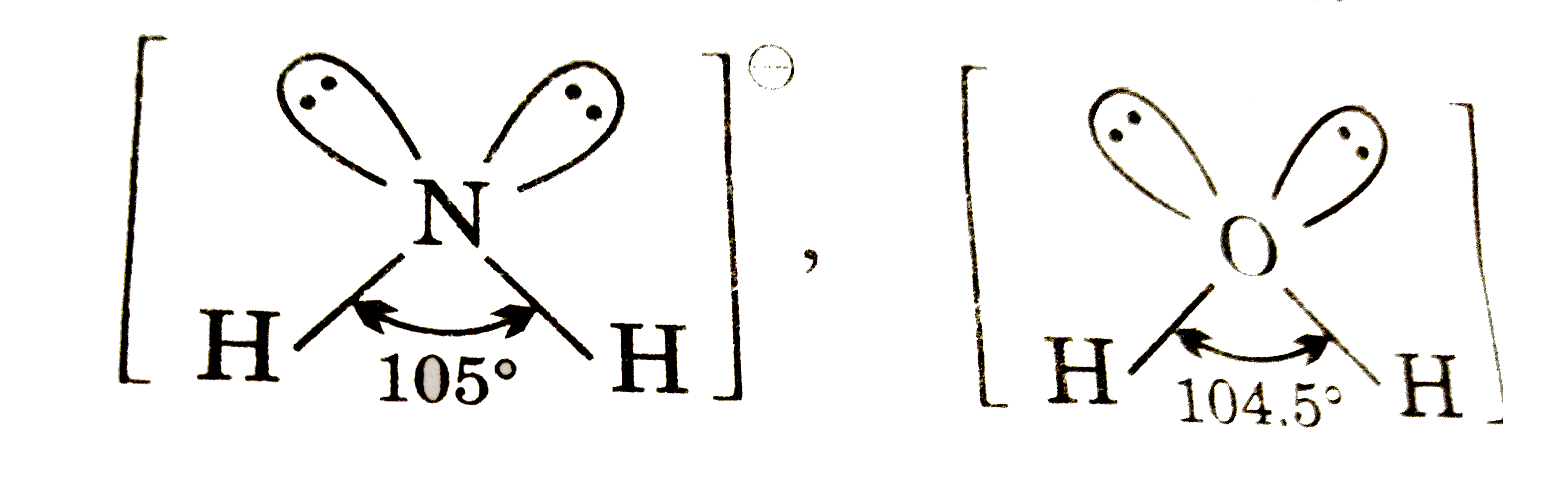 `H_(2)OgtNH_(2)^(-)` (Bond angle) (b) B. P. of `H_(2) gt He`, due to greater surface area of `H_(2)` (a) C-O B. L. order `[V(CO)_(6) ]^(-) gt [Cr (CO)_(6)]` |
|
| 32. |
Identify the correct option :- |
|
Answer» `NO_(3)^(-) gt NH_(3) gt NH_(2)^(-)` (order of bond angle) (ii) In `(CH_(3))_(3)` B hyb. of carbon is `sp^(3)` (non planar) (III) `NH_(4)Cl to NH_(4)^(+)Cl^(-)` in `NH_(4)^(+)` hyb. of N is `sp^(3)` (iv) In `s_(8)` molecule TOTAL 16 lp or 32 non bonded `e^(-)` |
|
| 33. |
Identify the correct match of monosaccharide to the characteristics of the monosaccharide described: {:("(i) Open-chain form is an aldopentose","(ii) Open-chain form is a ketohexose "),("(iii) D-glucose","(iv) A glycoside"):} |
|
Answer» (a)-(II), (b)-(iii), (C)-(iv), (d)-(i) |
|
| 34. |
Identify the correct match '(## AAK_MCP_03_NEET_CHE_E03_019_Q001 ##)' |
|
Answer» a(iv), B(i), C(ii), d(iii) |
|
| 35. |
Identify the correct match |
|
Answer» LEACHING : Ag and Au |
|
| 36. |
Identify the correct IUPAC name of the compound : CH_(3)CH_(2)CH_(2)CH_(2)CN |
|
Answer» BUTYL CYANIDE |
|
| 37. |
Identify the correct IUPAC name. |
|
Answer» 2,2-Dimethyl-4-ethyl heptane |
|
| 38. |
Identify thecorrectcompoundin eachcase (a) FourstereoisomericcompoundsC_(4) H_(8)Oall opticallyactivecontainno doublebondsand evolvea gaswhentreatedwith CH_(3)Mgl (b) Acompoundbelievedto beeithercyclohexyl methyl etheror 2-methylcyclohexanolevolvesa gaswhentreatedwith NaH . |
Answer» SOLUTION : 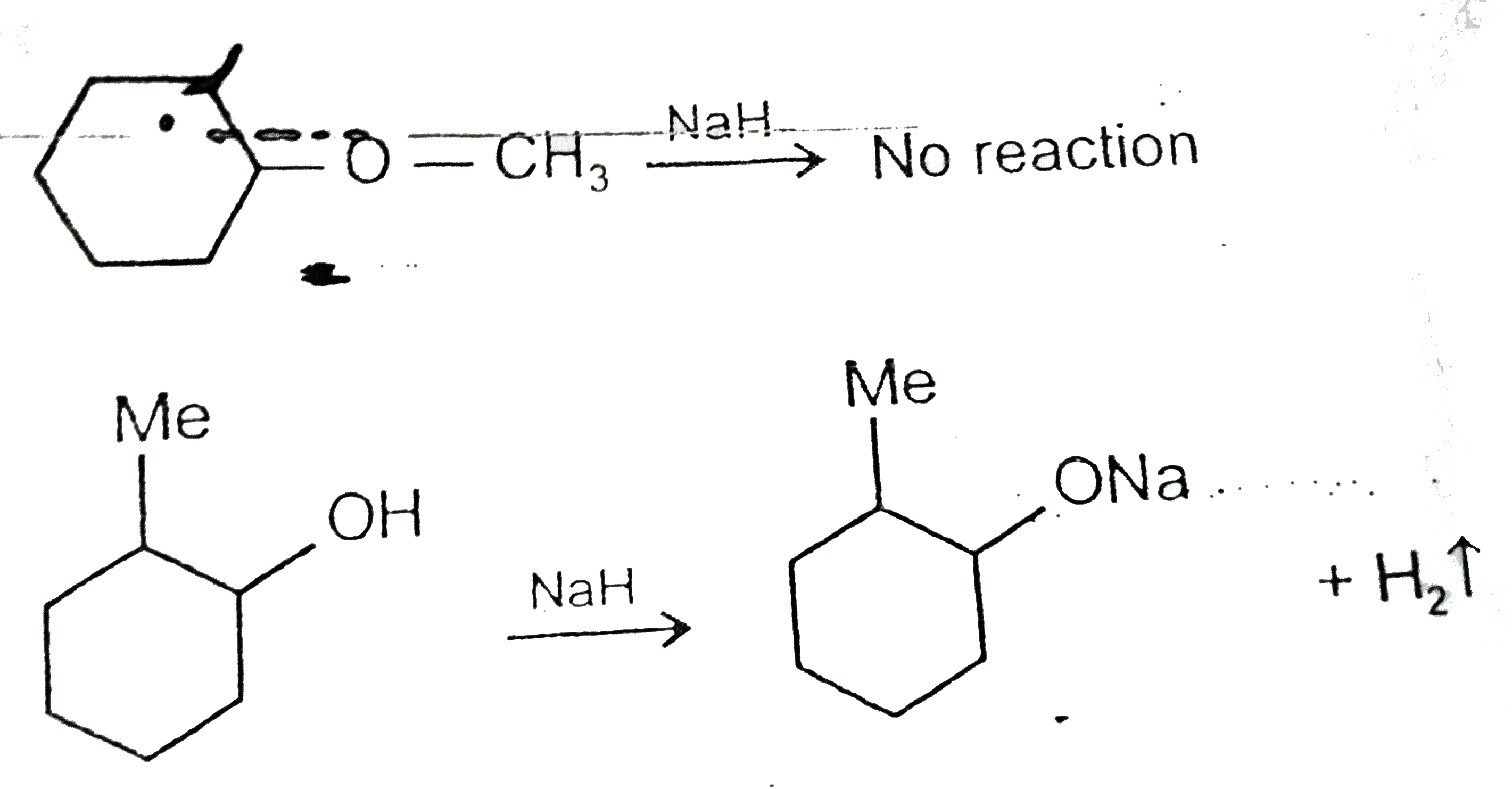
|
|
| 39. |
Identify the conjugate acid base pair for the following reaction in aqueous solution (i) HS^(-)(aq)+HF iff F^(-)(aq)+H_(2)S(aq) (ii) HPO_(4)""^(2-)+SO_(3)""^(2-) iff PO_(4)""^(3-)+HSO_(3)""^(-) (iii) NH_(4)""^(+)CO_(3)""^(2-) iff NH_(3)+HCO_(3)""^(-) |
Answer» Solution :(i) 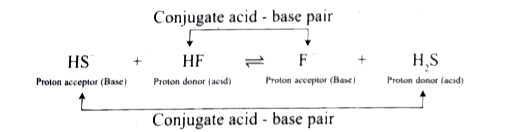 `*` HF and `F^(-), HS^(-) " and "H_(2)S` are two conjugate acid - base pairs. `* F^(-)` is the conjugate base of the acid HF (or) HF is the conjugate acid of `F^(-)`. `* H_(2)S` is the conjugate acid of `HS^(-)" (or) "HS^(-)` is the conjugate base of `H_(2)S`. (ii) 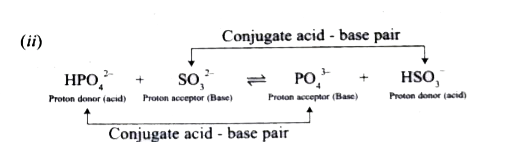 `* HPO_(4)""^(2-)" and "PO_(4)""^(3-), SO_(3)""^(2-)" and "HSO_(3)""^(-)` are two conjugate acid - base pairs. `* PO_(4)""^(3-)` is the conjugate base of the acid `HPO_(4)""^(2-)` (or) `" "HPO_(4)""^(2-)` is the conjugate acid of `PO_(4)""^(3-)`. `* HSO_(3)""^(-)` is the conjugate acid of `SO_(3)""^(2-)" (or) "SO_(3)""^(2-)` is the conjugate base of `HSO_(3)""^(-)`. (iii)  `* NH_(4)""^(+)" and "NH_(3), CO_(3)""^(2-)" and "HCO_(3)""^(-)` are two conjugate acid - base pairs. `*HCO_(3)""^(-)` is the conjugate of acid `CO_(3)""^(2-)" (or) "CO_(3)""^(2-)` is the conjugate bases of `HCO_(3)""^(-)`. `* NH_(3)` is the conjugate base of `NH_(4)""^(+)" (or) "NH_(4)""^(+)` is the conjugate acid of `NH_(3)`. |
|
| 40. |
Identify the copolymer in the following : |
|
Answer» Bakelite |
|
| 42. |
Identify the conjugate acid base pair for the following reaction in aqueous solution HS^-(aq)+HF leftrightarrow F^(-) (aq) +H_2S (aq) (ii) HPO_4^(2-)+ SO_3^(2-) leftrightarrow PO_4^(3-)+HSO_3^(-) (iii) NH_4^(+)+CO_3^(2-) leftrightarrow NH_3+HCO_3^(-) |
Answer» Solution :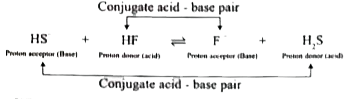 `HF and F^-,HS^- and H_2S` are TWO conjugate ACID-base PAIRS. `F^-` is the conjugate base of the acid HF (or) HF is the conjugate acid of `F^-` `H_2S` is the conjugate acid of `HS^-` (or) `HS^-` is the conjugate base of `H_2S`. 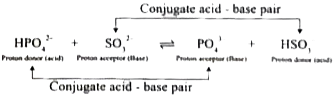 `HPO_4^(2-) and PO_4^(3-), SO_3^(2-) and HSO_3^(-)` are two conjugate acid-base pairs. `PO_4^(3-)` is the conjugate base of the acid `HPO_4^(2-)` (or)`HPO_4^(2-)` is the conjugate acid of `PO_4^(3-)` `HSO_3^(-)` is the conjugate acid of `SO_3^(2-)` (or) `SO_3^(2-)` is the conjugate base of `HSO_3^(-)` 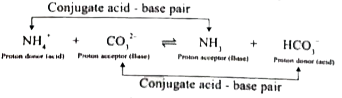 `NH_4^(+) and NH_3,CO_3^(2-) and HCO_3^-` are two conjugate acid -base pairs. `HCO_3^-` is the conjugate of acid `CO_3^(2-)` (or) `CO_3^(2-)` is the conjugate bases of `HCO_3^-`. `NH_4` is the conjugate base of `NH_4^(+)` (or) `NH_4^(+)` is the conjugate acid of `NH_3` |
|
| 43. |
Identify the compounds (X), (Y) and (Z) in the following reaction : CH_(3)Broverset(Mg//ether)toX overset((i)CO_(2))underset((ii)"water")to Y overset(CH_(3)OH,H^(+))underset(Delta)toZ |
|
Answer» `(X)=CH_(3)MgBr, (Y)=CH_(3)COOH, (Z)=CH_(3)COOCH_(3)`<BR>`(X)=CH_(3)CH_(2)Br, (Y)=CH_(3)CH_(2)OH, (Z)=CH_(3)CH_(2)CH_(2)CH_(3)` 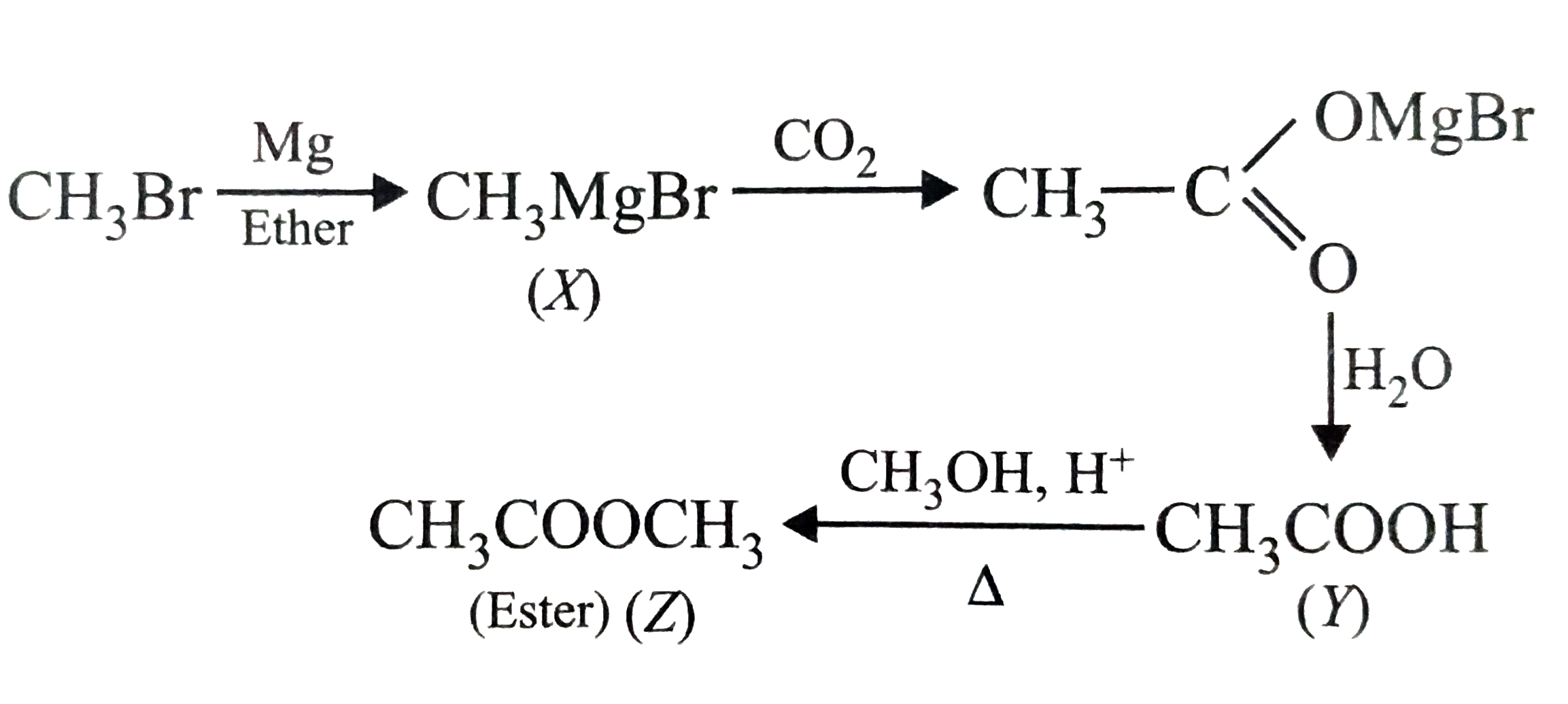
|
|
| 44. |
Which one of the following undergoes aldol condensation and gives iodoform test |
|
Answer» All |
|
| 45. |
Identify the compounds [E] to [J] in the following reactions. {:([E]overset(LiAH_(4)//"ether")rarr[F]+[G]),([F]overset("PCC")rarr[H]),([H]overset(NaOH(conc.))rarr[I]+[F]),([I]overset([J])rarr(C_(6)H_(5)CO_(2))O),([G]overset([J])underset(NaOH)rarrC_(6)H_(5)COOC_(6)H_(5)):} |
Answer» Solution :Identities of the compounds (E to G) can be established by the following SEQUENCE of reactions: 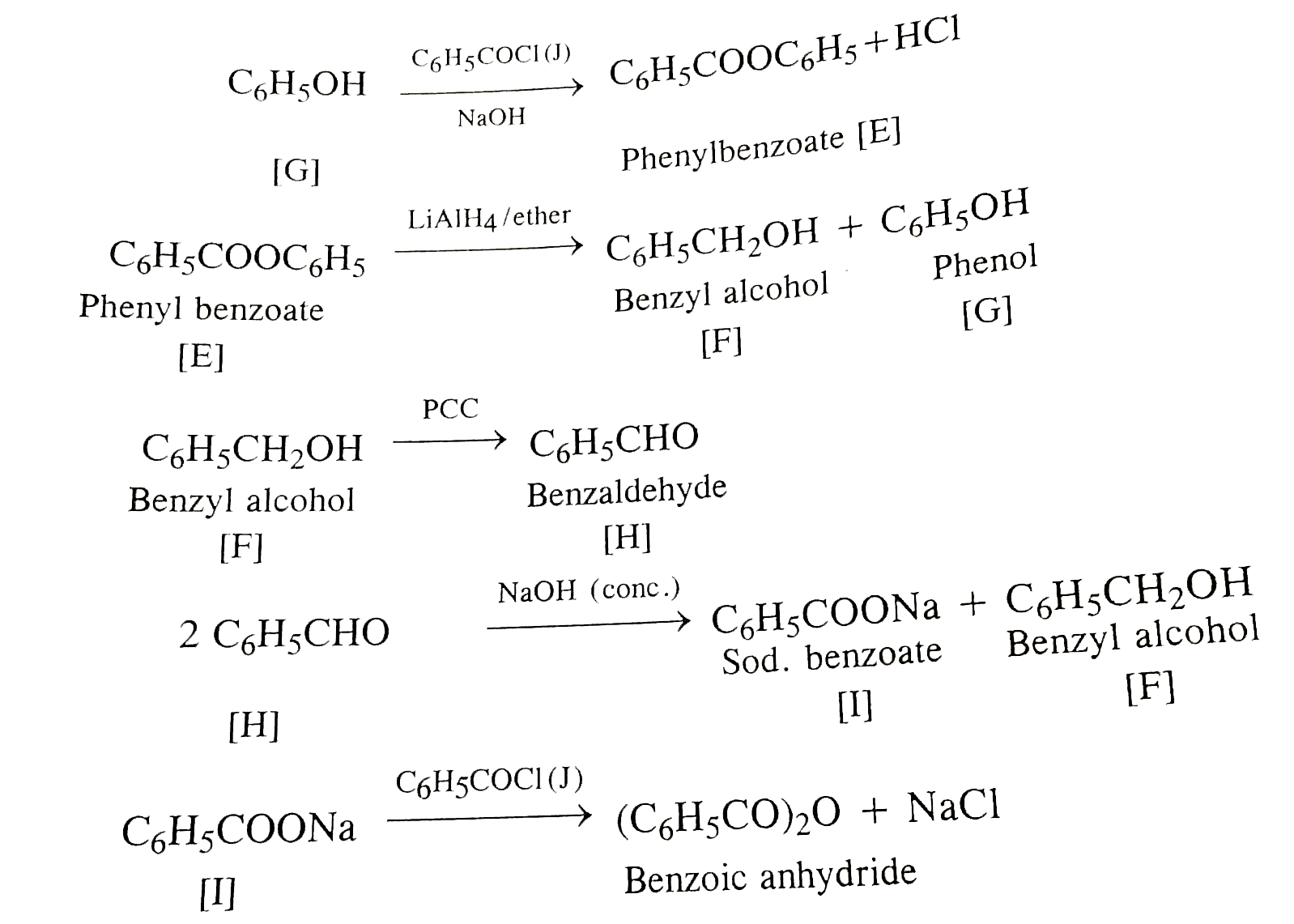
|
|
| 46. |
Identify the compounds in which all bond length are equal : |
|
Answer»
|
|
| 47. |
Identify the compounds A,B,C in the following reactions: C_2H_5Cl overset(AgCN)(to)A overset(Sn"/"HCl)(to)B overset(HNO_2)(to)C |
| Answer» SOLUTION :`{:(C_2H_5Cloverset(KCN)(to)C_2H_5CNoverset(SN"/"HCL)(to)C_2H_5CH_2NH_2overset(HNO_2)(to)CH_3-CH_2-CH_2-OH),("ETHYL chlorideEthylcyanide1-amino propane1-propenol "):}`. | |
| 48. |
Identify the compounds A,B and C in the following reaction: CH_(3)-Broverset(Mg//"Ether")(to)[A]underset((ii)"Water")overset((ii)CO_(2))(to)[B]underset(Delta)overset(CH_(3)OH//H^(+))(to)[C] |
|
Answer» Solution :`A=CH_(3)MgBr` `B=CH_(3)COOH` `CH=CH_(3)-OVERSET(O)overset(||)(C)-O-CH_(3)` |
|
| 49. |
Identify the compounds A and B. PCl_5 + SO_2 A + B rarr. |
| Answer» SOLUTION :`PCl_5 + SO_2 RARR POCl_3 + SOCl_2`. | |