Saved Bookmarks
This section includes 7 InterviewSolutions, each offering curated multiple-choice questions to sharpen your Current Affairs knowledge and support exam preparation. Choose a topic below to get started.
| 1. |
Identify the compound Y in the following reaction. |
|
Answer»
|
|
| 2. |
Identify the compound Y in the following reaction. |
|
Answer»
|
|
| 3. |
Identify the compound X |
|
Answer»
 UNDERGOES electrophilic substitution reaction with `HNO_(3)` at para position. UNDERGOES electrophilic substitution reaction with `HNO_(3)` at para position. 
|
|
| 4. |
Identify the compound which turns black with ammonia solution. |
|
Answer» LEAD chloride 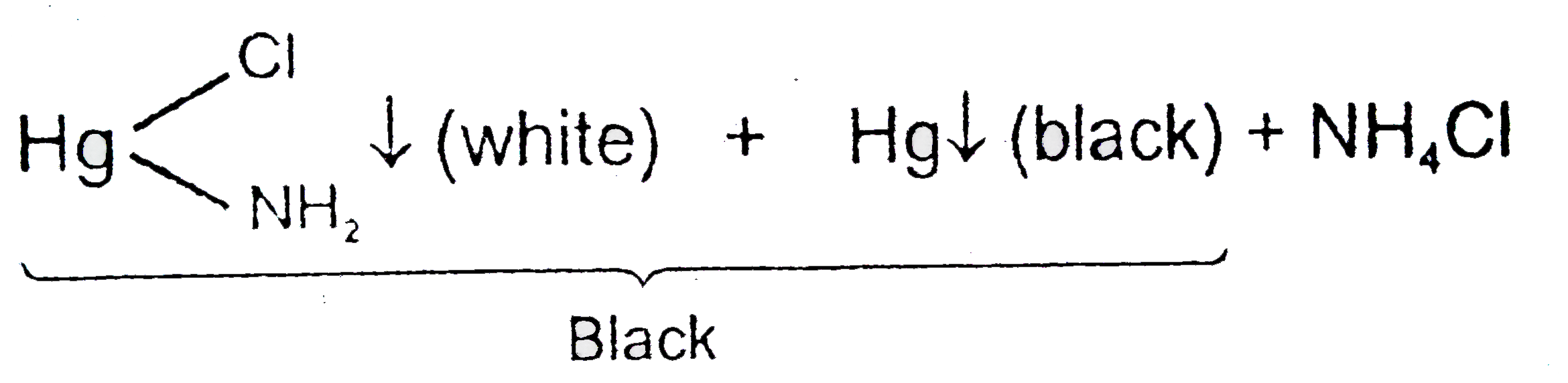
|
|
| 5. |
Identify the compound that exhibits tautomerism: |
|
Answer» 2-butene |
|
| 6. |
Identify the compound 'D' in the following series of reactions . CH_(3)-overset(CH_(3))overset(|) ( C)H - CH_(2)-CH_(2)- Br overset("alc." KOH)underset(Delta)(to) 'A' overset("(i) Conc." H_(2)SO_(4))underset("(ii)" H_(2)O , Delta)(to) underset("(Major product)") ('D') + underset("(Minor product)")('C') 'B' overset(HI , Delta)underset(-H_(2)O)(to) underset("(Major product)")('D') + underset("(Minor product)") |
|
Answer» `CH_(3)-overset(CH_(3))overset(|) ( C)H- UNDERSET(I)underset(|)( C)H- CH_(3)`  
|
|
| 7. |
Identify the compound 'B' in the following series of reaction propanenitrile overset("Alc. Na") to A overset(NaNO_(2))underset("dil. HCl")to B |
|
Answer» n-propyl CHLORIDE |
|
| 8. |
Identify thecompound B in the following series of reaction. Propanenitrile overset("Na/Alc.")rarr A underset("dil. HCl")overset(NaNO_(2))rarr B |
|
Answer» n-propyl chloride |
|
| 9. |
Identify the compound A that gives each the following products on oxidative cleavage with HIO_(4). a. PhCHO+MeCOMe b. Cyclopentanone + HCHO c. 2HCHO+HCOOH d. 5HCOOH+HCHO e. 3HCOOH+2HCHO+CO_(2) |
Answer» SOLUTION :a. 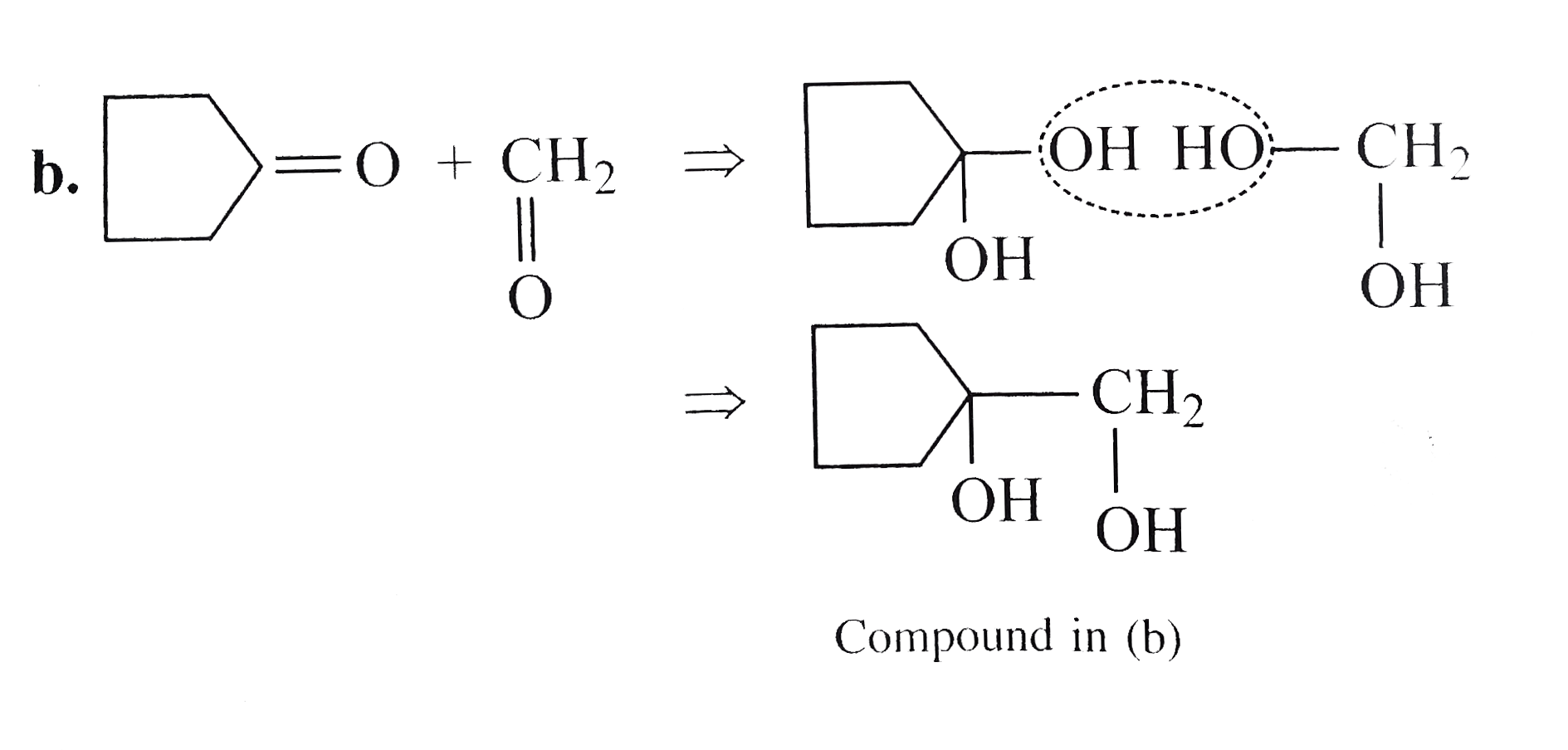 B. 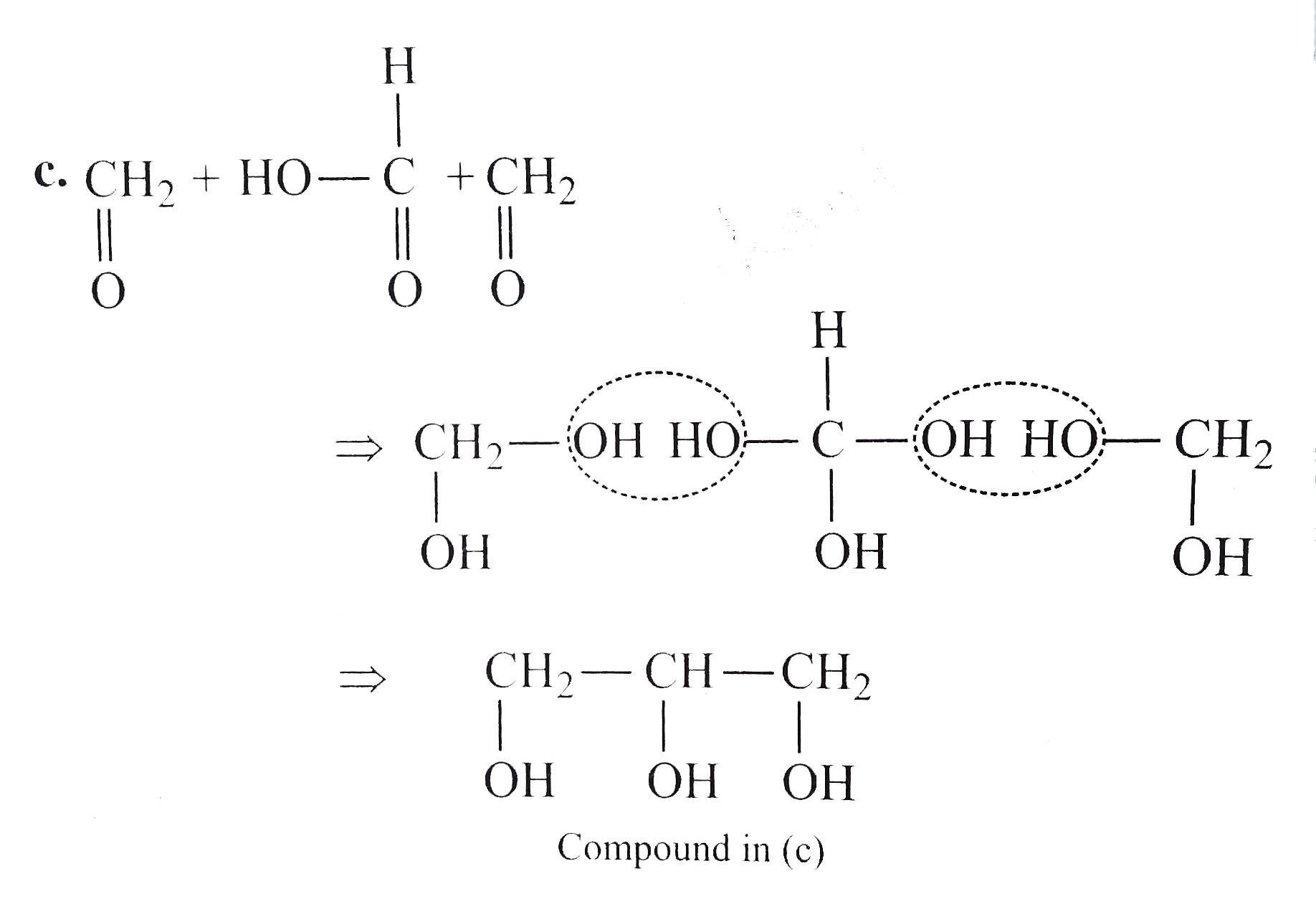 c. 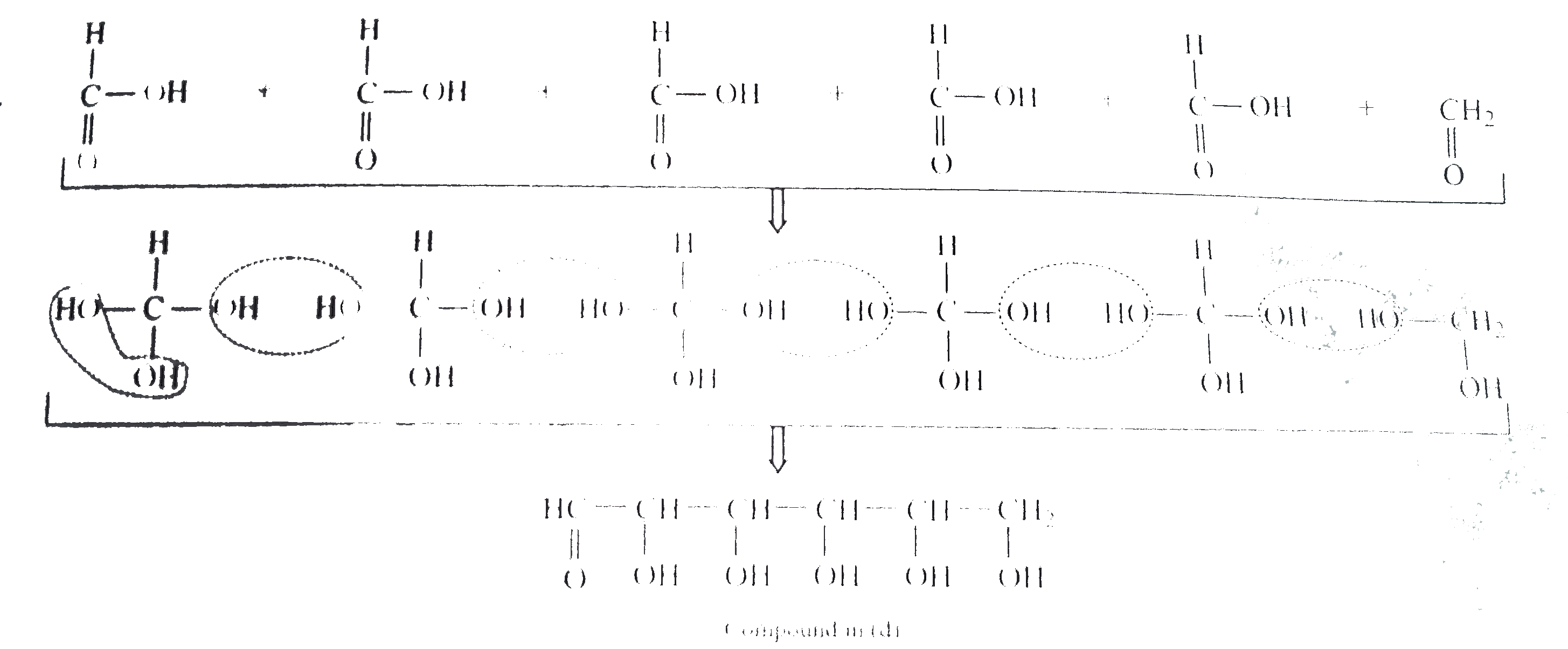 d. 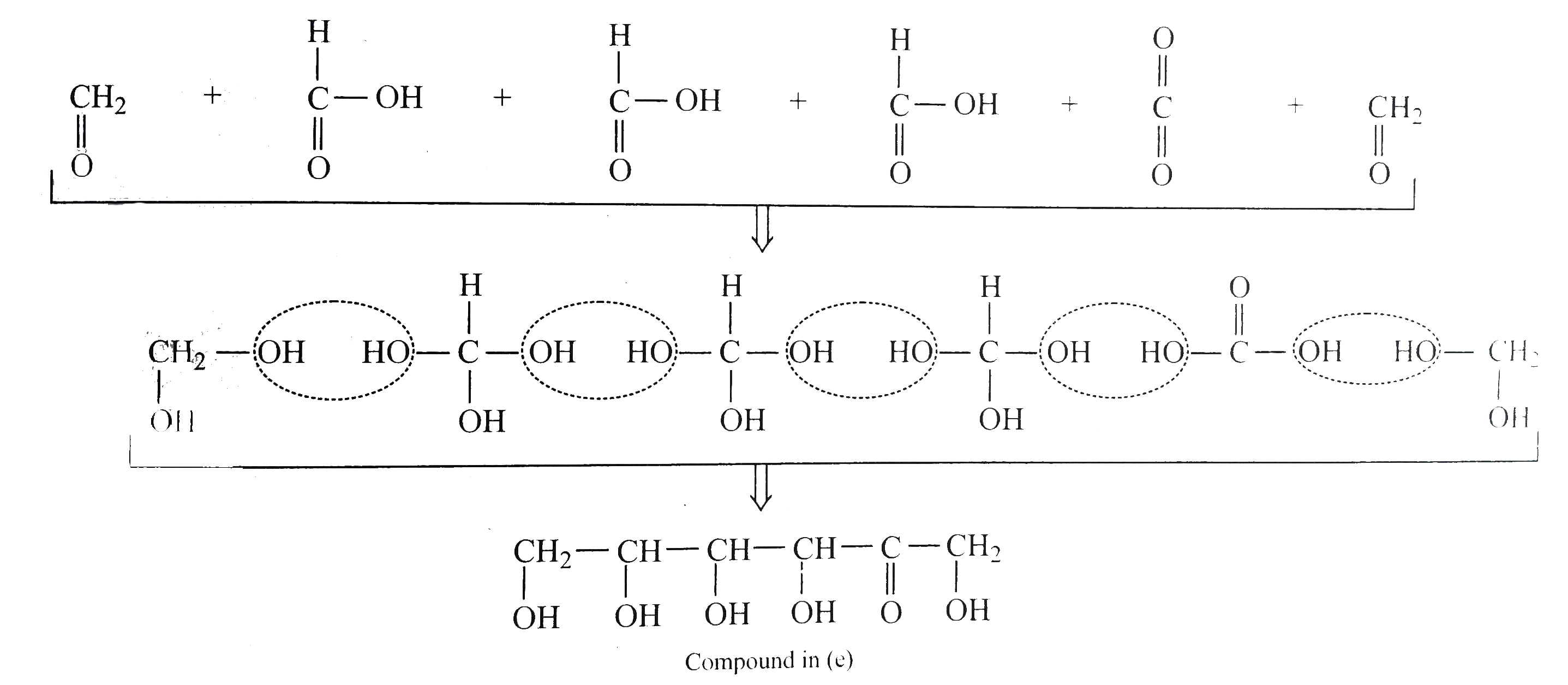 e. There are two POSSIBILITIES: i. First possibility: 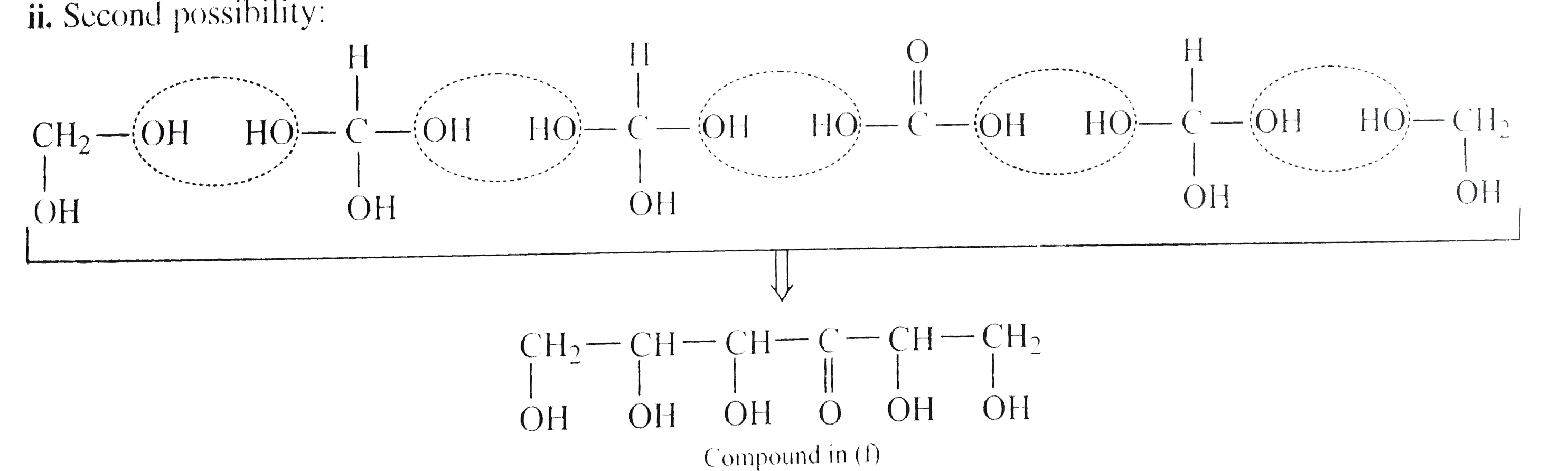 II. Second possibility: 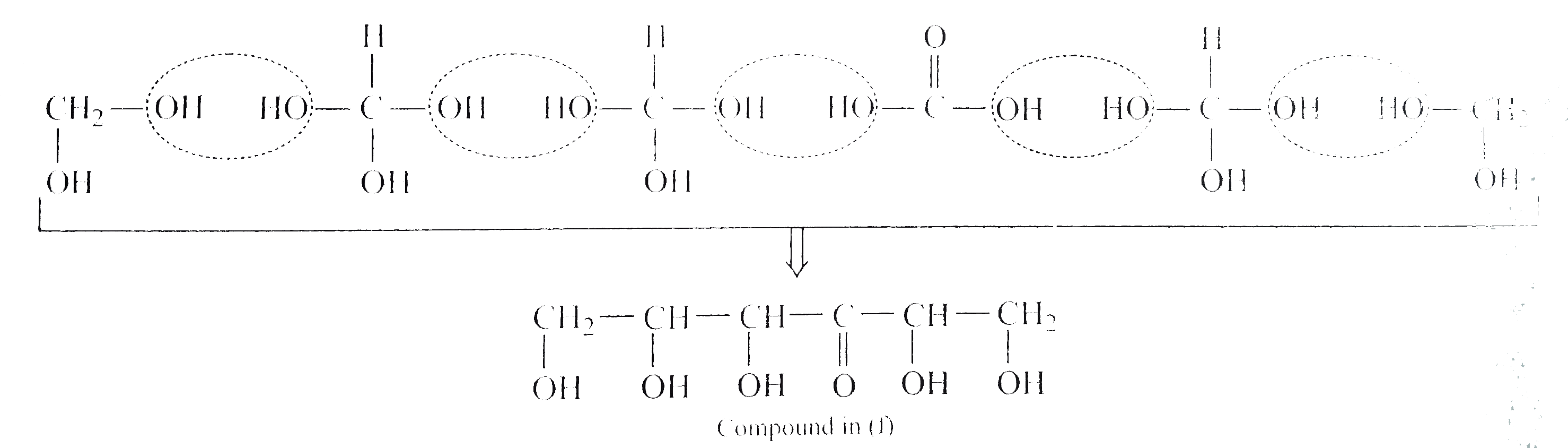
|
|
| 10. |
Identify the compound A,B and C in the following reactions. CH_(3)-Br overset(Mg//"ether")to(A) underset((ii)"Water")overset((i)CO_(2))to(B) underset(Delta)overset(CH_(3)OH//H^(+))to(C) |
| Answer» SOLUTION :`underset("Bromomethane")(CH_(3)-Br) overset(Mg//ether)to underset("Methylmag. Bromide (A)")(CH_(3)-MgBr) underset((ii)H_(2)O)overset((i)CO_(2))to underset("ETHANOIC acid (B)")(CH_(3)-overset(O)overset(||)(C)-OH) underset(("ESTERIFICATION")) overset(CH_(3)OH//H^(+),Delta)to underset("METHYL ethanoate (C)")(CH_(3)-overset(O)overset(||)(C)-OCH_(3))+H_(2)O` | |
| 11. |
Identify the compound and explain whether it is reduicng or non - reducing or non - reducing sugar for the following structure. |
|
Answer» Solution :(i) Lactose is disaccharide found in milk of mammals and hence it is referred to as milk SUGAR. (II) On hydrolysis, it YEILDS galactose and GLUCOSE. The `beta-D` galactose and `beta-D` glucose are linked by `beta-1, 4-` glycosidic bond. The aldehyde carbon is not involved in the glycosidic linkage. Hence it retains its reducing property and is called a reducing sugar. (iii) Structure of lactose : 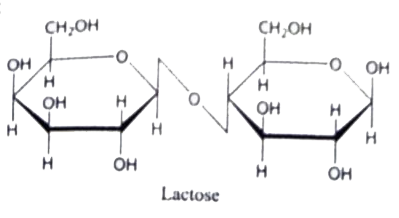
|
|
| 12. |
Identify the complexes which are expected to be coloured. Explain, (a) (i) [Ti(NO_(3))_(4)] (ii) [Cu(NC CH_(2))_(4)]^(+) BF_(4)^(-) (iii) [Cr(NH_(3))_(6)]^(3+)3Cl, (iv) K_(3)[VF_(6)] (b) Complete and balance the following reactions. (i) [MnO_(4)]^(2-) + H^(+) to ............... + [MnO_(4)]^(-) + H_(2)O (ii) Ca_(5)(PO_(4))_(2)F + H_(2)SO_(4) + H_(2)O overset("heat")to............... + 5CaSO_(4).2H_(2)O + ............. (iii) SO_(2)(aq) + CrO_(7)^(2-) + 2H^(+) to ............... + ........... +........... (iv) Sn + 2KOH + 4H_(2)O to.......... + .......... (c ) Give reasons for the following: Although aluminium is above hydrogen in the electrochemical series, it is stable in air and water. |
|
Answer» Solution :(a) (iii) (b) (i) `3MnO_(4)^(2-) + 4H^(-) to MnO_(2) + 2MnO_(4)^(-) + 2H_(2)O` (b) (i) `3MnO_(4)^(2-) + 4H^(-) to MnO_(2) + 2MnO_(4)^(-) + 2H_(2)O` (II) `Ca_(5)(PO_(4))_(2)F+H_(2)SO_(4) + H_(2)O overset("heat")to H_(3)PO_(4) + 5CaSO_(4).2H_(2)O + HF` (iii) `SO_(2)(aq) + CrO_(7)^(2) + 2H^(+) to SO_(4)^(2-) + 2Cr^(3+) + H_(2)O` (IV) `SN + 2KOH + 4H_(2)O to K_(2)[Sn(OH)_(6)] + 2H_(2)` (c ) Due to formation of oxide layer. |
|
| 13. |
Identify the complexes which are expected to be coloured. Give explanation. |
|
Answer» `[Ti (NO_(3))_(4)]` Hence, in Ti (IV) (1s_(2),2S^(2), 2p^(6),3S^(2), 3p^(6))` incomplete d-orbital is not present. So, ITIS colourlese. (B) In [Cu(NCCH_(3))]^(+) BF_(4), O. N. of Cu is +1. Hence, in Cu(I)`[1s^(2), 2s^(2), 2p^(6) 3s^(2), 3p^(6), 3d^(10)]`incomplete d-orbital is not present. So it is also colourless (C) In `Cr(NH_(3))_(6)]^(3+) 3CI^(-), O.N. of Cr is +3`. Hence, in Cr(III) `(1s^(2), 2s^(2), 2p^(6),3s^(2), 3p^(6) 3d^(3)` incomplete d-orbitals are present. So, it is coloured (D) In `K_(3) [VF_(6)).O.N. of Vis +3. Hence, in V(III) `(1s^(2), 2s^(2) 2p^(6) 3s^(2), 3p^(6), 3d^(2))` incomplete d-orbital is present, so it is coloured Hence, (C) and (D) are the correct answers. |
|
| 14. |
Identify the complexes which are expected to be coloured |
|
Answer» `[Ti(NO_(3))_(4)]` `{:("Complex","Central ion","Outer metal ion configuration","Colour"),(Ti(NO_(3))_(4),Ti^(4+),3d^(0)4S^(0),"colourless"),([Cu(NC CH_(3))_(4)]^(+)BF_(4)^(-),Cu^(+),3d^(10)4s^(0),"colourless"),([Cr(NH_(3))_(6)]^(3+)3Cl^(-),Cr^(3+),3d^(3)4s^(0),"coloured"),(K_(3)[VF_(6)],V^(3+),3d^(2)4s^(0),"coloured"):}` |
|
| 15. |
Identify the complexes expected to be coloured and explain Ti(NO_(3))_(4)[Cr(NCCH_(3))_(4)^(+) BF_(4) (iii) [Cr(NH_(3))_(6)]Cl_(3)(iv) K_(3)[VF_(6)] |
| Answer» SOLUTION :(C) and (D) are COLOURED because `Cr^(3+)` in `[Cr(NH)_(3)_(6)]^(3+)` and `V^(3+) in `[VF_(6)]^(3-)` has unpaired ELECTRON in d-sub-shell. | |
| 16. |
Identify the complexes which are expected to be coloured. |
|
Answer» `Ti(NO_(3))_(4)` `Cr^(3+)=3d^(3)""V^(3=)=3d^(2)` IONS with UNPAIRED electrons are expected to be coloured. |
|
| 17. |
Identify the combination of compounds that undergo aldol condensation followed by dehydration to produce but-2-enal. |
|
Answer» methanal and ETHANAL |
|
| 18. |
Identify the colourless complexes |
|
Answer» `TI(NO_(3))_(4)` |
|
| 19. |
Identify the class of drug used in curing disease produced by infection? |
|
Answer» antioxidant |
|
| 20. |
Identify the class of drug : Aspirin |
| Answer» SOLUTION :ANALGESICS and ANTIPYRETIC | |
| 21. |
Identify the class of drug : Phenelzine (Nardin) |
| Answer» SOLUTION :ANTIDEPRESSANT DRUG | |
| 22. |
Identify the class of drug : Cimetidine |
| Answer» SOLUTION :ANTIHISTAMINE | |
| 23. |
Identify the chiral molecule/molecules: |
|
Answer»
Chiral MOLECULES do not have PLANE of SYMMETRY |
|
| 24. |
Identify the chiral species amongthe following :1 |
|
Answer»
|
|
| 25. |
Identify the binary mixture(s) that can be separated into individual compounds by differential extraction, as shown in the given scheme. |
|
Answer» `C_(6)H_(5)OH` and `C_(6)H_(5)COOH` (b) `C_(6)H_(5)COOH` REACTS with both `NaOH (aq)` and `NaHCO_(3) (aq)` whereas `C_(6)H_(5)CH_(2)OH` does not. This option is possible. (c) `C_(6)H_(5)CH_(2)OH` and `C_(6)H_(5)OH` both do not react with `NaHCO_(3) (aq)`. therefore, this option is not possible. (d) `C_(6)H_(5)CH_(2)COOH` reacts with both `NaHCO_(3) (aq)` and `NaOH (aq)` whereas `C_(6)H_(5)CH_(2)OH` does not. Therefore, this option is possible. |
|
| 26. |
Identify the binary mixture (s) that can be spearated into individual compounds, by differential extraction, as shown in the given scheme. |
|
Answer» `C_(3)H_(5)OH"and" C_(6)H_(5)COOH` |
|
| 27. |
Identify the binary mixtures (s) that can be separated into the individual compounds, by differential extraction, as shown. In the given scheme- |
|
Answer» `C_(6)H_(5)OH` and `C_(6)H_(5)COOH` `C_(6)H_(5)COOH,C_(6)H_(5)CH_(2)CO_(2)HgtH_(2)CO_(3)gtC_(6)H_(5)OHgtH_(2)OgtC_(6)H_(5)CH_(2)OH` (A) `C_(6)H_(5)OH,C_(6)H_(5)COOHrarr`separated by `NaHCO_(3)` only but not by NaOH` (B) `C_(6)H_(5)COOH,C_(6)H_(5)CH_(2)OHrarr` sparated by `NaHCO_(3) & NaOI I` both. (C) `C_(6)H_(5)CH_(2)OH,C_(6)H_(5)OHrarr` separated by `NaOH` only but npt nu `NaHCO_(3)` (D) `C_(6)H_(5)CH_(2)OH,C_(6)H_(5)CH_(2)COOHrarr` separated by `NaHCO_(3) & NaOH` both. |
|
| 28. |
Identify the binary mixtrues (s) that can be separated nto the individual compounds, by differential extraction, as shown in the given scheme- |
|
Answer» `C_(6)H_(5)OH and C_(6)H_(5)COOH` |
|
| 29. |
Identify the artificial sweeteners. |
|
Answer» Saccharin, SUCRALOSE |
|
| 30. |
Identify the allylic alcohols in the above (ii) and (vi) are allylic alcohols |
| Answer» SOLUTION :(II) and (VI) are ALLYLIC ALCOHOLS | |
| 31. |
Identify the amine which cannot be prepared by Gabriel phthalimide synthesis |
|
Answer»
|
|
| 32. |
Identify the allylic alcohols in the above examples. |
| Answer» SOLUTION :ALLYLIC ALCOHOLS (II) and (VI) | |
| 33. |
Identifythealloycontaininganon -metalasaconstituent init |
| Answer» SOLUTION :Steelcontainsthe non-metal CARBON. | |
| 34. |
Identify the alkyne in the following sequence of reactions "Alkyne" underset"Lindlans catalyst"overset(H_2) to A overset"Ozonolysis"to underset"only"B underset"Process"overset"Weaker" larr CH_2=CH_2 |
|
Answer» `H_3C-C-=C-CH_3` |
|
| 35. |
Identify the alloy containing a non - metal as a constituent in it. |
|
Answer» Invar |
|
| 36. |
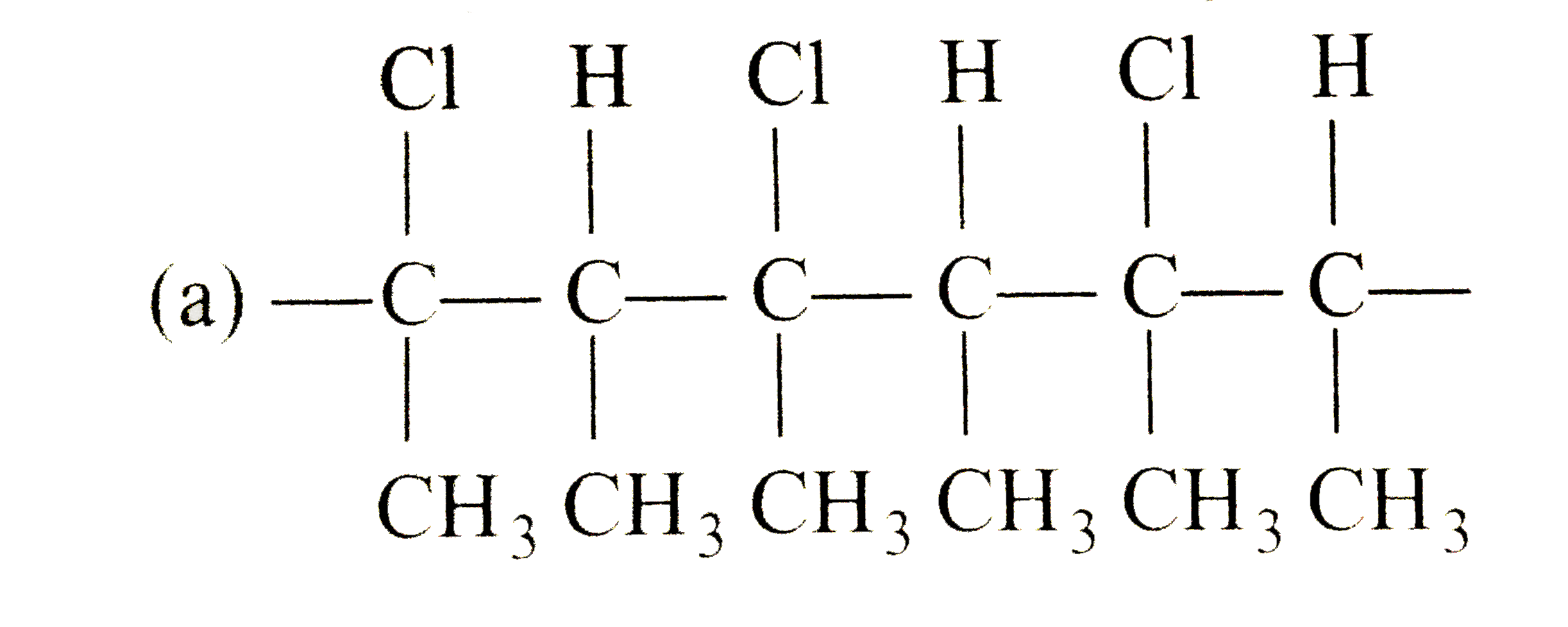
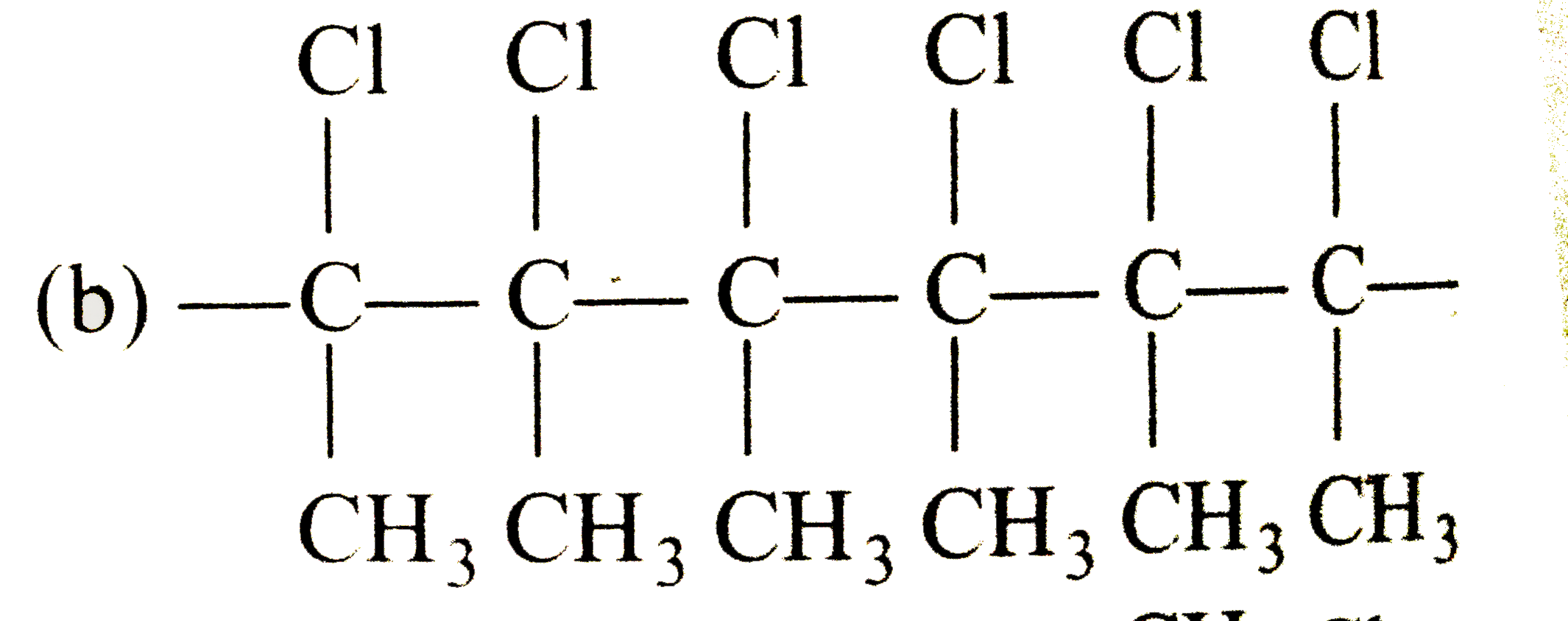
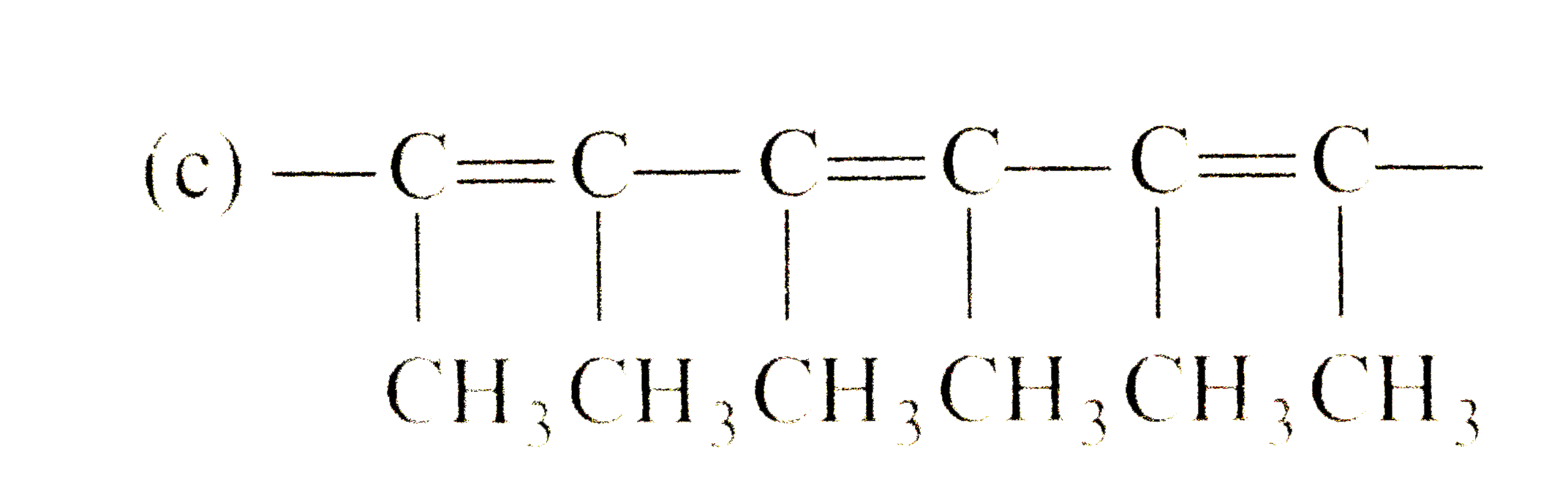
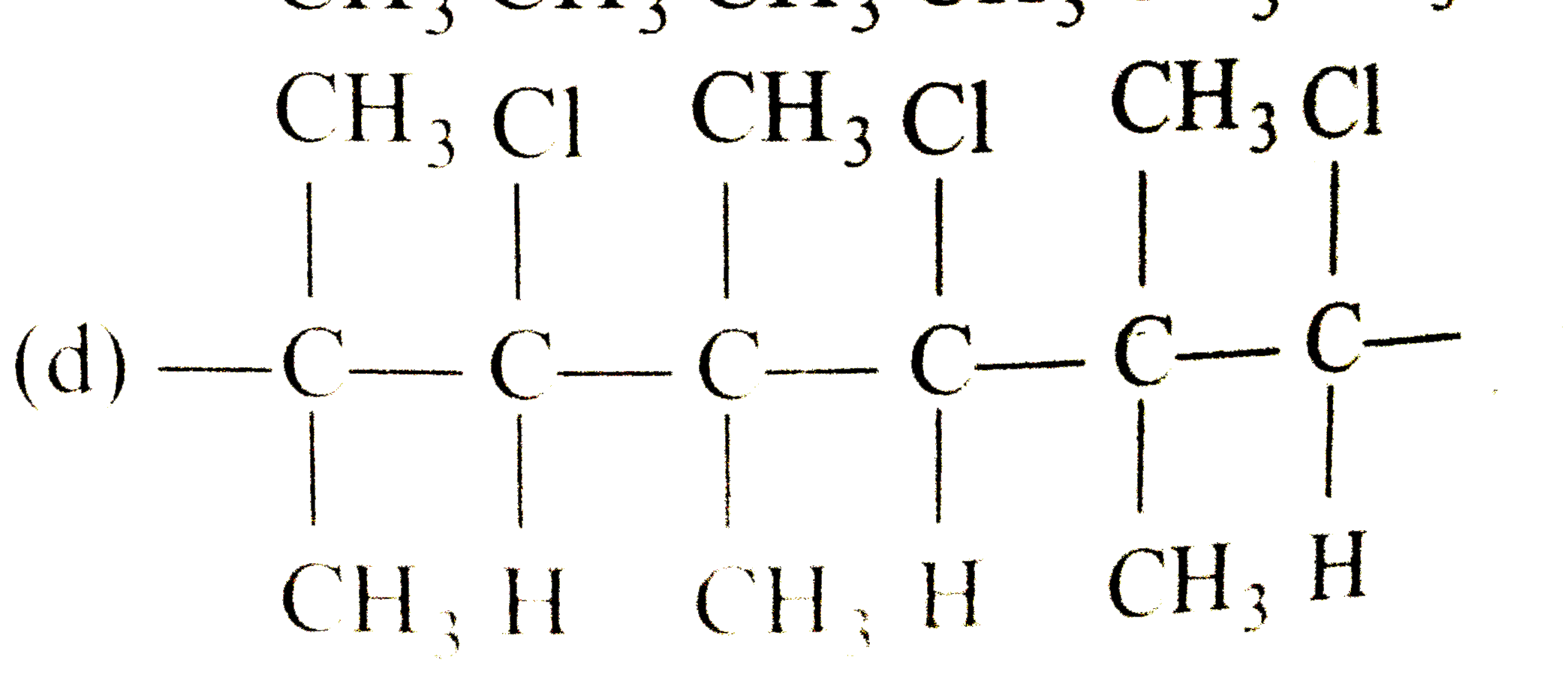
Identify the addition polymer that would be produced from 2-chloro-2-butene. |
|
Answer»
|
|
| 37. |
Identify the (A),(B),(C) and (D) in the following reactions sequence: |
Answer» SOLUTION :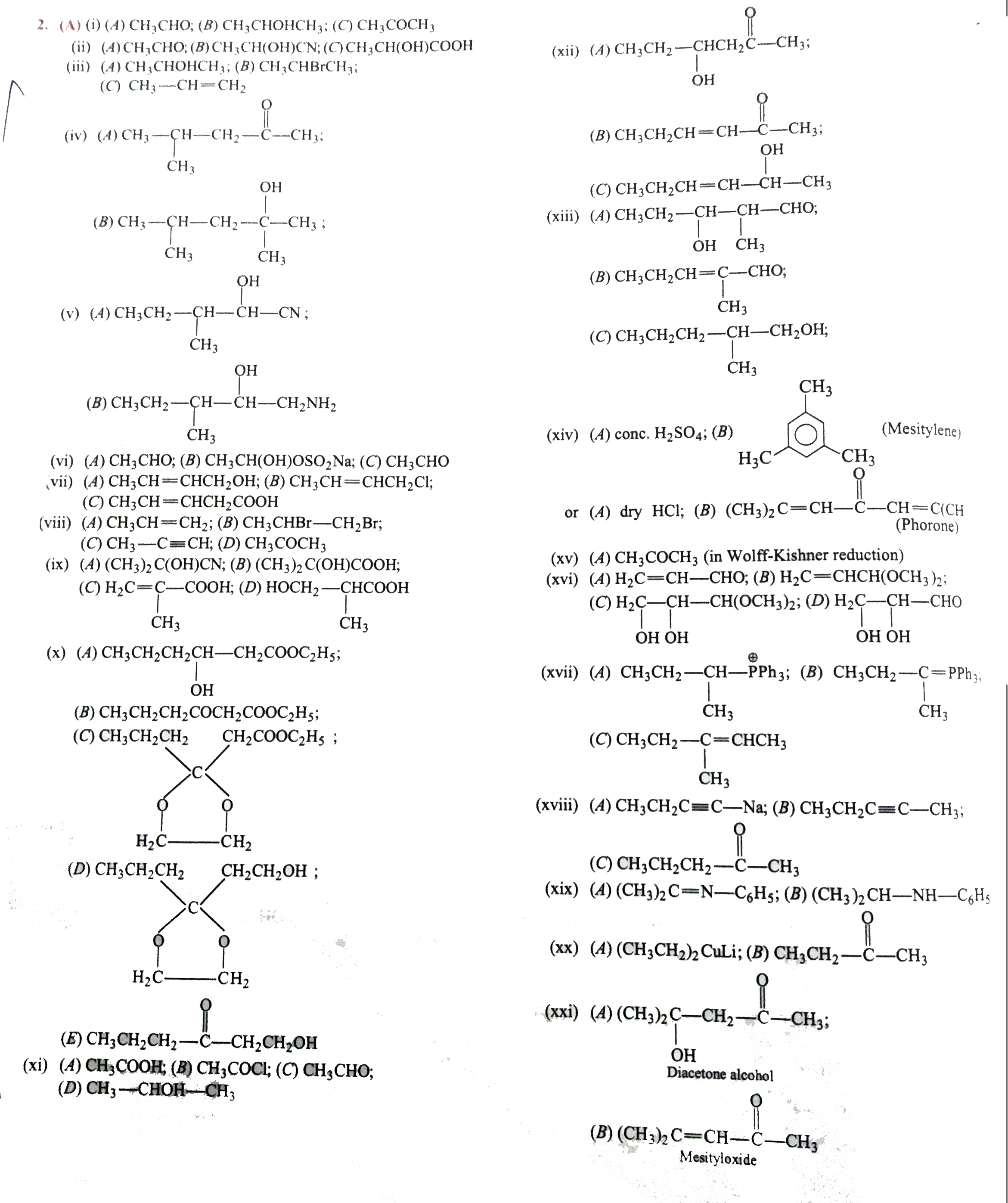 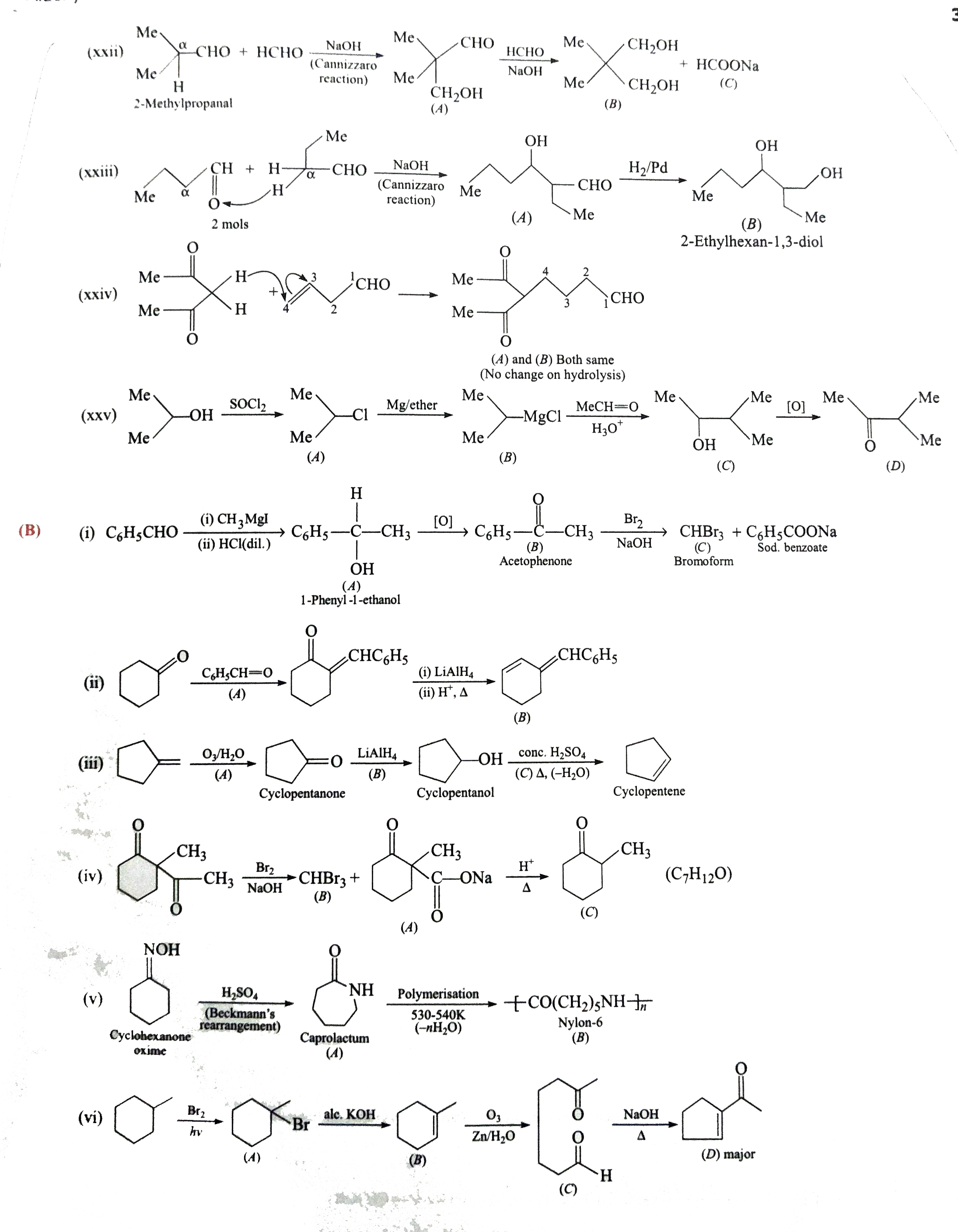 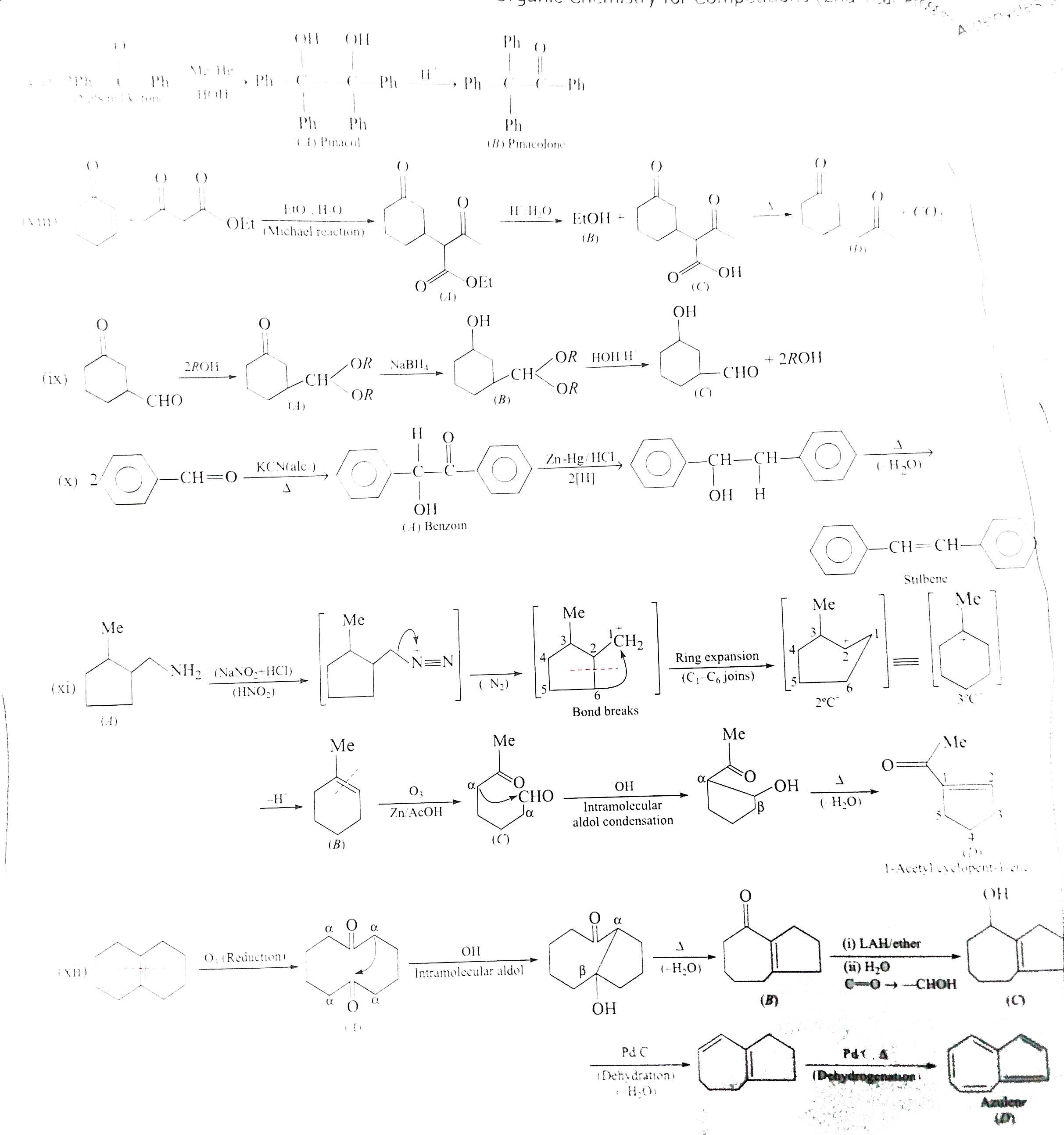
|
|
| 38. |
Identify structure of (X) : |
|
Answer»
|
|
| 40. |
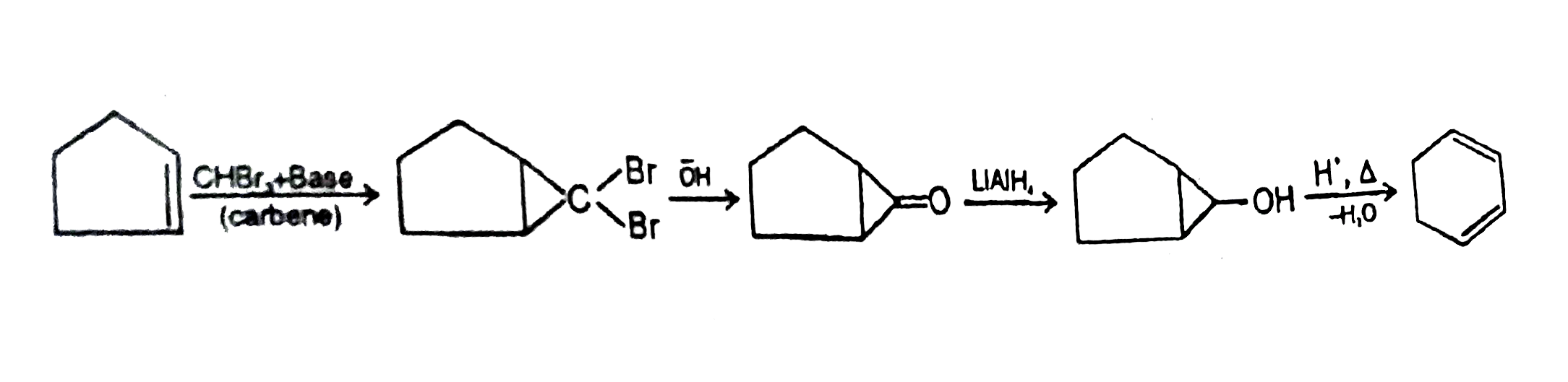
Identify structure of compound (D). |
|
Answer»
|
|
| 41. |
Identify structure of product P : |
|
Answer»
|
|
| 42. |
CH_3 -CH_2 - CH_2- Br overset(Alc.KOH)toCH_3-CH =Br overset(HBr)to CH_3 - overset(Br) overset(|)(CH) -CH_3 |
|
Answer» X = dilute NaOH, `20^@C` , Y = HBr/acetic acid, `20^@C` |
|
| 43. |
Identify salts (A)and(B)based on following reactions: |
| Answer» Solution :(A): `NH_(4)NO_(2)` (B): `NH_(4)NO_(3)` (C): `N_(2)`, (D): AIN (E): `N_(2)O` | |
| 45. |
Identify reactions that correctly match with their products: |
|
Answer»
(B) Hoffmann product (C) Hoffmann product (D) `E_(1) CB` |
|
| 46. |
Identify reactions that correctly match with their products? |
|
Answer»
(B) More SUBSTITUTED alkene FINAL PRODUCT. |
|
| 47. |
Identify reaction type: _(13)^(27)Al+_(1)^(2)H rarr _(13)^(28)Al+_(1)^(1)H |
| Answer» Answer :A | |
| 48. |
Identify reactant (X) in the given reaction sequence. CH_(3)COCH_(3)+X to (CH_(3))_(3)C-OMg-Cl overset(H_(2)O) to(CH_(3))_(3)C-OH+Mg{:(" OH"),("/"),("\"),(" Cl"):} |
|
Answer» `CH_(3)MGCL` |
|
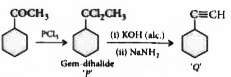
| 49. |
Identify 'Q' in the following sequence of reactions: |
|
Answer»
|
|
| 50. |
Identify .Q. in the following sequency of reactions : |
|
Answer»

|
|