Saved Bookmarks
This section includes 7 InterviewSolutions, each offering curated multiple-choice questions to sharpen your Current Affairs knowledge and support exam preparation. Choose a topic below to get started.
| 1. |
Hydrogenation of C_6H_5CHOHCOOH over Rh-Al_2O_3 catalyst in methanol gives : |
|
Answer» `C_6H_5CH_2COOH |
|
| 2. |
Hydrogenation of benzoyl chloride in the presence of Pd on BaSO_(4) gives |
|
Answer» benzyl ALCOHOL |
|
| 4. |
Hydrogenation of alkenes and alkynes takes place in presence of certain catalysts. In Sabatier Senderen's reaction, the addition of hydrogen takes place I presence of Raney nickel catalyst. Platininm and palladium can also be used as catalyst and used in finley divided state. Experimentally, it is observed that less crowded alkenes adsorb H_(2) with faster rate. Controlled hydrogenation of alkyne H_(2) with faster rate. Controlled hydrognetation of alkyne in presence of Lindlar's catalyst yields cis producti.e.,'cis' alkene. Thus, in presence of Lindlar's catalyst 'syn' addition takes place. The relative rate of hydrogenation follows the order: Non-terminal alkynes are reduced in presence of Na or Li metal dissolved in liquid ammonia. In this reaction, anti-addition of hydrogen results into the trans-product. Powdered nickel is more effective than grannular nickel because: |
|
Answer» Surface AREA of powdered nickel is maximum |
|
| 5. |
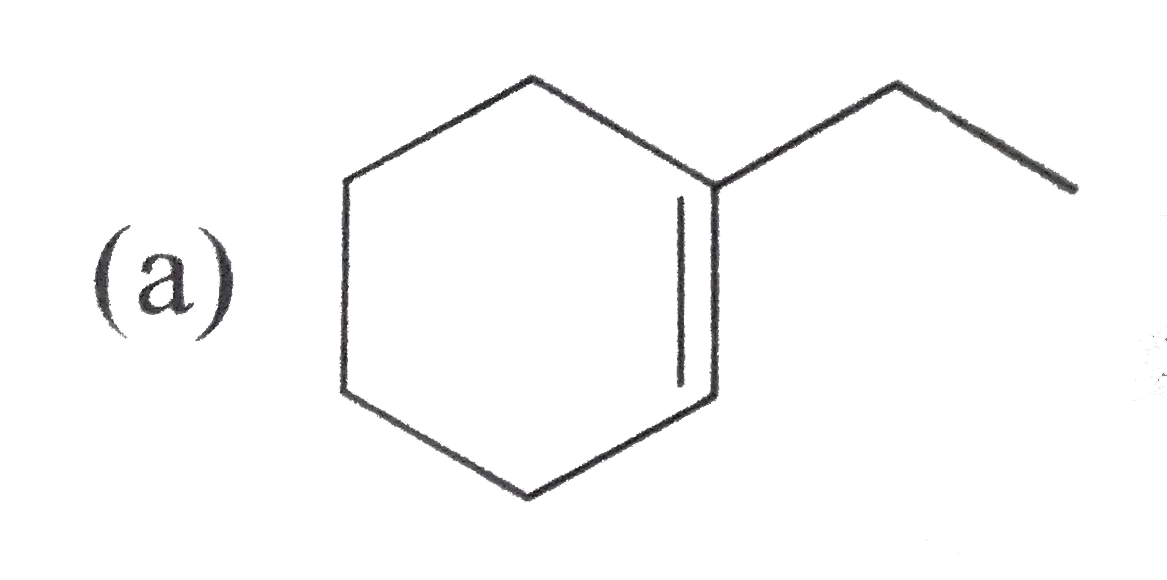
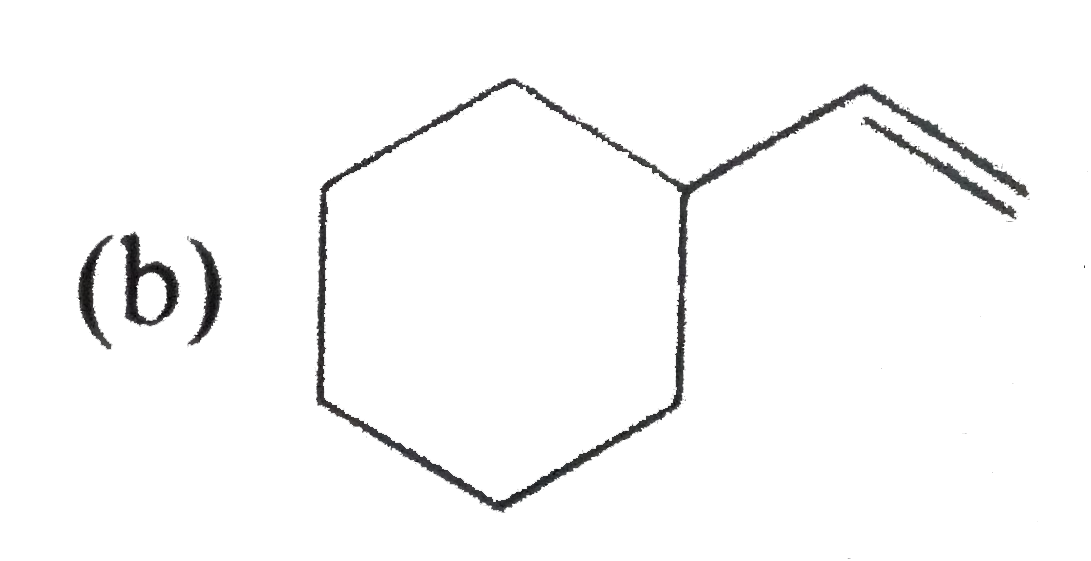
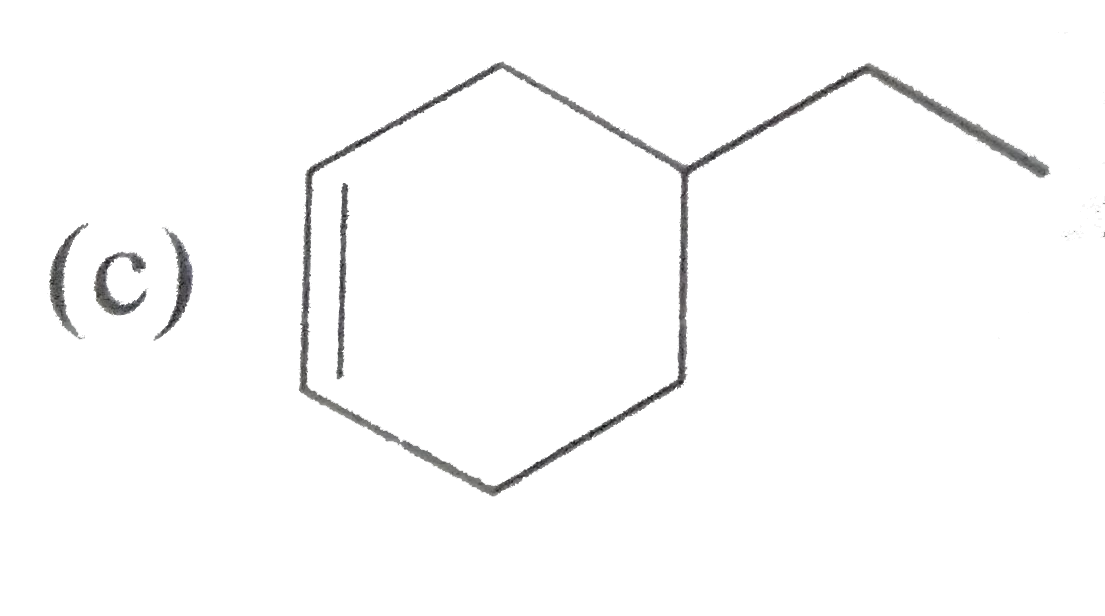
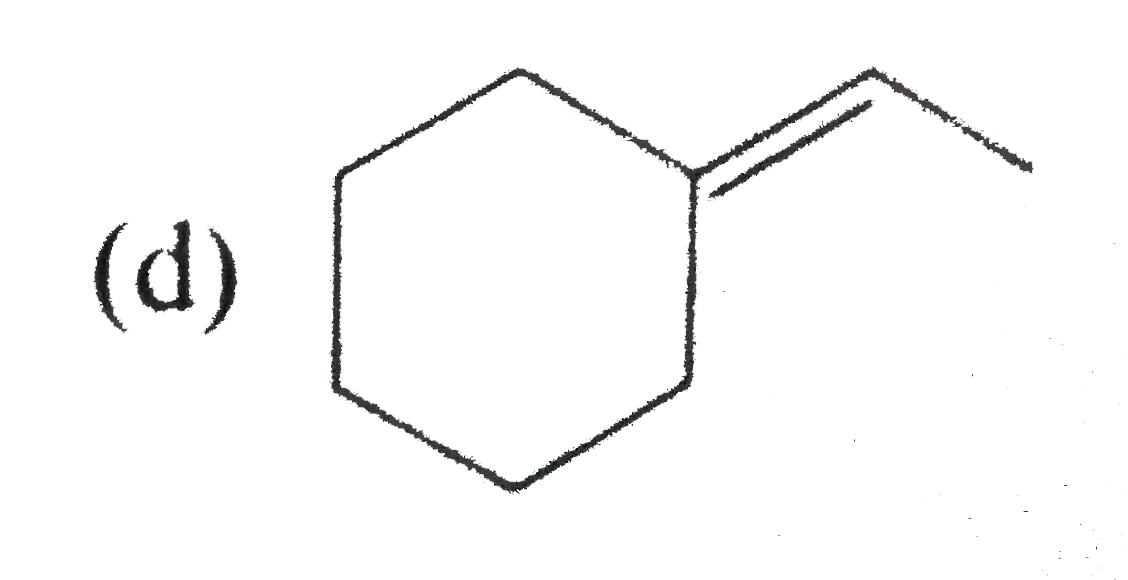
Hydrogenation of alkenes and alkynes takes place in presence of certain catalysts. In Sabatier Senderen's reaction, the addition of hydrogen takes place I presence of Raney nickel catalyst. Platininm and palladium can also be used as catalyst and used in finley divided state. Experimentally, it is observed that less crowded alkenes adsorb H_(2) with faster rate. Controlled hydrogenation of alkyne H_(2) with faster rate. Controlled hydrogenation of alkyne in presence of Lindlar's catalyst yields cis producti.e.,'cis' alkene. Thus, in presence of Lindlar's catalyst 'syn' addition takes place. The relative rate of hydrogenation follows the order: Non-terminal alkynes are reduced in presence of Na or Li metal dissolved in liquid ammonia. In this reaction, anti-addition of hydrogen results into the trans-product. In which of the following cases, the reaction is most exothermic? |
|
Answer»
|
|
| 6. |
Hydrogenwill not reduce |
|
Answer» heatedcupric OXID |
|
| 7. |
Hydrogen will not reduce :- |
|
Answer» HEATED CUPRIC oxide |
|
| 8. |
Hydrogen sulphide reacts with lead acetate forming a black compound which reacts with H_2O_2 to form another compound. The colour of the compound is: |
|
Answer» Black |
|
| 9. |
Hydrogen sulphide is not a group reagent for (basic radical) |
|
Answer» `2^(ND)` group RADICALS |
|
| 10. |
Hydrogen sulphide is important in cation analysis. Explain. |
|
Answer» Solution :Group 2 and Group 4cations are PRECIPITATED as their respective SULPHIDES. Group 2 cations have lower solubility. Hence they are precipitated in dilute acid medium. |
|
| 11. |
Hydrogen sulfide is a monobasic acid in solution. |
| Answer» SOLUTION :HYDROGEN SULFIDE is a DIBASIC ACID. | |
| 12. |
Hydrogen shows : |
|
Answer» +1 OXIDATION STATE only |
|
| 13. |
Hydrogen resembles in many of its properties with: |
|
Answer» ALKALI metals |
|
| 14. |
Hydrogen produced in contact with substance which is to be reduced is : |
| Answer» Answer :D | |
| 15. |
Hydrogen peroxide solution (20 ml) reacts quantitavely with a solution of KMnO_(4) (20 ml) acidified with dilute H_(2)SO_(4). The same volume of the KMnO_(4) solution is just decolourized by 10 ml of MnSO_(4) in neutral medium simultaneously forming a dark brown precipitate of hydrated MnO_(2). The brown precipitate is dissolved in 10 of 0.2 M sodium oxalate under boiling condition in the presence of dilute H_(2)SO_(4). Write the balanced equations involved in the reactions and calculate the volume strength of H_(2)O_(2). |
|
Answer» SOLUTION :Meq. Of `MnO_(2) = " Meq. of " Na_(2)C_(2)O_(4)` ` = 10 xx 0.2 xx 2 = 4` ` (C_(2)O_(4)^(2-) to 2CO_(2), ` n- factor = 2) Millimoles of `MnO_(2) = 4/2 = 2` 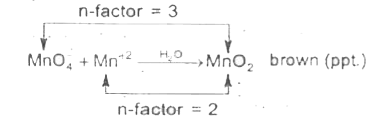 or `2MnO_(4)^(-) + 3Mn^(2+) to 5MnO_(2) `(MOLE ratio is reciprocal of n-factor ratio ) `("Millimoles of " MnO_(4)^(-))/("Millimoles of " MnO_(2))= 2/5` Millimoles of `MnO_(4)^(-) = 2/5 xx ` Millimoles of `MnO_(2)` ` = 2/5 xx 2 = 4/5` `2KMnO_(4) + 5H_(2)O_(2) + 3H_(2)SO_(4) to 2MnSO_(4) + K_(2)SO_(4) + 8H_(2)O + 5O_(2)` ` ("Millimoles of " H_(2)O_(2))/("Millimoles of " MnO_(4)^(-)) = 5/4 ` ` :. ` Millimoles of `H_(2)O_(2) = 5/2 xx 4/5 = 2` `N_(H_(2)O_(2)) xx 20 = 2 xx 2("n- factor for " H_(2)O_(2) = 2) ` `:. N_(H_(2)O_(2)) = 0.2` Volume STRENGTH of `H_(2)O_(2) = 5.6 xx N_(H_(2)O_(2))` ` = 5.6 xx 0.2 = 1.12` |
|
| 16. |
Hydrogen peroxide solution (20 mL) reacts quantitatively with a solution of KMnO_(4) (20 mL) acidfied with dilute H_(2)SO_(4).The same volue of theKMnO_(4) solution is just decoulurisedby 10 mL of MnSO_(4) in neutral medium forming a dark brown precipitate of hydrated MnO_(2) . the brownprecipitate isdissolved in 10 mL of 0.2M solution oxalate under boilingcondition in the presence of dilute H_(2)SO_(4).Writethe balancedequationsinvolved in teh reactions and calculate the molarity of H_(2)O_(2) . |
|
Answer» Solution :m.e of `H_(2)O_(2)` in 20 mL solution = m.e of 20 mL of `KMnO_(4)` = m.e of 20 mL of `MnsO_(4)` = m.e of `MnO_(2)` = m.e of `Na_(2)C_(2)O_(4)` ` = 0.4 xx 10 ` (NORMALITY = MOLARITY `xx` change in ON) = 4 EQ. of `H_(2)O_(2)` in 20 mL solution ` = 4/1000` Moleof `H_(2)O_(2)//20 mL = 4/1000 xx1/2 ` Molarity (mole.L) = `4/2000 xx 1000/20` `0.1 M ` The reactions involved are , `5H_(2)O_(2)+2KMnO_(4)+3H_(2)SO_(4)=2MnSO_(4)+K_(2)SO_(4)+8H_(2)O+5O_(2)` `2KMnO_(4) +3MnSO_(4) +2H_(2)O = 5MNO_(2) +2H_(2)O ` `MnO_(2) +Na_(2)C_(2)O_(4) +2H_(2)SO_(4) = MnSO_(4) +Na_(2)SO_(4) +CO_(2)+2H_(2)O ` |
|
| 17. |
Hydrogen peroxide solution (20 mL) reacts quantitatively with a solution of KMnO_(4) (20mL) acidified with dilute of H_(2)SO_(4). The same volume of the KMnO_(4) solution is just decolourised by 10 mL of MnSO_(4) in neutral medium simultaneously forming a dark brown precipitate of hydrated MnO_2. The brown precipitate is dissolved in 10 mL of 0.2 M sodium oxalate under boiling condition in the presence of dilute H_(2)SO_(4). Write the balanced equations involved in the reactions and calculate the molarity of H_(2)O_(2). |
|
Answer» |
|
| 18. |
Hydrogen peroxide works as : |
|
Answer» An OXIDANT only |
|
| 19. |
Hydrogen peroxide on heating gives |
|
Answer» HYDROGEN and OXYGEN. |
|
| 20. |
Hydrogen peroxide, povidone - iodine, chlorine compounds, benzalkonium chloride. |
| Answer» SOLUTION :CHLORINE COMPOUNDS. It is a DISINFECTANT whereas others are antiseptic. | |
| 21. |
Hydrogen peroxide molecules are |
|
Answer» diatomic and form `HO_(2)^(-)`ions |
|
| 22. |
Hydrogen peroxide reacts with ethylene to give |
|
Answer» ETHANE |
|
| 23. |
Hydrogen peroxide linerates iodine from acidified potassium iodide. Identify the oxidation reaction. |
|
Answer» SOLUTION :`H_(2)O_(2) + H_(2)SO_(4) + 2KI RARR I_(2) + K_(2)SO_(4) + 2H_(2)O` In this reaction, iodide is oxidised to iodine. Hydrogen peroxide acts as oxidant in this reaction. Oxidation reaction is : `2I^(-) rarr 2E^(-) + I_(2)` |
|
| 24. |
Hydrogen peroxide is usedas an antiseptic under the name |
| Answer» Answer :B | |
| 25. |
Hydrogen peroxide is now generally prepared on industrial scale by the: |
|
Answer» Action of `H_2SO_4` on BARIUM peroxide |
|
| 26. |
Hydrogen peroxide has a non-planar structure. In gas phase of H_(2)O_(2), dihedral angle is v^(@) and in solid phase at 110 K, its dihedral angle is y^(@). What are x and y ? |
|
Answer» `90^(@), 90^(@)` 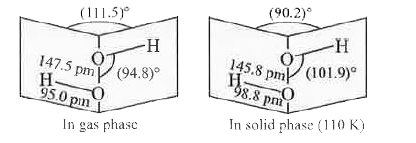
|
|
| 27. |
Hydrogen peroxide has ----- structure . |
|
Answer» LINEAR structure |
|
| 28. |
Hydrogen peroxide for the first, time was prepared by: |
|
Answer» Priestley |
|
| 29. |
Hydrogen peroxide does not |
|
Answer» liberate iodide from KI |
|
| 30. |
Hydrogen peroxide does not: |
|
Answer» Liberate iodine from KI |
|
| 31. |
Hydrogen peroxide cannot be concentrated easily because |
|
Answer» it decomposes at its boiling point |
|
| 32. |
Hydrogenperoxide can be prepared from |
|
Answer» NAOH |
|
| 33. |
Hydrogen - oxygen fuel cells are used in space prograins to supply |
|
Answer» Power |
|
| 34. |
Hydrogen-oxygen fuel cell are used in space-craft to supply |
|
Answer» POWER for heat and light |
|
| 35. |
Hydrogen of vegetable ghee at 250^(@)C reduces pressure of H_(2) from 2 atm to 1.2 atm in 30 minutes. The rate of reaction in terms of molarity per secondis |
|
Answer» `1.03xx10^(-6)` |
|
| 36. |
Hydrogenof acetadehydeare nothighlyacidicmediumexplain . |
|
Answer» Solution :In weakly ACIDIC MEDIUM, the carbonyl group is protonated. As a result of PRESENCE of +ve charge on carbon, the protonated carbonyl group UNDERGOES nucleophilic attack of hydrazine easily `[-underset(| )C= O +H^+ hArr - underset(| ) C=overset(+)OH harr- underset(|) C^(+)- underset(* *) overset(**) H]` In strongly acidic medium, the hydrazine being basic in nature, forms its salt by protonating the unshared pair of electrons on N atom. `H_2overset(* *) n overset(**)NH_2 overset(H^+ ) hArrH_3^(-) N NH_2` This salt cannot act as nucleophile. Thus, to CARRY out these reactions, we have to control the pH between 3 and 4. |
|
| 37. |
Hydrogen may be prepared by heating a solution of caustic soda with: |
|
Answer» Mg |
|
| 38. |
Hydrogen is not used for ? |
|
Answer» Manufacture of vegetable ghee |
|
| 39. |
Hydrogen is not obtained when zinc reacts with: |
| Answer» Answer :A | |
| 40. |
Hydrogen is evolved by the action of cold dilute HNO_(3) on |
|
Answer» Al |
|
| 42. |
Hydrogen is a common reductantof organic chemicals, but it isnotwidelyused in metallurgy. Substantiate. |
|
Answer» Solution :METALLURGICAL reductions are usually high temperature processes. At elivated temperatures, hydrogen may form hydrides withmetals. Metallurgical OPERATIONS in open VESSELS lead to be combination of hydrogen with oxygento form water. Further, Ellinghamcurve has a positive slopeand is parallel to the CURVES of several metal OXIDES. |
|
| 43. |
Hydrogen ion concentration of an aqueous solution is 1 xx 10^(-8) M. The solution is diluted with equal volume of water. Hydroxyl ion concentration of the resultant solution in terms of mol dm^(-3) is |
|
Answer» `1 xx 10^(-8)` `=1 xx 10^(-10)M` When the solution is diluted by adding EQUAL volume of water, then concentration of the `OH^(-)` ions is HALVED. `i.e., (1)/(2) xx 1xx 10^(-10) =0.5 xx 10^(-10) M` |
|
| 44. |
Hydrogen ion concentration of an aqueous solution is 1 xx 10^(-4)M. The solution is diluted with equal volume of water. Hydroxyl ion concentration of the resultant solution in terms of mol dm^(-3) is |
|
Answer» `2 XX 10^(-10)` `rArr [OH^(-)] = (10^(-14))/(0.5 xx 10^(-4)) = 2 xx 10^(-10)` MOLES `dm^(3)` |
|
| 45. |
Hydrogen ion concentration of an aqueous solution is 1 xx 10^(-4) M. The solution is diluted with equal volume of water. Hydroxyl ion concentration of the resultant solution in terms of mol dm^(-3) is |
|
Answer» `1 xx 10^(-8)` |
|
| 46. |
Hydrogen ion concentration of a solution whose pH is zero, would be |
|
Answer» `2.0g ION L^(-1)` |
|
| 47. |
Hydrogen ion concentration in mol/L in a solution of pH = 5.4 will be |
|
Answer» `3.98 XX 10^(8)` `5.4 = -log[H^(+)], [H^(+)] = 3.98 xx 10^(-6)`. |
|
| 48. |
Hydrogen ion concentration in mol/L in a solution of pH = 5.4 will be : |
|
Answer» `3.98xx10^(-8)` or`[H^(+)]=`ANTILOG `(-pH)` = Antilog `(-5.4)=3.98xx10^(-6)M` |
|
| 49. |
Hydrogen iodide cannot be prepared by the action of conc. H_(2)SO_(4) on KI because : |
|
Answer» `HI` is stronger than `H_(2)SO_(4)` |
|
| 50. |
Hydrogen iodide is injected into a container at 458^(@)C. Certain amount of HI dissociates to H_(2) and I_(2) At equilibrium, concentration of HI is found to be 0.421M while [H_(2)] and [I_(2)] each equal to 6.04xx10^(-2)M, at 458^(@)C. Calculate the value of the equilibrium constant of the dissociation of HI at the same temperature. |
|
Answer» |
|