Saved Bookmarks
This section includes 7 InterviewSolutions, each offering curated multiple-choice questions to sharpen your Current Affairs knowledge and support exam preparation. Choose a topic below to get started.
| 1. |
Hydrolysis of methyl acetate in aqueous solution has been studied by titrating the liberated acetic acid against sodium hydroxide. The concentration of the ester at different times is given below : {:("t/min",,,0,,,30,,,60,,,90),("C/mol L"^(-1),,,0.8500,,,0.8004,,,0.7538,,,0.7096):} Rate =k'["CH"_(3)"COOCH"_(3)]["H"_(2)O] |
|
Answer» Solution :For the GIVEN reaction, rate `=k'["CH"_(3)"COOCH"_(3)]["H"_(2)O]` But as `["H"_(2)O]`remains constant, we put `k'["H"_(2)O]=k` so that rate `=k["CH"_(3)"COOCH"_(3)]` Now, it is a pseudo first ORDER reaction. Hence, for the given data, `k=(2.303)/(t)log""(C_(0))/(C_(t))` We are given `C_(0)=0.8500" mol L"^(-1)` `{:("t/min",,,C_(t)//"mol L"^(-1),,,k=(2.303)/(t)log""(C_(0))/(C_(t))),(30,,,0.8004,,,k=(2.303)/(30min)log""(0.8500)/(0.8004)=2.004xx10^(-3)min^(-1)),(60,,,0.7538,,,k=(2.303)/(60min)log""(0.8500)/(0.7538)=2.002xx10^(-3)min^(-1)),(90,,,0.7096,,,k=(2.303)/(90min)log""(0.8500)/(0.7096)=2.005xx10^(-3)min^(-1)):}` Average value of `k=2.004xx10^(-3)min^(-1)` Thus, `k'["H"_(2)"O"]=k" or "k'[55" mol L"^(-1)]=2.0074xx10^(-3)min^(-1)` `:.k'=(2.004xx10^(-3)min^(-1))/(55" mol L"^(-1))=3.64xx10^(-5)" L mol"^(-1)" min"^(-1).` |
|
| 2. |
Hydrolysisof inulin in acidic medium gives ……… . |
|
Answer» glucose |
|
| 3. |
Hydrolysis of maltose (C_12H_22O_11) by invertase give : |
|
Answer» Gluose |
|
| 4. |
Hydrolysis of HCN give |
|
Answer» FORMIC acid |
|
| 6. |
Hydrolysis of fats oils yields |
|
Answer» DIHYDRIDE alcohol |
|
| 7. |
Hydrolysis of fats and oils yields- |
|
Answer» Dihydric ALCOHOL |
|
| 8. |
Hydrolysis of fats and oils in the body produce : |
|
Answer» A CARBOXYLIC acid |
|
| 9. |
Hydrolysis of ethyl acetate in acidic medium is an example of |
|
Answer» Unimolecular |
|
| 10. |
Hydrolysis of ethanoic anhydride gives |
|
Answer» methanoic ACID |
|
| 11. |
Hydrolysis ofesters in alkaline medium is known as : |
|
Answer» Saponification |
|
| 12. |
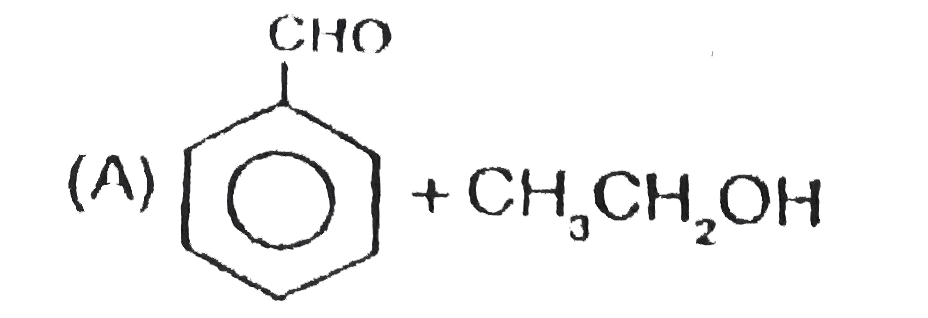
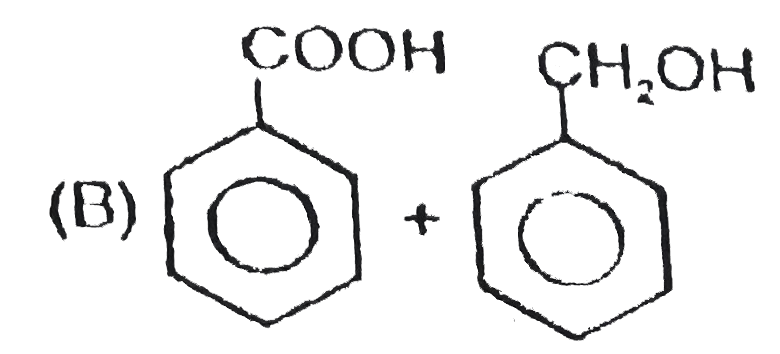
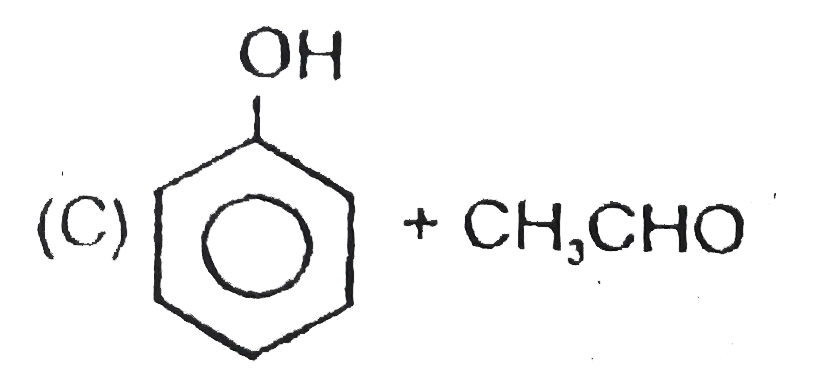
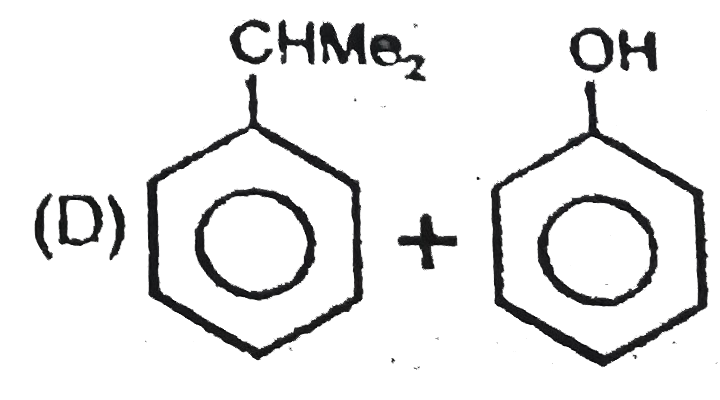
Hydrolysis of cumene hydroperoxide is an important reaction in organic chemistry.This reaction involves migration of phenyl group to electron deficient oxygen. Another reaction which involves group migration is the Schmidt reaction, in which isocyanide intermediate is formed. RCOOHunderset((ii)NaN_3)overset((i)PCl_5)toR-undersetunderset(O)(||)C-N_3overset(Delta)toR-N=C=O("Isocyanate")overset(EtOH)toRNHCOOC_2H_5 Now consider the following scheme of reaction and answer the following questions. (i)+CH_3CH=CH_2overset(H^+)toXoverset(H^+ // K_2Cr_2O_7)toYunderset((ii)NaN_3)overset((i)PCl_5)toZoversetDeltatoWoverset(C_3H_7OH)toP (ii)Xunderset((ii)H_3O^+)overset((i)O_2)toX_1+(CH_3)_2C=O The product P should be |
|
Answer» `C_6H_5OH` |
|
| 13. |
Hydrolysis of d- sucrose result in change of optical rotationbecause: |
|
Answer» number of models of d-GLUCOSE are LESS than the number of moles of l-fructose PRODUCED during hydrolysis. |
|
| 14. |
Hydrolysis of DDT is a first order reaction , its half life is 10 years . Time to hydrolyse 10 g DDT to half is |
|
Answer» 100 YEARS If INITIAL concentration a = 10 gm and final concentration `x = (a)/(2) = 5` gm then , t = `(2.303)/(k)` log `(a)/(a-x) = (2.303)/(0.693) xx 10 xx "log" (10)/(5)` `= (2.303 xx 10 xx "log" 2)/(0.693) = (2.303 xx 10 xx 0.301)/(0.693) = 10 ` years . |
|
| 15. |
Hydrolysis of cyanogen gives |
|
Answer» OXALIC acid +`NH_(3)` 
|
|
| 16. |
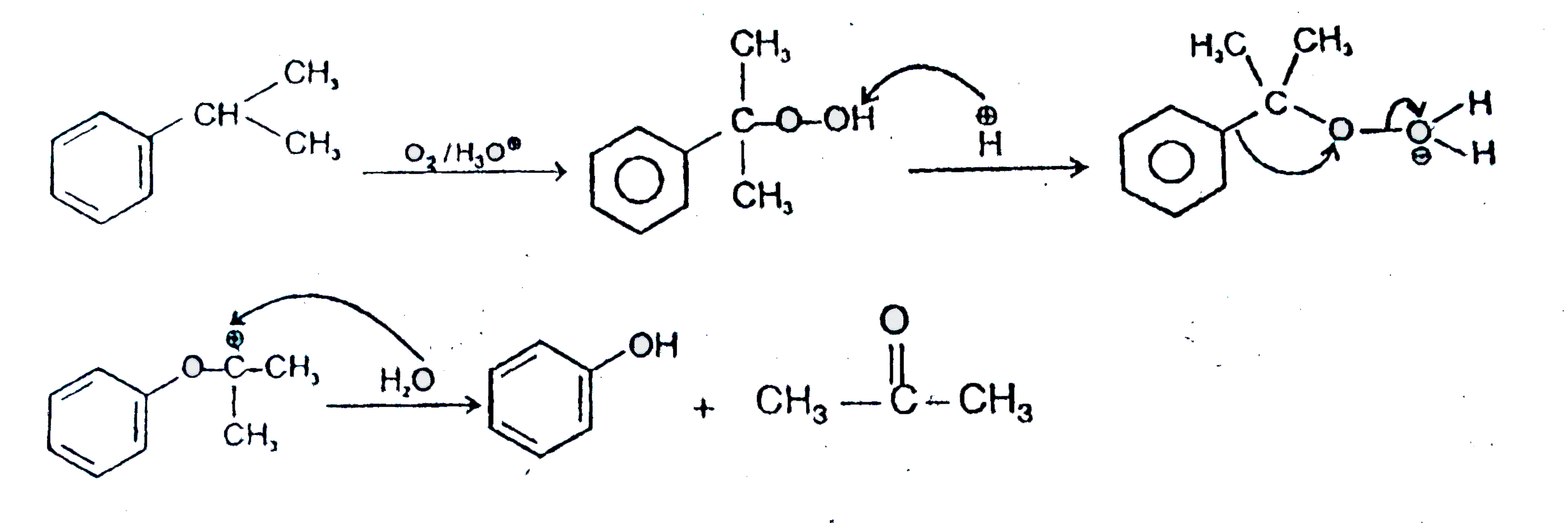
Hydrolysis of cumene hydroperoxide is an important reaction in organic chemistry.This reaction involves migration of phenyl group to electron deficient oxygen. Another reaction which involves group migration is the Schmidt reaction, in which isocyanide intermediate is formed. RCOOHunderset((ii)NaN_3)overset((i)PCl_5)toR-undersetunderset(O)(||)C-N_3overset(Delta)toR-N=C=O("Isocyanate")overset(EtOH)toRNHCOOC_2H_5 Now consider the following scheme of reaction and answer the following questions. (i)+CH_3CH=CH_2overset(H^+)toXoverset(H^+ // K_2Cr_2O_7)toYunderset((ii)NaN_3)overset((i)PCl_5)toZoversetDeltatoWoverset(C_3H_7OH)toP (ii)Xunderset((ii)H_3O^+)overset((i)O_2)toX_1+(CH_3)_2C=O What are X and X_1 |
|
Answer»
|
|
| 17. |
Hydrolysis of CH_(3)CH_(2)NO_(2) with 85% H_(2)SO_(4) gives: |
| Answer» Answer :D | |
| 18. |
Hydrolysis of CH_(3)CH_(2)NO_(2) with 85% H_(2)SO_(4) gives |
|
Answer» `CH_(3)CH_(2)OH` |
|
| 19. |
Hydrolysis of cellulose yields _____. |
|
Answer» D - GLUCOSE |
|
| 20. |
Hydrolysisof CH_(3) - CH_(2) - NO_(2) with 85%H_(2) SO_(4) gives |
|
Answer» `CH_(3) - CH_(2) - CH_(2) - OH` |
|
| 21. |
Hydrolysis of calcium cyanamide gives Hydrazine is formed when ammonia react with |
| Answer» Answer :D | |
| 23. |
Hydrolysis of benzonitrile gives : |
|
Answer» Benzylamine |
|
| 24. |
Hydrolysis of an ester is catalysed by H^(+) ion. Using equimolar concentrations of two acids HX and HY both being strong acids. The rate constants of the reaction are found to eb 3xx10^(-3)"min"^(-1) and 5xx10^(-3)"min"^(-1) respectively at a fixed temperature. It can be concluded that. |
|
Answer» RATE const may be taken as the measure of DEGREE of ionization of one acid used as catalyst. |
|
| 25. |
Hydrolysis of an ester in an aqueous solution was studied by titrating the liberated carboxylic acid against sodium hydroxide solution . The concentration of the ester at different time intervals are given below . {:("Time (min)",0,30,60,90),("Ester concentration "mol L^(-1),0.85,0.80,0.754,0.71):} Show that , the reaction follows first order kinetics. |
Answer» SOLUTION :The value of K at different time can be CALCULATED as follows :  This value shows that reaction follows FIRST order KINETICS . |
|
| 26. |
Hydrolysis of an ester may be achived under acidic as well as basic conditions. Pick up the correct statement regarding this |
|
Answer» Acidic hydrolysis is faster than alkaline hydrolysis. |
|
| 27. |
Hydrolysis of an ester gives a carboxylic acid which on Kolbe's electrolysis yields ethane ester is |
|
Answer» METHYL ethanoate |
|
| 28. |
Hydrolysis of an ester gives acid A and alcohol B. The acid reduces Fehling's solution. Oxidation of alcohol B gives acid, A. The ester is |
|
Answer» METHYL formate |
|
| 29. |
Hydrolysis of an ester gives a carboxylic acid which o Kolbe's electrolysis yields ethane. The ester is |
|
Answer» ETHYL methonoate 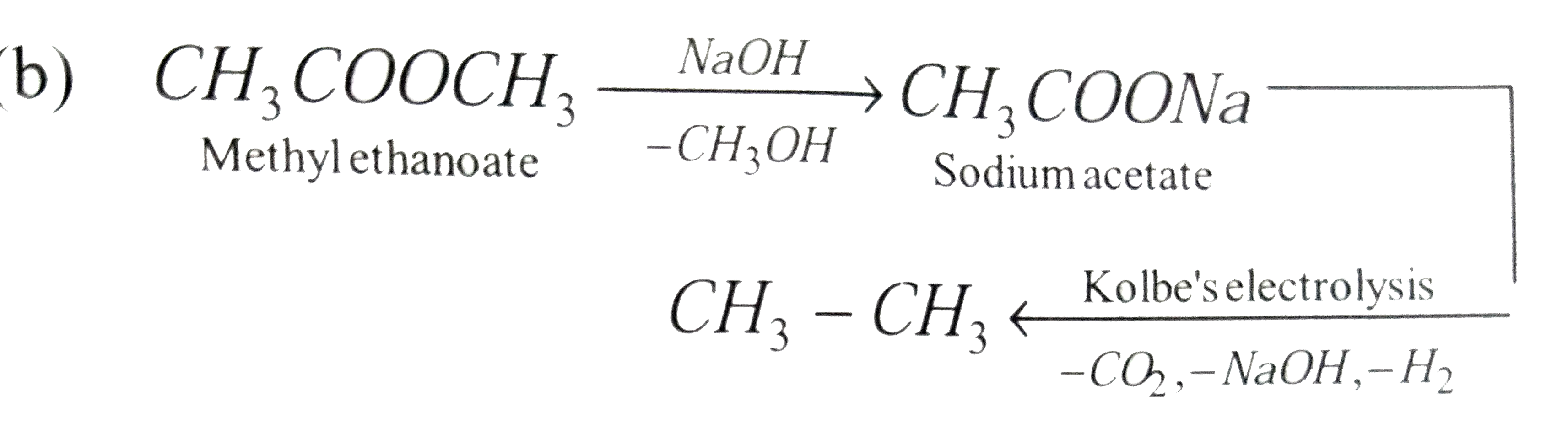
|
|
| 30. |
Hydrolysis of an ester gives acid A and alcohol B. The acid reduces Fehling's solution. Oxidation of alcohol gives acid A. The ester is : |
| Answer» Answer :A | |
| 31. |
Hydrolysis of alkyl halides has been compared. Which of the following comparision is incorrect ? |
|
Answer» `CH_(2)=CHBR gt CH_(2) = CHCH_(2)BR` THUS, hydrolysis is slower. |
|
| 32. |
Hydrolysis of adenosine triposphate involves rupture of |
|
Answer» Base-sugar BOND |
|
| 33. |
Hydrolysis of adenosine triphosphate, involves rupture o: |
|
Answer» Base-sugar bond |
|
| 34. |
Hydrolysis of adenosine triphosphate, involves rupture of: |
|
Answer» Base-sugar bond |
|
| 35. |
Hydrolysis of acid anhydride gives |
|
Answer» aldehydes |
|
| 36. |
Hydrolysis of acetamide produces |
|
Answer» Acetic acid |
|
| 37. |
Hydrolysis of acetonitrile in acidic medium gives |
|
Answer» `CH_3CH_2OH` |
|
| 38. |
Hydrolysis of (+)-sucrose (ordinary table sugar) yields |
|
Answer» D-glucose |
|
| 39. |
Hydrolysis is regarded as an interaction between : |
|
Answer» `H^+ , `OH^-` IONS |
|
| 42. |
Hydrogenaton of vegetable thee at 25^(@)C reduces pressure of H_(2) from 2 atm to 1.2 atm in 50 minute. The rate of reaction in terms of molarity per second is |
|
Answer» `1.06xx10^(-6)` |
|
| 43. |
Hydrogenation of vegetable oils in the presence of finaly divided nickel as catalyst, the reaction is : |
|
Answer» ENZYME CATALYSED reaction |
|
| 44. |
Hydrogenation of vegetable oils in the presence of finely divided nickel as catalyst. The reaction is |
|
Answer» enzyme catalysed reaction `"Vegetable OIL"_(l)+H_(2(g)) overset(Ni_(s))to "Vegetable ghee"_(s)` |
|
| 45. |
Hydrogenation of vegetable oils in presence of finely divided Nickel as catalyst. The reaction is |
|
Answer» ENZYME CATALYSED REACTION |
|
| 46. |
Hydrogenation of vegetable ghee at 25^@C reduces pressure of H_2 from 2 atm to 1.2 atm in 50 minute. The pressure of H_2 from 2 atm to 1.2 atm in 50 minute. The rate of reaction in terms of molarity per second is : |
|
Answer» `1.09xx10^-6` |
|
| 47. |
Hydrogenation of phenol in the presence of Nickel gives ……………… . |
|
Answer» CYCLO hexane |
|
| 48. |
Hydrogenation of ethylene in the presence of nickel catalyst follows ........... theory. |
| Answer» SOLUTION :ADSORPTION | |
| 49. |
Hydrogenation of oils involves : |
|
Answer» Saturation of UNSATURATED FATTY acid |
|