Saved Bookmarks
This section includes 7 InterviewSolutions, each offering curated multiple-choice questions to sharpen your Current Affairs knowledge and support exam preparation. Choose a topic below to get started.
| 1. |
Hydro-metallurgical process of extraction of metals is based on |
|
Answer» COMPLEX formation |
|
| 2. |
Hydroazobenzene on treatement with H_(2)SO_(4) forms |
|
Answer» Azobenzene  This is KNOWN as Benzidine REARRANGEMENT. |
|
| 3. |
Hydro chloric acid is used in manufacture of {:(A,"Chlorine",B.NH_(4)Cl),(C.,C_(6)H_(12)O_(6),D."Bromine"),(E,C_(12)H_(22)O_(11),):} |
|
Answer» All are correct |
|
| 4. |
Hydro chloric acid decomposes salts of which compounds |
|
Answer» STRONG acid |
|
| 5. |
Hydrides of oxygen and sulphur differ in physical state due to |
|
Answer» presence of intermolecular HYDROGEN bonding in the hydrides of OXYGEN |
|
| 6. |
Hydrides of group 16 are weakly acidic in nature. The correct order of acidity is |
|
Answer» `H_2O gt H_(2)S gt H_(2)Se gt H_(2)TE` |
|
| 7. |
......hydrides are non inflammable. |
|
Answer» `NH_(3)` |
|
| 8. |
Hydride of sulfur is more stable than that of oxygen. The given statement is correct or not? |
| Answer» SOLUTION :HYDRIDE of sulfur is LESS stable than of oxygen | |
| 9. |
Hydride of sulfur is more stable than that of oxygen. |
| Answer» SOLUTION :HYDRIDE of sulfur is less STABLE than of OXYGEN | |
| 10. |
Hydride of ether is |
|
Answer» aldehyde |
|
| 11. |
In an aqueous solution, hydrogen (H_2) will not reduce: |
|
Answer» HEATED CUPRIC oxide |
|
| 12. |
Hydrogen cannot reduce : |
|
Answer» HEATED CUPRIC oxide |
|
| 13. |
Hydrazones of aldehydes and ketones are not prepared in highly acidic medium. Explain. |
Answer» Solution :In highly ACIDIC medium, the `NH_(2)` group of hydrazine gets protonated.  Due to strong -I-effect of the `OVERSET(+)(N)H_(3)` group, the lone pair of ELECTRONS on the `-NH_(2)` group of protonated hydrazine is not available for nucleophilic attack on the C=O group and hence hydrazone formation does not occur. |
|
| 15. |
Hydrazobenzene reacts with cold conc. HCl to form : |
|
Answer» Azobenzene |
|
| 16. |
Hydrazobenzene can be obtained by reducing nitrobenzene with |
|
Answer» `SN + HCI` 
|
|
| 19. |
Hydrazine as a drug is also used in the treatment of |
|
Answer» TUBERCULOSIS |
|
| 20. |
Hydrazine as a drug is also used in the treatment of : |
|
Answer» TYPHOID |
|
| 21. |
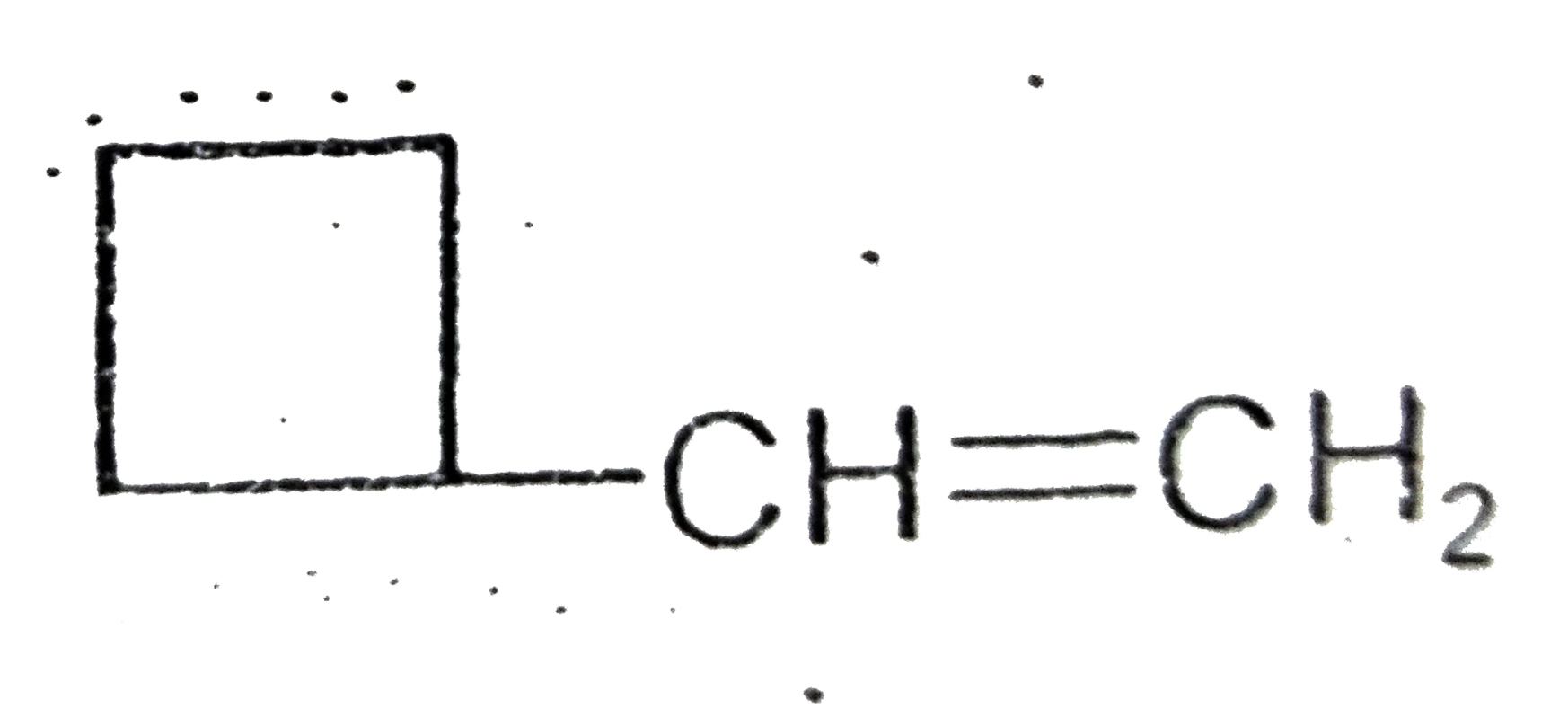
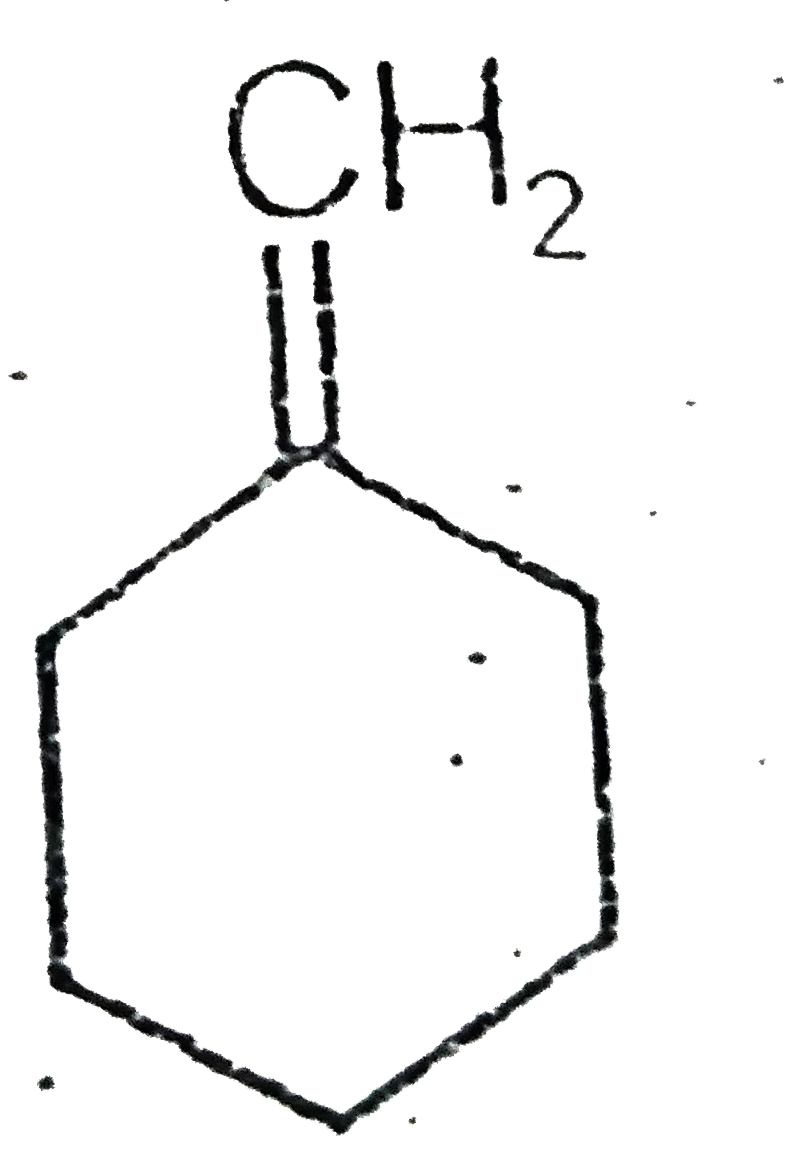
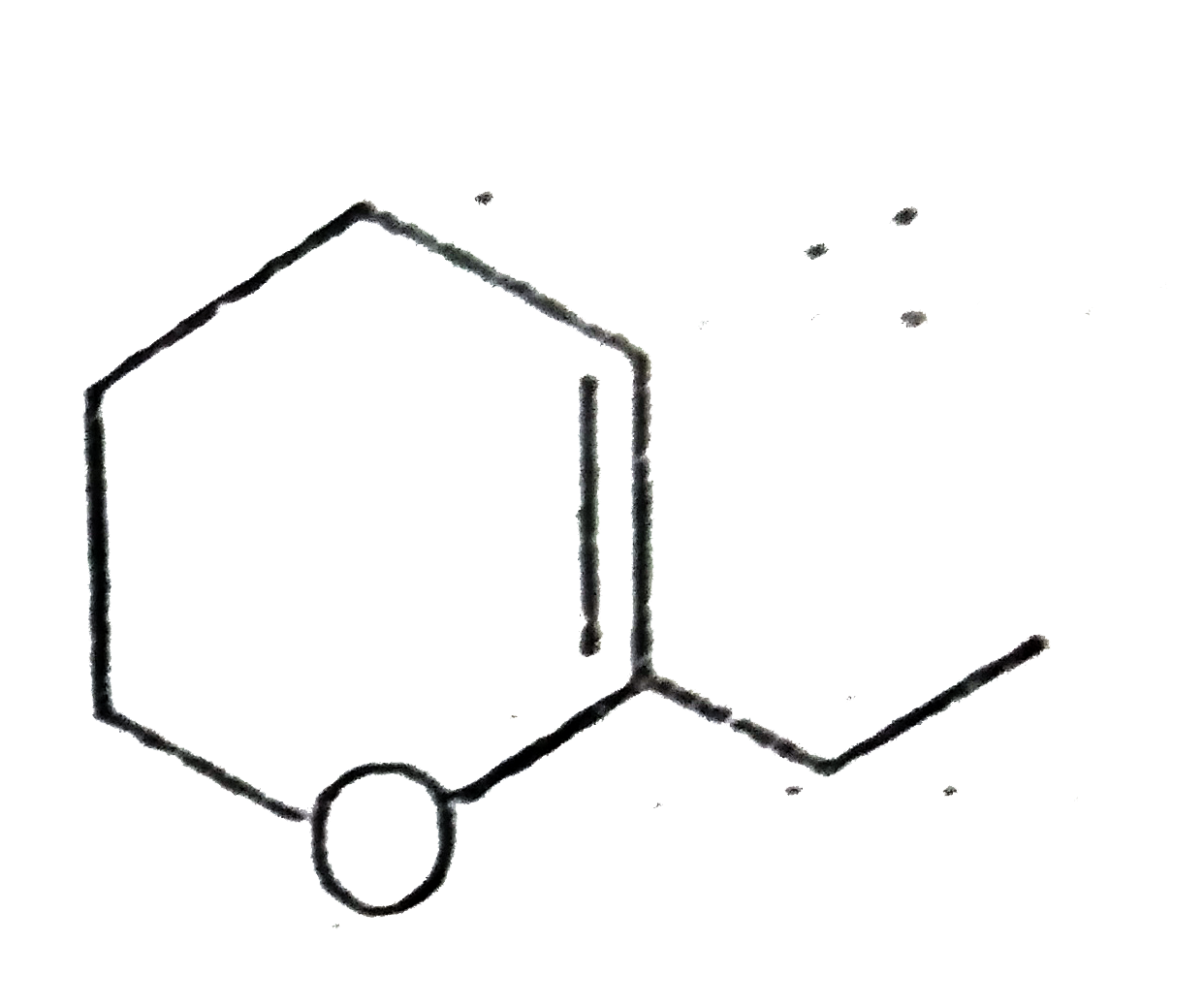
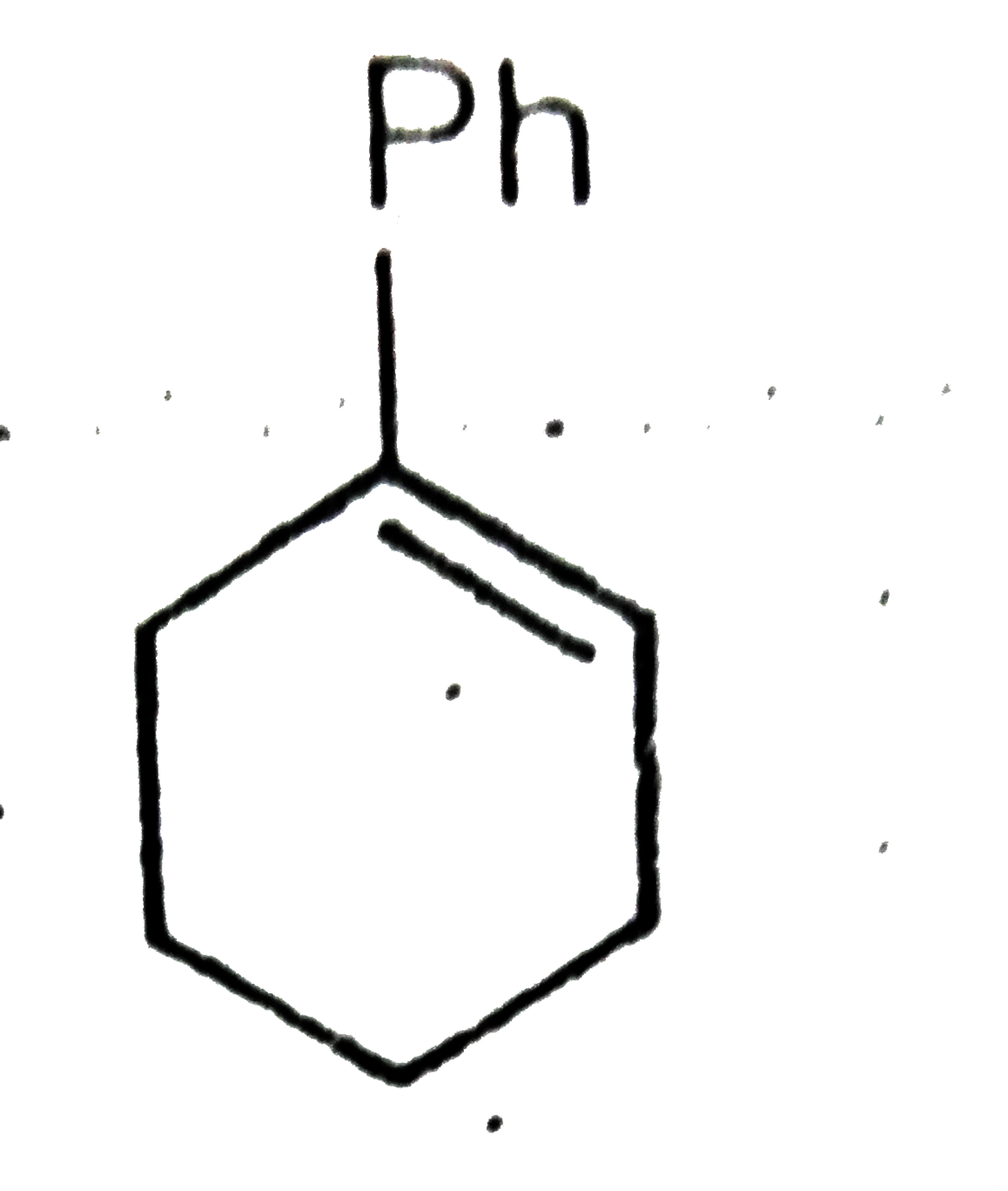
Hydration reaction of alkene is catalyzed by dilute acid. Selection of acid is important . Conjugate base of the acid should not interfere in the reaction. There are other means by which alkenes can be converted to alcohols. Oxymercuration demercuration gives Markovnikoff's alcohols while hydroboration oxidation give Anti Markovnikoff's alcohol. When subjected to acid catalyzed hydration which of the following alkene will give rearrangement alcohol as the predominant product? |
|
Answer»
|
|
| 22. |
Hydraulic classifier is __________. |
|
Answer» CONICAL in shape |
|
| 23. |
Hydration of which one of the following yields a ketone |
|
Answer» Propyne 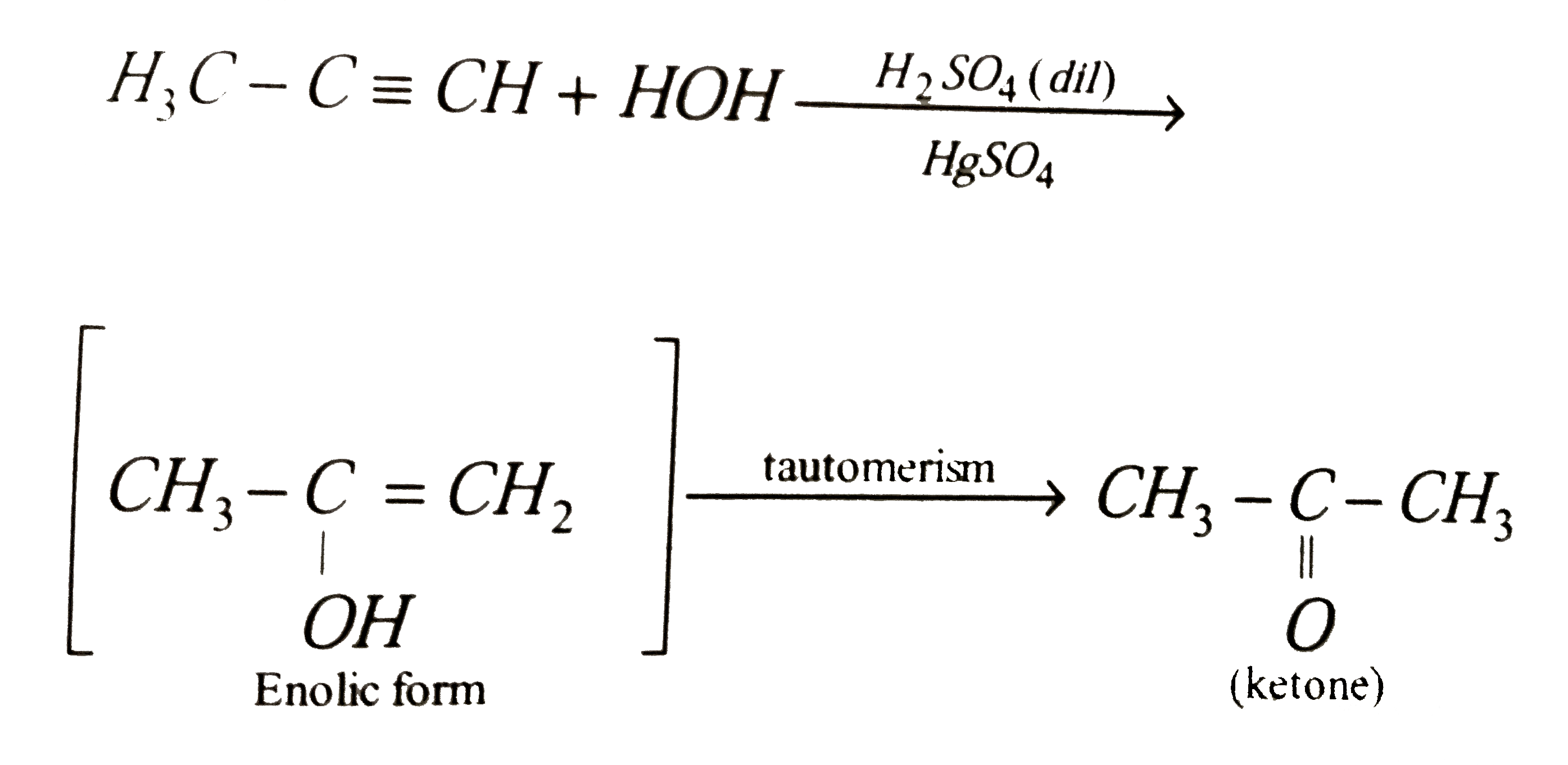
|
|
| 24. |
Hydration of which of the given compounds leads to the formation of 2-methylpropan-2-ol? |
|
Answer» 2-methylpropane |
|
| 25. |
Hydration of which of the following yields ketone ? |
|
Answer» Propyne |
|
| 26. |
Hydration of an alkyne to get an aldehyde or ketone is possible in the presence of Hg^(2+) ions and H_2SO_4 |
|
Answer» |
|
| 27. |
Hydration of alkynes catalysed by H_2 SO_4 in presence of Hg^(+2) give carbonyl compounds. Which of the following is correct. |
|
Answer» Acetylene gives acetaldehyde `(C ) ` Terminalalkynes`R-C-= CH underset(H_2SO_4) overset(Hg^(+2))to[R -underset(OH) underset(|)C=CH_2] to R- underset(O) underset(||)C-CH_3` (D) Non-terminalalkynesgive ketons `R-C-=C -Runderset(H_2SO_4)overset(Hg^(+2))to[R-CH= underset(OH) underset(|)C-R ] toR- CH_2 - underset(O) underset(||)C-R ` ( ketones) |
|
| 28. |
Hydration of 3-phenyl-1.butene with dil. H_(2)SO_(4), is not a satisfactory method for preparing 3-phenyl-2-butanol because 2-phenyl-2-butanol is obtained instead. Explain. |
| Answer» Solution :Hydration form `2^(@)` carbocation which undergoes a HYDRIDE SHIFT to STABLE `3^(@)` benzylic carbocation. | |
| 29. |
Hydration of alkenes (except ethylene ) in presence of acid produce- |
|
Answer» `1^@` ALCOHOLS |
|
| 30. |
Hydration of alkene produces |
|
Answer» `1^@`ALCOHOLS or `2^@` alcohols |
|
| 31. |
Hydration of 3- phenylbut -1- ene with dil , H_2SO_4 mainly gives |
|
Answer» 3- Phenlbutan -1-OL |
|
| 34. |
Hydrated sulphate of a divalent metal of atomic weight 65.4 loses 43.85% of its weight on dehydration. Find the number of molecules of water of crystallisation in the formula of hydrated salt. |
|
Answer» SOLUTION :Formulae of divaelnt hydrated metal SULPHATE will be `MSO_(4)xH_(2)O` MOLECULAR MASS of salt`=65.4+96+18x` `=(161.4+18x)` % of water`=(18x)/(161.4+18x)xx100=43.85` On solvingx=7 `therefore` Molecular FORMULA of hydrated salt `=MSO_(4).7H_(2)O` |
|
| 35. |
Hydration : |
|
Answer» TAKES place through CARBOCATION |
|
| 37. |
Hydrated magnesium chloride, on strong heating gives finally |
|
Answer» `MgCl_(2)` |
|
| 38. |
Hydrated oxalic acid contains : |
|
Answer» 5 WATER MOLECULES |
|
| 39. |
Hydrated Cu^(2+) ions absorb light of ..... colour and transmit light of ....... colour |
| Answer» Solution :red and blue | |
| 40. |
Hydrate isomerism. |
| Answer» Solution :The phenomenon of isomerism in the coordination compounds arising due to the EXCHANGES of `H_(2)O` molecules inside the coordination sphere and OUTER sphere of the COMPLEX is KNOWN as hydrate isomerism. | |
| 41. |
Hybridization, shape and magnetic moment of K_(3)[Co(CO_(3))_(3)] is |
|
Answer» `d^(2)sp^(3)`, octahedral, 4.9 B.M.  Thus, hybridisation possible is `sp^(3)d^(2)`, i.e., outer ORBITAL (HIGH spin) octahedral complex. |
|
| 42. |
Hybridized state of bromine in bromine penta fluoride is : |
|
Answer» `sp^(3)d` |
|
| 44. |
Hybridization is a concept of mixing or merging of orbitals of same atom with slight differences in energies to redistribute their energies and give new orbitals of equivalent energy called 'Hybrid Orbitals'. Hybridisation is a hypothetical concept and never actually exists. One should not be confused by a common misconception that hybridization is responsible for particular geometry. Geometry of a molecule is decided by energy factor not by hybridization. It is the orbital (which may be half filled, completely filled or empty) that undergoes hybridization and not the electron. The bond angles in hybridised orbitals are influenced by presence of lone pair, presence ofmultiple bonds, presence of one electron and electronegativity of atom. An increase in s-character of hybridised orbitals results in decrease in size of orbitals. This results in decrease in bond length and increase in energy. Which of the following statement is not true? |
|
Answer» <P>`O-F` bond length in `OF_(2)` is less than `O-F` bond length in `O_(2)F_(2)` (b) `BF_(4)^(-)` is tetrahedral with B.A. = `109^(@)28'` `P_(4)rarrsp^(3),SO_(3)rarrsp^(2)` |
|
| 45. |
Hybridization of Fe in [Fe(H_2O)_5NO]SO_4(brown ring complex) is |
|
Answer» `dsp^2` |
|
| 46. |
The percentage of p-character of the hybrid orbitals in graphite and diamond are respectively. |
|
Answer» `SP^(3), sp^(3)` |
|
| 48. |
Hybridised states of carbon in graphite and diamond are respectively |
|
Answer» `SP^(3),sp^(3)` |
|
| 49. |
Hybridisation of Xe atom in XeF_6 is: |
|
Answer» `sp^3` |
|
| 50. |
Hybridisation of Xenon in Xenon tetrafluoride is ____. |
| Answer» SOLUTION :`sp^3d^2` | |