

Saved Bookmarks
This section includes 7 InterviewSolutions, each offering curated multiple-choice questions to sharpen your Current Affairs knowledge and support exam preparation. Choose a topic below to get started.
| 1. |
How many time oxyhaemoglobin is less stable than carboxyhaemoglobin? |
|
Answer» 50 |
|
| 2. |
How many the following conversions be carried out : (i) Propene to propan -2- ol (ii) Anisole to phenol (write the reaction only). |
|
Answer» SOLUTION :The conversions can be carried out as under : (i) Propene to PROPAN -2- ol : `underset("Propene")(CH_(3)-CH=CH_(2)+H_(2)O)overset(H_(2)SO_(4))rarr underset("Propan -2- ol")(CH_(3)-underset(OH)underset("|")"CH"-CH_(3))` ANISOLE to phenol : 
|
|
| 4. |
How many tetrahedral and octahedral voids are present if the number of close packed sphere in two layers is N ? |
|
Answer» SOLUTION :TETRAHEDRAL voids = 2N Octahedral voids = N |
|
| 5. |
How many tetrahedral and octahedral holes are occupied hy Zn^(2+) ions in ZnS ? |
| Answer» Solution :`ZN^(2+)` IONS in ZnS crystal occupy half of the TOTAL number of HOLES. | |
| 6. |
How many tetrahedral and octahedral void spaces are there for each sphere in close packing? |
| Answer» SOLUTION :In CLOSE packing, there are 8 TETRAHEDRAL void spaces and 4 octahedral void spaces for each SPHERE. | |
| 7. |
How many tautomeric forms of molecular formula C_(6)H_(5)OH are possible ? |
|
Answer» TWO 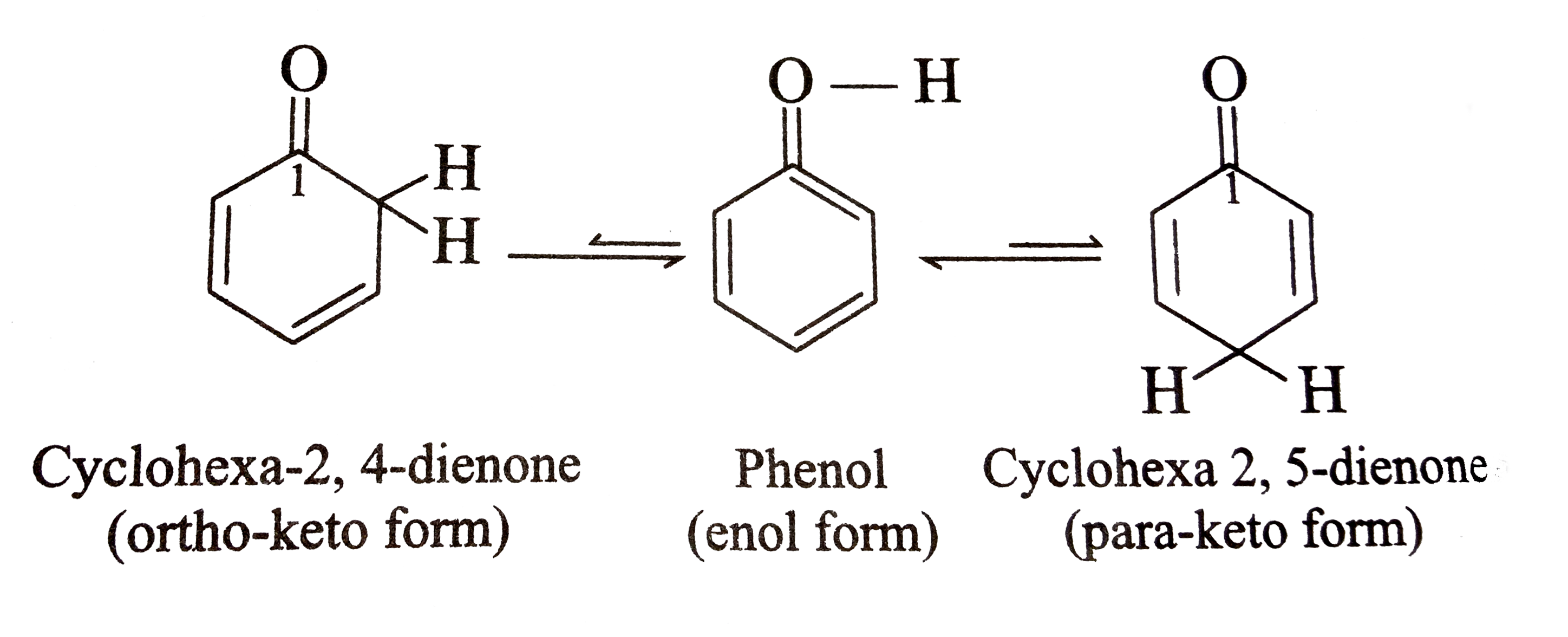 Phenols are much more stable than enols.Both phenols and enols can EB regarded as tautomers of a keto structure. The large resonance energy of 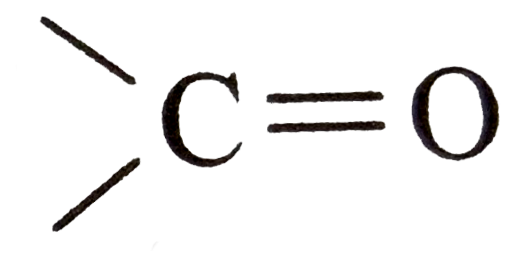 usually causes the keto tautomer to be much more stable than the enol. usually causes the keto tautomer to be much more stable than the enol. 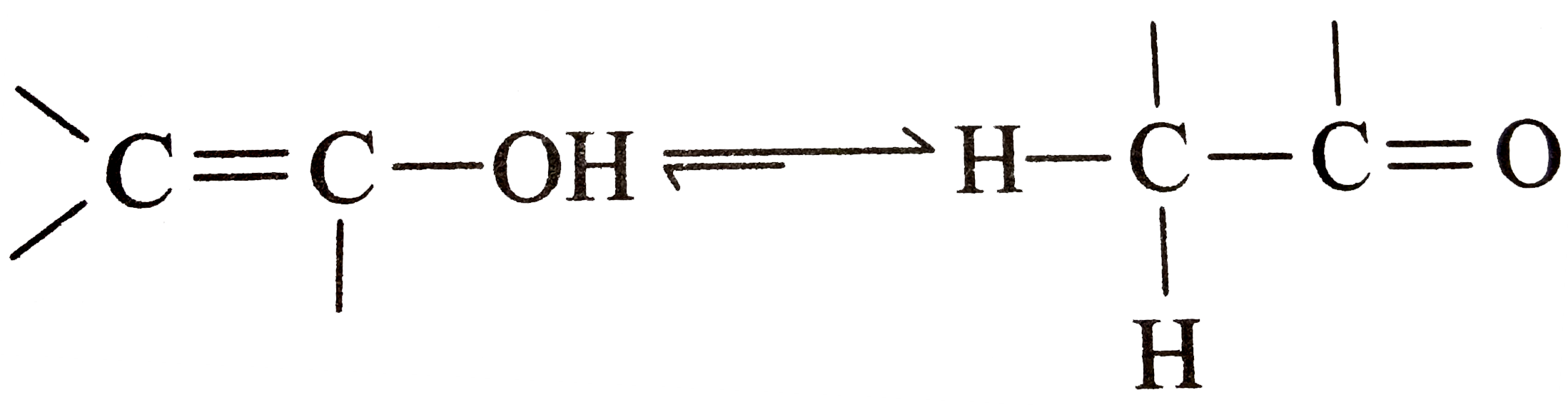 However , the keto FORM of phenol can be attained only with the LOSS of the stable aromatic RING making it very much less stable than phenol. |
|
| 8. |
How many symmetry elements are there for a cubic structure or a crystal ? |
| Answer» Solution :There are 3 types of symmetry elements. They are : (a) centre of symmetry, (b) AXIS of symmetry and (c) PLANE of symmetry. A cube has 1 centre of symmetry. A cube has 3 axis of four fold symmetry, 4 axis of three fold symmetry and 6 axis of two fold symmetry. A cube has 3 rectangular PLANES of symmetry and 6 diagonal planes of symmetry. The total NUMBER of symmetry elements of a cube = 1 + (3 + 4 + 6) + (3 + 6) = 23. | |
| 9. |
How many structures possibles for a compound with the molecular formula C_(6)H_(12)O which can give positive iodoform and 2,4-DNP test. |
|
Answer» `CH_(3)-CH_(2)-underset(CH_(3))underset(|)(CH)-underset(O)underset(||)(C )-CH_(3)`" " `CH_(3)-underset(CH_(3))underset(|)overset(CH_(3))overset(|)(C )-underset(O)underset(||)(C )-CH_(3)` |
|
| 10. |
How many sturcture isomers are possible for a comound with molecular formula CH_3H_7Cl |
|
Answer» 2 |
|
| 11. |
How many structurally isomeric pentyl alcohols will give immediate turbidity with lucas reagent ? |
| Answer» Solution :Only ONE alcohols is tertiary in NATURE : `C_(2)H_(5)-underset(CH_(3))underset(|)OVERSET(CH_(3))overset(|)C-OH` | |
| 12. |
How many structures are possible for amines (C_(7)H_(9)N) having one benzene ring ? |
|
Answer» Five 
|
|
| 13. |
How many structural isomers of C_(6)H_(14) can exhibit enantiomerism? |
| Answer» Answer :D | |
| 14. |
how many structural isomers are possible for C_6H_14? |
|
Answer» 4 |
|
| 15. |
How many structural isomers are possible for C_(4)H_(10)O |
|
Answer» 3 1. `UNDERSET("Butan-1-ol")(CH_(3)CH_(2)CH_(2)CH_(2)-OH)` 2. `{:( CH_(3)-CH_(2)-CH-CH_(3)),("|"),(""underset("Butan-2-ol")(OH)):}` 3.`{:(CH_(3)-CH-CH_(2)-OH),("|"),(" "underset("2-Methyl propan-1-ol")(CH_(3))):}`4. `{:(""CH_(3)),("|"),(CH_(3)-C-CH_(3)),("|"),(""OH),("2-Methyl-propan-2-ol"):}` 5. `underset("Methyl propylether")(CH_(3)-O-C_(3)H_(7))`6. `underset("Diethyl ether")(C_(2)H_(5)-O-C_(2)H_(5))` 7. 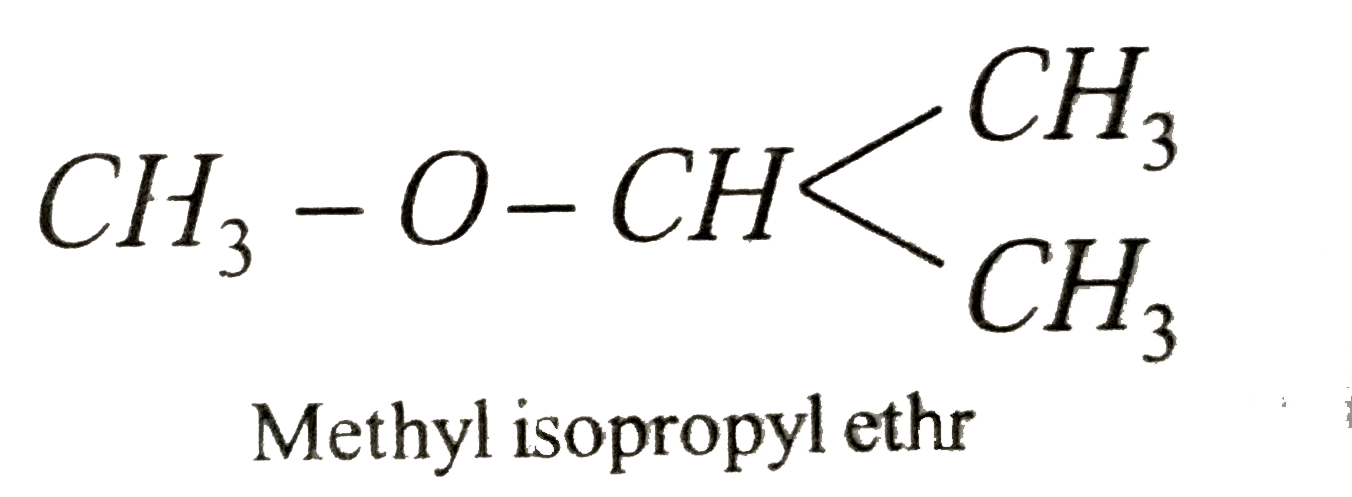
|
|
| 16. |
How many structural isomeric secondary alkyl halides aer possible for C_(4)H_(9)X |
|
Answer» 0 |
|
| 17. |
How many structural isomers are possible for a compound with molecular formula C_(3)H_(7)Cl |
|
Answer» 2 |
|
| 18. |
How many structural isomeric ketones having molecular formula (C_(6)H_(10)O) give iodoform test ? |
Answer» SOLUTION :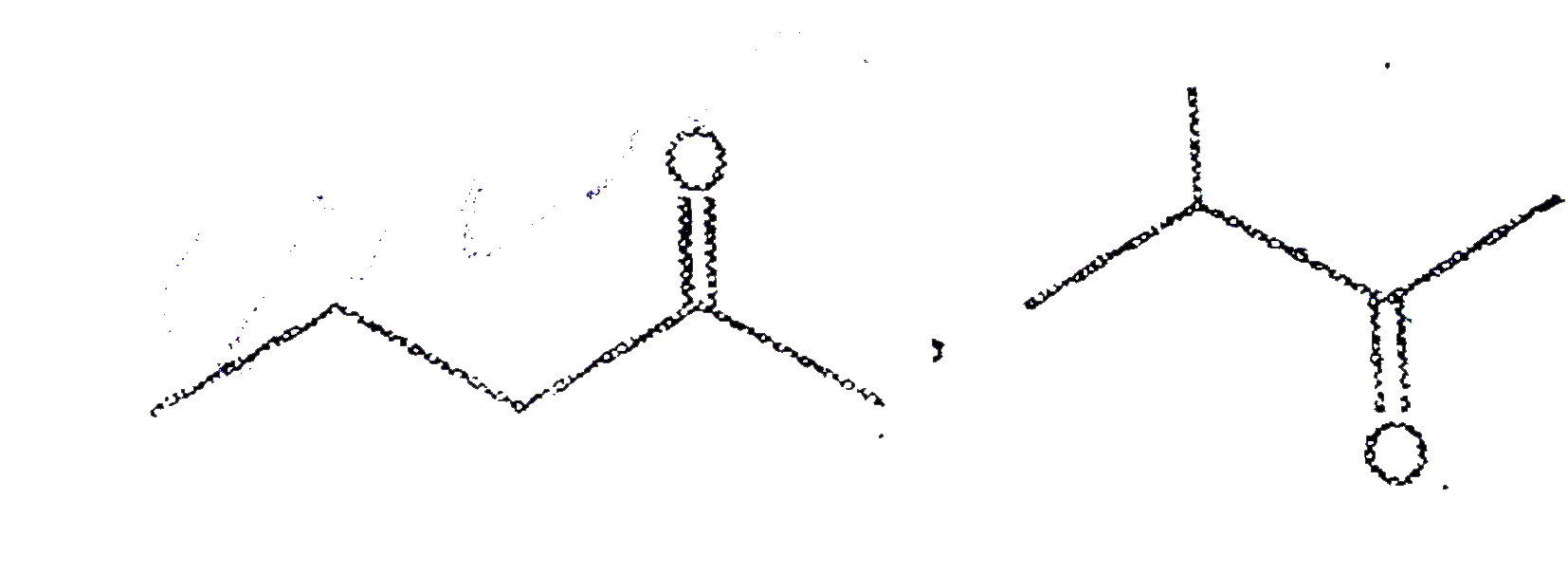
|
|
| 19. |
How many structural isomers are known forC_4H_(10)O: |
|
Answer» 4 |
|
| 20. |
How manystructural isomeric alkenes on hydrogenation give -n-Pentane. |
|
Answer» |
|
| 21. |
How many structural isomeric alkenes are possible with molecular formula C_(5)H_(10) that does not show geometrical isomerism |
|
Answer» 2 |
|
| 22. |
How many structural isomer are possible for C_(4)H_(10)O (only alcohol). |
|
Answer» (1) C-C-C-C-OH (2) `C-C-underset(OH)underset(|)C-C` (3) `C-overset(C)overset(|)C-C-OH` (4) `C-underset(OH)underset(|)overset(C)overset(|)C-C` |
|
| 23. |
How many structural and geometrical isomers are possible for dimethyleyclohexane? |
|
Answer» 3,6 GEOMETRICAL isomers - Six, i.e. cis- and trans-1, 2,1,3 and 1,4-dimethylcyclohexanes. |
|
| 24. |
How many stoal effective number of O-atoms, Si-atoms and changes that are present respectively in enclosed area by dotted line in the above given 2-D sheet silicate? [If your answer are 24,9 and 5 then write the answer as 2495.] |
|
Answer» |
|
| 25. |
How many sterioisomers does the following compound have ? CH_(3)-CH_(2)-underset(overset(|)(Br))(C)H-CH_(2)-CH=CH-CH_(3) |
|
Answer» None |
|
| 26. |
How many steroisomers doe this molecule have? H_(3)C-CH=CHCH_(2)CHBrCH_(3) |
|
Answer» 2 |
|
| 27. |
Howmanystereoisomersof 1,2,3 - cryclohexantril |
Answer» SOLUTION : No. of Chiralcarbon= 3 (IDENTICAL) SYMMETRICAL ) No. of Chiralcarbon= 3 (IDENTICAL) SYMMETRICAL )`a= 2^(n-1)-2 ^((n-1)/(2)) = 2^(3-1) -2 ^((3-1)/(2)) = 4-2` `m = 2 ^((n-1)/(2)) = 2 ^((3-1)/(2))` Totalstereoisomers = 2 + 2=4  Mesoform isopticallyyinactivedue tointernal compensationand recemicmixtureis opticallyinactivedue toextentcompensation. |
|
| 29. |
How many stereoisomers are possible for dichlorocyclobutane? |
|
Answer» |
|
| 30. |
How many stereoisomers does this molecule have? CH_(3)CH=CHCH_(2)CHBrCH_(3) |
|
Answer» 8 |
|
| 31. |
How many stereoisomers are possible for threonine? |
|
Answer» 4 `CH_(3)underset(OH)underset(|)overset(**)(C)H-underset(+NH_(3))underset(|)overset(**)(C)HCOO^(-)` Thus, it has four optically active stereoisomers: 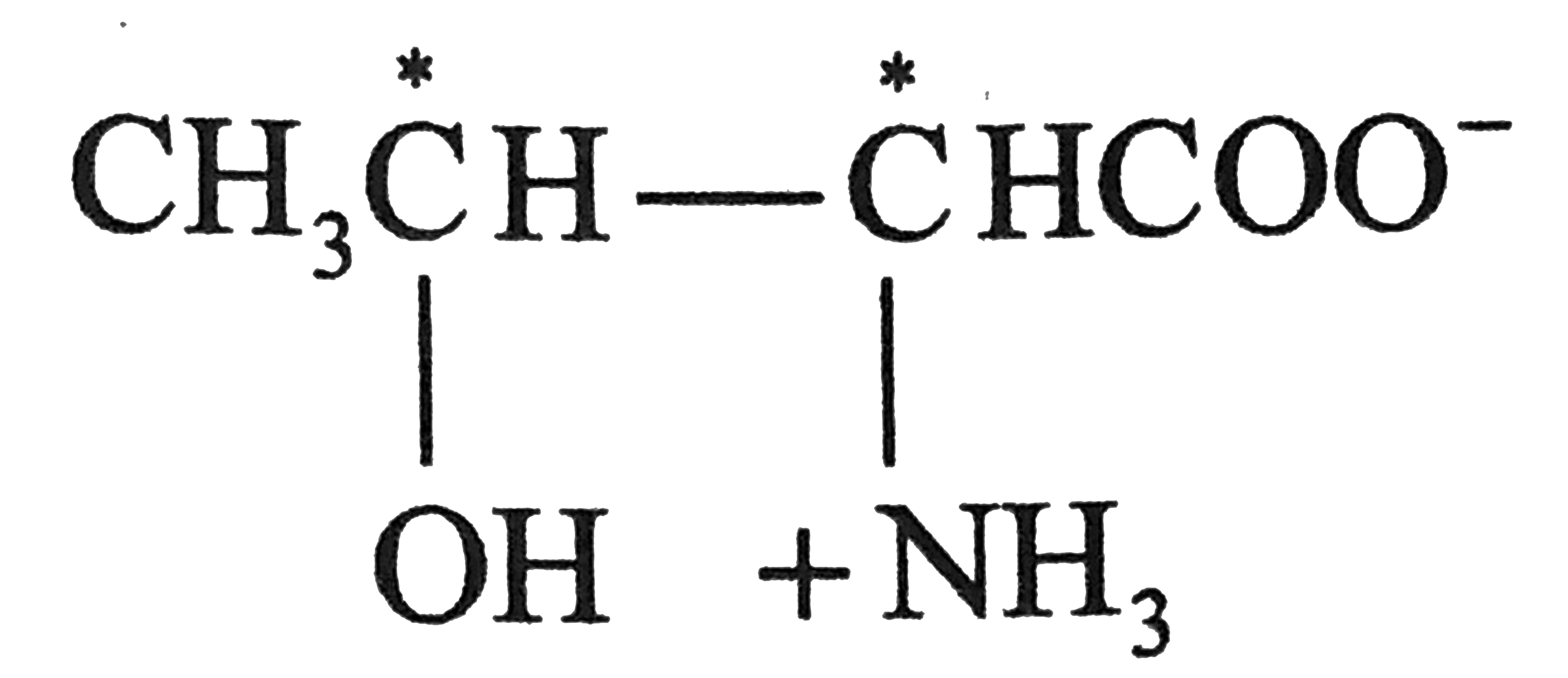 NATURALLY occurring theronine its NAME from its relationship to the TETROSE, threose, I is the correct configuration for NATURAL threonine. Besides threonine, there are four amino acids that can exist in more than two stereoisomeric forms as they have more than one chiral center: (-) - Cystine (one meso, on pair of ENANTIOMERS), (-) - hydroxylysine (two pairs of enantiomers) (-) hydroxyproline (two pair of enantiomers) and (+ - isolecucine (two pairs of enantiomers). |
|
| 32. |
How many stereoisomers are possible for chlorination of C_(5)H_(12) ? |
|
Answer» 3 |
|
| 33. |
How many stereoisomers are possible for |
|
Answer» 128 |
|
| 34. |
How many stereoisomers are possible for 1, 3-dichloro-cyclopentane? |
|
Answer» (II) trans-1,3-dichlorochyclopentane (ENANTIOMERIC PAIR) |
|
| 35. |
How manystereo isomersare possibleforCH_3 CH = CH - underset(Cl) underset(| )CH -CH_2 Br |
| Answer» SOLUTION :Total number of stereo ISOMERS for the above compound is FOUR. Out of which two are GEOMETRICAL isomers and two are optical isomers. | |
| 36. |
How many stereo isomers are possible for a 2-keto hexose. |
|
Answer» |
|
| 37. |
How many stereo isomer of 3-chloro butane 2-ol ? |
|
Answer» 2 No. of STEREO isomer of COMPOUND = `2^(n)` Where n= no. of CHIRAL .C. in the compound here n=2 `:.` Total isomer =` 2^(n)= 2^(2)= 4` |
|
| 38. |
How many statement(s) is/are correct? (a). In every case, a pair of enantiomers have a mirror-image relation (b). Mirror-image molecules are known as enantiomers. (c). If a compound has an enantiomer it must be criral. (d). Every chiral compound has a diastereomer. (e). All diastereomers are chiral. (f). Any molecule containing stereocentre must be chiral. (g). Some diastereomers have a mirror-image relationship. (h). All asymmetric carbon are stereocentres (i). Gauche form of n-butane along (C_(2)-C_(3)) is chiral is chiral, howerver anti form is achiral. |
|
Answer» |
|
| 39. |
How many statements is true among the following properties |
|
Answer» `ClO_(2)` molecules has odd number of ELECTRONS Valency electron`=7+6+=19` |
|
| 41. |
How many speices have bond angle greater than 109^(@).28' and less than 120 OH_(2),OF_(2),OCl_(2),O(CH_(3))_(2), ClO_(2), NO_(2)^(-), ClO_(3)^(-) |
Answer» 
|
|
| 42. |
How many species do not exist? PH_(3),PH_(5),PCl_(5),PBr_(5),SiF_(6)^(2-),SF_(6),Al_(2)F_(6),PbI_(4),NCl_(5),AlCl_(3),OF_(2),OH_(2),OF_(4),HFO_(4),FeI_(3),B_(2)F_(6) [If your answer is 5 then write the answer as 0005.] |
|
Answer» |
|
| 43. |
How many spectral line of balmer series present in visible region : |
|
Answer» 5 |
|
| 44. |
How many spectral lines are produced in the spectrum of hydrogen atom from 5th energy level? |
|
Answer» 5 `=((5-1)(5-1+1))/2=(4xx5)/2=10` |
|
| 45. |
How many sp^(2) and sp-hybridised carbon atoms are present respectively in the following compound ? |
|
Answer» 4,2 |
|
| 46. |
How many silicon atoms are present in the anion of a pyrosilicates |
Answer»  ANIONS, `(Si_(2)O_(7)^(6-))` in pyrosilicates |
|
| 47. |
How many significant figures should be present in the answer of the following calculations ? (i)(0.02586xx298.15xx0.112)/(0.5785)"(ii)"5xx5.364"(iii)"0.0125+0.7864+0.0215 |
|
Answer» Solution :(i) The LEAST precise TERM has 3 significant FIGURES (i.e., in 0.112). Hence, the answer should have 3 significant figures. (ii) LEAVING the exact number (5), the second term has 4 significant figres. Hence, the answer should have 4 significant figures. (iii) In the given addition, the least number of decimal places in the term is 4. Hence, the answer should have 4 significant. |
|
| 48. |
How many significant figures are there in each of the following numbers? (i)6.200""(ii)0.052""(iii)7.5xx10^(4)""(iv) 0.00050""(v) 67.32-6.3""(vi) 4.2+7.589 (vii)(5.56)^(2)(8.24)//(3.6)""(viii)18.567//(8.1xx2) |
|
Answer» (ii) Zeros to the left of the first non-zero digit are not significant. (iii) When expressed as `7.5xx10^(4)`, only significant figures of 7.5 are to be considered. (iv) Apply rules given in Hints (i) and (ii) above. (v) `67.32-6.3=61.01`. The result is to be reported to same number of decimal places as that of the term with LEAST number of decimal places (viz 6.3 with only one decimal place). Hence, after ROUNDING off, reported result = 61.0, (which has there significant figures). (vi) `4.2+7.589=11.789`. As it is to be reported to one decimal place (as in (v) above), after rounding off, reported result = 11.8 (having three significant figures). (vii) As least PRECISE term ( viz 3.6 ) has two significant figures, the reported result should have two significant figures. (viii) Leaving exact number 2, the least precise term (8.1) has two significant figures. |
|
| 49. |
How many significant figures are present in the following? (i) 0.0048 (ii) 208 (iii)5005 (iv) 126,000 (v) 500.0 (vi) 2.0034 |
| Answer» SOLUTION :`"(i) 2(II) 3(III) 4(iv) 3(V) 4(vi) 5."` | |
| 50. |
How many significant figure are there in each of the following numbers? (i) 6.005 (ii) 6.022xx10^(23) (iii) 8000 (iv) 0.0025 (v) pi (vi) the sum 18.5+0.4235 (vii) the product 14xx6.345. |
|
Answer» Solution :(i) Four because the zeros between the non-zero digits are SIGNIFICANT figures. (ii) Four because only the first term gives the signigicant figures and exponential term is not CONSIDERED. (iii) Four. HOWEVER, if expressed in scientific notation as `8xx10^(3)`, it will have only one significant figure, as `8.0xx10^(3),8.00xx10^(3) or 8.000xx10^(3)`, it will have 2, 3 or 4 significant figures. (iv) Two because the zeros on the left of the first non-zero DIGIT are not significant. (V) As `pi=(22)/(7)=3.1428571..........,` hence it has infinite number of significant figures. (vi) Three because the reported sum will be only upto one decimal place, i.e., 18.9. (vii) Four because leaving the exact number, the second term has four significant figures. |
|