

Saved Bookmarks
This section includes 7 InterviewSolutions, each offering curated multiple-choice questions to sharpen your Current Affairs knowledge and support exam preparation. Choose a topic below to get started.
| 1. |
How many of the following statements are correct ? (i)Among sp^3d,sp^3d^2 and sp^3d^3 hybridisation, the maximum number of 90^@ angles between bond pair bond pair of electrons is observed in sp^3d^2 hybridisation . (ii)Among SF_4,CF_4 and XeF_4, interatomic bond angle of 109^@28' is observed only in SF_4. (iii)Among N_2F_4,N_2F_2, and N_2 , the largest N-N bond length is found in N_2F_4. (iv)Among NF_3, NO_3^(-),BF_3,H_3O^+ and NH_3, [NH_3, H_3O^+] and [BF_3, NO_3^(-)] are isostructural pairs. (v)Among NH_3, PH_3, AsH_3, and SbH_3, SbH_3 has smallest bond angle. (vi)Among SbCl_3, SbBr_3, and Sbl_3 , Sbl_3 has the largest bond angle. |
Answer» 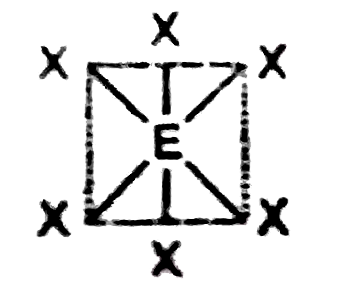 (ii)`109^@28'` bond angle is observed only in `CF_4` (TETRAHEDRAL GEOMETRY) 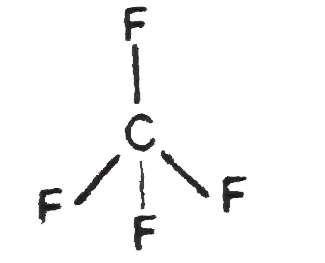 (iii)`N-=N(~~1.1CÅ)ltFN=NF(~~1.21Å)lt` 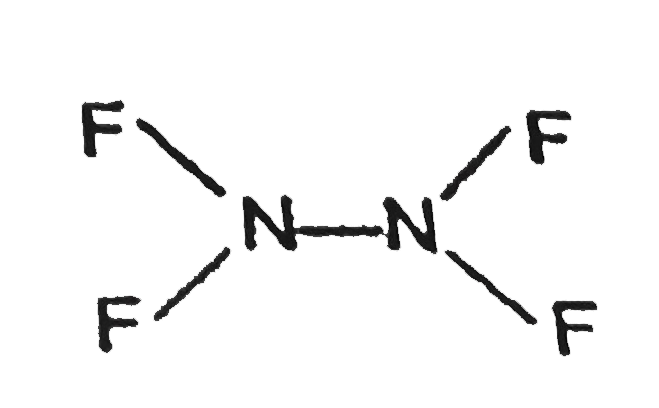 `(1.49pm0.004)` (iv)`BF_3` and `NO_3^(-)` ,both trigonal planar , `NF_3` and `H_3O^+`,both trigonal pyramidal. (v)ORDER is `{:(NH_3gtPH_3gtAsH_3gtSbH_3),(106^@6" " 93.8^@ " " 91.83^@ " " 91.3^@):}` (v)Order is `{:(Sbl_3gtSbBr_3gtSbCl_3),(99^@"" 98.2^@ "" 97.1^@):}` |
|
| 2. |
How many of the following statements are correct ? (a)BeO is amphoteric in nature ltbgt (b)LiHCO_3 is not found in solid state. ( c)K_2O_2 is diamagnetic but KO_2 is paramagnetic (d)Hydrated magnesium chloride on heating in dry air gives anhydrous MgCl_2 (e)AlCl_3 is soluble in excess of NaOH and form sodium meta aluminate (f)Anhydrous potassium nitrate on heating with potassium metal gives potassium oxide and nitrogen gas (g)Lithium chloride is highly soluble in water. |
|
Answer» (b)`LiHCO_3oversetDeltatoLi_2CO_3+H_2O+CO_2` (d)`MgCl_2 . 6H_2O to MgO+HCl+H_2O` (e)`AlCl_3+4NaOH("EXCESS")to NaAlO_2+2H_2O+3NaCl` (f)`KNO_3+K to K_2O+N_2` |
|
| 3. |
Howmany of the following statements are correct? (a) Delta at the mouth of a river is formed due to the coagulation of the colloidal sea water by the electrolytes present in the river water. (b) Artifical rain is caused by the coagulation of colloidal water droplets in the clouds by an electrolyte. (c ) Cotrell precipitator is used in the precipitation of the colloidal waste in the sewage water. (d) Cheese is an example of solid foam. (e) A colloid formed by adding small amount of AgNO_(3) to KI solution is negatively charged. (f) Micelles are formed only below the Kraft temperature (T_(k)) (g) Mixing of hydrated ferric oxide sol and arsenious sulphide sol bring them in precipitated form. (h) An oil in water emulsion can be diluted by addition of water. (i) Emulsions show Brownian motion and Tyndall effect. |
|
Answer» |
|
| 4. |
How many of the following statements are correct? |
|
Answer» All halogens form oxyacid |
|
| 5. |
How many of the following statement/s is/are correct? (1). For isothermal process DeltaE and DeltaH are 0. (2). On increasing temperature pK_(w) of water decreases. (3). For adiabatic process DeltaS is always 0. (4). Indicator methyl orange can be used for titration between strong acid and weak base. (5). At triple point liquid. vapour and solid state are in simultaneous equilibrium with one another. (6). DeltaH_(f)^(@) of D_(2) (gas) is zero. (7). Molal elevation constant (K_(b)) depends upon nature of solute. (8). Be does not give flame test. (9). Solubility of AgCN increases in KCN solution. |
|
Answer» |
|
| 6. |
How many of the following statement are true about the cathode rays? (i) Path of travelling is straight from the cathode with a very high velocity as it produces shadow of an object placed in its path (ii) Rays consist of material particle. (iii) They deflect towards negative end of the electrode. (iv) They produce yellow glow when the glass will beyond anode. (v) Cathode rays penetrate through thin sheets of aluminium and metals. (vi) They affect the photographic plates (vii) The ratio of charge (e) to mass (m) i.e. charge//mass is same for all cathode rays irrespective of the gas used in the tube. e//m=1.76xx10^(11) Ckg^(-1) (viii) Cathode rays are visible at low voltage. |
|
Answer» |
|
| 7. |
How many of the following statement are correct ? (1) CF_(4) can be prepared by reaction between SiC and F_(2). (2) In SiF_(4) Si-F observed bond length is shorter than actual Si-F bond length (3) (C_(2)F_(4))_(n) is known as PTFE. (4) C Cl_(4) react with Anyelrony HF, gives Chloro Flouro carbon (C Cl_(2)F_(2)) (5) C Cl_(4) can hydrolysis under super heating conditious. (6) Hydrolysis of SiF_(4) is not complete of SiF_(4) is partially hydrolysis. |
|
Answer» SOLUTION :(1)`SiC+F_(2)to SiF_(4)+CF_(4)` (2)Because of `dpi-ppi` BACK bonding in `SiF_(4)` (3)`PTFE=` Poly tetra flouro ethene (4)`C Cl_(4) +HF to C Cl_(2)F_(2)+HCl` (5)`C Cl_(4)underset("Super heating (steam)")overset(+H_(2)O) to COCl_(2)+HCl` (6)`SiF_(4)+F^(-)to [SiF_(6)]^(-2)` (`F^(-)` forms in `I^(ST)` staoe gtdriksus if `Si F_(4))` |
|
| 8. |
How many of the following statement is/are corret regarding silver extraction process. |
|
Answer» When the lead -silver alloy is RICH in lead ,lead is removed by the cupellion process |
|
| 9. |
How many of the following statement is/are ture for calcination of metal ore ? |
|
Answer» (i) It MAKES the ore more POROUS |
|
| 10. |
How many of the following species would have C-O bond length longer than that of free CO molecule. [V(CO)_(6)]^(-), [Ti(CO)_(6)]^(2-), [CO(NH_(3))_(3)(CO)_(3)]^(3+), [Cr(CO)_(6)], HMn(CO)_(5), Mn_(2)(CO)_(10), [Fe(CN)_(5)(CO)]^(3-), CO_(2), CO_(3)^(2-) [Write your answer as 0003, if it is 3.] |
|
Answer» |
|
| 11. |
How many of the following species can act as both bleaching agent and reducing agent O_(3),H_(2)O_(2),SO_(2),HCl,SO_(3) |
|
Answer» |
|
| 12. |
How many of the following species have no d-orbital s involved in their hybridisation XeF_(2),snF_(2) PbCl_(2),SF_(4),C Cl_(4),BF_(3),SO_(2)Cl_(2),XeO_(2)F_(2),XeOF_(4),POCl_(3) |
| Answer» | |
| 13. |
How many of the following species have reducing properties ? NH_(3),PH_(3),H_(3)PO_2,H_(3)PO_3,H_(3)PO_(4),LiA//H_(4),BH_3 |
|
Answer» |
|
| 14. |
How many of the following species have sp^(2) hybrid atoms? Diamond, Graphite, C_(60), (SiH_(3))_(3)N, AlCl_(3), Al_(2)(CH_(3))_(6), SiCl, H layered BN, borazine. |
|
Answer» |
|
| 15. |
How many of the following salts impart characteristic colours to the Bunsen flame ? NaCl, KCl, CuCl_(2), BaCl_(2), CaCl_(2),SrCl_(2), ZnCl_(2), MgCl_(2),AlCl_(3) |
|
Answer» |
|
| 16. |
how many of the following species are aromatic in nature cyclopentadienyl cation, cyclopentadienyl anion, tropylium cation, azulene, cyclopropenyl cation, tetrahydrofuran, cyclooctatetraene, furan , cycloheptatriene |
| Answer» SOLUTION :Cyclopentadienyl ANION, tropylium CATION , AZULENE, cyclopropenyl cation, FURAN | |
| 17. |
How many of the following salts impart characteristic colours to the Bunsen flame ltBrgt NaCl,KCl,CuCl_(2),BaCl_(2),CaCl_(2),SrCl_(2),ZnCl_(2),MgCl_(20,AlCl_(3) |
| Answer» Solution :`NaCl`-GOLDEN YELLOW, `KCl-`Licac, `CuCl_(2)-`bluish-green, `BaCl_(2)`-Apple green, `SrCl_(2)`-B Crimson,`CaCl_(2)`-brick RED. | |
| 18. |
How many of the following salts give precipitate with aq. NaOH solution which dissolve in excess of the reagent? CdSO_(4),Pb(NO_(3))_(2), CrCI_(3). MnCI_(2). ZnSO_(4). CuSO_(4). Bi(NO_(3))_(3), SnCI_(4) |
|
Answer» `Pb(NO_(3))_(2) +2NaOHrarrunderset("White ppt")(Pb(OH))_(2)+2NaNO_(3)` `Pb(OH)_(2) + 2NaOH rarr Na_(2)PbO_(2)+2H_(2)O` `CrCl_(3)+3NaOH rarr underset("Green ppt")(Cr((OH)_(3))+3NaCl` `Cr(OH)_(3)+NAOH rarr NaCrO_(2)+2H_(2)O` `ZnSO_(4)+2NaOH rarr underset("White ppt")(ZN((OH)_(2))+Na_(2)SO_(4)` `Zn(OH)_(2)+2NaOH rarrNaZnO_(2)+2H_(2)O` `SnCl_(4)+4NaOH rarr underset("White ppt")(Sn(OH)_(4))+4NaCl` `Sn(OH)_(4)+2NaOH rarr Na_(2)SnO_(3)+3H_(2)O` |
|
| 19. |
How many of the following reagents will not be useful in separating a mixture of Zn^(2+) and Cu^(2+) ? (i) H_(2)S in acid medium (ii) H_(2)S in an alkaline medium (iii) Excess of NaOH solution (iv) NH_(3) solution |
|
Answer» |
|
| 20. |
How many of the following refining processesare correctlymatchedwith their element ? |
|
Answer» |
|
| 21. |
How many of the following reagents can oxidise aqueous iodide to iodine. Acidified K_2Cr_2O_7, Alkaline KMnO_4, CuSO_4 H_2O_2 Cl_2,O_3,FeCl_3 ,HNO_3 "and" Na_2S_2O_3 |
|
Answer» |
|
| 22. |
How many of the following reagent would cause symmetrical cleavage in diborane? [ If your answer is 2 then writ the answer as 0002]. |
|
Answer» |
|
| 23. |
How many of the following reactions would have HCl as one ofthe products ? (a)CH_4+CI_2to(b) FeSO_4 + H_2SO_4 + Cl_2 to (c) l_2+Cl_2+H_2O to(d) Cl_2+H_2O(e)H_2O+SO_2+Cl_2 to(f) SO_3+Cl_2 to (g) NaCI(aq)overset("Electrolysis")to(h) Cl_2O_7+H_2O to (i)Cl_2+NaOH(conc) to |
|
Answer» |
|
| 24. |
How many of the following reaction yield POCl_(3) ? {:((i) PCl_(3) + O_(2)rarr,(ii) PCl_(5) + CO_(2) rarr,(iii) PCl_(5) + CH_(3)COOH rarr),((iv)PCl_(5) + H_(3)BO_(3) rarr,(v) PCl_(3) + SO_(2)Cl_(2) rarr,(vi) P_(4)O_(10) + NaCl rarr),((vii) PCl_(5) + H_(2)O rarr,(viii) PCl_(5) + SO_(2)rarr,(ix) PCl_(3) + SO_(3) rarr):} |
|
Answer» |
|
| 25. |
How many of the following quantities show increase in their value of increasing temperature? a. Extent of physisorption of gases on solids. b. Electrical conductivity of an electrolyte solution. c. Electrical conductivity of an electrolyte solution. d. Ionic product of water. e. Vapour pressure of a pure and liquid. f. Vapour pressure of an ideal solution which follows Rault's law, (keeping composition same) g. Solubility of gases in liquids. h. Reducing power of carbon monoxide for extraction of metals Correct answer: |
| Answer» Solution :Conductivity of electrolye INCREASES at higher temperature DUE to higher degree of dissociation and greater mobility of ions. Reducing power of `CO` DECREASES with increasing temperature as its oxidation becomes less spontaneous. | |
| 26. |
How many of the following reactions can leads to form ester. |
|
Answer» |
|
| 27. |
How many of the following pairs of ions can be separated by H_(2)S in dilute HCl? Bi^(3+) and Sn^(4+),Al^(3+) and Hg^(2+),Cd^(2+) and Zn^(2+),Fe^(3+) and Cu^(2+),As^(3+) and Sb^(3+) |
|
Answer» (2)`Cd^(2+)` and `Zn^(2+) underset(H_(2)S) overset(H^(+)) to CdS darr ("yellow")+ Zn^(2+)` (in solution) (3)`FE^(3+)` and `Cu^(2+) underset(H_(2)S) overset(H^(+)) to CuS darr ("black")+ Fe^(3+)` (in solution) |
|
| 28. |
How many of the following pairs of ions can be separated by H_2S in dilute HCl ? Bi^(3+) and Sn^(4+),Al^(3+) and Hg^(2+),Cd^(2+) and Zn^(2+),Fe^(3+) and Cu^(2+), As^(3+) and Sb^(3+) |
|
Answer» (2)`CD^(2+) and Zn^(2+) underset(H_2S)overset(H^(+))to CdSdarr(YELLOW)+Zn^(2+)`(in solution) (3)`Fe^(3+) and Cu^(2+) underset(H_2S)overset(H^(+))to CuSdarr(black)+Fe^(3+)`(in solution) |
|
| 29. |
How many of the following parameters/properties are greater for diamond as compared to graphite ? Denisty, Electrical resistivity, Thermal conductivity, stability, % s-character for hybridised orbitals, Hardness, Bond angle, C-C (bond length), Standard enthalpy of formation. |
| Answer» Solution :DENSITY, Electrical RESISTIVITY, THERMAL conductivity, Hardness, `C-C`(bond LENGTH),`DeltaH_(f)^(@)` | |
| 30. |
How many of the following pairs are conjugate acid/base pairs? HCl,Cl^(-) KH,KCl H_(2)SO_(4),Na_(2)SO_(4) NaHS,Na_(2)S CH_(3)COOH,CH_(3)COOH_(2)^(+) Na_(2)CO_(3),NaHCO_(3) NH_(3),NH_(4)Br HCl,ClOH Aniline, anilinium |
|
Answer» |
|
| 31. |
How many of the following order of bond energies are correct. (i) C-C gt Si-Si ,(ii) C-O gt Si-O ,(iii) C-FgtSi-F , (iv) C-FgtSi-F ,(v) C-HgtSi-H, (vi) Si-Cl gt C-Cl (vii) Si-SigtC-Si ,(viii) C-BrgtSi-Br |
|
Answer» |
|
| 32. |
How many of the following on reductive ozonolysis will give only glyoxal 1,3-butadiene, ethylene, acetylene , o-xylene, m-xylene, xylene, benzene, cyclobutadiene, cyclooctatetraene |
|
Answer» |
|
| 33. |
How many of the following obey's Sidgwick EAN rule ? (a) K_(4)[Fe(CN)_(6)],""(b) K_(3)[Fe(CN)_(6)], (c ) Mn_(2)(CO)_(10),""(d) [Fe(H_(2)O)_(5)NO]SO_(4), (e ) Na_(2)[Fe(CN)_(5)NO],""(f) [Co_(2)(CO)_(8)], (g) [Fe(pi-C_(5)H_(5))_(2)] |
|
Answer» |
|
| 34. |
How many of the following of ethrs cannot be prepared by Williamson's synthesis CH_(3)OC_(2)H_(5),(C_(6)H_(5))_(2)O,C_(6)H_(5)OCH_(3),C_(6)H_(5)OC_(2)H_(5) (CH_(3))_(3)COC(CH_(3))_(3), (C_(2)H_(5))_(2)O,C_(6)H_(5)CH_(2)OC_(6)H_(5), (CH)_(3))_(3)COCH_(3),(CH_(3))_(3)COCH_(2)CH_(3). |
|
Answer» |
|
| 35. |
How many of the following names are correct according to IUPAC system of nomenclature ? Pent - 3 - yne, Hexa-1, 6-diene,3 - Methylhexa-1, 5-diyne,2 - Ethyl-2-pentene, 1-Methoxyethane-2-ol,4,4,5-Trimethyl hex-1-yne, 1, 2-Dihydroxyethane, Pent-4-en-1-yne. |
|
Answer» |
|
| 36. |
How many of the following nitrates of metal 'M' decompose on heating similar to as given below in the scheme ? (where, M=Li, Be, Mg,K,Ca,Sr,Na,Rb,Ba). "Metal nitrate"overset("heat")tometal oxide + nitrogen dioxide + oxygen gas |
|
Answer» Other ALKALI metals decompose as given below, `2NaNO_3 to 2NaNO_2 +O_2` All alkaline EARTH metals decompose in the same WAY as the `LiNO_3` |
|
| 37. |
How many of the following molecles /ion are planar? CO_(3)^(2-), NO_(3)^(-), XeF_(4), XeO_(4), SF_(4), I_(3)^(-), COCl_(2), SO_(3), ClO_(3)^(-), I_(2)Cl_(6) (solid) |
|
Answer» `CO_(3)^(2-), NO_(3)^(-), XeF_(4), l_(3)^(-), COCl_(2), SO_(3),l_(2), Cl_(6)` (SOLID) |
|
| 39. |
How many of the following metals can be extracted buy carbon reduction method ? Na,Al,Mg,Sn,Fe,Pb,Zn,Ca |
|
Answer» |
|
| 40. |
How many ofthe followingmetalscan berefinedbyvapourphaserefining ? Zr, Zn,Cd, Hg, Ni, Co , Pt, Fe, Ti. |
|
Answer» |
|
| 41. |
How many of the following may react with SiCl_(4) to produce a non-polar product ? NaH, CH_(3)MgCl, H_(2)O, LiAlH_(4), H_(2)SO_(4)(l),NH_(3), Be |
|
Answer» `CH_(3)MgCl+SiCl_(4)toMgCl_(2)+SI(CH_(3))_(4)`(non-polar) `3H_(2)O+SiCl_(4)to H_(2)SiO_(3)+4HCL` `LiAiH_(4)+SiCl_(4)to LiCl + AlCl_(3)+SiH_(4)`(non-polar) `H_(2)SO_(4)(l)+SiCl_(4) to ` no reaction `NH_(3)+SiCl_(4) to ` Polymeric SUBSTANCE `2Be+SiCl_(4) to 2BeCl_(2)+Si`(non-polar) |
|
| 42. |
How many of the following liberate colured vapour/gas with concentrated H_2SO_4 ? KCl(s)+K_2Cr_2O_7(s),KNO_2(s),Kl(s), KBr(s), KCl(s) KBr(s)+MnO_2(s),KNO_3,KCl(s)+MnO_2,K_2SO_3 |
|
Answer» (ii)`NO_2^(-)+H^(+)toHNO_2 , 3HNO_2 to HNO_3+Nouarr+H_2O` `2NOuarr+O_2uarr to NO_2uarr`(BROWN) (iii)`3I^(-)+2H_2SO_4 to I_3^(-)uarr` (violet) +`SO_4^(2-)+2H_2O+SO_2` (iv)`2KBr+2H_2SO_4toBr_2uarr` (reddish brown) +`SO_2uarr+NO_4^(2-)+2K^(+)+2H_2O` (V)`Cl^(-)+H_2SO_4 to HCl uarr` (COLOURLESS) + `HSO_4^-` (vi)`2KBr+MnO_2+2H_2SO_4 to Br_2uarr("reddish brown")+ 2K^(+)+Mn^(2+)+2SO_4^(2-)+2H_2O` (vii)`4NO_3^(-)+2H_2SO_4toBr_2uarr("reddish-brown")+2K^(+)+Mn^(2+)+2SO_4^(2-)+2H_2O` (viii)`KCl+MnO(OH)_2+2H_2SO_4+2Cl^(-) ("brown")to Mn^(2+)+Cl_2uarr` (yellowish green) +`2SO_4^(2-)+3H_2O` (ix)`SO_3^(2-)+2H^(+)toSO_2uarr` (colourless) +`H_2O` |
|
| 43. |
How many of the following may act as buffer ? (a) 20mL 0.2 M -H_(2)CO_(3) solution +10 ml 0.2 M-NaOH solution (b) 20 ml 0.2 M -H_(2)CO_(3) solution +20 ml 0.2 M-NaOH solution (c) 20 mL 0.2 M-H_(2)CO_(3) solution +30 mL 0.2 M-NaOH solution (d) 20 mL 0.2 M - H_(2)CO_(3) solution +10 mL 0.2 M-NaHCO_(3) solution (e) 20 mL 0.2 M -H_(2)CO_(3) solution +10 mL 0.2 M-Na_(2)CO_(3) solution (f) 20 mL 0.2 M -H_(2)CO_(3) solution +20 mL 0.2 M -Na_(2)CO_(3) solution (g) 20 mL 0.2 M -H_(2)CO_(3) solution +30 ml 0.2 M-Na_(2)CO_(3) solution |
|
Answer» |
|
| 44. |
How many of the following liberate coloured vapour/gas with concentrated H_(2)SO_(4)? KCl(s)+K_(2)Cr_(2)O_(7)(s), KNO_(2)(s),Kl(s), KBr(s),KCl(s) KBr(s)+MnO_(2)(s),KNO_(3),KCl(s)+MnO_(2),K_(2)SO_(3) |
|
Answer» (ii)`NO_(2)^(-)+H^(+) to HNO_(2) , 3HNO_(2) to HNO_(3)+NO uarr +H_(2)O` `2NO uarr +O_(2) uarr to NO_(2) uarr` (BROWN) (iii)`3l^(-)+2H_(2)SO_(4) to l_(3)^(-) uarr ("violet") +SO_(4)^(2-) +2H_(2)O+SO_(2)` (iv)`2KBr +2H_(2)SO_(4) to Br_(2) uarr ("reddish brown")+SO_(2) uarr +NO_(4)^(2-) + 2K^(+) + 2H_(2)O` (v)`Cl^(-)+H_(2)SO_(4) to HCl uarr ("colourless") + HSO_(4)^(-)` (vi)`2KBr + MnO_(2) + 2H_(2)SO_(4) to Br_(2) uarr ("reddish-brown")+2K^(+)+Mn^(2+)+2SO_(4)^(2+) +2H_(2)O` (vii)`4NO_(3)^(-) + 2H_(2)SO_(4) to Br_(2) uarr ("reddish-brown") + 2K^(+) +MN^(2+)+2SO_(4)^(2-) + 2H_(2)O` (viii)`KCL + MnO(OH)_(2) +2H_(2)SO_(4)+2Cl^(-)("brown") to Mn^(2+)+Cl_(2) uarr ("yellowish green") + 2SO_(4)^(2-)+3H_(2)O` (ix)`SO_(3)^(2-) + 2H^(+) to SO_(2) uarr ("colourless") + H_(2)O` |
|
| 45. |
How many of the following is/are the correct match. (i) Photochemical smog: CF_(2)Cl_(2) (common component) (ii) Ozone layer: Protects from the Sun's radiation of wavelength 255 nm (iii) Methamoglobinemioa: Caused by the presenceof greater than 50 ppm of nitrate in drinking water (iv) Ozone layer depletion: CIO^(-)(g) + O(g) to Cl^(-)(g) + O_(2)(g) (one of the reaction involved) (v) DDT: Biodegredable pollutant (vi) Green house gas: Methane. |
|
Answer» |
|
| 46. |
How many of the following is/are correct order of dipole moment? (A) CH_(3)-FgtCH_(3)-ClgtCH_(3)-BrgtCH_(3)-I (B) H-FgtH-ClgtH-BrgtH-I (C) CH_(3)-ClgtCH_(2)Cl_(2)gtCHCl_(3)gt"CC"l_(4) (D) CH_(2)=CH-Cl lt CH_(3)-CH_(2)-Cl (E) (F) CH_(3)-Cl gt CH_(3)-FgtCH_(3)-Br (G) H-ClgtH-FgtH-Br |
Answer»  `to SIR` of `NO_(2)` `to SIR` of `NO_(2)` `CH_(2)=CHClimplies-l` is OPPOSED by `+R` or `CL` |
|
| 47. |
How many of the following is not oxidised by O_(3) ? KI, FeSO_(4), KMnO_(4), K_(2)MnO_(4) |
|
Answer» `2KI+H_(2)O+O_(3) to 2KOH+I_(2)+O_(2). 2FeSO_(4)+H_(2)SO_(3) +O_(3) to Fe(SO_(4))_(3)+H_(2)O+O_(2)` `2K_(2)MnO_(4)+H_(2)O+O_(3) to 2KMnO_(4)+2KOH+O_(2), KMnO_(4)+O_(3) to` no reaction. |
|
| 49. |
How many of the following ionic compounds have coordination number of either cation or anion equal to 6 or more : ZnS, KCl, K_2O, CsBr, NaBr,CaF_2 |
|
Answer» `Kclto` Rock salt, CN=6 `K_2Oto` Antifluorite structure , CN of `K^+=4` CsBr`to` CN=8 NaBr`to` Rock salt, CN=6 `CaF_2to`FLUORIDE structure, CN of `F^(-)=4CN` of `CA^(2+)=8` |
|
| 50. |
How many of the following involves carbon reduction during extraction of metal from ore ? Bauxite to Al implies "Copper pyrites" to Cu Haematile to Fe implies "Galena " to Pb Camallite to Mg implies "Sylvine" to K Cassiterite to Sn implies "Zinc blende" to Zn Silica to Si implies |
|
Answer» Galena `to` Pb CASSITERITE `to` SN ZINC blende `to` Zn SILICA `to` Si |
|