Saved Bookmarks
This section includes 7 InterviewSolutions, each offering curated multiple-choice questions to sharpen your Current Affairs knowledge and support exam preparation. Choose a topic below to get started.
| 1. |
{:[(H_(2)(g)+(1)/(2)O_(2)(g)=H_(2)O(g),DeltaH=-241.8kJ),(C_(2)H_(2)(g)+2(1)/(2)O_(2)(g)=2CO_(2)(g)+H_(2)O(g),DeltaH=-1300 kJ):}] Equal volumes of C_(2)H_(2) and H_(2) are combusted under identical conditions. The ratio of heats evolved in the two cases is |
|
Answer» `5.37//1` |
|
| 2. |
H_2(g)+1/2O_2(g)=H_2O(l), triangleH_298k=-68.32 kcal. Heat of vaporisation of water at 1 atm and 25^@C is 10.52 kcal. The standard heat of formation(in kcal) of 1 mole of water vapour at 25^@C is: |
|
Answer» `-78.84` |
|
| 3. |
H_(2)COH CH_(2)OH on heating with periodicacid gives : |
|
Answer» 2HCHOOH `underset(CH_(2)OH)underset(|)CH_(2)OH overset(HIO_(4))to CH_(2)O+ CH_(2)O` Note that a `1^(@)` ALCOHOL gives `CH_(2)O` since in glycol both the OH groups are primary hence give 2 MOLECULES of `CH_(2)O` as by product. |
|
| 4. |
H_2COHCH_2OH on heating with periodic acid forms: |
|
Answer» `2CO_2` |
|
| 5. |
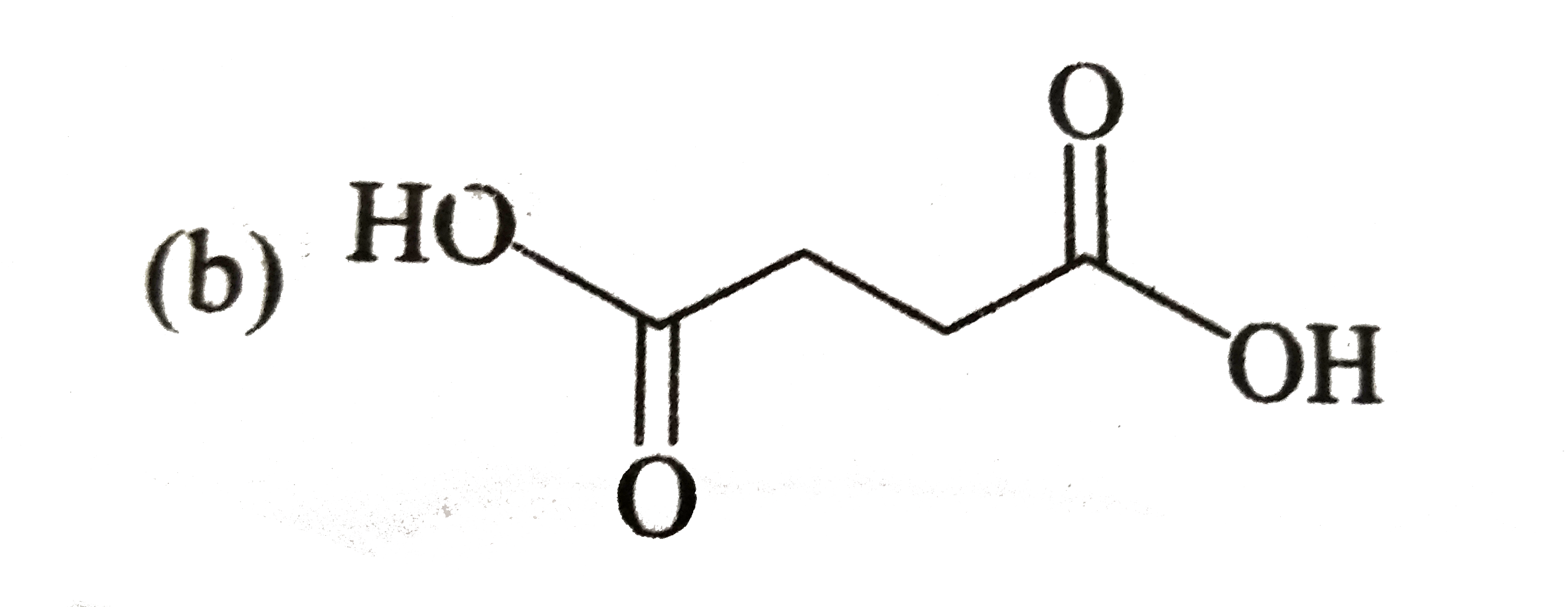
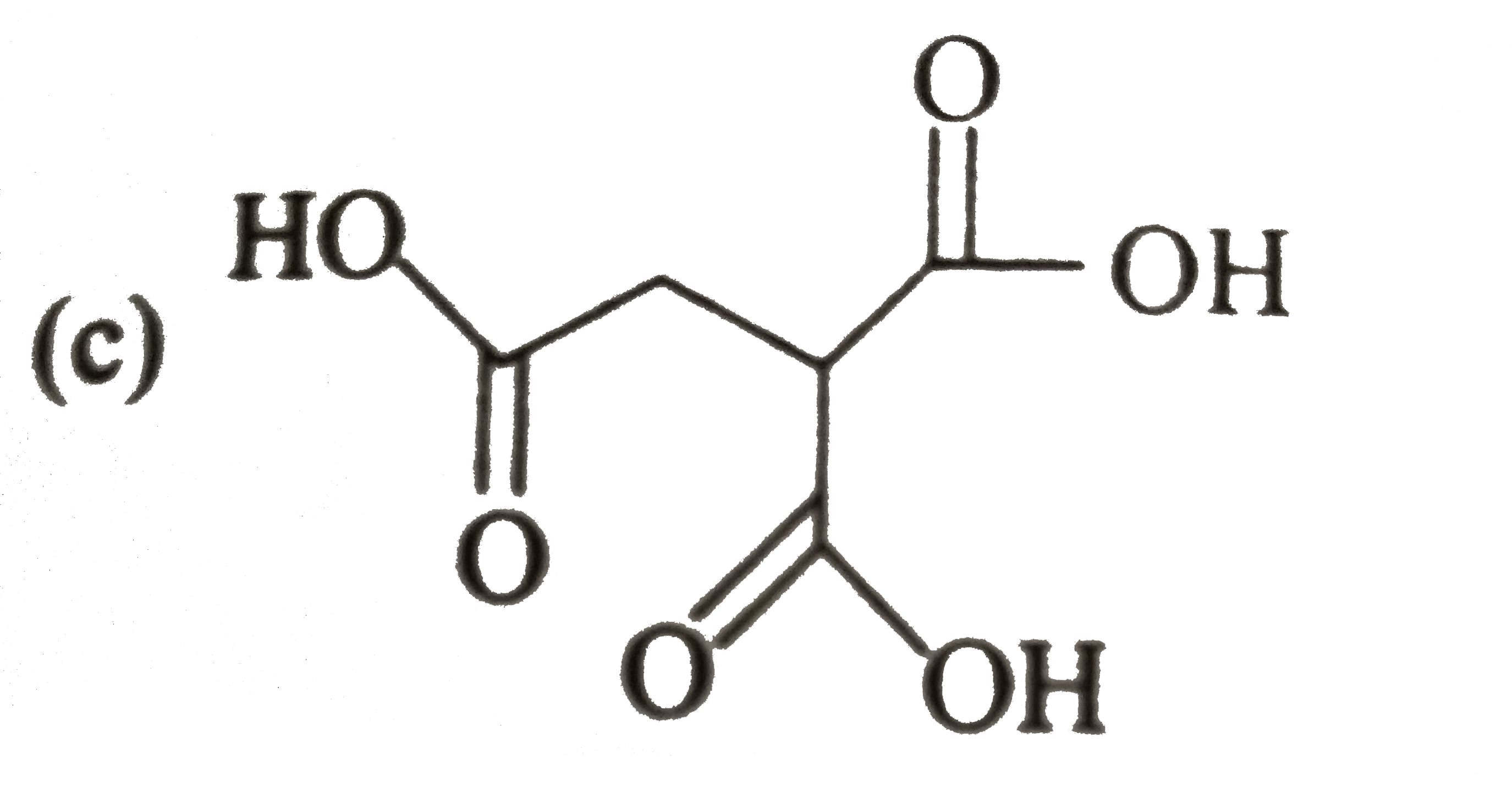
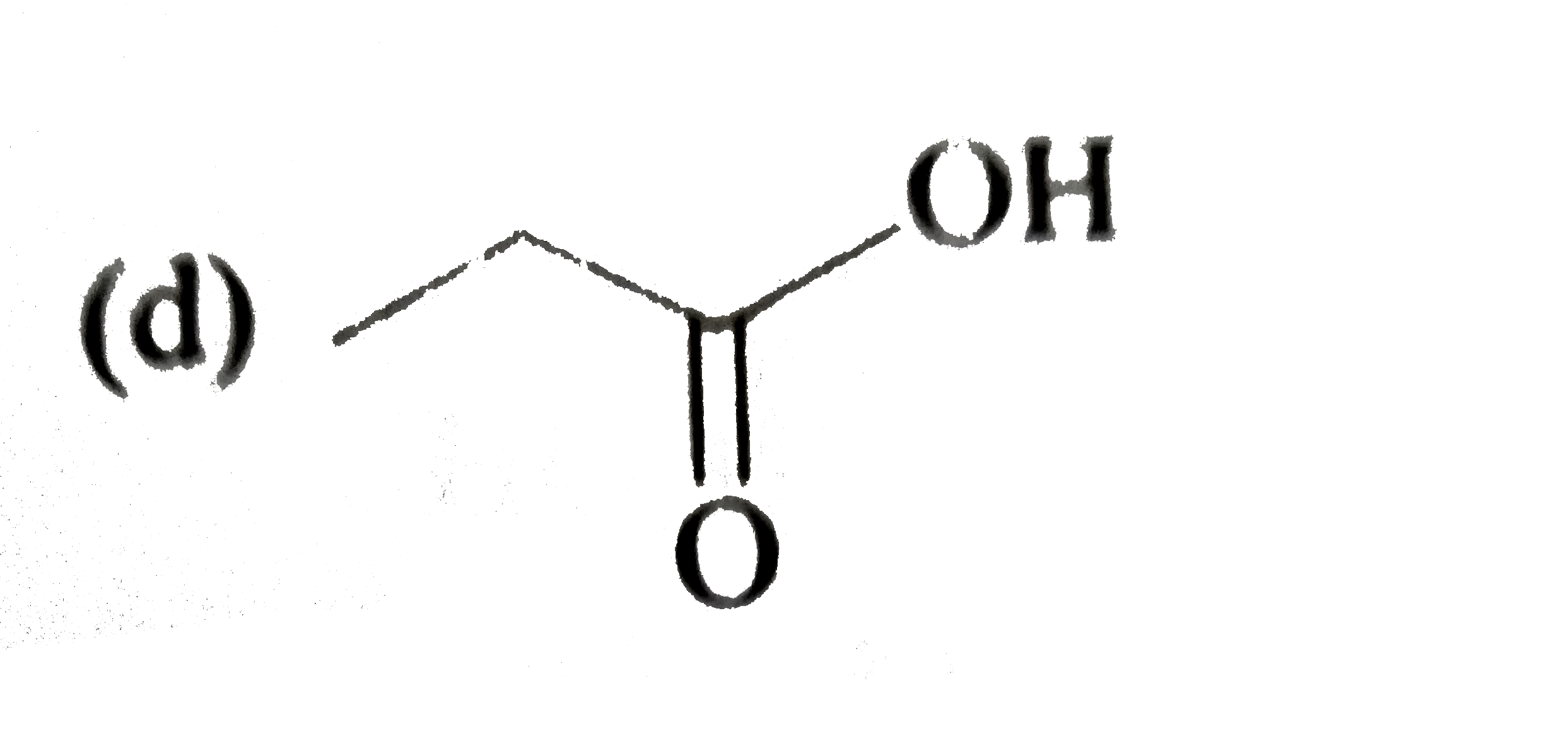
H_(2)C(COOEt)_(2)overset(1.EtO^(Theta)Na^(oplus))underset(2.Br-CH_(2)-COOEt)rarrAoverset(1.KOH,Delta)underset(2.H_(3)^(oplus)O)rarrB The end product B will be: |
| Answer» ANSWER :B | |
| 7. |
H_(2)C_(2)O_(4) acts as an acid as well as an oxidizing agent. The correct statement (s) about H_(2)C_(2)O_(4) is /are . |
|
Answer» it forms two SERIES of SALTS |
|
| 8. |
H_(2)C_(2)O_(4) acts as an acid as well as an oxidizing agent. The correct statement ( s) about H_(2)C_(2) O_(4) is // are |
|
Answer» It forms two series of salt |
|
| 9. |
H_(2)C-overset(O)overset(||)(C)-OC_(2)H_(5) underset(2." Base/"CH_(3)Cl(excess),"3. "H_(3)O^(+)//Delta)overset(1." "NaOC_(2)H_(5))to Number of carbon atoms in produce are |
|
Answer» |
|
| 10. |
H_(2)B_(4)O_(7) overset("Red hot")rarrA. Identify A? |
|
Answer» `H_(2)BO_(3)` |
|
| 11. |
H_2 SO_4 acts as dehydrating agent in its reaction with |
|
Answer» `H_(2)C_(2)O_(4)` |
|
| 13. |
H_2 S will precipitate the sulphide of all the metals from the solution of chlorides of Cu, Zn and Cd if |
|
Answer» The solution is aqueous |
|
| 14. |
H_2 S react with O_2 in restricted supply of O_2 to form |
|
Answer» `H_(2)O + S` If the `O_(2)` supply is not RESTRICTED `2H_(2)S +3O_(2) to 2H_(2)O +2SO_(2)` |
|
| 15. |
H_2 S is not a/an |
|
Answer» Reducing agent `PbO +H_(2)S to PBS +H_(2)O` It ACTS as a reducing agent. Also in chalcogens the acidic nature of HYDRIDE INCREASES from `H_(2)O` to `H_(2)Te`. |
|
| 16. |
H_2 S in the presence of HCl precipitate II group but not IV group because |
|
Answer» HCl activates `H_2 S` |
|
| 17. |
H_2 S in the presence of HCl precipitate group II but not group IV because |
|
Answer» HCl ACTIVATES `H_(2)S` |
|
| 18. |
H_2 S and SO_2 can be distinguished by |
|
Answer» Litmus paper `SO_(2)` has no EFFECT on `Pb(CH_(3)CO O)_(2)` |
|
| 20. |
H_(2)+I_(2)hArr 2HI In the above equlibrium system if the conectration of the reactants at 25^(@)C is increased, the value of K_(c) will |
|
Answer» INCREASE |
|
| 21. |
H_(2) gas is liberated at cathode and anode both by electrolysis of the following aq. Solution except in : |
|
Answer» `NaH` |
|
| 22. |
H_(2) gas can not be prepared by : |
|
Answer» Be + NaOH |
|
| 23. |
H_(2) gas is adsorbed on activated charcoal to a very little extent in compreison to easily liquefiable gases due to ………… |
|
Answer» very strong van DER WALLS interaction |
|
| 24. |
H_(2) gas is adsorbed on activated charcoal to a very little extent in comparison to easily liquefiable gases due to ......... |
|
Answer» very strong van dar WAALS' interaction. |
|
| 25. |
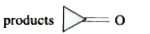
H_2 C=C=O+ CH_2 N_2 overset(-78^@ C)toProduct. Correct statements about the reaction is |
|
Answer» PRODUCT 
|
|
| 27. |
H_(2)+(1)/(2)O_(2)rarrH_(2)O, DeltaH=-68.39 kcalK+H_(2)O+"Water"rarrKOH(aq)+(1)/(2)H_(2),DeltaH=-48 kcalKOH+"water"rarrKOH(aq),DeltaH=-14 kcal The heat of formation of KOH is (in kcal) |
|
Answer» `-68.39 + 48-14` EQ. (II) + eq. (i) - eq. (iii) GIVES `DeltaH=-48+(-68.39)-(-14)=-68.39-48+14`. |
|
| 28. |
H_2+1/2O_2rarrH2O, triangle H=-68.39 kcal (i) K+aqrarrKOH(aq)+1/2H_2, triangleH=-48 kcal (ii) KOH+aqrarrKOH(aq): triangleH=-14 kcal (iii)T he heat of formation(in kcal) of KOH is: |
|
Answer» `-68.39+48-14` |
|
| 29. |
H_(2) + (1)/(2) O_(2) rarr H_(2)O, Delta = -68.39 kcal K + H_(2)O rarr KOH + (1)/(2) H_(2), Delta H = -48 kcal KOH + Water rarr KOH (aq), Delta H = -14 kcal The heat of formation of KOH in kcal is : |
|
Answer» `-34.39 KCAL` |
|
| 30. |
[H=1, C=12,O=16, Na=23, P=31,S=32] {:("Column-I","Column-II"),((A)4.1 g H_2SO_3,(p)"200 ml of 0.5 N NaOH is used forcomplete neutralization"),((B)4.9 g H_3PO_4,(q)"200 millimoles of oxygen atoms"),((C )4.5 g "oxalic acid"(H_2C_2O_4),(r)"Central atom has its highest oxidation number"),((D)4.3 g Na_2CO_3,(s)"May react with an oxidising agent"),(,(t)"Shape around central atom is regular"):} |
|
Answer» <P> 2NaOH+`H_2SO_3toNa_2SO_3+2H_2O` m moles of NaOH requries =2 x m mole of `H_2SO_3` =100 =m mole of NaOH present (200 ml x 0.5 N) HIGHEST O.N. of S= +6 (B)`4.9 gm =4.9/98` mole =50 m mole of `H_3PO_4` =200 m mole 'O' atom Highest O.N. of P = +5 (C )4.5 gm =`4.5/90` =50 m mole `H_2C_2O_4` (di basic acid) m mole of NaOH requires =2 x 50 =100 Highest O.N. of C = +4 (D)5.3 gm =`1/20` mole `Na_2CO_3` It do not reacts with NaOH and m mole of O atom =`1/20xx1000xx3=150` |
|
| 31. |
H-overset(O)overset(||)(C)-OH " and " Me-overset(O)overset(||)(C)-OHcan be differentitated by : |
|
Answer» IODOFORM test |
|
| 32. |
H-overset(O)overset(||6)(C )-overset(5)(CH_(2))-overset(4)(CH_(2))-underset(CH_(2)CHO)underset(|)overset(3)(CH)- overset(2)(CH_(2))-overset(O)overset(1||)©-H |
|
Answer» |
|
| 33. |
H-overset(O)overset("||")(C)-NHR underset("Pyridine")overset(POCl_(3))(rarr) X+H_(2)O In this reaction X is |
|
Answer» `R-N=C=O` |
|
| 34. |
H-overset(O)overset(||)C-H+CH_(3)-CH=Ooverset("Conc. NaOH")rarr Find out the products of reaction |
|
Answer» `CH_(3)CO_(2)NA & CH_(3)OH` |
|
| 35. |
H-N-H bond angle in NH_(3) is ……………. . |
|
Answer» `109^(@)28'` |
|
| 36. |
H^(+) is a |
|
Answer» Lewis ACID |
|
| 37. |
[H^+]in aqueous ammonium sulphate solution is : |
|
Answer» More than `10^(-7)` |
|
| 38. |
H^(+) ions are reduced at platinum electrode prior to |
|
Answer» `AG^(+)` |
|
| 39. |
H-H and Cl-Cl bond length are 0.74Å and 1.98Å What is the approximate bond length of HCl molecule. |
| Answer» SOLUTION :`1.36Å` | |
| 40. |
H-CHO overset("1) "RM_(g)X," ether")underset("2) "H_(2)O)rarrX overset(+R'-COOH)underset(H^(+))rarr Y. What are the structures of X and Y? |
|
Answer» Solution :`HCHO overset("1) "RM_(g)X)underset("2) "H_(2)O)rarr underset(X)(R-CH_(2)OH)overset(+R.-COOH)underset(H^(+))rarr R^(1)-underset(Y)(COOCH_(2)R)` Aldehydes on treatment with `R-Mg-x 1^(@)` alcohol is obtained. `1^(@)` alcohol on treatment with an acid will from ester in presence of `H^(+)` REACTION is KNOWN as esterification reaction. |
|
| 41. |
H -C equiv N and H-N equiv C are: |
|
Answer» Tautomers |
|
| 42. |
H-bonding is maximum in |
|
Answer» `C_(6)H_(5)OH` |
|
| 44. |
H _2O_2 is stored in : |
|
Answer» IRON CONTAINER after ADDITION of stabilizer |
|
| 45. |
Gypsum on heating at 120-130^@C gives: |
|
Answer» Hemihydrate |
|
| 46. |
Gypsum is added to clinker during manugacture of cement in order to: |
|
Answer» Decrease the rate of SETTING of CEMENT |
|
| 47. |
Gypsum is |
|
Answer» ` Ca SO _4*H _ 2 O ` |
|
| 49. |
Gutta pracha rubber is: |
|
Answer» A TRANS 1,4-polyisoprene polymer |
|