Saved Bookmarks
This section includes 7 InterviewSolutions, each offering curated multiple-choice questions to sharpen your Current Affairs knowledge and support exam preparation. Choose a topic below to get started.
| 1. |
For an van der Waals' gas, the term ((ab)/(V^(2))) represents some |
|
Answer» pressure Unit of `a=("atm". L^(2))/(("MOLE")^(2))` Unit of b `=L/("mole")` V=volume of gas per mole =L/mole So `(ab)/(V^(2))=(("atm".L^(2))/(("mole")^(2))xxL/("mole"))/((L//"mole")^(2))=("atm"L)/("mole")` it is the unit of energy. |
|
| 2. |
For an octahedral radius ratio limit is |
|
Answer» 0.155 |
|
| 3. |
For an octahedral arrangement the lowest radius ratio limit is |
|
Answer» 0.155 |
|
| 4. |
For an nth order reaction the half life period t_(1//2) is proportional to (initial conc = C_(0)) : |
|
Answer» `(1)/(C_(0)^(N))` |
|
| 5. |
for an isomerisation reaction A LeftrightarrowB , the temperature dependence of equilibrium constant is given by log_(e)K =4.0 -2000/T .the value of DeltaS^(@)at 300 K is therefore, |
|
Answer» 4R on COMPARING `(DeltaS^(@))/R=4or DeltaS^(@)=4R` |
|
| 6. |
For an isolated system, DeltaU = 0, then |
|
Answer» `DELTAS = 0` |
|
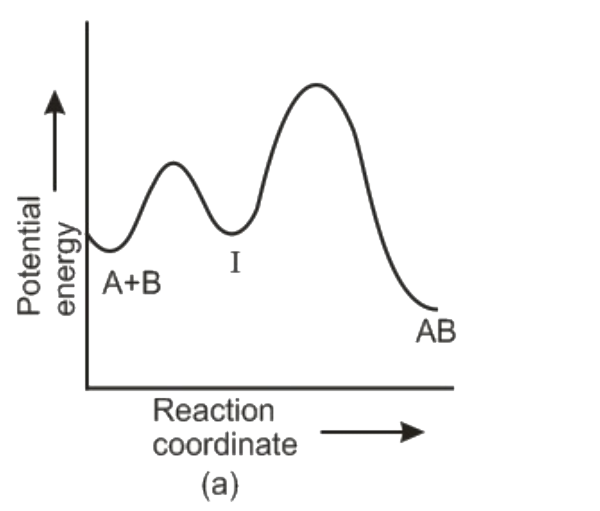
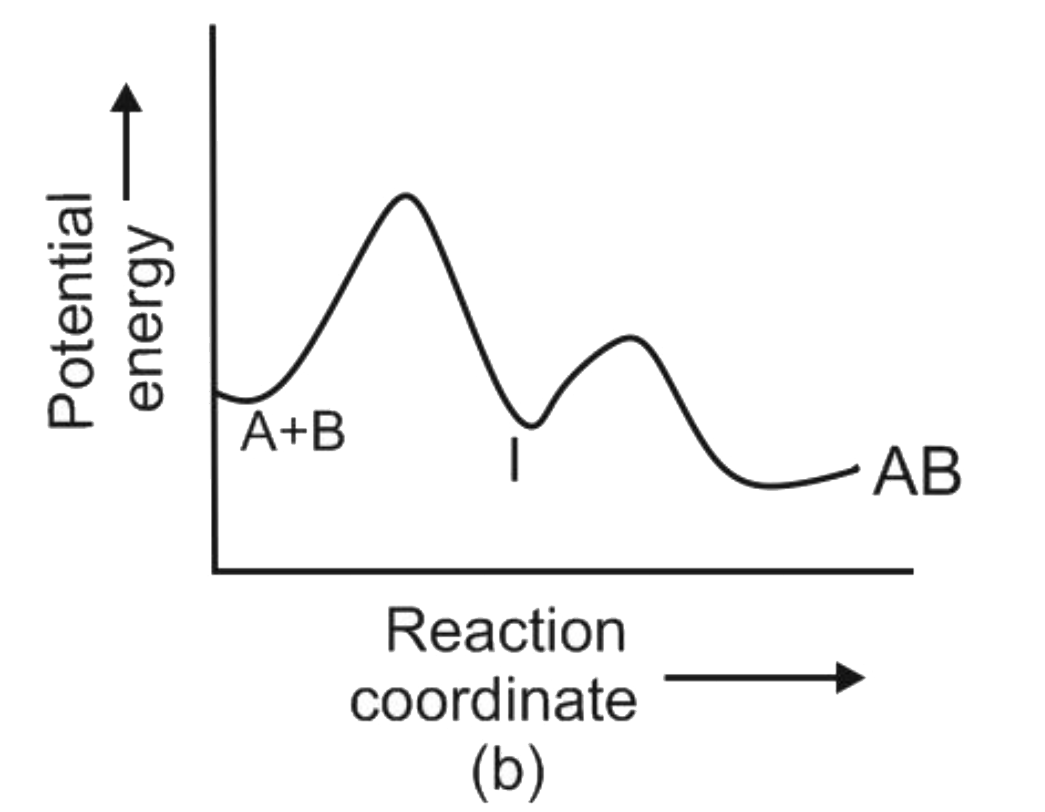
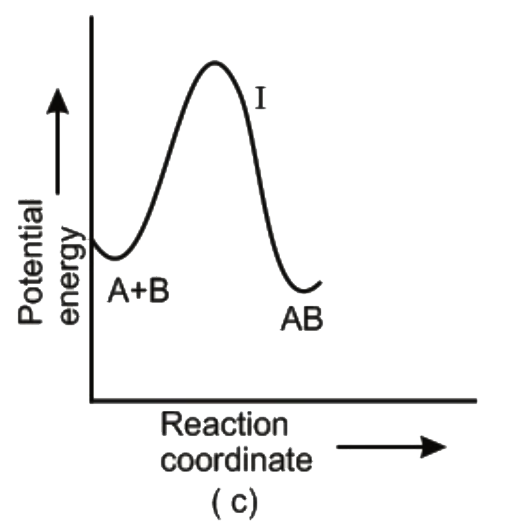
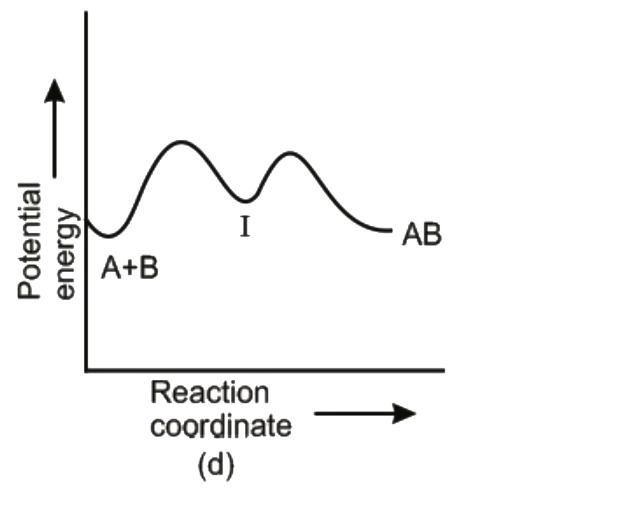
| 7. |
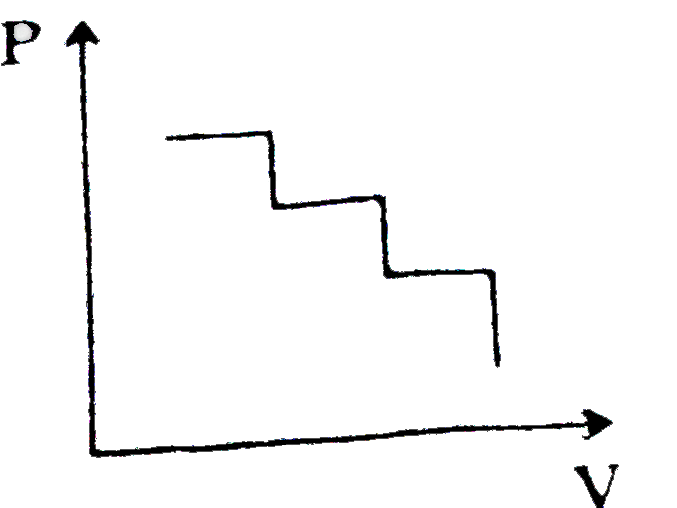
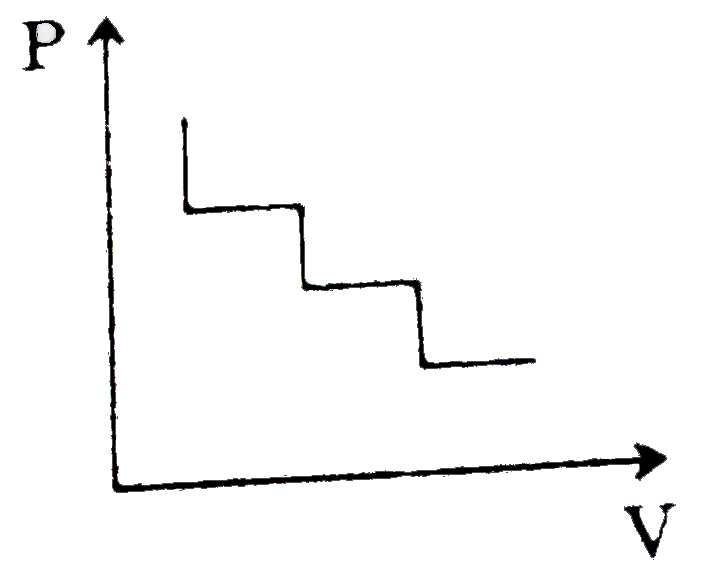
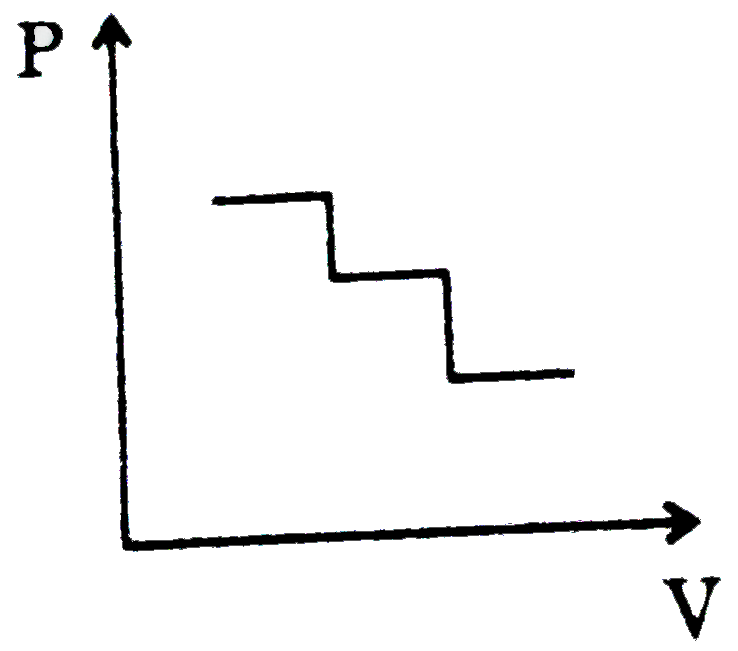
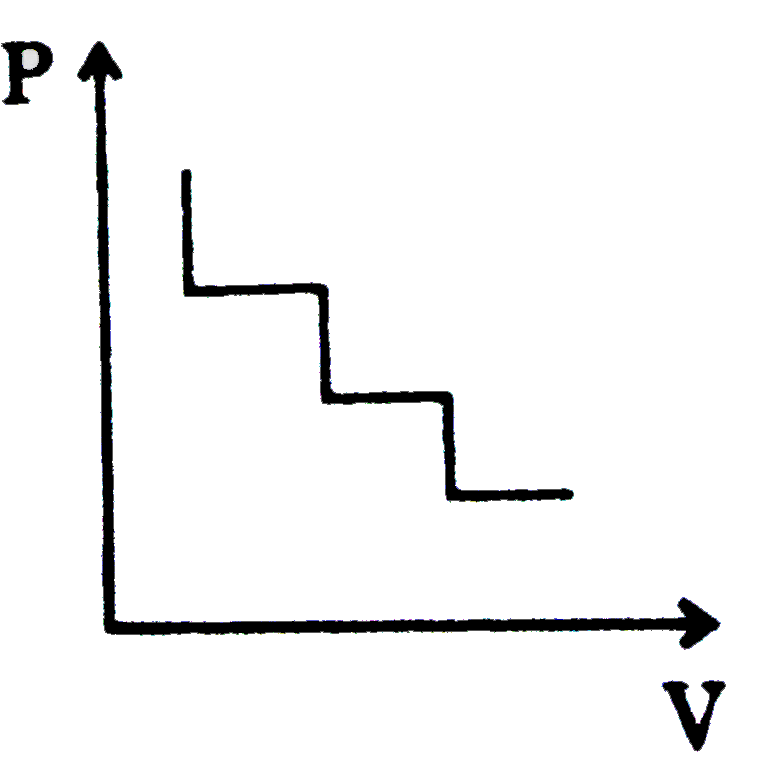
For an irreversible process, if P-V graphs are plotted simply to represents the work involved in the process as the area under the P-V curve.Then which of the following options has/have the correct P-V curve for the mentioned process on an ideal gas placed in a cylinder fitted with a piston. |
|
Answer»
|
|
| 8. |
For an ionic solid MX_(2), where X is monovalent, the enthalpy of formation of the enthalpy of formation of the solid from M (s) and X_(2) (g) is 1.5 times the electron gain enthalpy of X(g). The first and second ionisation enthalpies of the meta (M) are 1.2 and 2.8 times of the enthalpy of sublimation of M(s). The bond dissociation enthalpy of X_(2) (g) is 0.8 times the first ionisation enthalpy of metal and it is also equal to one -fifth of the magnitude of lattice enthalpy of MX_(2). If the electron gain enthalpy of X (g) is -96 K cal//mol, the answer the enthalpy of sublimation of metal (M) in K cal/mol |
|
Answer» `x+4x+0.96x-2y-4.8 x=-1.5 y` `1.16x=+0.5 y""rArrx=(0.5xx96)/(1.16)=41.38` |
|
| 9. |
For an ionic crystal of the general formula AX and co- ordination no. 6, the radius ratio value will be |
|
Answer» `gt0.73` |
|
| 10. |
For an ideal solution of two components A and B, If x_A and y_A are mole fractions of component 'A' in solution and vapour phase respectively, then the slope of linear line in the graph drawn between 1//x_A and 1//y_A is |
|
Answer» `P_A^0+P_B^0` |
|
| 11. |
For an ideal system at thermal equilibrium, the velocity distribution of the constituting particles will be governed by |
|
Answer» GAUSSIAN distribution |
|
| 12. |
For anionic crystal of the general formula A^+B^- and coordination number 6, the radius ratio will be: |
|
Answer» GREATER than0.73 |
|
| 13. |
For an ideal solution containing a nonvlatile solute , which of the following expressions is correctly represented ? |
|
Answer» `DeltaT_(f)=K_(f)m "with" K_(f)=M_(1)RT_(0)^(2)//DeltaH_("fusion")` |
|
| 14. |
For an ideal monoatomic gas during any process T = kV, find out the molar heat capacity of the gas during the process. (Assume vibrational degree of freedom to be active) |
|
Answer» `5/2R` |
|
| 15. |
Foran idealmonoatic gas duringanyprocess T= kV, find outthe molar heatcapacityod the gas during the process. (Assme vibrational degree of freedom to beactive )\ |
|
Answer» Solution :`TV^(-1) = k` COMPARING with"" `TV^(x-1)= k""x=0` `C_(m)= C_(vm)+(R)/(1-x)= (3)/(2)R+R = (5)/(2)R` |
|
| 16. |
For an ideal gas three adiabatic processes are carried out upto same final pressure from same initial state. If adiabatic reversible process ends up at point B and adiabatic single step irreversible process ends up at point C then adiabatic free expansion upto same final pressure will end up at : |
|
Answer» A |
|
| 17. |
For an ideal gas undergoing isothermal change : |
|
Answer» `q=OMEGA` |
|
| 18. |
For an ideal gas, the relation between the enthalpy change and internal energy at constant temperature is given by |
|
Answer» `triangleH=triangleE+PV` |
|
| 19. |
For an ideal gas, the Joule Thomson co-efficient is equal to |
|
Answer» 1 |
|
| 20. |
For an ideal gas, the heat of reaction at constant pressure and constant volumee are related as |
|
Answer» <P>`H+E=pV` `because q_(p)=q_(V)+DeltanRT` |
|
| 21. |
For an ideal-gas reaction 2A + B rarr C + D the value of K_(p) will be : |
|
Answer» <P>`K_(P) = n_(C)n_(D)/(n_(A)^(2)n_(B)).V//RT^(2)` `K_(p) = P_(c).P_(D)/(P_(A)^(2).P_(B)) = (n_(c)RT//V.n_(D)RT//V)/((n_(A)RT//V)^(2).(n_(B)RT//V)) = n_(C)n_(D)/n_(A)^(2)n_(B).V//RT` |
|
| 22. |
For an ideal gas four processes are marked as 1,2,3 and 4 on P-V diagram as shown in figure. The amount of heat supplied to the gas in the process 1,2,3 and 4 are Q_(1),Q_(2),Q_(3) and Q_(4) respectively, then correct order of heat supplied to the gas is: |
|
Answer» `Q_(1) gt Q_(2) gt Q_(3) gt Q_(4)` |
|
| 23. |
For an ideal gas, number of moles per litre interms of its pressure p, gas constant R and temperature T is : |
|
Answer» <P>`pT //R ` `(n)/( V ) = ( p )/( RT)` `:.` No. of MOLES per LITRE = `p //RT` |
|
| 24. |
For an ideal gas, C_(p) and C_(v) are related as |
|
Answer» <P>`C_(p) - C_(V) = R` |
|
| 25. |
For an ideal binary solution with p_(A)^(@)//p_(B)^(@) which relation between X_(A) ( mole fraction A in liquid phase) and Y_(A) ( mole fraction of A in vapour phase) is correct, X_(B) and Y_(B) are mole fraction of B in liquid and vapour phase respectively: (Given : p_(A)^(@)gtp_(B)^(@)) |
|
Answer» `X_(A)=Y_(A)` |
|
| 26. |
For an ideal binary liquid with P_(A)^(@) gt P_(B)^(@), which relation between X_(A)? (mole fraction of A in liquid phase) and Y_(A) (mole fraction of A in vapour phase) is correct. |
|
Answer» `X_(A) = Y_(A)` |
|
| 27. |
For an ideal gas, compressibility factor is |
|
Answer» 0 For ideal gas, PV = nRT so , Z = 1 |
|
| 28. |
For an ideal binary liquid solution with P_A^@> P_B^@which relation between X_A (mole fraction of A in liquid phase) and Y_A (mole fraction of A in vapour phase) is correct, X_B and Y_B are mole fraction of B in liquid and vapour phase respectively |
|
Answer» `X_A = Y_A` |
|
| 29. |
For an exothermic reaction, which is true |
|
Answer» `DeltaS_("sys")GT0` |
|
| 30. |
For an ideal binary liquid mixture |
|
Answer» `DeltaS_("(mix)")=0, DeltaG_("(mix)")=0` `Delta G = -ve` HENCE, `Delta G lt 0` and `Delta S GT 0` |
|
| 31. |
Foran exothermicreactionanactivationenergyof 70 KJ"mole " ^(-1 )andtheenthalpychangeofreactionis 30 KJ"mole" ^(-1). Theorderofthereactionis |
|
Answer» `70KJ"MOLE"^(-1)` |
|
| 32. |
For an exothermic reaction, following two steps are involved. "Step 1. "A +B rarrI"(slow)" "Step 2. "IrarrAB"(fast)" Which of the following graphs correctly represent this reaction ? |
|
Answer»
|
|
| 33. |
For an exothermic reaction, equilibrium constant at T_1 and T_2 are respectively K_1 and K_2 If K_1 lt K_2then : - |
|
Answer» `T_1 GT T_2` `T UARR , K uarr` given `k_1 > k_2 ` then `T_1 lt T_2 ` |
|
| 34. |
For an exothermic reaction |
|
Answer» H of the products is less than H of the reactants |
|
| 35. |
For an exothermic chemical process occurring in two steps as (i) A+BtoX (slow) (ii) XtoAB (fast) The progress of the reaction can be best described by |
|
Answer»
|
|
| 36. |
For an exothermic reaction : |
|
Answer» ENERGY of REACTANTS `GT` energy of products |
|
| 37. |
For an exothermic chemical process occurring in two steps as i) A+BtoX" (slow)" ii) XtoAB" (fast)" The progress of the reaction can be best described by |
|
Answer»
|
|
| 38. |
The process 2A + B toCtaking place in two steps:1:2A toD"" 2: D + B to C(slow) then rate of reaction gets |
|
Answer»
|
|
| 39. |
For an exothermic chemical process occuring in 2 steps as (i) A+B rarr X (slow) , (ii) X rarr AB (fast) The progress of the reaction can be best described by (x - intermediate). |
|
Answer»
|
|
| 40. |
For an exothermic chemical process occuring in two steps as :A+BrarrX(slow),A+BrarrX(slow)The progress of the reaction can be described by : |
|
Answer»
|
|
| 41. |
For an equilibrium state, |
|
Answer» `DELTA H gt 0` |
|
| 42. |
For an equilibrium reaction, if the value of standard Gibb's free energy, AG° is zero, then the value of equilibrium constant, K will be equal to |
|
Answer» Zero |
|
| 43. |
For an equilibrium [2A(g) |
|
Answer» `3.75` X `10^-3` M |
|
| 44. |
For an endothermic reaction where DeltaH represents the enthalpy of the reaction in kJ/mole, the minimum value for the energy of activation will be |
|
Answer» LESS than `DELTAH` |
|
| 45. |
For an endothermic reaction where DeltaH represents the enthalpy of the reaction, the minimum value for the energy of activation will be |
|
Answer» LESS than `DELTAH` |
|
| 46. |
For an endothermic reaction where, Delta H represent the enthalpy of the reaction in "kJ"//"mol", the minimum value for energy of activation will be |
|
Answer» LESS than `DELTAH` |
|
| 47. |
For an endothermic reaction, where DeltaH represents the enthalpy of the reaction in kJ/mol, the minimum value for energy of activation will be |
|
Answer» less than `DeltaH` or`(E_a)_f=DeltaH+(E_a)_b` For endothermic reaction `DELTAHGT0` `therefore(E_a)_fgtDeltaH` |
|
| 48. |
For an endothermic reaction , energy of activation is E_(a) and enthalpy of reaction is DeltaH (both of these in KJ/mol). Minimum value of E_(a) will be |
|
Answer» EQUAL to ZERO |
|
| 49. |
For an endothermic reaction, where DeltaH represents the enthalpy of the reaction in "kJ"//"mol", the minimum value for the energy of activation will be |
|
Answer» LESS than `DELTAH` 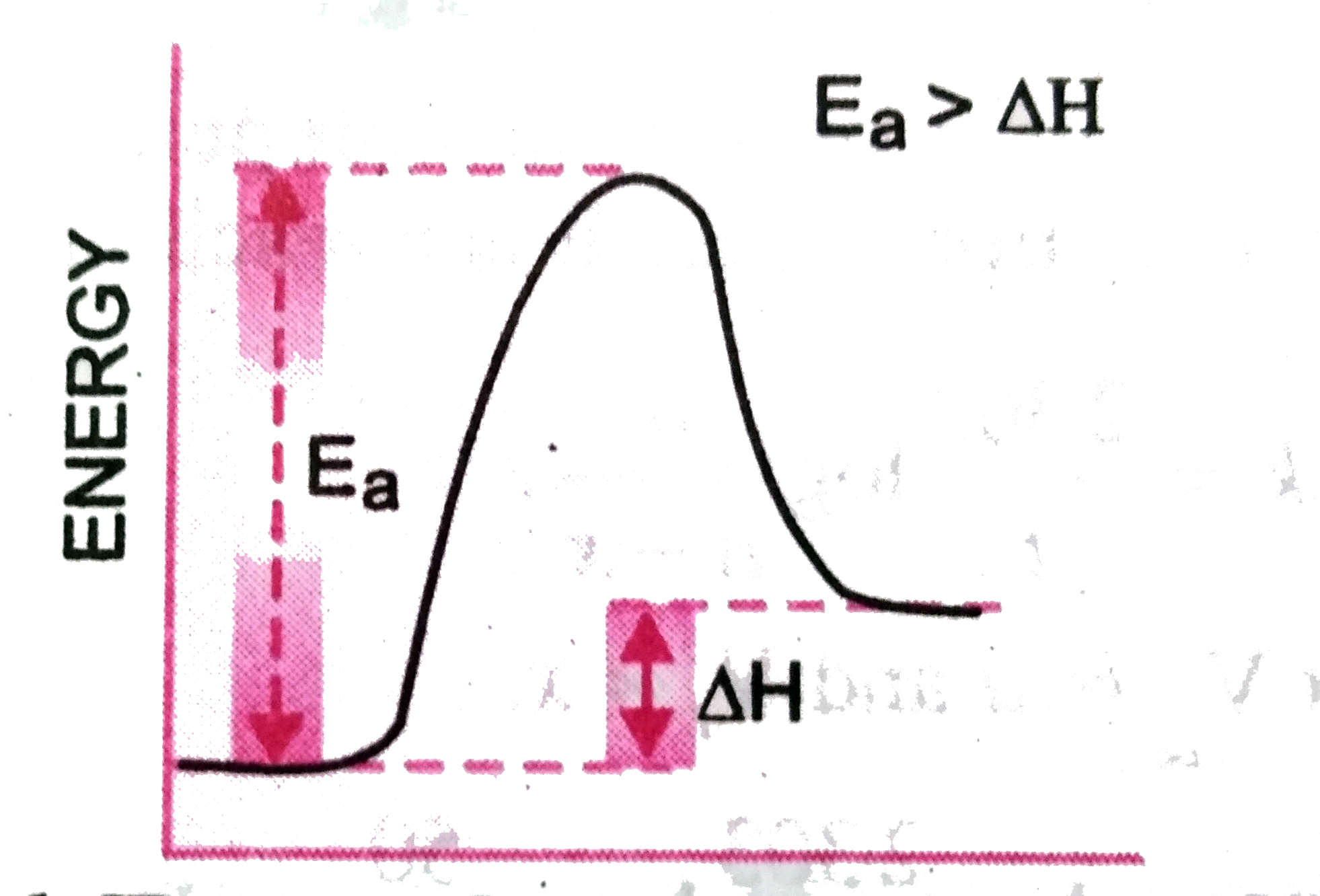
|
|
| 50. |
For an endothermic reaction, DeltaH represents the enthalpy of the reaction in kJmol^(-1). The minimum of activation energy will be: |
|
Answer» less than `DeltaH` |
|