

Saved Bookmarks
This section includes 7 InterviewSolutions, each offering curated multiple-choice questions to sharpen your Current Affairs knowledge and support exam preparation. Choose a topic below to get started.
| 1. |
[Fe(CN)_6]^(4-) ion is: |
|
Answer» Octahedral |
|
| 2. |
[Fe(CN)_(6)]^(4-) and [Fe(H_(2)O)_(8)]^(2+) are of different colours in dilute solutions. Why |
| Answer» Solution :In both the complexes, `Fe is in +2` state with the configuration `3d^(6)`, i.e., it has FOUR unpaired electrons. As the ligands `H_(2)O and.`CN^(-)` posses, different CRYSTAL FIELD splitting energy(triangle_(o))`, they absorb different components of the visible light (VIBGYOR) for d-d TRANSITION. HENCE, the transmitted colours are different | |
| 3. |
[Fe(CN)_(6)]^(4-) and [Fe(H_(2)O)_(6)]^(2+) are of different colours in dilute solutions. Why ? |
| Answer» SOLUTION :In both the complexes, Fe is in +2 state with the CONFIGURATION `3d^(6)`, having four unpaired electrons. As the ligands `H_(2)O` and `CN^(-)` POSSESS different crystal field splitting energy (`Delta_(0)`), they absorb different wavelengths of the visible light for d - d transition. HENCE, the transmitted colours are different. | |
| 4. |
[Fe(CN)_(6)]^(4-) and [Fe(CN)_(6)]^(3-) have different _________ but same _________. |
| Answer» SOLUTION :MAGNETIC MOMENT, STRUCTURE | |
| 5. |
[Fe(CN)_6]^(4-) and Fe(H_2 O)_6]^(2+) are different colours in dilute solutions . Why ? |
| Answer» Solution :In both the COMPLEXES, Fe is in +2 state with the configuration `3d^6`, i.e., it has FOUR unpaired electrons. In the presence of WEAK `H_2 O` ligand, they do not pair up. In the presence of strong CN ligand, they pair up leaving no unpaired electron. DUE to the difference in the number of unpaired electrons, they have different colours. | |
| 6. |
[Fe(CN)_5NO]^(2-)+S^(2-)toProduct[X] Answer the following questions for the product [X]. (i)Number of negative monodenate ligand(s). (ii)Effective atomic number of iron in the complex. (iii)Number of unpaired electrons |
|
Answer» (ii)Iron is in +2 OXIDATION state and atomic number of iron is 26. Therefore, EAN=24+12=36 (iii)`Fe^(2+)=3d^(5)4s^(0)` 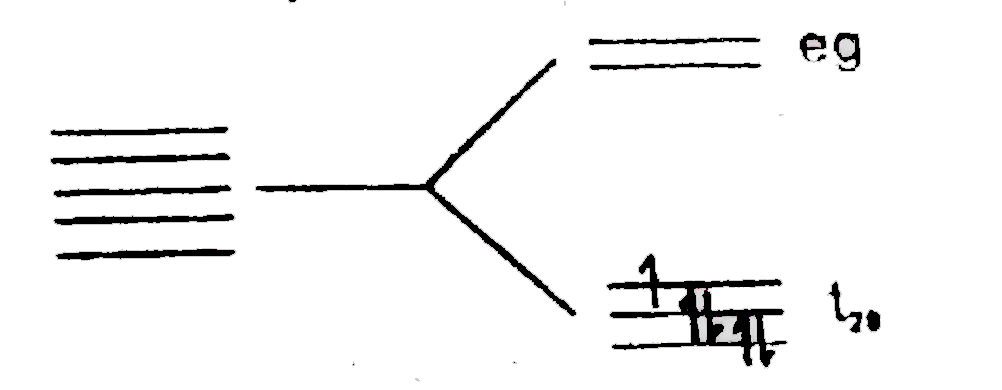 `CN^-` is strong FIELD ligand which compels for paring of electron. Therefore , there is one unpaired electron. |
|
| 7. |
FeCL_(3)+KI to Fe^(2+)(aq.)+KI_(3) |
|
Answer» For COLOURED ppt./Black ppt |
|
| 8. |
FeCl_3 on reaction with K_4[Fe(CN)_6] in aq solution gives blue colour and these are separated by a semi permeable membrane Due to osmosis there is |
|
Answer» blue COLOUR FORMATION in the SOLUTION of`FeCl_3` |
|
| 9. |
FeCl_(3) on reactiSon with K_(4)[Fe(CN)_(6)] in aq solution gives blue colour of these are separated by a semi permeable memrane AB as shown, Due to osmosis there is |
|
Answer» BLUE colour formation in side X |
|
| 10. |
FeCl_3 solution on reaction with SO_2 changes to: |
|
Answer» `FeCl_2` |
|
| 12. |
FeCl_(3) is known but not Fel_(3) Why? |
| Answer» Solution :`I^(-)` is a strong REDUCING agent, it reduces `Fe^(3+)` to `Fe^(2+) (or) Fe^(3+)`can oxidise `I^(-)` to `I_(2)`but not `CL^(-)` to `Cl_(2).2Fe^(3+)+2I^(-)rarr 2Fe^(2+)+I_(2)`. THUS `FeCl_(3)` is KNOWN but not `Fel_(2)`. | |
| 13. |
FeCl_(3) has each of the following characteristics except : |
|
Answer» it exists as dimer |
|
| 14. |
FeCl_2 reacts with SO_2 |
|
Answer» to GIVE FeS |
|
| 15. |
FeC_3 is added separately to excess of boiling water and excess of NaOH solution, the sols obtained contain respectively the disperse particles to be : |
|
Answer» `F_3e_3 C` |
|
| 16. |
FeC_(2)O_(4) can decolorise acidified KMnO_(4) dueto the oxidation of (a) _____and (b)____. |
|
Answer» |
|
| 17. |
Fear or excitement generally cause one to breathe rapidly and it results in the decreases of concentration of CO_2 in blood. In what way it will change pHof blood : |
|
Answer» PH will increase |
|
| 21. |
Fe_(3)O_(4) is ferrimagnetic at room temperature but at 850 K it becomes : |
|
Answer» DIAMAGNETIC |
|
| 22. |
Fe_3O_4 is ferrimagnetic at room temperature but becomes paramagnetic at 850K. Explain. |
| Answer» Solution :DUE to RANDOMISATION of SPINS at high TEMPERATURE. | |
| 23. |
Fe_(3)O_(4) is: |
|
Answer» FERROMAGNETIC |
|
| 24. |
Fe_3O_4 has inverse spinel structure. What is not true about this solid ? |
|
Answer» `FE^(3+)` ions are EQUALLY distributed between octahedral and tetrahedral voids |
|
| 25. |
Fe^(3+)overset(SNC^(Θ)("Excess"))rarrunderset("Bloodre"d)(A)overset(F^(ΘExcess))rarrunderset("Colourless")(B) Identify A and B (a) Write the IUPAC name of A and B (b) Find out the spin only magnetic moment of B . |
|
Answer» Solution :`NaS_(2)O_(3)+2HCI rarr 2NaCI +H_(2)O+SO_(2) +S` A is `[Fe(SCN)(H_(2)O)_(5)]^(2+)` The `IUPAC` NAME is pentaaquathiocyanatoferrate(III) ion `B` is `[FeF_(6)]^(3-)` The `IUPAC` mane is hexafluridoferrate(III) `Fe^(3+) + SCNbar rarr [Fe(SCN)(H_(2)O)_(5)]^(2+)` `Fe[SCN(H_(2)O)_(5)]^(2+)+6F rarr [FeF_(6)]^(3-) + SCN^(Θ) +5H_(2)O` `B[FeF_(6)]^(3-)` The oxidation number of ion is + 3 Atomic number = 26 `Fe = [Ar]3d^(6) 4s^(2)` `Fe =[Ar]3d^(5)` Which means five UNPAIRED electrons Spin magnetic moment` sqrt(N(+2))` `=sqrt(5(5+2)) =sqrt35BM` 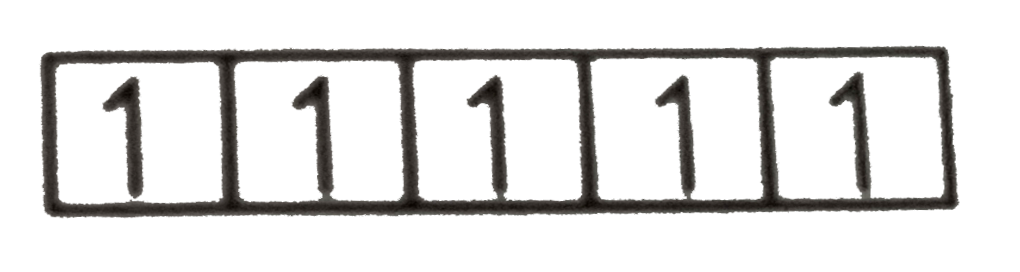 . .
|
|
| 26. |
Fe^(3+)overset(SCN^(-)(excess))to "blood red"(A)overset(F^(-)(excess))to"colourless"(B)Identify A and B (a) Write IUPAC name of A and B (b) Find out spin only magnetic moment of B. |
|
Answer» Solution :`Fe^(3+)unerset(excess)(SCN)^(-)overset(aqueous)tounderset((A)"(blood RED))[Fe(SCN)(H_(2)O)_(5)]]^(2+)``unerset((A)("blood red"))([Fe(SCN)(H_(2)O)_(5)]^(2+)) `unerset(excess)(6F^(-))tounerset((B)("colour LESS")([FeF_(6)]^(3-))+SCN^(-)+5H_(2)O` (a) Pentaaquathiocyanatoiron (III)ion hexafluoroferrate (III) (b) Magnetic moment = SQRT(n(n+2)) = sqrt35 = 5.92 B.M., where n = number of UNPAIRED electrons which is equal to 5 here. |
|
| 27. |
Fe^(3+) is reduced to Fe^(2+) by using |
|
Answer» `H_(2)O_(2)` in PRESENCE of `NaOH` |
|
| 28. |
Fe^(3+) is reduced of Fe^(2+) by using |
|
Answer» `H_(2)O_(2)` is PRESENCE of NAOH |
|
| 29. |
Fe^(3+) does not give prussian blue colour with K_(4)[Fe(CN)_(6)] but on its reaction with (X), prussian blue colour appears (X) can be: |
| Answer» Solution :N//A | |
| 30. |
Fe^(3+)ions react with potassium thiocyanide to give : |
|
Answer» yellow PPT |
|
| 31. |
[Fe^(3+)(biphy)_(X)] , (bipy = 2,2' bipyridine)'X' value is |
|
Answer» |
|
| 32. |
Fe_(2)(SO_(4))_(3) is used in water and sewage treatment to aid the removal of suspended impurities. Calculate the mass percentage of iron, sulphur and oxygen in this compound. |
|
Answer» `%" of FE"=(2xx56)/(400)xx100=28%","%" of S"=(32xx3)/(400)xx100=24%,""%" of O"=(4xx16xx3)/(400)xx100=48%` |
|
| 33. |
Fe_(2)O_(3) is reduced to spongy iron near the top of blast furnace by |
| Answer» SOLUTION :C is used as reducing agent | |
| 34. |
Fe_(2)O_(3) is reduced to spongy iron near near the top of blast furnace by |
| Answer» Answer :D | |
| 35. |
Fe_(2)O_(3) is converted to FeO in the presence of CO at ________ |
|
Answer» 473-573 K |
|
| 36. |
Fe_2(CO)_9is diamagnetic. Which of the followingreasons is correct: |
|
Answer» PRESENCE of one CO as BRIDGE group |
|
| 37. |
Fe_(2)(CO)_(9) is diamagnetic. Which of the following is the correct reason ? |
|
Answer» One CO is present as BRIDGE group |
|
| 38. |
Fe_(2)(CO)_(9) is diamagnetic. Which of the following reasons is correct : |
|
Answer» Presence of one CO as bridge group |
|
| 39. |
Fe_2(CO)_9 is diamagnetic. Which of the following reasons is correct: |
|
Answer» PRESENCE of one CO as BRIDGE group |
|
| 40. |
Fe^(2+)+NO_(3)^(-) +H_(2)SO_(4) ("conc.") to "X" (Brown ring complex) The magnetic moment of complex 'X' to its nearest integer is : |
|
Answer» |
|
| 41. |
Fe^(2+) ions react with nitric oxide formed from reduction of nitrate and yields a brown coloured complex- |
|
Answer» `[Fe(CO)_(5)NO]^(2+)` |
|
| 42. |
Fe^(2+) gives blue coloue, called(a)____ with (b)___white Fe^(2+) gives blue coloue, called(c)____ with (d)____. |
|
Answer» |
|
| 44. |
Fe^(2+) does not give prussian blue colour with K_4[Fe((CN)_6], but on its reaction with (X), prussian blue colour appears with the reagent (X) is : |
|
Answer» `MnO_4^(-)//H^+` |
|
| 45. |
Fe^(2+) does not givebluecolour with K_(4)[Fe(CN)_(6)] but onitsreaction with (X) ,bluecolour oppears (X) can be |
| Answer» Answer :a | |
| 46. |
Fe^(2+)._((aq))+NO_(3)^(Θ)._((aq))+H_(2)SO_(4)(conc.)rarr Brown ring .The oxidationnumber of iron in brownring complex is |
|
Answer» |
|
| 47. |
Fe^(2+) (aq)+NO_(3)^(-) (aq)+H_(2)SO_(4) (conc.) to Brown ring The brown ring is due to the formation of complex, [Fe(H_(2)O)_(5)NO]SO_(4). What is the oxidation state of iron in the complex ? |
|
Answer» |
|
| 48. |
Fe^(2+) and Fe^(3+) can be distinguished by : |
|
Answer» `NH_(4)SCN` |
|
| 49. |
Fe ore is concentrated by : |
|
Answer» MAGNETIC TREATMENT |
|