

Saved Bookmarks
This section includes 7 InterviewSolutions, each offering curated multiple-choice questions to sharpen your Current Affairs knowledge and support exam preparation. Choose a topic below to get started.
| 1. |
Explain what is observed : (i) When a beam of light is passed through a colloidal sol. (ii) An electrolyte, NaCl is added to hydrated ferric oxide sol. (iii) Electric current is passed through a colloidal sol ? |
|
Answer» Solution :(i) When a light beam pass through colloidal sol, light is scattered this process is known as Tyndal EFFECT. The scattering of light illuminates the path. (II) When electrolyte `NaCl` is added to the aquous Ferric oxide sol, `NA^(+)` and Clions are removed from `NaCl` and coagulation of positive CHARGED ferric oxide is done in presence of negative charged `Cl^(-)` ion. (iii) Colloidal sols are either positive charged or negative charged dispersion medium has different charge. It made colloids neutral. Colloids are attracted towards positive charged electrodes, in presence of voltage and when they get connected to the electrodes they loose their charge and get coagulated. |
|
| 2. |
Explain the following facts giving approciate reason in each case : (i) NF_(3) is an exothermic compound whereas NCl_(3) is not. (ii) All the bonds in SF_(4) are not equivanent. |
|
Answer» SOLUTION :(i)It is because `F_(2)` is stronger oxidising agent than `Cl_(2)`, therefore `NF_(3)` is exothermic COMPOUND WHEREAS `NCl_(3)` is endothermic. (ii) In `SF_(4)` BONDS are in different planes, therefore,they are not equivalent. |
|
| 3. |
Explain what is meant by : (i) Biocatalyst |
| Answer» SOLUTION :Biocatalysts are the CATALYSTS which INCREASE the RATE of METABOLISM/ biochemical reactions. | |
| 4. |
Explain the following : Carbon tetrachloride is used as fire extinguisher |
| Answer» Solution :`"CCL"_(4)` is USED as fire EXTINGUISHER under the name pyrene | |
| 5. |
Explain what is observed (i) when a beam of light is passed through a colloidal sol. (ii) an electrolyte, NaCl is added to hydrated ferric oxide sol. (iii) electric current is passed through a colloidal sol? |
|
Answer» Solution :(i) SCATTERING of light by colloidal PARTICLES takes place and path of light becomes visible (Tyndall effect).(ii) The positively charged colloidal particles of `Fe(OH)_3`GET coagulated by the oppositely charged `CL^(-)`ions provided by NaCl. (iii) On passing electric current, the colloidal particles move TOWARDS the oppositely charged electrode where they lose their charge and get coagulated. This is electrophoresis process. |
|
| 6. |
Explain the following: F_2 is most reactive of all the four common halogens. |
| Answer» SOLUTION :FLUORINE is the most REACTIVE of all the four common halogens because of the small and strong BONDS formed by it with other ELEMENTS. It can also be explained on the basis of standard electrode potential value of fluorine which is the highest. | |
| 7. |
Explainwhatis meant by the following : (i)peptide linkage . (ii) pyranosestructureof glucose . |
|
Answer» Solution :(i)Peptide liknage: See Q4(i) above. (ii) Pyranosestructureof glucose : The six membered cyclic structure fo glucoseis called pyranosestructure (`ALPHA` - or `beta`) in analogy with pyran . Pyran is cyclic ORGANIC COMPOUND with one OXYGEN atom and fivecarbon atoms in the ring . 
|
|
| 8. |
Explain the following cases giving appropriate reasons : (i) Nickel does not form low spin octahedral complexes (ii) Co^(2+) is easily oxidized to Co^(3+) in the presence of a strong ligand. (iii) CO is a stronger ligand than NH_(3) for many metals. |
Answer» Solution : For low spin, ELECTRONS should pair up. This will produce only one empty d-orbital. HENCE, `d^(2)sp^(3)` hybridisation is not possible to form OCTAHEDRAL COMPLEXES. (ii) Co(II) has the configuration `3d^(7)`, i.e., it has three unpaired electron. Water being a weak ligand, the unpaired electrons do not pair up. In the presence of strong ligand and air, two unpaired electrons in 3d pair up and the third unpaired electron shifts tohigher energy subshell from where it can be easily lost and hence shows an oxidation state of III. (iii) Ligands such as CO, `CN^(-)` and `NO^(+)` have empty `pi`-orbitals which overlap with the filled d-orbital (`t_(2g)`-orbitals) of transition metals forming `pi`-BONDS (back bonding). These `pi`-interactions increase the value of `Delta_(0)`. This accounts for the position of these ligands as strong field ligands. `NH_(3)` cannot form `pi` bonds by back bonding. |
|
| 9. |
Explain what is meant (i) Glycosidic linkage |
| Answer» Solution :(i) The LINKAGE between the MONOSACCHARIDE units through oxygen is CALLED glycosidic linkage. | |
| 10. |
Explain the following : [Co(NH_(3))_(6)]^(3+) is diamagnetic, whereas [CoF_(6)]^(3-) is paramagnetic. |
| Answer» SOLUTION :`[Co(NH_(3))_(6)]^(3+)` is diamagnetic because `NH_(3)` is STRONG field LIGAND. It causes pairing of ELECTRONS and no unpaired electrons are left. `[CoF_(6)]^(3-)` is paramagnetic because `F^(-)` is weak field ligand. It does not cause pairing of electrons and there are unpaired electrons left. | |
| 11. |
Explain what is meant by (i) a peptide linkage (ii) a glycosidic linkage |
|
Answer» SOLUTION :Peptide linkage : Proteins are condensation polymers of `ALPHA`-amino acids in which the same or different `alpha`-amino acids are connected by peptide bonds . Chemically , a peptide bond is an amide linkage FORMED between -COOH group of one `alpha`-amino acid and `NH_(2)` group of the other `alpha`-amino acid by a molecular of water. (ii) Glycosidic linkage : The TWO monosaccharides units are joined together through an oxide linkage formed by loss of a molecule of `H_(2)O` . such a linkage between two monosaccharides units through oxygen atom is CALLED glycosidic linkage . |
|
| 12. |
Explain :What is instantaneous rate ?How it is determine? |
|
Answer» Solution :Definition :The rate of a particular moment of time ,si called instantaeous rate.It is EXPRESSED by `(r_(inst))`. Explanation:INSTANTANEOUS rate is rate for smallest time.The smallest time interval say dt and during this time the change in concentration by decrease the concentration of REACTANTS is d[R] then the Instantaneous rate is expressed by following.Instantaneous rate =`r_(inst)=-(d[R])/(dt)` The average rate at the smallest time interval say dt(i.e When `Deltat` approaches zero),Hence,mathematically for an infinitesimally small dt instantaneous rate is given by As `Deltat to0` or `r_(inst)=-(d[R])/(dt)=(d[P])/(dt)` [Remember:Average rate `r_(av)=-(Delta[R])/(dt)=(d[P])/(Deltat)]`  The procedure to DETERMINED instantaneous rate : The instantaneous rate is determined graphically. It can be determined by drawing a tangent at time t on either of the cuves for concentration R & p vs time t and calculating its slope. Take the value of d [R] or d[p] & dt and calculate `r_("inst")` ONT he base of tangent of graph. 
|
|
| 13. |
Explain the following cases giving appropriate reason: (i) Nickel does not from low spin octahedral complexes: (ii) The pie-Complexes are known for the transition metals only. (iii) CO^(2+) is easily oxidised to Co^(3+) in the presence of a strong ligand. |
|
Answer» |
|
| 14. |
Explain what is meant by . (i) a peptide linkage . (ii) a glycosdic linkage . |
|
Answer» Solution :(i) Peptidelinkageis anamide formed between - COOH group and `-NH_(2)` group `alpha` - amino acids in a protein are CONNECTED through peptidelinkage. (II) Two monosaccharideunitsare joninedtogetherby an oxide linkageformed by the loss of awatermolecule. Sucha linkagebetweentwomonosaccharideunits through OXYGEN atom iscalledglycosidc LINKAGE . |
|
| 15. |
Explain the following behaviours: (i) Alcohols are more soluble in water than the hydrocarbons of comparable molecular masses. (ii) o-nitrophenol is more acidic than o-nitrophenol is more acidic than o-methoxyphenol. |
|
Answer» SOLUTION :(i) Alcohols are more soluble in water than the hydrocarbons of comparable molecular masses because alcohols FORM hydrogen bonds with water. (ii) The EWG like -`NO_(2)` increases the acidic strength of the phenoxide ion by DISPERSAL of negative change, while EDG like -`OCH_(3)` decreases the acidic strength of phenol by destablising the phenoxide ion by CONCENTRATING neative change. |
|
| 16. |
Explainwhatis meantby (i) a peptidelinkage (ii)a glycoside linkage . |
|
Answer» Solution :(i) Peptidelinkage: Polymers OFX - amino acidsare connectedot eachother bypeptide bondor peptidelinkage . CHEMICALLY peptidelinkageis an amideformedbetween - COOH group and `NH_(2)` group. (ii) Glycosidiclinkage: Thetwomonosaccharide unitsare joninedtogetherby an oxide linkageformed bythe lossof a watermoleculeSuch a linkagebetween TOW mono saccharideunitsthrough oxygenatom is calledglycosidiclinkage . |
|
| 17. |
Explain the following behaviours : (i) Alcohols are more soluble in water than the hydrocarbons of comparable molecular masses. (ii) Ortho - nitrophenol is more acidic than ortho - methoxyphenol. (iii) Cumene is a better starting material for the preparation of phenol. |
|
Answer» SOLUTION :(i) Hydrogen bonding takes place between ALCOHOL and water molecules as under : `H-overset(H)overset(|)O* * * * *H-overset(r)overset(|)O* * * * *H-overset(H)overset(|)O* * * * *H-overset(R )overset(|)O* * * * *` Therefore ALCOHOLS are soluble in water. No such hydrogen bonding takes place between HYDROCARBON and water molecules. (ii) Ortho - nitrophenol is more acidic than ortho - methoxyphenol because the phenoxide ion obtained after the dissociation is stabilised by resonance in the case of o - nitrophenol. Such stabilisation does not happen in the case of o - methoxyphenol.  (iii) Side product formed in this reaction is acetone which is another important organic compound. |
|
| 18. |
Define gangue, flux and slag with a suitable example. |
Answer» SOLUTION :FLUX COMBINES with IMPURITY to from SLAG. 
|
|
| 19. |
Explain the following about the complexes [Fe(CN)_(6)]^(4-) and [Fe(H_(2)O)_(6)]^(2+): (i) What type of shapes do they have ? (ii) What type of hybridisation is involved in each case ? (iii) Which of them is outer orbital complex and which one is inner orbital complex ? (iv) Which of them is low spin complex and which one is high spin complex ? (v) Compare their magnetic behaviour. (vi) Why do they have different colours in dilute solution ? (vii) Write the electronic configuration of metal ion in each case in terms of t_(2g) and e_(g) orbitals. |
|
Answer» Solution :(i) Both have octahedral shape. (ii) In `[Fe(CN)_(6)]^(4-)`, `CN^(-)` is a strong ligand. 3d ELECTRONS PAIR up. Hybridisation is `d^(2)sp^(3)`. In `[Fe(H_(2)O)_(6)]^(2+)` is an outer orbital complex while `[Fe(CN)_(6)]^(4-)` is an INNER orbital complex. (iv) In `[Fe(CN)_(6)]^(4-)`, after pairing up of 3d electrons, no unpaired electron is left while in `[Fe(H_(2)O)_(6)]^(2+)`, 4 unpaired electrons are present in the 3d SUBSHELL. Hence, `[Fe(CN)_(6)]^(4-)` is low spin complex while `[Fe(H_(2)O)_(6)]^(2+)` is high spin complex. (v) As `[Fe(CN)_(6)]^(4-)` has no unpaired electron, it is diamagnetic while `[Fe(H_(2)O)_(6)]^(2+)` has 4 unpaired electrons, it is paramagnetic. (vi) In both complexes, Fe is in +2 oxidation state and has the configuration `d^(6). CN^(-)` is a strong ligand while `H_(2)O` is a weak ligand. Hence, their crystal field splitting energies are different. Consequently, they absorb different wavelengths from white light and, therefore, the transmitted colours are also different. (vii) `[Fe(CN)_(6)]^(4-)=t_(2g)^(6)e_(g)^(0), [Fe(H_(2)O)_(6)]^(2+)=t_(2g)^(4)e_(g)^(2)`. |
|
| 20. |
Explain the following: a) Why alkenes are more reactive than alkanes? b) Acetylene reacts with ammoniacal silver nitrate solution or ammoniacal cuprous chlroide solution or sodamide to form an acetylide while ethylene does not. c) But-2-ene shows geometrical isomerism but but-1-ene does not show. d) Why has but-1-yne a larger dipole moment (0.80 D) than but-1-ene (0.40D) ? e) Wjhuy alkylnes are slightly more soluble in water than alkenes and alkanes? f) Cyclopropane is more reactive than cyclobutane. g) Cyclopentane is more reactive than cyclobutane. h) Which isomer of C_(4)H_)(9)Br yeilds only a single alkene on dehydrobromination? i) Write the products of dehydrochlorination of the following: (j) Which of the following reactions would provide a better synthesis of 2-pentene? k) Write the major products of dehydration of l) Comparison of heat of hydrogenation for the following alkenes: m) Write the intermolecular step and give the product of the following reactioni: n) Give the structures of an optically active alkene (A) having the lowest molecular mass, which on catalyst hydrogenation gives an optically inactive compound (B). |
|
Answer» Solution :a) `pi`-bond is weaker than a greater bond and is easily broken. The `pi`-electron are less firmly bound to carbon nuclei. b) Acetylene reacts to form acetylide because it contains acidic hydrogen. c) In but-1-ene, the carbon atom linked by double bond is ATTACHED with two hydrogen atoms (similar GROUPS) and thus does not show geometrical isomerism. 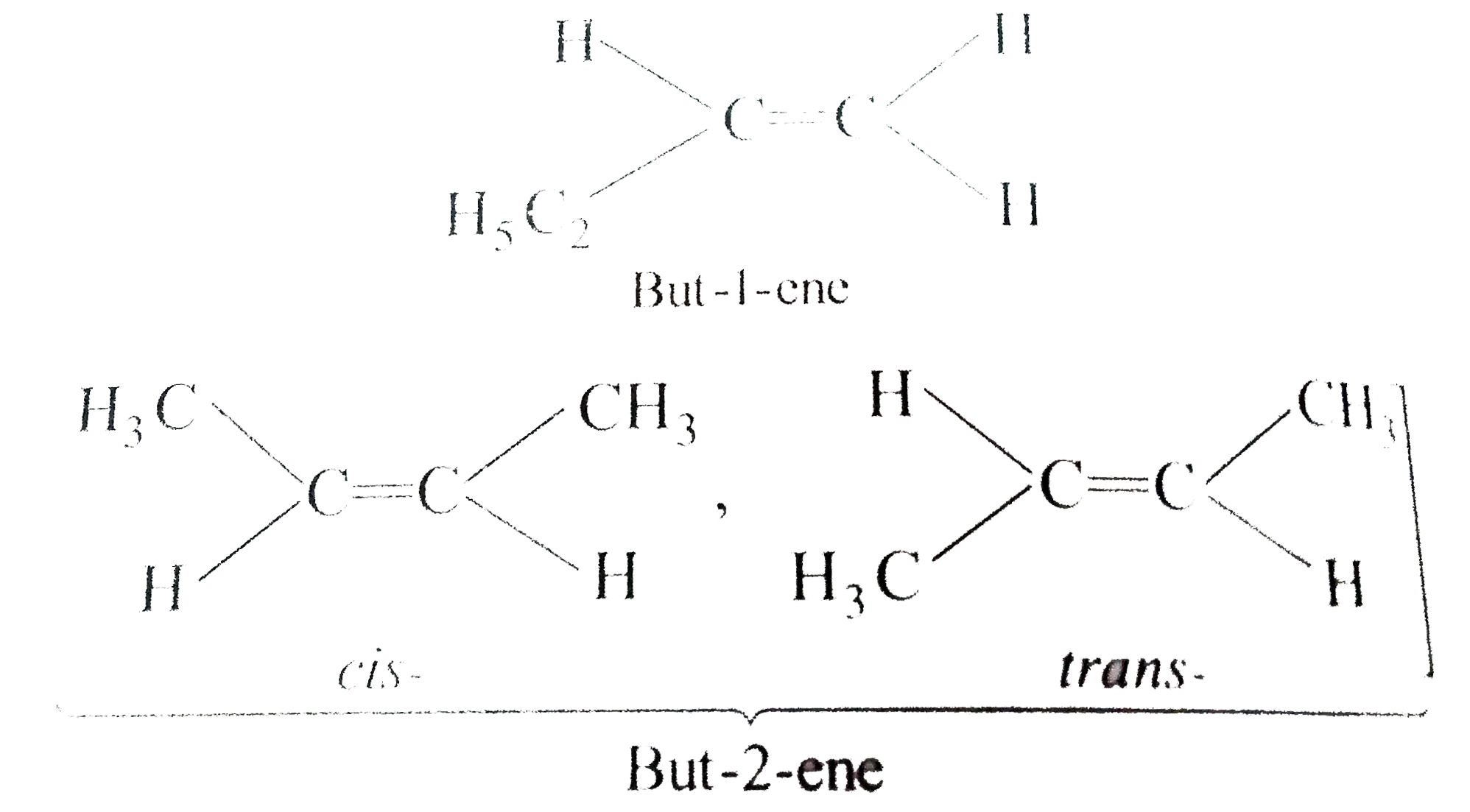 d) A `C-C_(sp)` bond is more polarised than `C-C_(sp^(2))` bond because carbon with more s-character is more electronegative. e) Alkuynes are somewhat more polar in nature and thus, their solubility is slightly more in water. h) 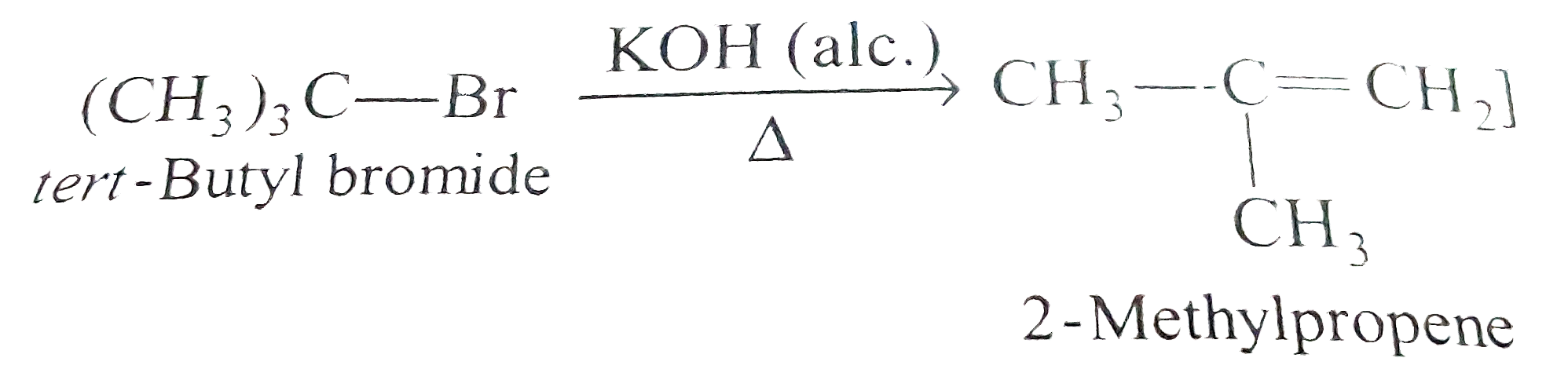 i) 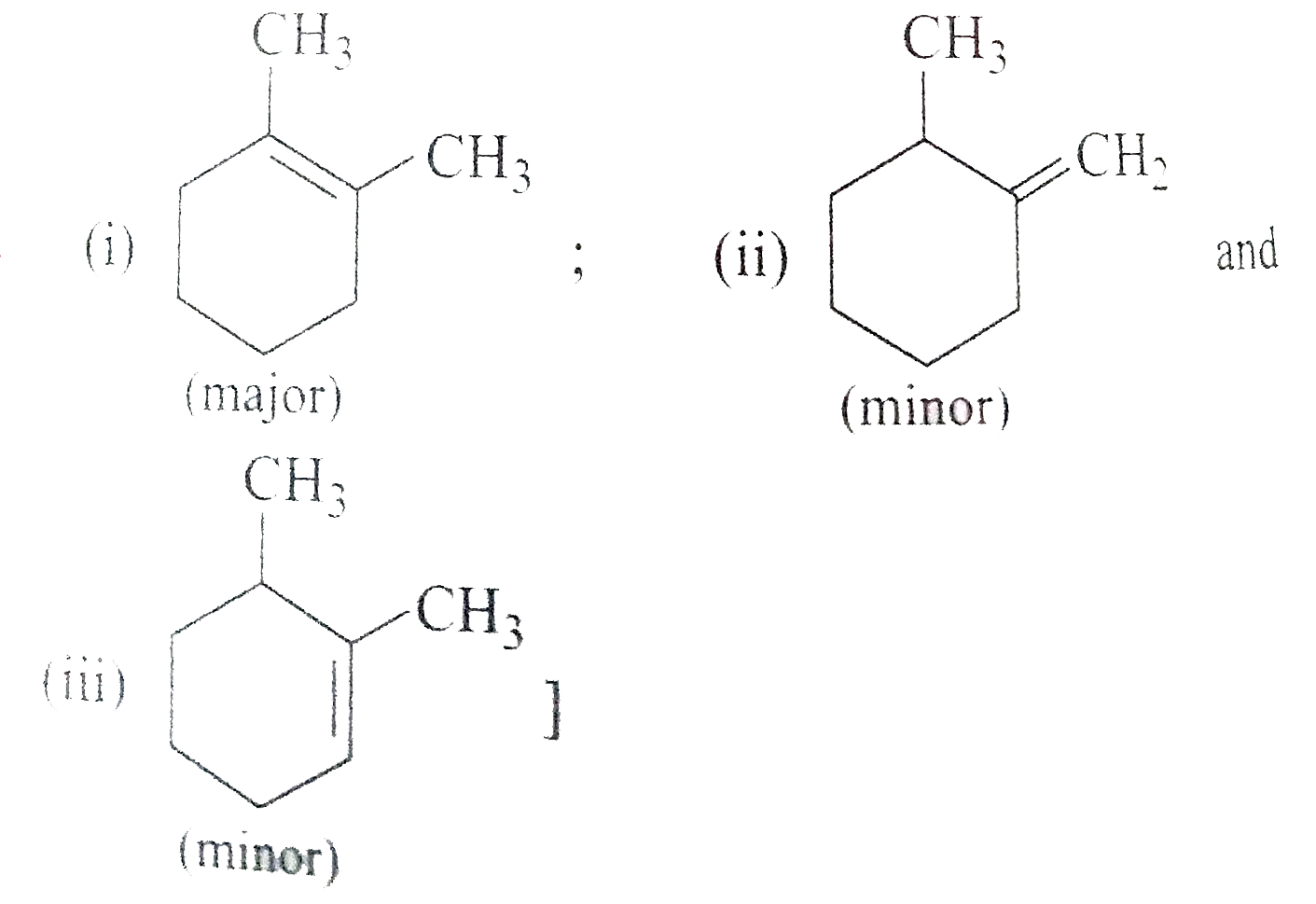 j) I) is better because it gives only one product. 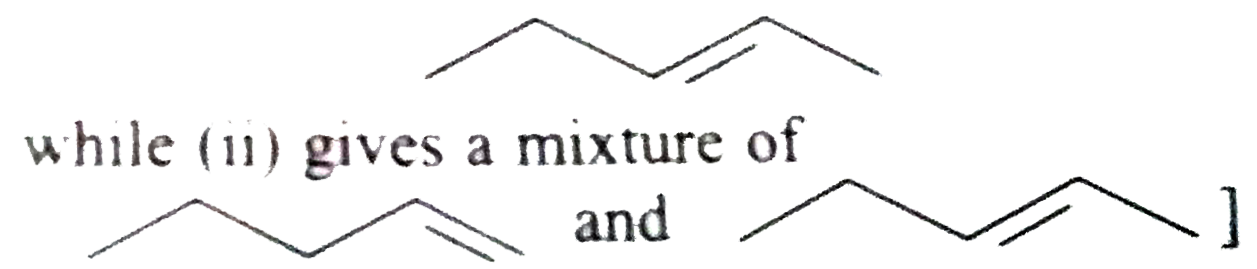 While (ii) gives a mixture of  k) 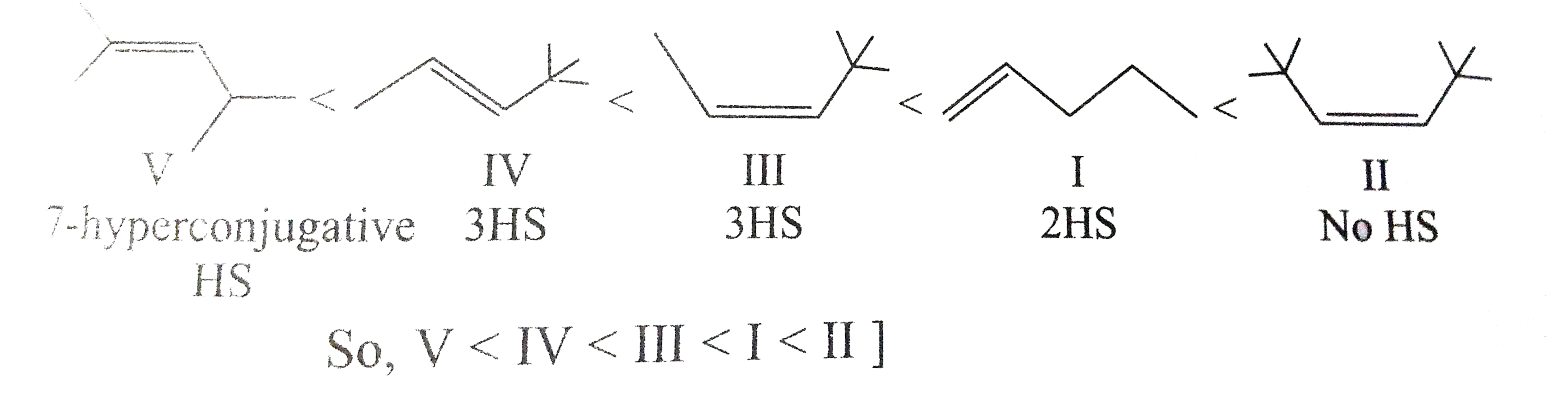 l) Greater is the stability of alkene, lower the heat of hydrogenatin. Out of cis- and trans-isomes, the trans-isomer is more STABLE than cis-isomer in which two alkyl groups lie on the same side of the double bond and hence cause STERIC hindrance, THEREFORE, heat of hydrogeneation of trans-isomer is less than that of cis-isomer. 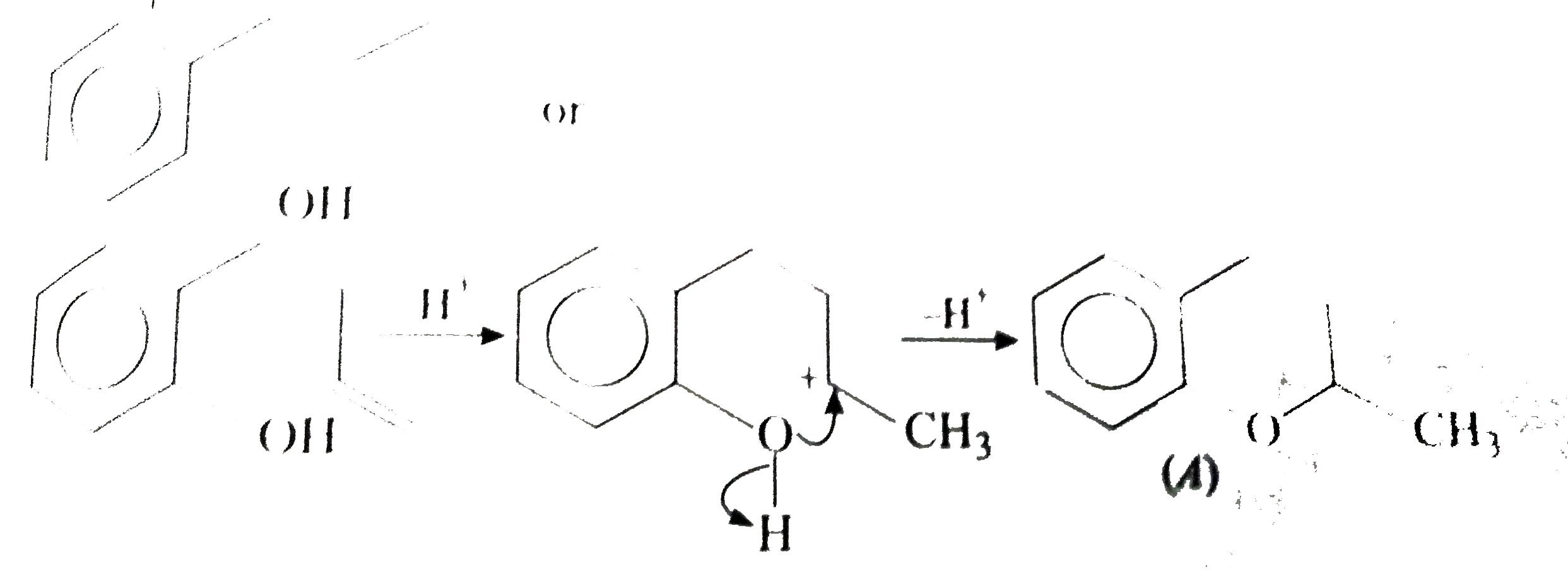 m) 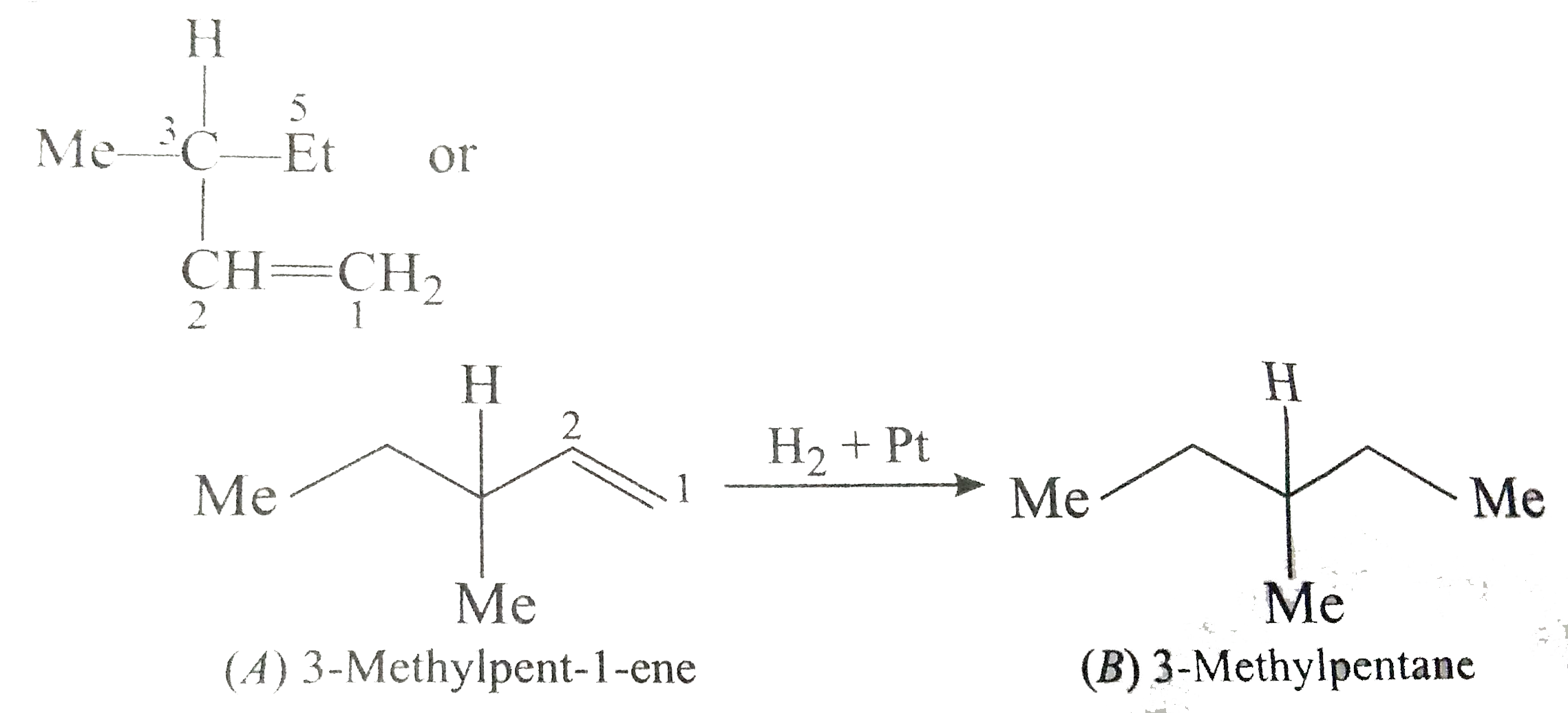
|
|
| 21. |
Explain what is electric current is passed through a colloidal sol ? |
| Answer» Solution :On passing an electric CURRENT, colloidal PARTICLES move towards the oppositely charged electrode where they lose their charge and GET COAGULATED. This process is called ELECTROPHORESIS. | |
| 22. |
Explain the following: (a) White phosphortus is chemically reactive while red phosphorus is not? (b) MgCl_(2).6H_(2)O cannot be made anhydrous simply by heating. |
Answer» Solution :(a) White phosphorus `(MF P_(4))` has tetrahedral structure. Each P atom is linked with other three P-atoms by means of single bonds. The BOND PPP `(=90^(@))` is far less than tetrahedral ANGLE `109^(@) 28^(.)`. The molecule is, therefore, under strain and hence the molecule has tendency to open up and atomise. This is why `P_(4)` is reactive. Red phosphorus (MF `(P_(4))_(4)]` is polymer of white phosphorus. The integer n being very high, red phosphorus is having enormously high MW and it is for this reaction that red phosphorus is chemically inert.  (b) `MgCl_(2).6H_(2)O` upon heating, loses 5 MOLECULES of WATER of hydration (crystallisation) easily to transform into mono hydrate `MgCl_(2).H_(2)O`. This upon further heating gets hydrolysed. `MgCl_(2).H_(2)O overset(Delta)to Mg(OH)Cl + HCl` `2Mg(OH)Cl overset(Delta)to Mg_(2)OCl_(2) + H_(2)O` |
|
| 23. |
Explain the following : (a) Same substance can act both as colloid and crystalloid (b) Artificial rain is caused by spraying salt over clouds (c ) When a beam of light is passed through a colloidal sol its path gets illuminated. |
| Answer» | |
| 24. |
Explain what is an electrolyte, NaCl is added to sol. |
| Answer» Solution : The positively CHARGED colloidal particles of `Fe(OH)_3` get coagulated by the oppositely charged IONS PROVIDED by NACL. | |
| 26. |
Explain the following: (a) ROH's with three or fewer C's are H_(2)O soluble, those with five or more C's are insoluble, and those with four C's are marginally soluble. (b) When equal volumes of ethanol and water are mixed the total volume is less than the sum of the two individual volumes. (c ) Propanol (molecular weight = 60) has a higher boiling point than butane (molecular weight = 58). |
|
Answer» Solution :(a) The WATER solubility of alcohols is attributed to intermolecular H-bonding with `H_(2)O`. As the number of CARBONS increases, molecular weights of the alcohols also increase and their solubility in water decreases because greater carbon CONTENT makes the alcohol less hydrophilic. Conversely, their solubility in hydrocarbon solvents increases. (b) Due to H-bonding ethanol and water molecules. (c ) Alcohol molecules attract each other by relatively stronger H-bonds and somewhat weaker dipole-dipole interactions, resulting in a higher BOILING point, Only weaker van der Waals forces must be overcome to vapourize the hydrocarbon. |
|
| 27. |
Explain what happens, when KCI, an electrolyte, is added to hydrated ferric oxide sol ? |
| Answer» Solution :COAGULATION of the sol takes place and a precipitate of `Fe(OH)_3` is OBTAINED. The CHARGE on the colloidal particles is NEUTRALISED by the ADDITION of electrolyte. | |
| 28. |
Explain what happens, when an electric current is passed through a colloidal solution ? |
| Answer» Solution :Electrophoresis TAKES place. The COLLOIDAL particles move TOWARDS the oppositely charged clectrode on PASSING ELECTRICITY | |
| 29. |
Explain the following - (a) Melting point of Fe is higher than that of Cu. (b) Magnetic moment of Ni^(2+) is lower than that of Co^(2+). (c ) Scandium does not produce coloured ions but still it is a transition element. (d) The increasing order of oxidation states of the oxo - ions is : VO_(2)^(+)lt CrO_(7)^(2-)lt MnO_(4)^(-) |
| Answer» SOLUTION :(a) N/A(b) N/A (C ) Sc ghas partially filled d - orbitals in its penultimate SHELL but `Sc^(3+)` has no d - electron and thus d - d transition is not possible (d) N/A | |
| 30. |
Explain the following : (a) PH_3 has lower boiling point than NH_3 , why(b) Noble gases are mostly inert why ? |
Answer» SOLUTION :(a) This is because in ammonia MOLECULES there are intermolecular H-bond but in `PH_3` there are WEAK VANDER waal.s forces of ATTRACTION . 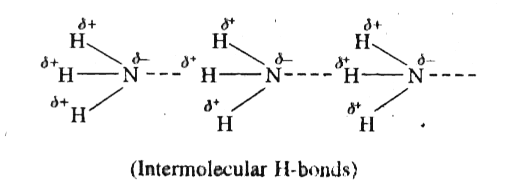 (b) This is due to the following reasons : (i) They have high ionization enthalpies. (ii) They have zero election affinity. (iii) They have their octets complete. (iv) They have no unpaired electrons. |
|
| 31. |
Explain what happens, when a beam of light is passed through a colloidal solution ? |
| Answer» Solution :A bright Tyndall cone is observed at RIGHT angle to the DIRECTION of light. This is due to SCATTERING of light by the COLLOIDAL particles. | |
| 32. |
Explain the following: (a) How is XeF_4prepared ? Give its molecular shape. (b)Why ammonia has higher boiling point than phosphene? |
|
Answer» Solution :(a) `Xe + 2F_2 UNDERSET(" Ni tube5-6 atm")overset(675K)(to) XeF_4` (1:5 by vol) ` Xe F_2`has square planar geometry DUE `sp^3 d^2`hybridisation is atom of Xe atom. There are two lone pairs of electrons present on Xe atom. 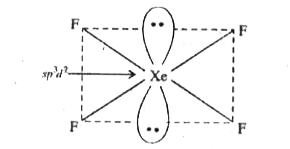 (b)Ammonia has higher boiling POINT than phosphine. This is because in `NH_3`there are intermolecular H-bonds but in phosphine there are weak VAN der Waals. forces of attraction. 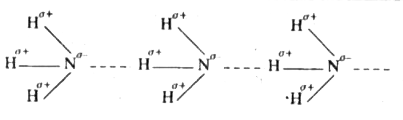
|
|
| 33. |
Explain what happens when a colloidal solution of gold is brought under the influence of electric current. |
| Answer» Solution :Colloidal solution of gold contains NEGATIVELY charged gold particles, where `OH^-` ion have been adsorbed in order to stabilise the gold solution. When a colloidal solution of gold is brought under the influence of electric field then negatively charged gold particles move towards anode. Such type of migration of gold COLLOIDS towards anode under the influence of electric field is called ANAPHORESIS or GENERAL electrolysis. | |
| 34. |
Explain the following: (a) H_2Sis a gas while H_2Ois liquid at room temperature. (b) Ionization energies of noble gases are very high. (c) Why is ammonia a good complexing agent ? (d) Name a compound in which iodine shows positive oxidation state. |
|
Answer» Solution :(a)` H_2O`has higher boiling point than `H_2S` , because hydrogen is bonded to electronegative element oxygen and, therefore, it can form hydrogen bonds. As a result, water EXISTS as associated MOLECULES and, therefore, exists as a liquid (B)The ionisation energies of noble gases are very high. This is due to stable completely filled electronic configurations of their atoms. Noble gases : `ns^2 np^6` As a result, very large amount of energy is required to remove the electron. (c) Ammonia is a good complexing agent because of the presence of lone pair of electrons on nitrogen. This lone pair can easily be donated to electron deficient species (transition metal ions) to form complexes. (d) Iodine shows positive oxidation state in ICI. The EVIDENCE for positive oxidation state of iodine is that when ICl is electrolysed, iodine is liberated at cathode while both `I_2`and `Cl_2` , are liberated at anode. The liberation of iodine at cathode indicates the presence of cationic iodine. `2ICl iff I^(+) + ICl_(2)^(-)` |
|
| 35. |
Explain Werner's theory of coordination compounds with suitable examples. |
|
Answer» Solution :Werner's theory : Werner's theory : POSTULATES : 1) EVERY complex compound has a central metal atom (or) ion. 2) The central metal shows two TYPES of valencies NAMELY primary valency and secondary valency. A) Primary valency : The primary valency is numerically equal to the oxidation state of the metal. Species or groups bound by primary valencies undergo complete ionization.These valencies are identical with ionic bonds and are non-directional. These valencies are represented by discontinuous lines (.....) Eg : `CoCl_(3)` contains `Co^(3+) and 3Cl^(-)` ions. There are three Primary Valencies or three ionic bonds. B) Secondary Valency: Each metal has a characteristic number of Secondary Valencies. They are DIRECTED in space around the central metal. The number of Secondary Valencies is called Coordination numbe (C.N .) of the metal. These valencies are directional in Nature. For example in `CoCl_(3). 6NH_(3)` Three `Cl^(-)` ions are held by primary Valencies and `6NH_(3)` molecules are held by Secondary Valencies. In `CuSO_(4).4NH_(3)" complex "SO_(4)^(2-)` ion is held by two Primary Valencies and `4NH_(3)` molecules are held by Secondary Valencies. 3) Some negative ligands, depending upon the complex, may satisfy both primary and secondary valencies. Such ligands, in a complex, which satisfy both primary as well as secondary valencies do not ionize. 4) The primary valency of a metal is known as its outer sphere of attraction or ionizable valency while the Secondary valencies are known as the inner sphere of attraction or coordination sphere. Groups bound by secondary valencies do not undergo ionization in the complex. 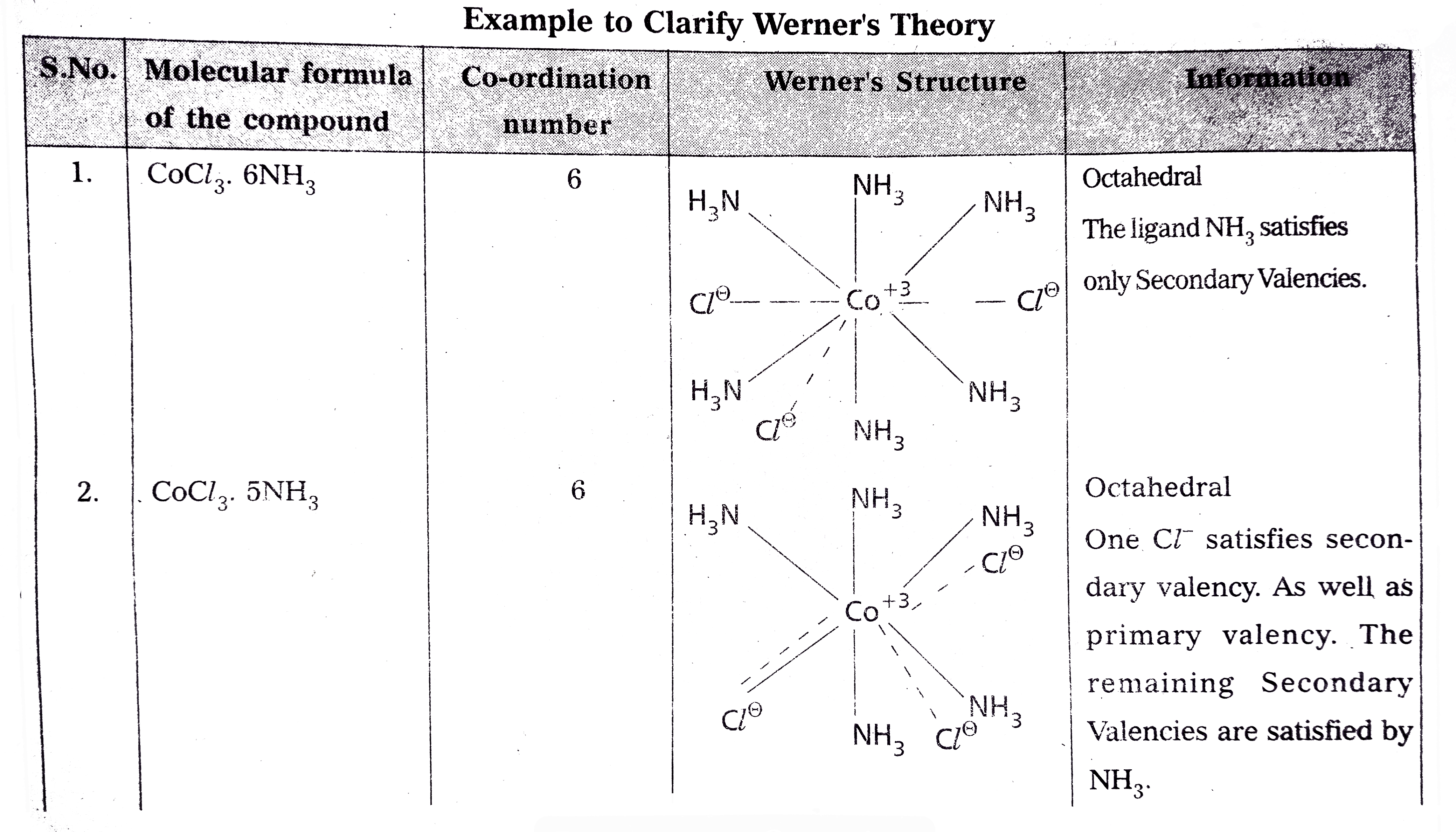 
|
|
| 36. |
Explain the following: (a) Faraday's first law of electrolysis (b) Faraday's second law of electrolysis. |
|
Answer» Solution :(a) Faraday.s first law of electrolysis. It STATES that the mass of the SUBSTANCE produced at an electrode during electrolysis is directly proportional to the quantity of electricity passed through it. Mathematically, `mpropQ` m=zQ m= Mass of substance produced in g Q = Quantity of electricity passed in c z = constant of proportionality called electrochemical equivalent of substance. (b) Faraday.s SECOND law of electrolysis. It states that when the same quantity of electricity is passed through different electrolytes connected in series, the masses of the SUBSTANCES produced at the respective electrodes will be in the ratio of their equivalent masses. Mathematically, `("Mass of substance A")/("Mass of substance B")=("Equivalent of mass of A")/("Equivalent of mass of B")` |
|
| 37. |
Explain the following: (a) Ethylamine is soluble in water, whereas aniline is not. (b) Although amino group is o- and p-directing in aromatic electrophilic substitution reactions, aniline on nitration gives a substantial amount of m-nitroaniline. (c) Aniline does not undergo Friedel Crafts reaction. |
|
Answer» Solution : (a) Ethylamine DISSOLVES in water DUE to intermolecular hydrogen bonding as shown below: `H-underset(C_(2)H_(5))underset(|)overset(H)overset(|delta-)(N).......overset(delta+)(H)-underset(H)underset(|)overset(delta-)(O)......overset(delta+)(H)-underset(C_(2)H_(5))underset(|)overset(H)overset(|delta-)(N)........overset(delta+)(H)-underset(H)underset(|)(O).......` However, because of large hydrophobic part (i.e., hydrocarbon part) of aniline, the extent of hydrogen bonding is less and therefore, aniline is insoluble in water. (b) Under strongly ACIDIC conditions of nitration (in the presence of a mixture of conc. `HNO_(3) + H_(2)SO_(4)` ), aniline gets protonated and is converted into anilinium ion having `-NH_(3)^(+)` group. This group is deactivating group and is m-directing. So, the nitration of aniline gives o, p-nitroaniline (mainly p-product) while the nitration of anilinium ion gives m-nitroaniline.  Thus, nitration of aniline gives a substantial amount of m-nitroaniline due to protonation of aniline. (c) Aniline being a Lewis base reacts with Lewis acid such as `AlCl_(3)` to form a salt. `underset("Lewis base")(C_(6)H_(5)NH_(2)) + underset("Lewis acid")(AlCl_(3)) to underset("Salt")(C_(6)H_(5)overset(+)(NH_(2))AlCl_(3)^(-))` As a result, N of aniline acquires +ve charge and hence it acts as a STRONG deactivating group for electrophilic substitution reaction. Hence aniline does not undergo Friedel Crafts reaction. |
|
| 38. |
Explain Werner's postulate using COCl_(3).6NH_(3). |
Answer» SOLUTION :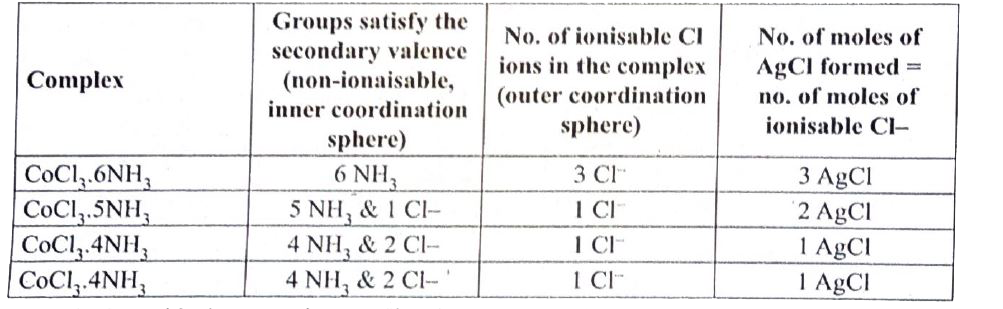
|
|
| 39. |
Explain the following: (a) CO_2 is a better reducing agent below 710 K whereas CO is a better reducing agent above 710 K. (b) Generally sulphide ores are converted into oxides before reduction. (c) Silica is added to the sulphide ore of copper in the reverberatory furnace. (d) Carbon and hydrogen are not used as reducing agents at high temperatures. (e) Vapour phase refining method is used for the purification of Ti. |
|
Answer» Solution :(a) At temperature below 710 K, `Delta_fG_((C","CO_2))^(Theta) < Delta_fG_((C","CO))^(Theta)` Hence, `CO_2` is better reducing agent below 710 K. At temperature above 710 K, `Delta_(F)G_(C","CO)^(Theta) < Delta_(f)G_((C","CO_2)^(Theta)` Hence, CO is better reducing agent above 710 K. (e) Ti reacts with iodine to form `Til_4`, which decomposes to `Ti` at HIGH temperature to give extra PURE `Ti`. `underset("(impure)")(Ti) + 2I_2 to Til_4 overset(1800K)(rarr)underset("(pure)")(Ti) + 2I_2` |
|
| 40. |
Explain % w/V and % w/w in brief. |
|
Answer» Solution :Mass by volume percentage (% w/V) : It is the mass of SOLUTE dissolved in 100 mL of the solution. Another unit which is commonly used in MEDICINE and pharmacy is mass by volume percentage. Mass percentage (w/w) : The mass percentage of a component of a solution is defined as: Mass % of a component `= ("Mass of the component in the solution")/("Total - mass of the solution")xx100` For example, if a solution is described by 10%glucose in water by mass, it means that 10 g of glucose in dissolved in 90 g of water resulting in a 100 g solution. Concentration described by mass percentage is commonly used in INDUSTRIAL chemial applications. For example, commercial BLEACHING solution contains 3.62 mass percentage of sodium HYPOCHLORITE in water. |
|
| 41. |
Explainthefollowing : (a) COisa betterreducingagentbelow 983 KwhereasC isabetterreducingagentabove 983 K (b)Generallysulphide oresareconvertedinto oxidesbeforereduction (c )Silicaisaddedtothesulphideoreofcopper in the reverberatoryfurnace (d) Carbonandhydrogenare notusedasreucingagentsathigh temperatures. (e) Vapourphaserefining methodis usedforthe purificationof Ti. |
|
Answer» Solution :(C ) Sulphideoreofcoppercontains ironas impurity. Silicaisaddedto removethisimpurity as ironsilicate(slag). ` "" UNDERSET ("Impurity")(FeO) +SiO_2tounderset ("Ironsilicate (slag)")(FeSiO_3) ` (d) Thereasonbeingthatcarboandhydrogenreactwithmetalsat hightemperatureformingtheircarbidesandhybridesrespectively. (e) Ti reactswith iodineat523 Ktoformvolatile` TiI_4 `whichdecomposesat high TEMPERATURE(1700 K ) toformpuretitanium. |
|
| 42. |
Explain the following : (a) Carbon tetrachloride is used as fire extinguisher. (b) Use of chloroform as anaesthetic is decreasing. (C)Chloroform is kept with a little ethyl alcohol in a dark brown coloured bottle. (d) Iodoform gives precipitate with AgNO_(3) on heatingwhile chloroform does not. (E) Alkyl iodides become darken on standing in presence of light. (f) A small amount of Nal or KI catalyses the hydrolysis of R-CI or the reaction, R-CI +R' ONa to R-O-R' + NaCI (g) while preparing alkyl halides from alkanes ,dry gaseous hydrohalgen acids are used instead of their aqueous solutions. (h) Hydrogen atom of chloroform is definitely acidic in nature. (i) Vinyl halide is less reactive while allyl halide is more reactive than alkyl halides. or Vinyl chloride does not gives S_(N) reaction but allyl chloride gives. (j) Why is free radical halogenation of alkanes is seldom used for laboratory preparation of alkyl halides ? Underwhat condition good yields of monosubstituted chloride can be obtained ? (K) What effect shouldthe following resonance of vinyl chloride have on its dipole moment? H_(2)C-overset(delta^(+))(CH)-overset(delta^(-))(CI) hArr H_(2)overset(delta^(-))(C)-CH=overset(delta^(+))(CI) (I) 2-Chloro-3-methylbutane on treatment with alcoholic potash gives2- methylbut-2-ene as themajorproduct. (m) Compare the rates of (i) S_(N^(1)) " and (iii) S_(N^(2)) reactions ofallyl chloride and n-propyl chloride. (N)When CH_(3) CH = CHCH_(2)CI reacts with alcoholic potassium cyanide, a mixture of isomeric product is obtained. (O) the formation of the products giving the structures of the intermediates. (q) Arrange C_(6)H_(5)CH_(2)CH_(2)CI, ""C_(6)H_(5)CHCICH_(3)"and"C_(6)H_(5)CH=CHCI in the order of their decreasing activitieswithalcoholic silver nitrate. (r) Arrange CH_(3)CH_(2)Br,C_(6)H_(5) " and "C_(6)H_(5)CH_(2) Br in order of their decreasing activities with KCN. (s) Chlorobenzene is less reactive as compared to ethyl chloride. |
|
Answer» Solution :(a) the dense vapours form a protectivelayer on the burning objects and prevent the oxygen or air to come in contact with the burning objects. (b) Due to side effects , as it causes liver damage, etc, it is rarely used as anaesthetic these days. (c) when exposed to sunlight and air . chloroform slowly decomposes into phosgene and hydrogen chloride. Phosgene is extremely poisonous gas. As to prevent thedecomposition it is stored in dark brown coloured BOTTLE and 1% ETHYL alcohol is added. This retards the decomposition and converts phosgene into harmless ethyl carbonate. `CHCI_(3) +[O] to COCI_(2) + HCI,` `COCI_(2) + 2C_(2) H_(2)OH to (C_(2)H_(5)) CO_(3) +2HCI]` (d) C-I bond being less stable than C-CI bond and thus undergoes fission on heating giving `I^(-)` ions which combine with `Ag^(+)` ions to form a yellow ppt. (e) Alkyl iodides are less stable and lose free iodine . this iodine makes the remaining iodide darken. (f) NaI or KI reactswith R-CI to form R-I. the alkyl iodide is comparatively more reactive than alkyl chloride it undergoes hydrolysis readily or reacts with R' ONa to form ether. `R-I +HOH to R-OH +HI` `R-I +R' ONa to R -O -R'+NaI` (g) DRY hydrohalogen acids are stronger acids and better electrophiles than `H_(3)O` formed in the aqueous solutions. Furthermore, `H_(2)O` is a nucleophile and can easily react with R-X toformalcohol. (h) Chlorine is more electronegative than carbon. Due to three chlorine atoms the carbon acquires partial positive charge on account of -I effect . The carbon atom thus attracts the electron pair of C-H bond towardsitself MAKING the hydrogen atom removal as proton easier 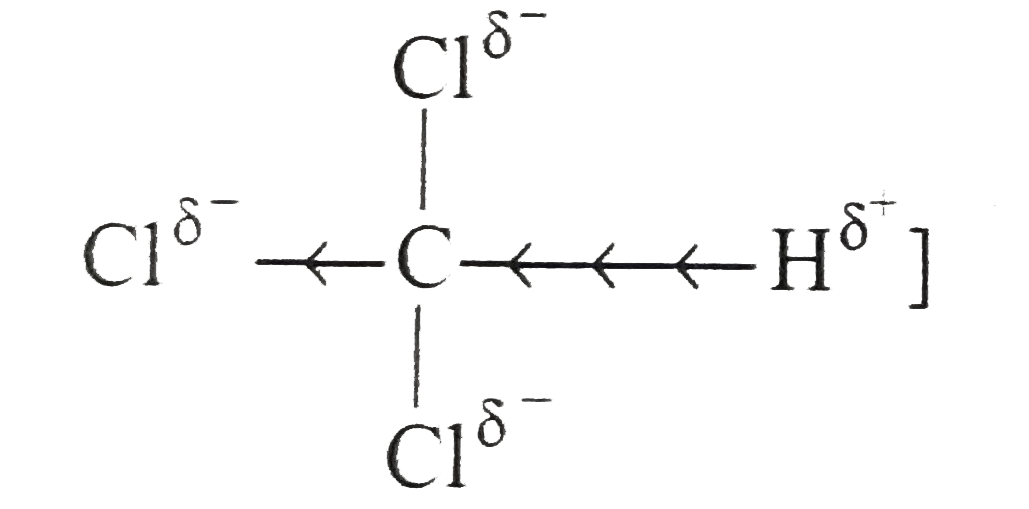 (i) in vinyl chloride C-CI bond is stable due to resonance (as in chloro benzene)  Hence CI atom cannot be repleaced .Further `sp^(2)` -hybridized carbon is more acidic than `sp^(3)-`carbon . In allyl chloride `S_(N)` reaction is easier allkyl carbonium ion formed after removal of `CI^(-)` is stabilized by resonance. `H_(2) C=CH -CH_(2)CI to CI^(-) +H_(2)C=CH-overset(**)(CH_(2))` `harr H_(2)overset(***)(C)-CH=CH_(2)` (j) Serveral isomeric monosubstituted halides are formed because alkanes have different types of hydrogenatoms Their separation is difficult. thus free radical halogenation method is not used unless the parent hydrocarbon possesses equivalenthydrogen atoms. Good yields are obtained in hydrocarbons such as `CH_(3)-CH_(3) (CH_(3))_(4)C,` cyclopropane etc, (k) The dipole moment increase because the distance between positiveand negative partial charges increases . (L) elimination occurs in accordance to Saytzeff's rule i.e., elimination of hydrogen from the carbon which is attached with least number of hydrogen atoms.  (m) (i) Allyl chloride is much more reactive than n-propy. chloride and the + charge of its intermediate `R^(+)` is stabilized by resonance `(H_(2)C =CH -overset(**)(CH_(2)) harr H_(2)overset(**)(C)=CH-CH_(2))` (ii) Allyl chloride is again more reactive but not to the extent of `S_(N^(1))` reaction and stabilized the transition state. (n)It can undergo `S_(N^(1)) " and " S_(N^(2))` reactions. By `S_(N^(2))` reaction only one product (A) is formed. `underset("1-Chlorobut")(CH_(3)CH =CHCH_(2)CI) +CN^(-) overset(("Slow"))underset(S_(N^(2)))to CH_(3)CH=CH-underset(CN)underset(vdots)(CH_(2)) ......CI` `overset(("Fast"))(to)CH_(3)CH=underset((A))(C)HCH_(2)CN` By `S_(N^(1))` reaction the intermediate is carbocation (resonance stabilized ) and can give a mixture of two isomeric products (A) and (B). `CH_(3)CH =CHCH_(2) CI overset(("Slow"))underset(S_(N^(1)))(to)` 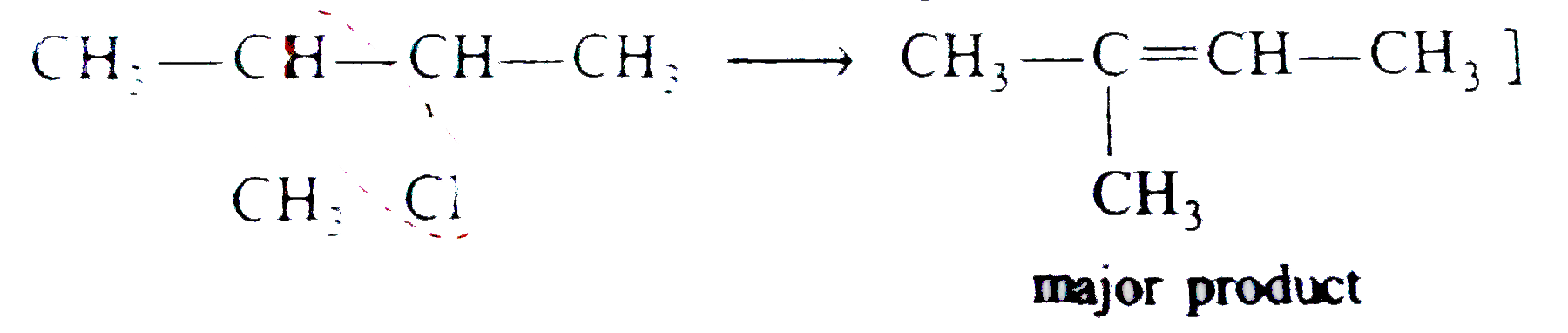 (O) 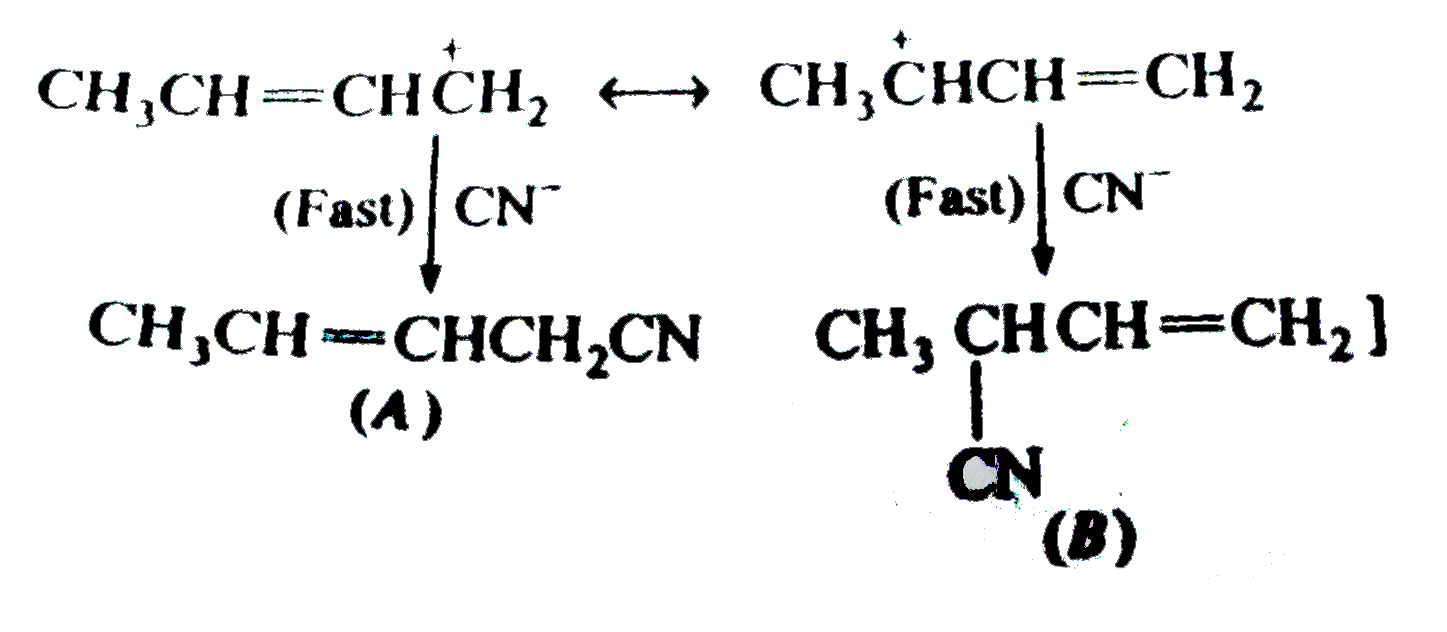 In this reaction the majorproduct (4-chlorobut-1-ene) is formed by `S_(N^(2))` mechanism. Now thesecond product is formed by the initial formation of carbocation and attacked by the double bond on the +ve carbonatom to form a second (cyclic) carbocation which eventually gives the product. 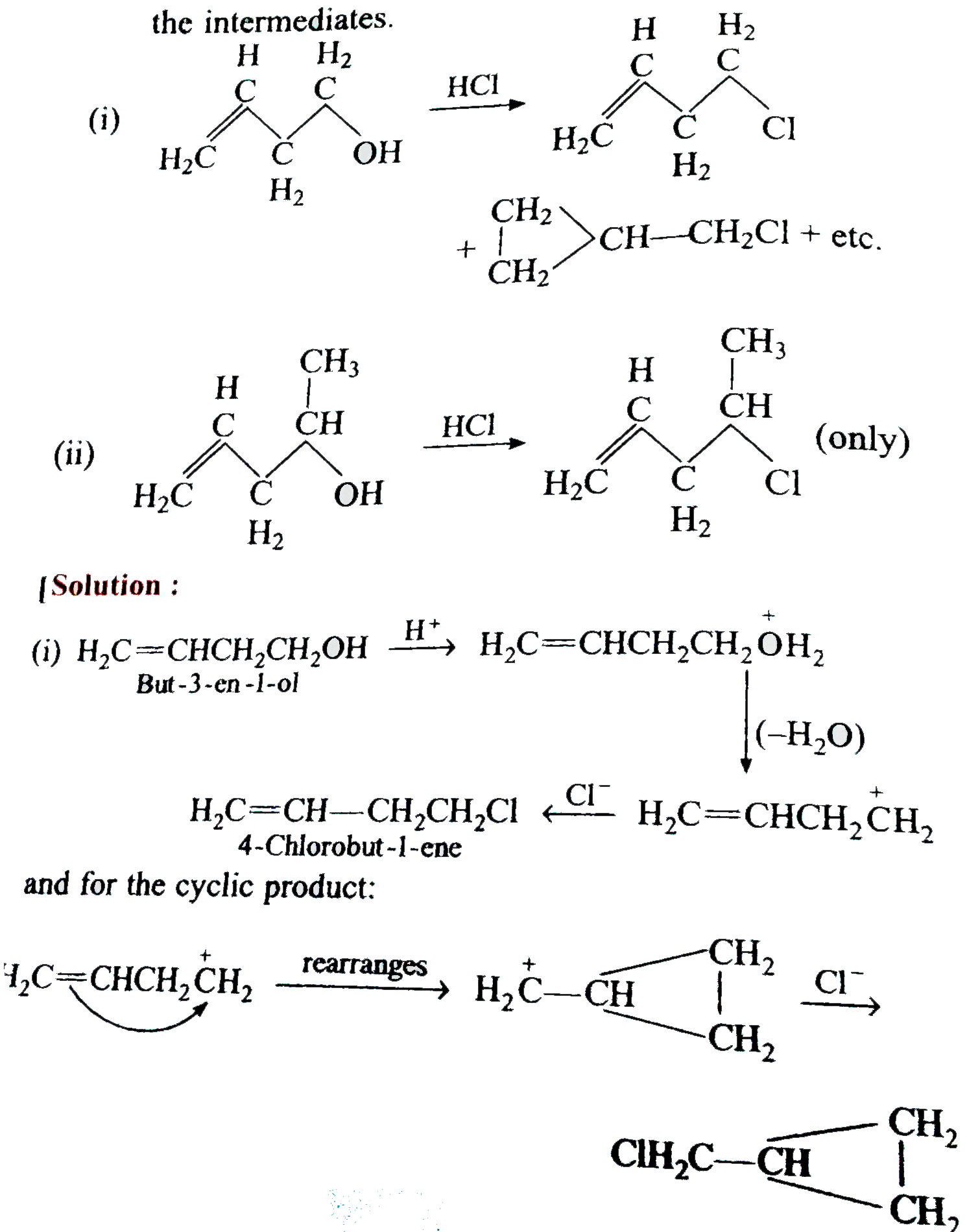 In this reaction the +I effect of `CH_(3) -` group avoids cyclisation . (p) (i) 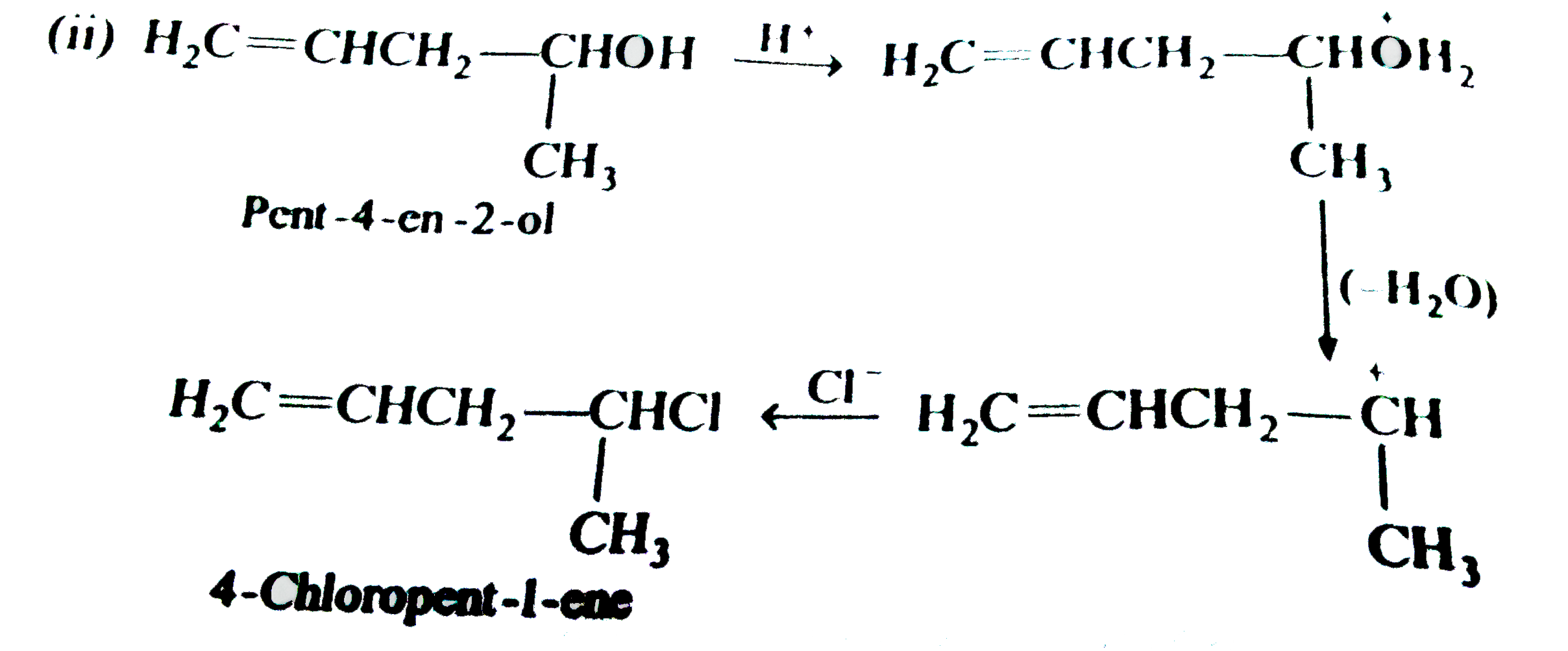 because in EQUATION (ii) C-CI bond is stable due to resonance hence nucleophilic attack is not preferred. (q) `C_(6)H_(5)CHCICH_(3) gt C_(6)H_(5)CH_(2)CH_(2)CI gt C_(6)H_(5)CH=CHCI` (r) `C_(6)H_(5)CH_(2)Br gt CH_(3)CH_(2)Br gt C_(6)H_(5)Br` (s) The low reactivity of chlorobenzene is due to partial double bondcharacter of C-CI bond i.e., it is shorter and stronger bond in comparison to C-CI bond in ethyl chloride. 
|
|
| 43. |
Explain Victor Meyer's test used to distinguish 1^@, 2^@ and 3^@ alcohols. |
|
Answer» Solution :Victor Meyer.s test: This test is BASED on the behaviour of nitro alkanes formed by the THREE types of alcohols with nitrous acid and it consists of the following steps. (i) Alcohols are converted into alkyl iodide by treating with `I_2//P`. (ii) Alkyl iodides so formed is then treated with `AgNO_2` to form nitro alkane. (iii) Nitro alkanes are finally treated with `HNO_2` (mixture of `NaNO_2//HCI`) and the resultant solution is made alkaline with KOH. Result : PRIMARY alcohol gives red colour Secondary alcohol gives blue colour. No colouration will be observed in tertiary alcohol. 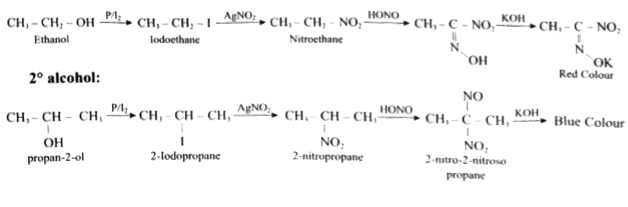 `3^@` aochol : `underset("2 - methyylpropan -2 -ol")(CH_3 - underset(CH_3)underset(|)overset(CH_3)overset(|)C- OH)overset(P//I_2)to underset("2 - IODO - 2- methylpropane")(CH_3-underset(CH_3)underset(|)overset(CH_3)overset(|)C-I) overset(AgSO_2)to underset("2-methyl-2-nitropropane")(CH_3-underset(CH_3)underset(|)overset(CH_3)overset(|)C-NO_2) overset(HONO)to underset(("No colouration with KOH"))("NO reaction")` |
|
| 44. |
Explain the following: (a) Arrange HCI, HI, HBr, HF in increasing order of acidic strength. (b) Draw structure ofIF_(4)^(-)(c) Why are interhalogen compounds more reactive than related elemental halogens ? (d) Write chemical formula of Laughing gas. (e) Why molecular nitrogen is not so reactive ? |
|
Answer» Solution :(a) The increasing order of ACIDIC STRENGTH is HF < HCI < HBr < HI (b) Structure of `IF_(4)^(-)` In `IF_(4)^(-)`, Iodine atom is in `sp^3d^2`hybridisation state. 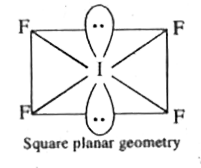 (c) Interhalogen compounds are more reactive than halogens because the bonds are more polar and weaker in interhalogens as compared to in halogens. (d) `N_2O` (e) This is because in N `-=` N, the BOND length is small and it has high bond energy (945 kJ /mol). |
|
| 45. |
Explain variations in atomic radii and ionisation enthalpies in group-16. |
|
Answer» Solution :(i) Atomic radii : The atomic radii of group-16 elements are smaller than CORRESPONDING group-15 elements. This is due to increase in effective nuclear charge. In group-16, moving down the group, the atomic radii and IONIC radii increases due to addition of new electron shells at each successive element. (ii) IONISATION enthalpy : The first ionisation enthalpies of group-16 elements are lower than corresponding group-15 elements. This is due to fact that group-15 elements have extra stable half-filled p-orbitals. (iii)The ionisation enthalpy of group-16 elements are quite high due to small SIZE and high nuclear charge. However, down the group, the ionisation enthalpy decreases with the increase in atomic size. |
|
| 46. |
Explain the following (a) Al_(2)(SO_(4))_(3), is used as a mordant in textile industry (b) AlCl_(3) 6H_(2)O on over heating over produce anlaydou. AICI_(3) (C) AlCl_(3) in water shows acidity. (d) Why red colour Rousin's sall[Fu(NO)_(2)S]_(2), is diamagnetic. How do you account for the phenomenon. |
|
Answer» Solution :`Al_(2)(SO_(4))_(3) + H_(2)O rarr 2Al(OH)_(3) + 3H_(2)SO_(4)` Because of this hydrolysis of aq. `Al_(2)(SO_(4))_(3)` the fibres when dipped in aq. `Al_(2 (SO_(4))_(3)` solution, `Al(OH)_(3)`, forms on the surface of the fibres. Dye then combine with `Al(OH)_(3)`, to form an insoluble LAKE whichis fast to washing. The process of f ormation of metallic HYDROXIDES on the fibres before dyeing is known as mordanting (B) `2(AlCl_(3) 6H_(2)O) rarr Al_(2)O_(3) + 6HCl + 9H_(2)O ` Because of hydrolysis of `AlCl_(3)` it never produces anhydrous `AlCl_(3)`. (c) `AlCl_(3) + 6H_(2)O ` [Al(H_(2)O)_(6)]^(+3) (d)There is Fe-Fe bond in the molecules 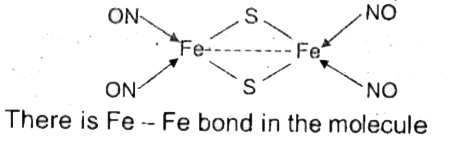 |
|
| 47. |
Explain variations in electron gain enthalpy and electronegativity of group-16 elements. |
|
Answer» Solution :(i) Electron gain enthalpy : GROUP-16 elements have high electron gain enthalpy. Oxygen has less negative electron gain enthalpy because of the compact nature (Small size) of oxygen atom. However, from SULPHUR onwards, the electron gain enthalpy becomes less negative upto polonium. Order of electron gain enthalpy: `O lt S gt Se gt Te gt Po` (ii) Electronegativity : Oxygen is the second most electronegative element after fluorine. Down the group, the electronegativity DECREASES with INCREASE in atomic number. This implies that metallic character INCREASES from oxygen to polonium. |
|
| 48. |
Explain the following: (a) Although Au is soluble in aqua-regia, Ag is not (b) Zinc and hot copper is used for recovery of Ag from the complex [Ag(CN)_(2)]^(-) (c ) Aluminium metal is frequently used as a reducing agent for extraction of metal such as chromium manganese etc. (d) Partial roasting of sulphide ore is donue in the metallurgy of copper. |
|
Answer» Solution :(a) Au dissolved in aquaregia forming soluble `HAuCl_(4)` but Ag forms insoluble AgCl `Au + 4HCl + 3HNO_(3) to underset("soluble")(HAuCl_(4)) + 3NO_(2) + 3H_(2)O` `Ag + HCl + HNO_(3) to underset("insoluble")(AgCl) + NO_(2) + H_(2)O` (b) Zinc is POWERFUL reducing agent in comparison to copper and zinc is cheaper also than copper. (C ) Aluminium metal is frequently used as a reducing agent for the EXTRACTION of metals. Such as Cr and Mn from their respective oxides because aluminium is more electropositive than Cr or Mn. The process of reduction is called alumino thermy. `Cr_(2)O_(3) + 2Al to Al_(2)O_(3) + 2Cr` `3Mn_(2)O_(4) + 8Al to 4Al_(2)O_(3) + 9Mn` (d) Partial roasting of sulphide ore forms some oxide. The oxide then reduces the remaining sulphide ore into metal. `2CuS + 3O_(2) to 2CuO + 2SO_(2)` `2CuO + CUS to 3Cu^(+) + SO_(2)` |
|
| 49. |
Explain vapour pressure of solutions of solids in liquids. |
Answer» Solution :Liquids at a GIVEN temperature vapourise and under equilibrium conditions the pressure exerted by the vapours of the liquid over the liquid phase is called vapour pressure.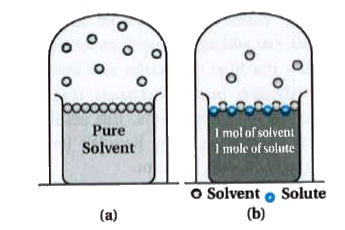 In a PURE liquid the entire surface is occupied by molecules of the liquid. If anon - volatile solute is added to a solvent to given a solution, the vapour pressure of the solution is solely from the solvent alone. This vapour pressure of the solution at a given temperature is found to be lower than the vapour pressure of the pure solvent at the same temperature. In the solution, the surface has both solute and solvent molecules, there by the fraction of the surface covered by the solvent molecules gets reduced. Consequently, the number of solvent molecules escaping from the surface is correspondingly reduced, thus, the vapour pressure is also reduced. The decrease in the vapour pressure of solvent depends on the QUANTITY of non - volatile solute present in the solution, irrespective of its nature. Let `p_(1)` be the vapour pressure of the solvent, `x_(1)` be its MOLE fraction, `p_(1)^(0)` be its vapour pressure in the pure state. Then according to Raoult.s law`p_(1)prop x_(1)` and `p_(1)=x_(1)xx p_(1)^(0)` The proportionality constant is equal to the vapour pressure of pure solvent, `p_(1)^(0)`. A plot between the vapour pressure and the mole fraction of the solvent is linear. 
|
|
| 50. |
Explain the following: (a) Actinoids show large number of oxidation states. (b) The transition metals form a large number of complex compounds. (c) Chromium is a typical hard metal while mercury is a liquid. (d) MnO is basic while Mn_(2)O_(7) is acidic in nature. (e) Silver is a transition metal but zinc is not. |
|
Answer» Solution :(a) Due to comparable energies of 5f, 6 and 7s orbitals, all the electrons present in these subshells may participate in the bonding process, resulting in large number of oxidation states for ACTINOIDS. (b) Transition metals form a large number of complexes because of small size and high charge of ions. They also have empty d-orbitals to accept the electron pairs from the ligands. (c) Metal-metal interactions (metallic bonding) are strong in chromium due to the presence of six unpaired electrons in the 3d and 4s subshells. In the CASE of mercury, all the electrons in the 5d and 6s subshells are paired and, therefore, the metal-metal interactions (or metallic bonding) are weak. That is why chromium is a typical hard metal but mercury is a liquid. (d) Oxidation state of Mn in MnO is +2 while that in `Mn_(2)O_(7)` is +7. As the oxidation number of a metal increases, its acidic character increases due to DECREASE in the size of the metal ion and increase in charge density. (e) Silver can EXHIBIT +2 oxidation state in which it will have unpaired electrons in the d-orbitals. Thus, Ag is a transition metal. Zn does not form any ion with incomplete d-orbitals. The outer configuration of Ag and Zn metals are given below : `Ag=[Kr]4d^(10)5s^(1)` `Zn=[Ar]3d^(10)4s^(2)` |
|