

Saved Bookmarks
This section includes 7 InterviewSolutions, each offering curated multiple-choice questions to sharpen your Current Affairs knowledge and support exam preparation. Choose a topic below to get started.
| 1. |
Discuss abnormal behaviour of nitrogen. |
| Answer» SOLUTION :(i)` N_2`is gas WHEREAS other members of group 15 are solids. (ii) Nitrogen is diatomic, other members are polyatomic. (III) `NCI_5`does not exist but `PCI_5`etc. exist. | |
| 2. |
Discuss about clemmensen reduction. |
Answer» SOLUTION : The reduction of CARBONYL group of ketones aldehydes and some aromatic aldehydes to alkane by warming with amalgamated zinc and conc. HCL acid is called clemmensen reduction. 
|
|
| 3. |
Discribe the mechanism of heterogeneous catalysis. |
| Answer» | |
| 4. |
Discus biological and industrial importance of osmosis. |
|
Answer» Solution :The process of osmosis is of osmosis is of IMMENSE biological and INDUSTRIAL importance as is evident from the following examples : (A) Biological Importance : (i)Movement of water from soil into plant roots and subsequently into upper portion of the plant is partly due to osmosis. (ii) Preservation of meat against bacterial action by adding salt (i.e., salting). (iii) Preservation of fruits against bacterial action by adding sugar. Bacterium in canned FRUIT loses water through the process of osmosis, shrivels and dies. (iv) When placed in water containing less than 0.9% (mass by volume) salt blood cells collapse due to loss of water by osmosis. People taking lot of salt or salty food experience water retention in their tissue cells and in their intercellular spaces because of osmosis. This resulting puffiness or swelling has been identifed as a disease called edema. (v) Revival of wilted flowers when placed in FRESH water. (B) Industrial importance : (iv)Reverse osmosis is USED for desalination of sea water - when a pressure more than osmotic pressure is applied over sea water, pure water is squeezed out of the sea water through a semi - permeable membrane. A variety of semi - permeable membranes are available for this purpose. |
|
| 5. |
Disaccharides linked through C_(1) of the first to C_(4) or C_(6) of the second component are |
| Answer» Solution :reducing | |
| 6. |
Discovery, of Haber’s process for manufacture of ammonia is considered to be one of the principal discoveries of twentieth century. What is the temperature condition for maximum yield of ammonia? Justify. |
| Answer» Solution :The forward REACTION in Haber process, is exothermic. ACCORDING to Le Chatelier’s PRINCIPLE,, low TEMPERATURE will favour the forward reaction. But at low temperature, RATE of the reaction becomes very low. So an optimum temperature of 700K is used in Haber process. | |
| 7. |
Discovery, of Haber’s process for manufacture of ammonia is considered to be one of the principal discoveries of twentieth century. Which is the promoter used in the earlier process when iron was used as catalyst? |
| Answer» SOLUTION :`K_2O`and ALUMINIUM OXIDE - PROMOTER. | |
| 8. |
Disaccharides linked through the glycosidic carbon atoms of C-(1) of glucose and C_(2) of fructose are ______. |
|
Answer» NON-REDUCING |
|
| 10. |
Disaccharides have general formula |
|
Answer» `C_(n)(H_(2)O)_(n)` |
|
| 11. |
Disaccharides are of four types, namely 1,4'-glycosides, 1-6'-glycosides, 1,1'-glycosides are 1,5'-glycosides. Which of these will be reducing |
|
Answer» 1.4'- |
|
| 12. |
Direction iodination of benzene is not possible because |
|
Answer» iodine is oxidising agent |
|
| 13. |
Directconversion of starch into glucose maybe carried out by |
|
Answer» fermentationwith diastase |
|
| 14. |
Direct nitration of aniline yields __________ oxidation products in addition to nitro derivatives. |
|
Answer» |
|
| 15. |
Direct nitration of aniline is not carried out. Explain why? |
| Answer» Solution :Being a strong OXIDISING AGENT, nitric acid oxidises most of aniline RESULTING in the FORMATION of tarry oxidation PRODUCTS. | |
| 16. |
Direct nitration of aniline is not carried at all. Explain why? |
| Answer» Solution :NITRIC ACID being a STRONG OXIDISING agent OXIDISES most of aniline to form tarry oxidation products. | |
| 17. |
Direct nitration of aniline is not carried out. Explain. |
| Answer» Solution :`(H_(2)SO_(4) + HNO_(3))` easily OXIDIZED aniline into TARRY complex product DUE to high `e^(-)` density on the BENZENE ring of aniline. | |
| 18. |
Direct nitration of aniline is not carried out. Explain why ? |
| Answer» Solution :AMINO group is sensitive group. It GETS oxidised to give tarry PRODUCTS. It is FIRST acetylated before carrying out NITRATION. | |
| 19. |
Direct nitration of aniline gives O and P-nitro aniline along with …………….. Due to oxidation. |
|
Answer» |
|
| 20. |
The intermediate compound in the conversion of starch to glucose is |
|
Answer» FERMENTATION with diastase |
|
| 21. |
Direct conversation of starch into glucose may be carried out by: |
|
Answer» FERMENTATION with diastase |
|
| 23. |
Dipole moment will be zero in the complexes I. [Ni(CN)_(4)]^(2-) II. Cis-Pt[(NH_(3))_(2)Cl_(2)] trans-[Pt(NH_(3))_(2)Cl_(2)] |
|
Answer» I and II 
|
|
| 24. |
Dipole momentof is 1.5 D. The dipole moment of is |
|
Answer» 1.5 D 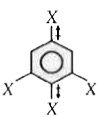 The bond moments at PARA positions cancel due to opposite direction. The other two groups are meta to each othr, thus angle between the two bond moments is `120^(@)` and HENCE `mu=1.5D`, |
|
| 25. |
Dipole momentts of aldehydes and ketones are higher than those of alcohols, explain. |
Answer» Solution :The `pi`-electrons of the 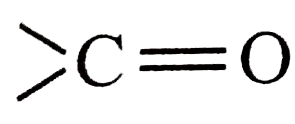 are loosely held and hence can be shifted towards O-atom more readily than the more tightly held `sigma`-electrons of the C-O bond in ALCOHOLS. Consequently, the magnitude of the +ve and -ve charge developed in are loosely held and hence can be shifted towards O-atom more readily than the more tightly held `sigma`-electrons of the C-O bond in ALCOHOLS. Consequently, the magnitude of the +ve and -ve charge developed in 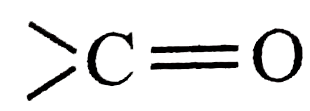 bond is higher than those on `C-O` bond of alcohols. As a result, the DIPOLE MOMENT of ALDEHYDES and ketones (2.3-2.8D) is much higher than that of alcohols (1.6-1.8D). bond is higher than those on `C-O` bond of alcohols. As a result, the DIPOLE MOMENT of ALDEHYDES and ketones (2.3-2.8D) is much higher than that of alcohols (1.6-1.8D).
|
|
| 26. |
Dipole moment of phenol is smaller than that of methanol. Why? |
| Answer» SOLUTION :In phenol, C-O bond is less POLAR due to electron-withdrawing effect of the benzene ring whereas in METHANOL, C-O bond is more polar due to +I-effect of the `CH_(3)` group. As a RESULT, phenol has lower dipole moment (1.54 D) than methnaol (1.71D). | |
| 27. |
Dipole moment of phenol is smaller than that of methanol. Why ? |
| Answer» Solution :`to` In PHENOL, the C-O bond is less polar because of -I EFFECT of benzene RING whereas in case of methanol, C-O bond is more polar because of +I effect of METHYL group. So, the dipole moment of phenol is less than methanol. | |
| 28. |
Dipole moment of diiethyl ether is lower than that of |
|
Answer» `CH_(3)OH` `C_(6)H_(5)OH""(1.54D),""CH_(3)OH""(1.71D),CH_(3)I(1.64D),CH_(3)CHO(2.69D) and (C_(2)H_(5))_(2)O(1.3D)` |
|
| 29. |
Dipole moment is shownby |
|
Answer» 1,4-dichlorobenzene  Cis-1,2-dichloroethene will have some net DIPOLE MOMENT. |
|
| 30. |
Dipole moment is shown by : |
|
Answer» 1. 1, 4- dichloro BENZENE |
|
| 31. |
Dipole moment is maximum for |
|
Answer» `CH_(2)=CHCl` |
|
| 33. |
Dipole-dipole (Keesom) attraction is present in :- |
|
Answer» `KCl+H_(2)O` `H_(3)C - underset(O)underset(||)C-CH_(3)+CH_(3)-C-=N` dipole-dipole attraction `HCl +Cl_(2) rArr`dipole induced dipole attraction |
|
| 34. |
Diphenyls are potential threat to the environment. How are thse produced from aryl halides? |
|
Answer» Solution :Diphenyls can be prepared from aryl HALIDES by the FOLLOWING two METHODS: (i) FITTIG reaction and (II) Ullmann biaryl synthesis. |
|
| 36. |
Diphenyls are potential threat to the environment. How are these produced from aryl halides ? |
Answer» SOLUTION :Diphenyls can be prepared by Fittig.s reaction. Alkyl halides when treated with SODIUM in PRESENCE of ETHER give diphenyls.
|
|
| 37. |
Diphenyl methanone is obtained from |
|
Answer»
|
|
| 38. |
Diphenylhydrazine are terfenadine are ______ drugs |
|
Answer» |
|
| 39. |
Diphenyl is prepared from iodobenzene by |
|
Answer» WURTZ REACTION |
|
| 40. |
Dioxygen directly reacts with nearly all metals annd non-metals except some metals (e.g., Au, Pt) and some noble gases and form oxide(s). Oxides can be simple (e.g., MgO, Al_(2)O_(3)) or mixed (Pb_(3)O_(4),Fe_(3)O_(4)). Simple oxides can be classified on the basic of their acidic, basic or amphoteric character. an oxide that combines with water to give an acid is termed acidic oxide (i.e., SO_(2),Cl_(2)O_(7),CO_(2),N_(2)O_(5)).for example, SO_(2) combines with water to give H_(2)SO_(3), an acid. Q. If, Then select incorrect statement with respect to gas 'X' |
|
Answer» burning sulphursmell |
|
| 41. |
Dioxygen directly reacts with nearly all metals annd non-metals except some metals (e.g., Au, Pt) and some noble gases and form oxide(s). Oxides can be simple (e.g., MgO, Al_(2)O_(3)) or mixed (Pb_(3)O_(4),Fe_(3)O_(4)). Simple oxides can be classified on the basic of their acidic, basic or amphoteric character. an oxide that combines with water to give an acid is termed acidic oxide (i.e., SO_(2),Cl_(2)O_(7),CO_(2),N_(2)O_(5)).for example, SO_(2) combines with water to give H_(2)SO_(3), an acid. Q. If Then 'X' is |
| Answer» ANSWER :C | |
| 42. |
Dioxygen directly reacts with nearly all metals annd non-metals except some metals (e.g., Au, Pt) and some noble gases and form oxide(s). Oxides can be simple (e.g., MgO, Al_(2)O_(3)) or mixed (Pb_(3)O_(4),Fe_(3)O_(4)). Simple oxides can be classified on the basic of their acidic, basic or amphoteric character. an oxide that combines with water to give an acid is termed acidic oxide (i.e., SO_(2),Cl_(2)O_(7),CO_(2),N_(2)O_(5)).for example, SO_(2) combines with water to give H_(2)SO_(3), an acid. Q. If, Then select correct statement with respect to gas 'Q'? |
|
Answer» PARAMAGNETIC GAS 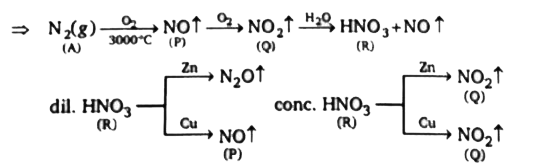 `NO_(2) `is anacidic oxide, browncolourcoulourtriatomicparamagnetic gas . |
|
| 43. |
Diphenyl ether cannot cleaved by treatment HI. Why? |
| Answer» Solution :In diphenyl ether, OXYGEN atom is bonded to PHENYL ring and both bonds are STRONG. They cannot be cleaved by HI. | |
| 44. |
Diode is a combination of the following semiconductors : |
|
Answer» n-type and n-type |
|
| 45. |
Dinucleotide is obtained by joining two nucleotides together by phosphodiester linkage. Between which carbon atoms of pentose sugars of nucleotides are these linkages present ? |
|
Answer» 5' and 3' 
|
|
| 46. |
Dinucleotide is obtained by joining two nucleotides together by phosphodiester linkage. Between which carbon atomsof pentose sugars of nucleotides are these linkages present ? |
| Answer» Answer :A | |
| 47. |
Dinucleotide is obtained by joining two nucleotides together by phosphodiester linkage. Between which carbon atoms of pentose sugars of nucleotides are these linkages present? |
|
Answer» 5' and 3' 
|
|
| 48. |
Dinitrogen pentoxide decomposes to NO_(2) and O_(2) following first order kinetics N_(2)O_(5)(g) rarr 2NO_(2)+O_(2)(g) 0.2 mole of N_(2)O_(5) was taken in 2L vessel and heated at 200K. The concentrated of N_(2)O_(5) is measured at different intervals . Following graphs A and B were obtained from the data. Calculate the rate of reaction after 5 xx 10^(-3) s |
|
Answer» `6.84 MOL L^(-1) s^(-1)` |
|
| 49. |
Dinitrogen tetroxide, N_(2)O_(4) is a mixed anhydride because it |
|
Answer» React with water to FORM two acids |
|
| 50. |
Dinitrogen pentoxide, N_2O_5, undergoes first-order decomposition in chloroformsolvent to yield NO_2and O_2 . The rate constant at 45^@Cis 6.2 xx 10^(-4) "min"^(-1), Could the volume of O_2obtained from the reaction of 1 mole of N_2O_5 at 45^@Cand 780 mmHg after 20 hours, be calculated? |
| Answer» SOLUTION :INSUFFICIENT INFORMATION | |


