Saved Bookmarks
This section includes 7 InterviewSolutions, each offering curated multiple-choice questions to sharpen your Current Affairs knowledge and support exam preparation. Choose a topic below to get started.
| 1. |
Consider the following compounds (1)CH_3CH_2CH_2CH_2OH (2)CH_3CH_2CHOHCH_3 (3)(CH_3)_3COH These compounds are dehydrated by treatment with H_2SO_4 .The correct sequence of increasing order of the reactivity of three compounds towards dehydration is |
|
Answer» 3 lt 1 lt 2 |
|
| 2. |
Consider the following compounds and Calculate the value of ((P^(2)-Q^(2))/(R+S)) (i)BeF(ii)ICl(iii)BeF_(3)(iv)BrF_(5)(v)ICl_(3)(vi)IF_(3)(vii)IF_(5)(viii)IF_(7), Where P: Total number of polar compounds. Q: Total number of planar compounds. R: Total number of non-polar compounds. S: Total number of non-planar compounds. |
|
Answer» |
|
| 3. |
Consider the following compounds 1. CH_(3)CH_(2)CH_(2)Br "" 2 CH_(2)CHBrCH_(3) 3. (CH_(3))_(3)CBr These compounds are dehydrohalgenated by treatement with strong base under indentical condition. The correct sequence of reactivity of these compounds in the given reaction is |
|
Answer» `1 gt 2 gt 3` i. It providees a greater number of `beta`- hydrogenes for ATTACK by base, and hence, a more favorable probability factor towards elimination. i It leads to more HIGHLY branched, more stable alkene. Thereofore, in dehydro halogenation, the increasing order of reactivity of alkyl halides is `3^(@) gt 2^(@) gt 1^(@) gt OR3 gt 2 gt 1 ` |
|
| 4. |
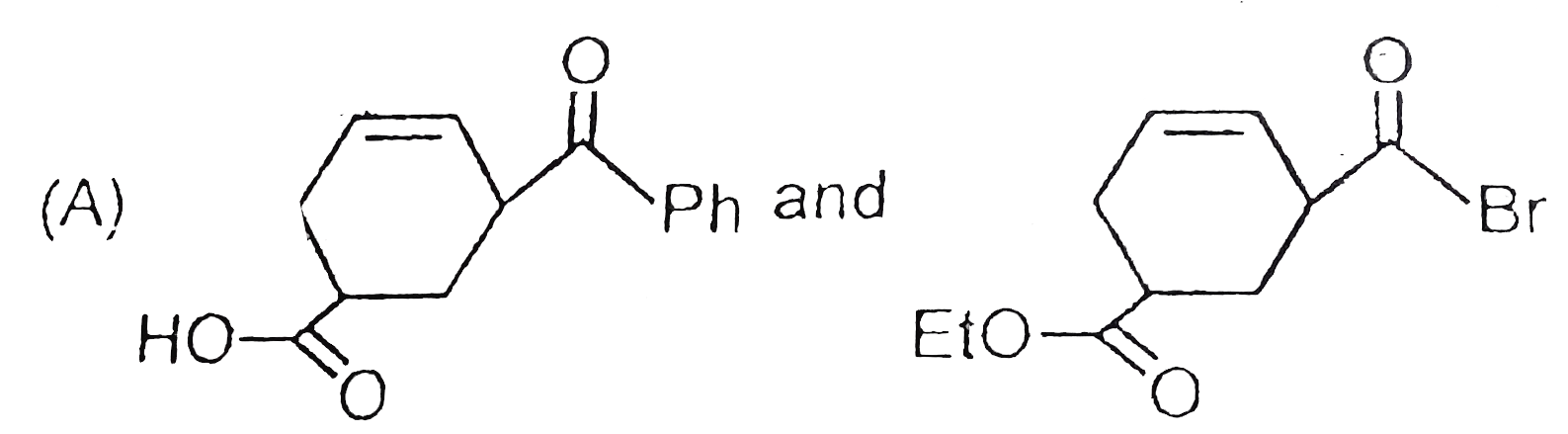
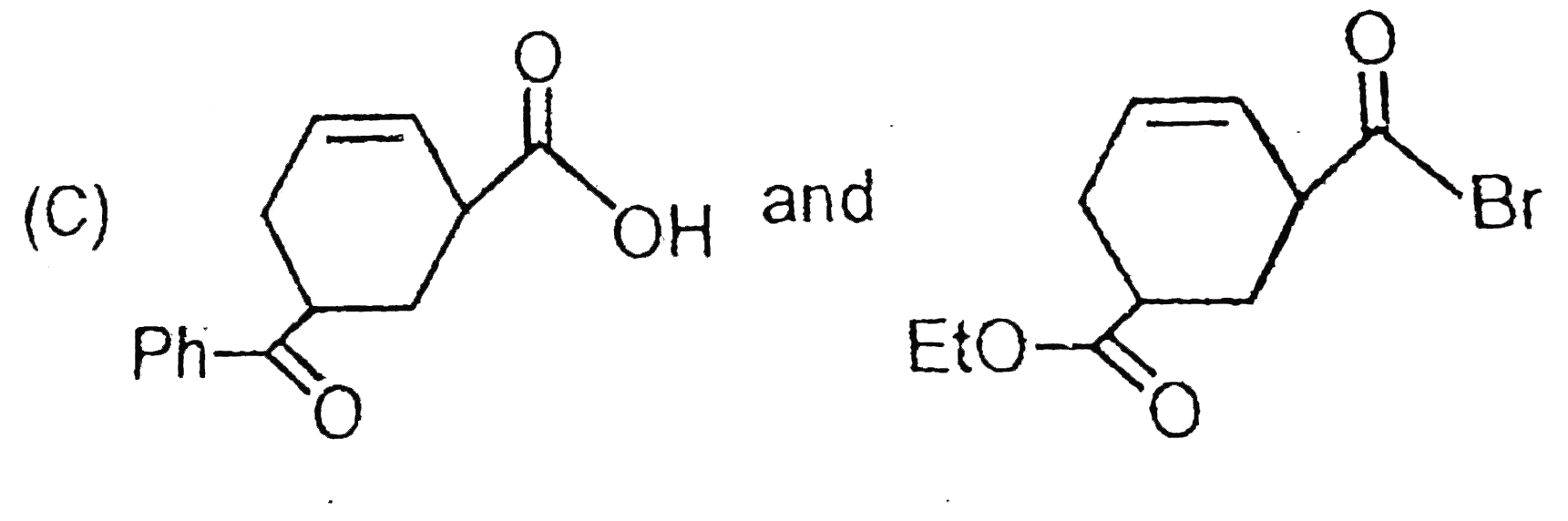
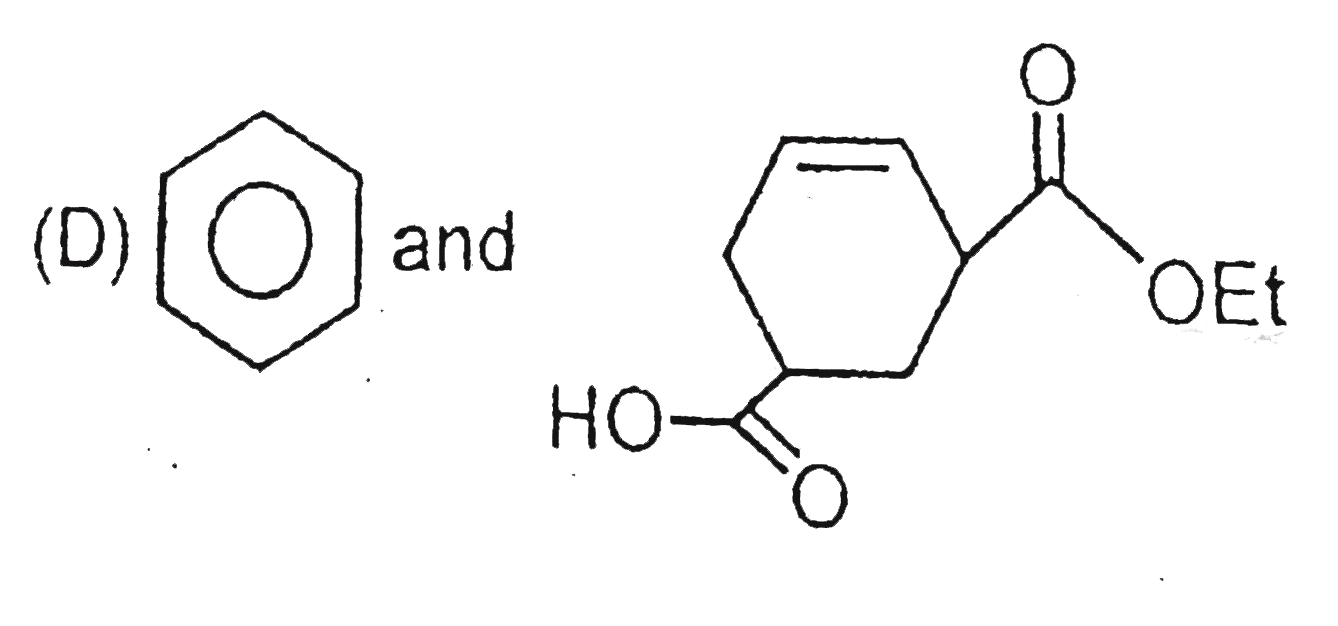
Consider the following compound (X): Q. When one equivalent of both phenylmagnesium halide and C_(2)H_(6)OH are reacted separately with compound (X), then the correct major products are: |
|
Answer»
|
|
| 5. |
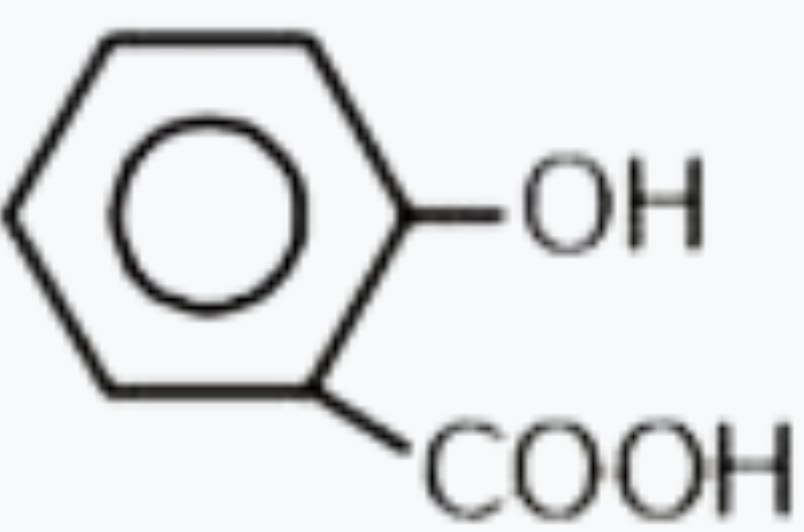
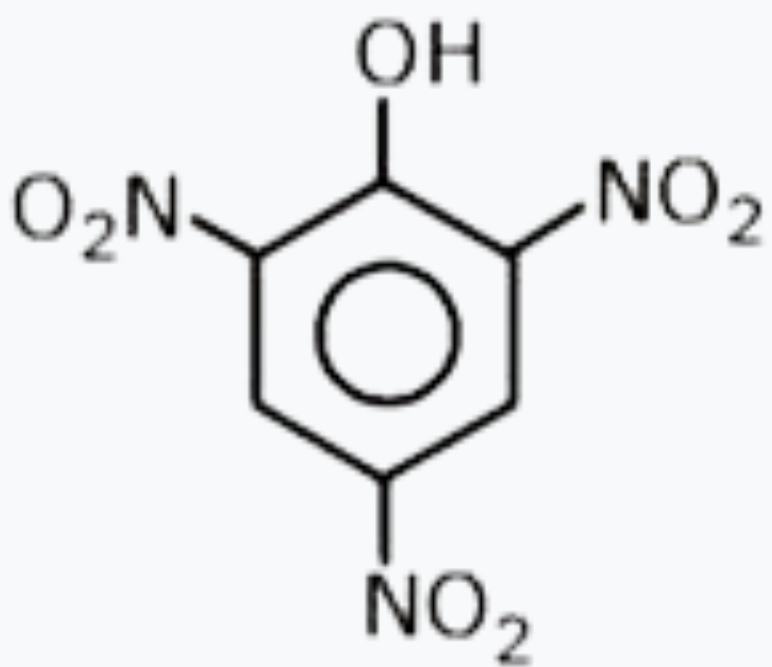
Consider the following compound : Which of the above compounds reacts with NaHCO_(3)" giving " CO_(2) |
|
Answer»
|
|
| 6. |
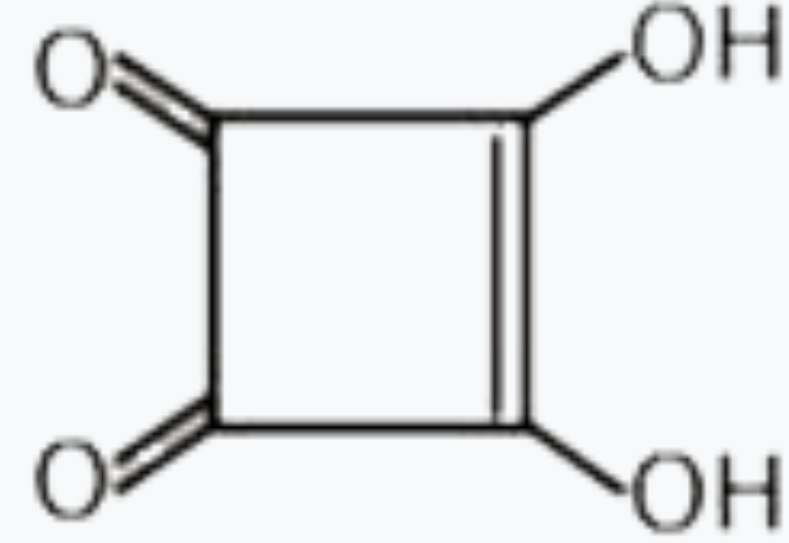
Consider the following compound A (below) Select the correct statement (s) |
|
Answer» It is more acidic that `CH_(3)OH` `-` Acidity of acids increases as stability of conjugate base increases. `-` DUE to resonance stabilization of conjugate base of compound, it is more acidic than `CH_(3)-OH` & `CH_(3)-COOH`. |
|
| 7. |
Consider the following compound 1) tyrocine 2) terephthalic acid 3) adipic acid 4) glucanic acid which can form zwitter ion? |
|
Answer» only 2 |
|
| 8. |
Consider the following complexies [V(CO)_(6)]^(-),[Cr(CO)_(6)] and [Mn(CO)_(6)]^(+). Then incorrect statement (s) about metal carbonyls is / are |
|
Answer» C-O' bond is strongest in the cation and weakest in the ANION |
|
| 9. |
Consider the following complexes : (P) K_(2)PtCl(6)""(Q) PtCl_(4).2NH_(3) (R) PtCl_(4).3NH_(3)""(S) PtCl_(4).5NH_(3) |
|
Answer» 256, 0, 97, 404 `(Q)to[Pt(NH_(3))_(2)Cl_(4)],` `(R )to[Pt(NH_(3))_(3)Cl_(3)]Cl,` `(S)to[Pt(NH_(3))_(5)Cl]Cl_(3)` |
|
| 10. |
Consider the following complexes (P) [Cr(CO)_(x)]""(Q) [Cr(CO)_(x-1)PF_(3)] If PF_(3) is better pi acceptor than CO, what will be the order of bond length of CO in complexes (P) and (Q) : |
|
Answer» `PgtQ` |
|
| 11. |
Consider the following complexes. (P) [Cr(CO)_(5)(PF_(3))]""(Q) [Cr(CO)_(5)(PCl_(3))] Select the correct options. |
|
Answer» Both P and Q have longer CO BOND LENGTH than free CO molecule. |
|
| 12. |
Consider the following complexes: (i) [FeIF(CN)(H_(2)O)(en)] (ii) [MoCl_(2)F_(2)(gly)]^(2-) Then, calculate value of |x-y| (where x and y are total number of possible optically active isomers in (i) and (ii) complex respectively). |
|
Answer» x=12 (active isomer) (ii) `[MoCl_(2)F_(2)(GLY)]^(-)` y=4 (active isomer) x-y=12-4 |
|
| 13. |
Consider the following complexes : [NiCl_(4)]^(2-), [Ni(CN)_(4)]^(2-), [Ni(CO)_(4)]^(0) What is the similarity in all three complexes ? |
|
Answer» Oxidation NUMBER and EAN of METAL |
|
| 14. |
Consider the following complexes compounds (i) [Cu(NH_(3))_(4)][Cu(NO_(2))_(4)] (ii) [Cr(py)^(6)][Cr(SCN)_(6)] (iii) [Co(NH_(3))_(5)(NO_(2))][Pt(SCN)_(4)] If x_(1),x_(2),x_(3) are more possible coordination isomers of given complex compounds respectively then calculate value of x_(1)^(2)+x_(2)^(2)+x_(3)^(2). |
|
Answer» |
|
| 15. |
Consider the following complexes 1) K_2PtCl_62) PtCl_4 . 2NH_3 3) PtCl_4 . 3NH_3 4) PtCl_4. 5NH_3 Their electrical conducatance in aqueous solutions are |
|
Answer» 256, 0, 97 and 404 RESPECTIVELY |
|
| 16. |
Consider the following complexes : 1. Fe(CO)_(5) 2. Ni(CO)_(4) 3. K_(4)[Fe(CN)_(6)] 4. Na_(3)[Cu(SCN)_(4)] Which of the above complexes obey EAN rule ? |
|
Answer» 1, and 2 only |
|
| 17. |
Consider the following complex ions, P, Q and R P=[FeF_(6)]^(3-), Q=[V(H_(2)O)_(6)]^(2+) and R=[Fe(H_(2)O)_(6)]^(2+) The correct order of the complex ions, according to their spin only magnetic moment (in B.M.) is |
|
Answer» `RltQltP` `Q=[V(H_(2)O)_(6)]^(2+)` has `V^(2+)`, i.e., `3d^(3)` (3 unpaired electrons) `R=Fe(H_(2)O)_(6)]^(2+)` has `Fe^(2+)`, i.e., `3d^(6)` (4 unpaired electrons) Hence, the order of spin only magnetic MOMENT is `QltRltP`. |
|
| 18. |
Consider the following complex ions. [CrCl_(6)]^(3-)""[Cr(H_(2)O)_(6)]^(3+) [Cr(NH_(3))_(6)]^(3+)""[Cr(CN)_(6)]^(3-) The correct order of Delta_(0) is : |
|
Answer» <P>`P GT Q gt Rgt S` |
|
| 19. |
Consider the following complex ions, P, Q and R. P=[FeF_(6)[^(3-),Q=[V(H_(2)O)_(6)]^(2+) and R=[Fe(H_(2)O)_(6)]^(2+) The correct order of the complex ions, according to theirspin-only magnetic moment values (in B.M.) is |
|
Answer» `R lt Q lt P`  Higherthe no. of unpaired ELECTRON(s), higher will be magnetic moment. THUS the correct order of SPIN only magnetic moment is QltRltP. |
|
| 20. |
Consider the following complex entities. [FeF_(6)]^(3-), [Fe(H_(2)O)_(6)]^(2+), [Mn(CN)_(6)]^(4-), [Co(gly)_(3)], [Co(EDTA)]^(-), [Pt(NH_(3))_(2)Cl_(4)], [PtCl_(2)(en)_(2)]^(2+) If W, X, Y and Z are the total number of diamagnetic, paramagnetic, capable of exhibiting stereoisomerism and coloured complex entities respectively, find WXYZ. If W,X,Y and Z are 2, 4, 3, 6 respectively, write your answer as 2436. |
|
Answer» `X to FeFe_(6)^(3-),Fe(H_(2)O)_(6)^(2+),Mn(CN)_(6)^(4-)` `Y to [Co(gly)_(3)],[Co(EDTA)]^(-)[Pt(NH_(3))_(2)Cl_(4)],[PtCl_(2)(en)_(2)]^(2+)` `Z to "Except" FeF_(6)^(3-)`, all are coloured. |
|
| 21. |
Consider the following complex [Co(NH_3)_5CO_3]ClO_4 The coordination number, oxidation number, number of d-electrons and number of unpaired d-electrons, respectively, on the metal are |
|
Answer» 6,3,6,0 |
|
| 22. |
Consider the following complex: [Co(NH_(3))_(5)CO_(3)]ClO_(4) The coordination number, oxidation number, no. of d-electrons an dnumber of unpaired d-electrons on the metal are respectively: |
|
Answer» 6,2,7,3 |
|
| 23. |
Consider the following complex [Co(NH_(3))_(5),CO_(3)]CiO_(4). The coordination number, oxidation number, number of d-electrons and number of unpaired d-electrons on the metal are respectively. |
|
Answer» 6,3,6,0 O.N.`=x+5xx(0)+1xx(-2)+1xx(-1)=0therefore x=+3`, electronic configuration of `Co^(3+)[AR]3d^(6)4s^(0)` hence number of d electrons is 6. all d-electrons are paired due to strong ligand hence unpaired electron is zero. |
|
| 24. |
Consider the following comparisons of basic nature of different compound Identify correct comparision |
|
Answer» I |
|
| 25. |
Consider the following complex compounds: (i) [Pt(NH_(3))_(2)(SCN)_(2)] (ii) [Co(NH_(3))_(3)(NO_(2))_(3)] (iii) [Pt(en)Cl_(2)] (iv) [Cr(en)_(2)Br_(2)]^(+) (v) [Rn(en)_(3)]^(3+) (vi) [CoCl_(2)Br_(2)] Then calculate sum of total number of geometrical isomers in all above complex compounds. |
|
Answer» |
|
| 26. |
Consider the following: [Co(CO_(3))(NH_(3))_(5)]ClO_(4) mark the correct option: |
|
Answer» `{:("COORDINATION no.","OXIDATION no.","No. of d-electrons","UNPAIRED d-electron"),(6,3,6,0):}` |
|
| 27. |
Consider the following changes : M_((s))toM_((g)) "" ……..(1) M_((s)) +M_((g))^(2+) +2e^("ϴ")""……..(2) M_((g))to M_((g))^(+) +e^("ϴ") ""………(3) M_((g))^(+) to M_((g))^(+2) +e^("ϴ") "".........(4) M_((g)) to M_((g))^(2+) +2e^("ϴ")"".........(5) The second ionization energy of M_((g)) could be calculated from the energy values associated with : |
|
Answer» `1+3+4` `M_((g)) toM_((g))^(+2) +2e^(-)` `M_((g)) to M_((g))^(+) +e^(-)` -------------------------------------- `""to M_((g))^(+2) - M_((g))^(+) +e^(-)` or `M^(+) to M^(+2) +e^(-)` |
|
| 28. |
Consider the following chemical reaction HCOOH(aq.)overset(X, Delta)rarr CO(g)+H_(2)O(g) Formic acid In the above reaction (X) is : |
|
Answer» Conc. `H_(2)SO_(4)` `{:(""N_(2)gt N_(2)^(+)gt N_(2)^(-)gt N_(2)^(-2)),("B.O. 32.52.52"):}` `N_(2)^(-)` is less stable than `N_(2)^(+)` due to presence of one `E^(-)` in ABMO (more energy orbital) |
|
| 29. |
Consider the following cell reaction: Fe_((s))+O_(2(g))+4H_((aq))^(+)to2Fe_((aq))^(2+)+2H_(2)O_((l)) E^(@)=1.67V At[Fe^(2+)]=10^(-3)M,P_((O_(2)))^(0)=0.1atm and pH=3, the cell potential at 25^(@)C is |
|
Answer» <P>1.47V `=1.67-(0.06)/(4)"log"((10^(-3))^(2))/((10^(-3))^(4)xx0.1)=1.67-(0.03)/(2)"log"10^(7)` `=1.67-(0.03)/(2)xx7=1.67-0.105=1.565=1.57V` |
|
| 30. |
Consider the following cell reaction : 2Fe_((s)) + O_(2(g)) + 4H_((aq))^(+) to 2Fe_((aq))^(2+) + 2H_2O_((l)), E^(0) = 1.67 V At[Fe^(2+)] = 10^(-3) M, P_((O_2)) = 0.1 atmand pH=3 , the cell potential at25^(@) Cis |
|
Answer» `1.47 V ` |
|
| 31. |
Consider the following cell reaction : 2Fe_(s) + O_(2(g)) + 4H_((aq.))^(+) rarr 2Fe_((aq.))^(2+) + 2H_(2)O_((l)), E^(@) = 1.67 V At[Fe^(2+)] = 10^(-3)M, P(O_(2)) = 0.1 atm and pH = 3, the cell potential at 25^(@)C is: |
|
Answer» `1.47 V` `n = 4` (no. of moles of electron involved) From Nernst's equation, `E_(cell) = E_(cell)^(@) - (0.059)/(n)log Q` `= 1.67 - (0.0591)/(4)log'((10^(-3))^(2))/(0.1 XX (10^(-3))^(4))` `= 1.67 xx 0.106` `= 1.57 V` |
|
| 32. |
Consider the following cell reaction. 2Fe(s)+O_(2)(g)+4H^(+)(aq)rarr2Fe^(2+)(aq)+2H_(2)O(l), E^(@)=1.67V At [Fe^(2+)]=10^(-3)M,P(O_(2))=0.1 atm and pH=3, the cell potential at 25^(@)C is |
|
Answer» `1. 77 V` |
|
| 33. |
Consider the following cell reaction: 2Fe(2)+O_(2)+4H^(+)(aq)to2Fe^(2+)(aq)+2H_(2)O(l),E^(@)=1.67V at [Fe^(2+)]=10^(-3)M,P(O_(2))=0.1 atm and pH=3, the cell potential at 25^(@)C is, |
|
Answer» 1.47 `E_(cell)=E_(cell)^(@)-(0.0591)/(n)"log"([FE^(2+)]^(2))/(P_(O_(2))XX[H^(+)]^(4))` Fot the given reaction, n=4 and pH=3 MEANS `[H^(+)]=10^(-3)M` `thereforeE_(cell)=1.67-(0.0591)/(2)"log"((10^(-3))^(2))/(0.1xx10^(-3))^(4)` `=1.67-(0.0591)/(4)log10^(7)=1.67-0.10=1.57V` |
|
| 34. |
Consider the following cell reaction: 2Fc(s) +O_(2)(g) +4H^(+) (aq)to 2Fe^(2+) (aq)+ 2H_(2) O (l)E ^(@)=1.67V At [Fe^(2+)]=10^(-3)M, p(O_(2))=0.1 atm and pH =3, the cell poteintial at 25^(@)C is |
|
Answer» `1.47 V` Applying Nernst equation `E=E^(@)-(0.059)/(n)log""([FE^(2+)]^(2))/([H^(+)]^(4) (po_(2)))` `=1.67 -(0.059)/(4) log ""((10^(-3))^(2))/((10^(-3))^(4) xx0.1)` `1.67 (0.059)/(4) log 10^(7) =1.67 =0.103=1.567V` |
|
| 35. |
Consider the following carbonyl complex compounds. (i) Mo(CO)_(x) (ii) H_(y)[Cr(CO)_(5)] and (iii) Ru_(3)(CO)_(s) Then calculate value of |x+y-x|. |
|
Answer» |
|
| 36. |
Consider the following bromides The correct order of S_N1 reactivity is |
|
Answer» ` A GT B gt C` |
|
| 37. |
Consider the following bromides: The correct order towards S_(N^(1)) reactivityis |
|
Answer» BgtCgtA  . . Both B and C are secondary carbocations but (B) is more STABLE tha (C) since it is allylic in nature.  . .
|
|
| 38. |
Consider the following Born-Haber's cycle: (Where DeltaH_(1),DeltaH_(2),DeltaH_(3),DeltaH_(4),DeltaH_(5) and DeltaH_(6) are in kJ/mol) Then according to given information the correct statement is/are: |
|
Answer» `DeltaH_(2) and DeltaH_(3)` are always POSITIVE |
|
| 39. |
Consider the following Borh-Habber's cycle for formation of MX_(3)(s). Then calculate value (q_(1))/(50), here q_(1) is electron affinity of X(g) in kJ/mol. |
|
Answer» `q=3xxDeltaH_(BG)=-550,` `q_(1)=(550)/(3)=183,(q_(1))/(50)=3.66~~4.0` |
|
| 40. |
Consider the following bond angles alpha= O-O-O inozone, beta=P-P-P in P_(4) (white), gamma=N-N-N in azide anion (N_(3)^(-)), delta=C-C-C diamond, then |
|
Answer» `alpha+beta=gamma`  `=(109^(@)28.)/(60)=(180)/(109^(0)28.)` |
|
| 41. |
Consider the following balanced chemical equation: 2A+4B_(2)+6C_(3)rarrP+2Q If initially 6.023xx 10^(24) atoms orf A, 448L of B_(2) gas at NTP and 960 gm of C_(3) gas are taken, which of the following is incorrect? [Given : Atomic mass of C=8] |
|
Answer» total number of species in final mixture is 4 `n_(B)=20` `n_(C)=(960)/(24)=40` `2A+4B_(2)+6C_(3)rarrP+2Q` Limiting reagent `rarrA & B_(2)` so only 3 species will be left in final mixture. |
|
| 42. |
Consider the following Baeyer-Villiger oxidation. |
|
Answer» a.`EWG` in PERACID facilitates the reaction. |
|
| 43. |
Consider the following atomic orbitals : Which of the following statement(s) is /are correct regarding given orbital ? |
|
Answer» It is a GERADE atomic orbital ONE lobe is dumb-bell shape while the other is in the shape of circular ring (in XY plane) 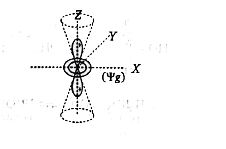
|
|
| 44. |
Consider the following attraction (a) HCl------HCl (b) CH_4------CH_4 (c) NH_4^(+) ------- H_2O (d) He------He The correct order of strength of given attraction is |
|
Answer» C GT B gt a gt d |
|
| 45. |
Consider the following arrangement volume of liquid in container I and II at equlibrium are: |
|
Answer» I=100 ML, II=100mL |
|
| 46. |
Consider the following aqueous solution |
|
Answer» `0.1M` GLUCOSE solution |
|
| 47. |
Consider the following antibiotics (i) Erythormycin(ii) Ofloxacin (iii) Chloroamphenicol(iv) Penicillin The pair of bactericidal antibiotics is |
|
Answer» i - iii |
|
| 48. |
Consider the following alkyl halides 1. (CH_3)_3 "CCH"_2Br 2. ClCH_2CH=CH_2 3. ClCH_2 CH_2 CH_3 4. BrCH_2CH_2CH_3 Arrange these alkyl halides in decreasing order of reactivity in Williamson reaction. |
|
Answer» `2 GT 1 gt 3 gt 4` |
|
| 49. |
Considerthe followingamines(1) n-butyl amine (2) ethyl dimethylamine (3) diethyl dimethylamine the correctsequenceof boilingpoint is |
| Answer» Answer :A | |
| 50. |
Consider the following acids (1) CH_(3) COOH ""(2) Cl_(2) CHCOOH (3) ClCH_(2)COOH""(4) Cl_(3)C COOH The correct sequence of acidity is |
|
Answer» `1 gt 4 gt 3 gt 2` THEREFORE, `ClCH_(2)COOH` is a stronger acid than `CH_(3)COOH` . Two chlorine atoms are more electron withdrawing than single Cl atom. So, `Cl_(2)CHCOOH` stronger acid than `ClCH_(2)COOH`. |
|