Saved Bookmarks
This section includes 7 InterviewSolutions, each offering curated multiple-choice questions to sharpen your Current Affairs knowledge and support exam preparation. Choose a topic below to get started.
| 1. |
Consider following solutions : I 1 M aqueous glucose solution II 1 M aqueous sodium chlorice soution III. 1 M aqueous ammonium phosphate soution IV 1 M benzoic acid in benzene Select correct statements for the above solutions. |
|
Answer» All are isotonic solutions |
|
| 2. |
Consider following reactions : Write the number of reactions (in increasing order) in which major product is having benzene ring. Answer can be one, two , three or four digit number. |
Answer» 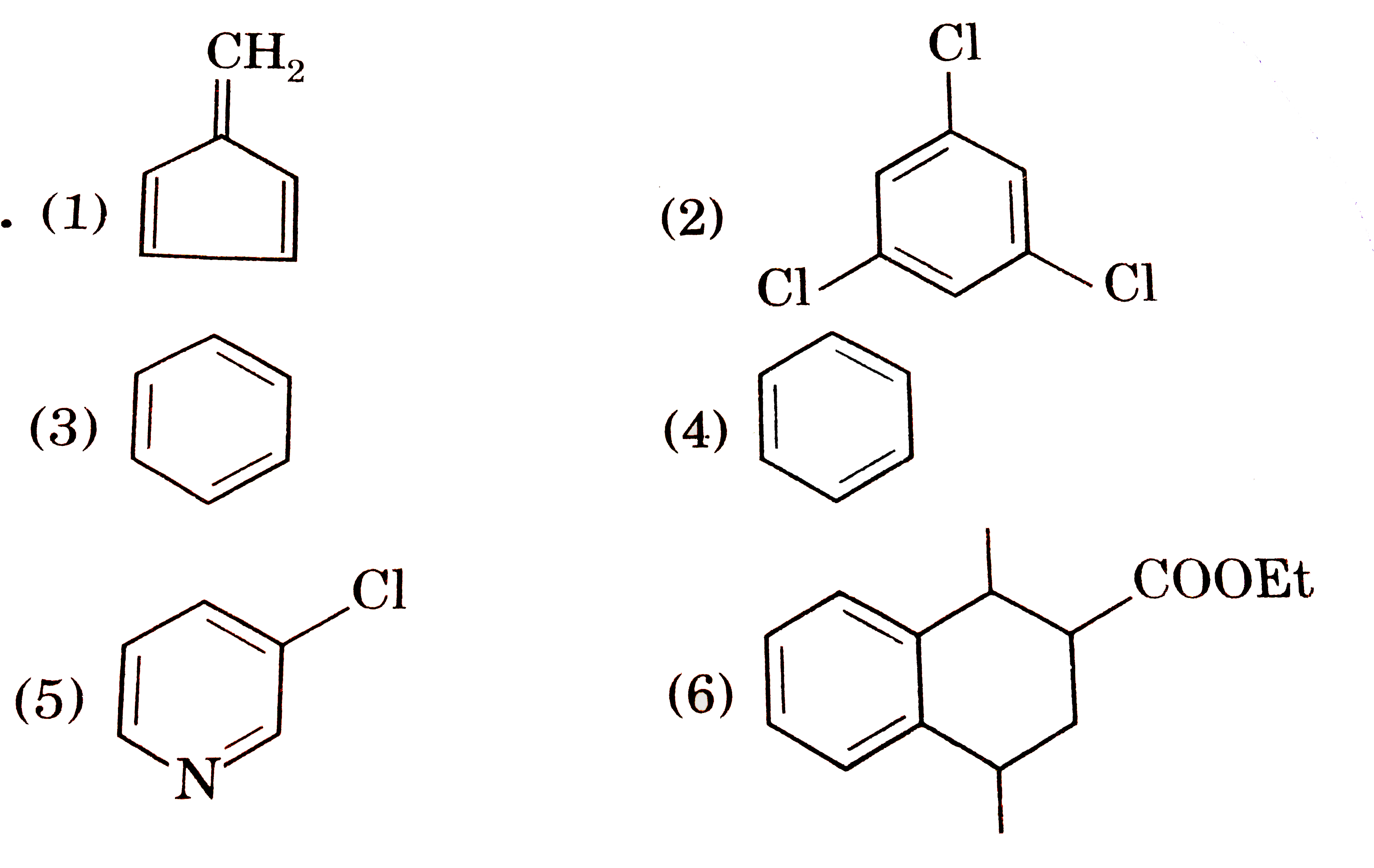
|
|
| 3. |
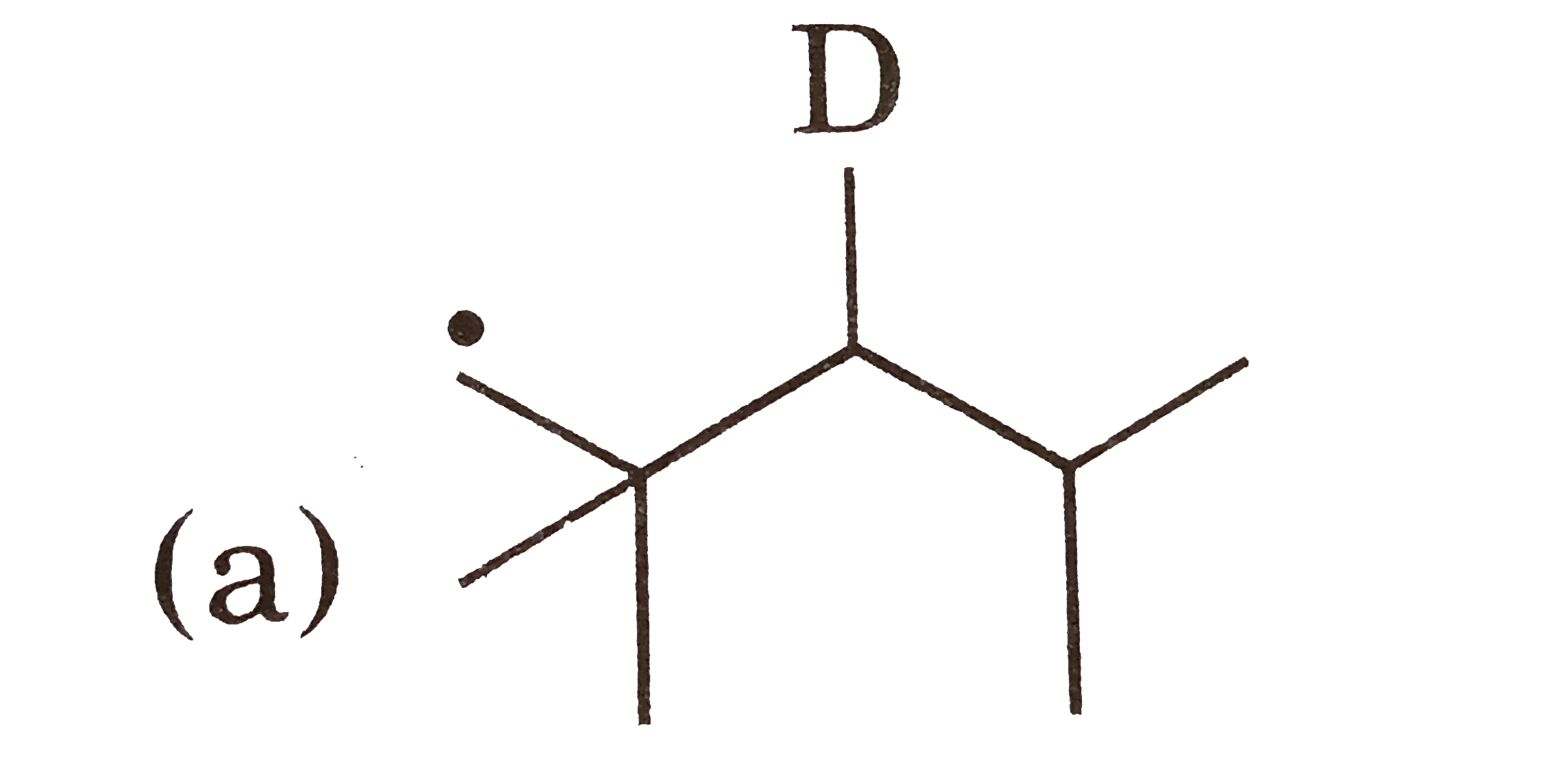
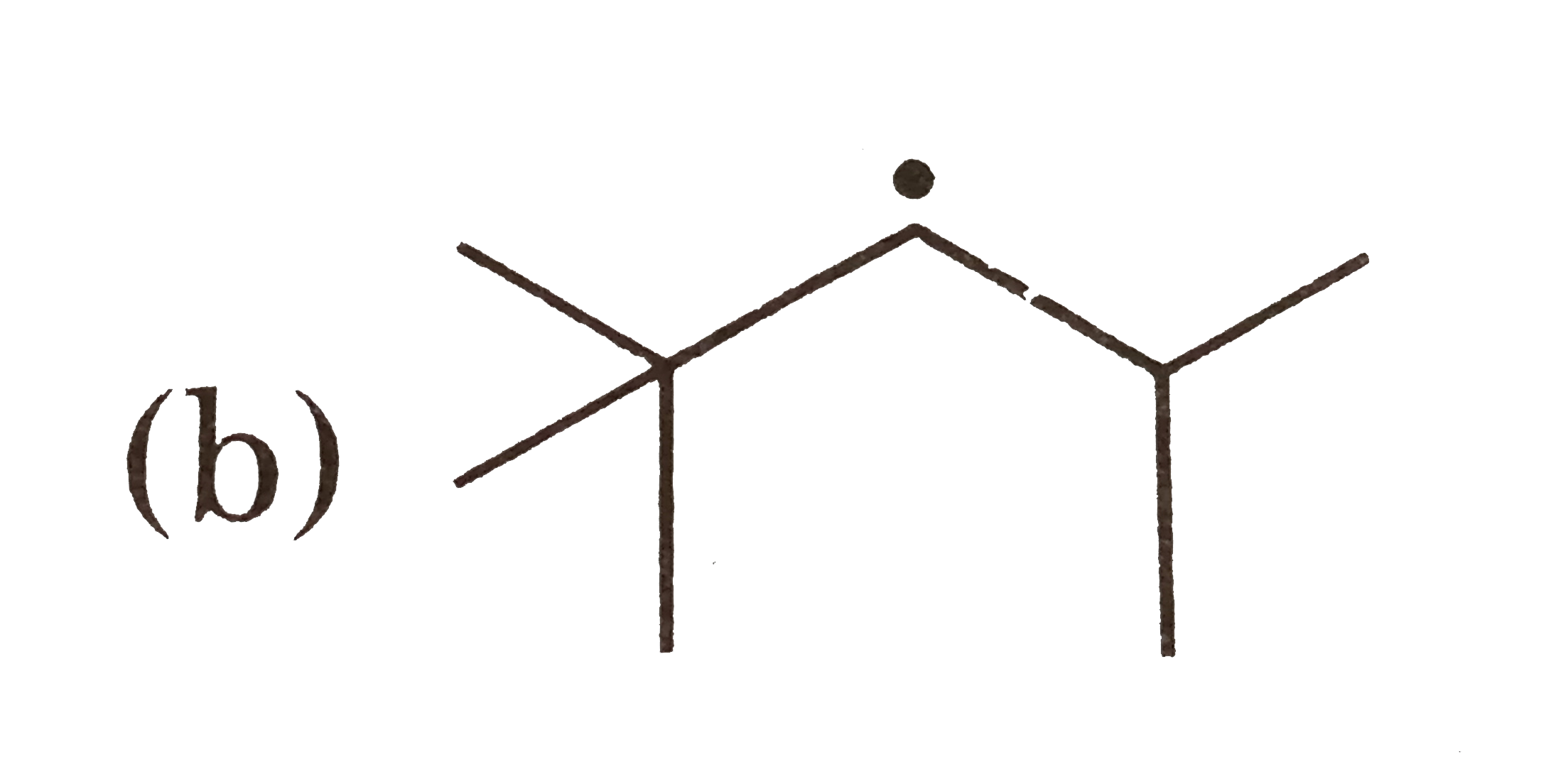
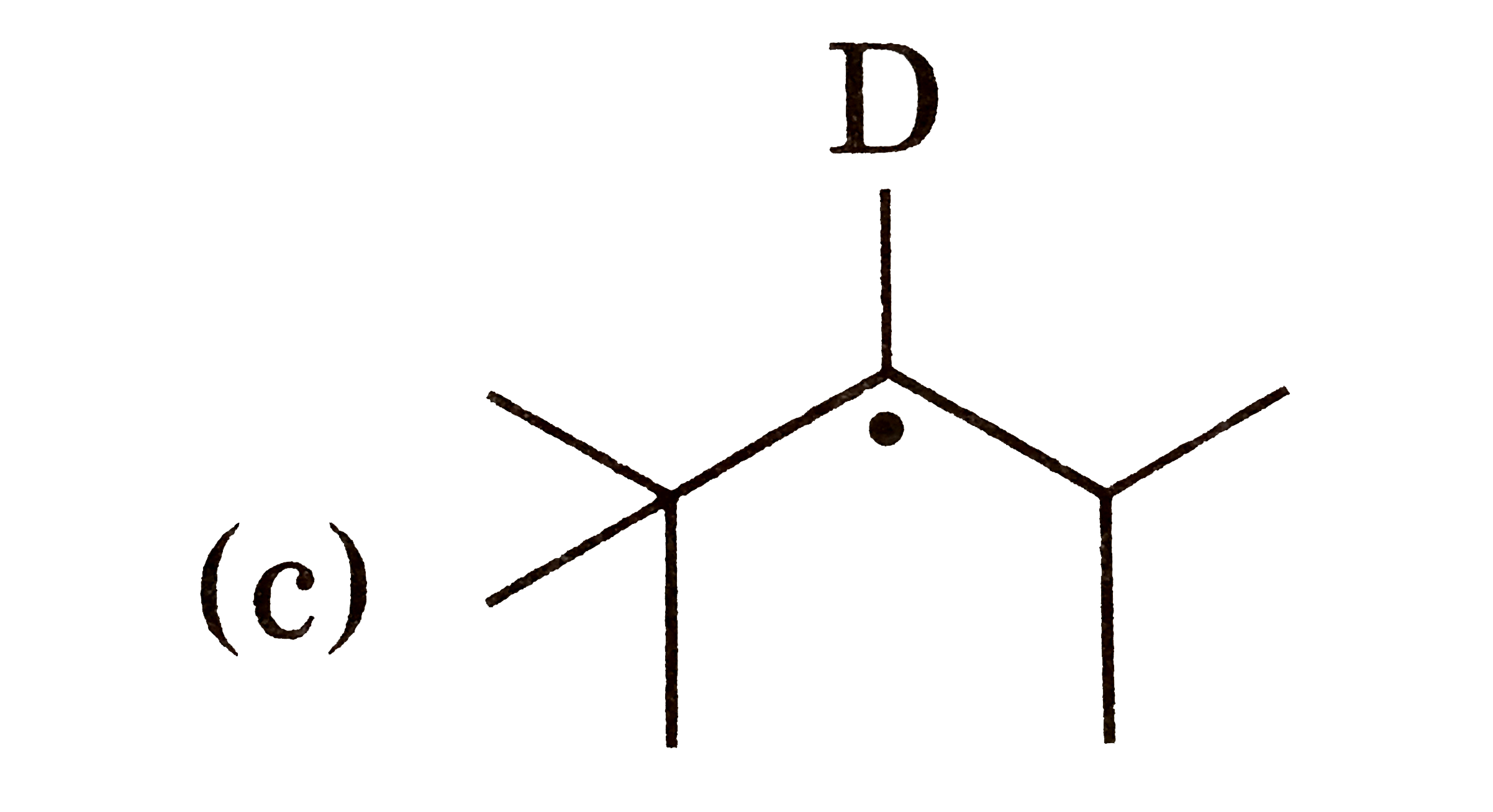
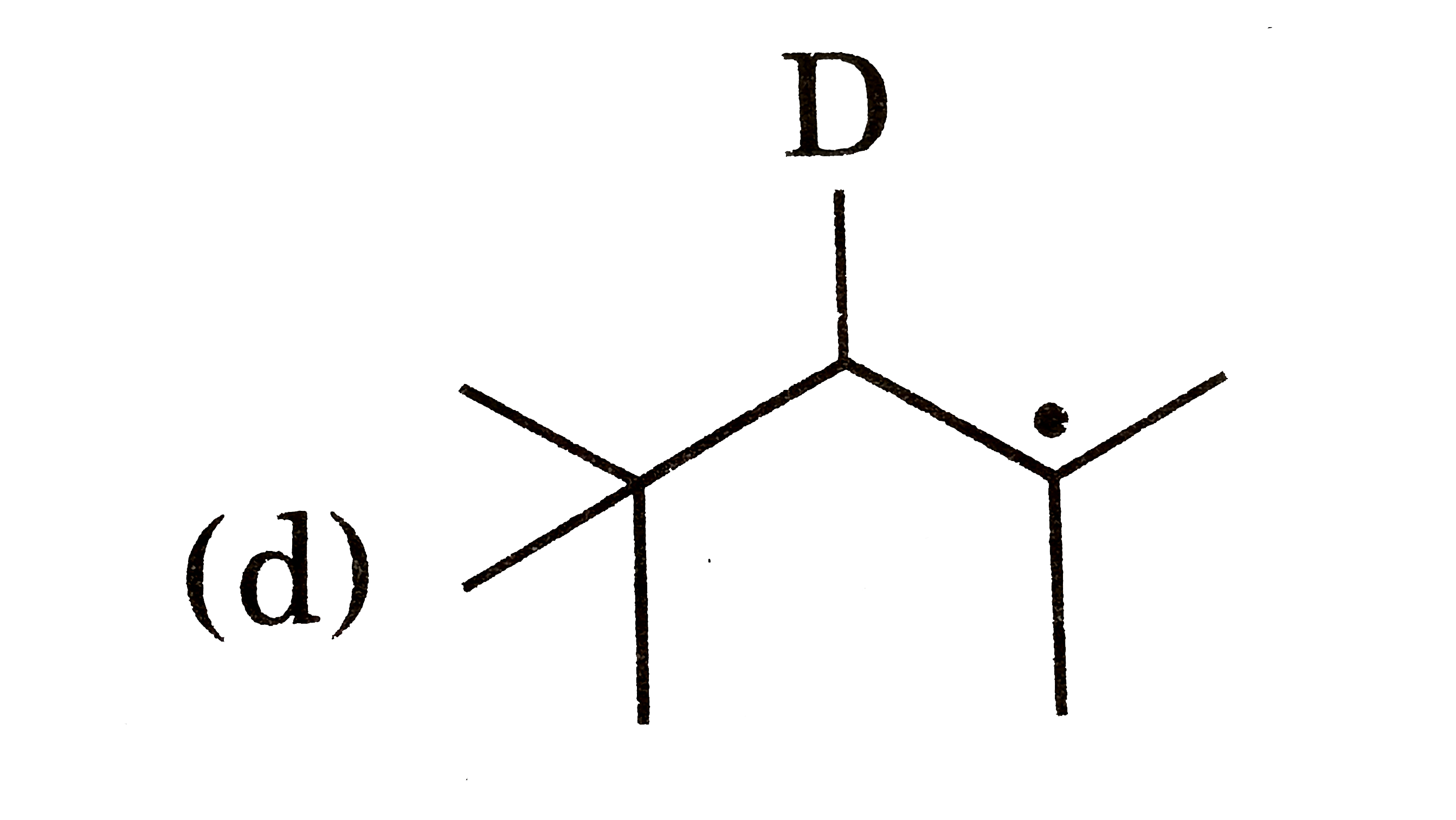
Consider following reaction: Intermediate (P) among the following is : |
|
Answer»
|
|
| 4. |
Consider the following reactions X+HC l underset(("Addition"))overset("Anhydrous "AlCl_(3))toC_(2)H_(5)Cl C_(2)H_(5)Cl underset(("Substitution"))overset("Anhydrous "ZnCl_(2)//HC l)to larrY Y can be converted to X on heating with at temperature |
|
Answer» ` Al_2 O_3 , 350 ^(@) C ` |
|
| 5. |
Consider following reactions, I.CH_3CH_2undersetunderset(OH)|CHCH_3 overset(H^+)to A (major ) II.CH_3undersetunderset(CH_3)|oversetoverset(CH_3)|C-undersetunderset(OH)|CHCH_3 overset(H^+)toB (major ) A and B (both alkenes ) are respectively : |
|
Answer» `CH_3CH=CHCH_3 " " CH_3undersetunderset(CH_3)|oversetoverset(CH_3)|C CH=CH_2` |
|
| 6. |
Consider following reaction: Cl_(2)(g)+H_(2)O overset(R.T.)to P+Q If molecular weight of P is less than Q then incorrect statement is: |
|
Answer» <P>On warming 'P' can form deep red coloured vapours with `CrO_(3)` `H_(2)S(g)+HCl to `No reaction `H_(2)S(g)+HClO to HCl + S darr+H_(2)O` |
|
| 7. |
Consider following polmers : Polythene, PVC, Bskelite, Nylon-6,6, Dacron, Buna-N,Buns-S Neopren, Teflon, Metaldehyde Number of homoppolymer = X number of co-polymer = Y Number of additionpolymer = J Number of condensation polymer = K 'XYJK' will be your answer. |
|
Answer» Number of COPOLYMER = 6 Number of addition polymer = 6 Number of conensation polymer = 4 |
|
| 8. |
Consider following figure and answer the questions at the end of it. Figure explains elevation in boiling point when a non-volatile solute is added to a solvent. Variation of vapour pressure with temperature and showing elevation in boiling point. A complex of iron and cyanide ions is 100% ionized at 1m (molal). If its elevation in boiling point is 2.08^(@) (K_(b) = 0.52^(@) mol^(-1) kg) then the complex is |
|
Answer» `K_(3)[Fe(CN)_(6)]` |
|
| 9. |
Consider following intramolecular aldol condensation reaction X can be |
|
Answer»

|
|
| 10. |
Consider following hydrogen-bonded amines I and II Select the correct statement (s) |
|
Answer» In I, WATER is electron-donor while AMINE is electron acceptor. |
|
| 11. |
Consider following half-cell reaction. A+e^- to A^-""E^0=0.96V II. B^- +e^- to B^(2-)""E^0=-0.12V III. C^+ + e^- to C""E^0=+0.18V IV. D^(2+)+2e^- to D""E^0=-1.12V |
|
Answer» I and II |
|
| 12. |
Consider following figure and answer the questions at the end of it. Figure explains elevation in boiling point when a non-volatile solute is added to a solvent. Variation of vapour pressure with temperature and showing elevation in boiling point. Elevation in boiling point of an aqueous urea solution is 0.52^(@). (K_(b) = 0.52^(@) mol^(-1)kg). Hence, mole fraction of urea in this solution is |
|
Answer» 0.982 |
|
| 13. |
Consider following figure and answer the questions at the end of it. Figure explains elevation in boiling point when a non-volatile solute is added to a solvent. Variation of vapour pressure with temperature and showing elevation in boiling point. Given that DeltaT_(b) is the elevation in boiling point of the solvent in a solution of molality 'm' then underset(m rarr 0)(Lt) ((Detal T_(b))/(m)) is equal to |
|
Answer» `K_(b)` (MOLAL elevation CONSTANT) |
|
| 14. |
Consider following figure and answer the questions at the end of it. Figure explains elevation in boiling point when a non-volatile solute is added to a solvent. Variation of vapour pressure with temperature and showing elevation in boiling point. A complex of iron and cyanide ions is 100% ionized at 1m (molal). If elevation in boiling point is 2.08^(@)(K_(b)=0.52^(@)mol^(-1)kg) then the complex is: |
|
Answer» `K_(3)[Fe(CN)_(6)]` |
|
| 15. |
Consider following figure and answer the questions at the end of it. Figure explains elevation in boiling point when a non-volatile solute is added to a solvent. Variation of vapour pressure with temperature and showing elevation in boiling point. Elevation in boiling point of an aqueous urea solution is 0.52^(@).(K_(b)=0.52^(@)mol^(-1)kg). Hence, mole fraction of urea in this solution is: |
|
Answer» 0.982 |
|
| 16. |
Consider following figure and answer the questions at the end of it. Figure explains elevation in boiling point when a non-volatile solute is added to a solvent. Variation of vapour pressure with temperature and showing elevation in boiling point. Given that DeltaT_(b) is the elevation in boiling point of the solvent in a solution of molality m then underset(mto0)(Lt)((DeltaT_(b))/(m)) is equal to |
|
Answer» `K_(b)` (MOLAL elevation constant) |
|
| 17. |
Consider following figure A and B indicating distribution of charge density ("electron probability" Psi^(2)) with distance r. Select the correct statement: |
|
Answer» `A` and `B` both for `1S` |
|
| 18. |
Consider following compounds, (i) H_(3)X-HCS(ii)H_(3)Y-NCS(iii)(H_(3)Y)_(2)O(iv)(H_(2)X)_(2)O The incorrect statement regarding given compounds is : |
|
Answer» If Y is carbon in compounds (ii) and (IV), then both are bent 
|
|
| 19. |
Consider following compounds & give number of compounds which have HOH higher than |
|
Answer» |
|
| 20. |
Consider following compounds and decide as to which of the following statements is true ? |
|
Answer» (II) gives no reaction with Na metal, however, 1 mole of (IV) on reaction with Na metal will liberate 22.4 litres of `H_2` gas at STP 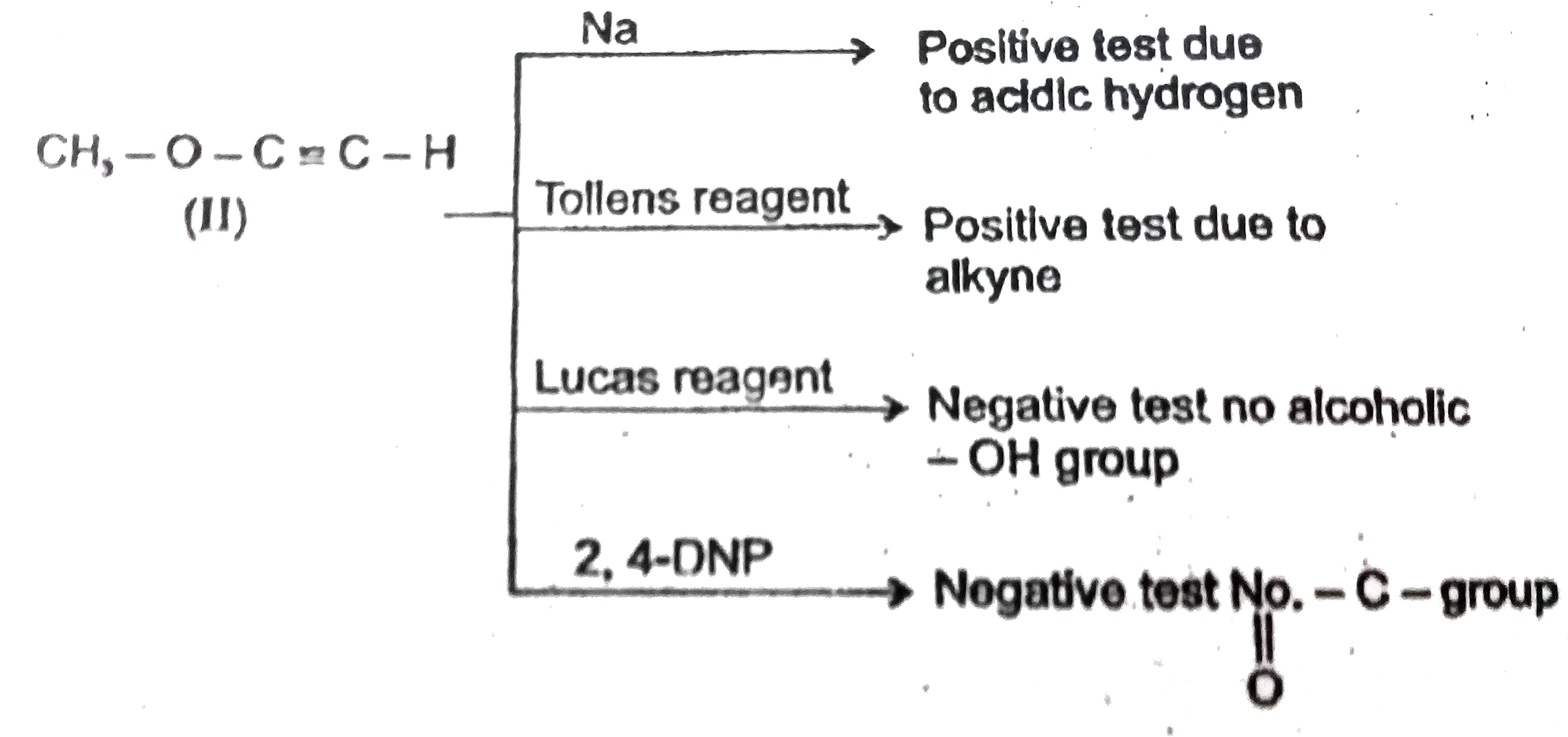
|
|
| 21. |
Consider following carbanions given write number of carbanions which are more stable than |
|
Answer» (i) `-OCH_(3) (+ M "effect")` (ii) `-NO_(2)` ( `-1` effect) meta - POSITION (iii) `-CN (-M, -1)` (iv) `-CH_(3) (+1) (+H)` effect (v) `-CH_(2) - CH_(3) (+1) (+H)` effect (vi) `-underset(O)underset(||)C - H (-M, -1)` effect (vii) `-CL (-1)` effect |
|
| 22. |
Consider following compounds A to E : (A) XeF_(n) "" (B) XeF_((n+1))^(+) "" (C ) XeF_((n+1))^(-) "" (D) XeF_((n+2)) (E ) XeF_((n+4))^(2-), If value of n is 4, then calculate value of p div q here, 'p' is total number of bond pair and 'q' is total number of lone pair on central atoms of compounds (A) to (E ). |
|
Answer» <P> `implies (p)/(Q)=(28)/(7)=04` |
|
| 23. |
Consider following carbohydrates. alpha-D-glucose,beta-D-fructose, Maltose, Sucrose, Lactose, Starch, Cellulose, Galactose, Mannose. Number of carbohydrate which are reducing carbohydrates. |
|
Answer» Number of carbohydrate which can SHOW mutarotation = 3 |
|
| 24. |
Consider following 4 complexes : (P) [Cr(CO)_(5)(Pet_(3))]""(Q) [Cr(CO)_(5)(PPh_(3)] (R ) [Fe(CO)_(5)]""(S) [Fe(CO)_(4)(Pet_(3))] Choose the correct statement. |
|
Answer» P will havel LOWER C-O stretching frequency and a longer metal carbon bond than Q. `Co gt PPh_(3) gt Pet_(3)` `Pet_(3)` is a better `SIGMA`-donor than `PPh_(3)`. Thus, `Pet_(3)UARR` the electron density on C.A. which BACK donates it to CO thus, decreasing CO bond strength or stretching frequency u. Also, M-C bond becomes stronger in (P). . Similarly, `sigma`-donor, `PEt_(3)uarr` electron density on Fe which back donates it to CO, decreasing C-O bond strength or v. `implies R` has longer stretching frequency than 'S' and longer M-C bond than 'S'. |
|
| 25. |
Consider following carbanions give write number of catbonions which are more stable than |
|
Answer» Solution :`therefore` More stable when -M l-1 GROUP attached. (i) `-OCH_(3)(+M "effect")` (ii) `-NO_(2)` (-1 effect) meta-positon (iii) `-CN(-M,1)` (iv) `-CH_(3)(+1)(+H)` effect (V) `-CH_(2)-CH_(3)(+1)(+H)` effect (VI) `-underset(O)underset(||)C-H(-M,-1)` effect (vii) `-Cl(-1)` effect |
|
| 26. |
Consider figure from the above question and answer the questions (i) to (vi) given below. (i) Redraw the diagram to show the direction of electron flow. (ii) Is silver plate the anode or cathode? (iii) what will happen it salt bridge is removed? (iv) When will the cell stop functining? ( v) How will concentration of Zn^(2+) ions and Ag^(+) ions be affected when the cell function? (vi) How will the concentration of Zn^(2+) ions and Ag^(+) ions be affected after the cell becomes dead? |
Answer» Solution : (i) Electrons MOVE from Zn to Ag as `E^(@)` is more negative for Zn so Zn undergoes OXIDATION and ` Ag^(+)` undergoes reduction. 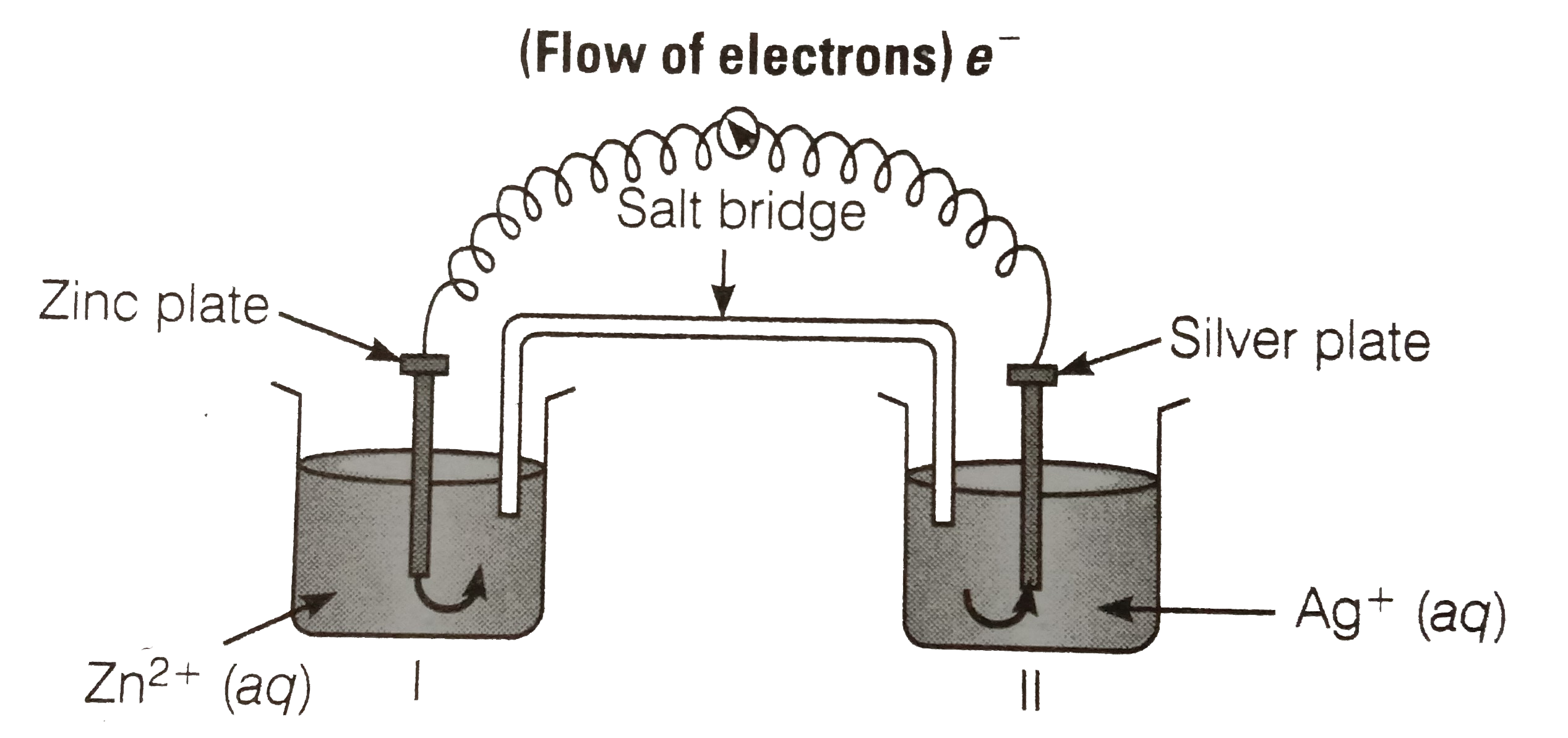 (II) Ag is the cathode as it is the site of reduction where `Ag^(+)` takes electrons from medium and deposit at cathode. (iii) Cell will stop functioning because cell POTENTIAL drops to zero. AT E=0 reaction reaches equilibrium. (iv) When `E_("cell")`=0 because at this condition reaction reaches to equilibrium. (v) CONCENTRATION of `Zn^(2+)` ions will increase and concentartion of `Ag^(+)` ions will decreases because Zn is converted into `Zn^(2+)` and `Ag^(+)` is converted into Ag. (vi) when `E_("cell")=0` equilibrium is reached and concentration of `Zn^(2+)` ions and `Ag^(+)` will not change. |
|
| 27. |
Consider equimolal aqueous solutions of NaHSO_(4) and Nacl with Delta T_(b) and DeltaT_(b)^(1) as their respective boiling point elevations. The value of underset (xrarrinfty)(Lt) (DeltaT_(b))/(DeltaT_(b)) will be |
|
Answer» 1 |
|
| 28. |
Consider and ideal gas at same temperature, separated initially as shown below in the diagram When the valve is opened, the equilibrium pressure is found to be 20//7 atmosphere. What was the initial pessure in the smaller flask? |
|
Answer» |
|
| 29. |
Consider an isothernmal cylinder and masslesskpiston assemblyinwhich ideal gas is filled . Cross sectional area of the cylinder = 1m^(2).Three massesm_(1),m_(2)and m_(3) are kept on thepiston . When m_(1) id removed , piston moves upon pointA. When m_(1) & m_(2) both are removedpiston moves upto jkpint B &when m_(1) m_(2) & m_(3) all three are removed , piston moves upto ,lpoint C. Calculatework done by the gas (in joule) when piston moves frompoint B to point C.[Given :m_(1)= 2xx 10 ^(4)kg , m_(2) = 3 xx 10 ^(4)kg , g =10 m//s^(2)] |
|
Answer» Solution :Initially piston is at EQ, `10^(6)=((2 xx 10 ^(4) + 3 xx 10 ^(4) + m_(3) )xx 10)/(1) + 10^(5)` `m_(3)= ((10^(6)-10^(5))/(10))- 5 xx 10^(4)= 10 ^(4)(10-1) - 5 xx10^(4)= 10 ^(4)(9-5)= 4 xx 10 ^(4) kg` since T = constant `P_(i) V_(i)= P_(B) V_(B)` `10^(6)xx 4 =(10^(5) + 4 xx10 ^(5))xx V_(B)` `V_(B)=(4XX 10^(6))/(10^(5)xx 5)=(40)/(5)= 8 lit.` ALSO, `P_(B)V_(B)=P_(C)V_(C)`lt brgt` 10^(5) xx 5 xx 8 = 10^(5)xx V_(c)` `V_(c)= 40 L` `W_(BC)= - P_(ext) (V_(C)_V_(B)) =- 10 ^(5) (40- 8 )xx 10 ^(-3) =- 3200 J` `W_(by)= 3200 J ` |
|
| 30. |
Consider aqueous solutions containing 6 g each of (I) CH_(3)COOH, (II) C_(3)H_(7)OH and (III) urea in 100 mL of solution. Which of them has the maximum molarity of all the particles (molecules and ions)? |
|
Answer» I `CH_(3)COOH` is a weak ELECTROLYTE and ionizes to some EXTENT `(CH_3COOH iff CH_3COO^(-)+ H^(+))` HENCE, total molarity = `1- alpha + alpha =1+ alpha` (other substances are non-electrolytes) |
|
| 31. |
Consider an ionic solid MX with NaCl structure. Construct a new structure (Z) whose unit cell is constructed from the unit cell of MX following the sequential instructions given below. Neglect the charge balance. (i) Remove all the anions (X) except the central one (ii) Replace all the face centered cations (M) by anions (X) (iii) Remove all the corner cations (M) (iv) Replace the central anion (X) with cation (M) The value of (("Number of anions")/("number of cations")) in Z is _________ |
|
Answer» `M^(+)rArrF C C` `M^(+) X^(-)` (i) 4 1 (II) 4-3 3+1 (iii) 4-3-1 3+1 (IV) 1 3 `Z=(3)/(1)=3` |
|
| 32. |
Consider an ionic solid MX with NaCl structur. Construct a new structure (Z) whose unit cell is constructed from the unit cell of MX following the sequential instruction given below. Neglect fthe charge balance. |
|
Answer» Remove all the ANIONS (X) except the central one |
|
| 33. |
Consider an ion with the following structure : [H_2C=C=NH_2]^+For this ion , we can define two planes : one plane containing H-C-H group , the other plane containing H-C-H group , what is the relationship between these planes ? |
|
Answer» They are at `120 ^0` |
|
| 34. |
Consider an esterification of isotopically labelled carboxylic acid : CH_3 -overset(O) overset(||) C -overset( 18) (OH) + C_2H_5OH overset(H^(+))to (A) and (B)Compounds (A) and (B) respectively are: |
|
Answer» `CH_3-OVERSET(O) overset(||) C-overset(18) (OC_2H_5) , H_2O ` |
|
| 35. |
Consider an endothermic reaction X to Y with the activation energies E_(b) and E_(i), for the backward and forward reactions, respectively. In general |
|
Answer» there is no definite relation between `E_(B) and E_(F)` For an endothermic reaction `DeltaH=+ve` HENCE for `DeltaH` to be POSITIVE `E_(a_(t))ltE_(a_(b))` |
|
| 36. |
Consider an endothermic reactionX to Y with the activation energies E_(b) and E_(f) for the backward and forward reactions respectively , in general |
|
Answer» `E_(b) lt E_(f)` Then from EQUATION `DELTA H = E_(a.F.R) - E_(a B.R) , E_(B.R) lt E_(F.R)` . |
|
| 37. |
Consider an endothermic reaction XtoY with the activation energies E_(b) and E_(f) for the backward and forward reactions, respectively. In general |
|
Answer» `E_(B)ltE_(F)` |
|
| 38. |
Consider an element A. It crystallizes in double fcc (like diamond) with edge length x. If distance between nearest neighbours, and most distant neighbours in one unit cell is p,q and respectively then find :(4pxxr)/q^2 |
Answer» 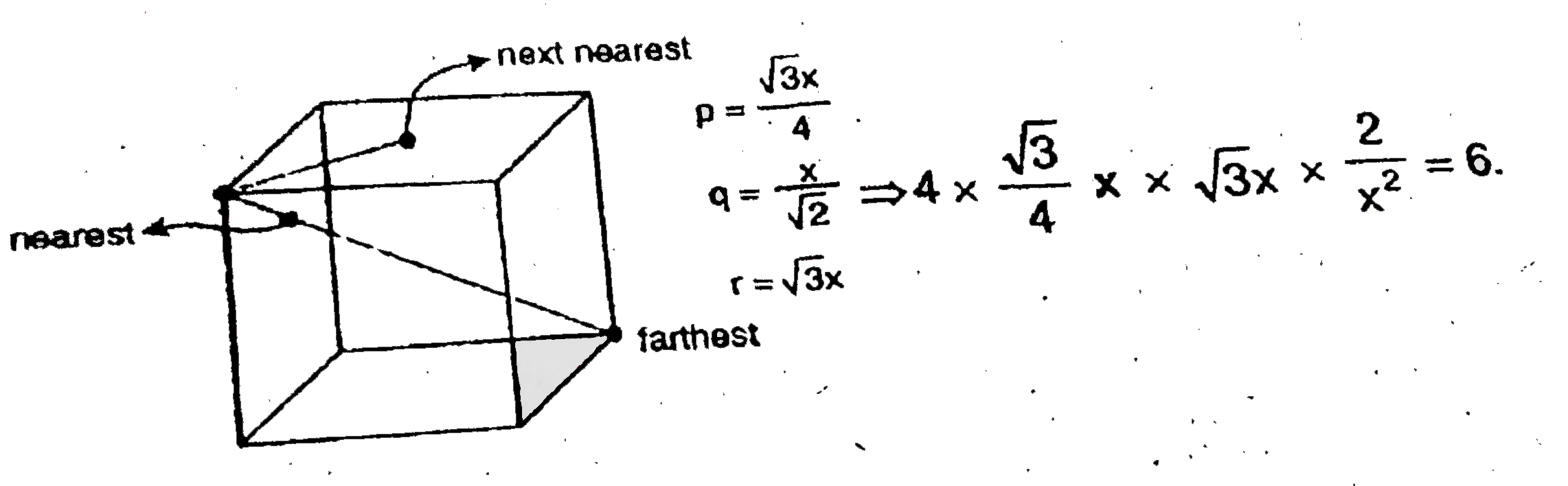
|
|
| 39. |
Consider an electrochemical cell: A(s)|A^(n+)(aq,2M)||B^(2n+)(aq,1M)|B(s). The value of DeltaH^(theta) for the cell reaction is twice that of DeltaG^(theta) at 300K. If the emf of the cell is zero, the DeltaS^(theta) (in KJ^(-1)mol^(-1)) of the cell reaction per mole of B formed at 300 K is ________ (Given: ln (2)=0.7, R (universal gas constant)=8.3 JK^(-1)mol^(-1). H,S and G are enthalpy, entropy an Gibs energy, respectively). |
|
Answer» `underset(DELTAH^(o)=2DeltaG_(O)^(o))(A(s)|A^(+n)(aq,2M))||B^(+2N)underset(E_(cell)=0)((aq,1M)|B(s))` Cell Rx `[AtoA^(+n)+ n e^(-)]xx2` `B^(+2n)+2n e^(-)toB(s)` `2A(s)+underset(1M)(B^(+2n))(aq)tounderset(2M)(2A^(+n))(aq)+B(s)` `DeltaG=DeltaG^(o)+RT" ln "([A^(+n)]^(2))/([B^(+2n)])` `DeltaG^(o)=-RT" ln "([A^(+n)]^(2))/([B^(+2n)])=-RT.ln(2^(2))/(1)=-RT.ln4` `DeltaG^(o)=DeltaH^(o)-TDeltaS^(o)` `DeltaG^(o)=2DeltaG^(o)-TDeltaS^(o)` `DeltaS^(o)=(DeltaG^(o))/(T)=-(RTln4)/(T)=-8.3xx2xx0.7=-11.62J//K.mol` |
|
| 40. |
Consider an endothermic reaction : XrarrY with activation energies E_(b) and E_(f) for the backward and forward reactions respectively . In general |
|
Answer» `E_(B) lt E_(f)` `DELTA H = + ve` `Delta H = E_(f) - E_(b)` :. `E_(b) lt E_(f)` |
|
| 41. |
Consider an alpha- particle just in contact with a ._(92)U^(238) nucleus. Calculate the coulombic repulsion energy (i.e., the height of the coulombic barrier between U^(238) and alpha particle) assuming that the distance between them is equal to the sum of their radii |
|
Answer» `23.851 xx 10^(4) eV` `r_(U^(238)) = 1.3 xx 10^(-13) xx (238)^(1//8) = 8.06 xx 10^(-13) cm` `r_(He^(4)) = 1.3 xx 10^(-13) xx (4)^(1//3) = 2.06 xx 10^(-13) cm` `:.` TOTAL DISTANCE in between URANIUM and `alpha` nuclei `= 8.06 xx 10^(-13) + 2.06 xx 10^(-13) = 10.12 xx 10^(-13) cm` Now repulsion energy `= (Q_(1)Q_(2))/(r) = (92 xx 4.8 xx 10^(-10) xx 2 xx 4.8 xx 10^(-10))/(10.12 xx 10^(-13)) erg` `= 418.9 xx 10^(-7) erg = 418.9 xx 10^(-7) xx 6.242 xx 10^(11) eV` `= 26.147738 xx 10^(4) eV` |
|
| 42. |
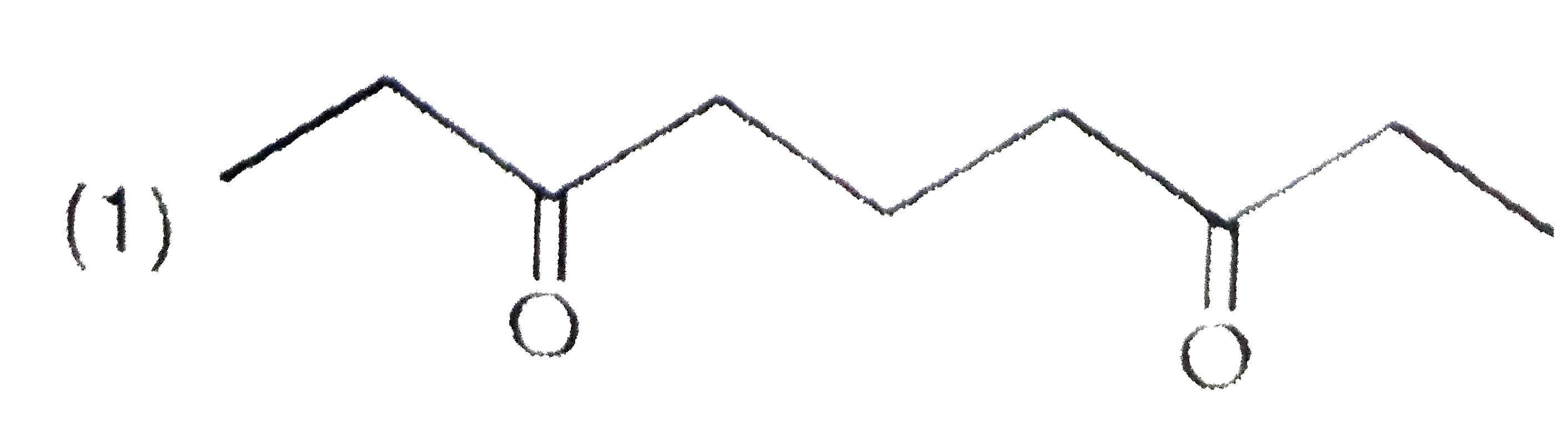
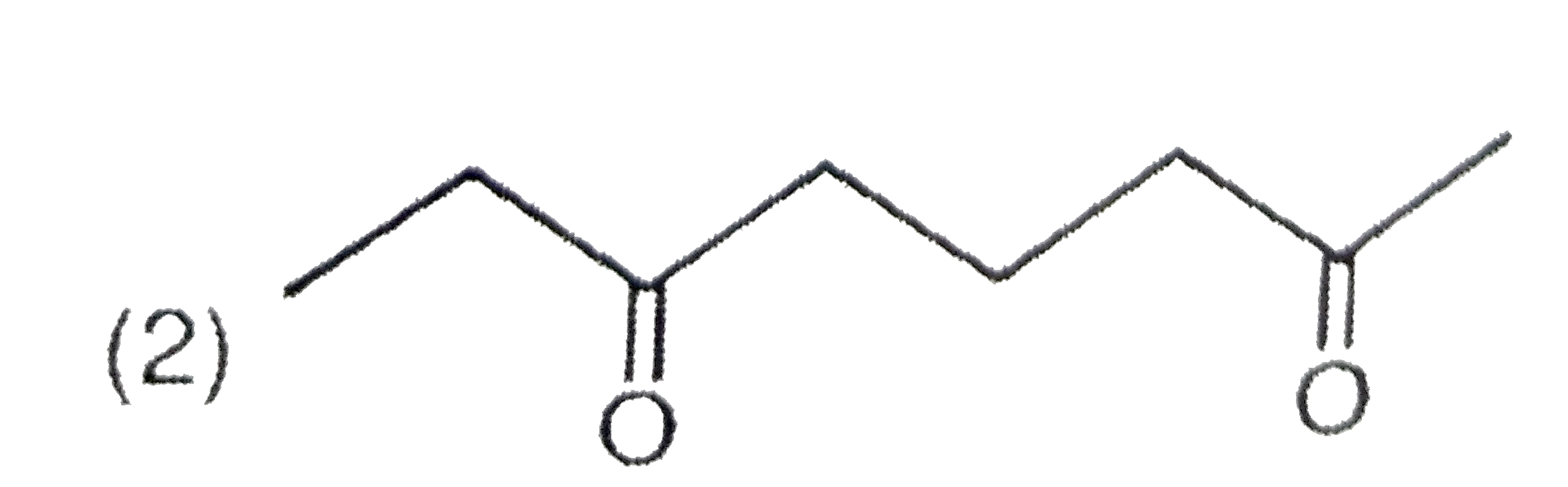
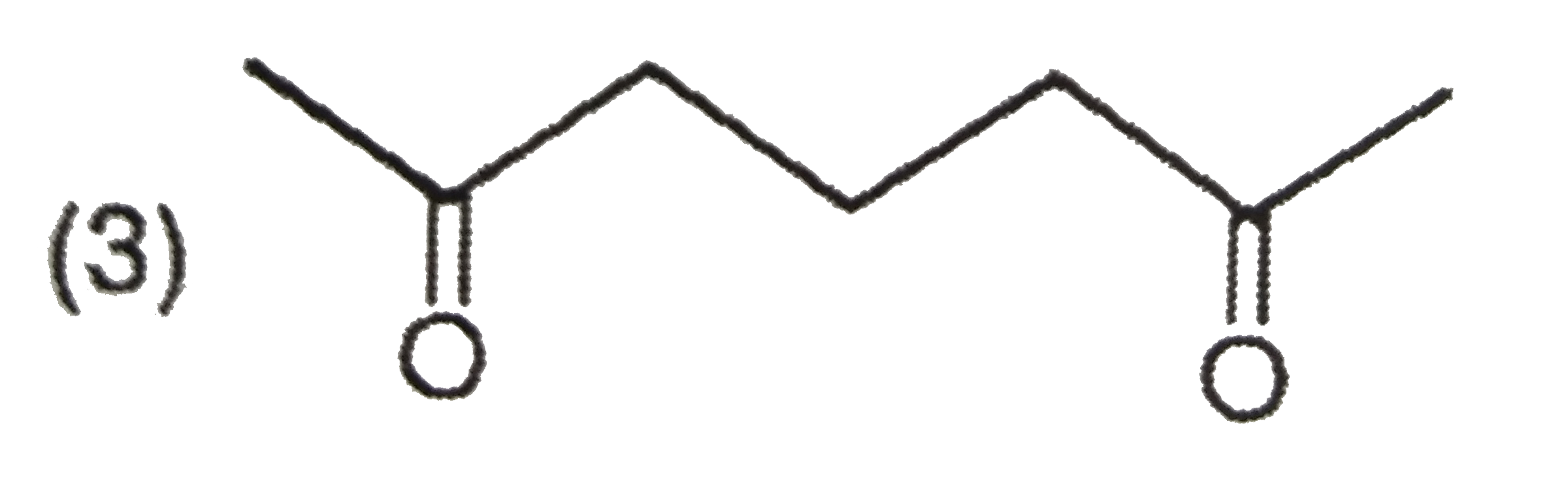
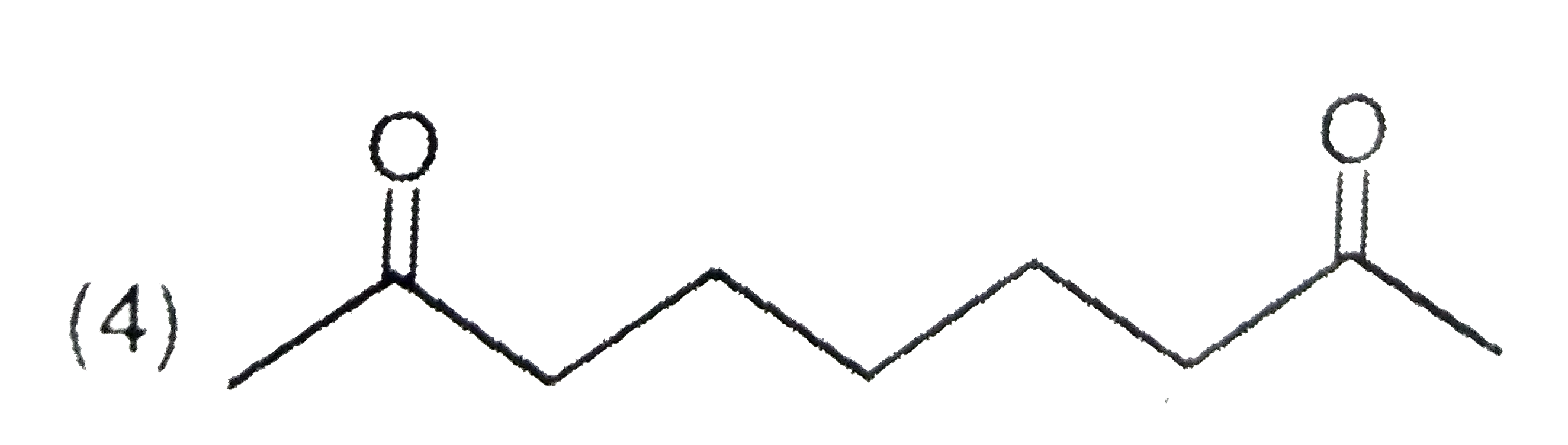
Consider all possible isomeric ketons including stereoisomers of MW=100 All these isomers are independently reacted with NaBH_(4) The total of number of ketones that gives a recemic product (S) is//are |
|
Answer» |
|
| 43. |
Consider an alpha-particle just in contact with .""_(92)^(238)U nucleus. Calculate the coulombic repulsion energy (i.e., the height of the coulombic barrier between ""^(238)U and the alpha-particle) assuming that the distance between them is equal to the sum of their radii. (r_(0)= 1.4 xx 10^(-13), e= 4.8 xx 10^(-10) esu) |
|
Answer» SOLUTION :Distance between `U^(238)` and `He^(4)` nuclei, d, = radius of `U^(238)`+ radius of `He^(4)` `=1.4 xx 10^(-13) xx (238)^((1)/(3)) + 1.4 xx 10^(-13) xx (4)^((1)/(3))` `=1.0899 xx 10^(-12)cm` `therefore` COULOMBIC barrier `=(Z_(1)Z_(2) e^(2))/(d)` `=(92 xx 2 xx (4.8 xx 10^(-10))^(2))/(1.0899 xx 10^(-12))` `=3.899 xx 10^(-5)` erg |
|
| 44. |
Consider all possible isomeric ketones including stereoisomers of relative molar mass of 100. All these isomers are independently reacted with NaBH_(4).(Note: stereoisomers are also reacted separately).The total number of ketones that give a racemic products is / are ....... . |
|
Answer» |
|
| 45. |
Consider all possible isomeric ketones, including stereoisomers of MW=100. all these isomers are independently reacted with NaBH_(4) (NOTE: stereoisomers are also reacted). The total number of ketones that give a racemic product(s) is/are |
|
Answer» MW of the ketone=100 `therefore12xxn+1xx2n+1xx16=100` or `14n=84` or `n=6` `therefore`M.F. of the ketone=`C_(6)H_(12)O`. The TOTAL number of isomeric ketones having the M.F. `C_(6)H_(12)O_(6)` is 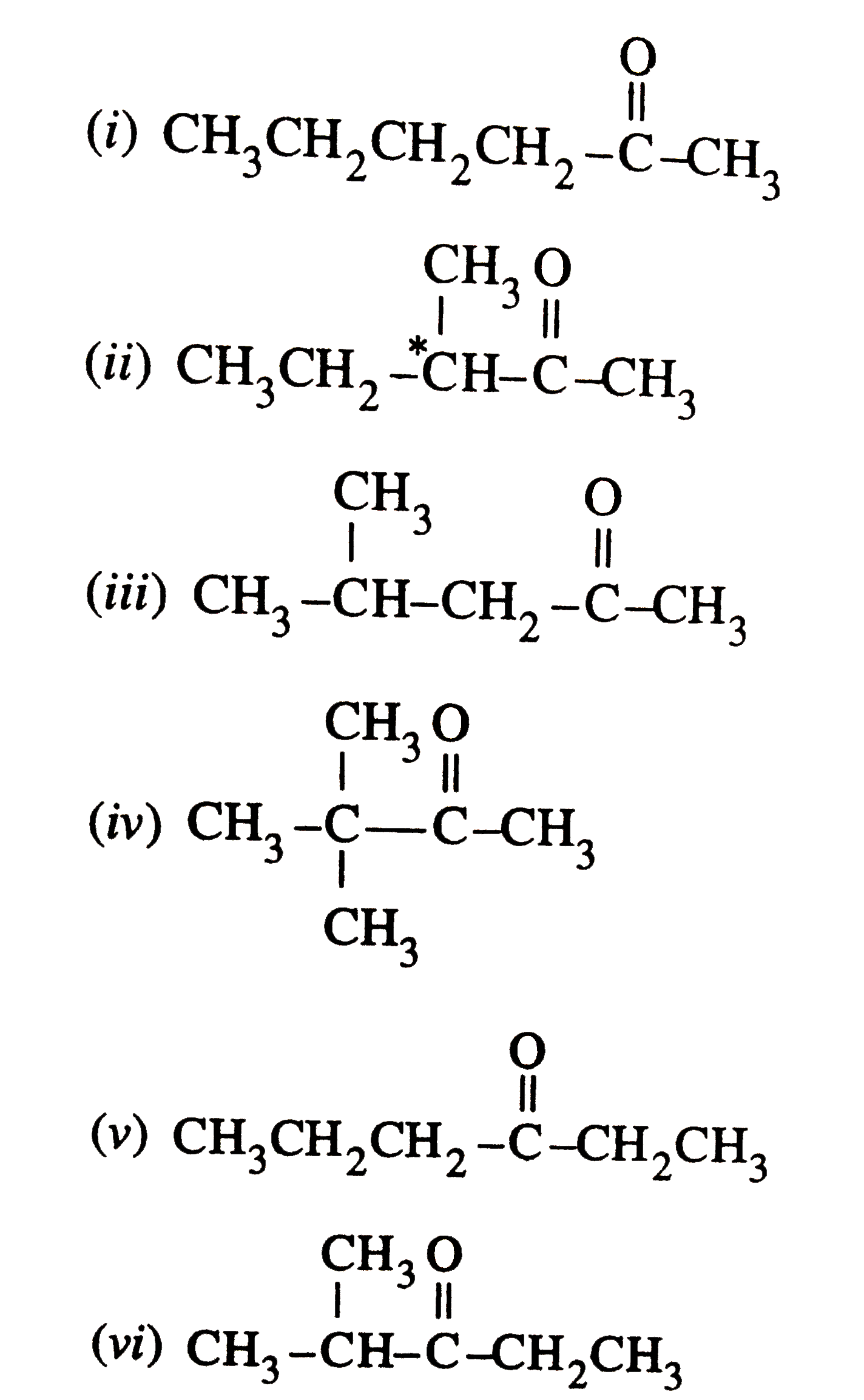 Whenever a new chiral centre is created by reaction of achiral COMPOUNDS with achiral reagents, a racemic MIXTURE of products is always produced. but chiral compounds under these conditions will product diastereomeric OPTICALLY active products. since there are five achiral ketones, therefore, on reduction with `NaBH_(4)` will produce five racemic mixture of products. |
|
| 46. |
Consider Al_(2)(OH)_(6) compound and caculate the value of (X+Y)+Z Wher X=total number of (2c-2e^(-)) bond. Y=total number of (3c-2e^(-)) bond. Z=total numbe of (3c-4e^(-)) bond |
|
Answer» Y=total number of `(3c-2e^(-))` bond=0 Z=total number of `(3c-4e^(-))` bond=2 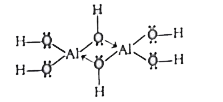 (10+0)+2=5 |
|
| 47. |
Consider (a) Zn(OH_(2) (b) Cr(OH)_(3) (c ) Mg(OH)_(2) (d) AI(OH)_(3). Which hydroxide is precipitated by NH_(4)OH containing NH_(4)CI ? |
| Answer» Answer :B | |
| 48. |
Consider a volatic cell based on these half -cell : Ag^(+) (aq.) + e^(-) rarr Ag(s), E^(@) = + 0.80 V Cd^(2+) (aq) + 2e^(-) rarr Cd(s) , E^(@) = - 0.40 V Identify the anode and give the voltage of this cell under standard conditions |
|
Answer» `AG, E_("cell") = 0.40 V` `E_("Cell")^(@) = E_("Cathode") - E_("Anode")` `E_(Ag^(+) //Ag) - E_(Cd^(2+)//Cd)^(@)` `= 0.80 - (-0.40) = 1.20 V` |
|
| 49. |
Consider a titration of potassium dichromate solution with acidified Mohr's salt solution using diphenylamine as indicator . The number of moles of Mohr 's salt required per mole of dichromate |
|
Answer» 3 |
|
| 50. |
Consider a titration of K_2Cr_2 O_7 solution with acidified Mohr's salt solution using diphenylamine as indicator. The number of moles of Mohr's salt required per mole of dichromate is |
|
Answer» 3 fromMohr.s SALT Noof molesofMohr.ssaltrequiredper moleof dichromateis 6 . |
|