

Saved Bookmarks
This section includes 7 InterviewSolutions, each offering curated multiple-choice questions to sharpen your Current Affairs knowledge and support exam preparation. Choose a topic below to get started.
| 1. |
Complete the chemical reaction. 2CuSO_4 + 4kI → |
|
Answer» SOLUTION :(a)`2CuSO_4 + 4KI RARR 2K_2SO_4 + Cu_2I_2 + I_2` (B) `Cu_2S + 2Cu_2Orarr 6Cu + SO_2` |
|
| 2. |
Complete the chemical equation : Ca_(3) (PO_(4))_(2) + SiO_(2) + C overset("Heat")rarr |
|
Answer» <P> Solution :`2 Ca_(3)(PO_(4))_(2) + 6 SiO_(2) + 10C overset(1773 K)rarr 6 CaSiO_(3) + P_(4) + 10 CO` |
|
| 3. |
Complete manure is that which supplies |
|
Answer» <P>`S, K` and `N` |
|
| 4. |
Complete reduction of benzene-diazonium chloride with Zn/HCl gives : |
|
Answer» Aniline 
|
|
| 5. |
Complete hydrolysis product of 1 mole each of following will need how many total number of moles of NaOH for complete neutralisation? SOCl_(2), SO_(2)Cl_(2), PCl_(3), PCl_(5), NCl_(3) |
|
Answer» |
|
| 6. |
Complete hydrolysis of DNAyields a pentosesugar, phosphoricacid and nitrogen containing heterocyclic compouds. |
|
Answer» |
|
| 7. |
Complete hydrolysis of cellulose gives…………………….. |
|
Answer» L-Glucose |
|
| 8. |
Complete hydrolysis of starch gives : |
|
Answer» only GLUCOSE |
|
| 9. |
Complete hydrolysis of cellulosegives ………. . |
|
Answer» L - GLUCOSE |
|
| 10. |
Complete hydrolysis of cellulose gives : |
|
Answer» L-glucose |
|
| 11. |
Complete hydrolysis of cellulose gives |
| Answer» Solution :D - Glucose | |
| 12. |
Complete following reaction equation: (i) C_(6)H_(5)N_(2)Cl+KIrarr........ |
Answer» SOLUTION :(i) `{:(C_(6)H_(5)N_(2)Cl+Kl,to,C_(6)H_(5)I+KClN_(2)),("Benzen",,"Benzene"),("diazonium chloride",,"Iodid"):}`
|
|
| 13. |
Complete each synthesis by giving the missing starting material, reagent, or products. i. ii. iii. C_(6)H_(5)CHO overset(H_(2)NCONHNH_(2))rarr iv. v. vi. vii. C_(6)H_(5)CHO+CH_(3)CH_(2)CHO overset(Dil.NaOH)rarr viii. CH_(3)COCH_(2)COOC_(2)H_(5)overset((i)NaBH_(4))underset((ii)H^(+))rarr ix. x. xi. |
Answer» SOLUTION :i. 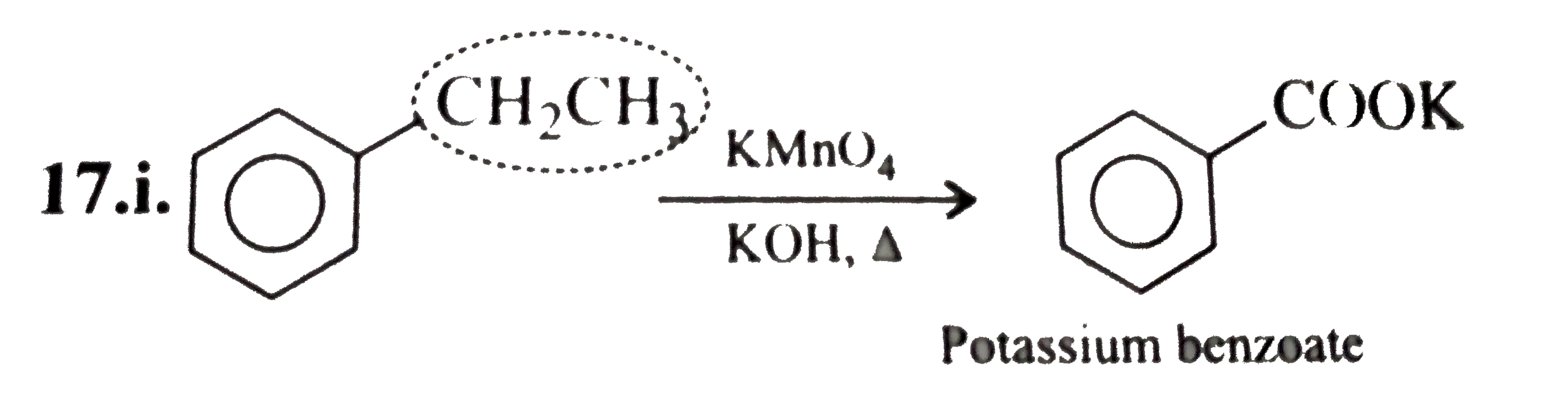 ii. 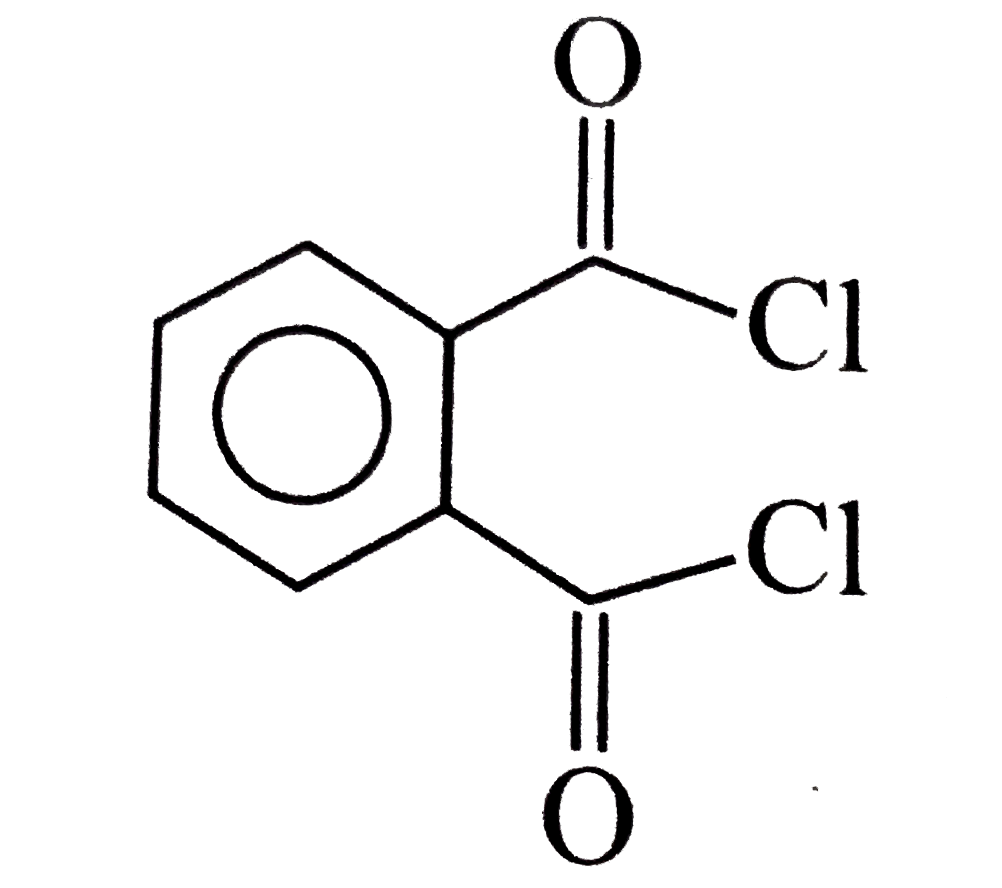 III. `C_(6)H_(5)CH==N NHCONH_(2)` (Benzaldehyde semicarbazone). More nucleophilic centre 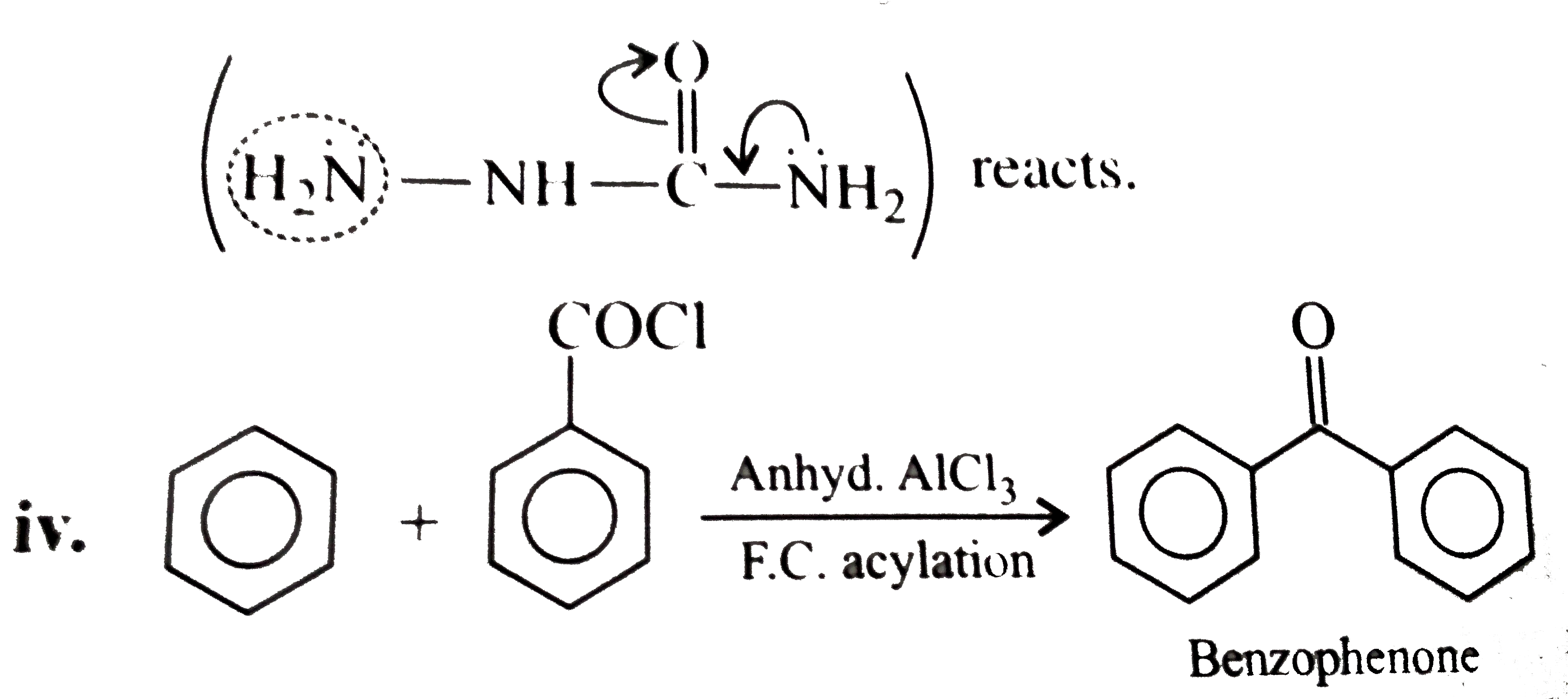 iv. 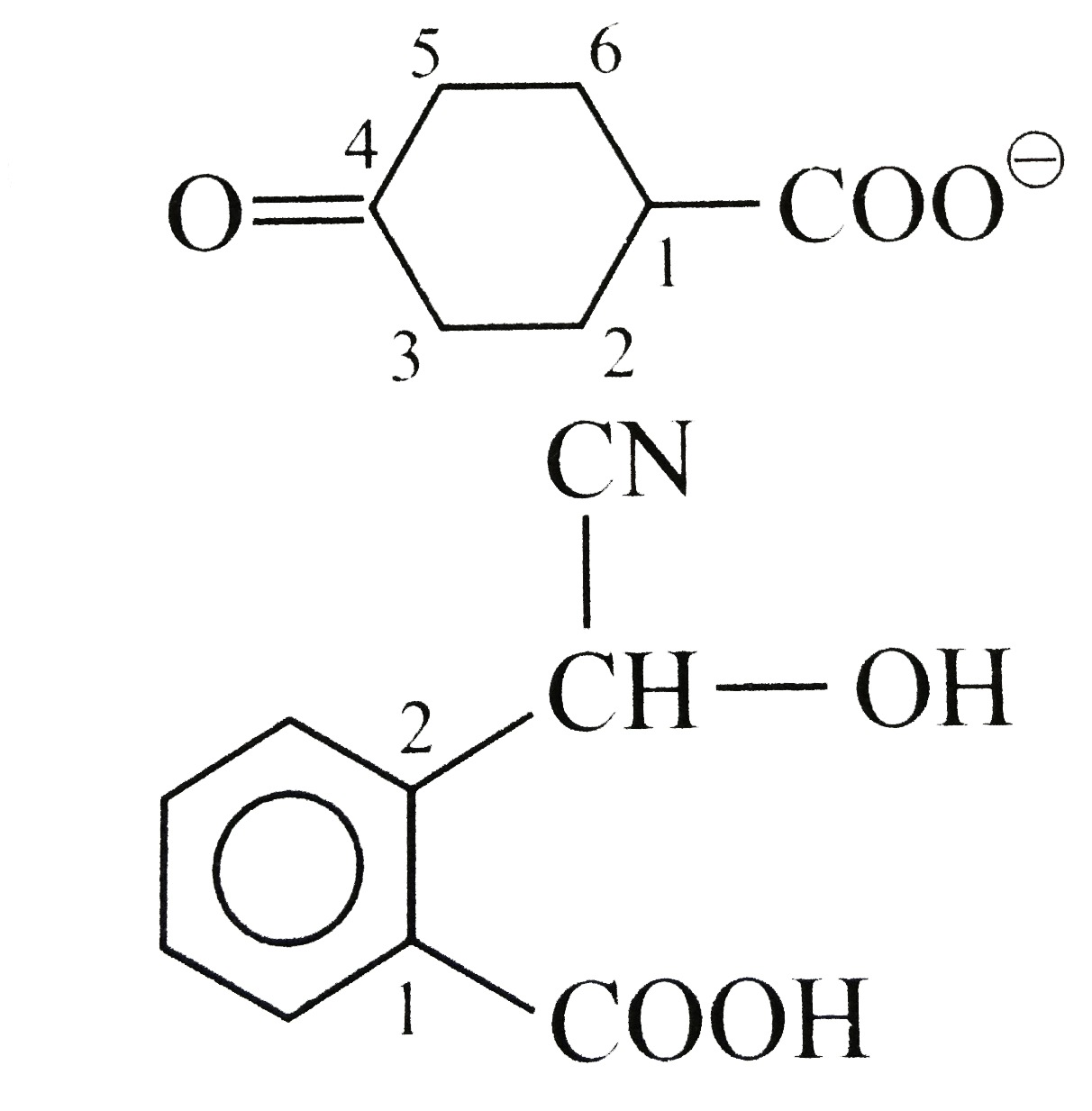 v. Aldehyde is oxidised to `(COO^(Θ))` bt Tollens REAGENT. 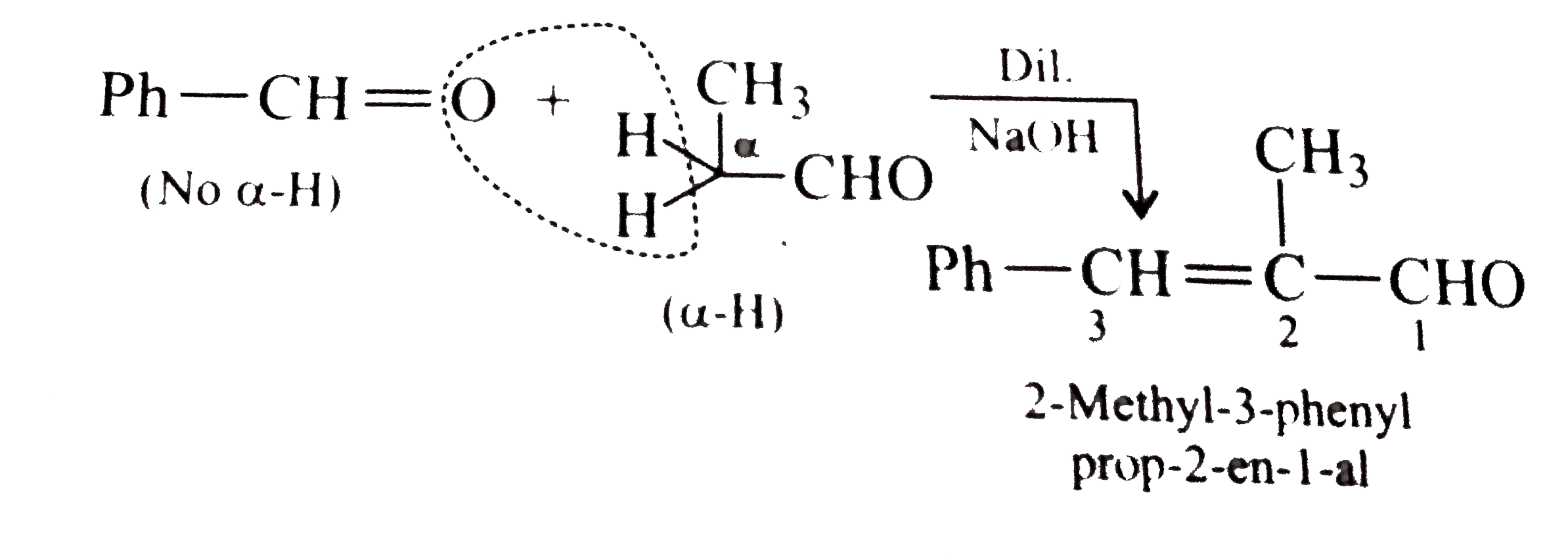 vi. 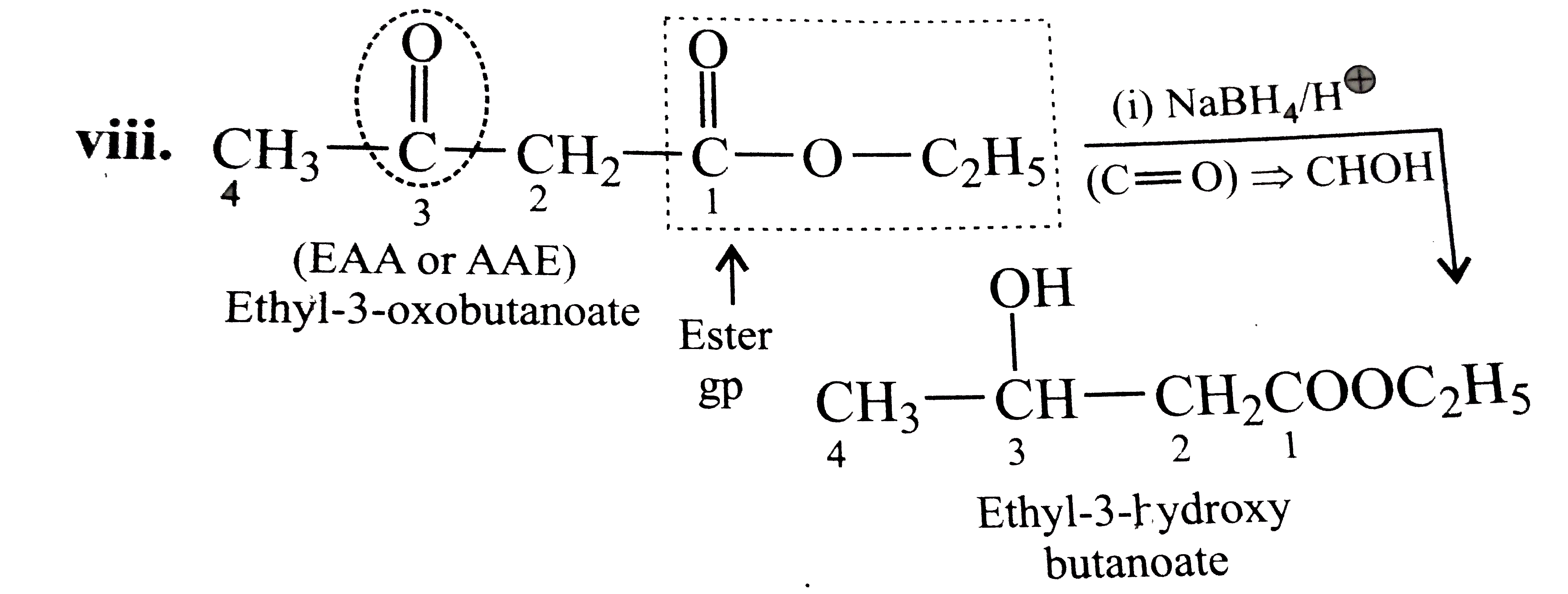 vii. It is an example of Claisen-Schmidt reaction. 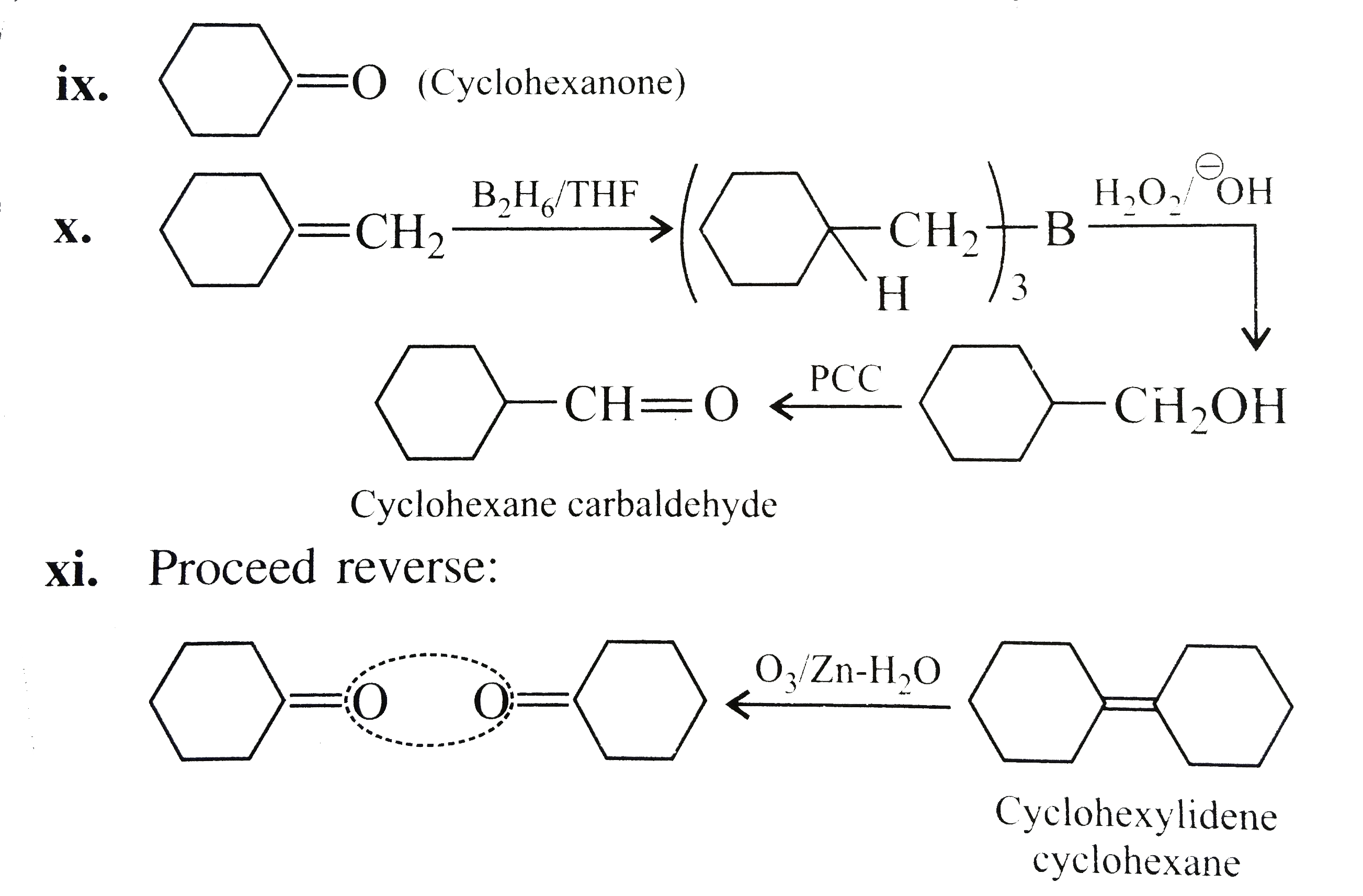
|
|
| 14. |
Complete dissociation of ZnCl_2 gives: |
|
Answer» 3 ions |
|
| 16. |
Completeand rewrite the balanced chemical equation for the following reactions : (a) 1-chloro-2, 4-dinitro benzene underset((368K,H^(+)))overset("aq.alkali")rarr ? (b) Benzaldehydeoverset("50% KOH")rarr ? Acetone + phenylhydrazine overset(H^(+))rarr? |
Answer» SOLUTION :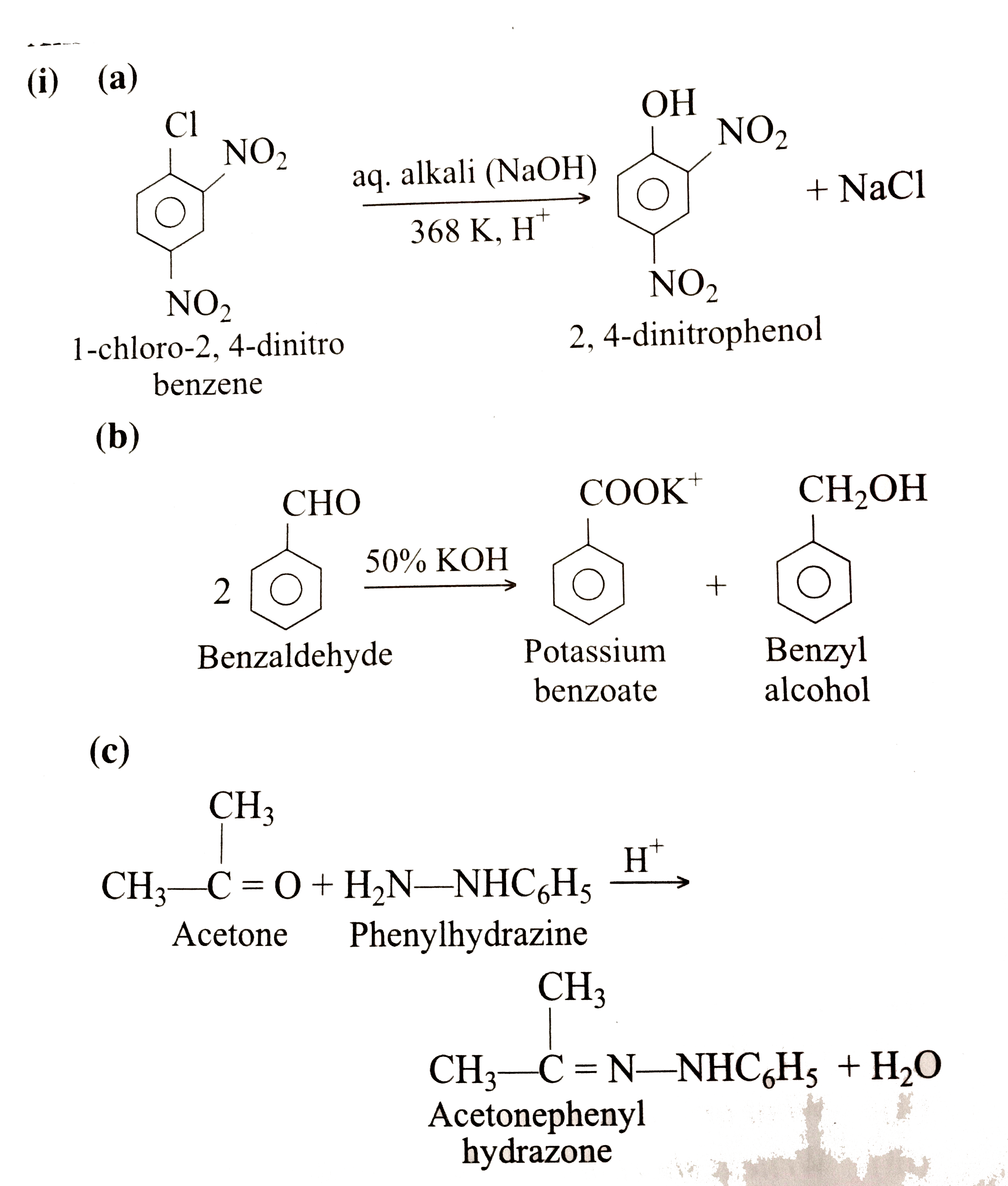
|
|
| 17. |
Complete and name the following reactions : (a) RNH_(2)+CHCl_(3)+3KOH rarr (b) RCONH_(2)+Br_(2)+4NaOH rarr |
|
Answer» SOLUTION :(a) `RNH_(2)+CHCl_(3)+3KOH rarr RNC+3KCl+3H_(2)O` <BR>This is KNOWN as carbylamine reaction. (b) `RCONH_(2)+Br_(2)+4NaOH rarr RNH_(2)+2NaBr+Na_(2)CO_(3)+2H_(2)O` This reaction is known as Hoffmann bromamide reaction. |
|
| 18. |
Complete and balance the following reactions: (a) FeSO_(4)+H_(2)O+O_(2) to , (b) FeCl_(3).6H_(2)O+CH_(3)-underset(OCH_(3))underset(|)overset(OCH_(3))overset(|)C-CH_(3) to (C ) CU(OH)_(2)+(NH_(4))_(2)SO_(4)to,(d)CuCl_(2).2H_(2)Ounderset(Strong)undersettoDelta (e ) AgNO_(3)(excess)+I_(2)+H_(2)O to, (f) KMnO_(4)+Na_(2)S_(2)O+H_(2)O to (g) K_(2)Cr_(2)O_(7)+H_(2)SO_(4)+SO_(2)+H_(2)O undersetto("Temptlt70^(@)C) |
|
Answer» |
|
| 19. |
Complete and name the following reaction. |
Answer» Solution :The carbonyl group of ALDEHYDES and ketones is reduced to `CH_(2)` group on treatment with zinc - amalgam and concentrated hydro CHLORIC acid is known as CLEMMENSEN REDUCTION. 
|
|
| 20. |
Complete and balance the following reactions. (i) ""_(92)Th^(234) rarr........ + 7" "_(2)He^(4)+6 " "_(-1)beta^(0) (ii) ""_(92)U^(235)+ " "_(0)n^(1) rarr........ + " "_(52)Te^(137)+6 " "_(40)Zr^(92) (iii) ""_(34)Se^(86) rarr2 " "_(-1)e^(0)+........ + |
|
Answer» |
|
| 21. |
Complete and balance the following equations: CH_3 NH_2+HNO_2to |
| Answer» SOLUTION :`CH_3 NH_2+HNO_2 toCH_3 OH +N_2+H_2 O` | |
| 22. |
Complete and balance the following equations: C_2 H_5 NH_2 +CH_3 COCl to "…. +…….." |
| Answer» SOLUTION :`C_2 H_5NH_2+CH_3 COClto C_2 H_5 UNDERSET(H) underset(|)(N) -COCH_3 +HCL` | |
| 23. |
Complete and balance the following equations : (b) KMnO_(4)overset(heat ) (to) |
| Answer» SOLUTION :`( b )2KMnO_(4)OVERSET( heat) (to)K_(2) MnO_(4)+ MnO_(2) + O_(2)` | |
| 24. |
Complete and balance the following equations : (a) Zn + Fe_(2)(SO_(4))_(3) rarr ? + ? (b) CuSO_(4) overset("heat")rarr ? + ? (c) AI + conc. H_(2)SO_(4) rarr ? + ? + ? (d) AI_(2)O_(3) + C + N_(2) overset("heat")rarr ? + ? (e) Pb + O_(2) + H_(2)O rarr ? |
|
Answer» Solution :(a) `ZN + Fe_(2)(SO_(4))_(3) RARR ZnSO_(4) + 2FeSO_(4)` (B) `CuSO_(4)overset(Delta)rarr CUO + SO_(3)` (c) `2AI + conc. 6H_(2)SO_(4) rarr AI_(2)(SO_(4))_(3) + 3SO_(2) + 6H_(2)O` (d) `AI_(2)O_(3) + 3C + N_(2) overset(Delta)rarr 2AIN + 3CO` (e) `2Pb + O_(2) + 2H_(2)O rarr 2Pb (OH)_(2)` |
|
| 25. |
Complete and balance the following equations: (a) Mg(HCO_(3))_(2) + Ca (OH)_(2) rarr MgCO_(3) + …..+ H_(2)O (b) MgO + CaC_(2) rarr Mg + ….......+ 2C (C)Be(OH)_(2) + NaOH rarr …........ + CO_(2) (e ) BeCl_(2) + LiAlH_(4) rarr …....... + LiCl + .......... (f) CaO + C rarr ................ + CO rarr ......... + .......... |
|
Answer» Solution :(a) `Mg(HCO_(3))_(2) + Ca (OH)_(2) rarr MgCO_(3) + CaCO_(3) + H_(2)O` (b) `MgO + CaC_(2) rarr Mg + CaO + 2C ` (C)Be(OH)_(2) + NAOH rarr Na_(2)BeO_(2) + CO_(2) (E ) `BeCl_(2) + LiAlH_(4) rarr 8BeH_(2) + LICL + AlCl_(3) ` (f) `CaO + C rarr CaC_(2) + CO + N_(2)rarr CaCN_(2) + C ` |
|
| 26. |
Complete and balance the following equations : (a) MnO_(4)^(2-) + H^(+) to |
| Answer» Solution :`(a ) 3MnO_(4)^(2-)4H^(+) to 2MnO_(4)^(-)+ MnO_(2)+ 2H_(2)O` | |
| 27. |
Complete and balance the following equation: (i). K_2Cr_2O_7+…+4H_2SO_4toK_2SO_4+Cr_2(SO_4)_3+7H_2O+3I_2 (ii). KK_2Cr_2O_7underset(400^@C)overset(triangle)to (c). KMnO_4underset(200^@C)overset(triangle)to (iv). MnO_4^(ɵ)+AsO_3^(ɵ)+H^(o+)to (v). K_(2)Cr_(2)O_(7)+overset(NH_(4)Cl)to |
|
Answer» SOLUTION :(i). `Cr_2O_7^(2-)+6Ii^(ɵ)+14H^(o+)to2Cr^(3+)+7H_2O+3I_2` (ii). `K_2Cr_2O_7overset(Delta)toK_2CrO_4+Cr_2O_3+O_2` (iii). `KMnO_4overset(Delta)toK_2MnO_4+MnO_2+O_2` (DISPROPORTIONATION) (iv). `2MnO_4^(ɵ)+5AsO_3^(ɵ)+6H^(o+)to2Mn^(2+)+3H_2O+5AsO_4^(3-)` (V). `K_2Cr_2O_7+2NH_4C"l" to(NH_4)_2Cr_2O_7+2KCl` 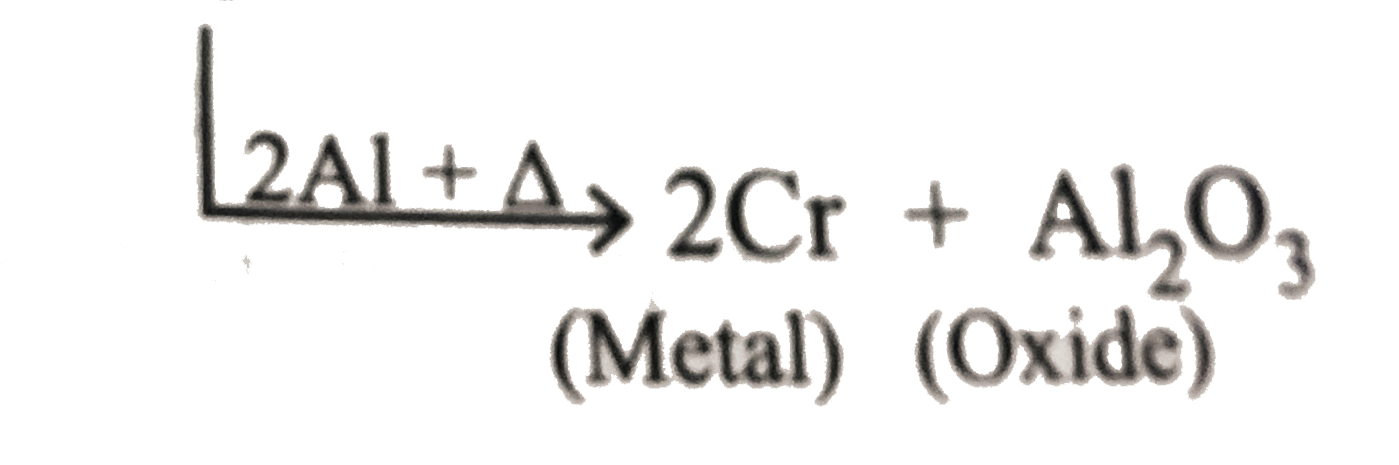
|
|
| 28. |
Complete and balance the following chemtcel MnO_(4)^(-)+H_(2)+I^(-)to |
| Answer» SOLUTION :`2MnO4^–+ H2O + I_– to 2 MnO_2 + 2OH_–^ + IO3_–` | |
| 29. |
Complete and balance the following chemtcel Fe^(2+) +MnO_(4) ^(-) +H^(+) to |
| Answer» Solution :`5Fe^(2+) + MNO^(– 4) + 8H^+ toMn^(2+) + 4H_2O + 5Fe^(3+)` | |
| 30. |
Complete and balance the following chemical equations : MnO_(4)^(-)+H_(2)O+I^(-)to |
| Answer» SOLUTION :`2MnO_(4)+H_(2)O+Ito2MnO_(2)+2OH+IO_(3)` | |
| 31. |
Complete and balance the following chemical equations : MnO_(4)^(-)+H^(+)+I^(-)to |
| Answer» SOLUTION :`2MnO_(4)^(-)+16H^(+)+10I^(-)to2Mn^(2+)+8H_(2)O+5I_(2)` | |
| 32. |
Complete and balance the following chemical equations : (i) underset("(cold + dil.)")(NaOH+)Cl_(2)to (ii) I^(-)(aq)+H_(2)O(l)+O_(3)(g)to |
|
Answer» SOLUTION :(i) `2NaOH+Cl_(2)OVERSET("cold+Dilute")(to)NaCl+NaClO+H_(2)O` (ii) `I^(-)(aq)+H_(2)O(l)+O_(3)(g)to2OH^(-)(aq)+I_(2)(s)+O_(2)(g)` |
|
| 33. |
Complete and balance the following chemical equations : (a) Fe^(2+)+MnO_(4)^(-)+H^(+)to (b) MnO_(4)^(-)+H_(2)O+I^(-)to |
|
Answer» Solution :(a) `5Fe^(2+)+MnO_(4)^(-)+8H^(+)toMn^(2+)+4H_(2)O+5Fe^(3+)` (B) `2MnO_(4)^(-)+H_(2)O+I^(-)to2MnO_(2)+2OH^(-)+IO_(3)^(-)` |
|
| 34. |
Complete and balance the equation: very dilute HNO_3 + Fe rarr |
| Answer» SOLUTION :`10HNO_3 + 4Fe RARR 4Fe(NO_3)_2 + NH_4NO_3 + 3H_2O` | |
| 35. |
Complete and balancethe following equations: CuSO_4 + PH_3 rarr _____+ 3H_2SO_4 |
| Answer» SOLUTION :`3CuSO_4 + 2PH_3 RARR Cu_3P_2 + 3H_2SO_4` | |
| 36. |
Complete and balance the equation: P_4 + H_2O + NaOH rarr______+______ |
| Answer» SOLUTION :`P_4 + 3H_2O + 3NaOH RARR 3NaH_2PO_2 + PH_3 UARR` | |
| 37. |
Complete and balance the equation: Very dilute HNO_3+ Cu rarr |
| Answer» SOLUTION :`8HNO_3+3Curarr 3Cu(NO_3)_2 + 2NO + 2H_2O` | |
| 38. |
Complete and balance the chemical equation : BrO_3^(-) + F_2 + OH^(-) to |
| Answer» SOLUTION :`BrO_3^(-) + F_2 + 2OH^(-) to BrO_4^(-) + 2F^(-) + H_2O ` | |
| 39. |
Complete and balance the chemical equation: BrO_(3)^(-)+ F_2 + OH^(-) rarr |
| Answer» SOLUTION :`BrO_(3)^(-)+ F_2 + 2OH^(-) RARR BrO_(4)^(-) + 2F^(-) + H_2O` | |
| 40. |
Compete the following reactions: a. b. c. d. e. |
Answer» SOLUTION :a.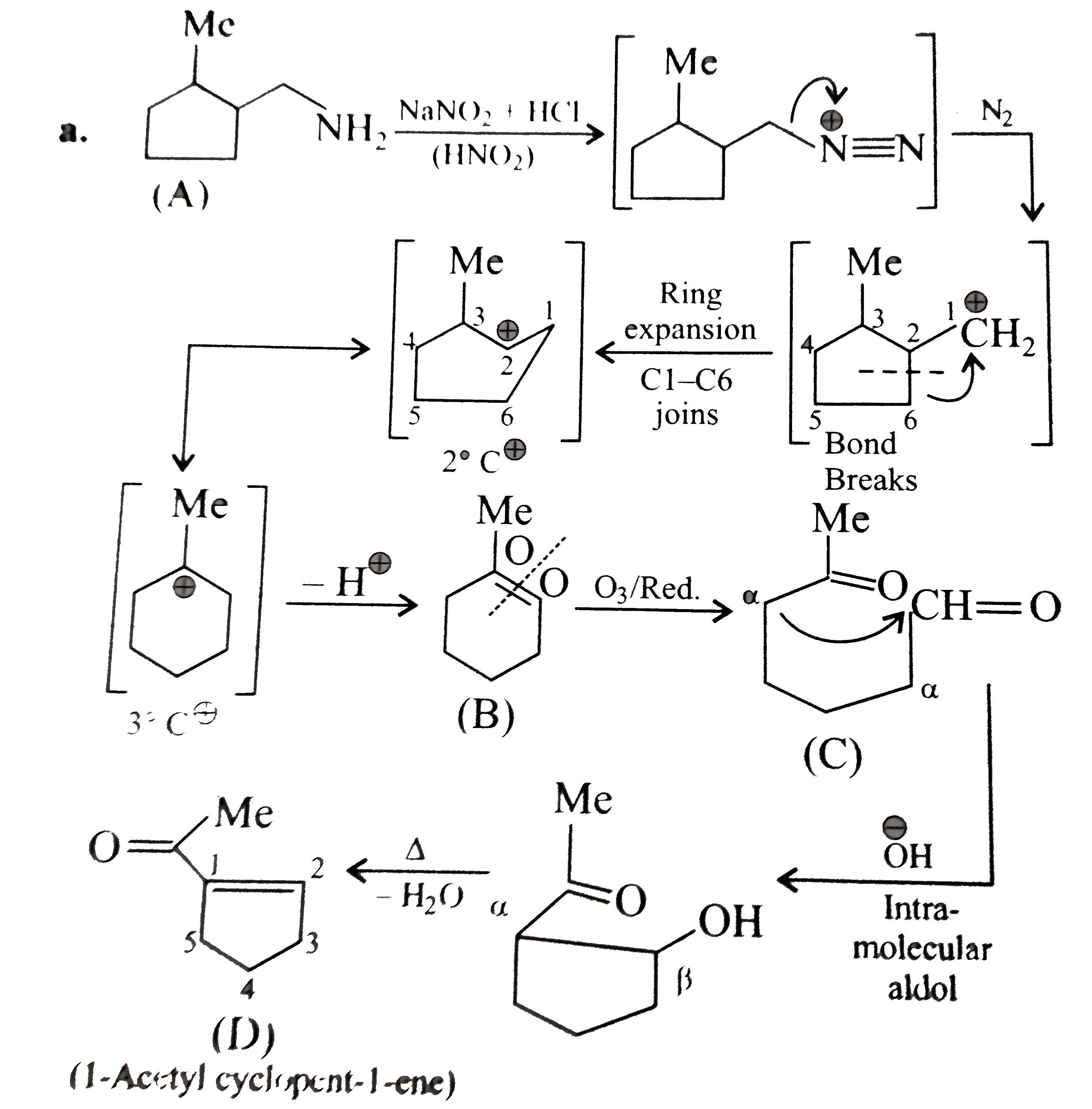 b.LDA (a bulky strong base) ABSTRACTS less hindered `alpha`-H atom to FORM lithium enolate which adds to C of `(CH=O)` group, to form `BETA`-hydrogen ketone, limiting to only one crossed aldol product. On the other hand, with a weak base (NaOH), two crosed products are formed. 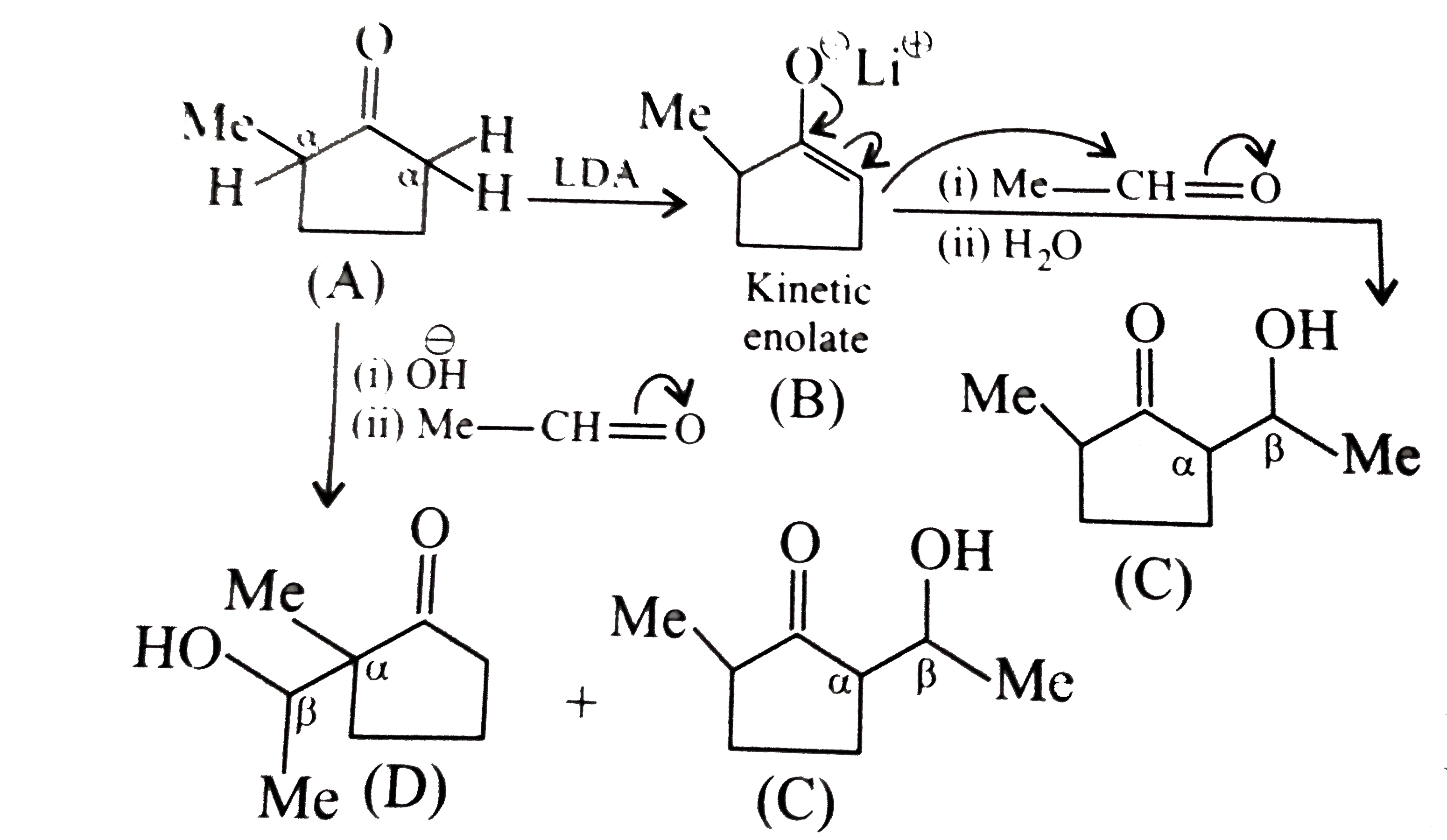 c. 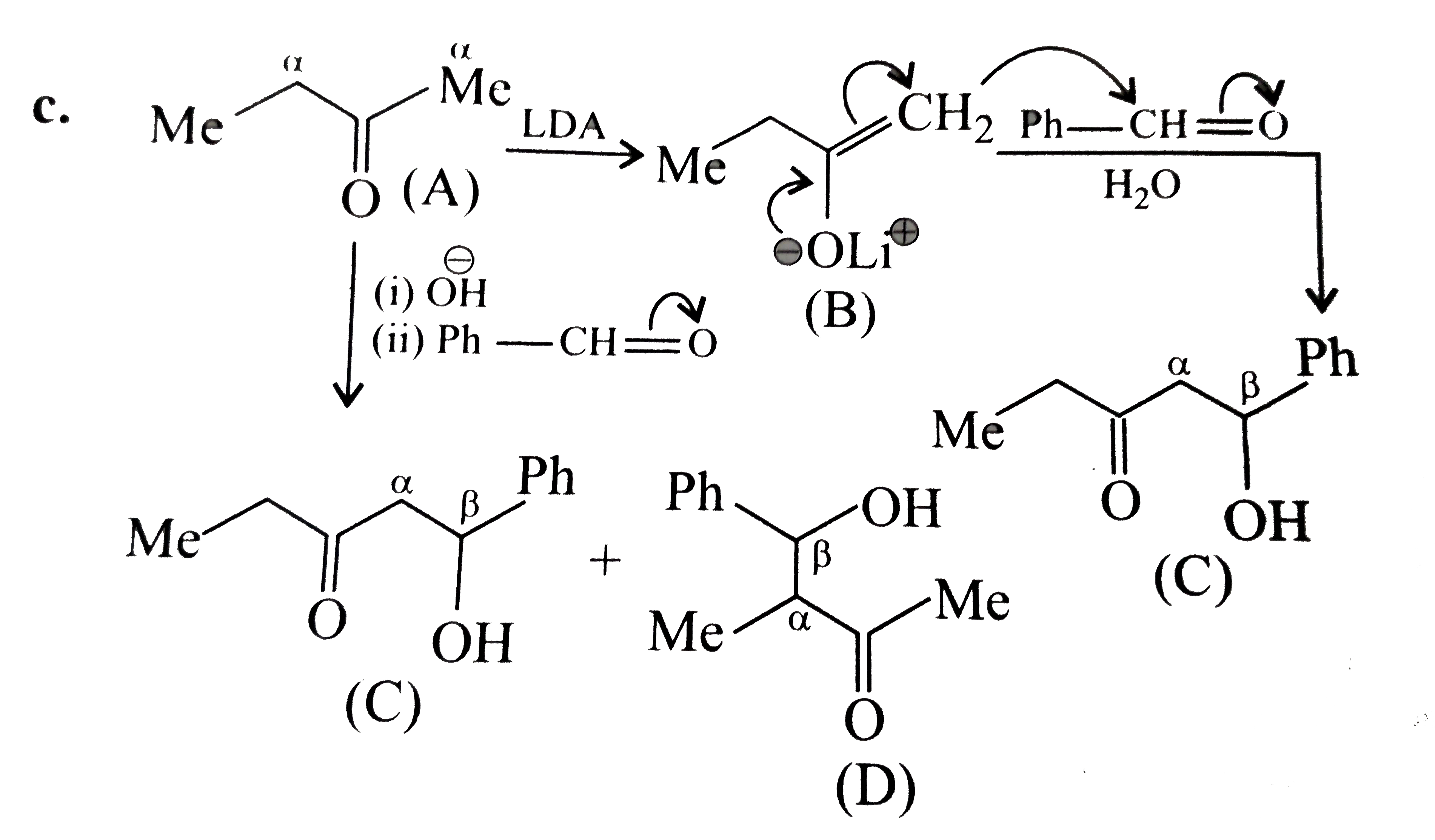 d. 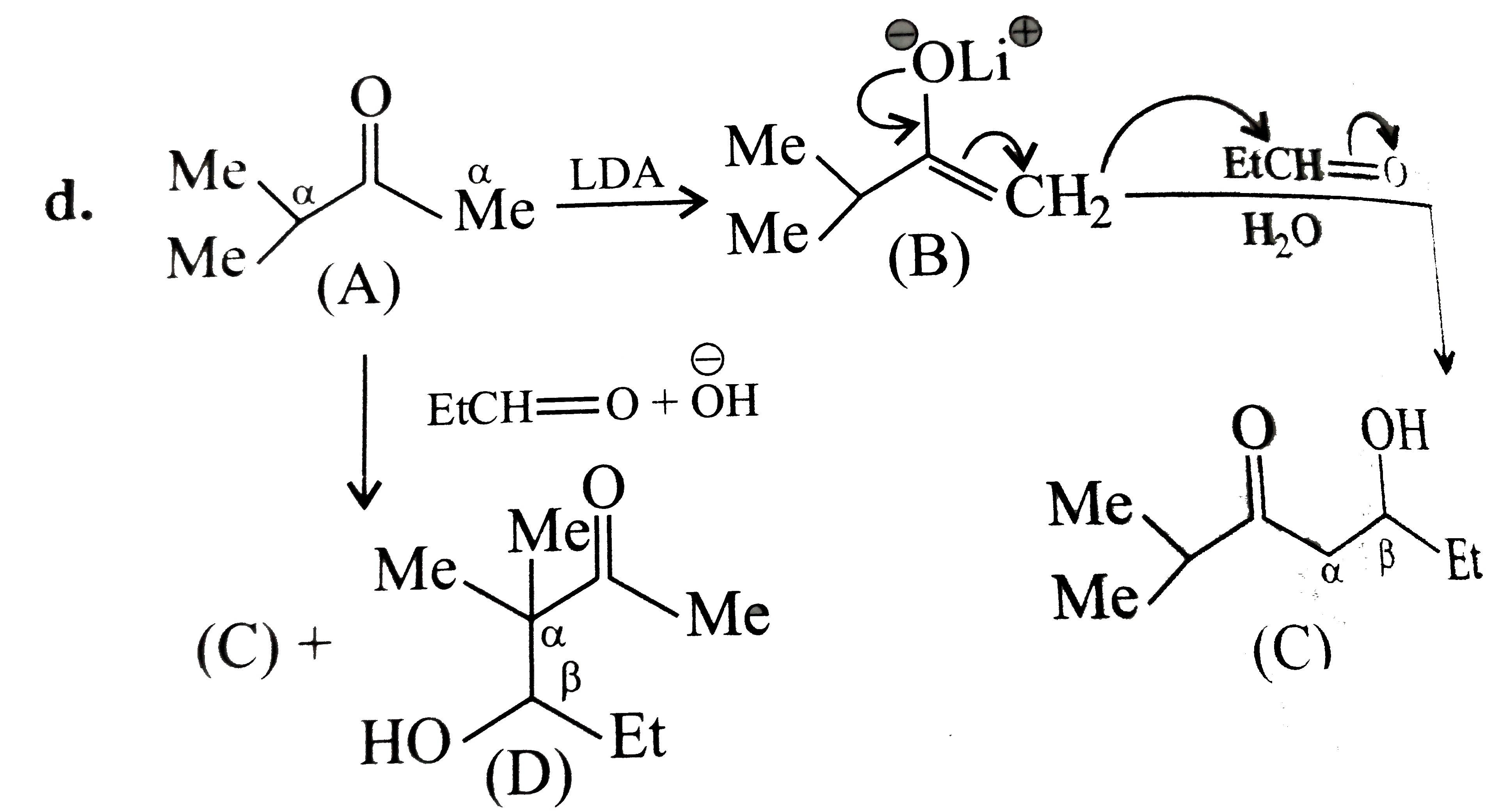 e. 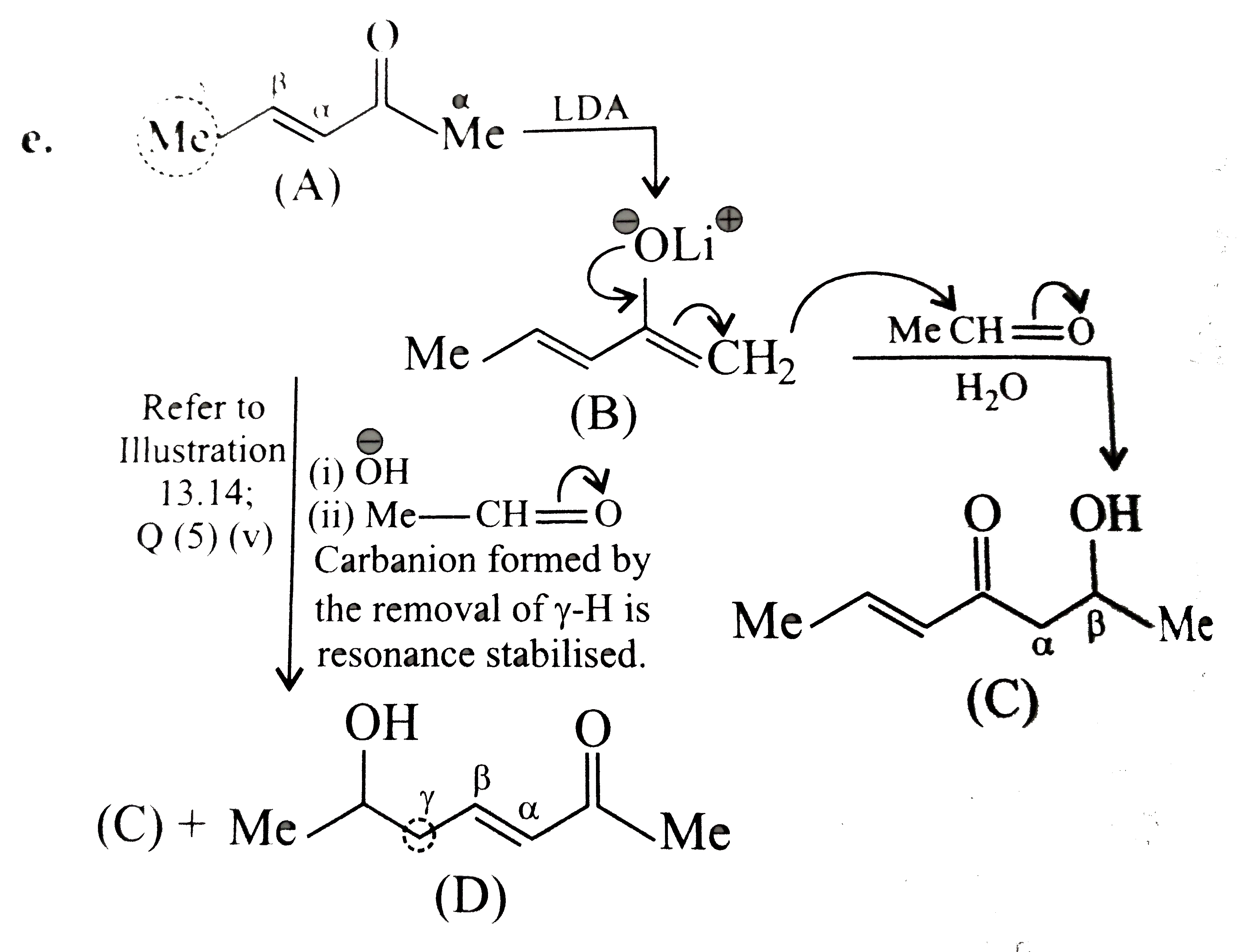
|
|
| 41. |
Complementary colour of green light of wavelength 5000 A^(@) is |
| Answer» Solution :purple | |
| 42. |
Complete and balance C_(2)H_(5)OH overset(250^(@)C)underset(Al_(2)O_(3))rarr ? |
| Answer» Solution :`underset("Ethanol") (2C_(2)H_(5)OH) overset(250^(@)C)underset(Al_(2)O_(3)) to C_(2)H_(5)- O - underset("ETHOXY ETHANE")(C_(2)H_(5)) + H_(2)O` | |
| 43. |
Compete the following reaction. CH_(3) underset(Z)underset(underset(HBr)(CH))=CH_(2) underset("Perioxide")overset(HBr)to X underset("Acetone")overset(NaI)to Y |
|
Answer» Solution :`CH_(3)UNDERSET(Z)underset(|)(underset(HBR)(CH)=CH_(2) underset("PEROXIDE")OVERSET(HBr)to underset(("Bromopropane"))(CH_(3)-CH_(2)-CH_(2)Br) (X)underset("Acetone")overset(NaI)to underset("IODOPROPANE") (CH_(3)CH_(2)CH_(2)-I) (Y)` `underset("2- Bromopropane")(CH_(3)-underset(Br(Z))underset(|)(CH)-CH_(3)` |
|
| 44. |
Comparing Al, B, Ga and Tl, which one exhibits +1 oxidation state? |
| Answer» Solution :Tl | |
| 45. |
Comparing La(OH)_(3) and Lu(OH)_(3), which is more basic and explain why? |
|
Answer» Solution :(i) Due tolanthanidecontrationthe size of`La^(3+)` ionsdecreasesregularlywithincreasesin atomicnumber . (ii)According toFajan'sruledecrease insizeof `Ln^(3+)` ionsincreasethe covalentcharacterand decreasesthe basiccharacterbetween`Ln^(3+)` & `OH^(-)` ion in`Ln (OH)_(3)`. (iii)Sincethe ORDEROF size`Ln^(3+)` ionsare `La^(3+) gt CE^(3+) ...... gtLu^(3+)` (iv) Hence `La(OH)_(3)` is the strongestgase while`Lu(OH)_(3)` is theweakest base. |
|
| 46. |
Compelte the following reactions by identifying B and C: (ii) CH_(3)-overset(CH_3)overset(|)underset(CH_3)underset(|)C-underset(O)underset(||)C-CH_(3)+NaOH to B+C. |
| Answer» Solution :B' is `CH_(4)` and 'C' is `CH_(3)-OVERSET(CH_3)overset(|)UNDERSET(CH_3)underset(|)C-underset ( O) underset(||)C-O N a`. | |
| 47. |
Compared with alkaline earth metals, the alkali metals exhibit. |
|
Answer» SMALLER IONIC radii |
|
| 48. |
Compared with alkaline earth metal the alkali metals exhibit |
|
Answer» SMALLER IONIC radii |
|
| 49. |
Compared to the osmotic pressure of 0.1 M urea, the osmotic pressure of 0.01 M KCl will be ( assume 100 % dissociation) |
|
Answer» <P>APPROXIMATELY 1/5 or `p_(2)=(0.01xx2)/(0.1) pi = pi//5` |
|