

Saved Bookmarks
This section includes 7 InterviewSolutions, each offering curated multiple-choice questions to sharpen your Current Affairs knowledge and support exam preparation. Choose a topic below to get started.
| 1. |
{:("Column I","Column II"),((A)underset(3.5"mole")(Sn^(+2))+underset(1.2"mole")(MnO_4^(-)("acidic")),(p)"Amount of oxidant available decides the number of electrons transfer"),((B)underset(8.4"mole")(H_2C_2O_4)+underset(3.6"mole")(MnO_4^(-)("acidic")),(q)"Amount of reductant available decides the number of electrons transfer"),((C )underset(7.2"mole")(S_2O_3^(-2))+underset(3.6"mole")(l_2),(r)"Number of electrons involved per mole of oxidant gt Number of electrons involved per mole of reductant"),((D )underset(9.2"mole")(Fe^(+2))+underset(1.6"mole")(Cr_2O_7^(-2)"(acidic)"),(s)"Number of electrons involved per mole of oxidant lt Number of electrons involved per mole of reductant"):} |
|
Answer» Eq of `MnO_4^(-)` =Moles xv.f=1.2x5=6 Since `MnO_4^(-)`(O.A) is the LR, so the amount of oxidant available DECIDES the number of ELECTRON transfer. Also, electron involved per mole of OA `(5)gt` electron involved per mole of RA(2). (B)Eq of `H_2C_2O_4`=Moles x v.f. =8.4x2=16.8 Eq of `MnO_4^(-)` =Moles x v.f=3.6x5=18 Since `H_2C_2O_4`(RA) is the LR, so the amount of reductantavailable decides the number of electron transfer. Also, electron involved per mole of `OA (5)gt` electron involved per mole of RA(2). (C )Eq of `S_2O_3^(2-)`=Moles x v.f. =7.2x1=7.2 Eq of `I_2` =Moles x v.f=3.6x2=7.2 Since `S_2O_3^(2-)`(RA)and `I_2` (OA) both completely get consumed, so both the amount of REDUCTANT and oxidantdecides the number of electron transfer. Also, electron involved per mole of `OA (2)gt` electron involved per mole of RA(1). (D)Eq of `Fe^(2+)`=Moles x v.f. =9.2x1=9.2 Eq of `Cr_2O_7^(2-)` =Moles x v.f=1.6x6=9.6 Since `Fe^(2+)`(RA) is the LR, so the amount of reductantavailable decides the number of electron transfer. Also, electron involved per mole of `OA (6)gt` electron involved per mole of RA(1). |
|
| 2. |
{:("COLUMN-I","COLUMN-II"),((A)"Thermal stability",(p)H_(2)Te gt H_(2)Se gt H_(2)S gt H_(2)O),((B)"Acidic nature",(q)H_(2)O gt H_(2)S gt H_(2)Se gt H_(2)Te),((C )"Boiling points",(r )H_(2)S lt H_(2)Se lt H_(2)Te lt H_(2)O),((D) angleM MH " Bond angle",(s) H_(2)S gt H_(2)Se gt H_(2)Te=H_(2)Po):} |
|
Answer» B) As the size of chalgcogen increasesH-X bond strengthdecrease and gives `H^((+))` in aqueoussolution.`H_(2)Te gt H_(2)Se gt H_(2)S gt H_(2)O` C) `H_(2)O` due to intermolecular H-bonding `:. H_(2)Te` - due to increase in molecular mass. `:.` ORDER is `H_(2)S lt H_(2)Se lt H_(2)Te lt H_(2)O` D) `H_(2)S gt H_(2)Se gt H_(2)Te = H_(2)Po` |
|
| 3. |
{:("COLUMN-I","COLUMN-II"),((A)"Sulphur"(S_(8)),(p)"Oleum"),((B)"Sulphuric acid",(q)"Vulcanizing rubber"),((C )"Fuming sulphuric acid",(r )"Marshall's acid"),((D)"Peroxy disulphuric acid",(s) sp^(3)" only"):} |
|
Answer» B) The central atom s-undergo `sp^(3)` hybridisation C) fuming sulphuric acid is called OLEUM `H_(2)S_(2)O_(7)`. D) `H_(2)S_(2)O_(8)` - Marshall.s acid, the sulphur in undergo `sp^(3)` only |
|
| 4. |
{:("COLUMN-I","COLUMN-II"),((A)"Sulphur dioxide",(p)"Laboratory reagent used during salt analysis"),((B)"Oxygen",(q)"Detection of position double bond in organic compound"),((C )"Ozone",(r )"Antichlor"),((D)"Hydrogen sulphide",(s)"Paramagnetic"):} |
|
Answer» B) `O_(2)` paramagenticexplained with M.O.T. C) Detection of DOUBLE bonds position in organic chemistryby ozonolysis D) Used to IDENTIFY the cations in the group analysis. |
|
| 5. |
{:(,"Column I",,"Column II",),((A),"Sodium digydrogen trpolyphosphate",(P),"Compound has P-O-P linkage",),((B),"Sodium dihydrogen hypophosphate",(Q),"Phosphorous atom has only odd number oxidation state",),((C ),"Sodium hydrogen pyrophosphite",(R ),"It has not" p pi - p pi " bond",),(,,(S),"Central atom involve 'd' orbital in bonding",):} |
Answer» 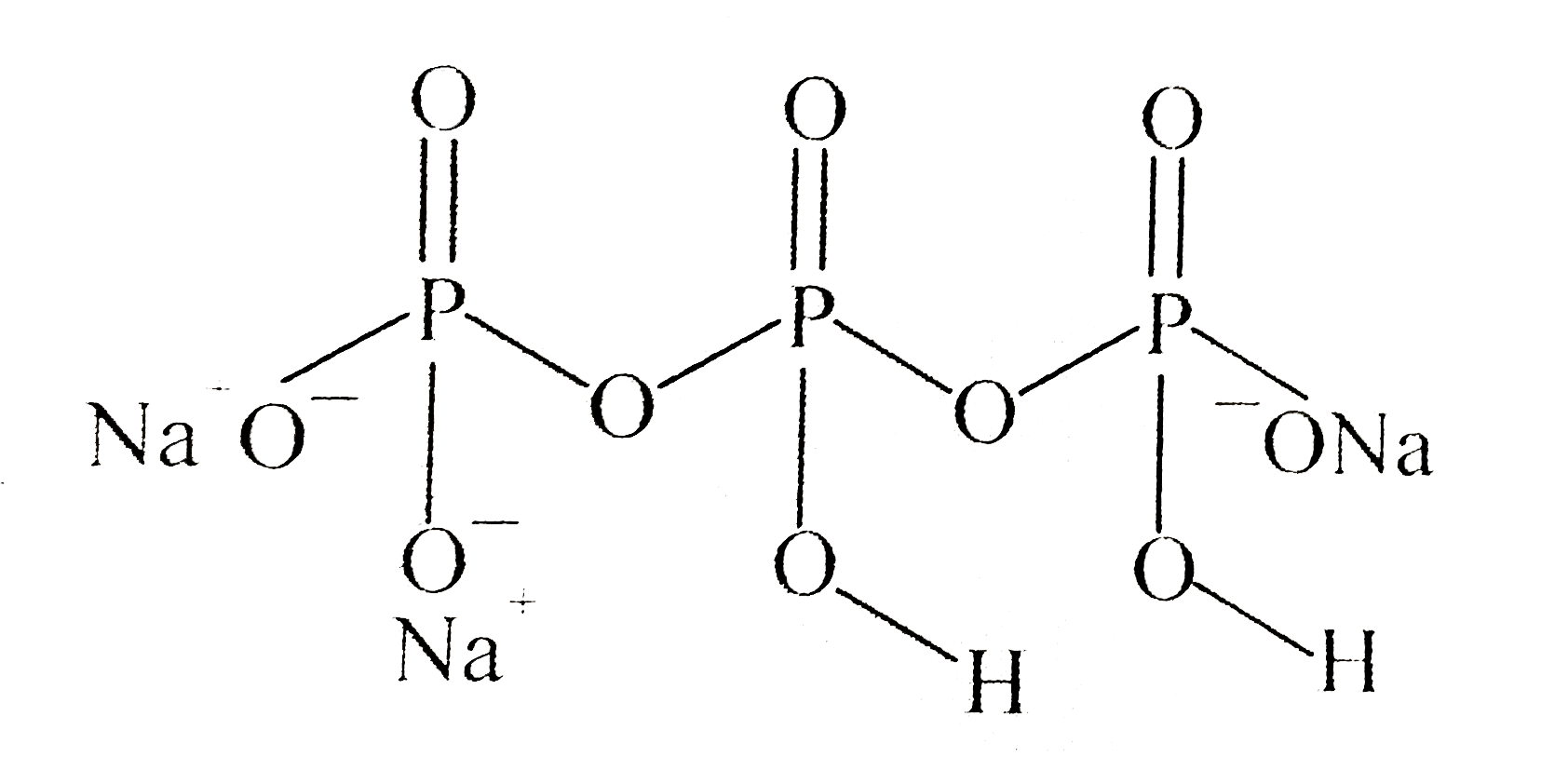 (B) `Na_(2)H_(2)P_(2)O_(6)` 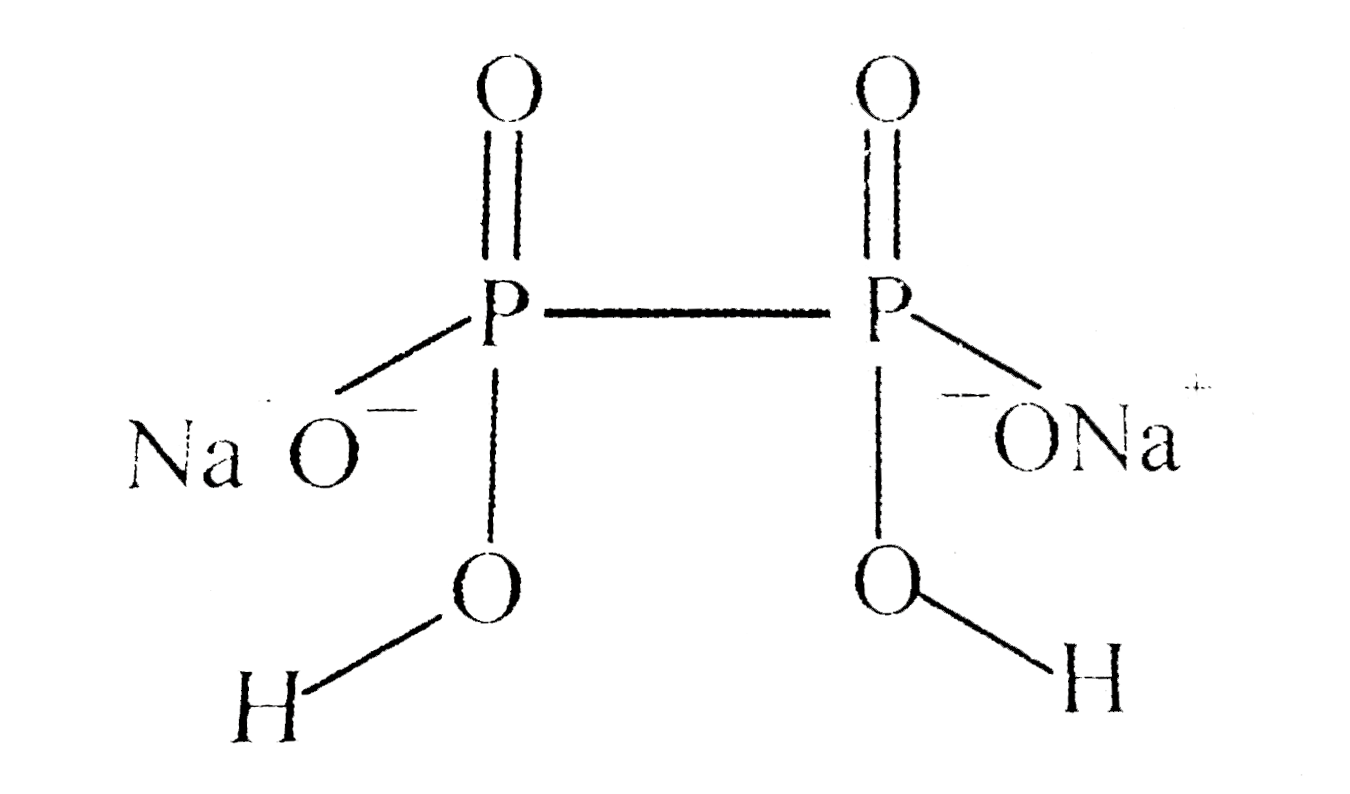 (C ) `NaH_(3)P_(2)O_(5)` 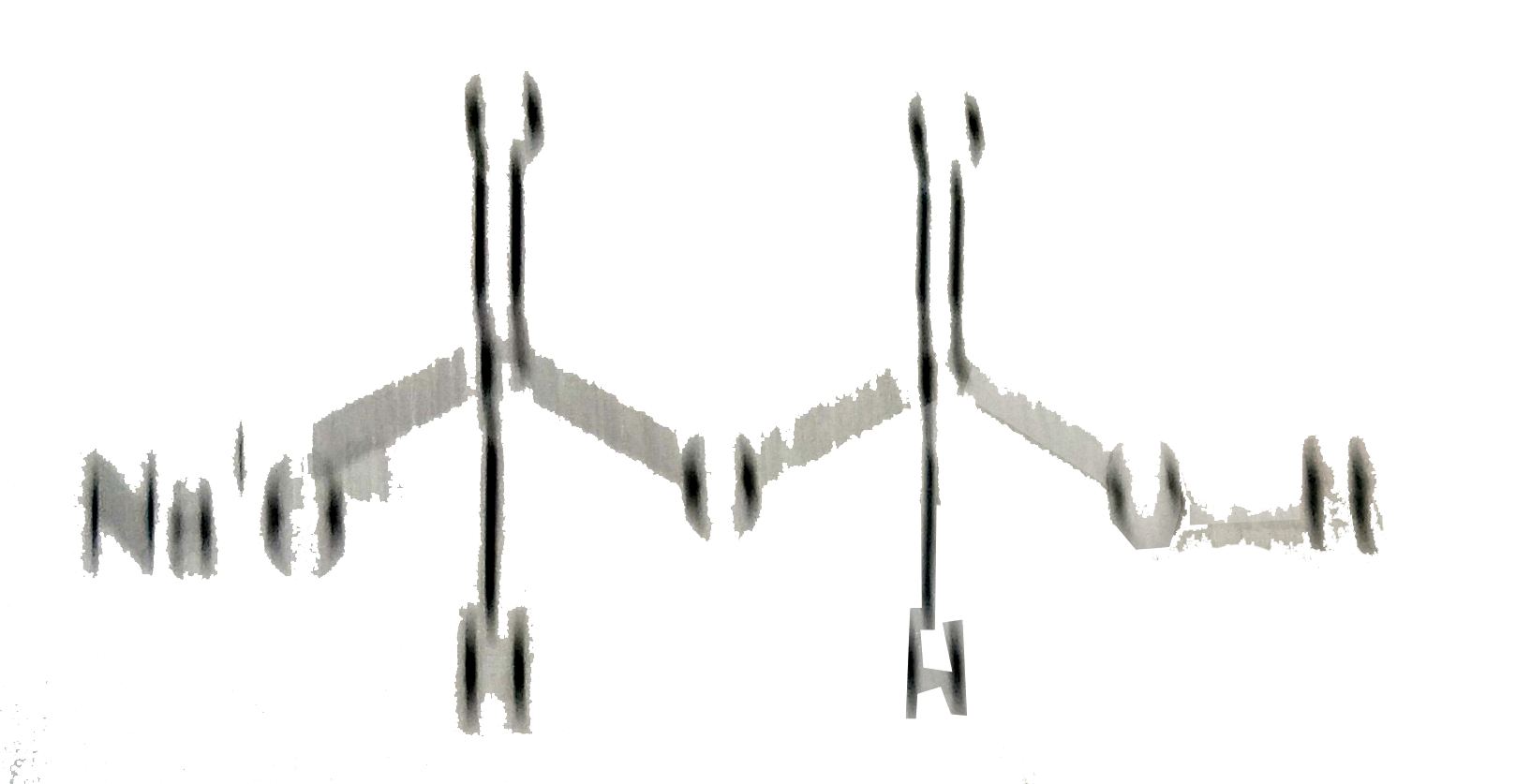
|
|
| 6. |
{:("COLUMN-I","COLUMN-II"),((A)SO_(2),(p)"Acidic nature"),((B)SO_(3),(q)"Oxidising agent"),((C )O_(3),(r )"Reducing agent"),((D)O_(2)^(-2),(s) "Bleaching agent"):} |
|
Answer» `SO_(2)+2H_(2)O+Cl_(2) to 2HCl+H_(2)O` (REDUCING agent) `2NaOH+SO_(2) to Na_(2)SO_(3)+H_(2)O` (acidic nature) `SO_(2)+2H_(2)O to H_(2)SO_(4)+2(H)` (BLEACHING agent) B) `SO_(3)+H_(2)O to H_(2)SO_(4)` (Acidic nature) `SO_(3)+2HBr toH_(2)O+Br_(2)+SO_(2)` (Oxidisingagent) C) `PbS +4O_(3) to PbSO_(4)+4O_(2)` (OXIDISING agent) `BaO_(2)+O_(3) to BaO+O_(2)` (Reducing nature) The bleaching action of ozone is to its oxidizing action on the organic matter. Coloured substance +(0), -1 COLOURLESS. D) Peroxide ion act as Bleaching agent. |
|
| 7. |
{:("Column-I","Column-II"),((A)sigma_(2s), "p0"),((B)sigma_(2p_x)^**, "q1"),((C )pi_(2p_x)^**, "r2"),((D)pi_(2p_y)^**, "sgerade"):} |
|
Answer» |
|
| 8. |
{:("COLUMN-I","COLUMN-II"),((A)SO_(2),(p)"+2 and '0' states of 'S' "),((B)H_(2)S,(q)"Trimer solid"),((C )SO_(3), (r )"Reductant"),((D)S_(6)O,(s)"Oxidant"),(,(t)sp^(2)"sulphur"):} |
|
Answer» B-r - `H_(2)S` - It act as only oxidant C-q,s,t - `SO_(3)` - In the solidstate it EXIST as Trimer `(S_(3)O_(9))`. It act as oxidant and undergo `sp^(2)` - hybridization. D-p,r,s,t |
|
| 9. |
{:("Column I","Column II"),((A)"Sheet silicate",(p)"Contain Si-O-Si bond"),((B)"Silicone",(q)"General formula" (SIO_3)_(n)^(-2n)),(( C)"Cyclic silicates",(r)Si_2O_7^(-6)),((D)"Pyro silicate",(s)(Si_4O_11)_n^(-6n)):} |
|
Answer» (B)SILICONE `to` CONTAIN Si-O-Si bond (C )CYCLIC silicate `to underset((SiO_3)_n^(-2N))("General formula")` (D)Pyro silicate `Si_2O_7^(-5)` |
|
| 10. |
{:("COLUMN-I","COLUMN-II"),((A)S_(2)Cl_(2),(p)"gives mustard gas with "C_(2)H_(4)),((B)SF_(6),(q)"gives dibasic acid on hydrolysis"),((C )SCl_(4),(r )"uniform bond angles"),((D)SCl_(2),(s) "Disproportionates on hydrolysis"):} |
|
Answer» `S_(2)Cl+2H_(2)O to 2HCl+SO_(2)+3S` B) `SF_(6)` - uniform bond angles (Octahedral) C) `SCl_(4)+4H_(2)O to H_(4)SO_(4)+4HCl` D) `2S+Cl_(2)to S_(2)Cl_(2) underset("EXCESS")overset(Cl_(2))to 2SCl_(2)` `CH_(2)=CH_(2)+S_(2)Cl_(2) to [{:(CH_(2)-CH_(2)-Cl),(|),(S),(|),(CH_(2)-CH_(2)-Cl):}+S]` |
|
| 11. |
{:("Column-I","Column-II"),((A)"Reversible isothermal expansion of an ideal gas",(p)w= -2.303 nRT log (V_2/V_1)),((B)"Reversible adiabatic compression of an ideal gas",(q)PV^(gamma)="constant"),((C )"Irreversible adiabatic expansion of an ideal gas",(r)w= (nR)/((gamma-1))(T_2-T_1)),((D)"Irreversible isothermal compression of an ideal gas",(s)DeltaH=0):} |
|
Answer» W=-2.303 nRT LOG `V_2/V_1` and `DeltaE=DeltaH=0` (as `DeltaT=0`) (B)Reversible adiabatic compression of an ideal gs `PV^(gamma)="constant" and W=(nR(T_2-T_1))/(gamma-1)=(P_2V_2-P_1V_1)/(gamma-1)` ( C )Irreversible adiabatic expansion of an ideal gas `W=(nR(T_2-T_1))/(gamma-1)` (D)Irreversible isothermal compression of an ideal gas `DeltaH=0` (as `DeltaT=0`) |
|
| 12. |
{:("","Column-I","",Column-II),((A),"Resonance",(p),CH_3-CH_2-CH_2-Cl),((B),"Hyperconjugation",(q),CH_3-overset(o)overset(||)C-CH_2-CH_3),((C ),"Electromeric effect",(r),CH_3-CH=CH_2),((D),"Inductive effect",(s),(##FIITJEE_CHE_MB_09_C02_E07_002_Q01##)):} |
| Answer» SOLUTION :`Ararrs, Brarrr,Crarrq,Drarrp` | |
| 13. |
{:(,"Column-I",,"Column-II"),("(a)","Reaction connot be completed in finite time ",,"(p)0"),("(b)","Reaction may be elementary",,"(q) 1"),("(c)",underset("reducing to half of the amount keeps on decreasing")"As reaction proceeds time required for",,(r)0.75),(,,,"(s) 5"):} |
|
Answer» |
|
| 14. |
{:("Column I",,"Column II"),((A)"Rain cloud",(p),"Gel"),((B)"Smoke",(q),"Foam"),((C)"Butter",(r),"Aerosol"),((D)"Soap bubble",(s),"Gas as dispersion medium"):} |
| Answer» | |
| 15. |
{:(,"Column I",,"Column II"),((a),[Pt(NH_(3))ClBrI]^(-),(p),"Square planar"),((b),[Pt(NH_(3))ClBrNO_(2)]^(-),(q),EAN=84),((c),[Pt(NH_(3))Cl(CN)_(2)]^(-),(r),"Linkage isomers are 3"),(,,(t),"Linkage isomers are 4"):} |
|
Answer» (b) `NO_(2)`,-ONO (LINKAGE) (c ) (C,C), (C,N),(N,N) (Linkage) (d) `C_(3),C_(2),N,CN_(2),N_(3)` (Linkage) |
|
| 16. |
{:("COLUMN-I","COLUMN-II"),((A)"Platinum",(p)"Decomposition of bleaching powder"),((B)V_(2)O_(5),(q)"Manufacturing of "HNO_(3)),((C )"Iron",(r )"Manufacturing of "H_(2)SO_(4)),((D)"Cobalt chloride",(s)"manufacturing of "NH_(3)):} |
|
Answer» B) The catalyst USED in manufactureof `H_(2)SO_(4)` is `V_(2)O_(5)` C) The catalyst used in manufacture of `NH_(3)` is Fe. D) The catalyst used in manufacture of `CaOCl_(2)` is `COCl_(2)`. |
|
| 17. |
{:("COLUMN-I","COLUMN-II"),((A)pi:0.1M NaCl,pi_(2):0.1"urea",(p)pi_(1)"is Isotonic to" pi_(2)),((B)pi_(1):0.1M NaCl,pi_(2):0.1M Na_(2)SO_(4),(q) "No net migration of solvent across the membrane"),((C)pi_(1):0.1M NaCl,pi_(2):0.1M KCl,(r)pi_(1)" is hypertonic to" pi_(2)),((D)pi_(1):0.1M CuSO_(4),pi_(2):0.1M "sucrose",(s)pi "si hypoteonic to" pi_(2)):} |
|
Answer» |
|
| 18. |
{:("Column I",,"Column II"),((A)"Physisorption",(p),"Multilayer adsorption"),((B)"Chemisorption",(q),"Weak van der Waals forces"),((C)"Desorption",(r),"Strong covalent forces"),((D)"Occlusion",(s),"Occurs at high temperature"):} |
| Answer» | |
| 19. |
{:("Column I",,"Column II"),((A)"Paint",(p),"Solid as dispersed phase"),((B)"Gem stones",(q),"Solid as despersion medium"),((C)"Cheese",(r),"Liquid as dispersion medium"),((D)"Milk",(s),"Liquid as dispersed phase"):} |
| Answer» | |
| 20. |
{:("COLUMN-I","COLUMN-II"),((A)P_(A)^(0)=200,P_(B)^(0)=300,P=250,X_(A)=0.5),((B)P_(A)^(0)=300,P_(B)^(0)=200,P=275,X_(A)=0.25),((C)P_(A)^(0)=400,P_(B)^(0)=400,P=264,X_(A)=0.33),((D)P_(A)^(0)=400,P_(B)^(0)=100,P=290,X_(A)=0.1):} |
|
Answer» |
|
| 21. |
{:(,"Column I",,"Column II"),(("A"),O_(2)^(-)rarrO_(2)+O_(2)^(2-),(p),"Redox reaction"),(("B"),CrO_(4)^(2-)+H^(+)rarr,(q),"one of the products has trigonal planar structure"),(("C"),MnO_(4)^(-)+NO_(2)^(-)+H^(+)rarr,(r),"dimeric bridged tetrahedral metal ion"),(("D"),NO_(3)^(-)+H_(2)SO_(4)+Fe^(2+)rarr,(s),"disproportionation"):} |
|
Answer» |
|
| 22. |
{:("Column I","Column II"),((A)O_3+H_2O_2 ""to,(p)"Blue"),((B)O_3+"starch KI"" " to,(q)"Tailing" ),(( C)O_3+Hg"" to,(r)HIO_3),((D)O_3+I_2+H_2O" "to,(s)O_2+H_2O):} |
|
Answer» (B)`O_3`+starch KI`to` BLUE (C )`O_3`+Hg `to Hg_2O`(TAILING) (D)`O_3 + I_2 + H_2O to HIO_3` |
|
| 23. |
{:("COLUMN-I","COLUMN-II"),((A)"Oleum",(p)NO.HSO_(4)),((B)"Peroxy disulphuric acid",(q)H_(2)SO_(5)),((C )"Peroxy monosulphuric acid",(r )H_(2)S_(2)O_(8)),((D)"Chamber Crystals",(s)H_(2)SO_(4).xSO_(3)):} |
|
Answer» B) Marshall.s acid= Peroxy disulphuric acid `=H_(2)S_(2)O_(8)` C) Peroxy monosulphuric acid `=H_(2)SO_(5)` D) Chamber CRYSTALS `= NO.HSO_(4)` |
|
| 24. |
{:("COLUMN-I","COLUMN-II"),((A)"Number of "p pi-dpi" type " pi " bondsin "SO_(2),(p)2),((B)"Number of "p pi-dpi" type "pi" bonds in "SO_(3),(q)1),((C )"Number of "p pi-dpi" type "pi" bonds in "H_(2)S_(2)O_(5),(r )4),((D) "Number of "p pi-dpi" type "pi " bonds in "H_(2)S_(2)O_(7) ,(s)3):} |
Answer»  In `SO_(2)` one is `p PI-p pi`, one is `dpi-p pi`. In `SO_(2)` one is `p PI-p pi`, one is `dpi-p pi`.B)  In `SO_(2)` one is ` p pi-p pi`, TWO are `d pi-d pi`. In `SO_(2)` one is ` p pi-p pi`, TWO are `d pi-d pi`. C) 3 D) `H-O-underset(O) underset(||)overset(O)overset(||)S-O-underset(O)underset(||)overset(O)overset(||)S-O-H :. ` No of `p pi-d pi=4` |
|
| 25. |
{:(,"Column I",,"Column II"),(("A"),[Ni(CO)_(4)],(p),"Square planar"),(("B"),[Ni(CN)_(4)]^(2-),(q),"Tetrahedral"),(("C"),[Cu(NH_(3))_(4)]^(2+),(r),"Paramagnetic"),(("D"),[FeCl_(4)]^(2-),(s),"Diamagnetic "):} |
|
Answer» |
|
| 26. |
{:("Column-I","Column-II"),((A)[Ni(CO)_4],(p)"Octahedral paramagnetic"),((B)[NI(CN)_4]^(-2),(q)"Square planar diamagnetic "),((C)[NI(NH_3)_6]^(+2),(r)"Tetrahedral diamagnetic "),((D )[NICl_4]^(-2), (s)"Tetrahedral paramagnetic"):} |
|
Answer» (B)`[Ni(CN)_4]^(-2)to` Square PLANAR diamagnetic (C )`[Ni(NH_3)_6]^(-2)to` Octahedral paramagnetic (D)`[NiCl_4]^(-2)to` Tetrahedral paramagnetic |
|
| 27. |
{:("Column-I","Column-II"),((A)NH_4Cl "in water", (p)"Neutral solution which does not undergo hydrolysis"),((B)CH_3COONa "in water" ,(q)"Cationic hydrolysis"),((C )NH_4CN "in water",(r)"Anionic hydrolysis"),((D)"NaCl in water",(s)"Both Cation and Anionic hydrolysis"):} |
|
Answer» `(B)tor` `CH_3COONa` only `CH_3COO^(-)` will get hydrolysed `( C)TOS` `NH_4CN` Both `NH_4^(o+)` and `CN^(-)` will get hydrolysed `(D)to p` NaCl Neither `NA^(o+)` nor `Cl^(-)` will get hydrolysed |
|
| 28. |
{:("Column I","Column II"),((A)NH_2COONH_4(s)hArr 2NH_3(g)+CO_2(g),DeltaHlt0,(p)"High pressure and low temperature will favour formation of products"),((B)CaCO_3(s)hArr CaO(s)+CO_2(g),DeltaHgt0,(q)"Increases in the amount of any of the product wil definitely favour backward reaction"),((C )N_2(g)+O_2(g)hArr2NO(g),DeltaHgt0,(r)"Increase in temperature and doubling the volume of reaction vessel will cause the equilibrium to shift in similar direction"),((D)2SO_2(g)+O_2(g)hArr 2SO_3(g),DeltaH lt0,(s)"A decrease in temperature will cause decrease in the value of equilibrium constant"),(,(t)"Increase in concentration of reaction the equilibrium is achieved will make the equilibrium shift towards product side"):} |
|
Answer» |
|
| 29. |
{:("Column-I","Column-II"),("(Analysis of Atoms)","(Characteristics)"),((A)"Total number of orbitals with m=0 in "._30 "Zn atom","(p)Number is even"),((B)"Total number of electrons with l=0 in "._12 "Mg atom","(q)Number is odd"),((C )"Maximum number of electrons with l+m=0 in"._17 "Cl atom","(r)Number is same as the number of unpaired electrons in "._25Mn^(2+)"ion"),((D)"Total number of electrons with anticlockwise spin in "._10 "Ne atom","(s)Number is greater than 5 "),(,"(t)Number is less than the number of fully filled orbitals in "._18Ar"atom"):} |
|
Answer» Total number of orbitals with m=0 i.e. 1+1+1+1+1+1+1=7 `._12Mg=1s^2 , 2s^2 , 2p^6 , 3s^2` s-orbitals have l=0 So, number of ELECTRONS =2+2+2=6 `._17Cl^(35)=1s^2 , 2s^2, 2p^6, 3s^2 3p^6` max. noof ELECTRON with l+m=0 will be : for s-orbitals , no of electrons =2+2+2=6 for p-orbitals , max no of electrons =2+2=4 So, max of total electrons=6+4=10 `._10Ne^20 =1s^2 , 2s^2 , 2p^6` 5 electrons will have anticlockwise spin. Number of unpaired electron in`._25Mn^(2+)` ion=`1s^2, 2s^2, 2p^6, 3s^2, 3p^6, 3d^5=5` Number of fully filled orbitals in `._18Ar` ATOM =`1s^2, 2s^2 , 2p^6, 3s^2 , 3p^6 =1+1+3+1+3=9` |
|
| 30. |
{:("COLUMN-I","COLUMN-II"),((A)Na_(2)S_(2)O_(3),(p)NaCl),((B)Na_(2)S_(2)O_(3)+AgNO_(3),(q)Na_(3)[Ag(S_(2)O_(3))_(2)]),((C )Na_(2)S_(2)O_(3)+Cl_(2)+H_(2)O,(r )Na_(2)SO_(4)),((D)Na_(2)S_(2)O_(3)+I_(2),(s) Na_(2)S_(4)O_(6)):} |
|
Answer» B) `2AgNO_(3)+Na_(2)S_(2)O_(3) to Ag_(2)S_(2)O_(3) +2NaNO_(3), Ag_(2)S_(2)O_(3)+H_(2)O to Ag_(2)S+H_(2)SO_(4)` C) `Na_(2)S_(2)O_(3)+Cl_(2)+H_(2)O to Na_(2)SO_(4)+2HCl+S` D) `2Na_(2)S_(2)O_(3)+I_(2) to Na_(2)S_(4)O_(6)+2NaI` |
|
| 31. |
{:("Column I","Column II"),((A)N_2O_4(g)hArr 2NO_2(g)"On increase in volume at constant temperature",(p)"Density of reacting mixture remains constant"),((B)H_2(g)+I_2(g)hArr 2HI(g)"On addition of inert gas at constant P & T",(q)"Density of reacting mixture decreases"),((C )2NO(g)+Br_2(g)hArr 2NOBr(g)"On decrease in pressure at constant temperature ",(r)"Average molar mass of reacting mixture increases"),((D)2ICl_3(g)hArr I_2(g)+3Cl_2(g)","DeltaHgt0"On increase in pressure at constant temperature",(s)"Average molar mass of reacting mixture decreases"),(,(t)"Reaction moves in forward direction"):} |
|
Answer» |
|
| 32. |
{:("COLUMN-I","COLUMN-II"),((A)"Muscle contraction",(p)Zn),((B)"Blue-green algae",(q)Co),((C)"Carboxypeptidase",(r)Ca),((D)"Cyanocobalanine",(s)MO):} |
|
Answer» |
|
| 33. |
{:("COLUMN-I","COLUMN-II"),((A)"n-hexane, n-heptane",(p)"Dimerisation"),((B)CO_(2)","H_(2)O,(q)"ionisation"),((C)C_(6)H_(5)COOH"," "Benzene",(r)"Roults law(obey)"),((D)C_(6)H_(5)COOH"," H_(2)O,(s)"Henrys law(obeys)"):} |
|
Answer» |
|
| 34. |
{:("COLUMN-I","COLUMN-II"),((A)[Mn(H_(2)O)_(6)]^(2+),(p)"Paramagnetic"),((B)[Mn(CN)_(6)]^(3+),(q)"Diamagnetic"),((C)[Co(NH_(2))_(6)]^(3+),(r)"High spin complex (or) outer orbital complex"),((D)[Ni(NH_(3))_(6)]^(2+),(s)"Low spin complex (or) inner orbital complex"):} |
|
Answer» |
|
| 35. |
{:("COLUMN-I","COLUMN-II"),((A)"molar elevation constant",(p)(RT_(b)^(2))/(1000L_(v))),((B)"molecular elevation constant",(q)iK_(b)m),((C)"molal elevation constant",(r)(RT_(b)^(2)M)/(1000DeltaH_("rap"))),((D)"Elevation in B.P",(s)(RT_(b)^(0))/(100L_(v))):} |
|
Answer» |
|
| 36. |
{:("Column I",,"Column II"),((A)"Milk",(p),"Aerosol"),((B)"Dust",(q),"Emulsion"),((C)"Cheese",(r),"Gel"),((D)"Froth",(s),"Foam"):} |
| Answer» | |
| 37. |
{:(,"Column - I",,"Column - II"),(A.,"Methanol",1.,"Printing Ink and Stamp pad ink"),(B.,"Ethanol",2.,"Industrial solvent"),(C.,"Glycol",3.,"Beverage"),(D.,"Glycerol",4.,"Anti-freezer in automobile radiator"):} |
|
Answer» `{:(A,B,C,D),(2,3,4,1):}` |
|
| 38. |
{:("Column I","Column II"),("Alkyl—P—toluene sulfonate","Ethanolysis relative"),((A) CH_(3)— CH_(2)— OTs,(P) 10^(10)),((B) H_(2)C=CH-CH_(2)-OTs,(Q)10^(5)),((C) Ph-CH_(2)-OTs,(R)400),((D)Ph-underset(Ph)underset(|)(CH)-OTs,(R) 35),((E)Ph_(3)C-OTs.,(T)1):} |
|
Answer» |
|
| 39. |
Match List-I with List-II and select the correct answer using the codes given below the lists. {:("COLUMN-I","COLUMN-II"),((A)"Engle's sulphur",(p)"Rings, Chair conformation, unstable"),((B)"Sulphur",(q)"Fibrous or rubber like"),((C )"Rhombic sulphur",(r )"Crystalline form yellow crystals"),((D)"monoclinic sulphur",(s) "Puckered "S_(8)" rings crown conformation"):} |
|
Answer» B) Sulphur - FIBROUS or rubber like C) Rhombic sulphur - Crvstalline form yellow crystals D) MONOCLINIC sulphur - Puckered `S_(8)` rings CROWN conformation |
|
| 40. |
{:(,"Column I","Column II"),((A),"Koldbe's electrolysis",(p)"Alkenes"),((B),"Ozonolysis",(q)"Alkenes"),((C ),"Electrophilic substitution",(r)"Alkynes"),((D),"Electrophilic addition",(s)"Arenes"):} |
|
Answer» |
|
| 41. |
{:("Column I",,"Column II"),((A)"Jelly",(p),"Colloidal solution"),((B)"Butter",(q),"Get"),((C)"Foam",(r),"Gas in liquid"),((D)"Curd",(s),"Liquid in solid"):} |
| Answer» | |
| 42. |
{:(,"Column-I",,"Column-II"),((A),"Insoluble in "H_(2)O,,(P)"""Whit phosphorous"),((B),"Insoluble in "CS_(2),,(Q)"""Red phosphorous"),((C),"Soluble in "H_(2)O,,(R)"""Rhombic sulphur"),((D),"Soluble in " CS_(2),,(S)""Br_(2)),(,,,(T)""I_(2)):} |
|
Answer» |
|
| 43. |
{:(,"Column -I",,"Column -II"),((A),H_(3)PO_(3),(p),m=2.79" mol/kg"),((B),20 " vol . of "H_(2)O_(2),(q),M=2.31" mol"L^(-1)),((C),"3 M NaCl solution with "d=1.25 gcm^(-3),(r),1.7 " mol "L^(-1)),((D),"Mole fraction of ethanol in" H_(2)O = 0.04 ,(s),"Dibasic "),(,,(t),3.4 N):} |
|
Answer» |
|
| 44. |
{:(,"Column I",,"Column II",),((A),"In 1 Maqueous NaoH, weight % of NaOH is " (d_("solution") = 2 gm//ml),(P),20,),((B),"Molarity of '22.4 V' " H_(2)O_(2) " solution",(Q),10,),((C ),"Molality of 20 ppm aqueous NaOH solution",(R ),3,),((D),"Mass % of " SO_(3) "in 102.25 % oleum sample",(S),2,),(,,(T),5 xx 10^(-4),):} |
|
Answer» Mass of solute = 40 gm Mass of solution `= (1000 xx 2)` = 2000 gm `% (w//w) = (4)/(2000) xx 100 = 2%` (B) `M = (V)/(11.2) rArr (22.4)/(11.2) = 2M` (C ) 20 ppm NaOH (aq) solution mass of solution = 20 gm Mass of solution `= 10^(6) gm ~=` mass of solvent Molality `= ((20//40))/(10^(6)) xx 1000 = (1)/(2) xx 10^(-3)` `rArr 0.5 xx 10^(-3)` `rArr 5 xx 10^(-4)` (D) 102.25% Oleum sample 2.25 gm of `H_(2)O` `{:(SO_(3),+,H_(2)O,rarr,H_(2)SO_(4),),((1)/(8)mol,,(2.25)/(18) = (1)/(8) mol,,,):}` % mass of `SO_(3) = ((1)/(8) xx 80)/(100) xx 100 = 10%` |
|
| 45. |
{:("COLUMN-I","COLUMN-II"),((A)H_(2)S_(2)O_(5),(p)"Dibasic"),((B)H_(2)S_(2)O_(4),(q)S-O-S " bond"),((C )H_(2)S_(4)O_(6),(r )S-S" bond with same oxidation state of sulphur"),((D)H_(2)S_(2)O_(7),(s) S-S " bond with different oxidation state of sulphur"),(,(t)"Atleast one 'S' in +6 oxidation state"):} |
|
Answer» `(B) H_(2)S_(2)O_(4) to HO-overset(O)overset(||)S-overset(O)overset(||)S-OH` `(C) H_(2)S_(4)O_(6) to underset("Polythaoinic acid")(O-underset(O)underset(||)overset(O)overset(||)S-(S)_(2)-underset(O)underset(||)overset(O)overset(||)S-O)""(D) H_(2)S_(2)O_(7) to HO-underset(O)underset(||)overset(O)overset(||)S-O-underset(O)underset(||)overset(O)overset(||)S-OH` |
|
| 46. |
{:("Column I",,"Column II"),((A)"Emulsion",(p),"Colloidal solution"),((B)"Sol",(q),"Dye test"),((C)"Tyndall effect",(r),"Milk"),((D)"Colligative properties",(s),"Haemoglobin"):} |
| Answer» | |
| 47. |
{:("COLUMN-I","COLUMN-II"),((A)"Elevation of B.P",(p)"Colligative property"),((B)"Osmotic pressure",(q)"Ebullioscopic constant"),((C)"Relative lowering in V.P. ",(r)"Berkeley-Heartley method"),((D)"Depression of E.P.",(s) "Ostwald and walker method" ):} |
|
Answer» |
|
| 48. |
{:("COLUMN-I","COLUMN-II"),((A)"Crown shape",(p)S_(2)Cl_(2)),((B)"Angular shape",(q)S_(8)" molecule"),((C )"Planar trigonal",(r )O_(3)" molecule"),((D) H_(2)O_(2)" like structure",(s) SO_(3)" molecule"):} |
Answer»  B) `O_(3)` has angular shape  C) `SO_(3)`has planar structure  D) `S_(2)Cl_(2)` has structure similar to that of `H_(2)O_(2)` i.e., open book structure. |
|
| 49. |
{:(,"Column - I",,"Column - II"),((A),"Coordination number",(p),"FCC"),((B),"9 places of symmetry.",(q),"Line passing through centres of two diagonaily opposite edges"),((C ),"2 fold axis of symmetry",(r ),"Decrease with increase in temperature"),((D),"Coordination number = 12",(s),"SCC"):} |
|
Answer» <P> Solution :(A) `to` (R ), (B) `to` (p) and (s), (C ) `to` (p), (Q) and (s), (D) `to` (p) |
|
| 50. |
{:(,"Column I",,"Column II"),(("A"),[CoCl_(2)(en)_(2)]^(+),(p),"Shows geometrical isomerism only"),(("B"),[Cr("ox")_(3)]^(3-),(q),"Shows optical isomerism only"),(("C"),[RhCl_(3)(py)_(3)],(r),"Shows geometrical as well as optical isomerism"),(("D"),[ZnCl_(2)(NH_(3))_(2)],(s),"Shows no isomerism"):} |
|
Answer» |
|