Saved Bookmarks
This section includes 7 InterviewSolutions, each offering curated multiple-choice questions to sharpen your Current Affairs knowledge and support exam preparation. Choose a topic below to get started.
| 1. |
Co^(2+)(aq)+SCN^(-)(aq)toComplex (X) Ni^(2+)(aq.)+"Dimethylglyoxime"overset(NH_4OH)toComplex (Y). The coordination number of cobalt and nickel in compleses X and Y are four. The IUPAC names of the complexes (X) and (Y) are respectively : |
|
Answer» Tetrathiocyanato-S-cobalt(II) and Bis(dimethylglyoximate) nickel(II) |
|
| 2. |
Clarify stoichiometry of reaction occurs on the electrodes of electrolytic cell and its relationship with quantity of electricity. |
|
Answer» Solution :* The amount of electricity(or charge) required for oxidation or reduction depends on the stoichiometry of the electrode reaction. For example, in the reaction : `Ag_((aq))^(+)+e^(-) to Ag_((S))` * One mole of the electron is required for the reduction of one mole of silver ions. * We know that charge on one electron is equal to `1.6021xx10^(-19)C`. * So, the charge on one mole of electrons is equal to : `=N_(A)xx1.6021xx10^(-19)C` `=6.02xx10^(23)mol^(-1)xx1.6021xx10^(-19)C` `=96487C" "mol^(-1)` * This quantity of electricity is called Faraday and is represented by the symbol F. for approximate calculations, we use `1F=96500C" "mol^(-1)` * 1F=electric quantity of 1 mol electron is 96487 (0.96500) COULOMB is known as 1 Faraday. Generally, in electrolytic reactions current is measured in ampere and time in second. * So TOTAL electricity=quantity of electricity=Q=It * To calculate required quantity of electricity to produced product on electrode following STEPS should be followed: (i) WRITE oxidation/reduction reaction occurs on the electrode. (ii) Determine the required quantity of Faraday based on reaction occurs for 1 mol of product. (iii) Calculate current in ampere by using Faraday value. e.g., (i) reaction occurs for the reduction of Ag metals: Reaction : `Ag_((aq))^(+)+e^(-) to Ag_((S))` 1 mole electron=1F, 1 mol electricity will produced 1 mol of Ag. (ii) required electricity for reduction of 1 mol Mg: Reaction : `Mg_((aq))^(2+)+2e^(-) to Mg_((S))` 2 mole electron=2F , 1 mole Mg is produced by 2 F electricity. (iii) required electricity for reduction of 1 mol of Al: `Al^(3+)+3e^(-) to Al` 3 mol electron=3F, for 1 mole Al 3 F electricity is required. |
|
| 3. |
Classical smog consists of dust particles, _______and ________. |
| Answer» | |
| 4. |
Co^(2+)(aq.)+SCN^(-) (aq.) to "Complex"(X) Ni^(2+)(aq.) +"Dimethylglyoxime" overset(NH_(4)OH) to "Complex"(Y) The coordination number of cobalt and nickel in complexes X and Y are four. The geometry of complexes (X) and (Y) are respectively : |
|
Answer» TETRAHEDRAL and SQUARE PLANAR. |
|
| 5. |
Co^(2+)(aq.)+SCN^(-) (aq.) to "Complex"(X) Ni^(2+)(aq.) +"Dimethylglyoxime" overset(NH_(4)OH) to "Complex"(Y) The coordination number of cobalt and nickel in complexes X and Y are four. Select the correct statement for the complexes (X) and (Y) . |
|
Answer» (X) is paramagnetic with two unpaired electrons. |
|
| 7. |
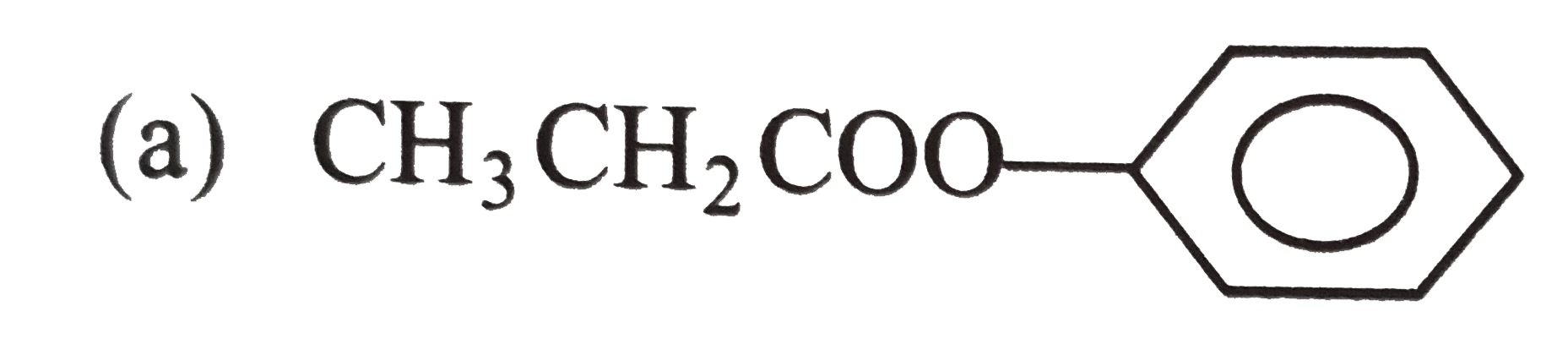
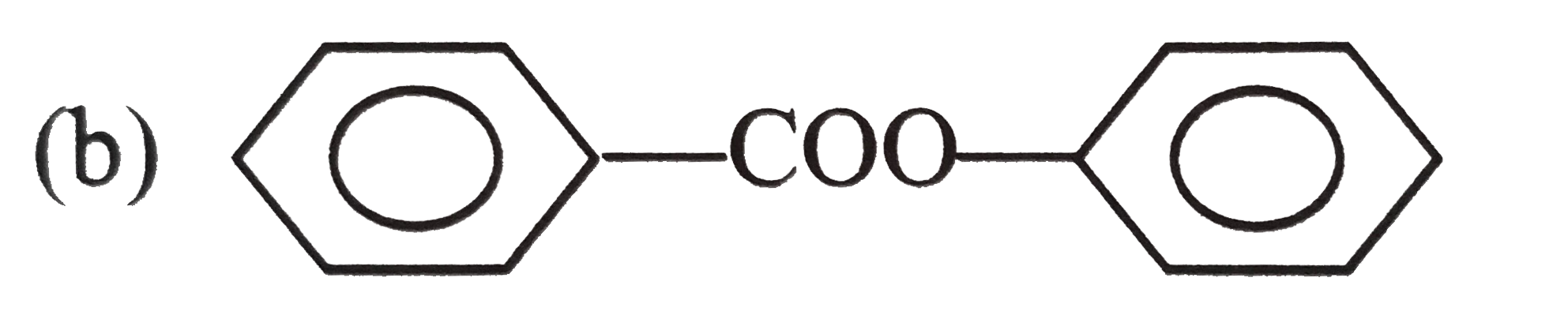
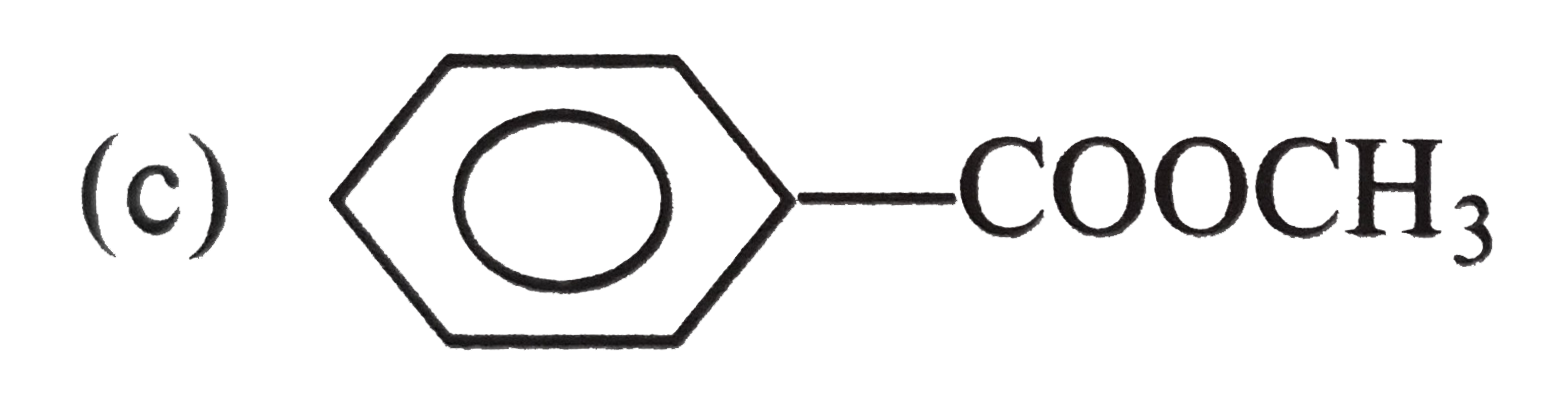
Claisen condensation is not given by |
|
Answer»
 as it does not have `alpha`-hydrogen atom. as it does not have `alpha`-hydrogen atom.
|
|
| 8. |
Cl_2O_7 is the anhydride of |
|
Answer» `HOCl` `Cl_2O_7 + H_2O to 2HClO_4`. |
|
| 9. |
Cl_(2)O_(6) + NaOH rarr products, how many possible products are among the following "___________" NaClO_(4), NaOCl, NaClO_(2),NaClO_(3) |
|
Answer» |
|
| 10. |
Cl_(2)O_(7) dissolves in water to give : |
|
Answer» `HClO_(3)` |
|
| 11. |
Cl_2O_6 is an anhydride of: |
|
Answer» `HClO_3` |
|
| 12. |
Cl_(2)O_(6) is an anhydride of |
|
Answer» `HClO_(3)` `Cl_(2)O_(6) + H_(2) O rarr HClO_(3) + HClO_(4)` |
|
| 14. |
Cl_(2(g))+Ba(OH)_(2)toX_((aq))+BaCl_(2)+H_(2)OX+H_(2)SO_(4)toY+BaSO_(4),Yunderset(Delta365K)overset(Delta)toZ+H_(2)O+O_(2) Substances Y and Z are respectively |
|
Answer» `HClO_(4),ClO_(2)` |
|
| 15. |
Cl_(2)(g)+Ba(OH)_(2) to X(aq.)+BaCl_(2)+H_(2)O X+H_(2)SO_(4) to Y+BaSO_(4) Y underset(Tgt365K)overset(Delta)to Z+H_(2)O+O_(2) Y and Z are respectively: |
|
Answer» `HClO_(4), ClO_(2)` |
|
| 16. |
Cl_(2) underset("(cold and dilute)")(NaOH) overset(-NaCl)overset(-H_(2)O)to X Cl_(2) + underset("(Hot and concentrated)")(NaOH) overset(-NaCl)overset(-H_(2)O)to Y In these reactions, X and Y are _________ respectively. |
|
Answer» NAOCL and `NaClO_3` |
|
| 17. |
Cl_2 reacts with water and forms |
|
Answer» HCL` +` HOCL |
|
| 18. |
Cl_(2) reacts with hot aqueous NaOH to give |
|
Answer» NaCl |
|
| 19. |
Cl_(2) reacts with CS_(2) in presence of AlCl3 to form: |
|
Answer» `CHCl_(3)` |
|
| 20. |
CI_2 (or) Br_2 (or) I_2 reacts with hot conc. Alkali solution to form |
|
Answer» HALIDE + Hypohalite |
|
| 21. |
Cl_2 (or) Br_2 (or) I_2 reacts with cold and dilute alkali solution to form |
|
Answer» Halide `+ ` Hypohalite |
|
| 22. |
Cl_2 on passing through Na_2S_2O_3 solution gives |
|
Answer» `Na_2S` |
|
| 23. |
Cl_2 is used in the manufacture of: |
|
Answer» CHLOROFORM |
|
| 25. |
'Cl_(2)' gas is obtained by various reaction but not by |
|
Answer» `KMnO_(4) +` conc. `HCl overset( Delta ) ( RARR)` |
|
| 26. |
Cl_2 is more reactive than I_2 but when KCIO_3 reacts with I_2, Cl,_2 is liberated. Why? |
|
Answer» SOLUTION :Reaction of chlorate with iodine is a REDOX reaction and `I_(2)` is oxidised. `2KClO_(3)+I_(2)rarr 2KIO_(3)+Cl_(2)` |
|
| 27. |
Cl_2 gas is evolved as byproduct in the manufacture of all the following elements except: |
|
Answer» Mg |
|
| 29. |
Cl_(2) can't replace |
|
Answer» F from NaF |
|
| 31. |
Cl_(2) can disproportionate in. |
|
Answer» `NaOH,HF` `Cl_(2)+HFrarr"No reaction"` `Cl_(2)+H_(2)OrarrHCl+HOCl` `Cl_(2)+NaOHrarrNaCl+NaOCl+H_(2)O` |
|
| 32. |
Cl - oversetunderset(||)(O)(C ) - OC_2H_5 underset(NH_4Cl)overset((1)xRMg X)(to)3^@ alcohol find our value of x |
Answer» 
|
|
| 33. |
Cl^(-) is the conjugate base of |
|
Answer» `HClO_(4)` Base `overset(+H^(+))rarr` conjugate acid. |
|
| 34. |
Cl in ClO^(-) undergoes ....... hybridisation |
|
Answer» `SP^(2)` |
|
| 35. |
Cl-CH_(2)-overset(14)CH_(2)-S-CH_(2)-CH_(3)overset(NH_(3))to number of amines produced. |
|
Answer» |
|
| 36. |
Cl-C-Cl angle 1, 1, 2, 2 - tetrachloroethene and tetrachloromethane respectively are about |
|
Answer» `120^(@)` and `109.5^(@)` 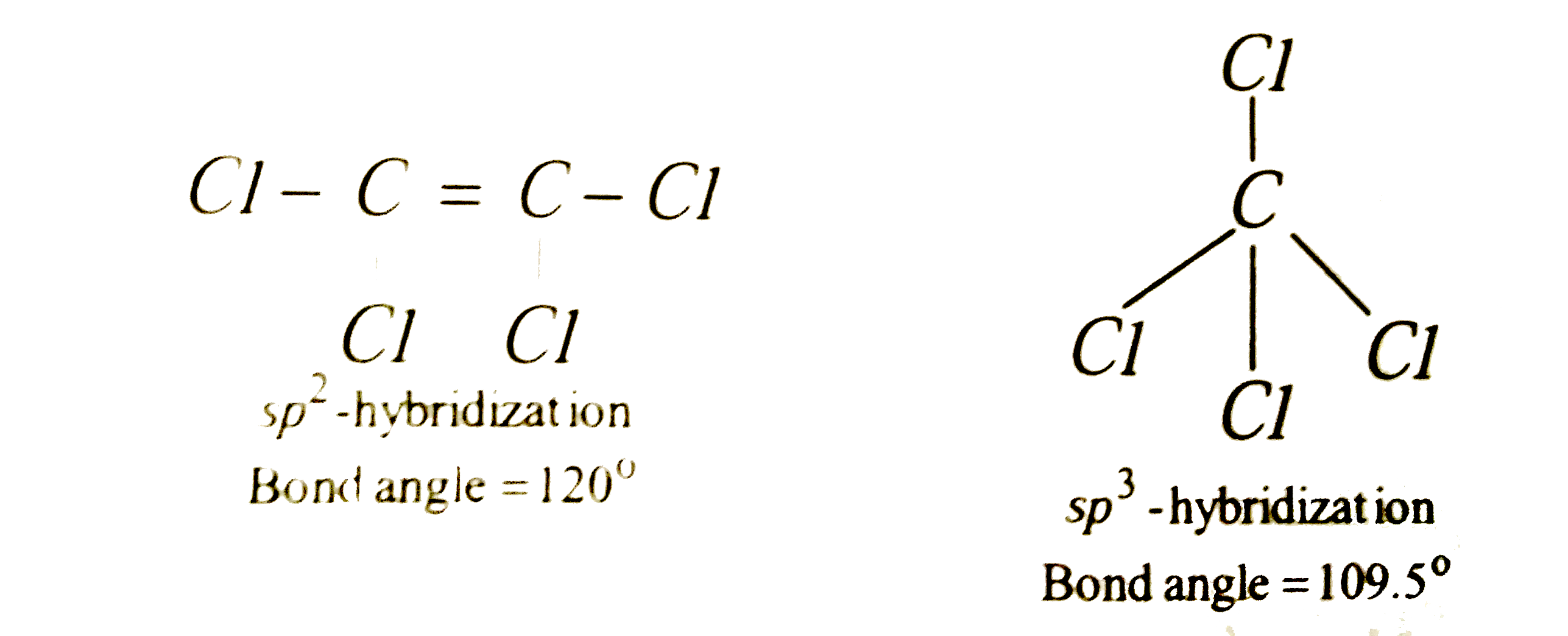
|
|
| 37. |
Citrus fruits are an important source of vitamin: |
|
Answer» B |
|
| 38. |
Citric acid is |
|
Answer» monocarboxylic ACID |
|
| 39. |
Cisplatin compound is used in the treatment of |
|
Answer» MALARIA |
|
| 40. |
Cis-trans isomerism is not possible in alkynes because of :- |
| Answer» SOLUTION :`180^(@)` BOND-angle at the carbon-carbon TRIPLE bond. | |
| 41. |
Cis-trans isomerism is found in squre planar complexes of molecular formula (a and b are monodentate ligands) : |
|
Answer» `Ma_(4)` |
|
| 42. |
Cis-trans-isomerism is found in square planar complexes of the molecular formula: (a and b are- monodentate ligands) |
|
Answer» `Ma_4` |
|
| 43. |
Cis-trans isomerism is exhibited by: |
|
Answer» `[PTCL(NH_(3))_(3)]^(+)` |
|
| 44. |
Cis-(or Z-)3-hexene |
Answer» SOLUTION :
|
|
| 45. |
Cis-(or z-)2-butanol |
Answer» SOLUTION :
|
|
| 47. |
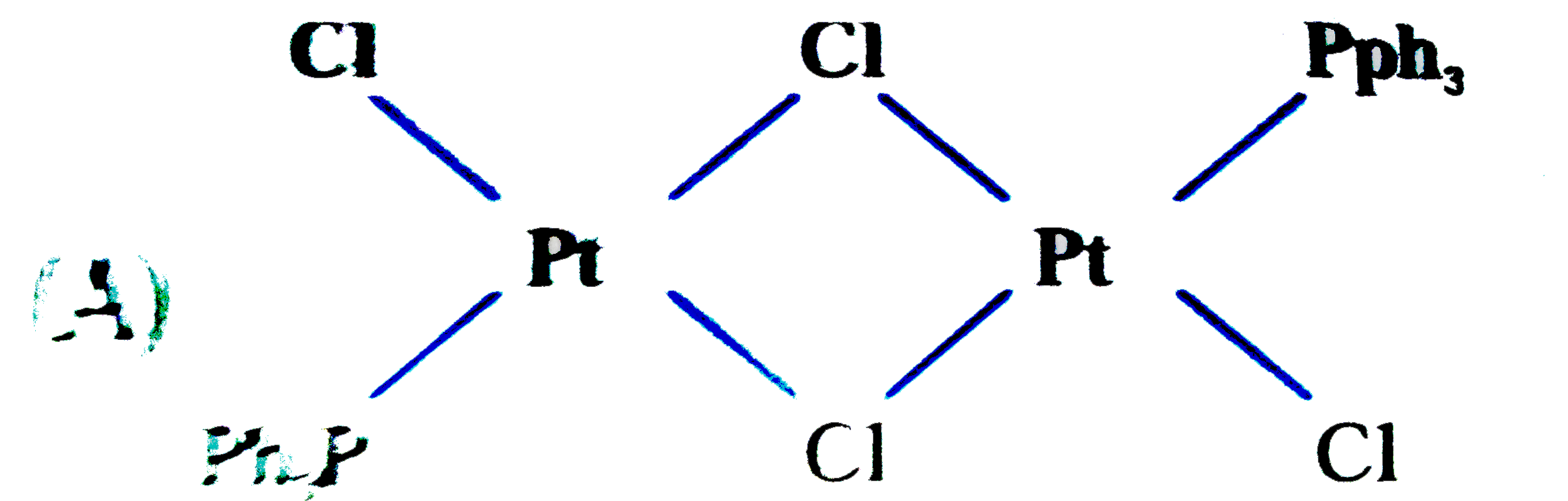
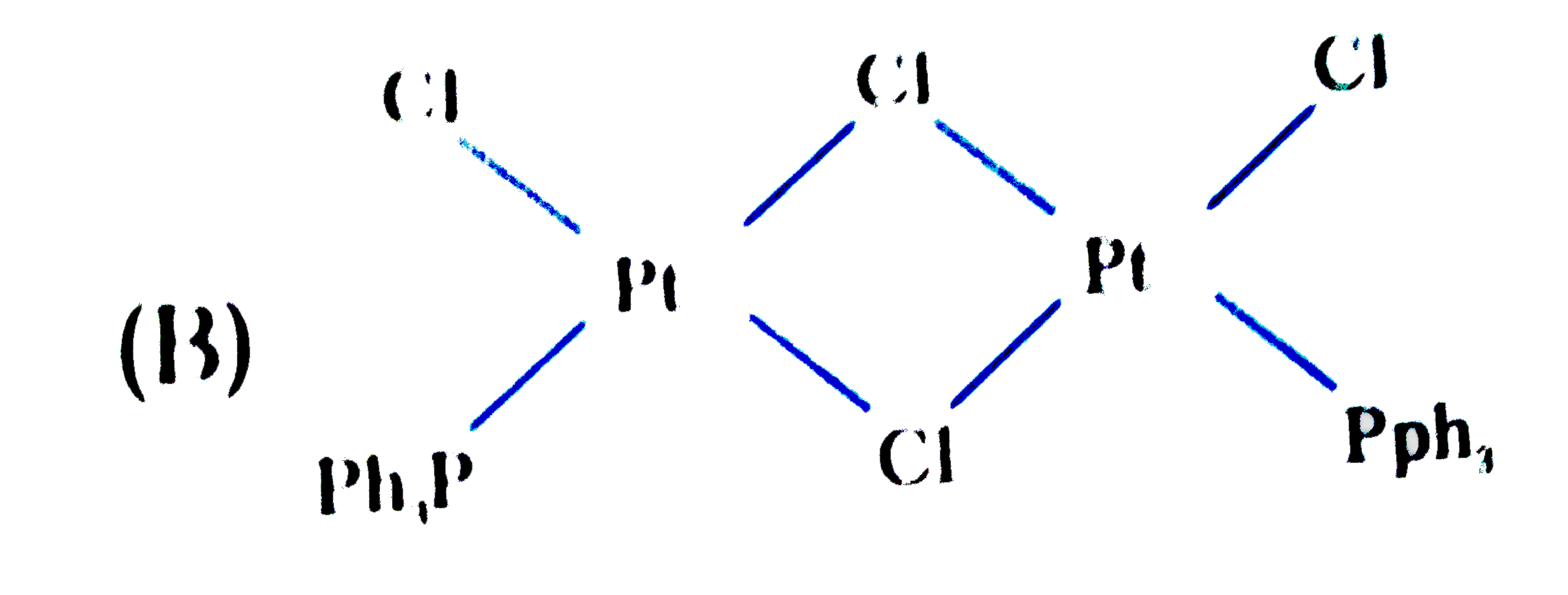
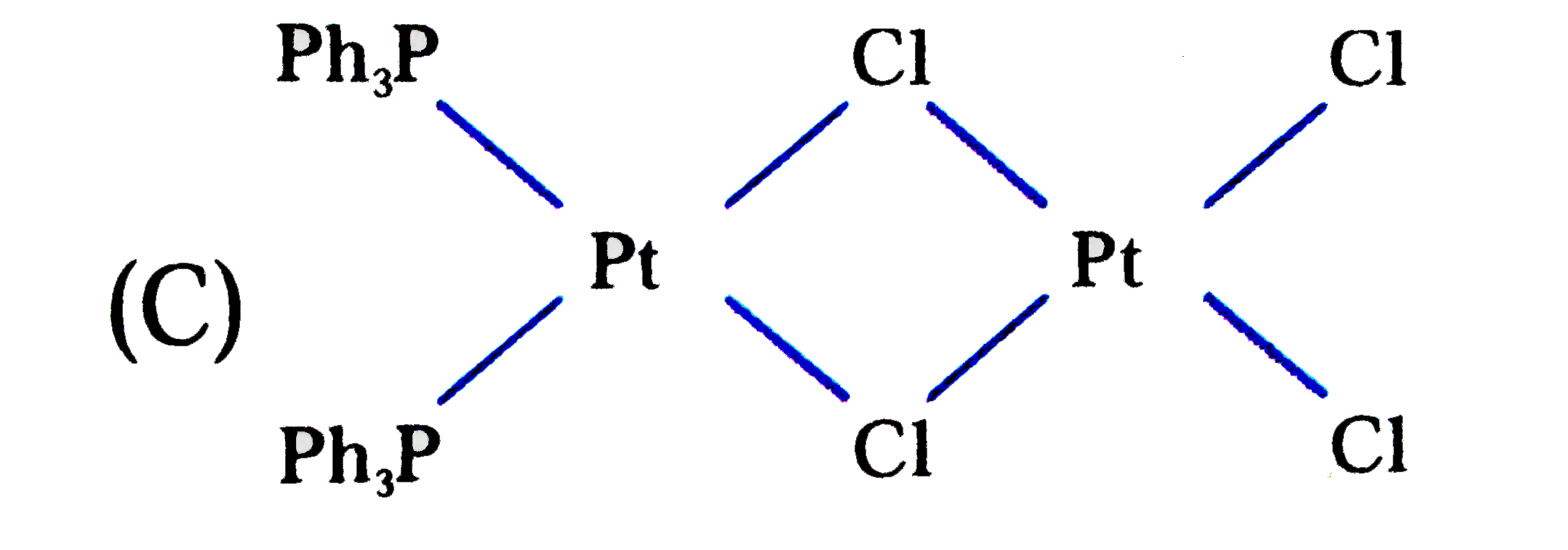
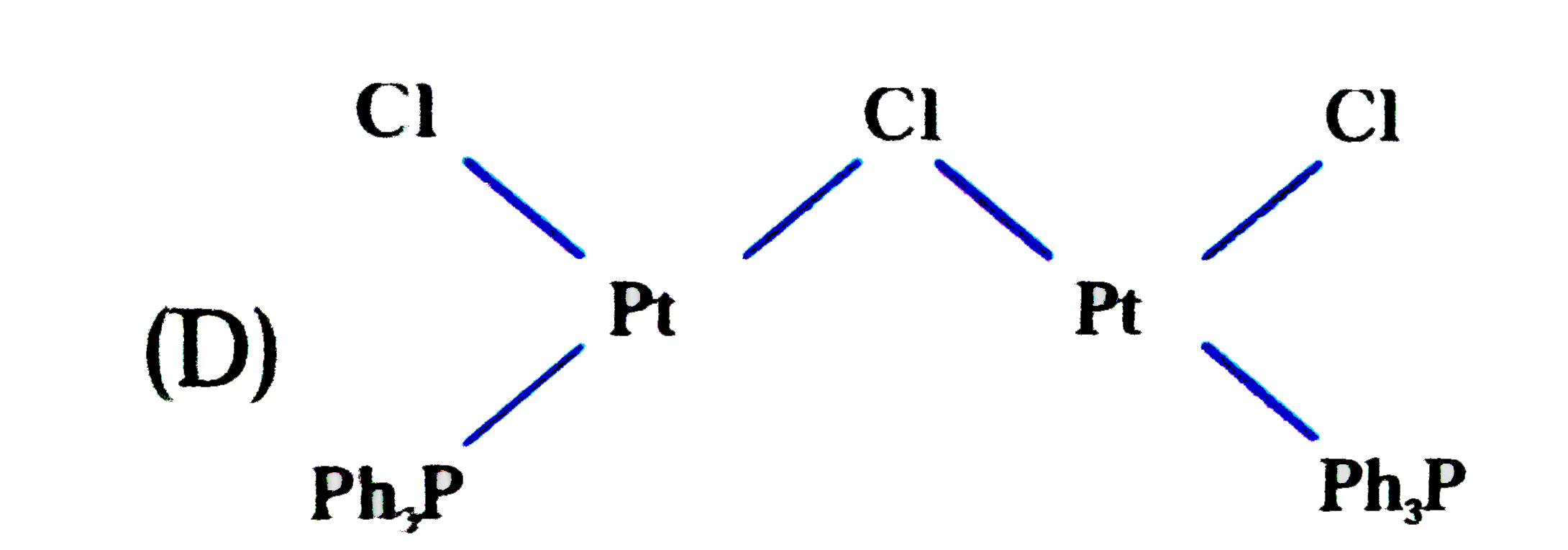
Cis di-mu -chloro bis [chloro(triphenyl phosphine) platinum(II)] is |
|
Answer»
|
|
| 48. |
Cis butene dioic acid overset(K_(a_(1))(-H^(+)))overset(to)(larr)X_(1)^(-) overset(K_(a_(2))(-H^(+)))overset(to)harrX_(2)^(-) Trans-butene dioic acid overset(K_(a_(1))(-H^(+)))overset(to)(larr)Y_(1)^(-) overset(K_(a_(2))(-H^(+)))overset(to)harrY_(2)^(-) The incorrect statement regarding above information is: |
|
Answer» `X_(2)^(2-)` SPECIES is more basic than `Y_(2)^(2-)` species 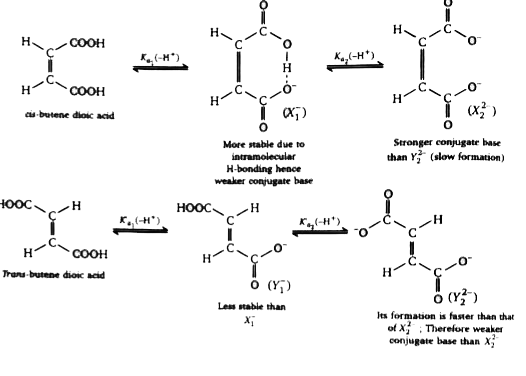
|
|
| 49. |
cis-But-2-ene reacts with D -N=N-D to yield the major product |
|
Answer» meso`-2,3-`dideuteriobutane 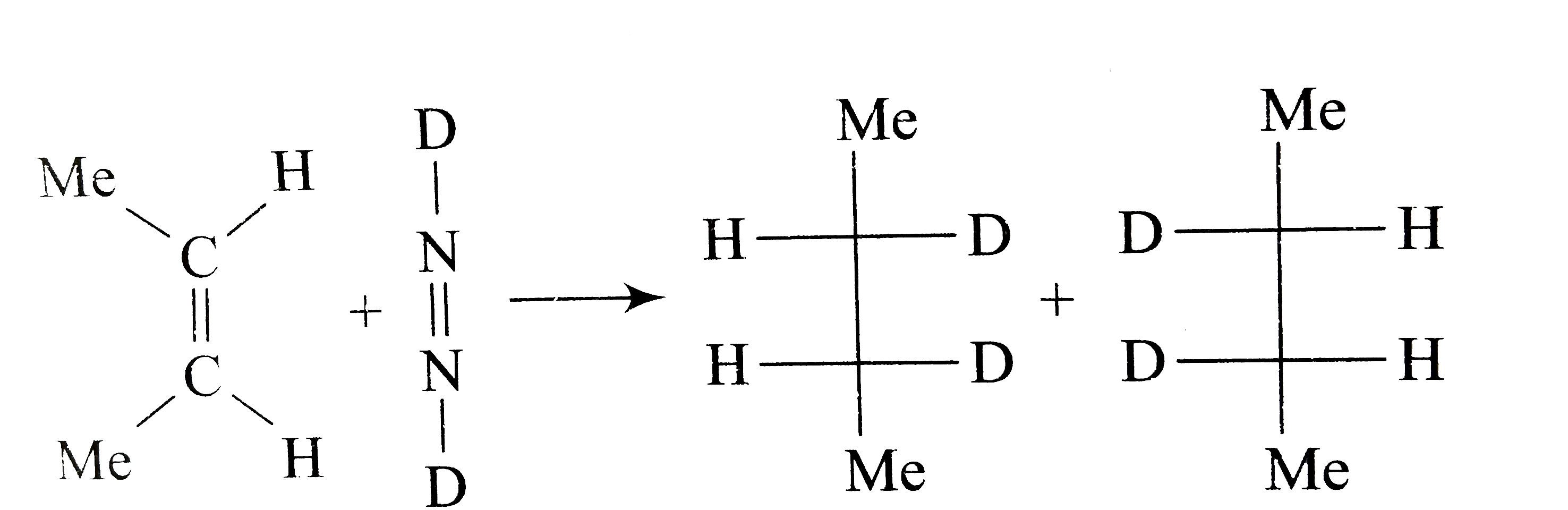 This stereospecificity can be EXPLAINED by the formation a cyclie TRANSITION state. |
|
| 50. |
cis-But-2-en on reaction with Br_(2) in C CI_(4) produces mainly |
|
Answer» `(+-)-2,3-`dibromobutane The first step is the formation of a bridged cation, called a bromonium ion. In the second step, the NUCLEOPHILE `(Br^(-))` adds to the face away form teh bridging group to yield the anti-addition PRODUCT.  Another case: 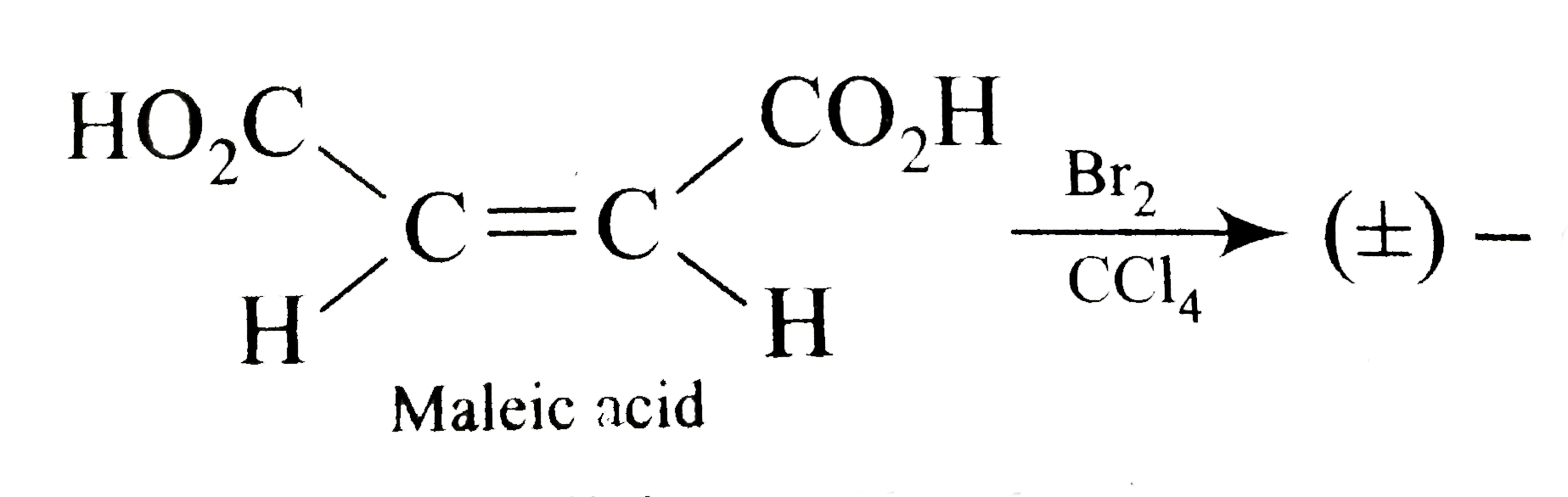
|
|