Saved Bookmarks
This section includes 7 InterviewSolutions, each offering curated multiple-choice questions to sharpen your Current Affairs knowledge and support exam preparation. Choose a topic below to get started.
| 1. |
Amines can be considered as derivatives of _______ obtained by the replacement of hydrogen atom with alkyl or aryl groups. |
|
Answer» |
|
| 2. |
Amines can be considered as derivatives of ammonia. What is the significance of the Hoffmann bromamide reaction? |
| Answer» Solution :The amine formed contains ONE carbon ATOM less than the amide. So the reaction is used for descending (or STEPPING down) in a HOMOLOGOUS series. | |
| 3. |
Amines can be considered as derivatives of ammonia. Represent a reaction to explain the basic character of aniline. |
|
Answer» Solution :Aniline REACTS with HCl to form ANILINIUM chloride `(ANE_PKE_CHE_XII_C13_E02_023_S01.png" WIDTH="80%"> |
|
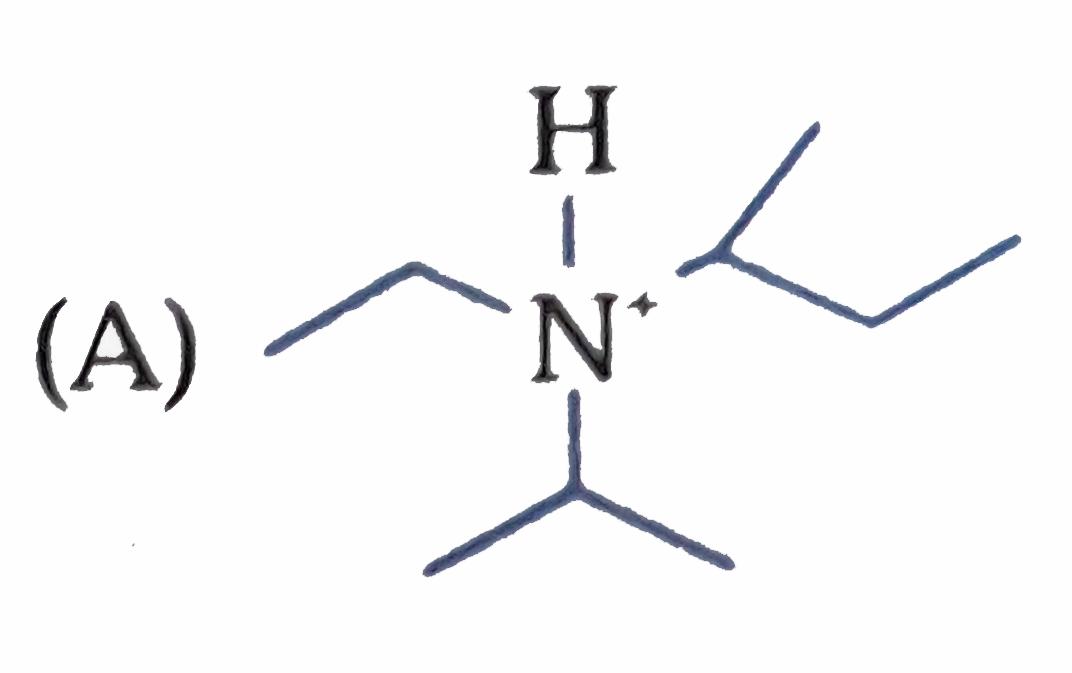
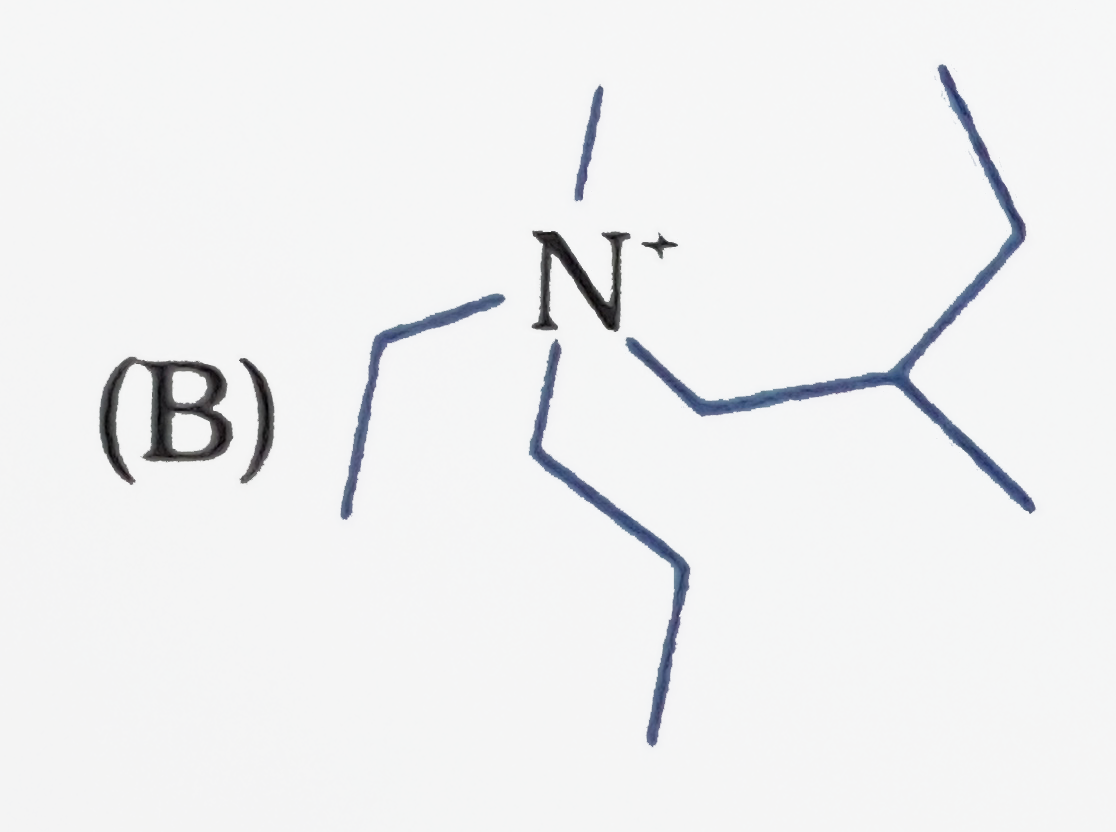
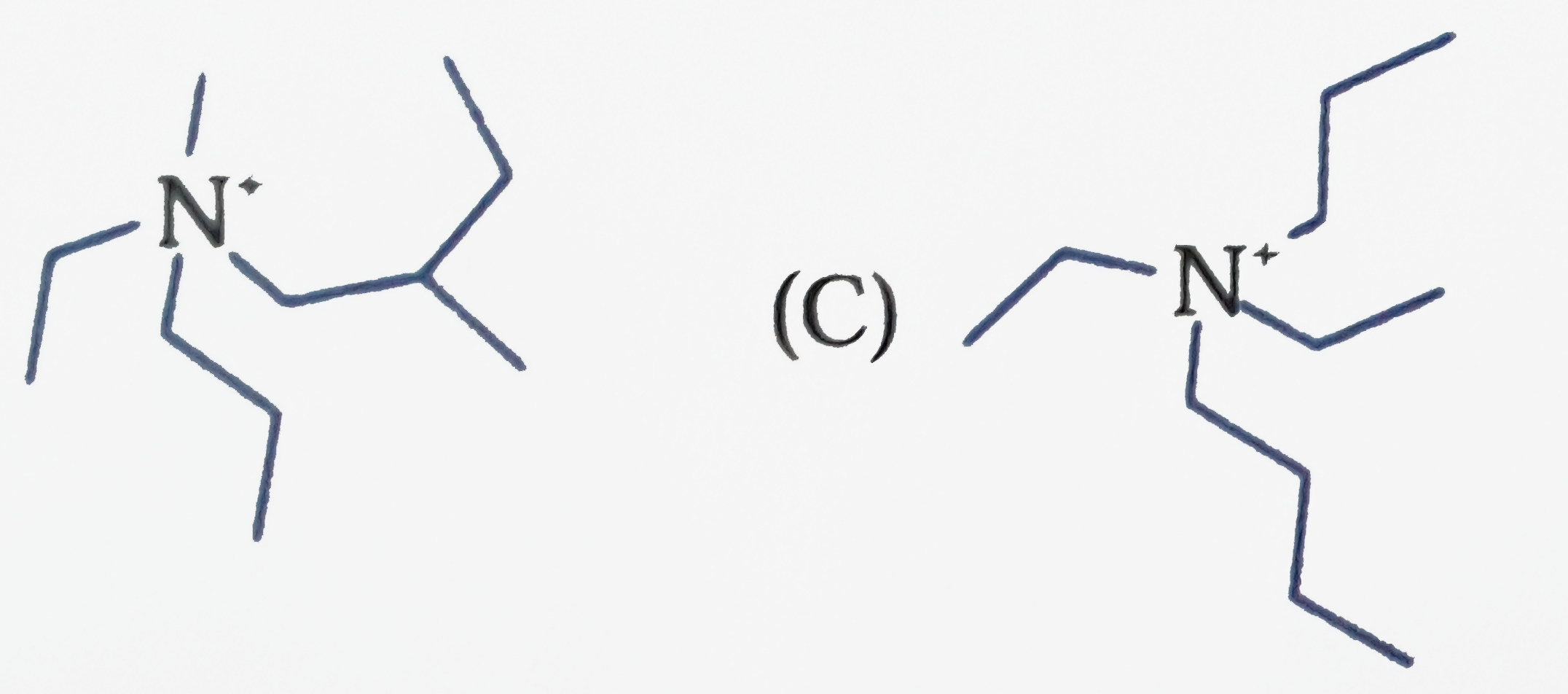
| 4. |
Amines can be considered as derivatives of ammonia. Name the reagents used in the hoffmann's bromamide reaction. |
| Answer» SOLUTION :Bromine in aqueous or ethanolic solution of NAOH is USED as the REAGENT. | |
| 5. |
Amines can be considered as derivatives of ammonia. Give one chemical test to distinguish between methyl amine and dimethyl amine. Write down the chemical reaction. |
|
Answer» SOLUTION :Methylamine on WARMING with chloroform and ethanolic KOH solution give foul smelling ISOCYANIDE. This is known as CARBYLAMINE reaction. Diethylamine does not answer this test. `(ANE_PKE_CHE_XII_C13_E02_026_S01.png" WIDTH="80%"> |
|
| 6. |
Amines can be considered as derivatives of ammonia. Arrange the following in increasing order of their basic strength. C_6H_5NH_2,C_2H_5NH_2,(C_2H_5)_2NH,NH_3 |
| Answer» SOLUTION :`C_6H_5NH_2ltNH_3ltC_2H_5NH_2lt(C_2H_5)_2NH` | |
| 8. |
Amines behave as |
|
Answer» APROTIC acid |
|
| 9. |
Amines are well known to be stronger bases and nucleophiles than alkcnes. Why do enamines, such as 1-dimethylaminocyclopentene, preferentially react with electrophiles at a double bond carbon rather than at nitrogen? |
|
Answer» The NITROGEN is stcrically HINDERED by alkyl subst.ituents. 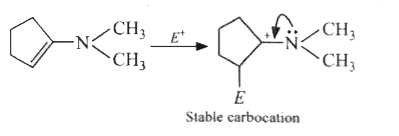
|
|
| 10. |
Amines are versatile fuctional groups useful in the preparation of many organic compounds. How can you convert. |
Answer» SOLUTION :
|
|
| 11. |
Amines are the basesbut |
|
Answer» Monoacidic |
|
| 12. |
Amines are versatile fuctional groups useful in the preparation of many organic compounds. How can you convert. |
Answer» SOLUTION :
|
|
| 13. |
Amines are more basic than comparable alcohols. |
|
Answer» Solution :Amines are more basic than camparable alcohols because of the following two reasons: (i) N being less electronegative is more willing to donate its lone pair of ELECTRONS to a proton than the more electronegative O atom. Therefore, amines are more basic than alcohols. (ii) when an amine ACCEPTS a proton, ammonium salt is formed and when an ALCOHOL accepts a proton oxonium salt is formed.  Since N being less electronegative can accommodate the positive CHARGE better than the more electronegative O atom, therefore, ammonium salts are more stable than oxonium salts. as a result, amines are more BASI than alcohols. |
|
| 14. |
Aminesare polar compounds because of the |
|
Answer» hydrogen bonding |
|
| 15. |
Amines are less reactive in substitution reactions. Their reactivity is much lesser than alcohols and alkylflourides towards substitution. Protonation of the amino group makes it a better leaving group, but not nearly as good a leaving group as a protonated alcohol. Protonated amino groups cannot be displaced by OH^(-) because it would react immediately with the acidic hydrogen which would convert it in to a poor nucleophile. The leaving group in quartenary ammonium ion has about the same leaving tendency as a protonated amino group but does not have acidic hydrogen. The reaction of a quartenary ammonium ion with hydroxide ion is known as Hoffmann elimination reaction. The leaving group is tertiary amine. Since a tertiary amine is only a moderately good leaving group, the reaction requires heat. The carbon to which the tertiary amine is attached is designated as alpha carbon. When the hydroxide ion starts to remove a beta H from a quartenary ammonium ion, the leaving group does not immediately start to leave because a tertiary amine is not a good leaving group. As a result, a partial negative charge builds up on the carbon from which the proton is removed. The compounds 'C' in question number 31 on heating with moist silver oxide gives |
|
Answer» Propene |
|
| 16. |
Amines are less reactive in substitution reactions. Their reactivity is much lesser than alcohols and alkylflourides towards substitution. Protonation of the amino group makes it a better leaving group, but not nearly as good a leaving group as a protonated alcohol. Protonated amino groups cannot be displaced by OH^(-) because it would react immediately with the acidic hydrogen which would convert it in to a poor nucleophile. The leaving group in quartenary ammonium ion has about the same leaving tendency as a protonated amino group but does not have acidic hydrogen. The reaction of a quartenary ammonium ion with hydroxide ion is known as Hoffmann elimination reaction. The leaving group is tertiary amine. Since a tertiary amine is only a moderately good leaving group, the reaction requires heat. The carbon to which the tertiary amine is attached is designated as alpha carbon. When the hydroxide ion starts to remove a beta H from a quartenary ammonium ion, the leaving group does not immediately start to leave because a tertiary amine is not a good leaving group. As a result, a partial negative charge builds up on the carbon from which the proton is removed. Which of the following statements are true regarding Hoffmann elimination ? |
|
Answer» it follows anti-zaitsev ELIMINATION |
|
| 17. |
Amines are less reactive in substitution reactions. Their reactivity is much lesser than alcohols and alkylflourides towards substitution. Protonation of the amino group makes it a better leaving group, but not nearly as good a leaving group as a protonated alcohol. Protonated amino groups cannot be displaced by OH^(-) because it would react immediately with the acidic hydrogen which would convert it in to a poor nucleophile. The leaving group in quartenary ammonium ion has about the same leaving tendency as a protonated amino group but does not have acidic hydrogen. The reaction of a quartenary ammonium ion with hydroxide ion is known as Hoffmann elimination reaction. The leaving group is tertiary amine. Since a tertiary amine is only a moderately good leaving group, the reaction requires heat. The carbon to which the tertiary amine is attached is designated as alpha carbon. When the hydroxide ion starts to remove a beta H from a quartenary ammonium ion, the leaving group does not immediately start to leave because a tertiary amine is not a good leaving group. As a result, a partial negative charge builds up on the carbon from which the proton is removed. Which of the following statements is correct? |
|
Answer» `PK_(N)` value of protonated amine is more than that of protonated alcohol Alchols more acidic than AMINES |
|
| 18. |
Amines are less reactive in substitution reactions. Their reactivity is much lesser than alcohols and alkylflourides towards substitution. Protonation of the amino group makes it a better leaving group, but not nearly as good a leaving group as a protonated alcohol. Protonated amino groups cannot be displaced by OH^(-) because it would react immediately with the acidic hydrogen which would convert it in to a poor nucleophile. The leaving group in quarternary ammonium ion has about the same leaving tendency as a protonated amino group but does not have acidic hydrogen. the reaction of a quarternary ammonium ion with hydroxide ion is known as Hoffmann elimination reaction. The leaving group is tertiary amine. Since a tertiary amine is only a moderately good leaving group, the reaction requires heat. The carbon to hwich the tertiary amine is attached is designated as alpha carbon. When the hydroxide ion starts to remove a beta H form from a quarternary ammonium ion, the leaving group does not immediately start to leave because a tertiaryamine is not a good leaving group. As a result, a partial negative charge bulds up on the carbon from which the proton is removed. Which compounds of question number 31 are optically active |
|
Answer» A and B |
|
| 19. |
Amines are less reactive in substitution reactions. Their reactivity is much lesser than alcohols and alkylflourides towards substitution. Protonation of the amino group makes it a better leaving group, but not nearly as good a leaving group as a protonated alcohol. Protonated amino groups cannot be displaced by OH^(-) because it would react immediately with the acidic hydrogen which would convert it in to a poor nucleophile. The leaving group in quarternary ammonium ion has about the same leaving tendency as a protonated amino group but does not have acidic hydrogen. the reaction of a quarternary ammonium ion with hydroxide ion is known as Hoffmann elimination reaction. The leaving group is tertiary amine. Since a tertiary amine is only a moderately good leaving group, the reaction requires heat. The carbon to hwich the tertiary amine is attached is designated as alpha carbon. When the hydroxide ion starts to remove a beta H form from a quarternary ammonium ion, the leaving group does not immediately start to leave because a tertiaryamine is not a good leaving group. As a result, a partial negative charge bulds up on the carbon from which the proton is removed. Which of the following statements are true regarding Hoffmann elimination? |
|
Answer» It follows anti-zaitsev ELIMINATION |
|
| 20. |
Amines are less reactive in substitution reactions. Their reactivity is much lesser than alcohols and alkylflourides towards substitution. Protonation of the amino group makes it a better leaving group, but not nearly as good a leaving group as a protonated alcohol. Protonated amino groups cannot be displaced by OH^(-) because it would react immediately with the acidic hydrogen which would convert it in to a poor nucleophile. The leaving group in quarternary ammonium ion has about the same leaving tendency as a protonated amino group but does not have acidic hydrogen. the reaction of a quarternary ammonium ion with hydroxide ion is known as Hoffmann elimination reaction. The leaving group is tertiary amine. Since a tertiary amine is only a moderately good leaving group, the reaction requires heat. The carbon to hwich the tertiary amine is attached is designated as alpha carbon. When the hydroxide ion starts to remove a beta H form from a quarternary ammonium ion, the leaving group does not immediately start to leave because a tertiaryamine is not a good leaving group. As a result, a partial negative charge bulds up on the carbon from which the proton is removed. The compound 'C' in question number 31 on heating with moist silver oxide gives |
|
Answer» Propene |
|
| 21. |
Amines are less reactive in substitution reactions. Their reactivity is much lesser than alcohols and alkylflourides towards substitution. Protonation of the amino group makes it a better leaving group, but not nearly as good a leaving group as a protonated alcohol. Protonated amino groups cannot be displaced by OH^(-) because it would react immediately with the acidic hydrogen which would convert it in to a poor nucleophile. The leaving group in quarternary ammonium ion has about the same leaving tendency as a protonated amino group but does not have acidic hydrogen. the reaction of a quarternary ammonium ion with hydroxide ion is known as Hoffmann elimination reaction. The leaving group is tertiary amine. Since a tertiary amine is only a moderately good leaving group, the reaction requires heat. The carbon to hwich the tertiary amine is attached is designated as alpha carbon. When the hydroxide ion starts to remove a beta H form from a quarternary ammonium ion, the leaving group does not immediately start to leave because a tertiaryamine is not a good leaving group. As a result, a partial negative charge bulds up on the carbon from which the proton is removed. Which of the following compounds when subjected to Hoffmann elimination gives an alkene which can exhibit geometrical isomerism? |
|
Answer»
|
|
| 22. |
Amines are less reactive in substitution reactions. Their reactivity is much lesser than alcohols and alkylflourides towards substitution. Protonation of the amino group makes it a better leaving group, but not nearly as good a leaving group as a protonated alcohol. Protonated amino groups cannot be displaced by OH^(-) because it would react immediately with the acidic hydrogen which would convert it in to a poor nucleophile. The leaving group in quarternary ammonium ion has about the same leaving tendency as a protonated amino group but does not have acidic hydrogen. the reaction of a quarternary ammonium ion with hydroxide ion is known as Hoffmann elimination reaction. The leaving group is tertiary amine. Since a tertiary amine is only a moderately good leaving group, the reaction requires heat. The carbon to hwich the tertiary amine is attached is designated as alpha carbon. When the hydroxide ion starts to remove a beta H form from a quarternary ammonium ion, the leaving group does not immediately start to leave because a tertiaryamine is not a good leaving group. As a result, a partial negative charge bulds up on the carbon from which the proton is removed. Which of the following statements is correct? |
|
Answer» `PK_(a)` VALUE of protonated amine is more than that of protonated alcohol |
|
| 23. |
Amines are derivatives of ammonia and are classified as 1^(@), 2^(@), and 3^(@), Primary and secondary (but not teritiary amines) form intermolecular hydrogen bonds and thus they boil at highter temperatures than expected. Like ammonia, all amines are basic, although they differ in their basic nature. As amines are considered as derivatives of ammonia, quaternary ammonium salts are considered as derivatives of ammonium salts. Only the quaternary ammonium salts can shown optical activity. Methylethylpropyl amine is optically inactive because |
|
Answer» it is not tetrahederal |
|
| 24. |
Amines are derivatives of ammonia and are classified as 1^(@), 2^(@), and 3^(@), Primary and secondary (but not teritiary amines) form intermolecular hydrogen bonds and thus they boil at highter temperatures than expected. Like ammonia, all amines are basic, although they differ in their basic nature. As amines are considered as derivatives of ammonia, quaternary ammonium salts are considered as derivatives of ammonium salts. Only the quaternary ammonium salts can shown optical activity. Which of the following shows configurational isomerism ? |
|
Answer» Diethyldimethylammonium iodide |
|
| 25. |
Amines are derivatives of ammonia and are classified as 1^(@), 2^(@), and 3^(@), Primary and secondary (but not teritiary amines) form intermolecular hydrogen bonds and thus they boil at highter temperatures than expected. Like ammonia, all amines are basic, although they differ in their basic nature. As amines are considered as derivatives of ammonia, quaternary ammonium salts are considered as derivatives of ammonium salts. Only the quaternary ammonium salts can shown optical activity. When nitrogen is bounded to three different groups |
|
Answer» The molecule is optically INACTIVE |
|
| 26. |
Amines are derivatives of ammonia and are classified as 1^@, 2^@ , and 3^@ Primary and secondary (but not teritary amines) form intermolecular hydrogen bonds and thus they boil at higher temperature than expected.Like ammonia, all amines are basic, although they differ in their basic nature.As amines are considered as derivatives of ammonia, quatemary ammonium salts are considered as derivatives of ammonium salts.Only the quatemary ammonium salts can show optical activity. Methylethylpropyl amine is optically inactive because |
|
Answer» It is not tetrahedral |
|
| 27. |
Amines are derivatives of ammonia and are classified as 1^@, 2^@ , and 3^@ Primary and secondary (but not teritary amines) form intermolecular hydrogen bonds and thus they boil at higher temperature than expected.Like ammonia, all amines are basic, although they differ in their basic nature.As amines are considered as derivatives of ammonia, quatemary ammonium salts are considered as derivatives of ammonium salts.Only the quatemary ammonium salts can show optical activity. Which of the following statement is correct ? |
|
Answer» All classes of amines form hydrogen bonds with each other |
|
| 28. |
Amines are derivatives of ammonia and are classified as 1^@, 2^@ , and 3^@ Primary and secondary (but not teritary amines) form intermolecular hydrogen bonds and thus they boil at higher temperature than expected.Like ammonia, all amines are basic, although they differ in their basic nature.As amines are considered as derivatives of ammonia, quatemary ammonium salts are considered as derivatives of ammonium salts.Only the quatemary ammonium salts can show optical activity. Which of the following shows configurationally isomerism ? |
|
Answer» Diethyldimethylammonium iodide |
|
| 29. |
Amines are basic in nature due to the presence of lone pair of electrons on N atom of -NH_(2) group. The basic strength of amines can be expressed by their dissociation constant, K_(b) or pK_(b). RNH_(2) + H_(2) to R NH_(3)^(+) + OH^(-) K_(b) = ([RHH_(3)^(+)][OH^(-)])/([RNH_(2)]) and pK_(b) = -log K_(b) Greater the K_(b) value or smaller the pK_(b) value, more is the basic strength of amine. Aliphatic amines are stronger bases than ammonia due to the electron releasing effect of alkyl groups. The basic strength among amines decreases as : 2^(@) gt 1^(@) gt 3^(@) Aryl amines such as aniline are less basic than aliphatic amines due to the involvement of lone pair of electrons on N atom with the resonance in benzene. In derivatives of aniline, the electron releasing groups increase the basic strength while electron withdrawing groups decrease the basic strength. The base weakening effect of electron withdrawing group and base strengthening effect of electron releasing group is more marked at p-position than at m-position. Every o- substituted aniline is less basic than aniline due to ortho effect. Maximum pK_(b) value is of |
|
Answer» `(CH_(3)CH_(2))_(2)NH` |
|
| 30. |
Amines are classifie as primary, secondary and teritary Write the IUPAC name of the following compound:NH_2-(CH_2)_6-NH_2 |
| Answer» SOLUTION :Hexane-1, 6-diamine | |
| 31. |
Account for the following Amines are basic substances while amides are neutral |
| Answer» SOLUTION :In amines alkyl GROUP is electron RELEASING which increases electron density on nitrogen making them basic whereas in amindes R-CO-group is electron withdrawing. THEREFORE they are neutral. | |
| 32. |
Amines are basic in nature due to the presence of lone pair of electrons on N atom of -NH_(2) group. The basic strength of amines can be expressed by their dissociation constant, K_(b) or pK_(b). RNH_(2) + H_(2) to R NH_(3)^(+) + OH^(-) K_(b) = ([RHH_(3)^(+)][OH^(-)])/([RNH_(2)]) and pK_(b) = -log K_(b) Greater the K_(b) value or smaller the pK_(b) value, more is the basic strength of amine. Aliphatic amines are stronger bases than ammonia due to the electron releasing effect of alkyl groups. The basic strength among amines decreases as : 2^(@) gt 1^(@) gt 3^(@) Aryl amines such as aniline are less basic than aliphatic amines due to the involvement of lone pair of electrons on N atom with the resonance in benzene. In derivatives of aniline, the electron releasing groups increase the basic strength while electron withdrawing groups decrease the basic strength. The base weakening effect of electron withdrawing group and base strengthening effect of electron releasing group is more marked at p-position than at m-position. Every o- substituted aniline is less basic than aniline due to ortho effect. Which of the following has lowest pK_(b) value ? |
|
Answer»
|
|
| 33. |
Aromatic and aliphatic amines are basic in nature like ammonia. Arrange the following compounds in the increasing order of their basic strngth: CH_3NH_2,(CH_3)_2NH,NH_3,C_6H_5-NH_2 |
|
Answer» SOLUTION :In AQUEOUS solution BASIC STRENGTH ORDER is `(CH_3)_2NHltCH_3NH_2lt(CH_3)_3NltNH_3ltC_6H_5NH_2` |
|
| 34. |
Amines are basic compounds They act as Lewis base due to the presence of lone pair electrons at nitrogen Amines aho behave as base as well as Bronsted inductive effect, steric hindrance and resosnance. CH_(3)-NH_(2)+HOH hArr CH_(3)-NH_(3)^(+)+OH^(-) CH_(3)-NH_(2)+H^(+)Cl^(-)hArr CH_(3)-NH_(3)^(+)+Cl^(-) Alkyl groups and electron groups hence these groupsincreases the electron density at nitrogen as well as the basic amines character of amines. Basic character of teritary amines is reduced due to the steric hindrance of three alkyl groups. Experimentally it is observed that stronger bases have smaller values of pK_(b) greater value of K_(b). Which among the following factors in fluence the basicity of amines? I-the inductive effect of alkyl group II-the polar effect III-the resonance |
| Answer» Answer :D | |
| 35. |
Amines are basic in character because they have |
|
Answer» a lone PAIR of ELECTRONS on the nitrogen atom |
|
| 36. |
Amines are basic. Arrange the following amines in the increasing order of base strength: CH_3NH_2, (CH_3)_2NH, (CH_3)_3N, C_6H_5NH_2 |
| Answer» SOLUTION :`C_6H_5NH_2lt(CH_3)_3NltCH_3NH_2lt(CH_3)_2NH`- In AQUEOUS MEDIUM | |
| 37. |
Amines are |
|
Answer» mono alkyl DERIVATIVEOF AMMONIA |
|
| 38. |
T/F Amines act as Lewis bases |
|
Answer» |
|
| 39. |
NH_3 acts as a Lawis base. Comment. |
|
Answer» |
|
| 40. |
Amine that cannot be prepared by Gabrielphthalimide synthesis is |
|
Answer» aniline 
|
|
| 41. |
Amine that cannot be prepared by Gabriel pthalimide synthesis is |
|
Answer» aniline |
|
| 42. |
Amine that cannot be prepared by Gabriel Phthalimide synthesis is……….. |
|
Answer» BENZYL amine |
|
| 43. |
Amine that cannot be prepared by Gabriel-phthalimide synthesis is |
|
Answer» ANILINE HYDROCHLORIDE |
|
| 44. |
Amine that cannot be prepared by Gabriel phthalimide synthesis is |
|
Answer» ANILINE |
|
| 45. |
Amine produced by the Hoffmann degradation of benzamide is |
|
Answer» SECONDARY amine |
|
| 47. |
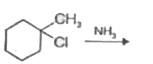
Amine is obtained as major product in |
|
Answer»
|
|
| 48. |
AminehavehigherB.P thancorrespondingalkane orethersdue to . |
|
Answer» intermolecularhydrogenbonding |
|