

Saved Bookmarks
This section includes 7 InterviewSolutions, each offering curated multiple-choice questions to sharpen your Current Affairs knowledge and support exam preparation. Choose a topic below to get started.
| 1. |
Na_(2)CO_(3) cannot be used in place of (NH_(4))_(2)CO_(3) for the precipitation of V group, because |
|
Answer» `NA^(+)` INTERFERES in the detection of V group |
|
| 2. |
Na_(2)CO_(3) cannot be used in place of (NH_(4))_(2)CO_(3) for the percipitation of V group because |
|
Answer» Na will react with acid radicals |
|
| 3. |
Na_2CO_3 cannot be used in place of (NH_4)_2,CO_3, for precipitation of group Vcations because |
|
Answer» Na INTERFERES in the detection of group V |
|
| 4. |
Na_(2)CO_(3) cannot be used in place of (NH_(4))_(2)CO_(3) for precipitation of group V cations because |
|
Answer» `NA^(+)` INTERFERES in the detection of group V Hence, (D) is the correct answer. |
|
| 5. |
Na_2CO_(3) can be manufactured by Solvay's process but K_(2)CO_(3) cannot be prepared because |
|
Answer» `K_(2)CO_(3)` is more soluble |
|
| 6. |
Na_2CO_3can be manufactured by Solvay's process butK_2CO_3 can not be prepared because |
|
Answer» `K_2CO_3` is more SOLUBLE |
|
| 7. |
Na_(2)B_(4)O_(7)overset(Delta)toNaBO_(2)+B_(2)O_(3) NaBO_(2)+H_(2)O_(2)+H_(2)O to compound A(aq)The compound A the sum of oxidation states of all the oxygen atoms is X. Then the value of (X) is |
Answer» 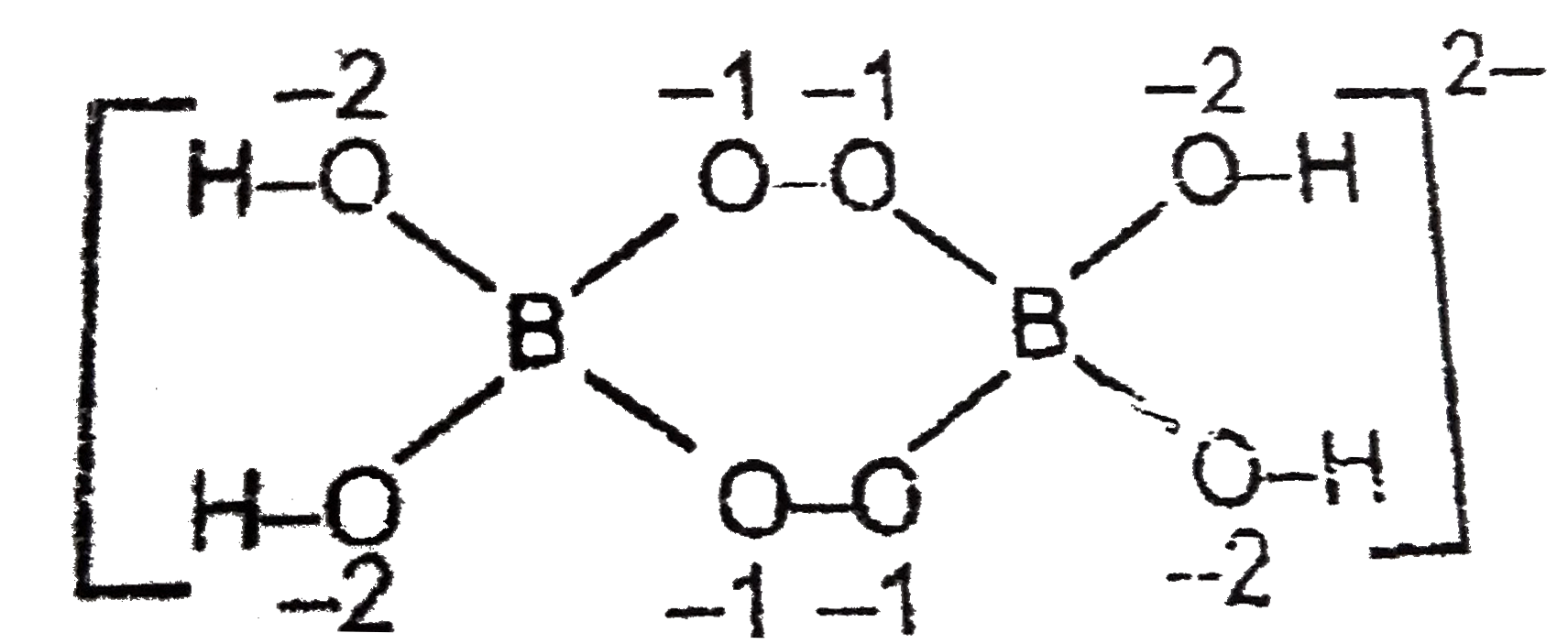 `X=[(-2)xx4+(-1)xx4]=-12` , HENCE `|X|=12` |
|
| 8. |
Na_(2)[Be(OH)_(4)] is formed when |
|
Answer» BEO reacts with NAOH solution |
|
| 9. |
Na^(23) is more stable isotope of Na. Find out the process by which ._(11)Na^(24) can undergo radioactive decay. |
|
Answer» `beta^(c-)-` emission `underset(Less stabl e)(._(11)Na^(24)) rarr underset(Stabl e)(._(11)Na^(23))+ underset("Neutron")(._(0)n^(1)` This neutron on DECOMPOSITION gives proton and `beta-` particle`(._(-1)e^(0))` `._(0)n^(1) rarr underset(Prot on)(._(1)H^(1)) ` or`._(1)P^(1)+underset(beta-partic l e)(._(-1)e^(0)` Hence, isotopicsodium is CHANGED into sodium by means of emission of `beta-` particle and a proton `i.e., ` by `beta-` emission. |
|
| 10. |
Na^(22) has half life of 2.68 years . It decays both by positron emission and electron capture with a ratio of 86% of the former to 14% of the later . The half life for positron emission in years (nearly) is ………. |
Answer»  `t_(1//2)= (0.693)/(lambda_(1)) = (0.693)/(0.2224) = 3.116 -= 3, Y_(A) = (lambda_(1))/(LAMBDA) xx 100 = 86 l lambda = (0.693)/(2.68) ………. (2)` `Y_(B) = (lambda_(2))/(lambda) xx 100 = 14 , lambda = (lambda_(1) + lambda_(2)) ……... (3) implies (lambda_(1))/(lambda_(2)) = (86)/(14) ...... (1)` From (1) , (2) and (3) `lambda = (lambda_(1)+ lambda_(2)) = (0.693)/(2.68) , (lambda_(1) + (14 lambda_(1))/(80) ) = 0.2586 , lambda_(1) (1 + (14)/(80)) = 0.2586` `lambda_(1) = (0.2586 xx 86)/(100) = 0.2244 , t_(1//2) = (0.693)/(lambda_(1)) = (0.693)/(0.2224) = 3.116 -=3` |
|
| 11. |
Na""^(22) has half life of 2.68 years. It decays both by positron emission and electron capture with a ratio of 86% of the former to 14% of the later. The half life for positron emission in years (nearly) is |
|
Answer» `lamda=lamda""_(1)+lamda""_(2)` `0.693/2.68=(lamda""_(2)xx14)/86+lamda""_(2)02` `0.258=lamda""_(2)(14/86+1)` `0.258=lamda""_(2)(100/86)` lamda""_(2)=(86xx0.258)/(100),t""_(1//2)=0.693/lamda""_(2)` |
|
| 12. |
Na_2 O and P_4 O_(10) on heating at 1000^@C yields |
|
Answer» <P>SODIUM tripolyphosphate : `Na_(5)P_(3)O_(10)` |
|
| 13. |
N_A spheres of radius 'R' are melted in x xxN_A smaller spheres, so that when fcc lattice is generated from smaller spheres the edge length is formed to be 2 5/6 R.Find x. |
|
Answer» In fcc `sqrt2a=4r. " " implies " " sqrt2xx2^(5//6)R=(4R)/root(3)(x)` `2^(5/6+1/2)=2^2/x^(1//3)implies x^(1//3)=2^(2 4/3)implies x^(1//3)=2^(2//3) implies x=4` |
|
| 14. |
Na^(+), Mg^(2+), Al^(3+) and Si^(4+) are isoelectronic. The order of their ionic size is |
|
Answer» `Na^(+) GT MG^(2+) LT Al^(3+) lt SI^(4+)` |
|
| 16. |
Na is used in reduction of Zn salt because |
|
Answer» `E^(@)Zn_("OX") GT E^(@)Na_("ox")` |
|
| 17. |
Na is used in the reduction of Znsalt because |
|
Answer» `E_(Zn("oxi"))^(@) gt E_(Na("oxi"))^(@)` `because` oxidation potential of Nais more than that of Zn `therefore` Na is USED to reduce Zn salts |
|
| 18. |
Na and Mg crystallize in bee and fcc type crystals respectively, then the nwnber of atoms ofNa and Mg present in the unit cell of their respective crystal is |
|
Answer» 4 and 2 Number of atoms per unit cell`=8xx(1)/(8)+1=2`. ,brgt In fcc-points are at the corners and ALSO centre of the six faces of each cell. Number of atoms per unit cell`=8xx(1)/(8)+6xx(1)/(2)=4`. |
|
| 19. |
Na and Mg crystallize in BCC and FCC type of crystals respectively, then the number of atoms of Na and Mg present in the unit cell of their respective crystals is |
|
Answer» 4,2 |
|
| 20. |
When Na and Li placed in dry air we get:- |
|
Answer» `NAOH,Na_2O,Li_2O` |
|
| 21. |
Na // alcoholis a good |
|
Answer» Dehydratingagent |
|
| 22. |
Na^(+) and Ag^(+) differ in |
|
Answer» `Na_(2)CO_(3)` is thermally stable while `Ag_(2)CO_(3)` decompose into Ag, `CO_(2) and O_(2)` |
|
| 23. |
N_2O_4 molecule is completely changed into 2NO_2 molecules at: |
| Answer» Answer :B | |
| 24. |
N_2O_4 is 25% dissociated at 37^@C and one atmosphric pressure. Calculate (i) K_p and (ii) per cent dissociation at 0.1 atmospheric pressure and 37^@C. |
|
Answer» |
|
| 25. |
N_(2)O_(4) is |
|
Answer» ACIDIC and paramagnetic |
|
| 26. |
N_2O_2 hArr NO,K_1,1/2 N_2 +1/2O_2hArr NO,K_22NO hArr N_2+O_2k_3 , NO hArr 1/2 N_2 +1/2O_2 K_4 |
|
Answer» `K_1 xx K_3 =1` |
|
| 27. |
N_(2)O_(2)_(g) rarr 2NO is a first -order reaction in terms of the concentration of N_(2)O_(2)(g) . Which of the following is valid. [N_P(2) O_(2) ] being constant ? |
|
Answer» `[NO] = [ N_(2) O_(2) ]_(0) e^(-KT)` |
|
| 28. |
N_(2)O_(3) exists pure only in the solid state at low temperature. Above its melting point, it dissociates to : |
|
Answer» `NO and NO_(2)` |
|
| 29. |
N_(2)O is formed when: |
|
Answer» moist FE reacts with NO |
|
| 30. |
N_(2)O is formed when ........ |
|
Answer» Moist Fe REACTS with NO b) `4SnCl_(2)+2HNO_(3)+3HClrarr 4SnCl_(4)+N_(2)O+5H_(2)O` c) `4Zn+10HNO_3 rarr 4Zn(NO)_3(2)+N_(2)O+5H_(2)O` |
|
| 31. |
N_(2)O is obtained by the reaction of |
|
Answer» Cu with dil `HNO_(3)` |
|
| 32. |
N_2O is formed on reaction with dil, HNO_3 with: |
|
Answer» Cu |
|
| 33. |
N_(2(g))hArr+NH_(3(g)) In the reaction given above, the addition of small amount of on inert gas at constnat pressure will shift the equlibrium towards which side of |
|
Answer» LHS (Left Hand Side) |
|
| 34. |
N_(2)H_(4) and H_(2)O_(2) show similarity in .......... |
|
Answer» Hybridisation of central ATOMS 
|
|
| 35. |
N_2H_2 reduces IO_3^(-) //H^+ ...... |
|
Answer» to `I^(+)` |
|
| 36. |
N_(2(g))+3H_(2(g))hArr2NH_(3)(g)+22k.cal. The activation energy for the forward reaction is 50 k. cal What is the activation energy for the backward reaction ? |
| Answer» Answer :D | |
| 37. |
N_2(g) + 3H_2(g) hArr 2NH_3(g), /_\H =-93.5 kj what will happen when helium gas is added to the vessel at constant valume: |
|
Answer» more `NH_3` is FORMED |
|
| 38. |
N_(2)+O_(2)hArr2NO-Q cal In the above reaction which is the essential condition for the higher production of NO |
|
Answer» HIGH temperaturee The above reaction is endothermic so for higher PRODUCTION of NO, and the temperature should br high. |
|
| 39. |
N_2 O is used as an anesthetic in dental surgery. |
|
Answer» |
|
| 40. |
N_(2) is found in a litre flask under 100 kPa pressure and O_(2) is found in another 3 litre flask under 320 kPa pressure. If the two flasks are connected, the resultant pressure is |
|
Answer» 310 kPa `100xx1+320xx3=P_(3)(1+3)` or`P_(3)=265` kPa |
|
| 41. |
N_(2) gas will not be evolved upon reaction of HNO_(2) with which of the following amines |
|
Answer» `1^(@)` `underset(1^(@)"amine")(RNH_(2))+HONOrarrunderset("Alcohol")(ROH)+N_(2)uparrow+H_(2)O` `underset(2^(@)"amine")(R_(2)NH)+HONOrarrunderset("N-Nitrosodialkylamine")(R_(2)N NO+H_(2)O)` 
|
|
| 42. |
N_(2) exerts a pressure of 0.987 bar. The mole fraction of N_(2) ia (K_(H)=74.48 k bar) |
|
Answer» `7.648 xx 10^(-3)` `:. X_(N2)=P_(N2)/K_(H)=(0.987"barr")/(76480"bar")=1.29 xx 10^(-5)` |
|
| 43. |
N_2 combines with metal to form: |
|
Answer» Nitritie |
|
| 44. |
N_(2) combines with metal to form |
|
Answer» Nitride `6LI +N_(2) overset(450^(@)C) to 2Li_(3)N` (LITHIUM nitride) |
|
| 45. |
N_(2) DOES NOT show property of catenation because : |
|
Answer» it has no 'd' orbitals in the valence shell |
|
| 46. |
N_(2) and O_(2) are converted into monocations N_(2)^(+) and O_(2)^(+) respectively. Which of the following statements is wrong? |
|
Answer» In `N_(2)^(+)`, the N-N bond weakens |
|
| 47. |
N_(2) and O_(2) are converted to monocations N_(2)^(+) and O_(2)^(+) respectively, which is wrong statement: |
|
Answer» In `N_(2)^(+)`, the N-N BOND weakens |
|
| 48. |
N_(2) and O_(2) are converted to mono cations N_(2)^(+) and O_(2)^(+) respectively. Which is wrong ? |
|
Answer» In `N_(2)^(+), N-N` bond WEAKENS |
|
| 49. |
N_(2)+3H_(2)hArr2NH_(3). Which is correct statement, if N_(2) is added at equlibrium condition |
|
Answer» The equlibrium will shift to forward direction because according to `II^(ND)` law of thermodynamics the entropy must increases in the direction of spontaneous reaction |
|
| 50. |
N_(2)+3H_(2)hArr2NH_(3)+ heat. What is the effect of the increase of temperature on the equilibrium of the reaction |
|
Answer» Equlibrium is unaltered Formation of ammonia is exothermic REACTION so increase in TEMPERATURE favours BACKWARD reaction and equlibrium is shifted to the left. |
|