

Saved Bookmarks
This section includes 7 InterviewSolutions, each offering curated multiple-choice questions to sharpen your Current Affairs knowledge and support exam preparation. Choose a topic below to get started.
| 3. |
Match the column I and II {:(,"Column (I)",,"Column (II)",),(,"Group",,"Effect on phenyl ring",),((a),-CH = CH - CO_(2)H,(p),p//p - "directors",),((b),-O - overset(O)overset(||)(S) - CH_(3),(q),"meta-directors",),((c),-NH - overset(O)overset(||)(C) - CH_(3),(r),"Activating group",),((d),- underset(O)underset(||)(S) - CH_(3),(s),"De-activating group",):} |
|
Answer» |
|
| 4. |
Match the column I and II |
|
Answer» <P> |
|
| 5. |
match the column (I) and (II). |
|
Answer» In constrast, when the methyl group is in an axial position, it is gauche to the C-3 and C-5 carbons (fig.) 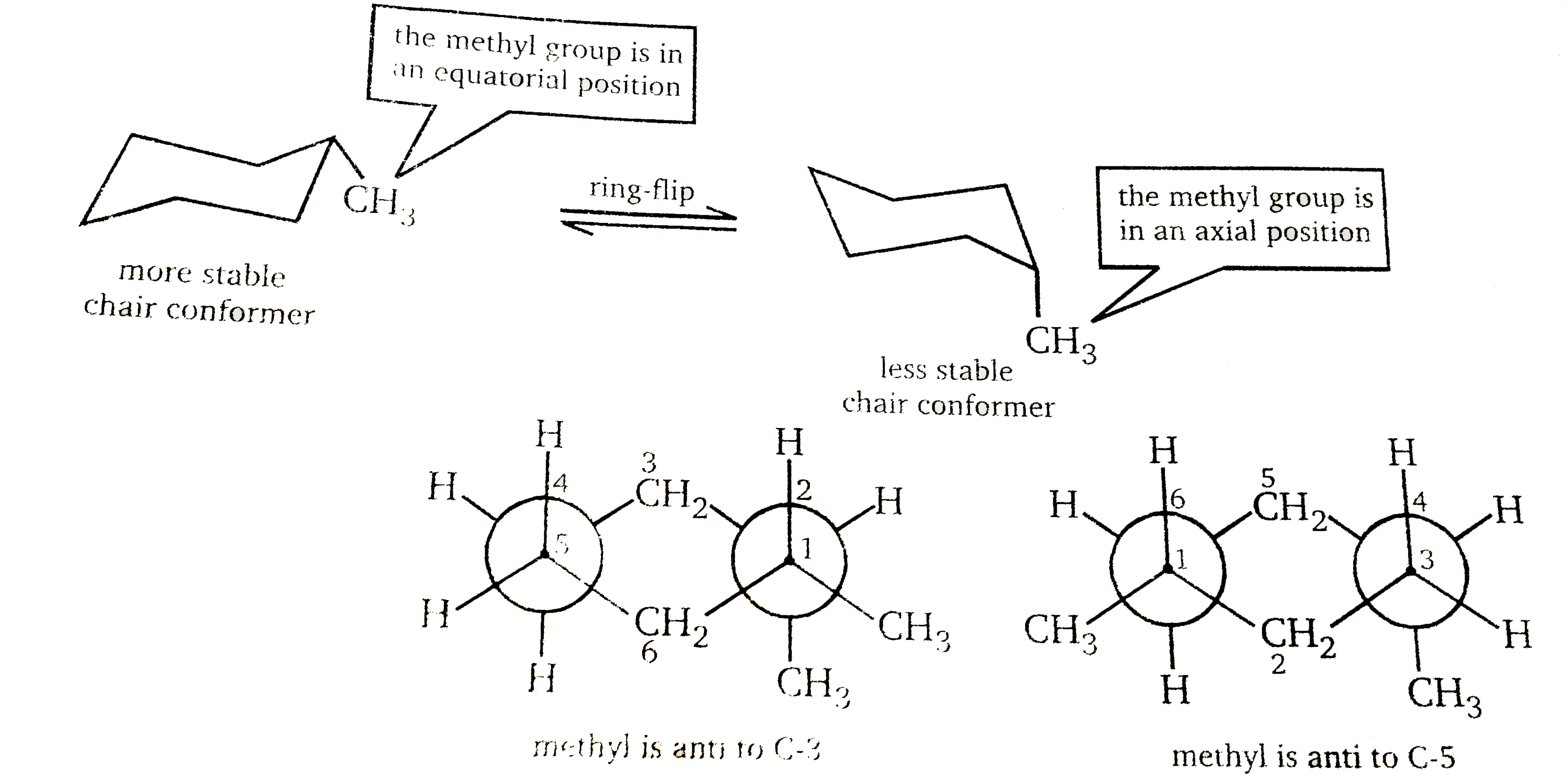 As a result, there are unfavourble steric interactions between the axial methyl group and both the axias substituent on C-3 and the axial substituent of C-5 (in this case HYDROGENS). In other words, the three axial bonds on the same side of the ring are parallel to each carbons. Because the interacting substituents are on 1,3-positions relative to each other,these unfavourable steric interactions are called 1,3-diaxial interactions `***` Alkyl group ocupy equational position to achieve maximum stability. `***` If the size of alkyl group increase, then stability of conformer will increase and VALUE of equilibrium constant will also increase. |
|
| 6. |
Match the column (I) and column (II). (Matrix) |
|
Answer» |
|
| 7. |
Match the column I and column II and mark the appropriate choice. {:("(A) Diastase"," (i) Proteins "rarr. "peptones"),("(B) Pepsin ","(ii) Glucose"rarr. "ethyl alcohol"),("(C) Ptyalin","(iii) Starch" rarr." Maltose"),("(D) Zymase ","(iv) Starch "rarr." Sugar"):} |
|
Answer» `A-(iv), B-(II), C-(i), D-(III)` |
|
| 9. |
Match the column- {:(,"Column-I",,"Column-II",),(,("Nuclear reactor component"),,("Used substance"),),((A),"Moderator",(P),"Uranium",),((B),"Control rods",(Q),"Graphite",),((C),"Fuel rods",(R),"Boron",),((D),"Coolent",(S),"Lead",),(,,(T),"Sodium",):} |
|
Answer» |
|
| 10. |
Match the Column {:(,"Column-I",,"Column-II"),((A),"Vapour pressure of binary solution of two miscible and volatile liquids when half of the liquid solution goes into vapour phase",(p),(P_(A)^(@)-P)/(P)=chi_(B)),((B),"Vapour Pressure of two binary miscible and volatile liquids",(q),P_(A)^(@)+P_(B)^(@)),((C),"Vapour pressure of binary solution of two immiscible and volatile liquids",(r),(P_(A)^(@)-P_(B)^(@))chi_(A)+P_(B)^(@)),((D),"Vapour pressure of binary solution having non-volatile solute",(s),sqrt(P_(A)^(@)P_(B)^(@))),(,,(t),"Solution is ideal"):} |
| Answer» Solution :`(A) to s, t, (B) to R,t, (C) to q, (D) to p,t` | |
| 11. |
Match the column- {:(,"Column-I",,"Column-II",),(,("Atomic /Molecular species"),,("Corresponding pairs"),),((A),"Isotope",(P),.^(228)"Ra"_(88) " & " ^(228 )"Ac"_(89),),((B),"Isobar",(Q),.^(39)"Ar"_(18) " &"^(40)"K"_(19),),((C),"Isotone",(R), .^(235)"U"_(92) " & " ^(231)"Th"_(90),),((D),"Isosters",(S),.^(235) "U"_(92) " & " ^(231)"Th"_(90),),((E),"Isodiaphers",(T),CO_(2) " & " "N"_(2)O,):} |
|
Answer» <P> |
|
| 12. |
Match the column : {:("Column-I","Column-II"),((A)"Molten" PbCl_2 "using inert electrode", (p)"Metal of salt will reduced"),((B)"Sodium chloride solution using inert electrode ",(q)H_2O+2e to H_2(g)+2OH^(-)),((C )"Silver nitrate solution with silver electrode",(r)"Solution become basic after electrolysis"),((D)"Sodium nitrate solution using inert electrode",(s)"Solution become neutral after electrolysis "),(,(t)"Solution become acidic after electrolysis"):} |
|
Answer» Anode : `2Cl^(-)to Cl_2(g)+2e^(-)` (B)`"Cathode" : H_2O+2eto H_2(g)+2 OH^(-)` Anode : `2Cl^(-)to Cl_2(g)+2e^(-)` ( C)`"Cathode" : Ag^(+)+e^(-)to Ag(s)` Anode : `Ag(s)underset("Neutral solution")(to Ag^(+)+e^(-))` ( D)`"Cathode" : H_2O+2eto H_2(aq)+2OH^(-)` Anode : `H_2Ounderset("Neutral solution")(to 1//2O_2+2H^(+)+2e^(-))` |
|
| 13. |
Match the column : {:("Column-I","Column-II"),((A)DeltaH=q_p,(p)DeltaH_f^@=0),((B)"Kirchhoff's equation",(q)"A definite quantity"),((C )H^(+)(aq),(r)DeltaH_2-DeltaH_1=DeltaC_P(T_2-T_1)),((D)"Spontaneous process",(s)DeltaGgt0),(,(t)DeltaS_("Total")^@ gt0):} |
|
Answer» <P> `because` ENTHALPY is a STATE function ( B)`DeltaH_2-DeltaH_1=Delta C_p(T_2-T_1)` is Kirchhoff's equation ( C) For `H^+(AQ), DeltaH_f^@=0` as per the standard assumption (D)For spontaneous process `DeltaGlt 0` or `DeltaS_("total")^@gt0` |
|
| 14. |
Match the column : {:(,"Column-I Structure",,"Column-II Type of detergents",),((i),CH_(3)(CH_(2))_(16)COO(CH_(2)CH_(2)O)_(n)CH_(2)CH_(2)OH,(a),"Cationic detergent",),((ii),C_(17)H_(35)COO^(-)Na^(+),(b),"Anionic detergent",),((iii),CH_(3)-(CH_(2))_(10)CH_(2)Soverset(ө)(O)_(3)Noverset(o+)(a),(c ),"Nonionic detergent",),((iv),[CH_(3)(CH_(2))_(15)-underset(CH_(3))underset(|)overset(CH_(3))overset(|)(N)-CH_(3)]^(o+)overset(ө)(Br),(d),"Soap",):} |
|
Answer» i-a, ii-b, iii-C, iv-d |
|
| 15. |
Match the column : {:("Column I","Column II"),((A)"Cubic",(p)"Have 2-fold axis of symmetry"),((B)"Orthorhombic",(q)"Have all axial angles identical "),(( C)"Tetragonal",(r)"Have all edge lengths identical"),((D)"Rhombohedral",(s)"More than one types of Bravias lattices are found"),(,(t)"Found in "CaCO_3):} |
|
Answer» |
|
| 16. |
Match the column {:("Column I","Column II"),((A)." "CH_(3)MgBr,(P)." "PhCH_(2)COCl),((B)." "PCl_(5),(Q)." "PhCH_(2)COOCH_(3)),((C)." "NH_(3)", followed by heating",(R)" "CH_(4)),((D)." "CH_(3)OH" in the presence of conc. "H_(2)SO_(4),(S)." "PhCH_(2)CONH_(2)):} |
|
Answer» |
|
| 17. |
Match the column : {:("Column-I","Column-II"),((A)AB("Zinc blende"),(p)d(gm//cm^3)=(4xx"molar mass")/("Avogadro's number" xx "Volume of unit cell")),((B)AB("Rock salt"),(q)"All the voids along one of the body diagonal are not occupied"),(( C)AB_2("Fluorite"),(r)"Voids along one face plane are not occupied"),((D)AB_2("Anti-Fluorite"),(s)"Anion & cation have similar surroundings"),(,(t)"Cation is bigger than anion"):} |
|
Answer» So, d=`("mass)/("VOLUME")=(4xxM)/(N_A a^3)` `S^(2-)`at FC c lattice & `Zn^(2+)` occupy alternate tetrahedral voids octahedral voids are not occupied (B)AB (ROCK salt) Same as for NaCl ( C)`AB_2` (FLUORITE ) same as `CaF_2` (D)`AB_2` (Antifluorite ) same as `Na_2O` |
|
| 18. |
Match the column : Column -I Column -II (A) Nylon-6, 6 (P) Condensation polymerization (B) styrene (Q) Addition polymerization (C ) Bakellite (R ) Homo polymer (D) Teflon (S) Co-polymer |
| Answer» SOLUTION :A-P,S, B-Q,R, C-P,S, D-Q,R | |
| 19. |
Match the column {:(A."Willionsan synthesis", P. "Conversion of phenol to salicylic acid"),(B. "Conversion of 2° alcohol to ketone", Q. "Conversion of phenol to salicaldehyde"),(C. "Reimer Tiemann reaction", R. "Heated with Cu-573k"),(D. "Kolbc's reaction", S. "reaction of alkyl halide with sodium alkoxide"):} |
|
Answer» A–S, B–R, C–Q, D–P |
|
| 20. |
Match the column and select the answer :- |
|
Answer» (a-q), (b-r), (c-p) |
|
| 21. |
Match the column and choose correct option:{:((A) "Smoke",P.,"foam"),((B)"Butter",Q.,"emulsion"),((C)"Hair cream ",R.,"aerosol"),((D)"Whipped cream",S. ,"gel"):} |
|
Answer» A-P,B-S, C-Q, D_R |
|
| 22. |
Match the column A (name of process) with column B (one of the intermediate) for extraction of Al: |
|
Answer» XYZ |
|
| 23. |
Match the column and choose correct option |
|
Answer» <P>A- S , B -R , C - P , D- Q |
|
| 24. |
Match the column {:(A. "Methanol and ethanol", P. "lucas reagent"),(B. "Phenol and cyclohexanol" ,Q. "Sodium metal"),(C. n-"propylalcohol and tertbutyl alcohol", R. "Iodoformtest"),(D. "Methanol and diethylether", S. "Ferric chloride"):} |
|
Answer» A–Q, B–S, C–P, D–R |
|
| 25. |
Match the Column |
|
Answer» <P> SOLUTION :`(A) RARR S, t, (B) rarr r, t, (C ) rarr q, (D) rarr p, t` |
|
| 26. |
Match the column |
|
Answer» (C) `H_(2)SO_(4)` protonates OH group and changes it into good lenving group to give electrophilic carbon which under goes `ArSE_2` intermolecular reaction for ring CLOSURE. (D) Intra molecular aldol condensation involves carbanion, nucleophilic addition and dehydration. |
|
| 27. |
Match the column (4 × 5) (Reaction) (Possiblemajor product) x_(1) Product x_(2) Product (Possible products) x_(3) Product x_(4) Product {:("Column-I","Column-II"),((A)2,(P)x_(1)+4),((B)4,(Q)x_(2)-2),((C)8,(R)x_(3)+4),((D)6,(S)x_(4)-4),(,(T)x_(4)//2-2):} |
|
Answer»
|
|
| 28. |
Match the column |
| Answer» | |
| 29. |
Match the column |
| Answer» | |
| 30. |
Match the column |
| Answer» | |
| 31. |
Match the column |
| Answer» | |
| 32. |
Match the column |
| Answer» | |
| 35. |
Match the column |
|
Answer» (B). It is an alkoxy mercuratio demercuration reaction, which proceeds with a similar mechanisms as i (A) (C). It is hydroboration oxidation (HBO) reaction. the formatio of alcohol takes place with anti markovnikov's rule with syn-addition. the overall reaction is stereospecific. (D). It is also an `HBO` REACTIO involving the formation of cis-alkene and proceeds with the similar mechanisms as in (C). |
|
| 40. |
Match the column. |
Answer» 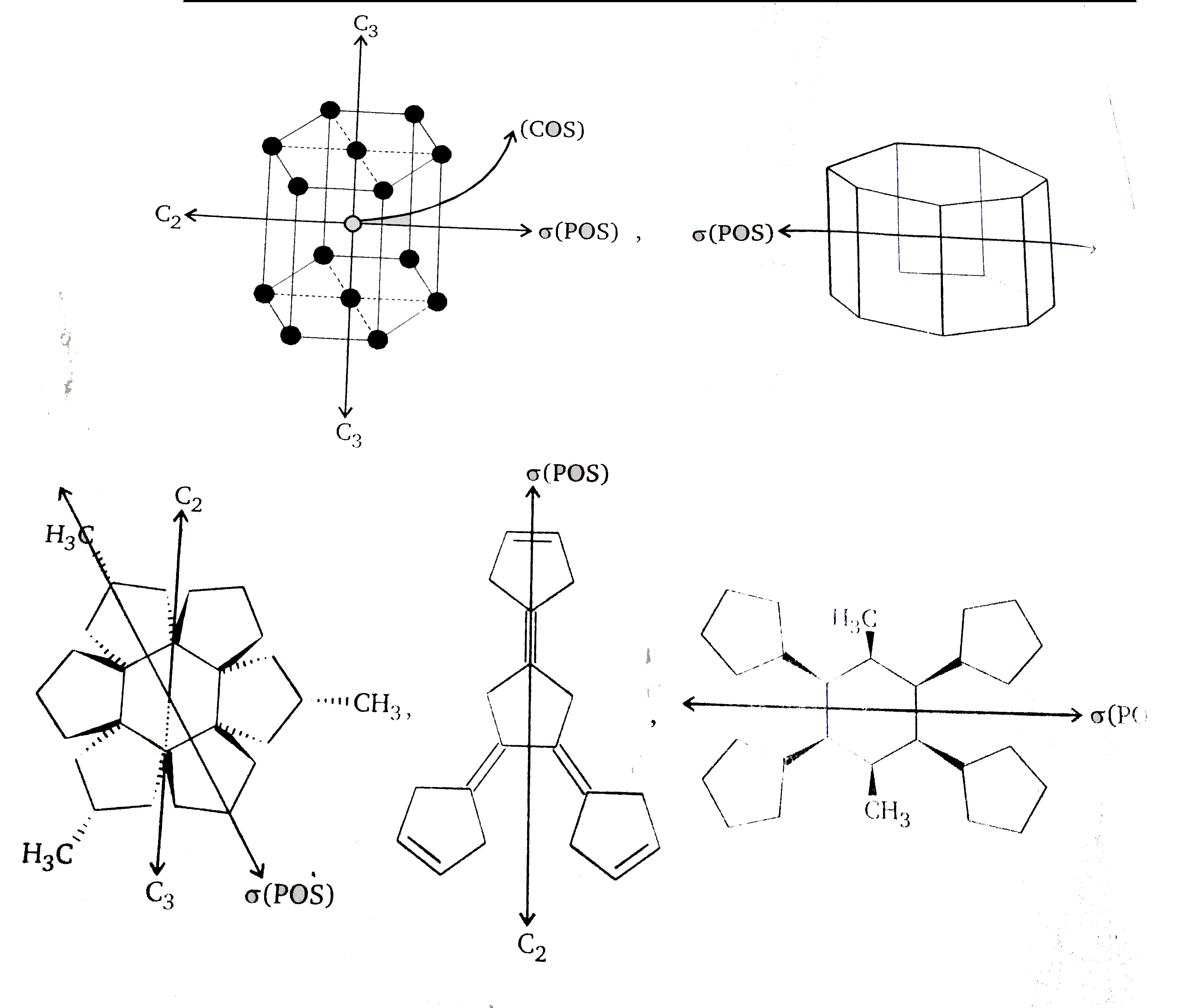
|
|
| 41. |
Match the column: |
|
Answer» A-P, B-Q, C-S, D-R `O lt N lt F` `IP IMPLIES` P conf. |
|
| 42. |
Match the column |
|
Answer» A-P, B-Q, C-S, D-R 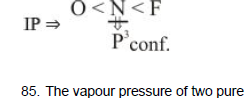
|
|
| 47. |
Match the class of compounds given in Column I with their functions given in Column II. |
|
Answer» |
|
| 48. |
Match the column- |
|
Answer» <P>`{:(Column-I,Column-II),("Highest DENSITY",(P) OS):}` |
|
| 50. |
Match the column- |
|
Answer» (B). It is birch REDUCTION which proceeds by the formation of radical anion `to` vnylic radical `to` trans VINYLIC anion `to` product  (C). It is an example of Claisen rearrangement reaction and proceeds by concerted MECHANISM. (D). It is an example of Diels-Alder reaction and proceeds by concerted mechanism. |
|

