

Saved Bookmarks
This section includes 7 InterviewSolutions, each offering curated multiple-choice questions to sharpen your Current Affairs knowledge and support exam preparation. Choose a topic below to get started.
| 1. |
Incorrect match is |
|
Answer» `H_2S_2O_7 "-" S - O - S` LINKAGE |
|
| 2. |
Incorrect matching for given complex compound/ion and its characteristics: |
|
Answer» |
|
| 3. |
Incorrect match is :- |
|
Answer» Permutit `to` HYDRATED SILICATES of Na and Al |
|
| 4. |
Incorrect match for give complex compound/ion and its characteristics |
|
Answer» `[CrBrCl(en)_2]Br,` LONIZATION and optical ISOMERISM |
|
| 5. |
Incorrect formula for Hydronium ion is : |
|
Answer» `H_3O^(+)` |
|
| 6. |
Incorrect about the product: |
|
Answer» It GIVES two MONOCHLORO products. 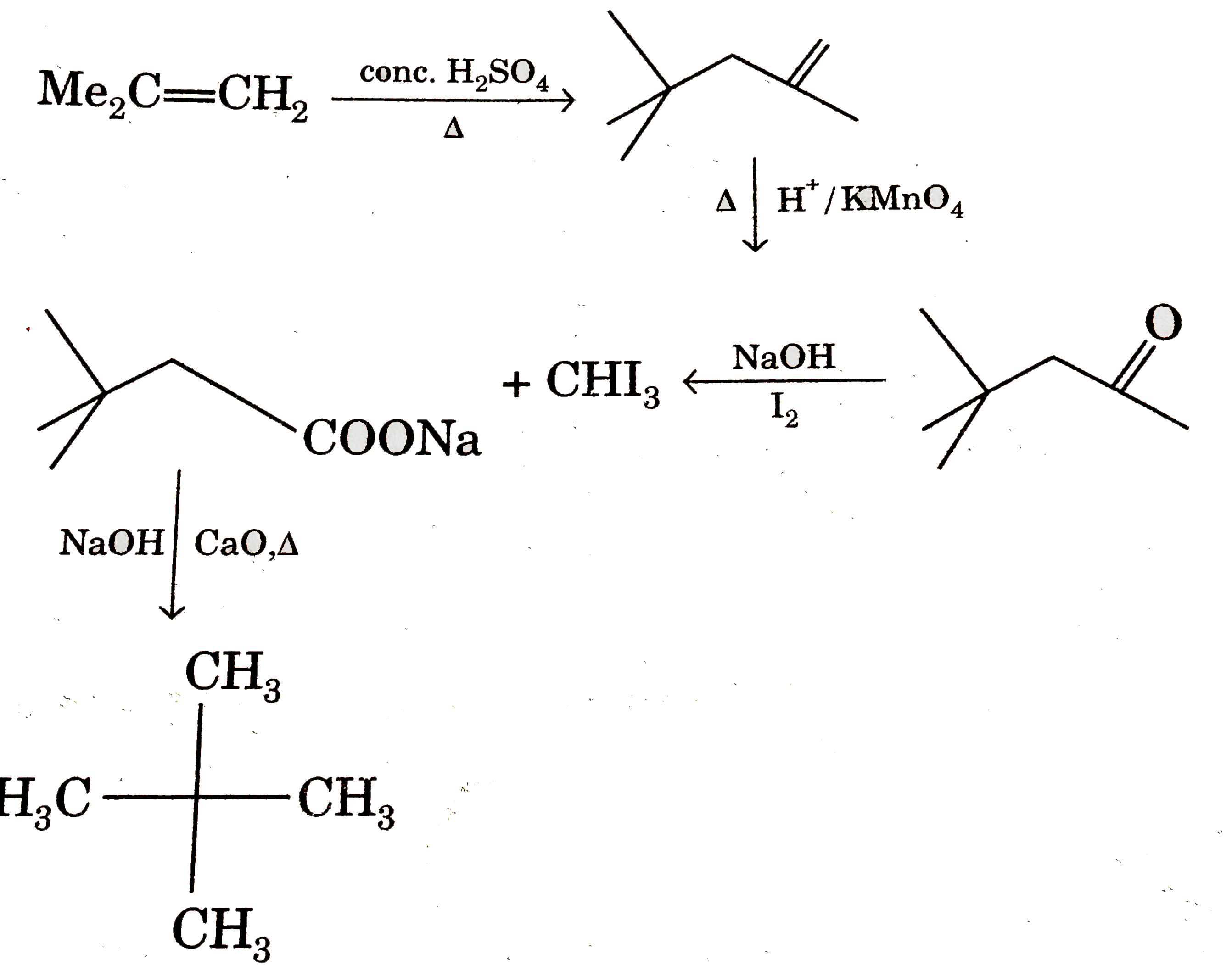
|
|
| 7. |
Incomplete combustion of petrol or diesel oil in automobile engines can be best detected by testing the fuel gases for the presence of |
|
Answer» carbon dioxide and WATER vapour |
|
| 8. |
Incorrect among the following |
|
Answer» `H^(+)` exist in water as `H^(+)(H_(2)O)_(N)` |
|
| 9. |
Incerasing order of EAN of the metals in [Ni(CN)_(4)]^(2-),[Fe(CN)_(6)]^(3-)and[Cu(CN)_(4)]^(3-) is |
|
Answer» `[NI(CN)_(4)]^(2-)lt[FE(CN)_(6)]^(3-)lt[Cu(CN)_(4)]^(3-)` `[Fe(CN)_(6)]^(3-)to26-3+6xx2=23+12=35` `[Cu(CN)_(4)]^(3-)to29-1+4xx2=28+8=36` |
|
| 10. |
Incomnia condition is used by |
|
Answer» EQUANIL |
|
| 11. |
(i)Name the macromolecules which are chosen as drug targets. (ii)Where are receptors located on cell membranes ? (iii)What types of forces are involved in binding of substrate to the active site of enzymes ? Explain . (iv)Which sites of an enzyme is called the allosteric site ? Explain. (v)What are enzyme inhibitors ? Explain. |
| Answer» Solution :MACROMOLECULES such as proteins, NUCLEIC acids, carbohydrates and lipids are called drug TARGETS. | |
| 12. |
Inamixture, two enantiomers are found to be present in 85% and 15% respectively. The enantiomeric excess(e,e) is |
| Answer» Solution :Enantionmeric EXCESS is (85 - 15 ) = 70% | |
| 13. |
{:((i)N_(2)O,(a)+5),((ii)N_(2)O_(4),(b)+3),((iii)N_(2)O_(5),(c)+1),((iv)N_(2)O_(3),(d)+4):} |
| Answer» SOLUTION :(i) C (ii) d (III) a (IV) b | |
| 14. |
Ina chemical equilibrium A+B hArrC+D, when one mole each ofhte two reactant are mixed, 0.6 male each of the products are formed. The equilibrium constant calculated is |
|
Answer» 1 initial `1" "1""0" "0` REMAINING at EQULIBRIUM `0.4" "0.4""0.6" "0.6` `K=([C][D])/([A][B])=(0.6xx0.6)/(0.4xx0.4)=36/16=2.25.` |
|
| 15. |
Ina benzene ring substituted with -NH_(2) group, orientation is controlled by |
|
Answer» release of ELECTRONS in the system by resonance |
|
| 17. |
In zone-refining method the motten zone |
|
Answer» consists of IMPURITIES only |
|
| 18. |
In zonerefiningmethod,the moltenzone |
|
Answer» contains impurities |
|
| 19. |
Inzone - Refiningmethodthe moltenzone : |
|
Answer» consistsof impuritiesonly |
|
| 20. |
In xone-refining method the molten zone |
|
Answer» consists of IMPURITIES only |
|
| 21. |
In Zn ("oxine")_(2) (oxine : 8- quinolinol), the coordination number and the oxidation state of Zn are x and Y respectively, then (x+y) is |
|
Answer» |
|
| 22. |
Zinc blende type structure has what co-ordination ratio? |
|
Answer» 2 |
|
| 23. |
The coordination number of a body centred atom is: |
|
Answer» 2 |
|
| 24. |
In Ziese's salt C=C bond length is : Note:{{:(C-C" bond length in ethane is " 1.54 Å),(C=C" bond length in ethane is " 1.34Å),(CequivC" bond length in ethane is " 1.20Å):}} |
|
Answer» `1.37 Å` B.L.`uarr` but remains LESS than C-C |
|
| 25. |
in XeO_3 Xe is: |
|
Answer» `sp^3` hybridised |
|
| 26. |
In Zeigler-Natta polymerisation of ethylene, the active species is |
|
Answer» `AlCl_(3)` `Ti_(3+)` has active SITE VACANT and thus acclmmodate one alkyl group `(as(C_(2)H_(5))_(3)Al reduces TiCl_(4) to TiCl_(3))` . |
|
| 27. |
In XeF_6 molecule, Xenon atom undergoes |
|
Answer» `sp^3 d^2` hybridisation in its 2nd excited STATE |
|
| 28. |
In XeF_4 molecule, the no. of lone pairs are x, the air x, the no. of sigma bonds are y and the no. of Pi bonds are z, then x + y + z is _________ |
Answer» 
|
|
| 29. |
In XeF_2,XeF_4, XeF_6the number of lone pairs of Xe are respectively |
|
Answer» 2, 3, 1 |
|
| 30. |
In XeF_4molecule, the two lone pairs of electrons on Xe atom occupy which of the following positions on the square planar structure? |
|
Answer» Two adjacent CORNERS on the planar square |
|
| 31. |
In XeF_4 molecule |
|
Answer» 4 bond pairs occupy equatorial positions & 2 LONE pairs occupy axial positions |
|
| 33. |
In x-ray diffraction experiment at which one of the following path difference between the two waves, destructive interference is observed (alpha = wavelength of x-rays) |
|
Answer» `LAMBDA` |
|
| 34. |
In XeF_(2), XeF_(4) and XeF_(6) the number of lone pairs on Xe is respectively. |
|
Answer» 2, 3, 1 |
|
| 35. |
In x-ray diffraction experiment at which one of the following path difference between the two waves, destructive interference is observed ( lamda= wavelength of x-rays) |
|
Answer» `LAMDA` |
|
| 36. |
In Wurtz synthesis, the reactivity of alkyl halides with sodium metal follows the order : |
|
Answer» `RClgtRBrgtRI` |
|
| 37. |
In Wurtz reaction of alkyl halides with sodium the reactivity order of these halids is : |
| Answer» Answer :A | |
| 38. |
In Wurtz reaction, if we take CH_(3)Cl and C_(2)H_(5)Cl then product , will be |
|
Answer» propane+ ETHANE ( 2) . `CH_(3) Cl + 2Na +Cl - CH_(2) - CH_(3) to CH_(3)underset ("Propane ") (-CH_(2)) -CH_(3)` (3) `CH_(3)- CH_(2) Cl+2Na +Cl -CH_(2) -CH_(3) to CH_(3)underset ("Butane") (-CH_(2)-CH_(2)) - CH_(3)` |
|
| 39. |
In winter, the normaltemperature in a Himalayan's valley was found to be- 10^(@)C. Is a 30% bymass of aqueoussolutionof ethylene glycol (molarmass = 62) suitablefor car radiator?(K_(f) for water= 1.86K/m) . |
|
Answer» `DELTA T_(f)(1.86 xx 30 xx 1000)/(62 xx 70) = 12.86` The solutionwill freeze at ` - 12.86^(@)C` and therefore , it will be suitable . |
|
| 40. |
In wine making, grapes are the source of sugars and yeast. As grapes ripen, the quantity of sugar increases and yeast grows on the outer skin. When grapes are crushed, sugar and the enzyme come in contact and fermentation starts. Fermentation takes place in anaerobic conditions ie., in absence of air. Carbon dioxide is released during fermentation. The action of zymase is inhibited once the percentage of alcohol formed exceeds 14 per cent. If äir gets into fermentation mixture, the oxygen of air oxidises ethanol to ethanoic acid which in turn destroys the taste of alcoholic drinks. Ethanol is a colourless liquid with boiling point 351 K. It is used as a solvent in paint industry and in the preparation of a number of carbon compounds. The commercial alcohol is made unfit for drinking by mixing in it some copper sulphate (to give it a colour) and pyridine (a foul smelling liquid). It is known as denaturation of alcohol. Nowadays, large quantities of ethanol are obtained by hydration of ethene. What is meant by denaturation of alcohol ? |
| Answer» Solution :To MAKE ALCOHOL unfit for drirking, by adding `CuSO_(4)` and pyridine, is CALLED denaturation. | |
| 41. |
In winter season at some places the temperature falls to -0.36^(@)C . The amount of ethylene glycol to be added to 300 gr of water to avoid the freezing is |
|
Answer» 1.23 gr |
|
| 42. |
In wine making, grapes are the source of sugars and yeast. As grapes ripen, the quantity of sugar increases and yeast grows on the outer skin. When grapes are crushed, sugar and the enzyme come in contact and fermentation starts. Fermentation takes place in anaerobic conditions ie., in absence of air. Carbon dioxide is released during fermentation. The action of zymase is inhibited once the percentage of alcohol formed exceeds 14 per cent. If äir gets into fermentation mixture, the oxygen of air oxidises ethanol to ethanoic acid which in turn destroys the taste of alcoholic drinks. Ethanol is a colourless liquid with boiling point 351 K. It is used as a solvent in paint industry and in the preparation of a number of carbon compounds. The commercial alcohol is made unfit for drinking by mixing in it some copper sulphate (to give it a colour) and pyridine (a foul smelling liquid). It is known as denaturation of alcohol. Nowadays, large quantities of ethanol are obtained by hydration of ethene. What are the uses of commercial alcohol ? |
| Answer» Solution :COMMERCIAL alcohol is USED as a solvent in PAINT INDUSTRY. | |
| 43. |
In wine making, grapes are the source of sugars and yeast. As grapes ripen, the quantity of sugar increases and yeast grows on the outer skin. When grapes are crushed, sugar and the enzyme come in contact and fermentation starts. Fermentation takes place in anaerobic conditions ie., in absence of air. Carbon dioxide is released during fermentation. The action of zymase is inhibited once the percentage of alcohol formed exceeds 14 per cent. If äir gets into fermentation mixture, the oxygen of air oxidises ethanol to ethanoic acid which in turn destroys the taste of alcoholic drinks. Ethanol is a colourless liquid with boiling point 351 K. It is used as a solvent in paint industry and in the preparation of a number of carbon compounds. The commercial alcohol is made unfit for drinking by mixing in it some copper sulphate (to give it a colour) and pyridine (a foul smelling liquid). It is known as denaturation of alcohol. Nowadays, large quantities of ethanol are obtained by hydration of ethene. Under what conditions is the fermentation of grapes for making wines, carried out ? |
| Answer» SOLUTION :This is DONE under ANAEROBIC CONDITIONS. | |
| 44. |
In wine making, grapes are the source of sugars and yeast. As grapes ripen, the quantity of sugar increases and yeast grows on the outer skin. When grapes are crushed, sugar and the enzyme come in contact and fermentation starts. Fermentation takes place in anaerobic conditions ie., in absence of air. Carbon dioxide is released during fermentation. The action of zymase is inhibited once the percentage of alcohol formed exceeds 14 per cent. If äir gets into fermentation mixture, the oxygen of air oxidises ethanol to ethanoic acid which in turn destroys the taste of alcoholic drinks. Ethanol is a colourless liquid with boiling point 351 K. It is used as a solvent in paint industry and in the preparation of a number of carbon compounds. The commercial alcohol is made unfit for drinking by mixing in it some copper sulphate (to give it a colour) and pyridine (a foul smelling liquid). It is known as denaturation of alcohol. Nowadays, large quantities of ethanol are obtained by hydration of ethene. Name the sources in the process of making wine. |
| Answer» SOLUTION :SUGARS and ENZYMES are USED in the process of MAKING wine. | |
| 45. |
In Williamson's synthesis , tert-alkyl halidesCANNOT be used because ___________. |
|
Answer» they READILY DECOMPOSE to giveolefin along with ethers |
|
| 46. |
In Williamsons synthesis t-alkyl halide can not be used for preparation of alkyl t-butyl ether, because |
|
Answer» it is difficult to remove HALOGEN atom |
|
| 47. |
In Williamson's synthesis, ethoxyethane is prepared by |
|
Answer» passing ethanol over heated alumina. |
|
| 48. |
In Williamson's synthesis, ethoxyethane is pprepared by |
|
Answer» Heating SODIUM ETHOXIDE with ethyl bromide |
|
| 49. |
In Williamson's synthesis |
|
Answer» sodium alkoxide is treated with ALKYL halide |
|