Saved Bookmarks
This section includes 7 InterviewSolutions, each offering curated multiple-choice questions to sharpen your Current Affairs knowledge and support exam preparation. Choose a topic below to get started.
| 1. |
In the reaction, Po""overset(alpha)toPboverset(beta)toBi If Bi belongs to group 15, to which group Po belongs ? |
|
Answer» 14 |
|
| 2. |
In the reaction "Phenol"overset(NaOH) to(A) underset(140)overset(CO_(2) + HCl)to(B)here Bis |
|
Answer» SALICYLALDEHYDE |
|
| 3. |
In the reaction "Phenol"overset(NaOH)rarrAoverset(CO_(2).415k)rarrBunderset(4-7 atm)overset(H^(+))rarrCoverset(CH_(3)CO)_(2)OrarrD the product is |
|
Answer» salicylaldehyde |
|
| 4. |
In the reaction PCl_(5(g))hArrPCl_(5(g))+Cl_(2(g)) The equilibrium concentrations of PCl_(5) and PCl_(3) are 0.4 and 0.2 mole/litre respectively. If the value of K_(c) is 0.5 what is the concentration of Cl_(2) in moles/litre |
|
Answer» `2.0` |
|
| 5. |
In the reaction PCl_(5(g))iffPCl_(3(g))+Cl_(2(g)), the equilibrium concentrations of PCl_(5)andPCl_(3) are 0.4 and 0.2 mole/litre respectively. If the value of K_(c ) is 0.5, what is the concentration of Cl_(2) in moles/litre? |
|
Answer» `2.0` or, `[Cl_(2)]=1.0molL^(-1)` |
|
| 6. |
In the reaction, PCl_5 hArr PCl_3 + Cl_2, the amounts of PCl_5 PCl_3 and Cl_2 at equilibrium are 2 mole each and the total pressure is 3 atm. The equilibrium constant K_p is: |
|
Answer» 1 atm |
|
| 7. |
In the reaction PbO_(2)+SO_(2) to PbSO_(4) |
|
Answer» Lead is REDUCED from `Pb^(4+)` to `Pb^(2+)` |
|
| 8. |
In the reaction Pb(s)+Cu^(2+) (aq) rarr Pb^(2+) (aq)+Cu(s) which is reducing agent |
|
Answer» `PB^(2+) (aq)` |
|
| 9. |
In the reaction, P_2 O_5 + 3 CaO to Ca_3 (PO_4)_2, P_2 O_5 acts as…. |
|
Answer» ACIDIC FLUX |
|
| 10. |
In the reaction p-chlorotoluene with KNH_2 in liq. NH_3 , the major product is |
|
Answer» o-toluidine 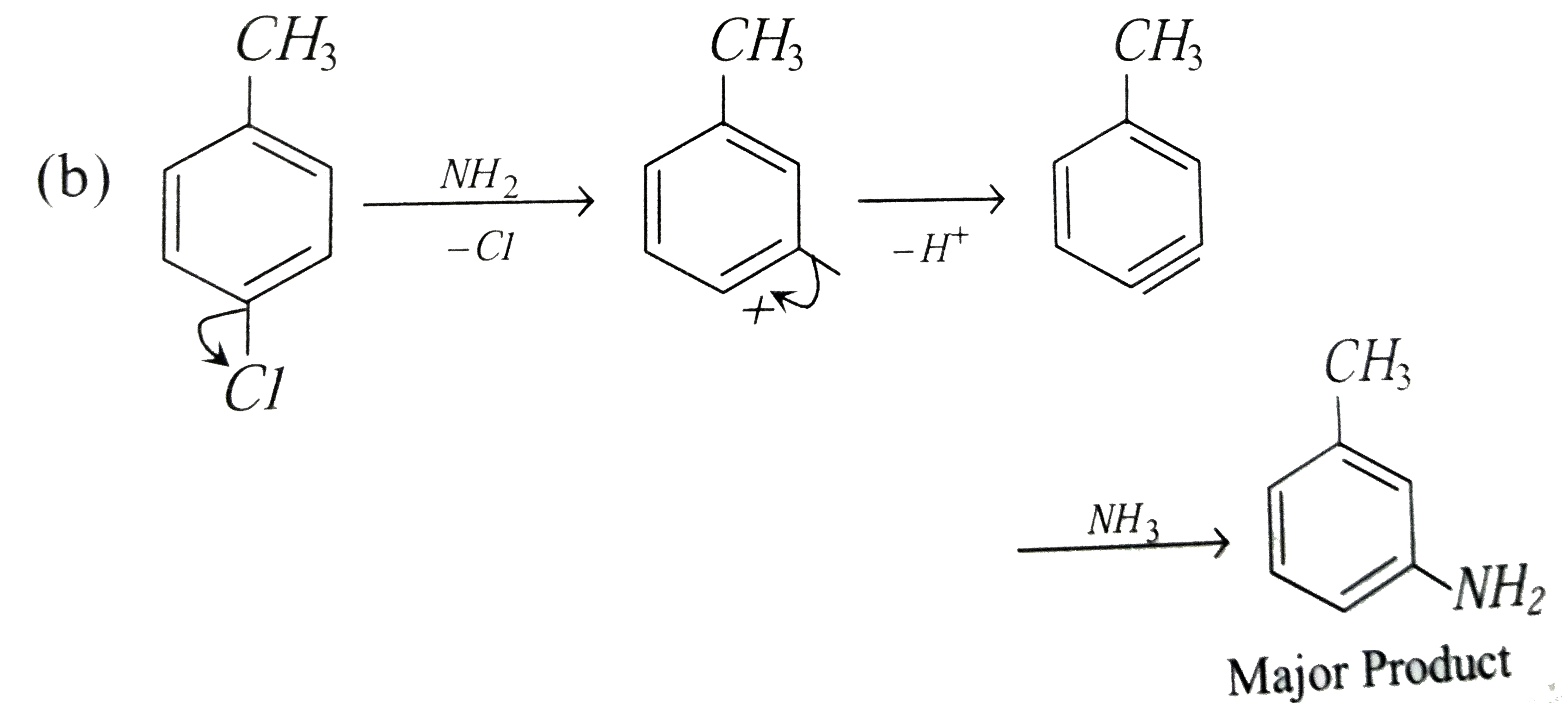
|
|
| 11. |
In the reaction P+NaOH rarr PH_(3)+NaH_(2)PO_(2) |
|
Answer» <P>P is oxidised only 
|
|
| 12. |
In the reaction P rarr Qif the concentration of P is increased by four times the rate of reaction is increased by two times . The order of reaction is : |
| Answer» Answer :B | |
| 13. |
In the reaction: overset(3)(A)+overset(2)(2B)++overset(1)(3C)toD …. Initial no. of moles the limiting reactant may be |
|
Answer» A |
|
| 14. |
In the reaction on C_2H_5OH + HX overset(ZnX_2)(to) C_2H_5X + H_2Othe order of reactivity of HX is |
|
Answer» HBr gt HI gt HCI |
|
| 15. |
The reaction of phenol with chloroform in presence of aqueous NaOH solution at 350 K gives ortho-hydroxy benzaldehyde. The reaction is called as____ |
|
Answer» |
|
| 16. |
In thereaction of phenol with CHCl_3 and aqueous NaOH at 70^@C the electrophile attacking the ring is : |
|
Answer» `CHCl_3` |
|
| 17. |
In the reaction of p-chlorotoluene with KNH_(2) in liquid NH_(3), the major product is |
|
Answer» o-toluidine |
|
| 18. |
In the reaction of p-chlorotoulene with KNH_(2) in liq. NH_(3) the major product is |
|
Answer» o-toluidine 
|
|
| 19. |
In the reaction of p-chlorotoluene with KNH_(2) in liq. NH_(3), the major product is |
|
Answer» o-toluidine |
|
| 20. |
In the reaction of p- chlorotoluene with KNH_(2) in liq NH_(3), the major product is |
|
Answer» o- toluidine |
|
| 21. |
In the reaction of p-chlorotoluene with KNH_(2) in liquid NH_(3), the major product is : |
|
Answer» o - toluidine 
|
|
| 22. |
In the reaction of oxidation of thiosulphate (mol . Mass =112)2S_(2)O_(3)^(2-)toS_(4)O_(6)^(2-)+2e^(-) equivalent weight of thiosulphate ion is : |
|
Answer» 56 |
|
| 23. |
In the reaction of O_3 and H_2O_2 the later acts as: |
|
Answer» OXIDISING agent |
|
| 24. |
In the reaction of formation of sulphur trioxide by contact process 2SO_(2)+O_(2) harr 2SO_(3) the rate of reactionn was (d[O_(2)])/(dt)=2.5times10^(-4)mol*L^(-1)*s^(-1). The rate of reaction is terms of [SO_(2)] in mol*L^(-1)*s^(-1) will be |
|
Answer» `-1.25times10^(-4)` `(1)/(2)(dSO_(2))/(DT)=-(dO_(2))/(dt)=(1)/(2)(dSO_(3))/(dt)` `THEREFORE -(dSO_(2))/(dt)=-2times(dO_(2))/(dt)=2times2.5 times10^(-4)=-5times10^(-4)MOL*L^(-1)*s^(-1)` |
|
| 25. |
In the reaction of benzene with a mixture of conc. HNO_(3) and conc. H_(2)SO_(4), the active species involved is |
|
Answer» nitrite ION |
|
| 26. |
In the reaction of aA + bB + cC to Products,i) if concentration of A is doubled, keeping cone. of B and C constant, the rate of reaction becomes double ii) if concentration of Bis halved keeping cone. of A and C constant, the rate of reaction remains unaffected iii) if concentration of C is made 1.5 times, the rate of reaction becomes 2.25 times. The order of reaction is |
|
Answer» 1 Rate `prop [A][B]^(0) [C]^(2)` . Hence , `THEREFORE ` Over all ORDER = 3 . |
|
| 27. |
In the reaction of autocatalysis, the variation of concentration with time is correctly represented by which of the following plots? |
|
Answer»
|
|
| 28. |
In the reaction of aniline, a coloured product C was obtained. The structure of C would be |
|
Answer»
|
|
| 29. |
In the reaction of 2-nitroluene with bromine in the presence of iron which of the products shown below is the most abundant in the mixture? |
|
Answer»
|
|
| 30. |
In the reaction :Ni^(2+)+6H_(2)Orarr[Ni(H_(2)O)_(6)]^(2+) |
|
Answer» `Ni^(2+)` behave LIKE a LEWIS ACID |
|
| 31. |
In the reactionNH_(3)+BF_(3) hArr NH_(3) rarr BF_(3), BF_(3) is |
|
Answer» LEWIS acid |
|
| 32. |
in the reaction ,Na(s) to Na(g) the enthalpy of atomsiation is same as the |
|
Answer» ENTHALPY of DISSOCIATION the enthalpy of atmoisation in saem as the enthalpy of sublimation. |
|
| 33. |
In the reaction NaOH + Al(OH)_(3) ti NaAlO_(2) +H_(2)O The equivalent mass of Al(OH)_(3) is |
|
Answer» 78 `:. "40 g of NaOH"= (78)/(3) "g of "Al(OH)_(3)` Hence equivalent mass of `Al(OH)_(3) = (78)/(3)=26 g` |
|
| 34. |
In the reaction :NaCl+ K_(2)Cr_(2)O_(7) +cons. H_(2)SO_(4) overset("heat")(rarr)X+ Na_(2)SO_(4) +K_(2)SO_(4)+ H_(2)O , X is a reddish brown gas which gives a yellow solution on passing through water and a yellow precipitate on treating the solution with lead acetatesolution . X could be |
|
Answer» `Cl_(2)` |
|
| 35. |
In the reaction Na_(2)CO_(3)+HCl toNaHCO_(3)+NaCl the eq.wt of Na_(2)CO_(3) is |
|
Answer» 53 |
|
| 36. |
In the reaction N_(2(g)) + O_(2(g)) to 2NO_((g)), DeltaH^@reaction is + 179.9 kJmol^(-1) and DeltaS_("reaction")^@ = 66.09 JK^(-1)mol^(-1). Calculate DeltaG^@ reaction at 300K. |
| Answer» SOLUTION :`DeltaG_r^@ = 160.07kJ. MOL^(-1)` | |
| 37. |
In the reaction N_(2(g)) + 3H_(2(g))hArr2NH_(3(g)), the forward reaction is exothermic and the backward reaction is endothemic. In order to produce more heat it is necessary – |
|
Answer» To add ammonia |
|
| 38. |
In the reaction, N_2(g) +3H_2(g) hArr2NH_3(g) increase in H_2 concentration equilibrium: |
|
Answer» FAVOURS the DISSOCIATION of `NH_3` |
|
| 39. |
In the reaction N_(2)+3H_(2)rarr2NH_(3) ((dx)/(dt))=1xx10^(2)[N_(2)][H_(2)]^(3) and at some instant ([N_(2)][H_(2)]^(3))/([NH_(3)]^(2)) has value 10^(-5)M^(2) then, at this instant, value of ((dx)/(dt)) is : |
|
Answer» 0 |
|
| 40. |
In the reaction N_(2)+3H_(2)rarr2NH_(3). The ratio of volumes of nitrogen, hydrogen and ammonia is 1:3:2. these figures illustrate the law of: |
|
Answer» CONSTANT PROPORTIONS |
|
| 41. |
In the reaction N_2 + 3H_2 rarr 2NH_3 ratio by volume ofN_2 ,H_2 and NH_3 IS 1:3:2 This illustrate law of : |
|
Answer» definite proportion |
|
| 42. |
In the reaction , n- Hexanenitrile underset(H_(2)O)overset(H_(3)O^(+))toAoverset(NaOBr)toB, the product B is : |
|
Answer» 1- Aminopentane |
|
| 43. |
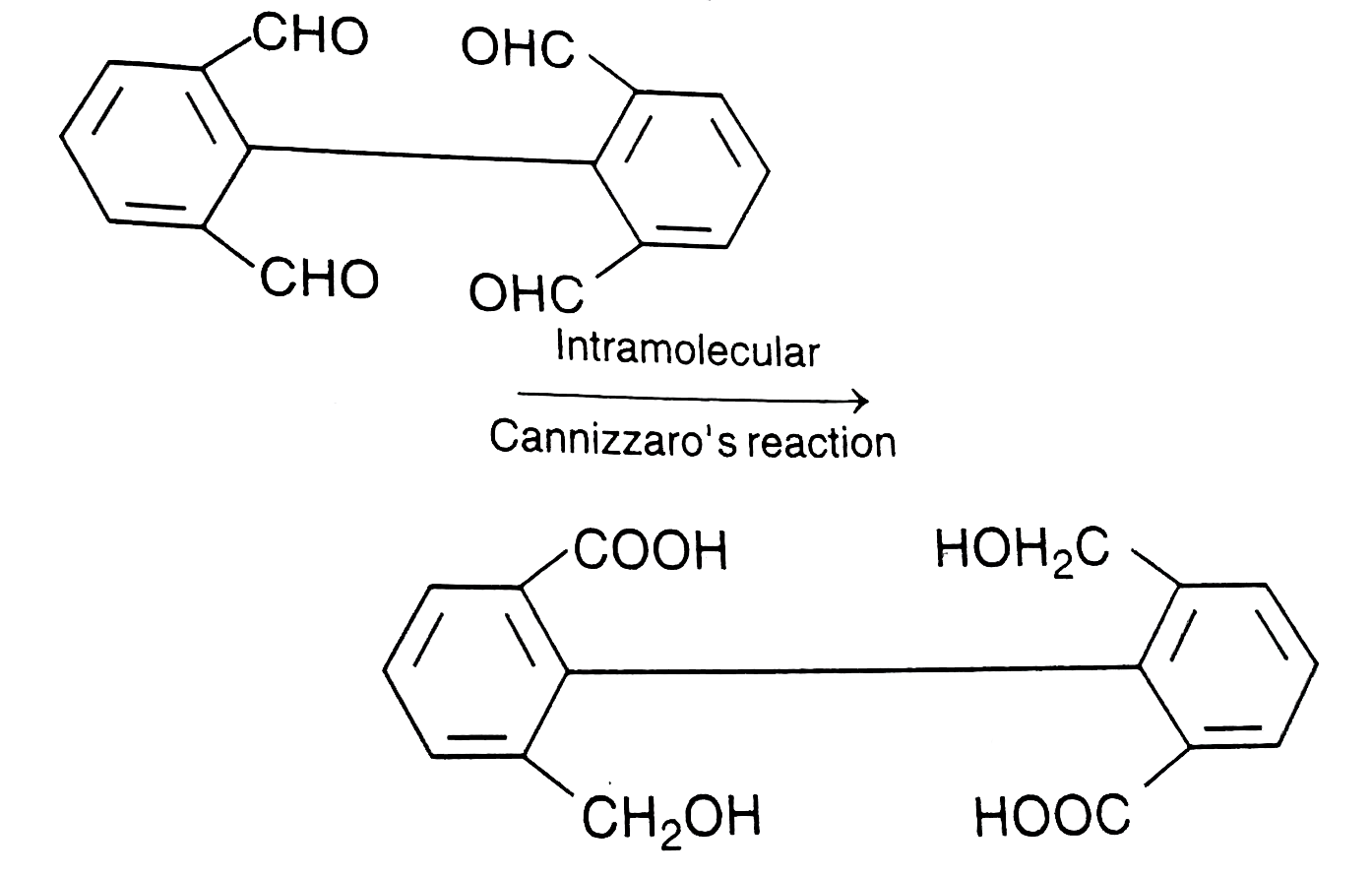
In the reaction : Major product is : |
|
Answer»
|
|
| 44. |
In the reaction LiH+AlH_3 rarrLiAlH_4, AlH_3 and LiH acts as : |
|
Answer» LEWIS base and Lewis ACID |
|
| 45. |
In the reaction l_(2)+2Na_(2)S_(2)O_(3) to Na_(2)S_(4)O_(6)+2Nal the equivalent weight of oxidant is [M= Molecular weight of oxidant]- |
| Answer» ANSWER :A | |
| 46. |
In the reaction struture of the product (T) is : |
|
Answer» ` (##KSV_CHM_ORG_P2_C15_E01_155_O01.png" WIDTH="30%"> |
|
| 47. |
In the reaction KMnO_4+H_2SO_4+H_2C_2O_4 to productsMn^(++) ions acts as |
|
Answer» POSITIVE catalyst |
|
| 48. |
In the reaction K_2Cr_2 O_7+XH_2 SO_4+YSO_2 toK_2 SO_4+Cr_s(SO_4)_3 +ZH_2 O X,Y,Zare |
|
Answer» 1,3,1 ` K_2Cr_2 O_7 +H_2 SO_4 +3SO_2 to K_2SO_4+Cr (SO_4)_3+H_2O` thereforeX,Y, and Zthe coefficeintsof `H_2SO_4 , SO_2`and `H_2O` RESPECTIVELY are 1 ,3,1 |
|
| 49. |
In the reaction K + SO_2 rarr………..the products are: |
|
Answer» `KO_2 + S` |
|