Saved Bookmarks
This section includes 7 InterviewSolutions, each offering curated multiple-choice questions to sharpen your Current Affairs knowledge and support exam preparation. Choose a topic below to get started.
| 1. |
In the following sequence of reactions :Toluene overset(KMnO_(4))toAoverset(SOCl_(2))toBunderset(H_(2)//Pd)overset(H_(2)//Pd)toC |
|
Answer» `C_(6)H_(5)COOH` 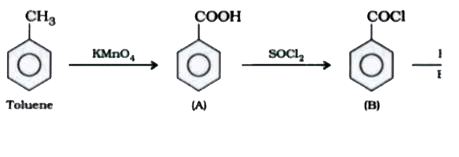
|
|
| 2. |
In the Duma's method for the estimation of nitrogen, the gas collected in nitrometer is |
|
Answer» `N_(2)` |
|
| 3. |
In the Duman method for the estimation of nitrogen , 0.0237 grams of an organic compound gave 2.21 mL of nitrogen at 754.32 mm of Hg pressrue at 18^(@)C. (Aquesous tension at 18^(@)C is 15.4mm of Hg). Therefore the percentage of nitrogen in the compound is |
|
Answer» `20.67%` |
|
| 4. |
In the dry cell (a) Which substance acts as anode and which as cathode ? (b) Which electrolyte is used in the cell ? (c ) What is the cell potential of the cell ? (d) Why does the cell voltage not change during operation ? |
|
Answer» Solution :(a) Zinc container acts as anode while carbon rod behaves as cathode. (b) A paste of HgO and KOH acts as the electrolyte. (C ) The cell POTENTIAL is 1.35 V. (d) The cell VOLTAGE does not change because the OVERALL redox reaction taking place in the cell does not involve any ions and there is no change in concentration. `Zn(s)+HgO(s) to ZNO(s)+Hg(l)` |
|
| 5. |
In the following sequence of reactions: Toluene overset(KMnO_(4))toA overset(SOCl_(2))toB underset(BaSO_(4))overset(H_(2)//Pd)toC The product (C) is |
|
Answer» `C_(6)H_(5)CH_(2)OH` `C_(6)H_(5)COCL underset(("Rosenmund reduction"))overset(H_(2)//Pd-BaSO_(4))to underset("Benzoyl chloride")(C_(6)H_(5)CHO)` |
|
| 6. |
In the Duma's method for the estimation of nitrogen , 0.84g of an organic compound gave 448ml of nitrogen at S.T.P. The percentage of nitrogen in the compound is : |
|
Answer» `33.3%` `448ML` of nitrogen at S.T.P weigh `=(28)/(22400)xx448=0.56g` `%` Nitrogen `=(0.56)/(0.84)xx100=66.7` |
|
| 7. |
In the following sequence of reactions, the end product is CaC_(2) overset(H_(2)O)rarr A overset(Hg^(2+)//H_(2)SO_(4))rarr B overset([O])rarr C overset(Ca(OH)_(2))rarr D overset("heat")rarr E |
|
Answer» acetaldehyde |
|
| 8. |
In the following sequence of reactions, the endproduct is CaC_2 overset(H_2O) to A overset(Hg^(2+) // H_2SO_4)to B overset"(O)"to C overset(Ca(OH)_2)to D overset"heat"to E |
|
Answer» acetaldehyde |
|
| 9. |
In the Down's process at low temperature sodium extracted is more because |
|
Answer» Solubility of SODIUM metal in FUSED electrolyte is less |
|
| 10. |
In the following sequence of reactions, the alkene affords the compound 'B' CH_3CH=CHCH_3overset(O_3)to A underset"Zn"overset(H_2O)to BThe compound B is |
|
Answer» `CH_3COCH_3` 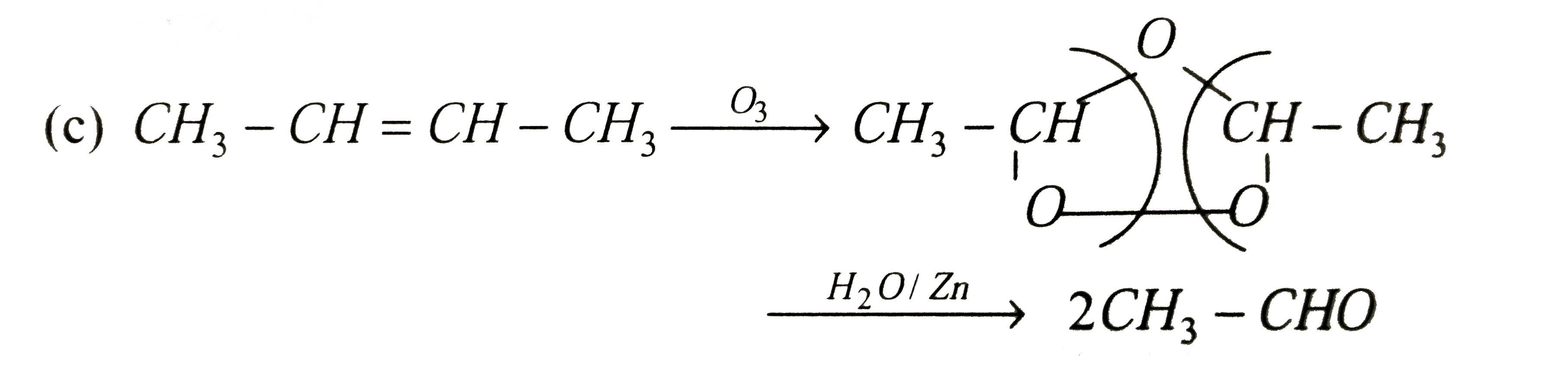
|
|
| 11. |
In the Down's cell KCl is added in NaCl to: |
|
Answer» LOWER its MELTING point |
|
| 12. |
In the DNA of E coli, the mole ratio of adenine to cytosine is 0.7. if the number of moles of adenine in the DNA is 350000, the number of moles of guanine is equal to: |
|
Answer» 35000 Adenine=Guanine=500000 |
|
| 13. |
In the following sequence of reactions The compound Q formed will be |
|
Answer» aniline |
|
| 14. |
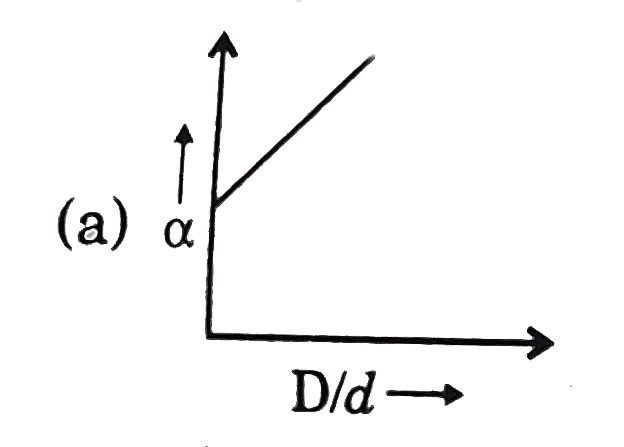
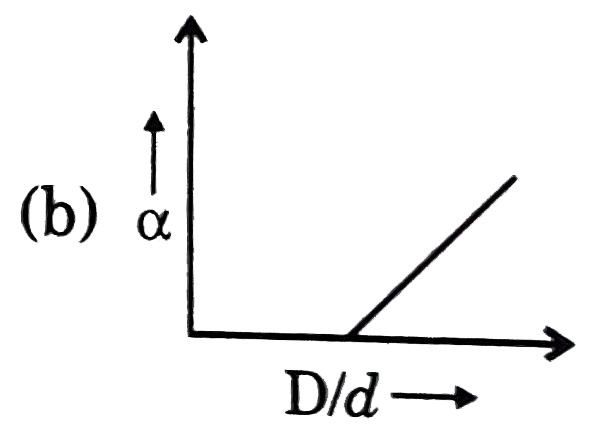
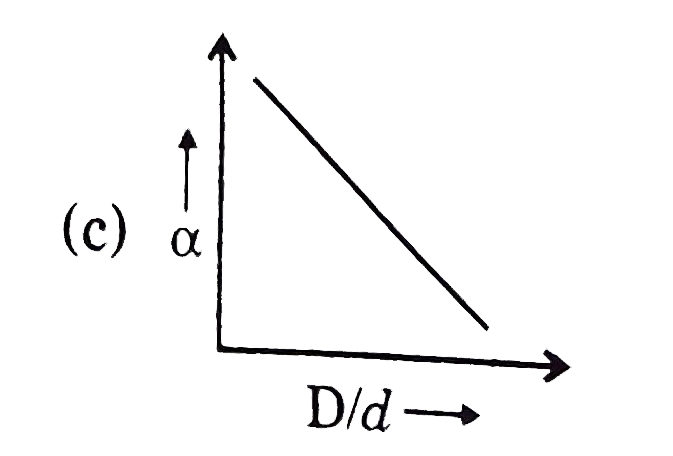
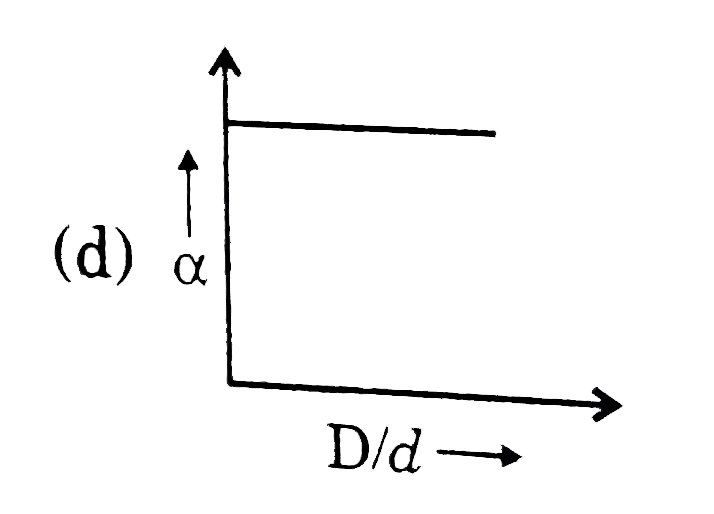
In the dissociation of N_(2)O_(4) into NO_(2)O_(4) into NO_(2), alpha varies with ((D)/(d)) according to: [alpha degree of dissociation, D-vapour density before dissociation, d-vapour density after dissociation] |
|
Answer»
|
|
| 15. |
In the following sequence of reactions, the alkene affords the compound 'B' CH_(3)CH=CHCH_(3)overset(O_(3))rarrAoverset(H_(2)O)rarrB compound B is: |
|
Answer» `CH_(3)CH_(3)CHO` |
|
| 16. |
In the dissociation of 2HI hArr H_2 +I_2 the degree of dissociation will be affected by the |
|
Answer» ADDITION of INERT gas |
|
| 17. |
In the dissociation of HI, it is found that 20% of the acid is dissociated when equilibrium is reached. Calculate the pressure equilibrium constant. |
| Answer» SOLUTION :`1//64` | |
| 18. |
In the disproportionation reaction of Cl_2 with caustic soda, the main rection products are |
|
Answer» `NACLO and NaClO_(3)` |
|
| 19. |
In the following sequence of reactions, the alkene affords the compound 'B'. CH_(3)CH=CHCH_(3) overset(O_(3)) to A underset(Zn)overset(H_(2)O) to B. The compound B is : |
|
Answer» `CH_(3)CH_(2)CHO` 
|
|
| 20. |
In the following sequence of reactions, the alkene affords the compound B CH_(3)CH = CHCH_(3) overset(O_(3))rarr A overset(Zn)rarr B The compound B is |
|
Answer» `CH_(3)CHO` 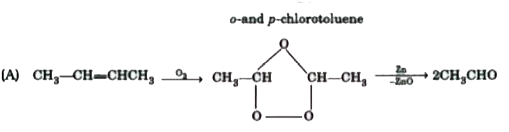
|
|
| 21. |
In the disintegration of a radioactive element, alpha and beta-particles are evolved from the nucleus: ._(0)^(1)n to ._(1)^(1)H + ._(-1)^(0)e + Antineutrino + Energy 4 ._(1)^(1)H to ._(2)^(4)He + 2 ._(+1)^(0)e + Energy Then, emission of these particles changes the nuclear configuration and results into a daughter nuclide. Emission of an alpha-particles results into a daughter element having atomic number lowered by 2 and mass number by 4, on the order hand, emission of a beta-particle yields an element having atomic number raised by one. soddy and Fajan proposed that the daughter nuclide may occupy different positions in the periodic talbe. Select the correct statements amont the following: |
|
Answer» EMISSION of a `beta` PARTICLE results into ISOBAR of parent element |
|
| 22. |
In the disintegration of a radioactive element, alpha- and beta-particles are evolved from the nucleus. ._(0)n^(1) rarr ._(1)H^(1) + ._(-1)e^(0) + Antineutrino + Energy 4 ._(1)H^(1) rarr ._(2)He^(4) + 2 ._(+1)e^(0) + Energy Then, emission of these particles changes the nuclear configuration and results into a daughter nuclide. Emission of an alpha-particles results into a daughter element having atomic number lowered by 2 and mass number by 4, on the other hand, emission of a beta-particle yields an element having atomic number raised by 1. Select the correct statements among the following: |
|
Answer» Emission of a `beta`-PARTICLE RESULTS into an isobar of parent element. |
|
| 23. |
In the following sequence of reactions M overset(K_(1))(to)Noverset(K_(2))(to)Ooverset(K_(3))(to)P:K_(1)ltK_(2)ltK_(3) then the rate determining step is |
|
Answer» <P>`M to N` |
|
| 24. |
In the dichromate dianion, the nature of bonds are |
|
Answer» four equivalent Cr-o BONDS 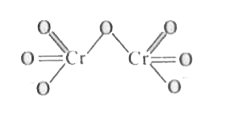
|
|
| 25. |
In the dichromate-dianion |
|
Answer» 4 Cr-o BONDS are equivalent |
|
| 26. |
In the following sequence of reactions. CH_(3)CH_(2)Ohoverset(P+I_(2))to A underset("ether")overset(Mg)to B overset(HCHO)to C overset(H_(2)O)to D the compound 'D' is |
|
Answer» Butanal |
|
| 27. |
In the dichromate dianion : |
|
Answer» 4 Cr-O BONDS are EQUIVALENT |
|
| 28. |
In the dichlorination reaction of propane,mixture of products are obtained .How many compounds the mixture contain ? |
|
Answer» 2 |
|
| 29. |
In the following sequence of reactions CH_(3)CH_(2)OH overset(P+I_(2))(to)A overset(Mg)underset("ether")(to)Boverset(HCHO)(to)Coverset(H_(2)O)(to)D the compounds D is |
|
Answer» PROPANAL 
|
|
| 30. |
In the dichromate dianion |
|
Answer» Cr-O BONDS are EQUIVALENT |
|
| 31. |
In the diazotisation of arylamine, the use of nitrous acid |
|
Answer» suppresses HYDROLYSIS of phenol 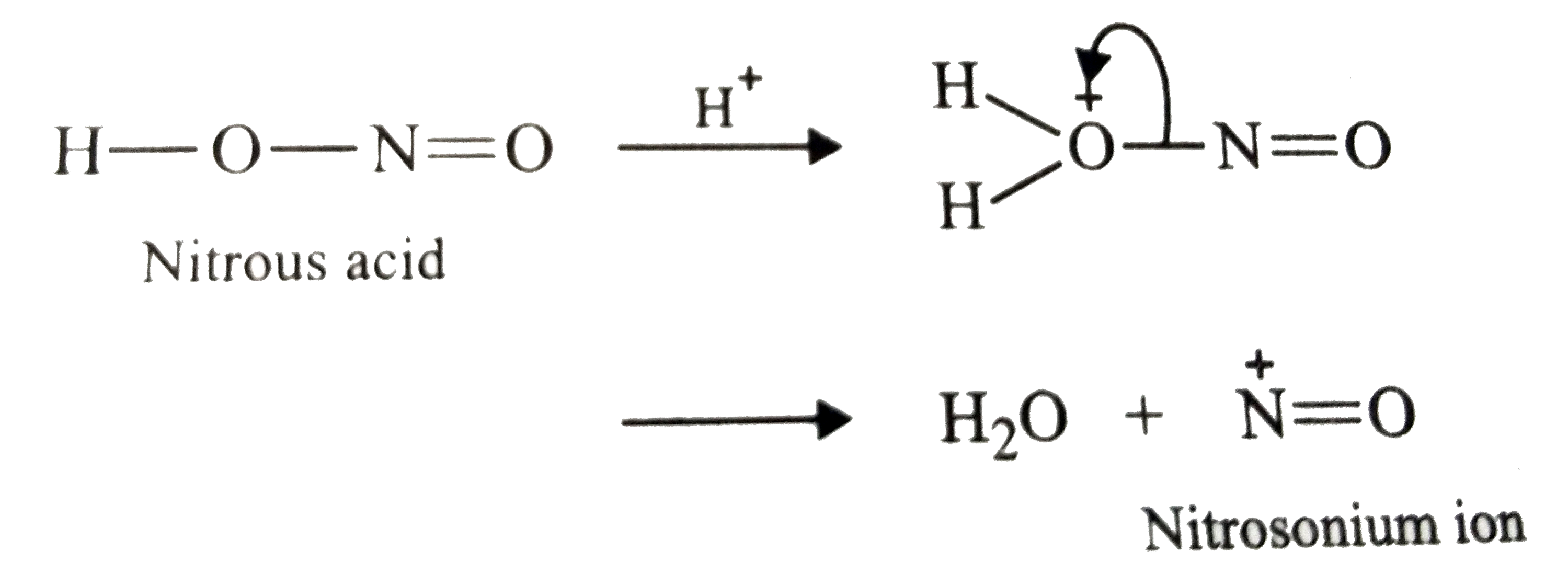
|
|
| 32. |
In the following sequence of reactionsCH_(3)CH_(2)CH_(2)Broverset(KOH(alc))rarr(A)overset(HBr)rarr(B)overset(KOH(aq.))rarr(C),The product ( C) is |
|
Answer» propan-2-ol |
|
| 33. |
In the diazotisation of aniline with sodium nitrite and hydrochlorid acid, the excess of hydrochloric acid is used primarily to |
|
Answer» suppressthe concentration of FREE aniline |
|
| 34. |
In the diazotisasation of aniline with sodium nitrite and hydrochloric acid, the excess of hydrochloric acid is used primarily to : |
|
Answer» Supress the concentration of free ANILINE |
|
| 35. |
In the dialysis of kidney, recycling of patient's blood is done through semipermeable tube in an ........... solution |
| Answer» SOLUTION :ISOTONIC SALINE | |
| 36. |
In the diagram given in the point D refers to composition where, the solution exhibits |
|
Answer» MAXIMUM BOILING azeotropy |
|
| 37. |
In the determination of molar mass of A^(+)B^(-) , using a colligative property, what may be thevalue of van't Hoff factor if the solute is 50% dissociated ? |
| Answer» SOLUTION :`i= 1+ ALPHA = 1.5 (alpha = 0.5)` | |
| 38. |
In the following sequence of reactions CH_(3)CH_(2)CH_(2)Br overset(KOH(alc))to(A)overset(HBr)To(B)overset(KOH(aq.))to(C), The product (C) is |
|
Answer» Propan-2-ol 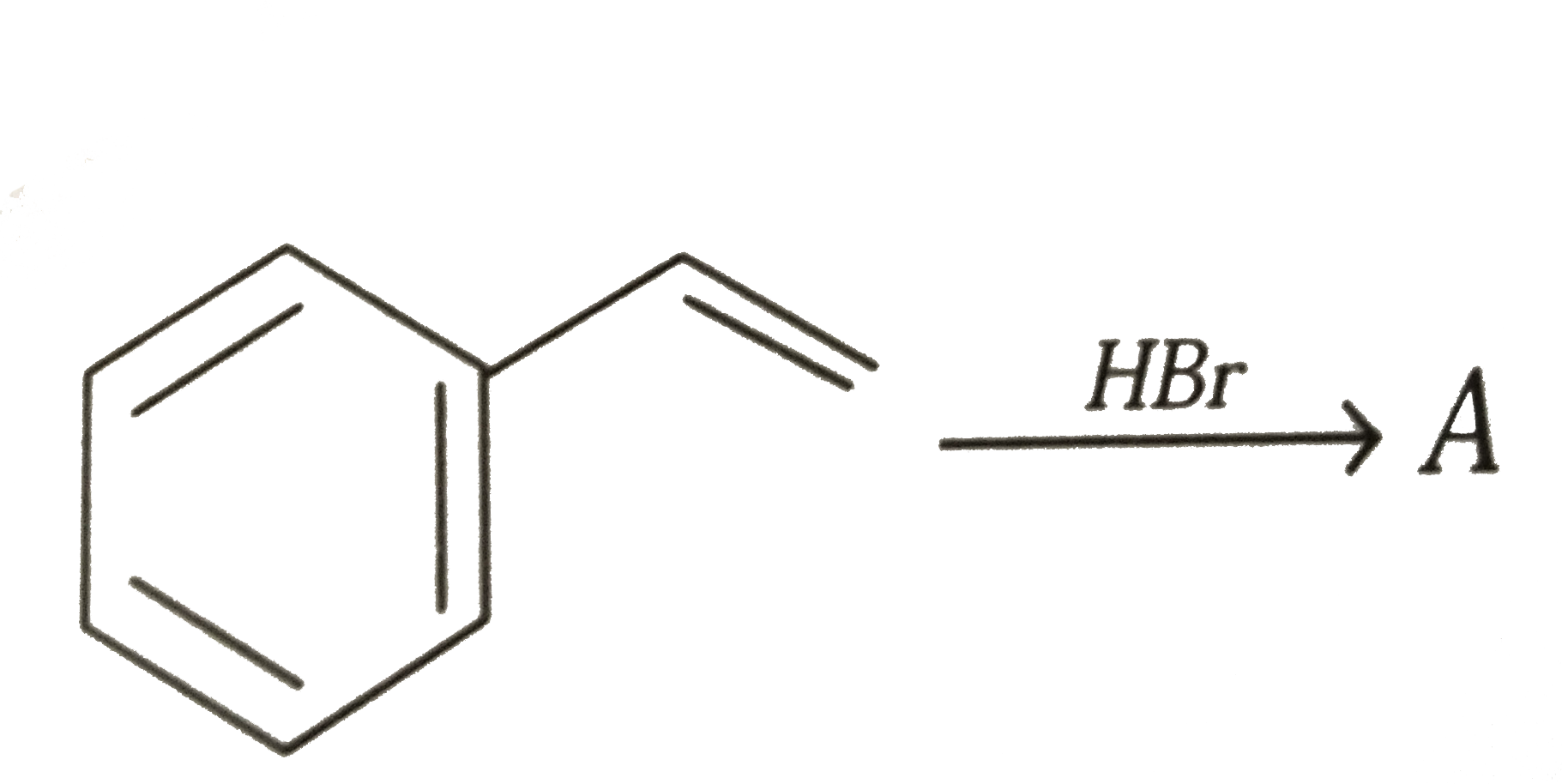
|
|
| 39. |
In the detection of phosphours in an organic compound, it is converted to sodium phosphate by fusing it with : |
|
Answer» SODIUM |
|
| 40. |
In the detection of hydrogen from organic compound , the compound is heated with CuO and the water produced is tested with: |
|
Answer» LIME water |
|
| 41. |
In the following sequence of reactions CH_3Br overset(KCN) rarrA overset(H_3O^+) rarrB overset("LiAl"H_4)rarr C the end product C is |
|
Answer» methane |
|
| 42. |
In the detection of halogen, nitric acid is added to the Lassaigne's extract. Its main function is to: |
|
Answer» oxidise the solution |
|
| 43. |
In the following sequence of reactions, CH_3-CH_2OH overset(P+I_2)to A overset("Mg/ether")to B overset(HCHO)toC overset(H_2O) D. the compound D is …………………. . |
|
Answer» BUTANAL |
|
| 44. |
In the detection of carbon, lime water turns milky due to the formation of : |
| Answer» Answer :C | |
| 45. |
In the depression of freezing point experiment, it is found that the: |
|
Answer» The vapour PRESSURE of the SOLUTION is LESS than that of PURE solvent |
|
| 46. |
In the following sequence of reactions all stereoisomers of (X) have been taken. Find the Total number of products (Z) formed. |
|
Answer» |
|
| 47. |
In the depression of freezing point experiment, it is found that the |
|
Answer» Vapour pressure of the solution is LESS than that of pure solvent |
|
| 48. |
In the depression of freezing point experiment, it is found that (a) The vapour pressure of the solution is less than that of pure solvent (b) The vapour pressure of the solution is more than that of pure solvent (c) Only solute molecules solidify at the freezing point (d) Only solvent molecules solidify at the freezing point |
|
Answer» a,b |
|
| 49. |
In the decomposition of ozone, 2 O_(3)to3O_(2), order with respect to O_(3) is………………………and that with respect to O_(2) is…………….. . |
|
Answer» |
|
| 50. |
In the following sequence of reactions, CH_(3)-Br overset(KCN)to A overset(H_(3)O^(+))to B underset("ether")overset(LiAlH_(4))toC the end product (C) is |
|
Answer» acetone |
|