Saved Bookmarks
This section includes 7 InterviewSolutions, each offering curated multiple-choice questions to sharpen your Current Affairs knowledge and support exam preparation. Choose a topic below to get started.
| 1. |
In each of the following two questions two statements are given one labelled as the Assertion(A) or Statement I and the other labelled as the reason (R) or statement II. Examine these statements carefully and mark the correct choice as per following instructions Assertion (A) - In gaseous reactions, the ratio of the volumes of gaseous reactants and products are in agreement with their molar ratio. Reason (R) - This is accrodance with Avogadro's law. |
|
Answer» Both A and R are TRUE and R is the correct EXPLANATION of A |
|
| 2. |
In each of the following three questions a hydrocarone is nemed. For each select from among the sixteen conformational structures (A through p) all structures that represent possible conformers of that compound. Write latters (a through p), corresponding to your selections in each answer box. |
|
Answer» <P> |
|
| 3. |
In each of the following pairs, which will allow greater conduction of electricity and why? (a) Silver wire at 20^(@)C, Same silver wire at 50^(@)C (b) NaCl solution at 20^(@)C, same NaCl solution at 50^(@)C (c) NH_(4)OH solution at 20^(@)C, Sae NH_(4)OH solutio at 50^(@)C (d) 0.1M acetic acid solution, 1M acetic acid solution. |
|
Answer» Solution :(a) Silver wire at `20^(@)C` because with increase in temperature, metallic conduction decreases due to vibration of kernels. (b) NaCl solution at `50^(@)C` because in case of a strong electrolyte with increase in temperature, the IONIC MOBILITIES increase. (c) `NH_(4)OH` at `50^(@)C` because in case of a weak electrolyte, DISSOCIATION increases with increase in temperature. (d). 0.1 M acetic acid because with dilution, dissociation/ionization increases. |
|
| 4. |
In each of the following pairs of organic compounds, identify the compound which will undergo S_(N^(1)) reaction. Faster. . |
|
Answer» Solution :In `S_(N^(1))` reaction, a carbocation intermediate is formed in slow step and the reaction rate depends UPON the stability of the carbocation formed as a RESULT of ionisation. (a). Tert-butly chloride upon ionisation will form a TERTIARY carbocation which is more stab le than the sec-butyl carbocation which will be formed upon the ionisation of secondary butyl chloride.  Tert-butly chloride is more reactive in this case. (b). Benzyl chloride is more reactive towards `S_(N^(1))` reaction than chlorobenzene because it readily ionises to give benzyl carbocation which is RESONANCE stabilized.  In chlorobenzene, ionisation leading to carbocation is not possible. THEREFORE, it is less reactive. |
|
| 5. |
In each of the following pairs of ions which ion is more stable: |
|
Answer» +M effect of `C_(6)H_(5)` increases the STABILITY (b). `I^(ST)` `CH_(3)-overset(o+)(CH_(2))` electron releasing group. (c). In `II^(nd)` 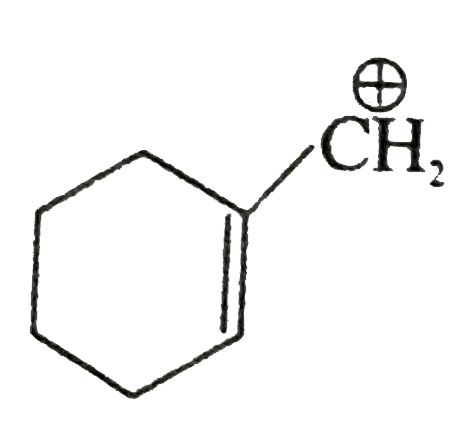 Resonance stabilises Resonance stabilises (d). In `II^(nd)`-1.p. of NITROGEN stablises the carbocation. (e). In `II^(nd)`-negative charge is present on more ELECTRONEGATIVE element. |
|
| 6. |
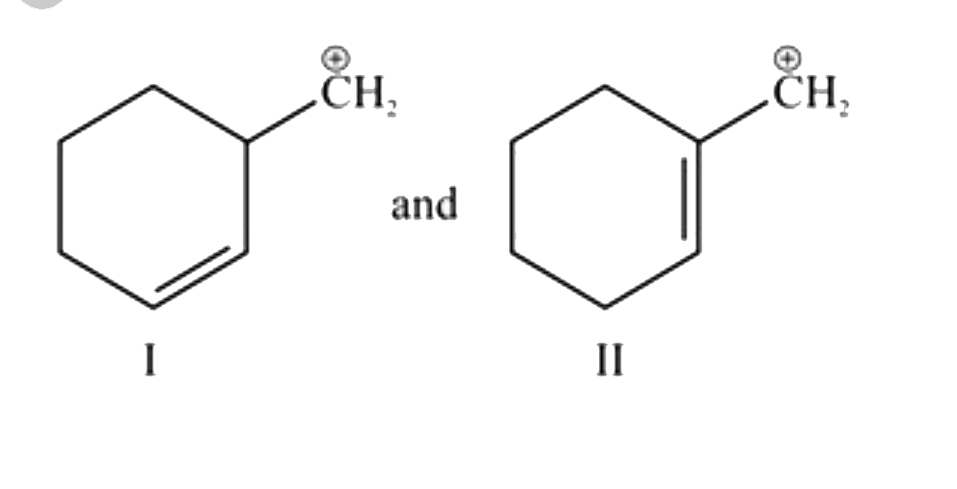
In each of the following pairs of ions in which I ion is more stable than II |
|
Answer» `underset("I")(C_(6)H_(5)-OVERSET(o+)CH_(2)) and underset("II")(CH_(2)=CH-overset(o+)CH_(2))` |
|
| 7. |
In each of the following pair of compounds,w hich is more basic in aqueous solution? Give an explanation for your choice: (a). CH_(3)NH_(2) or CF_(3)NH_(2) (b). ltBrgt (c). CH_(3)CH_(2)CH_(2)NH_(2) or CH_(3)CN (d). C_(6)H_(5)N(CH_(3))_(2) or 2,6-dimethyl-N-N-dimethylaniline. |
|
Answer» |
|
| 8. |
In E_2 elimination, some compounds follow Hofmann's rule which means: |
|
Answer» The DOUBLE bond GOES to the most SUBSTITUTED carbon |
|
| 9. |
In Dumas's methodof estimation of nitrogen 0.35 g of an organic compound gave 55 ml of nitrogen collected at 300 K temperature and 715 mm pressure. The percentage compositionof nitrogen in the compound would be (Aqueous tension at 300 K = 15 mm). |
|
Answer» <P>`14.45` `V_(2) = 46.09 ml` `%` of `N = (28 xx 46.09 xx 100)/(22400 xx 0.35) = 16.45` |
|
| 10. |
In Duma's method for quantitative estimation of nitrogen, 0.5 g of an organic compound gave 100 ml of nitrogen collected at 27°C temperature and 680 mm of Hg pressure. What is the percentage composition of nitrogen in the sample? [Given aqueous tension at 27°C = 20mm Hg] |
|
Answer» 0.2525 |
|
| 11. |
In Duma's method for estimation of nitrogen 0.4 gm of an organic compound gave 60 ml of nitrogen collected. Calculate the percentage composition of nitrogen in the compound : (Aqueous tension at 300 K=20 mm) |
|
Answer» `16.72%` |
|
| 12. |
In Dumas 'method for estimation of nitrogen, 0.3 g of an organic compound gave 50 mL. of nitrogen collected at 300 K temperature and 715 mm pressure. What will be the percentage composition of nitrogen in the compound?(Aqueous tension at 300 k = 15 mm ) |
|
Answer» 0.2238 |
|
| 13. |
In Duma'smethod for estimation of nitrogen 0.25 g of anorganic compound gave 40 mL of nitrogencollected at 300 K temeprature and 725 nn pressure. If the aqueous tension at 300 K is 25 mm. the percentage of nitrogen in the compound is |
|
Answer» <P>`18.20` `V_(1) = 40 ml` `T_(1) = 300 K` `P_(1) = 725 - 25 = 700 nm` of `Hg` `(P_(1)V_(1))/(T_(1)) = (P_(2)V_(2))/(T_(2))` `V_(2) = (700xx 40 xx 273)/(300 xx 760) = 323.52ml` `%` of `N = (28 xx V xx 100)/(22400 xx " mass of org.com")` `= (28 xx 33.52 xx 100)/(22400 xx 0.25) = 16.76` |
|
| 14. |
In Duma's method and Kjeldahl's method, respectively nitrogen present is estimated as : |
|
Answer» `N_(2),NH_(3)` |
|
| 15. |
In Duma's method for determining the nitrogen content of an organic compound, the nitrogen content is determined in the from of : |
|
Answer» GASEOUS `NH_3` |
|
| 16. |
In dry cell, what acts as negative electrode? |
|
Answer» Zinc |
|
| 17. |
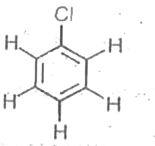
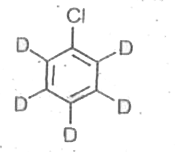
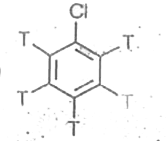
In Dow's process haloarene is converted to phenol with fused NAOH . The most reactive compound is |
| Answer» ANSWER :A | |
| 18. |
In dry cell the reaction which takes place at the zinc anode is |
|
Answer» `Zn^(2+)+2e^(-)toZn_((s))` |
|
| 19. |
In dry cell whatacts as a negative electrode ? |
|
Answer» Zinc At anode (negative terminal ) `Zn (s) RARR Zn^(2+) (Aq) +2e^(-)` at CATHODE (positiveterminal ) `2MnO_(2) (s) + 2e^(-)+2 NH_(3) (aq)+H_(2)O(I)+2CI^(-)` |
|
| 20. |
In Dow's process for theprocess for the manufacture of phenol, PhCl is fused with NaOH at elevated temperature under pressure. PhCl underset(623K, 300"atm")overset(NaOH)(rarr) ["Intermediate"] overset(H_(2)O)(rarr) underset((A))("Phenol") + underset("Side product")((B + C)) Which of the following statements are correct: |
|
Answer» <P>Pheonal is formed via the FORMATION of benzyene intermedicate. |
|
| 21. |
In Dow.s method, sodium is prepared by the electrolysis of molten NaCI. The reaction at cathode is : |
|
Answer» `2CI^-rarrCI_2(g)+2e` |
|
| 22. |
In double strand helix structure of DNA, heterocyclic base cytosine forms hydrogen bond with |
|
Answer» ADENINE |
|
| 23. |
In dénydrohalogenation of tert-pentyl bromide using alc. KOH, major product obtained is |
|
Answer» 2-Methylbut-1-ene |
|
| 24. |
In DNA the complementary bases are |
|
Answer» adenine and thynine , GUANINE and eytosine |
|
| 25. |
In DNA, Thymine and Adenine are bonded by |
|
Answer» TWO H-bonds |
|
| 26. |
In DNA, the consecutive deoxynucleotides are connected via |
|
Answer» PHOSPHODIESTER LINKAGE |
|
| 27. |
In DNA the consecutive deoxynucleotides are connected via______. |
|
Answer» PHOSPHO DIESTER linkage |
|
| 28. |
In DNA,the consecutivedeoxynucleotideare connected via. |
|
Answer» <P>phosphodiesterlinkage NUCLEOTIDES , containingnitrogen bases are CONNECTED through phosphodiesterlinkage . |
|
| 29. |
In DNA, the complementary bases are |
|
Answer» uracil and adenine : cytosine and GUANINE |
|
| 30. |
In DNA, the complimentary bases are |
|
Answer» URACIL and ADENINE, CYTOSINE , cytosine and GUANINE |
|
| 31. |
In DNA , the complimentary bases are |
|
Answer» adenine and guanine , THYMINE and CYTOSINE |
|
| 32. |
In DNA the complementary bases are : |
|
Answer» ADENINE and THYMINE , GUANINE and CYTOSINE |
|
| 33. |
In DNA base is attached to pentose sugar through |
| Answer» Answer :C | |
| 34. |
In DNA, thecomplementarybases are …… . |
|
Answer» URACIL and ADENINE , CYTOSINE and GUANINE |
|
| 36. |
In discharge tubes for advertisement..............inert gas is mostly used. |
| Answer» SOLUTION :NEON (NE) | |
| 37. |
In disaccharides, two monosaccharides are linked by ………called…………. . |
| Answer» SOLUTION :OXIDE, LINKAGE , GLYCOSIDICLINKAGE | |
| 38. |
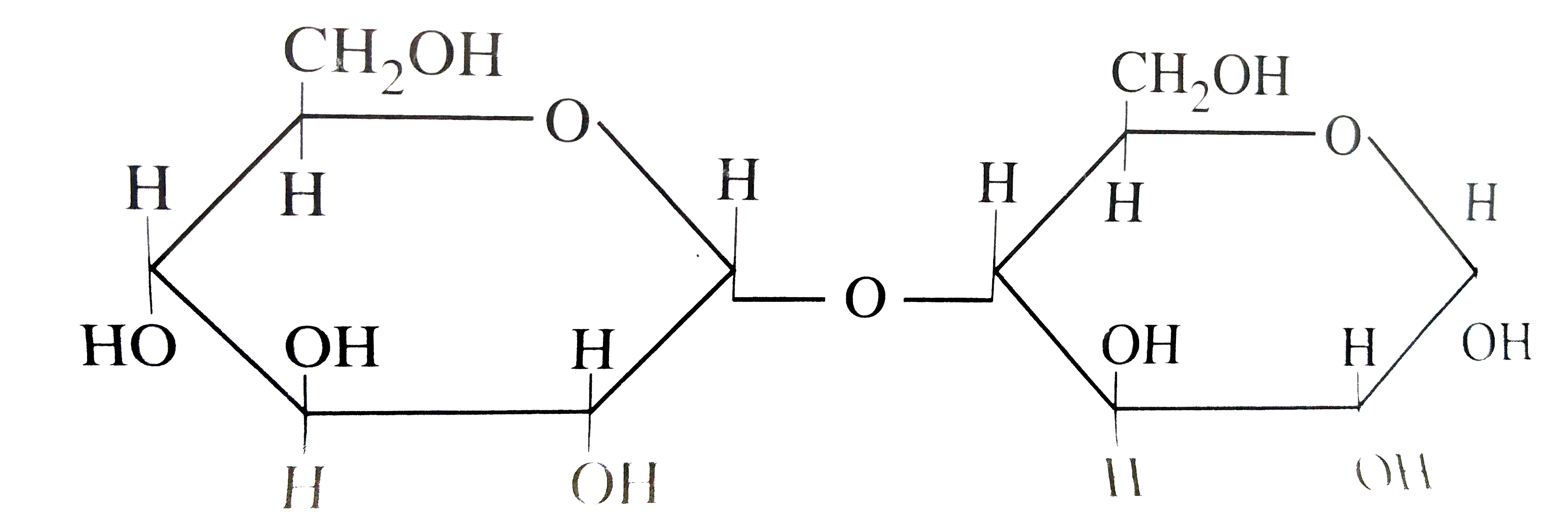
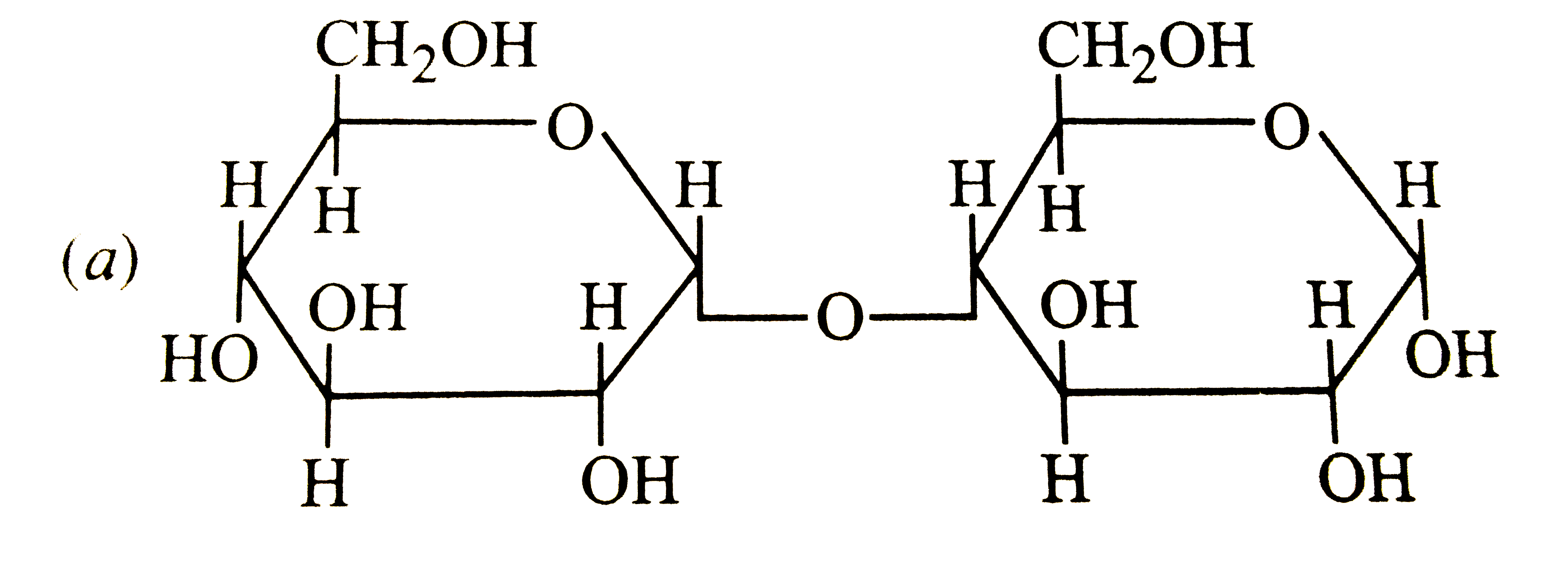
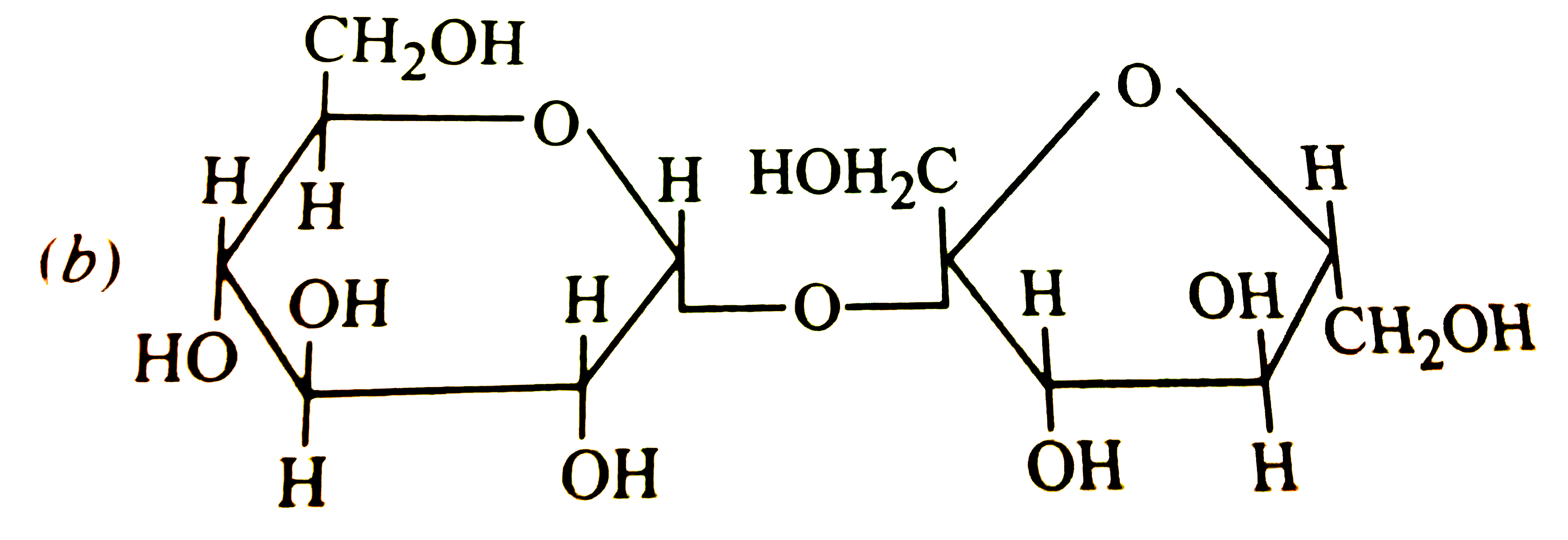
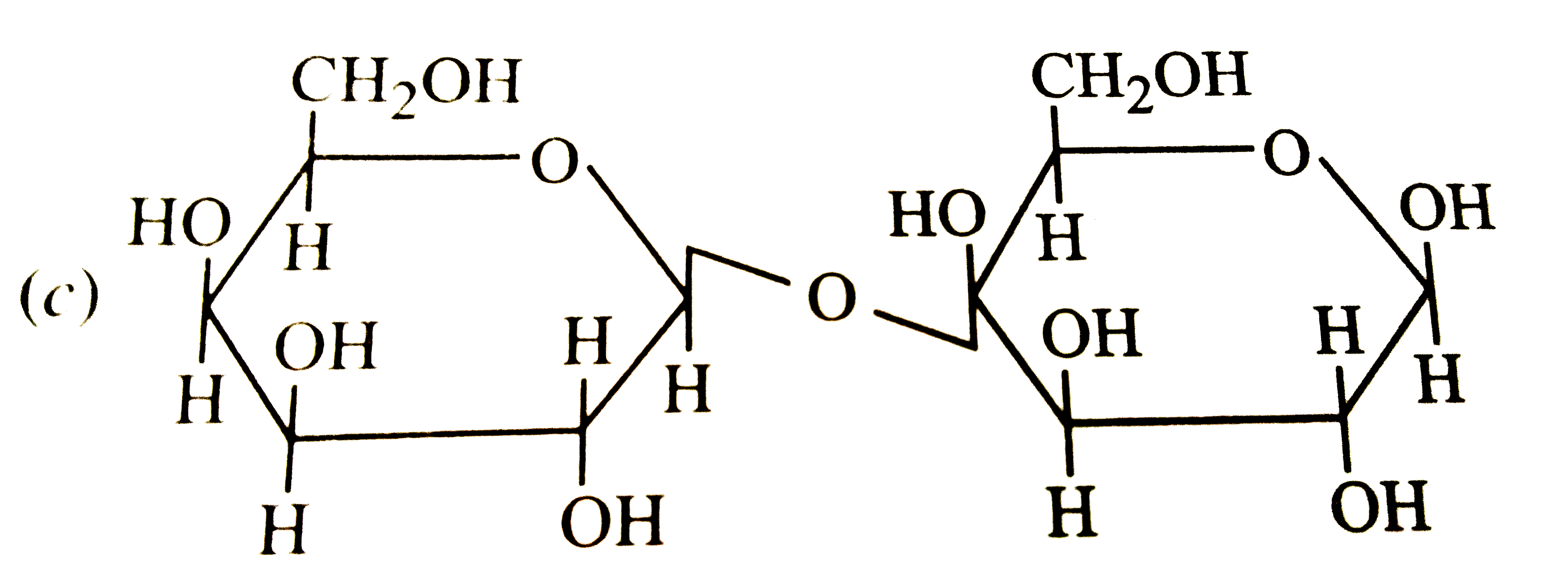
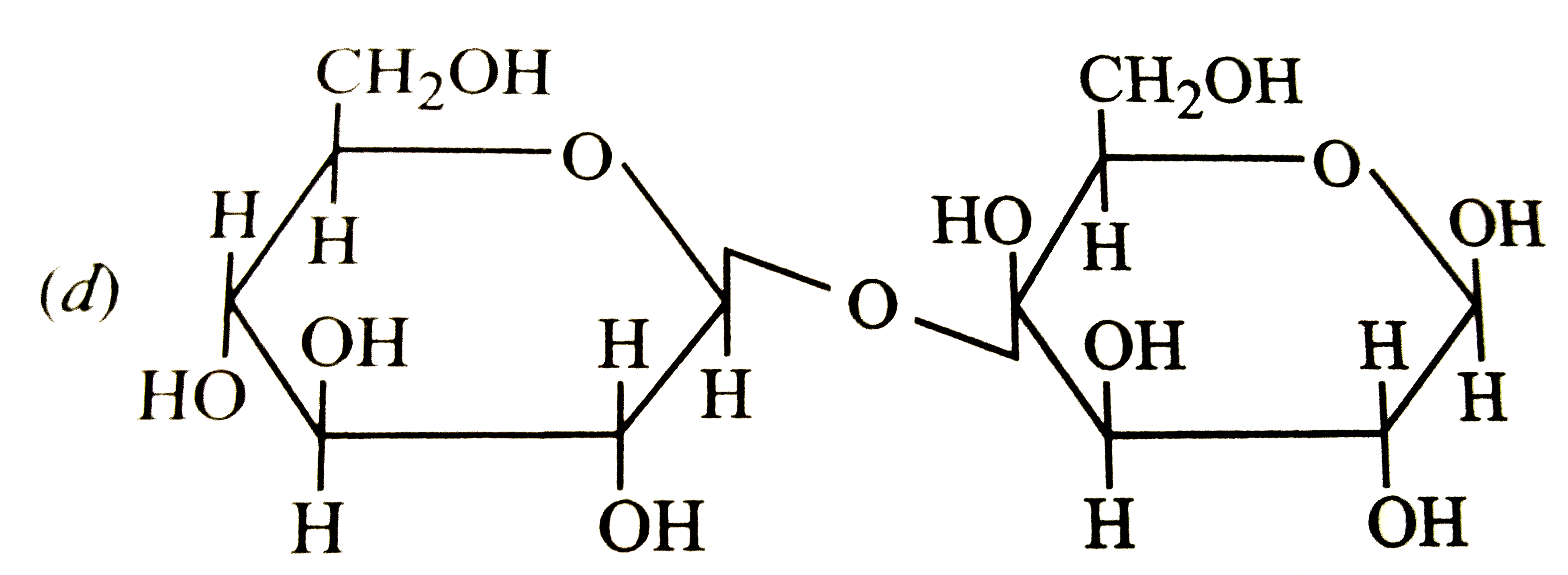
In disaccharides, if the reducing groups of monosaccharides, i.e., aldehydic or ketonic groups are bonded, these are non-reducing sugars. Which of the following disaccharide is a non-reducing sugar? |
|
Answer»
|
|
| 39. |
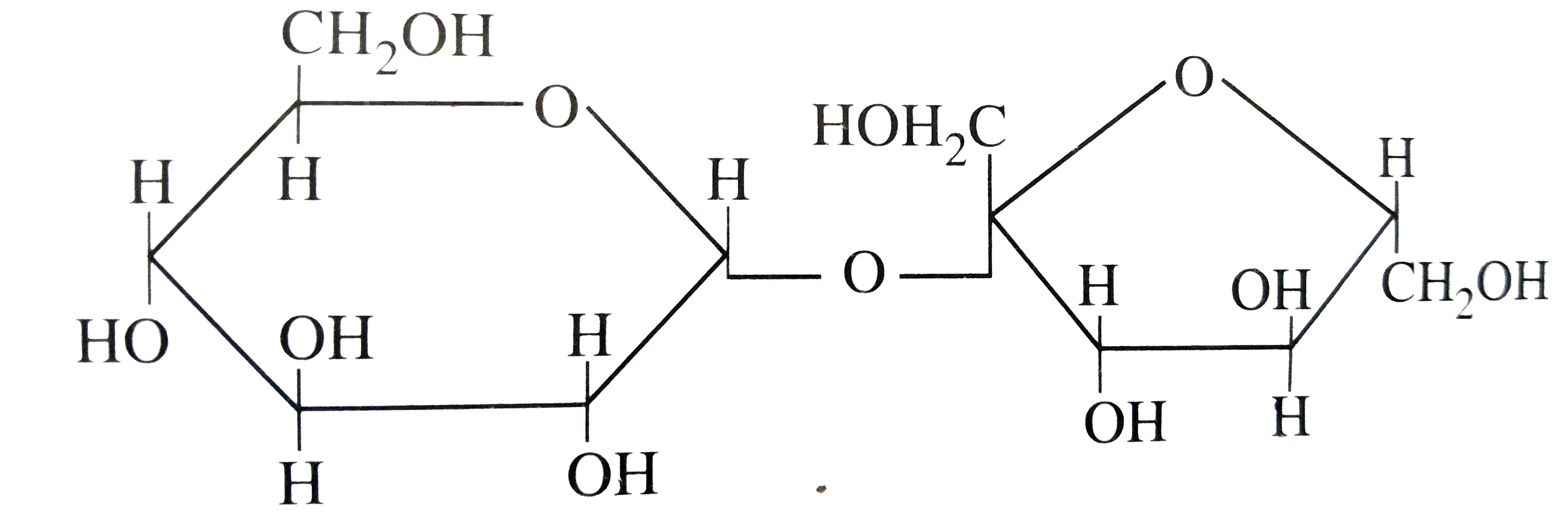
In disaccharides, if the reducing groups of monosaccharides, i.e., aldehydic or ketonic groups are bonded, these are non-reducing sugars. Which of the following disaccharide is a non-reducing sugar- |
|
Answer»
|
|
| 40. |
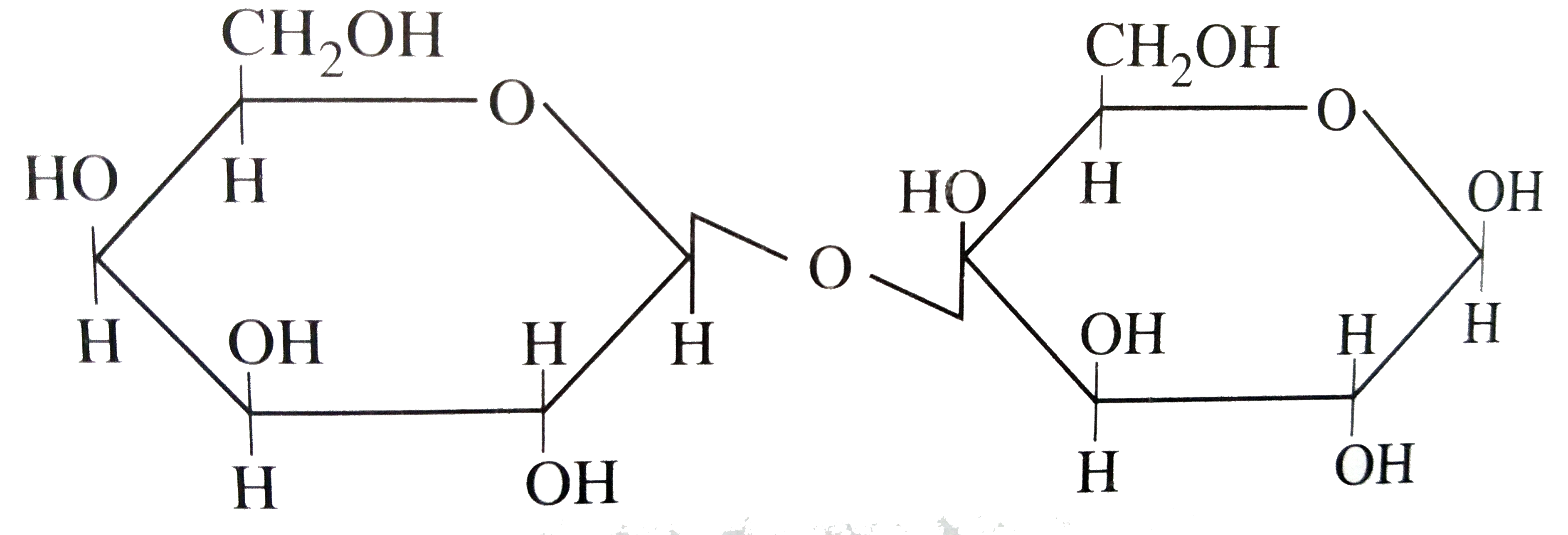
In disaccharides, if the reducing groups of monosaccharides, i.e., aldehydic or ketonic groups are bonded , these are non - reducing sugars. Which of the following disaccharide is a non - reducing sugar ? |
|
Answer»
|
|
| 41. |
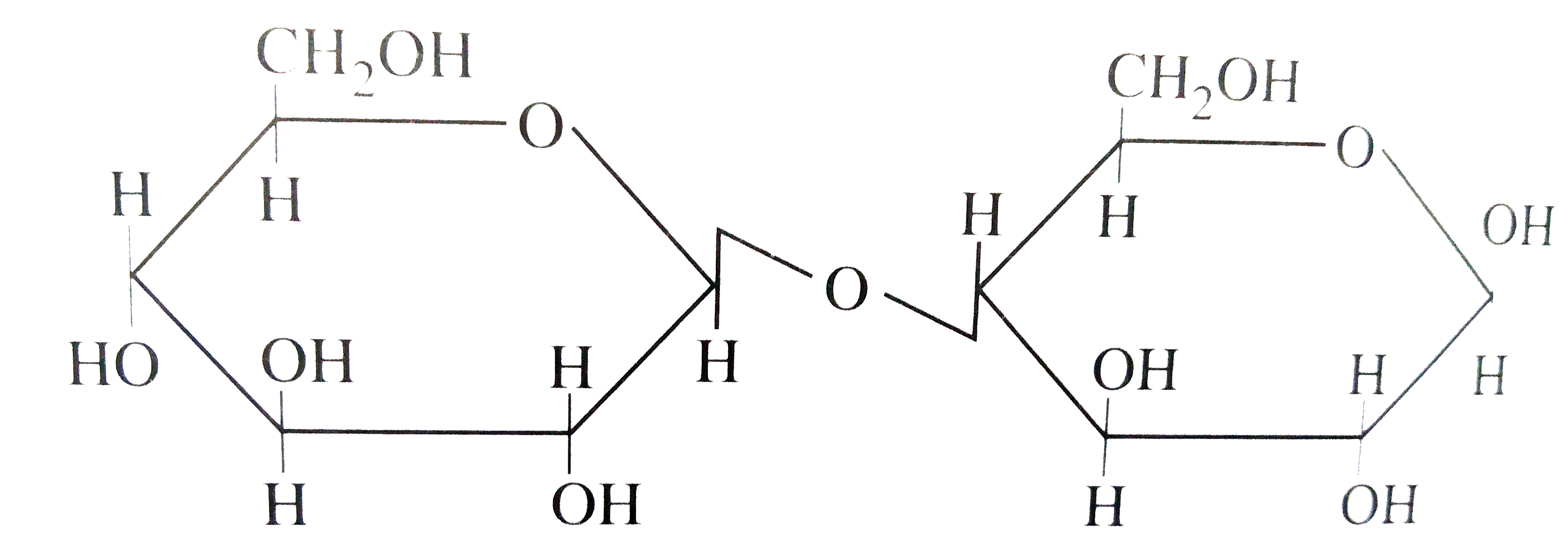
In disaccharide, if the reducing groups of monosaccharides, i.e., aldehydic or ketonic groups are bonded, these are non-reducing sugars. Which of the following disaccharide is a non-reducing sugar ? |
|
Answer»
|
|
| 42. |
In disaccharide and poly saccharides two or more monosaccharides units are held together by |
|
Answer» ACETAL bond |
|
| 43. |
In dilute aqueous H_(2)SO_(4), the complex diaquo-dioxalato ferrate (II) is oxidized by MnO_(4)^(-).For this reaction, the ratio of the rate of change of [H^(+)] to the rate of change of MnO_(4)^(-) is |
|
Answer» Fe in +2 oxidation state. In acidic medium, `KMnO_(4)` oxidizes `Fe^(2+)` to `Fe^(3+)` `MnO_(4)^(-)+8H^(+)+5Fe^(2+)rarrMn^(2+)+4H_(2)O+5Fe^(3+)` `5Fe^(2+)-=5[Fe(C_(2)O_(4))_(2)(H_(2)O)_(2)]^(2-)` `therefore ("Rate of change of "[H^(+)])/("Rate of change of "[MnO_(4)^(-)])=(8)/(1)=8` |
|
| 44. |
In dimethylglyoximatoligand (dmg) donor atom is/are: |
|
Answer» ONE NITROGEN atom 
|
|
| 45. |
In dihalogen derivatives if two halogen atoms are attached to the same carbon atom the compound is called : |
| Answer» Answer :A | |
| 46. |
In dihalogen derivatives if two halogen atoms are attached tp the adjacent carbon atom the compound is called : |
| Answer» Answer :A | |
| 47. |
In diborane, the number of electrons that accounts for banana bonds is…………… |
|
Answer» six |
|
| 48. |
In diborane, the number of electrons that accounts for banana bonds is |
|
Answer» six |
|
| 49. |
In diborane, the H-B-H bond angle is 120^(@). The hybridization of borons is likely to be |
| Answer» ANSWER :B::C | |