Saved Bookmarks
This section includes 7 InterviewSolutions, each offering curated multiple-choice questions to sharpen your Current Affairs knowledge and support exam preparation. Choose a topic below to get started.
| 1. |
Hydrogen has three isotopes. The number of possible diatomic molecules will be |
|
Answer» 3 |
|
| 2. |
Hydrogen has appreciable acidic character when it is bonded with: |
| Answer» Answer :B | |
| 3. |
Hydrogen halide which does not have reducing property at all |
|
Answer» HF |
|
| 4. |
Hydrogen has a tendency to gain one electron in order to Acquire helium configuration . Itthus resembles : |
|
Answer» ALKALI metals |
|
| 5. |
Hydrogen gas will not reduce |
|
Answer» HEATED ALUMINIUM oxide |
|
| 6. |
Hydrogen gas reduces which metal ion in its aqueous solution? |
|
Answer» `MG^(2+)` |
|
| 7. |
Hydrogen gas produced by heating NaOH with which metal :- |
|
Answer» Ag |
|
| 8. |
Hydrogen gas is prepared in the laboratory by reacting dilute HCl with granulated zinc. Following reaction taken place : Zn+2HCl rarr ZnCl_(2)+H_(2) Calculate the volume of hydrogen gas liberated at STP when 32.65 g of zinc reacts with HCl.1 mol of a gas occupies 22.7 L volume at STP , atomic mass of Zn = 65.3 u. |
|
Answer» Solution :1 MOLE of Zn, i.e., 65.3 g produced 1 mole of `H_(2)`, i.e., 22.7 L or STP `therefore"32.65 g of Zn will PRODUCE "H_(2)" at sTP"=(22.7)/(65.3)xx32.65=11.35L` |
|
| 9. |
Hydrogen gas is used on industrial scale in the manufacture of : |
|
Answer» `H_2SO_4` |
|
| 10. |
Hydrogen gas is not liberated when the following metal added to dill HCl |
|
Answer» Mg |
|
| 11. |
Hydrogen gas is liberated when dil. H_2SO_4 react with |
|
Answer» Cu |
|
| 12. |
Hydrogen gas can be produced by the reaction of aluminium with a concentrated solution of: |
|
Answer» `Fe_2O_3` |
|
| 14. |
Hydrogen fluoride is liquid unlike other halides because : |
|
Answer» `F_(2)` is highly reactive |
|
| 15. |
Hydrogen forms a bridge in the chemical structure of : |
|
Answer» HYDROGEN peroxide |
|
| 16. |
(a) Draw the structures of the following :(i) XeF_(4)(ii) H_(2)S_(2)O_(7)(iii) SO_(3)^(2-)(b) Explain the following observations : (i)Phosphorous has a greater tendency for catenation than nitrogen.(ii) The negative value of electron gain enthalpy is less for fluorine than that for chlorine.(iii) Hydrogen fluoride has a much higher boiling point than hydrogen chloride. |
| Answer» SOLUTION :HYDROGEN BONDING | |
| 17. |
Hydrogen fluoride is a better reducing agent than hydrogen bromide. |
| Answer» SOLUTION :Hydrogen jodide is a beller reducing agent than hydrogen BROMIDE | |
| 18. |
Hydrogen fluoride has usually high boiling point because of................ |
| Answer» SOLUTION :HYDROGEN BONDING | |
| 19. |
Hydrogen electrode is |
|
Answer» reversible with respect to `H^(+)` IONS The oxidation reaction is = `(1)/(2) H_(2) to H^(+) + e^(-)` |
|
| 20. |
Hydrogen cyanide is produced industrially from the reaction of gaseous ammonia, oxygen and mthane. 2NH_(3) (g) + 3O_(2) (g) + 2CH_(4) (g) rarr 2HCN (g) + 6H_(2) O (g) If 5 kg of each reactant is used then what mass of H_(2)O (g) will be formed. |
|
Answer» `5.6 gm` Moles of `H_(2)O` FORMED `= (5)/(32) XX 2 xx 10^(3)` mole `= (5)/(16) K` mole Mass of water formed `= (5)/(16) xx 18 xx 10^(3) gm` `= 5.6 Kg` |
|
| 21. |
Hydrogen diffuses six time faster than gas A. tham molar mass of gas A is |
|
Answer» 72 |
|
| 22. |
Hydrogen diffuses six times faster than the gas A. The molar mass of gas A is |
|
Answer» 72 `RARR``36=(M_(A))/(2)rArrM_(A)=72` |
|
| 23. |
Hydrogen cyanide is reacted with ethyl magnesium halide gives |
|
Answer» ISO BUTANE |
|
| 24. |
Hydrogen cyanide |
|
Answer» Solution :Action of hydrogen CYANIDE: Glucose react with hydrogen cyanide to form glucose cyanohydrin. `UNDERSET("Glucose")underset(CH_(2)OH)underset(|)OVERSET(CHO)overset(|)((CHOH)_(4))overset(HCN)to underset("Glucose cyannohydrin")underset(CH_2OH)underset(|)overset(CN)overset(|)overset(CHOH)overset(|)((CHOH)_(4))` |
|
| 25. |
Hydrogen cyanide and hydrogen isocyanide are: |
|
Answer» fuctional isomers |
|
| 26. |
Hydrogen combines with chlroine to form HCl. It also combines with sodium to form NaH. If sodium and chlorine also combine with each other, they will do so in the ratio of their masses as: |
|
Answer» `23:35.5` |
|
| 28. |
Hydrogen chloride and So, are the by products in the reaction of ethanol with thionyl chloride. Which of the following is the main product in this reaction ? |
|
Answer» `C_2 H_5 OC_2 H_5` |
|
| 29. |
Hydrogen can be put in halogen group because |
|
Answer» It has deuterium and tritium as isotopes |
|
| 30. |
Hydrogen can be placed in halogens group because: |
|
Answer» H is light |
|
| 31. |
Hydrogen can be placed : |
| Answer» SOLUTION :NORMALLY hydrogen is placed in IA group because of properties (Valence SHELL electronic configuration) is similar with IA group element | |
| 33. |
Hydrogen burns in air with a |
|
Answer» LIGHT bluish FLAME |
|
| 34. |
To the compound CH_3 -CH =CH_2, hydrogen bromide is added in the presence of peroxides the resultant compound formed is : |
|
Answer» `CH_3CHBrCH_3` |
|
| 35. |
Hydrogen bromide is dried by passing the gas through: |
|
Answer» Quicklime |
|
| 36. |
Hydrogen bonding would not affect the boiling point of : |
|
Answer» HI |
|
| 37. |
Hydrogen bonding plays a central role in the following phenomena: |
|
Answer» ICE floats in water (b) Due to greater H-bonding, the ammonium cation derived from `1^(@)` amine is mroe stable than that derived from `3^(@)` amine. (c) Due to absence of +I-effect of the `CH_(3)` group, HCOOH is a stronger acid than `CH_(3)COOH` and not due to H-bonding. thus. option (c) is wrong. (d) Acetic aacid dimerises in benzene due to H-bonding. |
|
| 38. |
Hydrogen bonding originates from the dipole-dipole interaction between H-atom and any of the other atom like F, O, N and in some cases with Cl atom. There are two types of H-bonding like intermolecular and intramolecular H-bondingThe pairs of bases in DNA are held together by |
|
Answer» Hydrogen bonds |
|
| 39. |
Hydrogen bonding originates from the dipole-dipole interaction between H-atom and any of the other atom like F, O, N and in some cases with Cl atom. There are two types of H-bonding like intermolecular and intramolecular H-bondingIntramolecular hydrogen bonding is found in |
|
Answer» SALICYLADEHYDE |
|
| 40. |
Hydrogen bonding originates from the dipole-dipole interaction between H-atom and any of the other atom like F, O, N and in some cases with Cl atom. There are two types of H-bonding like intermolecular and intramolecular H-bonding Which of following statement is incorrect |
|
Answer» Boiling point of `H_2O_2` is greater than `H_2O`. |
|
| 41. |
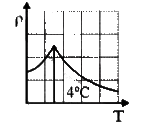
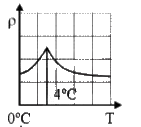
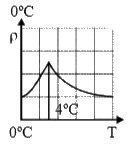
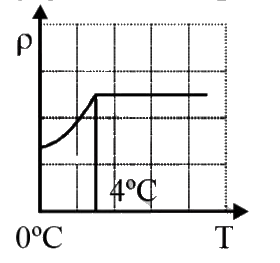
Hydrogen bonding originates from the dipole-dipole interaction between H-atom and any of the other atom like F, O, N and in some cases with Cl atom. There are two types of H-bonding like intermolecular and intramolecular H-bonding Which of the following plot for rho (density) v/s T (temperature) for liquid H_2O is correct |
|
Answer»
|
|
| 42. |
Hydrogen bonding is not shown by |
|
Answer» Water |
|
| 43. |
Hydrogen bonding is maximum in: |
|
Answer» `C_(2)H_(5)OH` `underset(("H-bonding possible"))(C_(2)H_(5)-OH) underset(("H-bonding not possible"))(CH_(3)-O-CH_(3))` `underset(("H-bonding not possible")) overset(O) overset(||)(CH_(3)-C-CH_(3)) underset(("H-bonding not possible")) overset(O) overset(||) (CH_(3)-O-CH_(3))` |
|
| 44. |
Hydrogen bonding is maximum in |
|
Answer» `C_(2)H_(5)OH` |
|
| 45. |
Hydrogen bonding is maximum in : |
| Answer» Answer :A | |
| 46. |
Hydrogen bonding does not play any role in boiling of |
|
Answer» `NH_(3)` |
|
| 47. |
Hydrogen bond is the given to the relatively weak secondry interaction between a hydrogen atom bound to an electronegative atom and another atom which is also generally electronegative and which has one or more lone pairs and can thus acts as a base. We can give the follwoing generalized representation of hydrogen bond. overset(delta-)(X)-overset(delta+)(H)...Y Bond dissociation energy of H-bond ranges from 8 and 42kJ/ol, and the most commonly encountred hydrogen bonds are O-H...O, N-H...O and F-H..E. Q.Whichof the following interaction has energy between 8-42kJ/mol? |
|
Answer» `NA^(+):C Cl_(4)` `CHCl_(3):Br`: Weaker ion-dipole `lt8`kJ/mol `C_(2)H_(6)`: London dipersion FORCES`lt8`kJ/mol `H_(2)O:HCN`: Unsymmetrical H-bond :8-42kJ/mol |
|
| 48. |
Hydrogen bond is weak type of electrostatic force, in which hydrogen is connected between two more electronegative elements. Select the correct representation of H-bonding : |
|
Answer» `H-O-H-H-OVERSET(H)overset(|)UNDERSET(H)underset(|)"N"` |
|
| 49. |
Hydrogen bond is the given to the relatively weak secondry interaction between a hydrogen atom bound to an electronegative atom and another atom which is also generally electronegative and which has one or more lone pairs and can thus acts as a base. We can give the follwoing generalized representation of hydrogen bond. overset(delta-)(X)-overset(delta+)(H)...Y Bond dissociation energy of H-bond ranges from 8 and 42kJ/ol, and the most commonly encountred hydrogen bonds are O-H...O, N-H...O and F-H..E. Q. Among molecules of HCl, which of the following forces are present. |
|
Answer» Interaction between two HCl MOLECULES is found to be greater than 8kJ/mol |
|