

Saved Bookmarks
This section includes 7 InterviewSolutions, each offering curated multiple-choice questions to sharpen your Current Affairs knowledge and support exam preparation. Choose a topic below to get started.
| 1. |
How manymoles of acidifiedKMn04requiredto oxidise one moleof oxalicacid ? |
|
Answer» 5 |
|
| 2. |
How many moles of acetic anhydride will be required to form glucose pertaacetate from 2M of glucose? |
|
Answer» 2 |
|
| 3. |
How many moles of acetic anhydride will be required to form glucose pentaacetate from 2 M of glucose ? |
|
Answer» 2 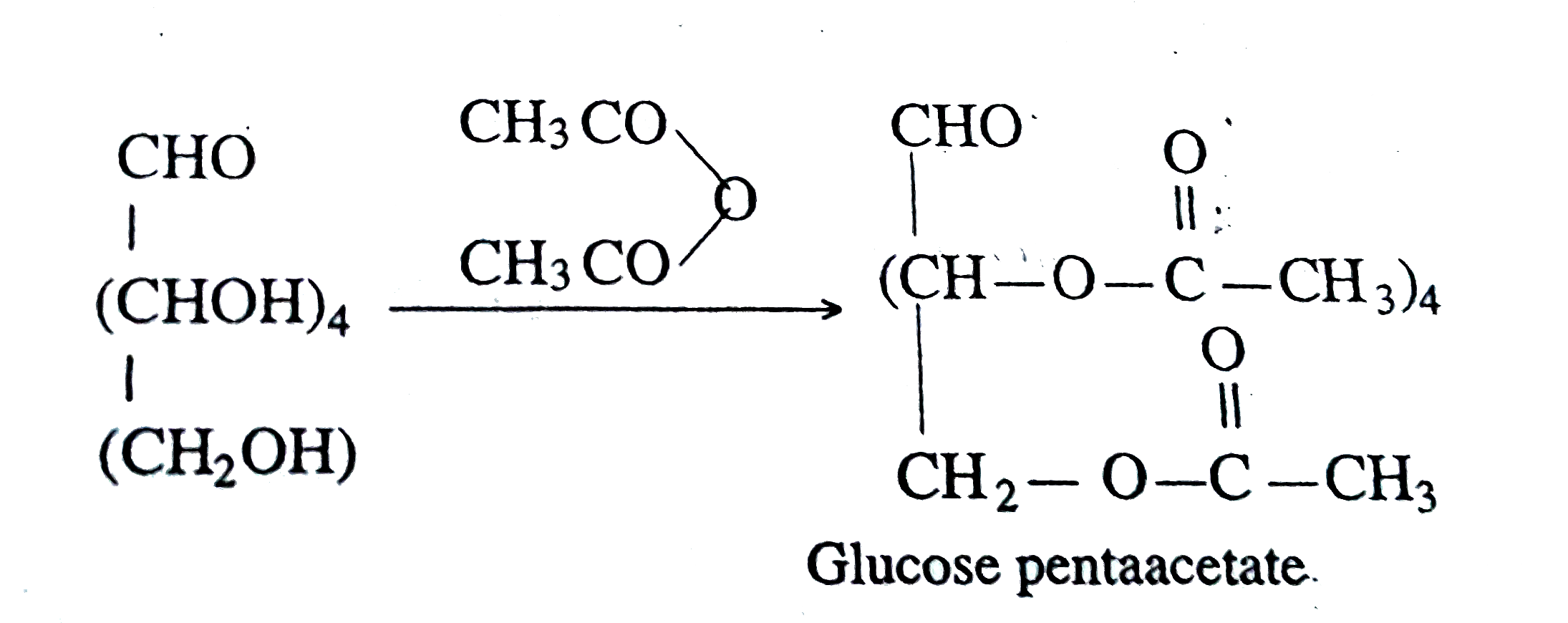 In the GIVEN reaction, 1 M of glucose is producing glucose pentaacetate i.e., it contains 5 OAC group. HENCE, 5 MOLES of acetic anhydride will be required to form from glucose pentaacetate from 2 M of glucose. |
|
| 4. |
How many moles of acetic anhydride will be required to form glucose pentaacetate from 1 mole of glucose? |
| Answer» SOLUTION :10 MOLES of ACETIC ANHYDRIDE. | |
| 5. |
How manymoleseachof Ag^(+) ionCu^(2+)ionand Fe^(3+)ionswould bedepositedby passeageof same quantityof electrictythrough solutionsof their salts? |
|
Answer» samenumberof moleeach |
|
| 6. |
How many moles electron weigh one kilogram |
|
Answer» `6.023xx10^(23)` So number of moles of electron in 1 kg is `(1)/(9.108 xx 10^(-31) xx 6.023 xx 10^(23)) = (1)/(9.108xx 6.023) xx10^(8)` |
|
| 7. |
How many moles chlorine (available ) are released when 254g bleaching powder is allowed to react with CO_(2)"_____________" |
|
Answer» `254 rarr ( 254)/( 127) =2 `2 MOLES of `Cl_(2)` are released |
|
| 9. |
How many moles are there in 1 m^(3) of any gas at NTP? |
|
Answer» |
|
| 10. |
How many moles and how many grams of sodium chloride (NaCl) are present in 250 mL of a 0.50 M NaCl solution? |
|
Answer» |
|
| 11. |
How many moles and how many grams of sodium chloride (NaCl) are present in 250 cm^(3) of a 0.500 M NaCl solution ? |
|
Answer» |
|
| 12. |
How many molecules will be present in one gram molecular mass of hydrogen gas ? |
|
Answer» |
|
| 13. |
How many molecules of water and oxygen atoms are present in 0.9g of water? |
|
Answer» SOLUTION :Gram-molecular mass of water =18g Number of moles in 0.9g of water `=(0.9)/(18)=0.05` Number of water molecular in one mole of water =18g Number of moles in 0.9g of water `=(0.9)/(18)=0.05` Number of water MOLECULES in one mole of water `=6.02xx10^(23)` Number of molecules of water in 0.05 moles. `=0.05xx6.02xx10^(23)` `=3.010xx10^(22)` As one molecular of water contains one oxygen atom. So, number of oxygen ATOMS in `3.010xx10^(22)` molecule of water `=3.010xx10^(22)` |
|
| 14. |
How many molecules of sulphur are present in 12.8 g of sulphur (atomic mass of S = 32) ? |
|
Answer» `3.01 XX 10^22` ` = (6.02 xx 10^23)/(32) xx 12.8` One of mulecules of sulphur contains 8 atoms ` = (S_8)` ` THEREFORE ` No. of `S_8` molecules ` = (6.02 xx 10^23 xx 12.8)/(32 xx 8) = 3.01 xx 10^22` |
|
| 15. |
How many molecules of phenyl hydrazine are used up per molecule of glucose? |
|
Answer» 1 `{:(""CHO),("|"),(""CHOH),("|"),(" "(CHOH)_(3)),("|"),(UNDERSET(" Glucose ")(""CH_(2)OH)):} OVERSET(C_(6)H_(5)NHNH_(2))underset(-H_(2)O)to {:(""CH=N NHC_(6)H_(5)),("|"),(""CHOH),("|"),(""(CHOH)_(3)),("|"),(underset("Glucose phenyl hydrazine")(CH_(2)OH)):} overset(2C_(6)H_(5)NHNH_(2))underset(-C_(6)H_(5)NH_(2),-NH_(3),-H_(2)O)to {:(" "CH=N NHC_(6)H_(5)),("|"),(""C=N NHC_(6)H_(5)),("|"),(" "(CHOH)_(3)),("|"),(underset("Glucosazone")(""CH_(2)OH)):}` |
|
| 16. |
How manymolecules of CH_(3)lwill reactwithCH_(3)NH_(2)to fromtetra methylammonium iodide? |
|
Answer» 2 |
|
| 18. |
How many molecules are present in 1 equivalent each of hydrogen, oxygen and nitrogen? |
|
Answer» SOLUTION :1 equivalent of H contains 1 MOLE of H. `therefore` 1 equivalent of H contains 1/2 mole of `H_2`. |
|
| 19. |
How many molecules are present in 2.24 ml of a gas at STP ? |
|
Answer» |
|
| 20. |
How many molecules approximately do you expect to be present in (i) a small sugar crystal which weighs 10 mg (ii) one drop of water with 0.05 cc volume ? |
|
Answer» (ii) 0.05 cc water = 0.05 G = 0.05/18 mole = `2.78xx10^(-3)" mole"` |
|
| 21. |
How many molecuels and atoms of oxygen are present in 5.6 litres of oxygen (O_(2)) at NTP. |
|
Answer» Solution :We KNOW that 22.4 litres of oxygen at NTP CONTAIN `6.02xx10^(23)` molecules of oxygen. So, 5.6 litres of oxygen at NTP contain. `=(5.6)/(22.4)xx6.02xx10^(23)` molecuels ltbr. `=1.505xx10^(23)` molecules 1 molecule of oxygen contain=2 ATOMS of oxygen. So, `1.505xx10^(23)` molecules of oxygen contain. `=2xx1.505xx10^(23)` atoms ltbr. `=3.01xx10^(23)` atoms. |
|
| 22. |
How many mole of oxygen is required for complete combustion of 1 mole of Alkenen. |
|
Answer» Solution :VOLUME of HYDROCARBON `=8c.c.`: Volume of`O_(2)=40c.c` FORMULA No. `1, (8)/(40)=(2)/(3n+)` (For alkane) `(1)/(5)=(2)/(3n+1)` or `3n+1=10` or `3n=10-1=9 , n=3` The value of `n` comes in whole number from `1st` formula it MEANS hydrocarbon |
|
| 23. |
How many mole of HCl are required to prepare one litre of buffer solution (conataining NaCN+HCl) of ph 8.5 using 0.01 g formula weight of NaCN(K_(HCN)=4.1xx10^(-10)? |
|
Answer» `8.85xx10^(-3)` |
|
| 24. |
How many mL of each of two hydrochloric acids of strengths 12 N and 3 N are to be mixed to make one litre of 6 N solution ? |
| Answer» SOLUTION :`333.33 "ML " 666.67 mL` | |
| 25. |
How many mole of acetic anhydride will consumed when it reacts with compound (A) |
|
Answer» 3 |
|
| 26. |
How many mole of electrons are involved in the reduction of one mole of MnO_4^- ion in alkaline medium to MnO_3^- : |
|
Answer» 2 |
|
| 27. |
How many mL of a 0.1 M HCl are required to react completely with 1 g mixture of Na_(2)CO_(3) and NaHCO_(3) containing equimolar amounts of the two? |
|
Answer» Solution :Step 1. To calculate the number of moles of the components in the mixture. Suppose `Na_(2)CO_(3)` present in the mixture = xg`""therefore""NaHCO_(3)" present in the mixture "=(1-x)g` `"Molar mass of "Na_(2)CO_(3)=2xx23+12+3xx16="106 g mol"^(-1)` `"Molar mass of "NaHCO_(3)=23+1+12+3xx16="84 g mol"^(-1)` `therefore"Moles of "Na_(2)CO_(3)" in x g "=(x)/(106),"Moles of "NaHCO_(3)" in "(1-x)g=(1-x)/(84)` As mixture contains equimolar AMOUNTS of the two. `(x)/(106)=(1-x)/(84)"or"106-106x=84x or x=(106)/(190)g=0.558g` Thus,`"moles of "Na_(2)CO_(3)=(0.558)/(106)=0.00526,"Moles of "NaHCO_(3)=(1-0.558)/(84)=(0.442)/(84)=0.00526` Step 2. To calculate the moles of HCl required. `Na_(2)CO_(3)+2HCl rarr 2NaCl+H_(2)O+CO_(2),NaHCO_(3)+HCl rarr NaCl +H_(2)O+CO_(2)` `"1 mole of "Na_(2)CO_(3)" required HCl =2 moles"` `therefore" 0.00526 mole of "Na_(2)CO_(3)"REQUIRES HCl "=0.00526 xx"2 moles = 0.01052 mole"` `"1 mole of "NaHCO_(3)" requires HCl =1 mole"` `therefore"0.00526 mole of "NaHCO_(3)" required HCl"="0.00526 mole"` `therefore"Total HCl required "=0.01052+0.00526" moles = 0.01578 moles"` Step 3. To calculate volume of 0.1 M HCl `"0.1 mole of 0.1 M HCl are present in 1000 mL of HCl."` `"0.01578 mole of 0.1 M HCl will be present in HCl "=(1000)/(0.1)xx0.01578="157.8 mL"` |
|
| 28. |
How many mL of concentrated suphuric acid of sp. Gr 1.84 containing 98 % H_(2)SO_(4) solution by weight is required to prepare 200 mL of 0.5 N solution ? |
| Answer» SOLUTION :`2.71` ML | |
| 29. |
How many mL of 0.5 M H_(2)SO_(4) are needed to dissolve 0.5 of Copper (II) carbonate ? |
|
Answer» Solution :`8.09 ML ~~ 8 mL` `underset("1 mol")(CuCO_(3)) + underset("1 mol")(H_(2)SO_(4)) rarr CuSO_(4) + H_(2)O + CO_(2)` Let of volume of 0.5 M `H_(2)SO_(4)` be V Moles of `CuCO_(3)-= "Moles of" H_(2) SO_(4)` `(0.5)/(123.5) = (0.5 xx V)/(1000)` `therefore""V = 8.09 mL ~~ 8 mL` |
|
| 30. |
How many mL of 0.3M K_(2)Cr_(2)O_(7) (acidic) is required for complete oxidation of 5 mL of 0.2 M SnC_(2)O_(4) solution. |
|
Answer» |
|
| 31. |
How many ml of 0.150M Na_(2)CrO_(4) will be required to oxidize 40 ml of 0.5 M Na_(2) S_(2) O_(3). CrO_(4)^(2-) + S_(2) O_(3)^(2-) rarr Cr(OH)_(4) ^(-) + SO_(4)^(2-) |
|
Answer» 225ml |
|
| 32. |
How many mL of 0.1 M HCl are required to react completely with 1 g mixture of Na_(2)CO_(3) and NaHCO_(3) containing equimolar amounts of both ? |
|
Answer» Solution :Let the amount of `Na_(2)CO_(3)` in the MIXTURE be `x_(g)`, Then, the amount of `NaHCO_(3)` in the mixture is `(1-x)g`. MOLAR mass of `Na_(2)CO_(3)=2xx23+1xx12+3xx16` `= 106 g mol^(-1)` `therefore` Number of moles `Na_(2)CO_(3)=(x)/(106)mol` Molar mass of `NaHCO_(3)=1xx23+1xx12+3xx16` `= 84 g mol^(-1)` Number of moles `NaHCO_(3)=(1-x)/(84)` mol According to the question, `(x)/(106)=(1-x)/(84)` `therefore 84x = 106-106 x` `therefore 190x=106` `therefore x=0.5579` Therefore, number of moles of `Na_(2)CO_(3)` `=(0.5579)/(106)mol` = 0.053 mol And, number of moles of `NaHCO_(3)` `= (1-0.5579)/(84)` = 0.0053 mol HCl reacts with `Na_(2)CO_(3)` and `NaHCO_(3)` according to the following equation. `2HCl+Na_(2)CO_(3)to 2NaCl+H_(2)O+CO_(2)` `HCl+NaHCO_(3)to NaCl+H_(2)O+CO_(2)` 1 mol of `Na_(2)CO_(3)` reacts with 2 mol of HCl. Therefore, 0.0053 mol of `Na_(2)CO_(3)` reacts with `2xx0.0053` mol = 0.0106 mol of HCl. Similarly, 1 mol of `NaHCO_(3)` reacts with 1 mol of HCl.Therefore, 0.0053 mol of `NaHCO_(3)` reacts with 0.0053 mol of HCl. Total moles of HCl required `= (0.0106+0.0053)` mol = 0.0159 mol In 0.1 M of HCl 0.1 mol of HCl is preset in 1000 mL of the solution Therefore, 0.0159 mol of HCl is present in `= (1000xx0.0159)/(0.1)` mol = 159 mL of the solution Hence, 159 mL of 0.1 M of HCl is required to react completely with 1 g mixture of `Na_(2)CO_(3)` and `NaHCO_(3)` containing equimolar amounts of both. |
|
| 33. |
How many mL of 0.1 M HCl are required to react completely with 1 g mixture of Na_2CO_3and NaHCO_3containing equimolar amounts of both ? |
|
Answer» Solution :STEP 1. To calculate the number of moles of the components in the mixture. Suppose mass of `Na_2CO_3` PRESENT in the mixture = x g Mass of `NaHCO_3`present in the mixture = (1 – x) g Molar mass of `Na_2CO_3 = 2 xx 23 + 12 + 3 xx 16 = 106 g "mol"^(-1)` Molar mass of `NaHCO_3 = 23 + 1 + 12 + 3 xx 16 = 84 g "mol"^(-1)` Number of moles of `Na_2CO_3` in x g ` = (x)/(106)` Number of moles of `NaHCO_3` in (1 – x) g= `(1 - x)/(84)` As mixture CONTAINS EQUIMOLAR amounts of the two, `(x)/(106) = (1-x)/(84) " or " 106 - 106x = 84x " or " x= (106)/(106+ 84) = 106/190 g = 0.558 g ` Number of moles of `Na_2CO_3 = (0.558)/(106) = 0.00526` Number of moles of `NaHCO_3 = (1-0.558)/(84) = (0.442)/(84) = 0.00526` Step 2. To calculate the number of moles of HCl required. `Na_2CO_3 + 2HCl to 2NaCl + H_2O + CO_2` `NaHCO_3 + HCl to NaCl + H_2O + CO_2` `NaHCO_3 + HCl to NaCl + H_2O + CO_2` 1 mole of `Na_2CO_3` requires = 2 moles of HCI ` therefore ` 0.00526 mole of `Na_2CO_3`requires = 0.00526 x 2 moles = 0.01052 mole 1 mole of `NaHCO_3`requires = 1 mole of HCI ` therefore `0.0526 mole of `NaHCO_3` requires = 0.00526 mole ` therefore ` Total HCl required = 0.01052 + 0.00526 moles = 0.01578 moles Step 3. To calculate volume of 0.1 M HCl. 0.1 mole of 0.1 M HCl are present in 1000 mL of HCl. 0.01578 mole of 0.1 M HCl will be present in = `(1000)/(0.01) xx 0.01578 = 157.8 mL` of HCl |
|
| 34. |
How many millilitres of 6.0 M hydrochloricacid should be used to prepare 150 mL of a solution which is 0.30 M in hydrogen ion |
|
Answer» `3.0` `M_(2) = 0.30 M` is `H^(+)` CONCENTRATION in solution. `V_(2) = 150 ml` of solution. `M_(1)V_(1) = M_(2)V_(2), 6.0 xx V_(1) = 0.30 xx 150` `V_(1) = (0.30 xx 150)/(6) = 7.5 ml`. |
|
| 35. |
How manymillilitres of concentrated sulphuric acidof sp. 1.84 containing 98 %H_(2)SO_(4) by weightare required to prepare 200 mLof 0.50 N solution ? |
|
Answer» Solution :98 % of `H_(2)SO_(4)`by weightmeans100 g `H_(2)SO_(4)`solutioncontains98 gof `H_(2)SO_(4)` Volume of 100g of `H_(2)SO_(4) = 100/(1.84 ) mL ` i.e `100/(1.84)` mL of `H_(2)SO_(4)` solution contains98.00g of `H_(2)SO_(4)` Equivalents of `H_(2)SO_(4) = 98/49 = 2 ""...(EQN .4i)` (eq. WT . of `H_(2)SO_(4)=49`) m.e of `H_(2)SO_(4) = 2xx1000 = 2000. "" ...(Eqn .3)` Normality of `H_(2)SO_(4)` solution = `(m.e)/("volume in mL") "" ....(Eqn.1)` ` = (2000)/(100//1.84) = 36.8 N ` Let the volume of `H_(2)SO_(4)`of normality36.8 N = 36.8 V ....(Eqn.1) and m.e of 200 mL of `H_(2)SO_(4)` of normality `0.5 N = 0.5 xx 200` = 100 Since both the solutions of `H_(2)SO_(4)`shouldhave the same number of m.e we have , ` 36.8 v = 100` ` :. "" v = 100/(36.8) = 2.72 mL ` |
|
| 36. |
How many millilitres of 0.5 M H_(2)SO_(4) are needed to dissolve 0.5 g of copper (II) carbonate ? (At. Mass : H = 1, C = 12, O = 16, S = 32, Cu = 63.5) |
|
Answer» Solution :`CuCO_(3)+H_(2)SO_(4)rarr CuSO_(4)+CO_(2)+H_(2)O` `"1 MOLE of "CuCO_(3)=63.5+12+48=123.5" G required "H_(2)SO_(4)="1 mole"` `THEREFORE 0.5 g CuCO_(3)" will required "H_(2)SO_(4)=(1)/(123.5)xx0.5"mole"=(1)/(247)"mole"` `"0.5 mole of 0.5 M "H_(2)SO_(4)" are present in 1000 mL"` `therefore""(1)/(247)" mole of 0.5 M "H_(2)SO_(4)" will be present in "(1000)/(0.5)xx(1)/(247)mL=8.1mL` |
|
| 37. |
How many milimoles of nitrogen dissolve when nitrogen is passed in 1 litre water at 293 K temperature ?[The value of K_(H) is 7.648xx10^(4) bar and partial pressure of N_(2) gas is 0.987 bar.] |
|
Answer» |
|
| 38. |
How many milligrams is 1 carat of diamond equal to ?( 1 कैरेट मे कितना मिलीग्राम हीरा होगा ? |
| Answer» Solution :1 carat=200 mg | |
| 39. |
How many milimoles of CO_(2) gas will dissolve when CO_(2) gas is passed in 900 mL water at 298 K temperature ? [The value of K_(H) is 6.02xx10^(-4) bar and partial pressure of CO_(2) gas is 2xx10^(-8) bar.] |
|
Answer» |
|
| 40. |
How many milli gram of iron (Fe^(2+)) are equal to 1 mL of 0.1055NK_2Cr_2O_7 equivalent? |
| Answer» Answer :A | |
| 41. |
How many methylanilines are formed when 3-methylchlorobenzene is treated with sodamide in liquid ammonia? |
Answer» 
|
|
| 42. |
How many mi Iii litre of 0.5 N SnCl_2 solution will reduce 600 ml of 0.1 N HgCl_2 to Hg_2 Cl_2 |
|
Answer» 60 ml |
|
| 43. |
How many metamers are possible for molecular formula C_5H_12O |
|
Answer» 4 |
|
| 44. |
How many metamersare possiblefor molecular formula C_(4),H_(11),N. |
|
Answer» 0 1. `CH_(3) - NH - CH_(2)- CH_(2)- CH_(3)` 2. `CH_(3) - NH - CH(CH_(3))_(2)` 3. `C_(2)H_(5) - NH- C_(2)H_(4)` |
|
| 45. |
How many metamers are possible for molecular formula C_4H_10O ? |
|
Answer» 3 |
|
| 46. |
How many metamers are possible for C_4H_10O ? |
|
Answer» 1 |
|
| 47. |
How many metamers are possible for 2^(0) amines of formula C_(5)H_(13)N? |
|
Answer» 5 |
|
| 48. |
How many metals are commercially extracted by electrometallurgy from the given metals? Al, Mg, Na, K, A, Hg. Ti, Th, Zt, B |
|
Answer» |
|
| 49. |
How many metals are commercially extracted by hydro metallurgy from the given metals Ag, Mn, In, Cr, Pb, Au |
|
Answer» |
|
| 50. |
How many maximum number of atoms are present in single plane of Al(CH_(3))_(3) molecule. |
|
Answer» 7 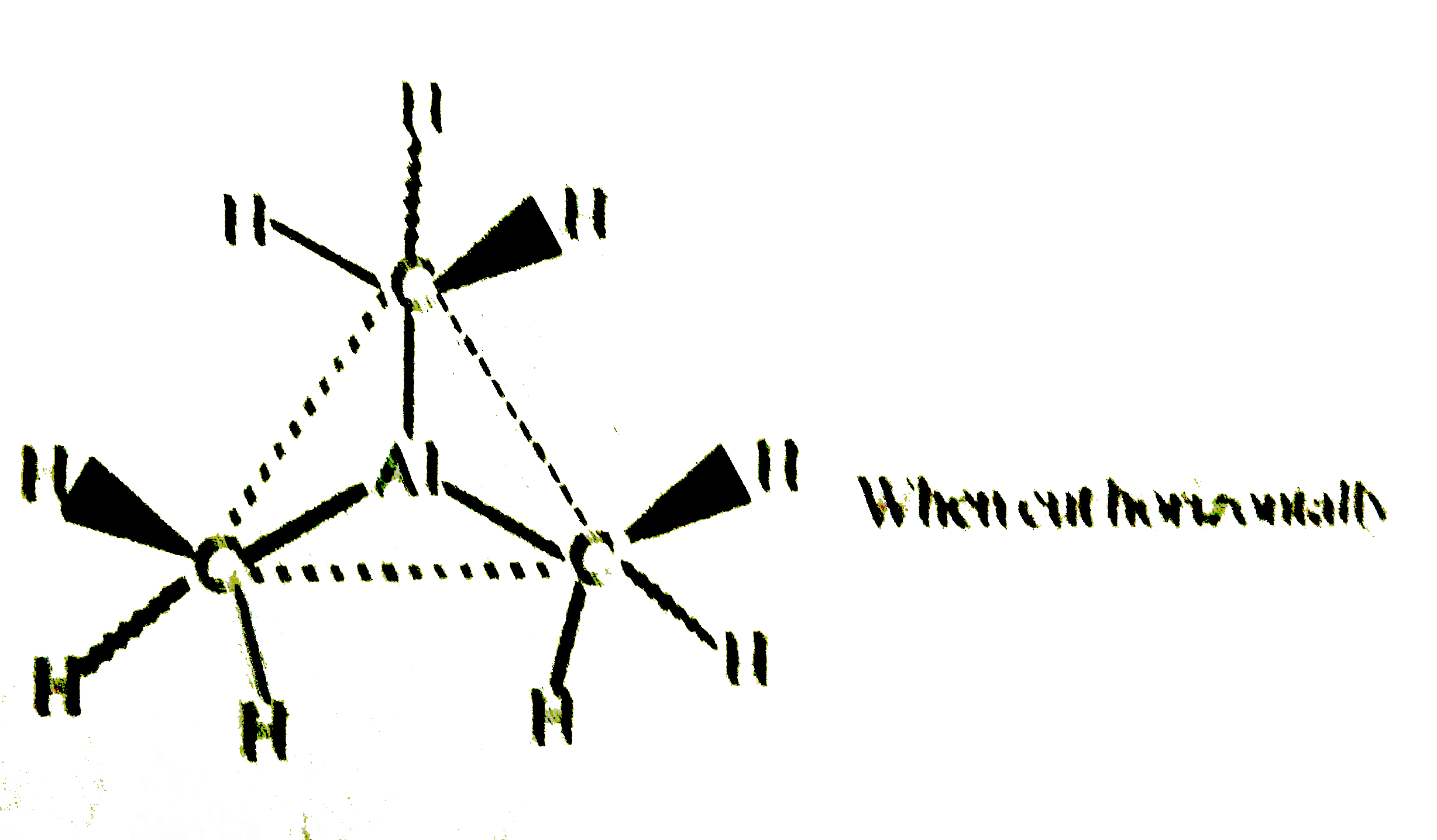 When CUT HORIZONTALLY When CUT HORIZONTALLY
|
|