

Saved Bookmarks
This section includes 7 InterviewSolutions, each offering curated multiple-choice questions to sharpen your Current Affairs knowledge and support exam preparation. Choose a topic below to get started.
| 1. |
How many amyl alcohol structures are possible ? |
|
Answer» Solution :Amyl alcohol is a FIVE carbon alcohol with the formula, `C_5H_11OH`. EIGHT structural isomers are possible for `C_5H_11OH` They are : FOUR primary, three secondary and ONE TERTIARY alcohols. |
|
| 2. |
How many amino acids migrates towards anode on electrolysis at pH = 8 ? |
|
Answer» |
|
| 3. |
How manyaminoacidspeptidebonsarepresent in dipeptides, TripeptidesandTetrapeptides ? |
| Answer» SOLUTION :Dipeptidecontainonepeptide BOND andtwoaminoacids. TRIPEPTIDES containtwopeptidebondsandthree aminoacids.Tetrapeptides containthreepeptidebondsandfouramino CELLS. | |
| 4. |
How many alpha particles are emitted per second by 1 microgram of radium |
|
Answer» `3.62 xx 10^(4)//s` Activity of `1 mug" of " Ra^(226) = 3.7 xx 10^(14)` dps So, the no. of `alpha` - particles EMITTED per second by `1 mu g` of Ra is `3.7 xx 10^(4) dps ~~ 3.62 xx 10^(4)//s` |
|
| 5. |
How many alpha-amino units are present in a molecule of insulin ? |
| Answer» SOLUTION :51 `alpha`-AMINO ACID units. | |
| 6. |
How many amino acids are present in insulin ? |
|
Answer» 25 |
|
| 7. |
How many amide linkages are present in penta-peptides ? |
|
Answer» 10 |
|
| 8. |
How many alpha and beta particles should be eliminated so that an isodiaphere is formed? |
|
Answer» `N alpha, n beta` |
|
| 9. |
How many alkyl groups can be derived from the alkane, CH_(3)(CH_(2))_(3)CH_(3)? |
|
Answer» |
|
| 10. |
How many alpha - amino acid units are presents in a molecule of insulin ? |
| Answer» SOLUTION :51 UNITS are PRESENTIN INSULIN . | |
| 11. |
How many allotropes possible for boron? |
|
Answer» 1 |
|
| 12. |
How many alkyl chlorides (without considering steroisomers ) would yield 2-methyl-butane on conversioninto the Grignard reagent followed by treatment with absolute ethanol ? |
|
Answer» |
|
| 13. |
How many alkyl chlorides would yield 3-methyl -pentane on conversion into the absolute ethanol? |
|
Answer» |
|
| 14. |
How many alkyl bromides would yield isopentane on reaction with Grignard reagent followed by treatment with water? |
|
Answer» `BrCH_(2)overset(CH_(3))overset(|)CHCH_(2)CH_(3)`, `CH_(3)overset(CH_(3))overset(|)CBrCH_(2)CH_(3)` `CH_(3)overset(CH_(3))overset(|)CHoverset(Br)overset(|)CHCH_(3)`, `CH_(3)overset(CH_(5))overset(|)CHCH_(2)CH_(2)Br` |
|
| 15. |
How many alkenes, from following are more stable than |
Answer» 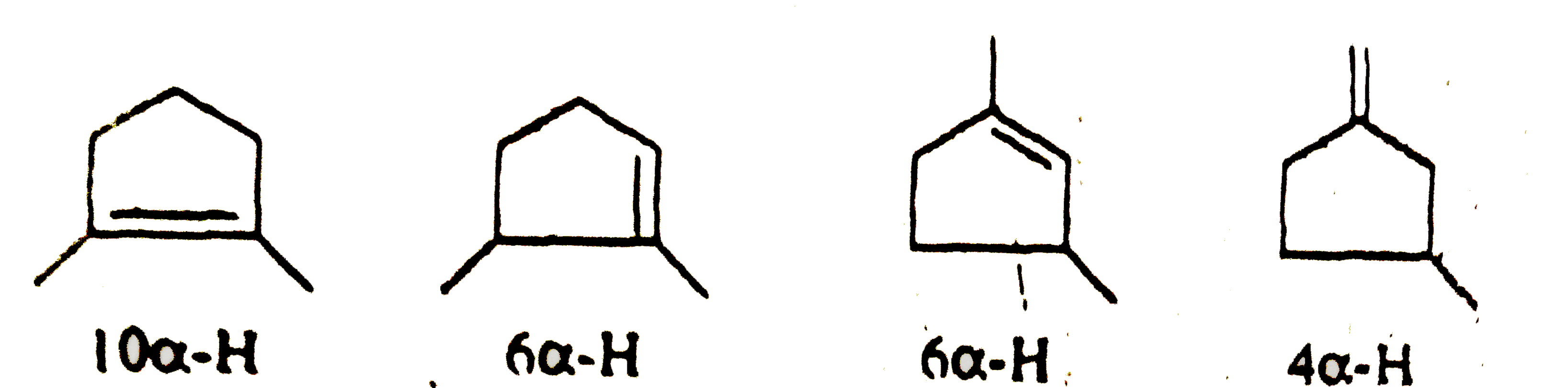 Compound CONTAIN `3prop-H` Compound CONTAIN `3prop-H` As the NUMBER of `prop-H` increases STABILITY of alkene increases. |
|
| 16. |
How many alkenes will be formed during the given Which of the following is not amongst the components of photochemical Smog - |
|
Answer» Acrolein |
|
| 17. |
How many alkenes can be hydrogenated to give an alkane with molecular formula C_4H_10 which give three monochloro derivative on monochlorination. |
|
Answer» `CH_3-CH_2-CH=CH_2 "" underset((" cis & TRANS"))(CH_3-CH=CH-CH_3)` |
|
| 18. |
How many alkenes are possible in the given below reaction ? |
Answer» 
|
|
| 19. |
How many alkene on catalytic reduction give normal butane as product. (i). (A)overset(H_(2)//Pt)ton-butene (ii) (B)overset(H_(2)//Pt)to Iso-pentane (iii). (C)overset(H_(2)//Pt)toNeo-pentane (iv). (D)overset(H_(2)//Pt)toCyclopentane (v). . |
|
Answer» SOLUTION :(i). CIS & trans 2-butene & 1-butene, (II). `C-underset(C)underset(|)(C)-C=C""C-underset(C)underset(|)(C)=C-C""C-underset(C)underset(||)(C)-C-C` (iii). Zero (Neo-pentane can not be PREPARED by catalytic hydrogenation of alkene), (iv). ONE (v). Including optical  Exluding optical=3. Exluding optical=3.
|
|
| 20. |
How many alkenes, alkynes, alkadienes can be hydrogenated to form isopentane (include all isomers)? |
|
Answer» `C-overset( C)overset(|)C-C=C, C=overset(C )overset(|)C-C =C, C-overset( c)overset(|)C=C=C` |
|
| 21. |
How many aliphatic amines having molecular formula C_(4)H_(11)N react with acetyl chloride |
|
Answer» |
|
| 22. |
How many aldolproduct are possible (structural only) when mixture of HCHO, CH_3CHO and CH_3-oversetoverset(O)(||)C-CH_3 are reacted in dilute NaOH ? |
|
Answer» |
|
| 23. |
How many aldol product will be obtained in the following reaction CH_(3)CHO+PhCHOoverset(NaOH)(to) |
|
Answer» 2 |
|
| 24. |
How many aldehydes are possible for molecular formual C_(4)H_(8)O ? |
|
Answer» 2 |
|
| 26. |
How many alcohols with molecular formula C_(4)H_(10)O are chiral in nature? |
|
Answer» 1 |
|
| 27. |
How many alcohols with a molecular formula C_(4)H_(10)O are chiral in nature? |
|
Answer» 1 |
|
| 28. |
How many alcohols give immediate turbidity with Lucas reagent having molecular formula (C_(5)H_(12)O) : |
Answer» SOLUTION :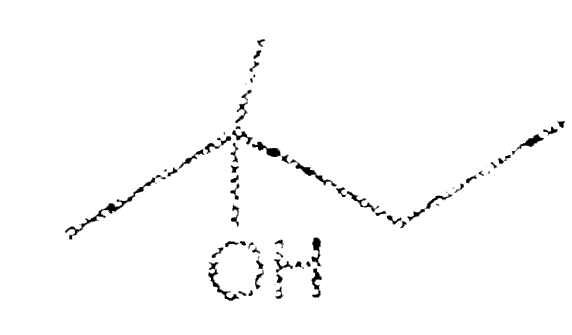
|
|
| 29. |
How many alcohols and how many ethers are represented by the formula C_4H_(10)O: |
|
Answer» 4 ALCOHOLS and 3 ethers |
|
| 30. |
How many alcohols and how many ethers are represented by the formula C_4H_(10)O. |
|
Answer» 4 alcohols and 3 ETHERS |
|
| 31. |
How many alcohols and ethers are possible with general formula C_(4)H_(10)O ? |
|
Answer» 7 |
|
| 32. |
How many acids andester are possible for the compound with molecularformula C_(4)H_(8)O_(2)? |
|
Answer» 2 ACIDS +2 esters |
|
| 33. |
How many acidic groups are present in the given amino acid? overset(+)(NH_(3))-CH_(2)CH_(2)-overset(COO^(-))overset(|)(CH)-COO^(-) |
|
Answer» |
|
| 34. |
The partlcles emitted 1n the decay of""_(92)^(238)U to ""_(92)^(234)U |
|
Answer» Solution :`""_(92)^(238)Uto_(92)^(234)U+x""_(2)^(4)He+yoverset(0)-1E` `238=234+4x+0` or `4x=4orx=1` `92=92+2x-y` `92=92+2xx1-y` or y=2 |
|
| 35. |
How many 3d series elements (Sc to Zn) have positive standard potential for M^(2+)//M? |
|
Answer» |
|
| 36. |
How many 5 membered parent chain akane are possible for C_(7)H_(16)? |
|
Answer» (1) `C-overset(C)overset(|)underset(C)underset(|)C-C-C-C` (2) `C-C-overset(C)overset(|)underset(C)underset(|)C-C-C` (3) `C-underset(C)underset(|)C-underset(C)underset(|)C-C-C` (4) `C-underset(C)underset(|)C-C-underset(C)underset(|)C-C` 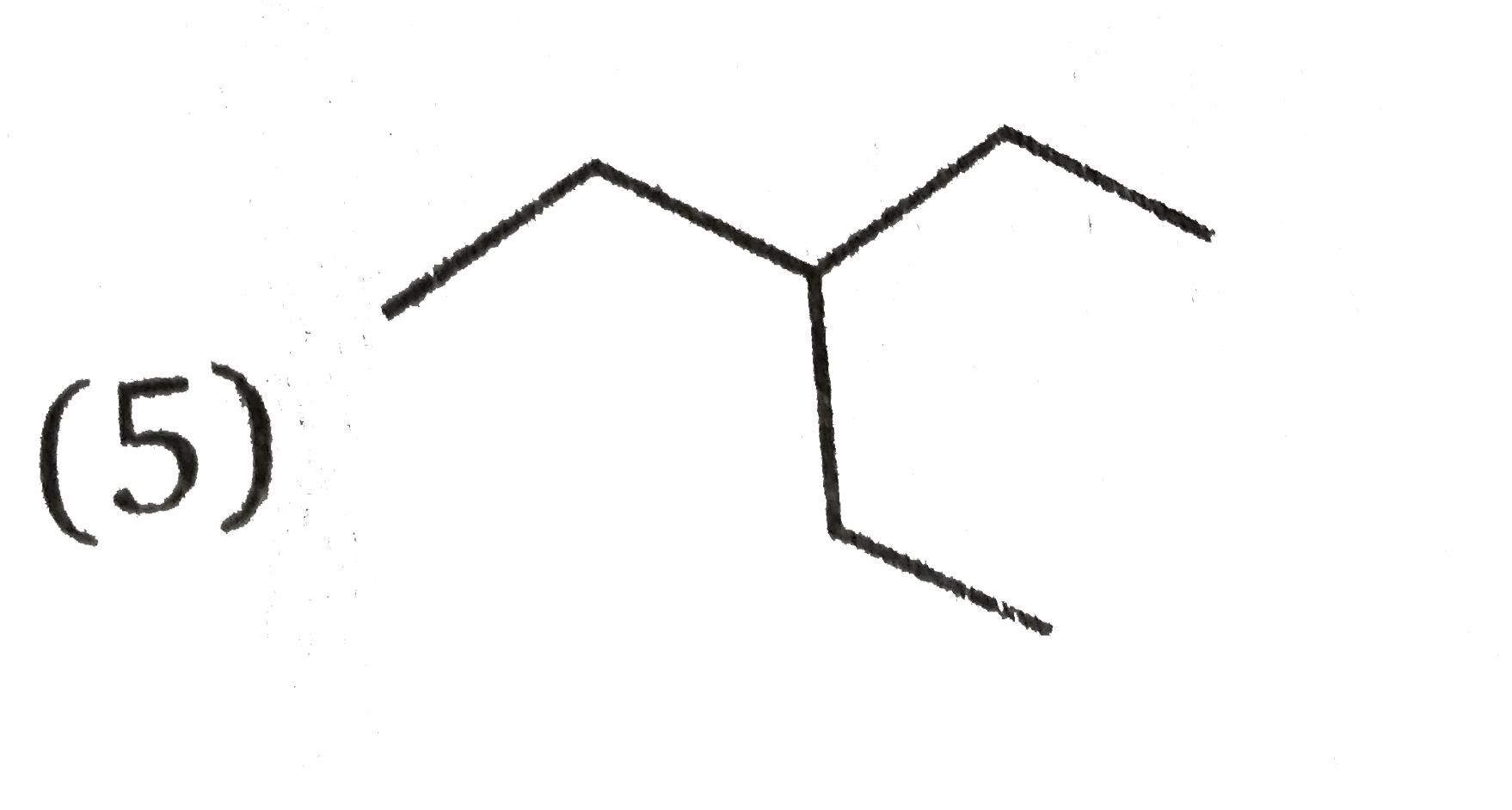
|
|
| 37. |
How many 3^(0)aminesare possibleformoleculeformolecularfomula C_(4)H_(11)N? |
|
Answer» 1 |
|
| 38. |
How many 2^(0)aminesare possiblefor moleculeformula C_(4),H_(11)N ? |
|
Answer» 2 |
|
| 39. |
How many 3^@ alcohols are possible for C_3H_8O? |
|
Answer» 0 |
|
| 41. |
How many 1^(@)RX are possible for molecular formula C_(4)H_(9)X? |
|
Answer» 2 |
|
| 42. |
How mana S-OH bonds are present in disulphuric acid? |
|
Answer» 1 |
|
| 43. |
How long will it take for a current of 3 amperes to decompose 36 g of water. (Eq. mass. Of hydrogen is 1 g and that of oxygen 8 g): |
| Answer» ANSWER :A | |
| 44. |
How long should a current o 0.5 amp be passed through 50 mL of a 0.10 M NaCl solution in order to make its pH 12, assuming no volume change ? |
|
Answer» |
|
| 45. |
How long (in hours) must a current of 5 ampere be maintained to electroplate 60 g of calcium from molten CaCl_(2) ? |
|
Answer» 27 hours |
|
| 46. |
How long (approximate) water be electrolysed by passing through 100 amperes current so that oxygen released can completely burn 27.66g of diborane ? (B = 10.8 u) |
| Answer» Solution :`B_(2)H_(6) + 3O_(2) rarr B_(2)O_(3) + 3H_(2)O` | |
| 47. |
How long a current of 3 amperes has to be passed through a solution of silver nitrate to coat a metal surface of 80 cm^2 with 0.005 mm thick layer ? [Density of Ag is 10.5 g cm^(-3), At wt.of silver = 108.0 u] |
|
Answer» Solution :`Ag^(+) (aq) + E^(-) to Ag (s)` Volume = Area x Thickness `=80 cm^(2) XX 0.05 xx 1/10 cm = 0.04 cm^(3)` Mass of Ag = Volume x Density `=0.04 cm^(3) xx 10.5 G cm^(-3) = 0.42 g` Let the time required be t seconds. Total charge passed - 3T COULOMBS. 96500 coulombs of charge deposits = 108 g 3t coulombs of charge deposits `=108/96500 xx 3t g` Thus, `108/96500 xx 3t = 0.42` or `t = (0.42 xx 96500)/(108 xx 3) = 125.09 s` |
|
| 48. |
How long (approximate) should water be electrolysed by passing through 100 amperes current so that the oxygen released can completely burn 27.66 g of diborane (Given atomic mass of B=10.8u) |
|
Answer» 0.8 hour `2xx10.8+6xx1` `=27.6 g(1mol)` 3 moles of OXYGEN are produced by the electrolysis of WATER. `6H_(2)Ooverset("Electrolysis") RARR 6H_(2)+O_(2)` or `6H_(2)O to 12H^(+)+3O_(2)+underset((12F))(12e^(-))` Now `Q=lxxt=(12xx96500" C")=(100" amp")xxt` `t=((12xx96500" C"))/((100" amp"))=11580" s"` `=(11580)/(3600)=3.21" h"`. |
|
| 49. |
How long a current of 3 amp has to be passed through a solution of AgNO_(3) to coat a metal surface of 80 cm^(2) with 0.005 mm thick layer ? Density of Ag is 10.5 g//cm^(3). |
|
Answer» Solution :No. of eq. of Ag deposited `= ("wt. of Ag deposited in grams")/("equivalent wt. of Ag")` `= ("volume " xx " density")/("equivalent weight")` `= ("surface area " xx " thickness " xx " density")/("equivalent weight")` `= (80 xx 0.0005 xx 10.5)/(108)` `= (7)/(1800) = 0.0039` Mole of ELECTRIC charge = 0.0039 FARADAY `= 0.0039 xx 96500` coulombs 376.35 coulombs. `THEREFORE` duration of electrolysis `= ("charge in coulombs")/("current in amp")` `= (376.35)/(3)s` `~~ 125s`. |
|
| 50. |
How long (approximate) should water be electrolysed by passing through 100 amperes current so that the oxygen released can completely burn 27.66g of diborane |
|
Answer» 0.8 hours 1 mol 3 mol 3 mol `O_(2)` is required for burning 1 mol `B_(2)H_(6)` `H_(2)O overset("ELECTROLYSIS")toH_(2)+(1)/(2)O_(2)"(V.F. of "O_(2)=4)` `("Equivalent of "O_(2))/("V.F. of "O_(2))=" mol of "O_(2)=3` `[((100A)xxtsec)/(96500)]xx(1)/(4)=3` `thereforet=(3xx96500)/(100xx3600)hr.=3.22hrs`. |
|