Saved Bookmarks
This section includes 7 InterviewSolutions, each offering curated multiple-choice questions to sharpen your Current Affairs knowledge and support exam preparation. Choose a topic below to get started.
| 1. |
Higher the value of ..................., safer is the drug |
| Answer» SOLUTION :THERAPEUTIC INDEX | |
| 2. |
Higher the concentration of reactions greater is thepossibility of ...........and hence the ........ |
| Answer» SOLUTION :COLLISION , RATE | |
| 3. |
Higher the standard reduction potential lesser is corrosion. Give reason. |
| Answer» Solution :The greater the `E^(@)` value means greater is the TENDENCY SHOWN by the species to ACCEPTS electrons and undergo REDUCTION. So higher the `(E^(@))` values lesser is the tendency to undergo corrosion. | |
| 4. |
Higher order (gt3) reactions are rate due to |
|
Answer» LOW PROBABILITY of simultaneos collision of all the reacting species |
|
| 5. |
Higher order (gt 3) reactions are rare due to |
|
Answer» LOW probability of simultaneous collision of all the REACTING species |
|
| 6. |
Higher order ( gt 3 ) reactions are rare due to : |
|
Answer» LOW probability of simultaneous collision of all the REACTING species . |
|
| 7. |
Higher members of carboxylic acids are water insoluble due to |
|
Answer» hydrophobic alkyl GROUPS. |
|
| 8. |
Higher is the bond order, greater is: |
|
Answer» BOND DISSOCIATION energy |
|
| 9. |
Higher homologous of ethers can be prepared from : |
|
Answer» ALKYL HALIDES `CH_(3)OCH_(3)overset(CI_(2))underset(-HCI)rarrCH_(3)OCH_(2)CIoverset(CH_(3)MgCI)rarrCH_(3)OCH_(2)CH_(3).` |
|
| 10. |
HI_((g))hArrH_(2(g))+O_(2(g)) The equlibrium constant of the above reaction is 6.4 at 300 k. If 0.25 mole each of H_(2)and I_(2) are added to the system, the equlibrium constnat will be |
|
Answer» `0.8` |
|
| 11. |
Higher alcohols are not soluble in water because of |
|
Answer» HYDROPHILIC alkyl GROUP |
|
| 12. |
High thermal conductivity of metals is due to transfer of heat through: |
|
Answer» MOLECULAR collsions |
|
| 13. |
High spin complex of d^6 configuration in an octahedral field will have the CFSE equal to |
|
Answer» `(-12)/5 triangle_circ` |
|
| 14. |
High quantity of heat is produced in the formation of Al_(2)O_(3). This property is used for _______. |
|
Answer» oxidation |
|
| 15. |
High purity (> 99.95%) dihydrogen is obtained be electrolysing |
|
Answer» `DIL H_2SO_4` solutions |
|
| 16. |
High purity copper metal is obtained by : |
|
Answer» CARBON REDUCTION |
|
| 17. |
High purity and more quantity of haloalkanes are obtained by …… |
|
Answer» reaction of alcohol with sodium HALIDE and conc. `H_(2)SO_(4)`. |
|
| 18. |
High negative value of raduction potential, indicates lanthanides are |
|
Answer» oxidising agent |
|
| 19. |
High of density polyethylene is |
|
Answer» LINEAR polymer |
|
| 20. |
Heavy water has found application in atomic reactor as: |
|
Answer» COOLANT |
|
| 21. |
High density polythene is prepared |
|
Answer» USING Ziegler-Natta Catalyst |
|
| 23. |
High density polythene is obtained by |
|
Answer» polymerisation of ethene in a hydrocarbon solvent in the presence of Ziegler - Natta catalyst |
|
| 24. |
High density polymer is not |
|
Answer» a. Tough |
|
| 25. |
High concentration of streptomycin is a |
|
Answer» HYPNOTIC tranqilizer |
|
| 26. |
Heavy water (D_2O) is : |
|
Answer» A product of oxygen and hydrogen |
|
| 27. |
High concentration of phenol is |
|
Answer» antiseptic |
|
| 28. |
Heavy water (D_(2)O)freezes at |
|
Answer» `-3.8^(@)` C |
|
| 29. |
High boiling point and viscosity of sulphuric acid is due to …………….. . |
| Answer» SOLUTION :HYDROGEN BONDING | |
| 30. |
High concentration hydrocarbon pollutants in atmospheric air causes : |
|
Answer» Cancer |
|
| 31. |
Heavyhydrogen was sseparated from liquid H_(2)byfractional evaporation by |
|
Answer» cavendish |
|
| 32. |
High basicity of Me_2NH relative to Me_3N is attributed to: |
|
Answer» effect of SOLVENT |
|
| 33. |
Heavy hydrogen is used : |
|
Answer» In FILLING the balloons |
|
| 34. |
HI was heated in a closed tube at 440^(@) C till equilibrium is obtained. At this temperaturee 22% of HI was dossociated. The equilbrium constant for this dissociation wil be |
|
Answer» `0.282` `{:("Initial CONC.", "2 MOLES",0,0),("At EQULIBRIUM",22/100xx2,0.22,0.22):}` `=2-0.44=1.56` `K=([H_(2)][I_(2)])/([HI]^(2))=(0.22xx0.22)/([1.56]^(2))=0.0199.` |
|
| 35. |
hich of the following compound is most acidic ? |
|
Answer» Phenol |
|
| 36. |
HI was heated in a sealed tube at 440^Oc till the equiibrium was reached. HI was found to be 22% decomposed. Calculate the equilibrium constant for dissociation. |
|
Answer» 0.282 |
|
| 37. |
Heavier halide is oxidised by lighter halogen. Justify. |
|
Answer» Solution :The oxidation ABILITY of HALOGENS is in the order : `F_(2)gtCl_(2)gtBr_(2)gtI_(2)`. Lighter halogen is a stroger oxidant .Heavier halide is less stable , acts as a reducing AGENT and is easily oxidised . The reaction that is easily POSSIBLE amonghalides and halogens is , `2I^(-)+F_(2)to2F^(-)+I_(2)` |
|
| 38. |
HI solution is titrated with NaOH conductometrically, graphical representation of the |
|
Answer» |
|
| 39. |
Heats of combustion of CH_(4),C_(2)H_(4), C_(2)H_(6) are -890, -1411 and -1560 kJ/ "mole" respectively. Which has the lowest fuel value in kJ/g ? |
|
Answer» `CH_(4)` |
|
| 40. |
HI was heated in a sealed tube at 400^(@)C till the equilibrium was reached. HI was found to be 22% decomposed. The equilibrium for decomposition is : |
|
Answer» `0.282` |
|
| 41. |
HI reacts with HNO_3 to form |
|
Answer» `O_2` |
|
| 43. |
Heats of combustion (DeltaH^(@)) for C(s), H_(2)(g) and CH_(4)(g)are -94, -68 and -213 kcal/mol. Respectively. The value of DeltaH^(@) for the reaction, C(s)+2H_(2)(g)rarrCH_(4)(g) is |
|
Answer» `- 85 KCAL` `C_((s))+O_(2(g))rarrCO_(2(g))DeltaH=-94 " kcal mol"^(-1)"....(ii)"` `H_(2(g))+(1)/(2)O_(2(g))rarrH_(2)O_((l))DeltaH=-68 " kcal mol"^(-1)"....(iii)"` `CH_(4)+3//2O_(2)rarrCO_(2)+2H_(2)O` `DeltaH=-213 " kcal mol"^(-1)"....(iv)"` |
|
| 44. |
HI heated in a sealed tube at 440^@Ctill the equilibrium was reached. HI was found to be 22% decomposed. The equilibrium constant for dissociation is: |
|
Answer» 0.282 |
|
| 45. |
Heating which of the following salts in a dry test tube may cause a change in their colour ? |
|
Answer» `ZnCO_(3)` (WHITE) `Co(NO_(3))_(2).6H_(2)O underset(Delta)to COO ("black")+2NO_(2)uarr+(1)/(2)O_(2)uarr+6H_(2)O uarr` `2FeSO_(4).6H_(2)O underset(Delta)to Fe_(2)O_(3) ("BROWN") +SO_(3) uarr + SO_(3)uarr +6H_(2)O uarr` `underset(("faint pink"))(3MnSO_(4)) underset(Delta)to underset(("black"))(Mn_(3)O_(4))+2SO_(2)uarr +SO_(3)uarr` |
|
| 46. |
HI cannot be prepared by the action of conc. H_(2)SO_(4) on KI because |
|
Answer» HI is stronger ACID than `H_(2)SO_(4)` |
|
| 47. |
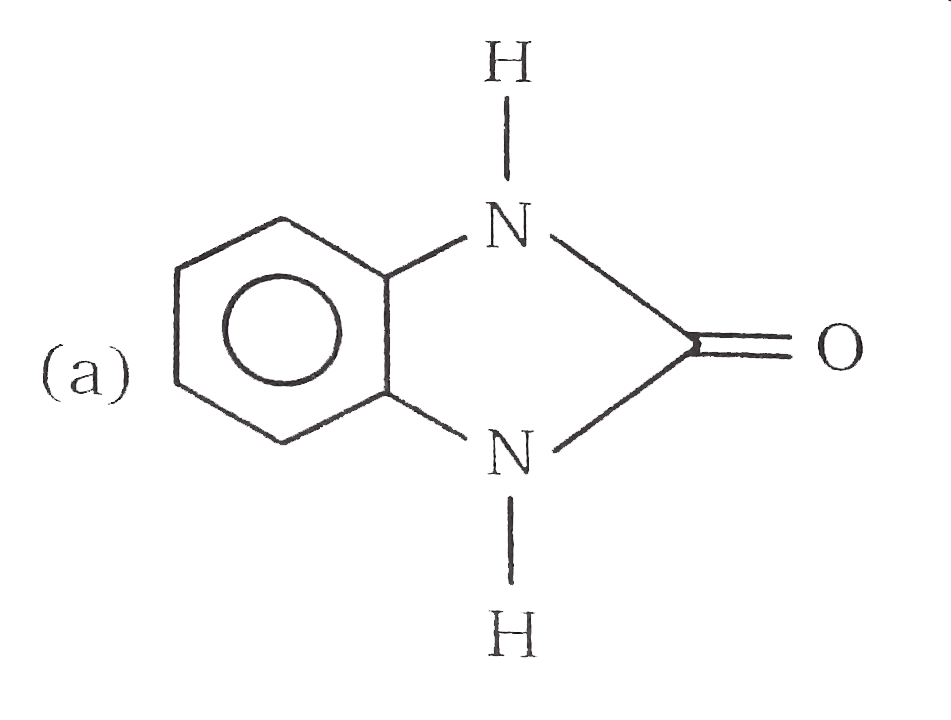
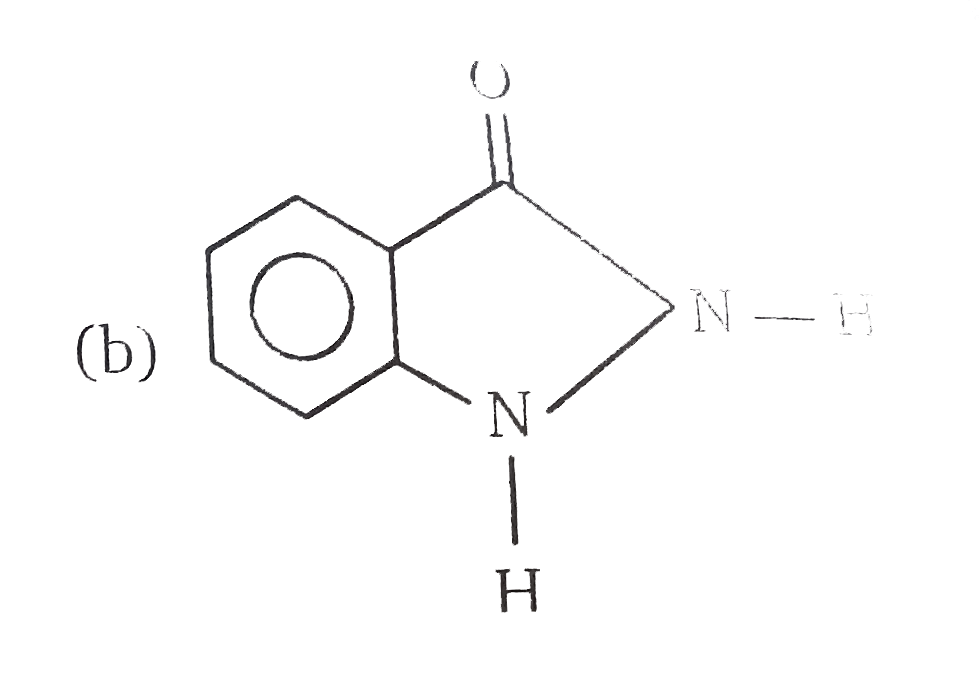
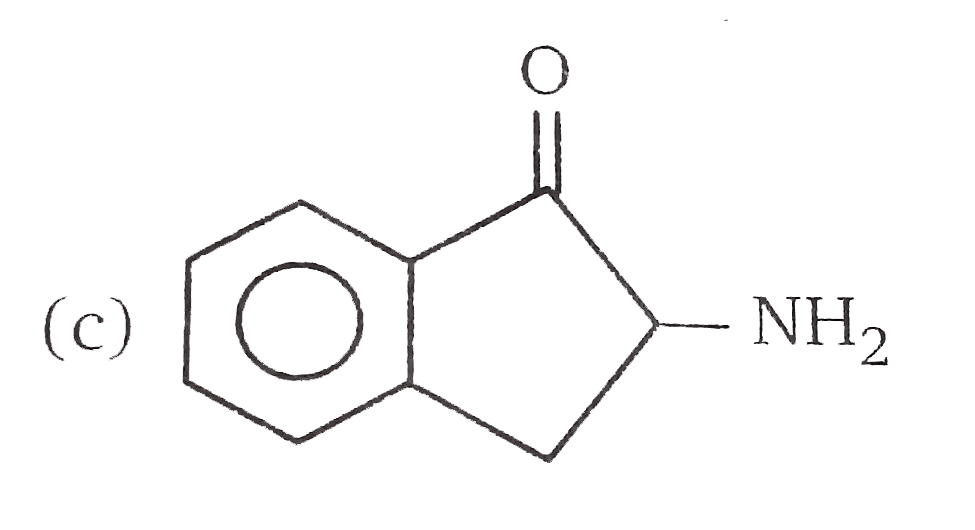
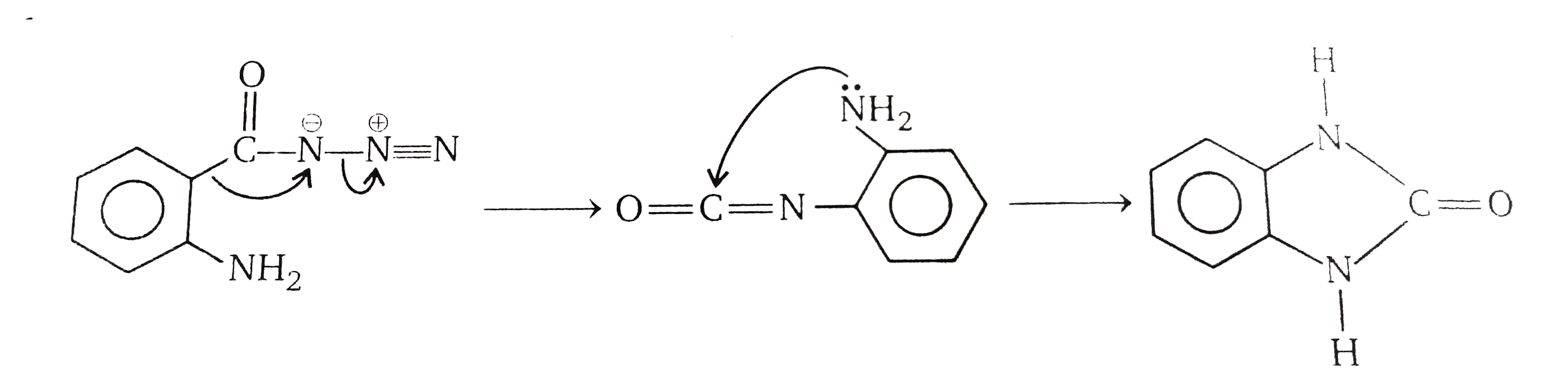
Heating the acyl azide in dry toluene under reflue for 3-hours give a 90% yield for a heterocyclic product. Identify the product (A) . |
|
Answer»
|
|
| 48. |
HI can be prepared by which of the following methods? |
|
Answer» `I_(2)+H_(2)S` |
|
| 49. |
Heating t-butylpheyl ether with HI produces |
|
Answer» IODO BENZENE 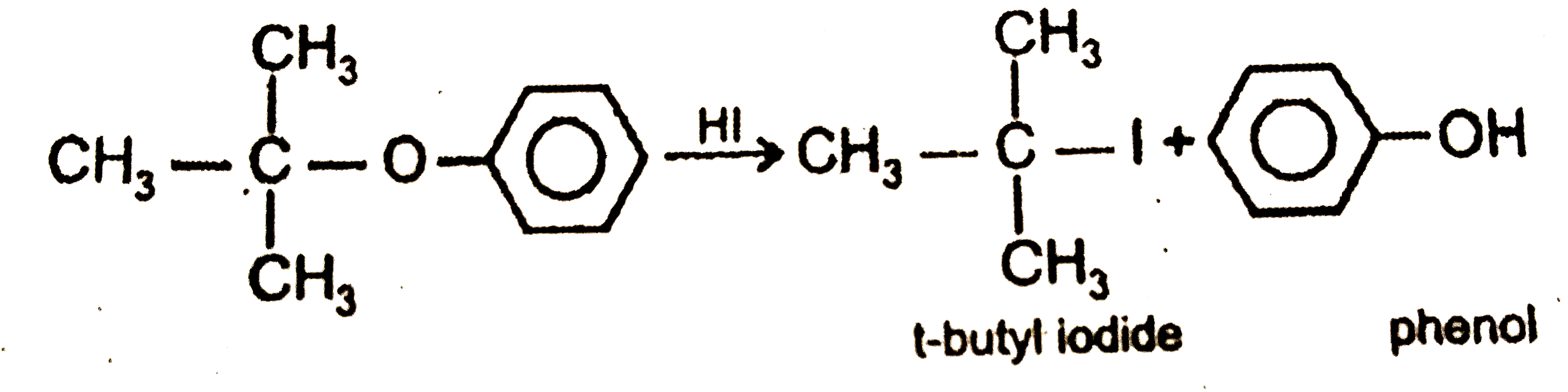
|
|