Saved Bookmarks
This section includes 7 InterviewSolutions, each offering curated multiple-choice questions to sharpen your Current Affairs knowledge and support exam preparation. Choose a topic below to get started.
| 1. |
From the rate expression for the following reactions,determine their order of reaction and the dimensions of the rate constants. (i)3NO_((g))toN_(2)O_((g)) ""Rate=K[NO]^(2) (ii)H_(2)O_(2_((aq)))+3I_((aq))^(-)+2H_((aq))^(+)to2H_(2)O_((l))+l_(3)^(-) "" Rate = k [ H_2O_2][I^-] (iii)CH_(3)CHO_((g)toCH_(4(g))+CO_((g)) Rate=K[CH_(3)CHO]^((3)/(2)) (iv)C_(2)H_(5)Cl_((g))toC_(2)H_(4(g))+HCl_((g)) Rate =k[C_(2)H_(5)Cl] |
|
Answer» Solution :Gvien reaction :`3NO_((g))toN_(2)O_((g))` Rate of reaction =`k[NO]^(2)` is GIVEN `THEREFORE` Order of reaction =Power=2 DIMENSION of rate constant: Rate of reaction =`k[NO]^(2)` `therefore k=("Rate")/([NO]^(2))` The unit of second order reaction is `mol^(-1) Ls^(-1)` The unit of rate is always mol `L^(-1) s^(-1)` (ii)Given reaction :`H_(2)O_(2(aq))+3I_((aq))^(-)to2H_(2)O_((l))+I_(3)^(-)` Rate of reaction =`k[H_(2)O_(2)][I]` so with respect to `H_(2)O_(2)` order is =1 With respect to `I^(-)` order is =1 `therefore` overal order of reaction =I+I=2 Dimension of k: Rate of reaction =`k[H_(2)O_(2)][I^(-)]` `therefore` Dimension of k=`("Dimension of rate")/([H_(2)O_(2)][I^(-)])` `=(mol L^(-1) s^(-1))/((mol L^(-1)) (mol s^(-1)))` (iii)Gicen reaction :`CH_(3)CHO_((g))toCH_((g))+CO_((g))` Rate of this reaction k=`[CH_(3)CHO]^((3)/(2))` Order of this reaction =Power of reactant in the equation =`(3)/(2)` Dimension of k: `therefore` Dimension of k(unit) Rate of reaction (r)=`k[C_(2)H_(5)Cl]` Rate of reaction (n)=(Sum of power in rate equation)=1 Dimension of rate constant k: Dimension of k=`("Dimension Rate (r)")/("dimension of reactant in rate equation ")` `(mol L^(-1)S^(-1))/(mol L^(-1))` `=s^(-1)` |
|
| 2. |
Generally transition elements and their salts are coloured due to the product of unpaired electrons in metal ions. Which of the following compounds are coloured? |
|
Answer» `KMnO_(4)` |
|
| 3. |
From the solution containingcopper (+2) and zine (+2) ions coppercan beselectively precipitateusingsodium sulphide. |
|
Answer» |
|
| 4. |
From the rate expression for the following reactions, determine their order of reaction and the dimensions of the rate constants: (i) 3NO(g) to N_(2)O(g), "Rate"=k[NO]^(2) (ii) H_(2)O_(2)(aq)+3I^(-)(aq)+2H^(+) to 2H_(2)O(l)+I_(3)^(-), "Rate"=k[H_(2)O_(2)][I^(-)] (iii) CH_(3)CHO(g) to CH_(4)(g)+CO(g) , "Rate"=k[CH_(3)CHO]^(3//2) (iv) C_(2)H_(5)Cl(g) to C_(2)H_(4)(g)+HCl (g) , "Rate"=k[C_(2)H_(5)Cl] |
|
Answer» SOLUTION : (i) Order = 2, Dimensions of `K=("Rate")/([NO]^(2))=("mol L"^(-1)s^(-1))/(("mol L"^(-1))^(2))="L mol"^(-1)s^(-1)` (ii) Order = 2, Dimensions of k = Same as in (i) (iii) Order `=(3)/(2)`, Dimensions of `k=("Rate")/([CH_(3)CHO]^(3//2))=("mol L"^(-1)s^(-1))/(("mol L"^(-1))^(3//2))=L^(1//2)"mol"^(-1//2)s^(-1)` (iv) Order = 1, Dimensions of `k=("Rate")/([C_(2)H_(5)CL])=("mol L"^(-1)s^(-1))/("mol L"^(-1))=s^(-1)`. |
|
| 5. |
Generally transitioin elementsform coloured salts due to the presence of unpaired electrons.Which of thefollowing compounds will be coloured in solid state ? |
|
Answer» `Ag_(2)SO_(4)` |
|
| 6. |
From the rate expression for the following reactions, determine their order of reaction and the dimensions of the rate constants. 3NO_((g))rarr N_(2)O_((g))" Rate"=K[NO]^(2) |
|
Answer» Solution :Given RATE `= K[NO]^(2)` `THEREFORE` order of the REACTION = 2 `K = ("Rate")/([NO]^(2))` Dimension of `=("MOL L"^(-1)S^(-1))/(("mol L"^(-1))^(2))` `= ("mol L"^(-1)S^(-1))/(mol^(2)L^(-2))` `= "L mol"^(-1)S^(-1)`. |
|
| 7. |
Generally transition elements and their salts are coloured due to the presence of unpaired electrons in metal ions. Which of the following compounds are coloured ? |
|
Answer» `KMnO_(4)` |
|
| 8. |
From the phase diagram of water and an aqueous solution containing non-volatile solute, identify the incorrect option. |
|
Answer» At temperature `T_(0)`, vapour pressure of solid and vapour pressure of LIQUID will be same . |
|
| 9. |
Generally transition elements and their salts are coloured due to the presence of unpaired electrons in metal ions, which of the following compounds are coloured? |
|
Answer» `KMnO_(4)` |
|
| 10. |
From the list given below, elements which belongs to the same group or sub-group are - |
|
Answer» Atomic number = 12, 20, 4, 88 |
|
| 11. |
From the kinetic theory of gases, predict the effect on the pressure of a gas insidea cubic box of side l by reducing the size so that each side measures l/2. |
| Answer» SOLUTION :8 TIMES INCREASE | |
| 12. |
Generally those gases are soluble in water to a greater extent which: |
|
Answer» Are EASILY liqefied |
|
| 13. |
From the graph, which is the best reducing agent to reduce Cu_(2)O at high temperature |
| Answer» Answer :1 | |
| 14. |
From the ground state, electronic configuration of the elements given below, pick up the one with highest value of second ionization energy : |
|
Answer» `1s^(2)2s^(2) 2P^(6)3S^(2)` |
|
| 15. |
From the knowledge of the position of radium in the periodic table, which of the following statements would you expect to be false |
|
Answer» `RaSO_(4)` is insoluble in WATER |
|
| 16. |
From the graph the value (Deltac)/(Deltat) and the value of rate reaction at X respectively are called |
|
Answer» AVERAGE RATE and INSTANTANEOUS rate |
|
| 17. |
Generally, the first ionization enthalpy increases along a period. But there are some exceptions. One which is NOT an expection is: |
|
Answer» Na and MG |
|
| 18. |
From the graph of binding energy (B.E.)vs mass number plotted as shown ,identify the correct option (s) |
|
Answer» Order of stability of nucleus is `D lt A lt C lt B`. So order of stability `B gt C gt A gt D` [`:.` As BE/Nucleon increases] Stability also increases. For BCD If `(BE)_("produced" )gt(BE)_("reactant")`then reaction will be spontaneous and energy will be released `{:(,"D"^(25),rarr,"C"^(18)""+X^(7),,),("BE",140,,ubrace(126""42),,),("BE","140MeV",," 168Me"V,,),(,,,,,):}` So energy will be released `{:(,"D"^(25),rarr,"C"^(18)""+X^(7),,),("BE",140,,ubrace(126""42),,),("BE","140MeV",," 168Me"V,,),(,,,,,):}` `"(BE)"_("Reactant")gt"(BE)"_("Product")` So to MAKE this reaction spontaneous energy has to be supplied. `{:(C^(18),rarr,Y^(9)""+""Y^(9),),(126,,underbrace(54""54),),(126,,""108,),(,,,):}` `"(BE)"_("Reactant")gt"(BE)"_("Product")` Energy will be released.] |
|
| 19. |
From the graph of binding energy (B.E.) usmass number plotted as shown, identify the correct option (s). (All the graphs are straight line) |
|
Answer» Order of stability of nucleus is `D lt A lt C lt B` |
|
| 20. |
Generally oxygen is converted into its ion by |
|
Answer» Losing ELECTRONS |
|
| 21. |
From the given set of species, point out the species from each set having least atomic radius (A) F^(-),Na^(+),Mg^(+2), (B) Ni,Cu,Zn (C) N^(-2),Cs^(+),H^(+) (D) Li,He,Be^(+2) |
|
Answer» `MG^(+2),Ni,H^(+),Be^(+2)` |
|
| 22. |
Generally oxygen is converted into its ion by: |
|
Answer» LOSING electrons |
|
| 23. |
From the given isothem for one mole of an ideal gas, which follows Boyle's law, what wil be the value of temperature? (R 0.0821 litre atm "mol"^(-1) K^(-1)). |
|
Answer» `8.2 XX 10^(-4) K` |
|
| 24. |
Generally, molecular mass of a polymer is over |
|
Answer» 100 |
|
| 25. |
From the given graph at constant temperature, which gas has the least solubility ? |
|
Answer» GAS - D |
|
| 26. |
Generally molecular mass of a polymer is over |
|
Answer» 100 |
|
| 27. |
From the given following sol how many can coagulate the haemoglobin sol? FO_6 O_3 C starch, clay, A_2S_3 Sbasic dye. |
| Answer» SOLUTION :HAEMOGLOBIN is POSITIVELY charged sol. Hence the sol with negative charge can coagulate haemoglobin, i.e., starch, CLAY, `A_2s_3`. | |
| 28. |
Generally in the isolation of fluorine the electrolytic ell is made with Copper because |
|
Answer» Fluorine can't REACT with copper |
|
| 29. |
From the given figure: i) Calculate DeltaE for the reactionand energy of activation for the forward reaction and energy of activation for the backward reaction. ii) The dotted curve is in the presence of a catalyst, what is the energy of activation for the two reactions in the presence of the catalyst? iii) will the catalyst change the extent of the reaction? |
|
Answer» <P> Solution :i)For the uncatalysed reaction, represented by upper curveEnergy of the reaction `(E_(r))= 110 kJmol^(-1)` Energy of the products `(E_(p)) = 100 kJmol^(-1)` `therefore` Change in the internal energy `(DeltaE) = E_(p) -E_(R )` `=140-110=30kJmol^(-1)` Energy of activation for the reverse reaction `(E_(a)(f) = E^(0)-E_(p)` `140-100 = 40 kJ MOL^(-1)` ii) For the catalyst reaction, represented by lower curve, `E_(a)(f) = E^(0) - E_(r) = 120-110 = 10 kJmol^(-1)` `E_(a)(b) = E^(0)-E_(p) = 120-100 = 20 kJmol^(-1)` iii) There will no effect on the EXTENT for the reaction because the activation energies for the FORWARD reactions have decreased EQUALLY. 
|
|
| 30. |
Generally high temperature is favourable for chemisorption . ' Why ? |
| Answer» SOLUTION :To PROVIDE ENERGY of ACTIVATION . | |
| 31. |
From the given figure, predict whether water will flow from BaCI_(2) solution towards NzCI solution or not. Give a suitable explanation for your answer. |
Answer» Solution : `pi= I CRT` both `BaCI_(2)` and NaCI are strong electrolytes. ASSUMING complete dissociation. `pi_(NaCI)=2xx0.1 RT=0.2 RT` `pi_(NaCI_(2))=3xx0.1 RT=0.3 RT` SINCE OSMOTIC pressure of `BaCI_(2)` solution is more more as comp[ARED to the of NaCI solution, water will flow from NaCI solution to `BaCI_(2)` solution. |
|
| 32. |
Generally H_2O exists as a liquid while H_2S as a gas because |
|
Answer» `H_2O` SHOWS HYDROGEN bonding |
|
| 33. |
From the given following sol how many can coagulate silicic acid sol?FO_2O_3C starch, clay, A_2S_3Sbasic dye. |
| Answer» Solution :Silicic ACID is NEGATIVELY charged sol. HENCE the sol with positive charge can coagulate silicic acid, i.e.,`FeO_3 CO_2P O_3`basic DYE. | |
| 34. |
Generally ,10^(@) of temperature should be increase to double the rate of chemical reation.If the temperature increase by 40^(@),then how much will be the rate of reaction? |
|
Answer» Solution :Rate will be double after increasing `10^(@)` Rate will be 4 times after increasing `20^(@)` Rate will be 8 times after increasing `30^(@)` Rate will e 16 times after increasing `40^(@)` |
|
| 35. |
From the given examples – ciprofloxacin, phenelzine, morphine, ranitidine – choose the drug used for : treating allergic conditions |
| Answer» SOLUTION :RANITIDINE | |
| 36. |
From the given examples – ciprofloxacin, phenelzine, morphine, ranitidine – choose the drug used for : to get relief from pain |
| Answer» SOLUTION :MORPHINE | |
| 38. |
From the given datacalculate the radius of the third orbit of a hydrogen atom. |
|
Answer» SOLUTION :we have `r_(1)= 0.53 xx 10^(-8) CM` Thus APPLYING `r_(N)= n^(2) r_(1)` …(Eqn.4) `r_(3)= 3^(2) xx 0.53 xx 10^(-8) cm` `=4.77 xx 10^(-8) cm= 4.77Å` |
|
| 39. |
General physical properties of alchols. |
|
Answer» Solution :The followingare thegeneral PHYSICALPROPERTIES of alcohols : (1) The lowermembers of alcohols are colourless liquidshavingcharacteristic pleasantsmell. (2) The highermembers of alchols, withmore than 14 carbonatoms are oduless andcolourless solids. (3) The boling pointof alcoholsdecrease in the followingorder: primary alcohol`gt` SECONDARY alcohol `gt`TERTIARY alcohol. (4)The melting pointof alcoholsincreaseswiththeincreasein theirmolecular weight. (5) Thelowermembers are water solubleand thesolubilitydecrease as themolecularweightincrease. (6) Thealcohols are NEUTRAL and toxic. |
|
| 40. |
From the given data , calculate the energy of an electron in the second Bohr orbit of an excited hydrogen atom. |
|
Answer» Solution :We have, `E_(1)=-2.18 xx 10^(-11)` erg THUS applying `E_(n)= (E_(1))/(n^(2))` `E_(2)= - (2.18 xx 10^(-11))/(2^(2)) = - 0.545 xx 10^(-11)` erg |
|
| 41. |
General oxidation states of halogens are |
|
Answer» `-1,+1` |
|
| 42. |
From the given cells : Lead storage cell, Mercury cell, Fuel cell and Dry cell Answer the following: (i) Which cell is used in hearing aids ? (ii) Which cell was used in Apollo Space Programme ? (iii) Which cell is used in automobiles and inverters ? (iv) Which cell does not have long life ? |
|
Answer» Solution : (i) Mercury cell is USED in hearing AIDS. (ii) Fuel cell was used in Apollo Space Programme. (iii) Lead storage cell is used in automobiles and inverters. (IV) DRY cell does not have a long LIFE. |
|
| 43. |
From the given data calculate the number of revolutions of an electron in the second Bohr orbit in one second |
|
Answer» Solution :If `r_(2)` is the radius of the second Bohr orbit, the distance travelled by an electron in one revolution will be `2pi r_(2)` (i.e., the circumference). We have calculate that an electron travels a distance of `1.09 xx 10^(8)cm` in one second in the second Bohr orbit. Hence, revolution per second `=(v_(2))/(2pi r_(2))= (1.09 xx 10^(8))/(2pi r_(2))` Now `r_(2)= 2^(2). r_(1)` `=2^(2) xx 53 xx 10^(-8)` `=2.12 xx 10^(-8)` (n=2, `r_(1)= 0.53 xx 10^(-8)`) `therefore` revolutions per second `= (1.09 xx 10^(8))/(2 xx (3.14) xx 2.12 xx 10^(-8))` `=8.18 xx 10^(14)` |
|
| 44. |
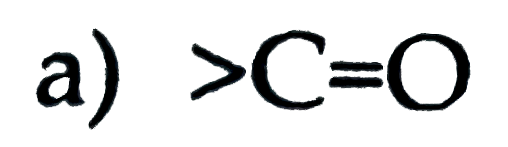
General molecular formula of carbonyl compounds |
|
Answer» `C_nH_(2N)O_2` |
|
| 45. |
From the following which type of magnetic substance magnetite is known ? |
|
Answer» DIAMAGNETIC |
|
| 46. |
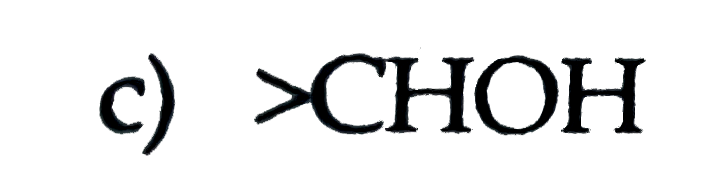
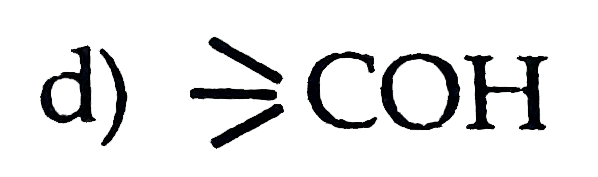
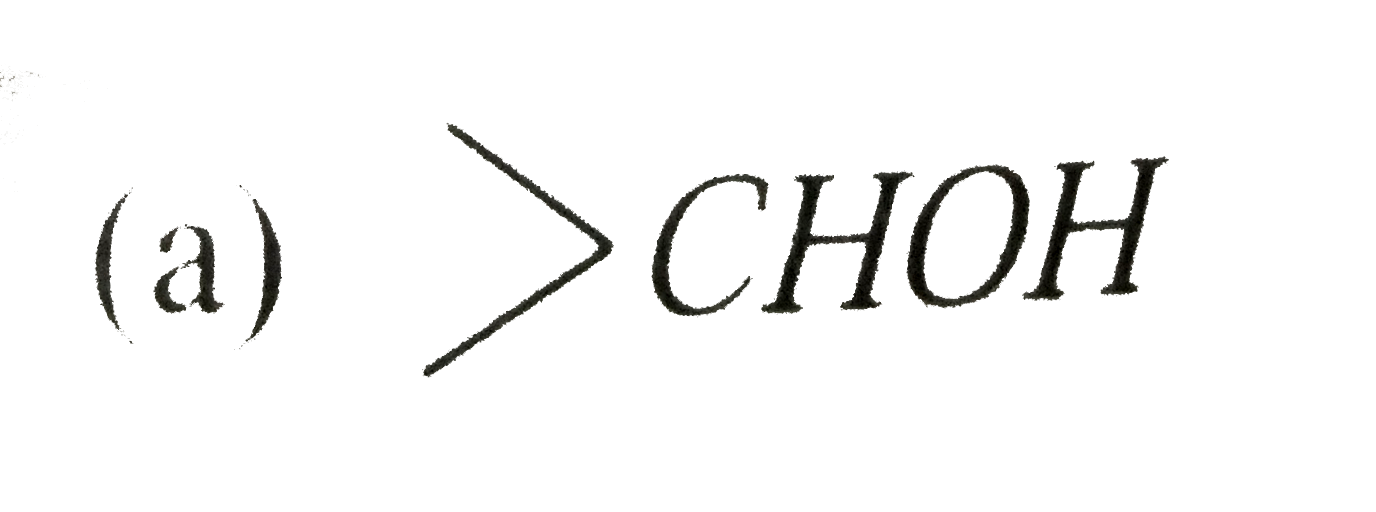
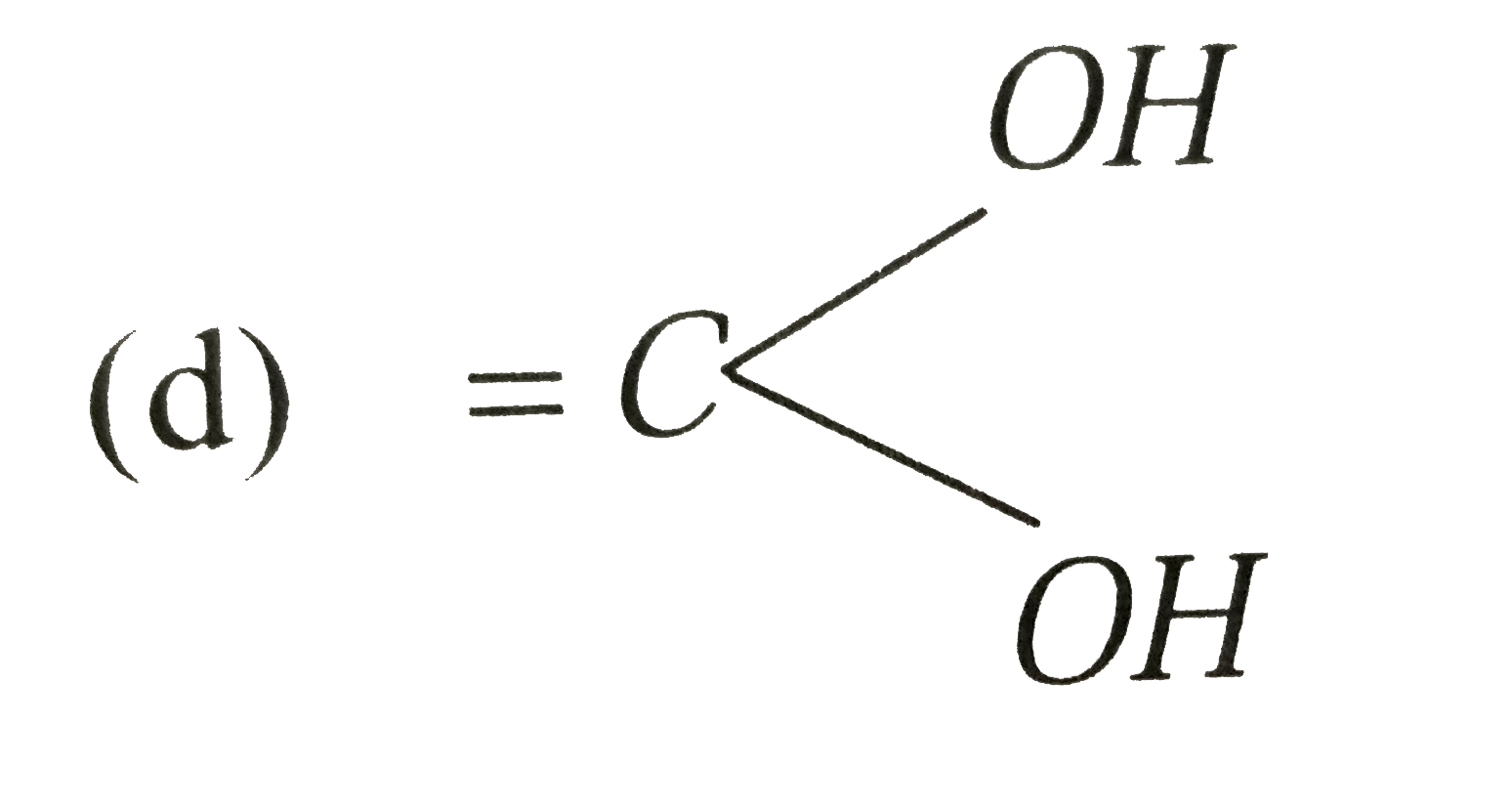
General formula of primary alcohol is |
|
Answer»
|
|
| 47. |
From the following values of E^@ drawn from the emf series, calculate standard emf and the equilibrium constant for the reaction Hg^(2+)+Hg leftrightarrow Hg_2^(2+) E_(Hg_2^(2+),Hg)^@=0.788V, E_(Hg^(2+),Hg_2^(2+))^@=0.92V |
| Answer» SOLUTION :`0.132 V, 1.72 TIMES 10^2` | |
| 48. |
General formula of saturated carboxylic acid is: |
|
Answer» `C_nH_(2n+1)COOH` |
|
| 49. |
From the following two reactions ,arrange HC-=CHNH_3 and H_2O in the increasing order of their acidic character . HC-=CH+NaNH_2to HC-=CNa+NH_3 |
| Answer» Solution :In reaction no. `①, HC -= CH` EXHIBITS its acidic character and produces `NH_(3)` from `NaNH_(2)`. So `HC -= CH` is more acidic than `NH_(3)`. On the other HAND, in reaction `②`, WATER exhibits its acidic character and produces `HC -=CH` from `HC-= CNa`. So, `H_(2)O` is more acidic than `HC-=CH`. Thus, the increasing order of acidic character: `NH_(3) lt HC -= CH lt H_(2)O` | |
| 50. |
General formula of metal boride is ………………. . |
|
Answer» |
|