Saved Bookmarks
This section includes 7 InterviewSolutions, each offering curated multiple-choice questions to sharpen your Current Affairs knowledge and support exam preparation. Choose a topic below to get started.
| 1. |
Geometrical shape of XeF_6 is |
|
Answer» HEXAGONAL  GEOMETRICAL SHAPE of `XeF_6` is as |
|
| 2. |
Froth floatation process is based on : |
|
Answer» WETTING PROPERTIES of ORE particles |
|
| 3. |
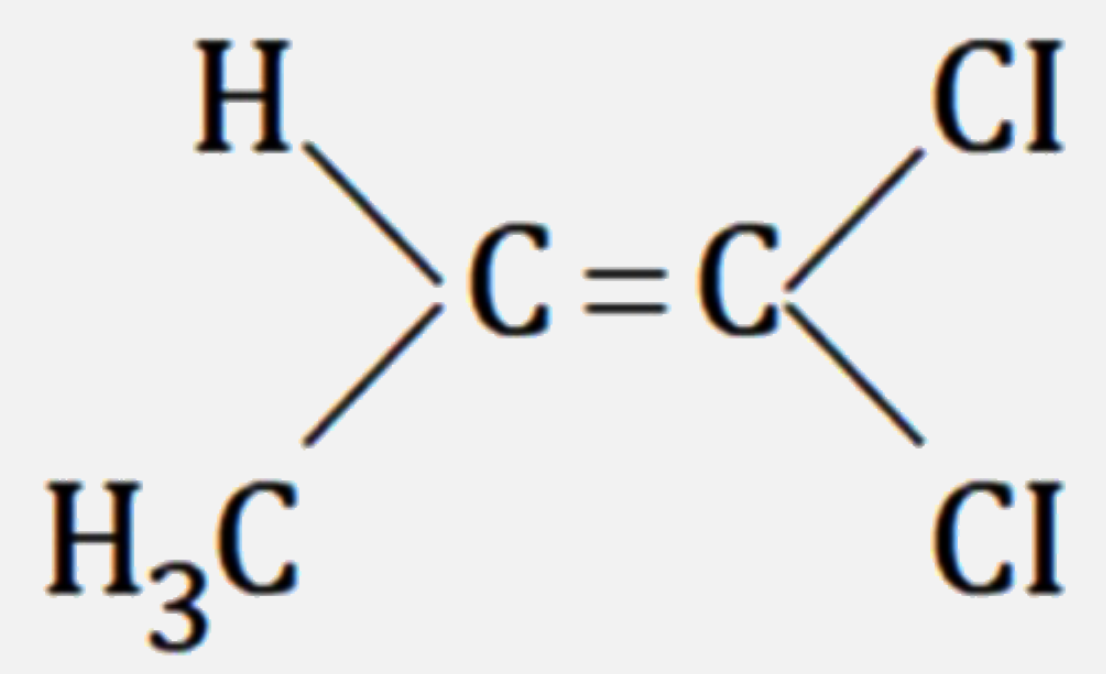
Geometrical isomersim is possible in: |
|
Answer» isobutene |
|
| 4. |
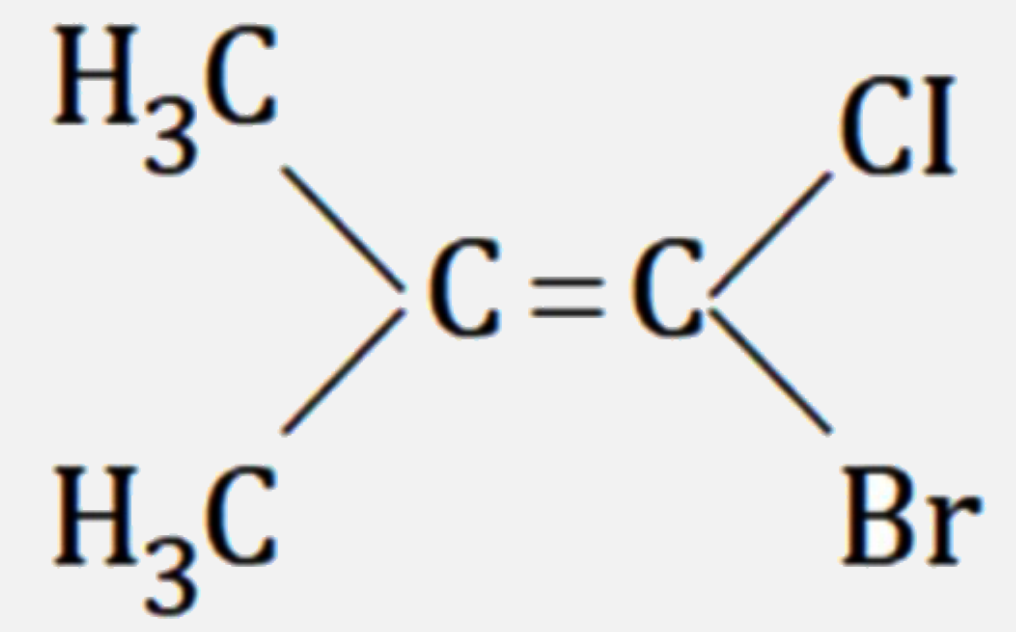
Geometricalisomersm isshownby : |
|
Answer» 2-methyl-1-pentene |
|
| 5. |
Froth flotation process is suitable for concentrating …………… ores. |
| Answer» Answer :D | |
| 6. |
Froth floatation process involves the…… |
|
Answer» TREATMENT of the ore with WATER and pine oil |
|
| 7. |
Geometrical isomers differ in: |
|
Answer» POSITION of FUNCTIONAL group. |
|
| 8. |
Geometrical isomerism may be possible with |
|
Answer» TETRAHEDRAL complex |
|
| 9. |
Froth floatation process for the concentration of ores is carried out in the case of the following ore |
|
Answer» oxides |
|
| 10. |
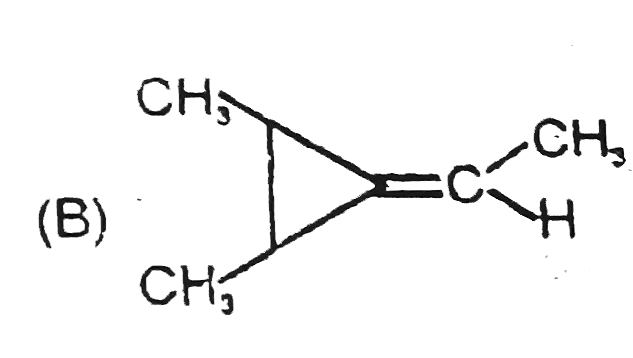
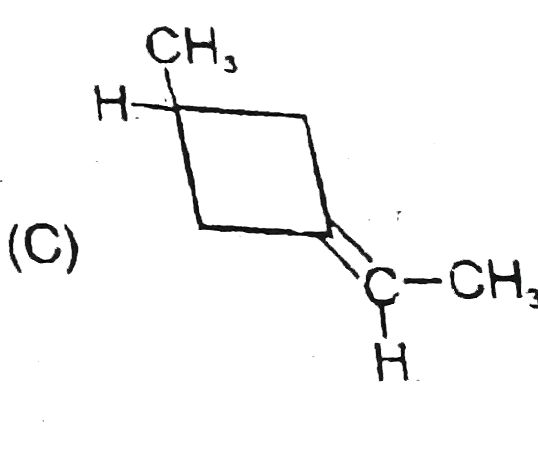
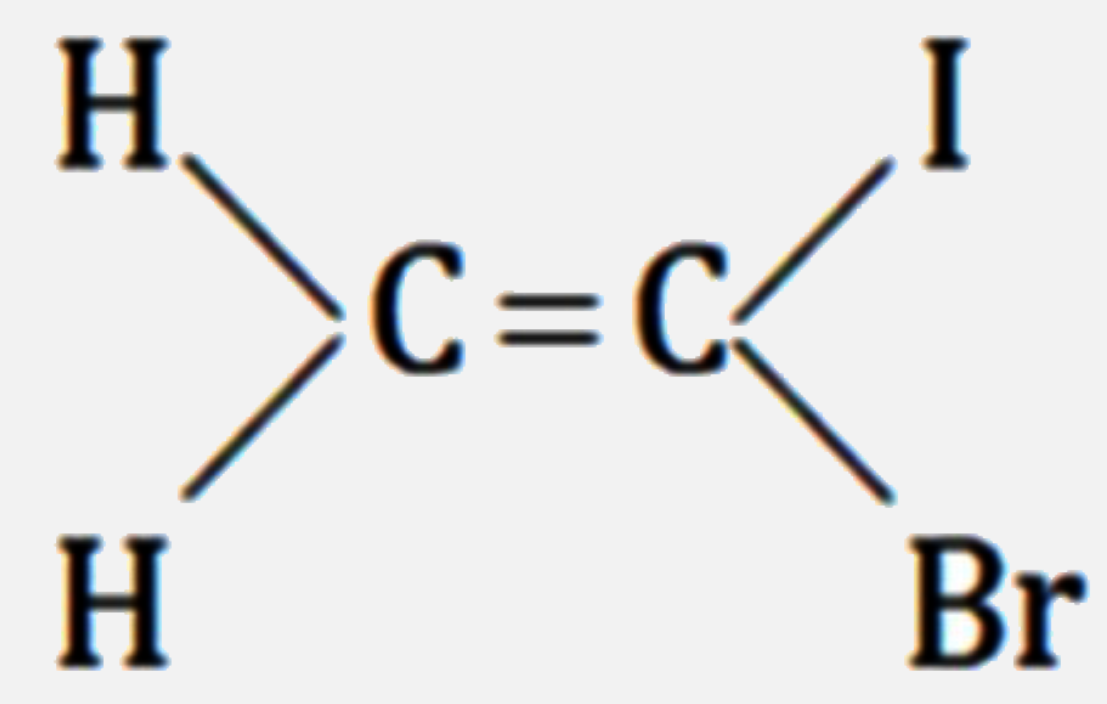
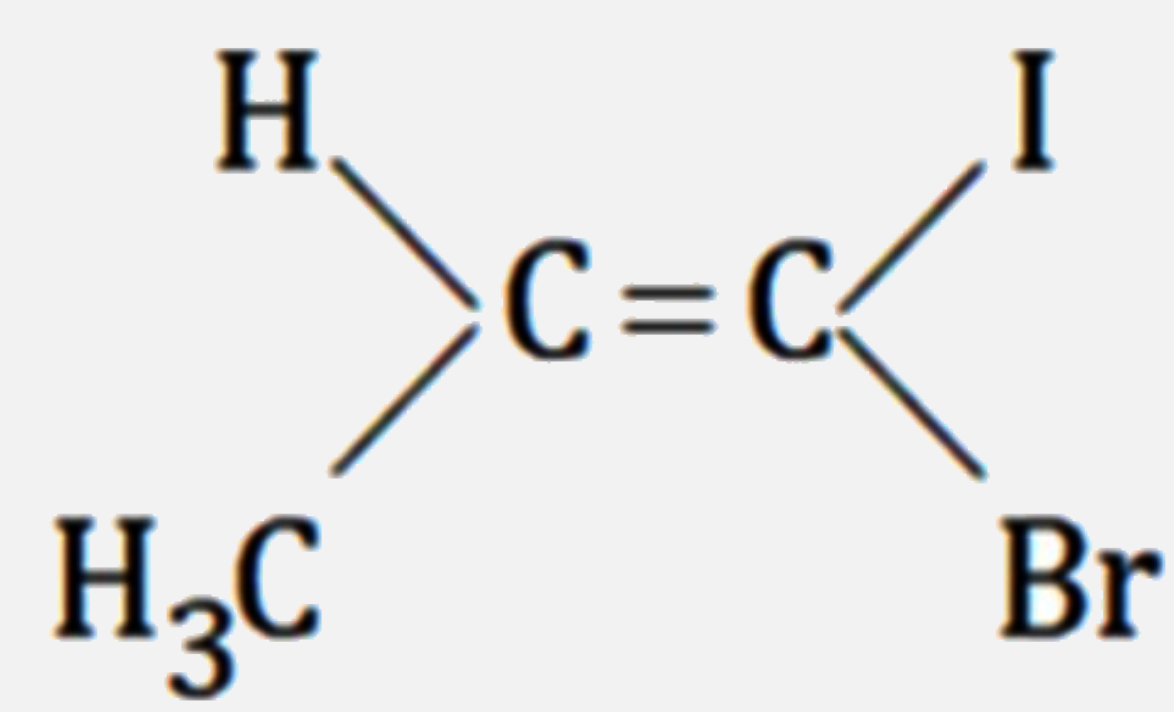
Geometrical isomerism is shown by ? |
|
Answer»
|
|
| 11. |
Froth floatation process for the concentration of ores is an illustration of the practical application of |
|
Answer» Adsorption |
|
| 13. |
Froth floatation processfor the concentration of ores is a practical application of : |
|
Answer» Adsorption |
|
| 14. |
From williamsons synthesis, which one of the following is most desirable to prepare ether? |
|
Answer» `3^@` R-X and ALKOXIDE of `1^@` ALCOHOL |
|
| 15. |
Geometrical isomerism is not shown by: |
|
Answer» `CH_3CH_2C(CH_3)=C(CH_3)CH_2CH_3` |
|
| 16. |
Froth floatation method is successful in seperating impurities from ores because _________. |
|
Answer» the pure ore is LIGHTER than water CONTAINING additives LIKE pine oil , fatty pineoil , fatty acid ETC |
|
| 17. |
Geometrical isomerism is found in coordination compounds having coordination number : |
|
Answer» 2 |
|
| 18. |
Geometrical isomerism is exhibited by: |
|
Answer» 2-chlorobut-2-ene |
|
| 19. |
Froth floatation method may be used to increase the concentration of mineral in |
|
Answer» Calamine |
|
| 20. |
Froth floatation: |
|
Answer» is a physical METHOD of separation MINERAL from the gangue |
|
| 21. |
Geometrical isomerism is found in co-ordination compounds having co-ordination number: |
|
Answer» 2 |
|
| 22. |
what happens when Formaldehyde reacts with ammonia |
Answer» Solution :When formaldehyde is treated with AMMONIA it GIVES Hexamethylene tetramine (HMT) which is also KNOWN as urotropine . 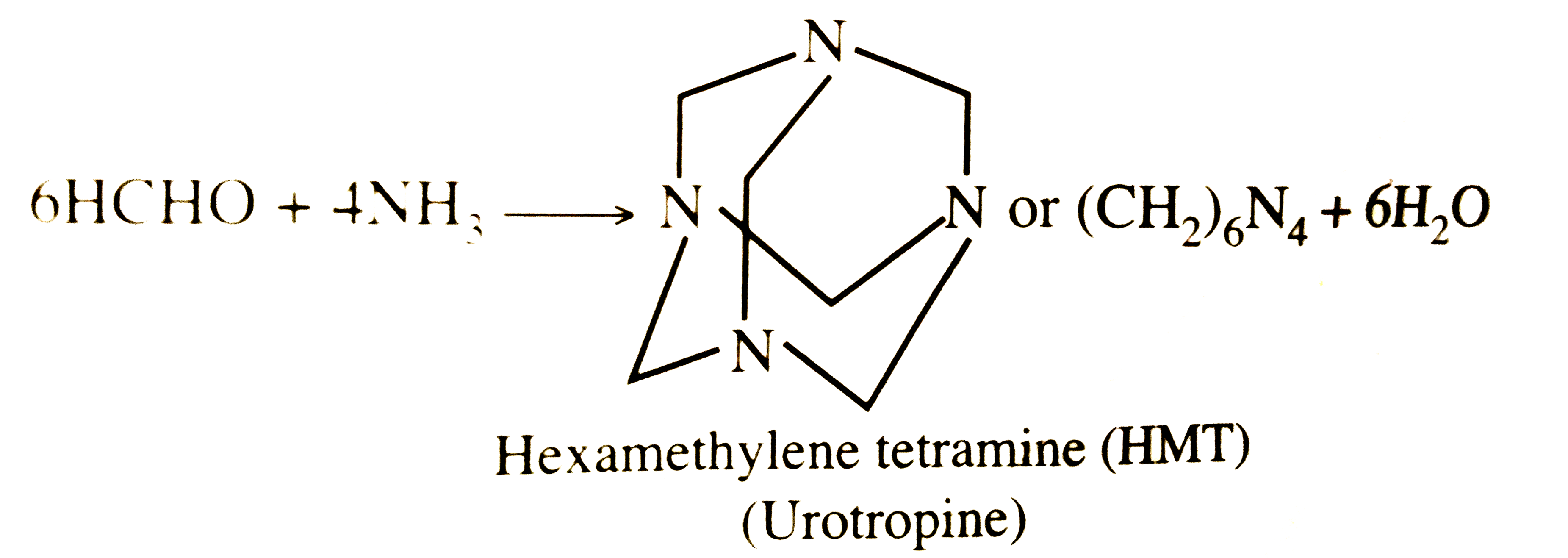
|
|
| 23. |
Geometrical isomerism is exhibited by …………. |
|
Answer» TETRAHEDRAL complex |
|
| 24. |
From which of the following, tertiary butyl alcohol is obtained by the action of methyl magnesium iodide? |
|
Answer» HCHO |
|
| 25. |
From which of the following the hydration energy of Mg^(2+) is larger |
|
Answer» `Na^(+)` |
|
| 26. |
Geometrical isomerism in square planar complexes is given by |
|
Answer» `Ma_4` TYPE COMPLEX |
|
| 27. |
From which of the following Nylon 6 is prepared ? |
|
Answer» 1,3-butadiene |
|
| 28. |
From which enzymes are made ? |
|
Answer» Vitamin |
|
| 29. |
Geometrical isomerism in coordination compounds is exhibited by : |
|
Answer» SQUARE PLANAR and TETRAHEDRAL complexes |
|
| 30. |
From which from of iron, other forms of iron can be produced ? |
|
Answer» CAST iron |
|
| 31. |
Geometrical isomerism arises in heteroleptic complexes due to different possible geometrical arrangement of the ligands. Important examples of this behaviour are found with coordination number 4 and 6. Such isomerism is not possible for a tetrahedral geometry but it is possible for square planar as well as octahedral complexes. Optical square planar as well as octahedral complexes. Optical square planar as well as octahedral complexes. Optical isomers are mirror images that cannot be superimposed on one another. These are called enantiomers. Optical isomerism is common in octahedral complexes involving bedentate ligands. Select the correct statement. |
|
Answer» Both `[NiCl_(2)(PPh_(3))_(2)]` and its analogous Pd(II) show geometrical isomerism. |
|
| 32. |
From the thermochemical reactions, C_ graphite+1//2O_2=CO, triangleH=-110.5 kJ CO+1//2O_2=CO_2, triangleH=-283.2 kJtriangleH for the reaction, C_graphite+O_2=CO_2 is: |
|
Answer» `-393.7 KJ` |
|
| 33. |
Geometrical isomerism can exist only when the molecule: |
|
Answer» Has a centre of symmetry |
|
| 34. |
From the values of 1 faraday anf Avogadro constant, show that 1 faraday may be called 1 mole of electricity. |
|
Answer» Solution :Since 1 faraday = 96500 COULOMBS `therefore (1F)/("AV, no.") = (96500)/(6.022 xx 10^(23))` `= 1.6 xx 10^(-19)` coulomb = charge of on electron. `therefore` 1 F = charge of an electron `xx` Av. no. Since 1 F of electricity is the charge of Av.no. of electrons, 1 faraday may be CALLED 1 mole of electricity. |
|
| 35. |
Geometrical isomerism arises in heteroleptic complexes due to different possible geometrical arrangement of the ligands. Important examples of this behaviour are found with coordination number 4 and 6. Such isomerism is not possible for a tetrahedral geometry but it is possible for square planar as well as octahedral complexes. Optical square planar as well as octahedral complexes. Optical square planar as well as octahedral complexes. Optical isomers are mirror images that cannot be superimposed on one another. These are called enantiomers. Optical isomerism is common in octahedral complexes involving bedentate ligands. Which of the following complexes will show geometrical isomerism ? |
|
Answer» `CS[FeCl_(4)]` |
|
| 36. |
From the unit cell dimension, we can accurately calculate |
|
Answer» GAS constant. |
|
| 37. |
Geometrical isomerism can be shown by : |
|
Answer» `[AG(NH_(3)(CN)]` |
|
| 38. |
From the standard potentials shown in the fillowing figure, calculate the potentials E_(1)^(@) and E_(2)^(@). |
|
Answer» `E_(1)^(@)=(-[5xx1.496+1.07])/(-6)=1.425V` |
|
| 39. |
Geometrical isomerism arises in heteroleptic complexes due to different possible geometrical arrangement of the ligands. Important examples of this behaviour are found with coordination number 4 and 6. Such isomerism is not possible for a tetrahedral geometry but it is possible for square planar as well as octahedral complexes. Optical square planar as well as octahedral complexes. Optical square planar as well as octahedral complexes. Optical isomers are mirror images that cannot be superimposed on one another. These are called enantiomers. Optical isomerism is common in octahedral complexes involving bedentate ligands. Which one of the following statements is false ? |
|
Answer» `[CIS-Pt(NH_(3))_(2)Cl_(2)]` will have some dipole moment |
|
| 40. |
Geometrical isomerism arises in heteroleptic complexes due to different possible geometrical arrangement of the ligands. Important examples of this behaviour are found with coordination number 4 and 6. Such isomerism is not possible for a tetrahedral geometry but it is possible for square planar as well as octahedral complexes. Optical square planar as well as octahedral complexes. Optical square planar as well as octahedral complexes. Optical isomers are mirror images that cannot be superimposed on one another. These are called enantiomers. Optical isomerism is common in octahedral complexes involving bedentate ligands. For which of the following complexes, are optical isomers possible ? (P) [Cr("ox")_(3)]^(3-)""(Q) [Cr(NH_(3))_(4)(ox)^(+) (R ) [Co("ox")_(2)(NH_(3))_(2)]^(-) Select the correct answer using the codes given below : |
|
Answer» <P>P only |
|
| 41. |
Geometrical isomerism arises in heteroleptic complexes due to different possible geometrical arrangement of the ligands. Important examples of this behaviour are found with coordination number 4 and 6. Such isomerism is not possible for a tetrahedral geometry but it is possible for square planar as well as octahedral complexes. Optical square planar as well as octahedral complexes. Optical square planar as well as octahedral complexes. Optical isomers are mirror images that cannot be superimposed on one another. These are called enantiomers. Optical isomerism is common in octahedral complexes involving bedentate ligands. The total number of isomers possible for the complex [Co(en)_(2)Cl_(2)]^(+) is : |
|
Answer» 3 |
|
| 42. |
Geometric isomerism exists in ……….. Complexes due to different possible three dimensional spatial arrangement of ligands around the central metal atom. |
|
Answer» |
|
| 43. |
From the stability constant (hypothetical values), given below, predict which is the most stable complex ? |
|
Answer» `Cu^(2)+4NH_(3) to [Cu(NH_(3))_(4)]^(2+), K=4.5xx10^(11)` |
|
| 44. |
Geomerical isomerism is found in co-ordination compounds having minimum co-ordination number. |
|
Answer» |
|
| 45. |
From the stability constant (hypothetical values) given below, predict which is the strongest ligand: |
|
Answer» `CU^(2+)+4NH_3iff[Cu(NH_3)_4]^(2+),(K=4.5xx10^11)` |
|
| 46. |
From the stability constant (hypothetical value given below predict which is the strongest ligand |
|
Answer» `Cu^(2+)+4NH_(3)HARR[Cu(NH_(3))_(4)]^(2+),K=4.5xx10^(11)` |
|
| 47. |
From the solution of an electrolyte , one mole of electrons will deposit at cathode , |
|
Answer» 63.5 gm of Cu |
|
| 48. |
Generally transition elements form coloured salts due to the presence of unpaired electrons. Which of the following compounds will be coloured in the solid state ? |
|
Answer» `Ag_(2)SO_(4)` |
|
| 49. |
From the rate expressions for the following reactions, determine their order of reaction and the dimensions of the rate constants : (i) 3" NO "(g)toN_(2)O(g)+NO_(2)(g)," Rate "=k[NO]^(2) (ii) H_(2)O_(2)(aq)+3" I"^(-)(aq)+2" H"^(+)to2H_(2)O(l)+I_(3)^(-)," Rate "=k[H_(2)O_(2)][I^(-)] (iii) CH_(3)CHO(g)toCH_(4)(g)+" CO "(g)," Rate "=k[CH_(3)CHO]^(3//2) (iv) C_(2)H_(5)Cl(g)toC_(2)H_(4)(g)+HCl(g) ," Rate "=k[C_(2)H_(5)Cl]. |
|
Answer» Solution :(i) ORDER = 2, Dimensions of `k=("Rate")/([NO]^(2))=(molL^(-1)s^(-1))/((molL^(-1))^(2))=Lmol^(-1)s^(-1)` (ii) Order = 2, Dimensions of k = Same as in (i) (III) Order `=(3)/(2)`, Dimensions of `k=("Rate")/([CH_(3)CHO]^(3//2))=(molL^(-1)s^(-1))/((molL^(-1))^(3//2))=L^(1//2)mol^(-1//2)s^(-1)` (iv) Order = 1, Dimensions of `k=("Rate")/([C_(2)H_(5)Cl])=(molL^(-1)s^(-1))/(molL^(-1))=s^(-1).` |
|