Saved Bookmarks
This section includes 7 InterviewSolutions, each offering curated multiple-choice questions to sharpen your Current Affairs knowledge and support exam preparation. Choose a topic below to get started.
| 1. |
From gold amalgam , gold may be recovered by : |
|
Answer» Addition of Zn metal |
|
| 2. |
From Gabrielphtalimide sythesis aromaticprimary aminecannotbeprepared . |
|
Answer» Ar - X do nitundergoesnucleophilicsubstituionreaction |
|
| 3. |
From Elligham diagram the correct statements (a) 4cu+O_(2) rarr 2Cu_(2)O (b)2C+O_(2) rarr2CO ( c)2Zn+O_(2) rarr 2ZnO |
|
Answer» At temeperature above `t_(1)^(0)C` "Carbon" can reduce `Cu_(2)O` |
|
| 4. |
From fluorine to iodine, the electronegativity, |
|
Answer» DECREASES |
|
| 5. |
From each of the following pairs of compounds, selects the one-which give positive iodoform test (a) Sec-butyl alcohol and Tert-butyl alcohol (b) Formaldehyde and Acetaldehyde ( c) Acetaone and Methyl alcohol |
|
Answer» |
|
| 7. |
From Bragg's equation which one of the following is wrong? |
|
Answer» INCIDENT ANGLE `(theta)` value is in between `0^(@)` to `90^(@)` |
|
| 8. |
From B_2H_6 all the following can be prepared except : |
|
Answer» `H_3BO_3` |
|
| 9. |
From analysis and molecular weight determination the molecular formula of a compound (A) is C_(3)H_(7)NO. The compound gives the following information. i) On hydrolysis it gives an amine (B) and Carboxylic acid (C) ii) Amine (B) reacts with benzne sulphonyl chloride and gives a product which is insoluble in aqouesous sodium hydroxide solution iii) Acid (C) on reaction with Tollens reagent gives a silver mirror. Compound 'A' is |
|
Answer» `CH_(3)-OVERSET(O)overset(||)C-NH-CH_(3)` |
|
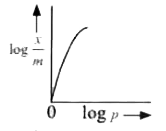
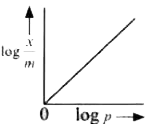
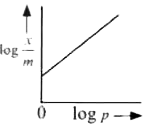
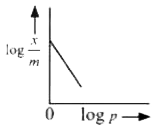
| 10. |
From argentite (Ag_2S) ore the method used for obtaining metallic silver is: |
|
Answer» Fused MIXTURE of `Ag_2S` and `KCI` is electrolysed |
|
| 11. |
From aqueous solution of ZnSO_(4), normal zinc carbonate may be precipitated by |
|
Answer» Boiling with `CaCO_(3)` |
|
| 12. |
From analysis and molecular weight determination the molecular formula of a compound (A) is C_(3)H_(7)NO. The compound gives the following information. i) On hydrolysis it gives an amine (B) and Carboxylic acid (C) ii) Amine (B) reacts with benzne sulphonyl chloride and gives a product which is insoluble in aqouesous sodium hydroxide solution iii) Acid (C) on reaction with Tollens reagent gives a silver mirror. What is compound (B) ? |
|
Answer» `CH_(3)NH_(2)` |
|
| 13. |
From analysis and molecular weight determination the molecular formula of a compound (A) is C_(3)H_(7)NO. The compound gives the following information. i) On hydrolysis it gives an amine (B) and Carboxylic acid (C) ii) Amine (B) reacts with benzne sulphonyl chloride and gives a product which is insoluble in aqouesous sodium hydroxide solution iii) Acid (C) on reaction with Tollens reagent gives a silver mirror. Compound 'C' is |
|
Answer» `CH_(3)-OVERSET(O)overset(||)C-OH` |
|
| 14. |
From an isolated system, DeltaU=0, what will be DeltaS? |
|
Answer» SOLUTION :For an isolated system, `DeltaU=0` and for a spontaneous process, total entropy change must be positive. `DeltaS gt 0`. |
|
| 15. |
From an aqueous solution of zinc sulphate , normal zinc carbonate may be precipitated by : |
|
Answer» PASSING `CO_2` |
|
| 16. |
From amongst the following electronic configuration, find out the alkaline earth element.[Ar]4s^2 [Ar]3d^5 4s^2 [Ar]3d^10 4s^2 |
|
Answer» [AR] `4s^2`, |
|
| 17. |
From amongst the following alcohols, the one that would react fastest with conc.HCl and anhydrous ZnCl is |
|
Answer» 1-Butanol |
|
| 18. |
From amongst the following alcohols, the one that would react fastest with conc. HCl and anhydrous ZnCl_(2), is |
|
Answer» 2-methylpropanol |
|
| 19. |
From amongst the following alcohols, the one that would react fastest with conc. HCl and anhydrous ZnCl_2 is |
|
Answer» I- BUTANOL |
|
| 20. |
From among the following elements choose one p-block element: |
|
Answer» NA |
|
| 21. |
From a study of properties of neighbouring elements, the properties of an unknown element can be predicted - justify with an example. |
|
Answer» Solution :Mendeleev left some gaps in the PERIODIC table. He predicted the properties of these unknown elements after studying the properties of the neighbouring elements. When he proposed the periodic table. The elements scandium (Z = 21) , gallium (Z = 31) and germanium (Z = 32) were unknown. Not only he predicted their properties but also NAMED them eka-boron, eka-aluminium and eka-silicon respectively. The three elements were soon discovered within 20 years of his pronouncement of the 'periodic law' (during his life time). It is astonishing to SEE that when the properties of these elements were studied, these showed a remakable agreement with those predicted by Mendeleev. In addition to the above three elements, Mendeleev the discovery of some more elements: Examples: `{:(S.NO.,"properties of Eka-silicon predicted by Mendeleev(1871)","Properties of Germanium discoverved by Winkler(1886)"),(1.,"Atomic weight"72,"Atomic weight"72.6),(2.,"SPECIFIC gravity"5.5,"Sp.gravity"5.46),(3.,"Colour-dirty grey","Colour-greyish white"),(4.,"Specific heat 0.073","Specific heat 0.076"),(5.,"Oxide"-EsO_(2)"less basic than"SnO_(2)",but more basic than"Si_(2)OSp.gr.4.70",refractory","Oxide"-GeO_(2)",slightly basic SP.gr."4.70", refractory"),(6.,"Chloride"-EsCl_(4) a "liquid, B.P. below"100^(@)C,"Chloide"-GeCl_(4)",liquid B.P."86.5^(@)C):}`. |
|
| 22. |
From acrylic acid prepare gamma-amino butyric acid. beta-aminopropionic acid (beta-alanine). |
Answer» SOLUTION :The `-NH_(2)` and the additional C are introduced from `CN^(-)` which REACTS with the ACID by Michael type addition. 
|
|
| 23. |
From among following pairs, number of pairs in which first compound is more basic than second compound is |
|
Answer» |
|
| 24. |
From a mixture of yellow P and red P, yellow P can be removed by |
|
Answer» heating with CONC. `H_(2)SO_(4)` `P_(4)+3NaOH+3H_(2)O to 3NaH_(2)PO_(2)+PH_(3)` |
|
| 25. |
From a solution of CuSO_4 , the metal used to recover copper is : |
|
Answer» Na |
|
| 26. |
From a porous vessel containing equimolar proportions of hydrogen and oxygen, the composition by mass of the mixture effusing out is : hydrogen and oxygen in the ration of |
|
Answer» `1:4` `("Mass of " H_(2))/( "Mass of " O_(2)) = ( 4)/(1)` or `4:1` |
|
| 27. |
From a mixture of amino acids the constituents can be separated by |
|
Answer» ion-exchange chromatography A mixture of `A A's` can also be separated by ion-exchange chromatoography: the column is charged with an ion-exchange resin with charged groups at tis surface. A cation - exchange resin, i.e., `R - SO_(3)^(-) NA^(+) (R=` resin), exchanges it cation`(Na^(+))` for positively charged `A A's` in acid when most `A A's` are cations. Separation depends on the rate of movement of the positively charged `A A's` down the column as the exchange occurs. The rate of movement is inversely proportional to the magnitude to the + charge on the `A A`. |
|
| 28. |
From 200mg of CO_(2),10^(21) molecuels are removed. How many moles of CO_(2) are left? |
|
Answer» Solution :Gram-molecular mass of `CO_(2)=44g` Mass of `10^(21)` molecuels of `CO_(2)=(44)/(6.02xx10^(23))xx10^(21)=0.073g` Mass of `CO_(2)` left `=(0.2-0.073)=0.127g` NUMBER of MOLES of `CO_(2)` left `=(0.127)/(44)=2.88xx10^(-3)` |
|
| 29. |
From +6 to +1 oxidation state is shon by the element of …… group |
|
Answer» V-B |
|
| 30. |
From 200 mg of CO_(2),10^(21) molecules are removed. How many moles of CO_(2) are left ? |
|
Answer» Solution :Total no. Of MOLES of `CO_(2) = ("wt.in g")/("mol. Wt")` `=0.2/44 =0.00454` No. Of moles REMOVED `=(10^(21))/(6.022 xx 10^(23)) = 0.00166` No. Of moles of `CO_(2)` LEFT `=0.00454 - 0.00166=0.00288` |
|
| 31. |
Friedel-Craft's reaction using MeCl and anhydrous AlCl_3 will take place most efficiently with |
|
Answer» Benzene |
|
| 32. |
Friedel Creft acetylation of benzene gives |
|
Answer» benzophenone |
|
| 33. |
Frinkelestein reaction is used to prepare |
|
Answer» R-F |
|
| 34. |
For making tyres,___is added to natural rubber during vulcanization. |
|
Answer» 1%-3% sulphur |
|
| 35. |
Friedel crafts reaction is an example of ........... catalysis. |
| Answer» SOLUTION :HETEROGENEOUS | |
| 36. |
Fridel-crafts' reaction of bromobenzene with methyl iodide gives |
|
Answer» o-bromotoluene |
|
| 37. |
Friedel-Crafts reaction of benzene with isobutyl chloride produces |
|
Answer» isobutylbenzene `overset("1,2-hydride")underset("shift")rarr CH_(3)-overset(CH_(3))overset("|")underset(CH_(3))underset("|")(C^(+))overset(C_(6)H_(6))underset(-H^(+))rarr underset("tert - butylbenzene")(CH_(3)-overset(CH_(3))overset("|")underset(CH_(3))underset("|")"C "-C_(6)H_(5))` |
|
| 38. |
Friedel-Crafts acylation requires an excess of the catalyst but Fredel-Crafts alkylation requires only a catalytic amount. Why? |
| Answer» Solution :The product of ACYLATION co-ordinates with the catalyst and removes the latter from the reactant side and thereby stops further acylation. For this reason, Friedel-Crafts acylation requires an excess of the catalyst. The product of alkylation does not co-ordinate with the catalyst. So, the catalyst can FORM COMPLEX with the alkylating agent and the catalyst PROPAGATES the reaction. | |
| 39. |
Friedel Crafts alkyation of benzene is an example of : |
|
Answer» nucleophilic substitution reaction |
|
| 40. |
Friedel Craft's acylation. |
|
Answer» Solution :Friedel CRAFT's ACYLATION : The introduction of acyl group in the BENZENE ring is termed as Friedel Craft's acylation. Anhydrous `AlCl_(3)` is used as the catalyst. Chlorobenzene react with acetyl CHLORIDE in presence of anhudrous aluminium chloride to form o- and p-chloro acetophenones. 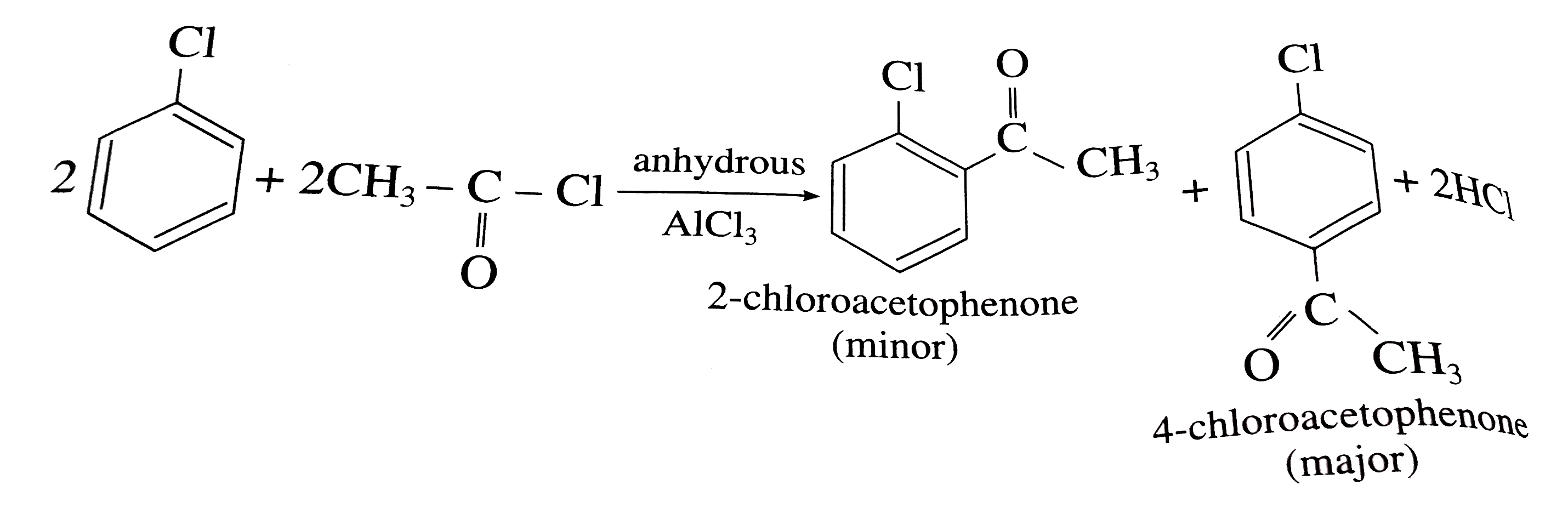
|
|
| 41. |
Friedel Craft acetylation of chlorobenezene gives |
|
Answer» 3-chloroacetophenone |
|
| 42. |
Freundlich equation for adsorption of gases (in amount of x g) on a solid (in amount of m g) at constant temperature can be expressed as |
|
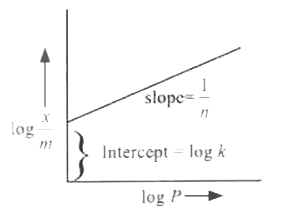
Answer» `LOG(x)/(m)=LOGP+(1)/(n)logK` `(x)/(m)propp^((1)/(n))or, (x)/(m)=Kp^((1)/(n))` or `log(x)/(m)=logKp^((1)/(2)) or log(x)/(m)=logK+(1)/(n)logp`. |
|
| 43. |
Freundlich adsorption isotherm is given by the expression (x)/(m)=kp^((1)/(n)). Which of the following conclusions can be drawn from this expression ? |
|
Answer» <P>When `(1)/(n)=0`, the adsorption is independent of pressure. If `(1)/(n)=0”“therefore(x)/(m)=k` If `n=0”“therefore` Plot is parallel to X-axis |
|
| 44. |
Freundlich adsorption isothermal equation is applicable fo adsorption of .......... |
| Answer» SOLUTION :GASES on solidsurface | |
| 45. |
Freundlich adsorption isotherm x//m = kp^(1//n) may be graphically represented as |
|
Answer»
|
|
| 46. |
Freundlich adsorption isotherm is (x)/m = kp^((1)/n where n gt1. Anser the following questions based on Freundlich adsorption isotherm: What is adsorption isotherm? |
|
Answer» |
|
| 47. |
Freundlich adsorption isotherm is given by the expression x/m=k p^(1/n). Which of the following conclusions can be drawn from this expression ? |
|
Answer» When `1/n=0,` the adsorption is independent of PRESSURE |
|
| 48. |
Freundlich adsorption isotherm is given by the expression (x)/(m) = kp^((1)/(n)). Then the slope of the line in the following plot is |
| Answer» ANSWER :B | |
| 49. |
Freundlich adsorption isotherm is: |
|
Answer» <P>`(x )/(m) = kp ^(N)` |
|
| 50. |
Freshly prepared precipitates can be easily dispersed by shaking it with dispersion medium. The process is called: |
|
Answer» PEPTISATION |
|