Saved Bookmarks
This section includes 7 InterviewSolutions, each offering curated multiple-choice questions to sharpen your Current Affairs knowledge and support exam preparation. Choose a topic below to get started.
| 1. |
For a zero order reaction |
|
Answer» the TIME TAKEN for HALF the reaction to complete is INVERSELY proportional to its RATE constant |
|
| 2. |
For a zero order chemical reaction, 2NH_(3)(g) to N_(2)(g) + 3H_(2)(g) rate of reaction=0.1 "atm"//"sec".Initially only NH_(3) is present and its pressure =3atm . Claculate total pressure at t=10 sec. |
|
Answer» |
|
| 3. |
For a weak monobasic acid, if pK_a = 4, then at a concentration of 0.01 M of the acid solution, the van't Hoff factor is |
|
Answer» 1.01 |
|
| 4. |
For a which reaction does the equilibrium constant depend on the units of concentration? |
|
Answer» `COCl_(2) HARR CO(G)+Cl_(2)(g)` |
|
| 5. |
For a yellow coloured solution obtained in column-1, select the only correct option. |
|
Answer» 1, C, P `Co^(2+)+"excess"CN^(-)underset(air)tounderset("yellow coloured solution")([Co(CN)_6]^(3-))` `Co^(3+), 3d^6 ,S.F.Limplies d^2sp^3`& OCTAHEDRAL complex n=0 `implies` Diamagnetic |
|
| 6. |
For a weak monobasic acid, if pK_(a)=4. then at a concentration of 0.01 M of the acid solution, the van't Hoff factor is |
|
Answer» 1.01 For weak acid, `HA hArr H^(+)+A^(-)` `K_(a)=C ALPHA^(2)"(Ostwald's dilutio law)"` `therefore""alpha=sqrt((K_(a))/(C))=sqrt((10^(-4))/(0.01))=10^(-1)=0.10` `{:(,HA,hArr,H^(+),+,A^(-)),("Initial","1 mole",,,,),("Moles after ",1-alpha,,alpha,,alpha","):}` `"dissoc.Total"=1+alpha` `i=1+alpha=1+0.10=1.10` |
|
| 7. |
For a weak acid HA with dissociation constant 10^(-9), pOH of its 0.1 M solutions is |
|
Answer» 9 `HA hArr H^(+) + A^(-)` `[H^(+)] = sqrt((K_(a))/(C)) = sqrt((10^(-9))/(0.1)) , [H^(+)] = 10^(-4)` `:. PH = 4` `because pH + POH = 14` `pOH = 14- pH = 14-4 , pOH = 10` . |
|
| 8. |
For a weak acid, the incorrect statement is |
|
Answer» Its dissociation constant is low |
|
| 9. |
For a weak base, the concentration of OH^(-) ion at concentration 'c' would be(disociation constant = K_(b)) |
|
Answer» `SQRT((K_(B))/(C ))` |
|
| 10. |
For a weak acid HA, Ostwald's dilution law is represented by the equation |
|
Answer» `K_(a) = (alpha C)/(1-alpha^(2))` |
|
| 11. |
For a weak acid HA of concentration C(mol l^-1) and degree of dissociation (alpha), Ostwald's dilution law is represented by the equation |
|
Answer» `K_a=(C^2alpha)/(1-alpha)` |
|
| 12. |
For a uni - univalent electrolyte, write the Debye - Huckel Onsagar equation. |
| Answer» SOLUTION :`wedge_(m)=wedge_(m)^(@)-(A+Bwedge_(m)^(@))SQRT(C)` | |
| 13. |
For a uncleophillic substitution reaction the rate was found in the order RI gt RBr gt RCl gt RF then the reaction could be |
|
Answer» `S_N1` only |
|
| 14. |
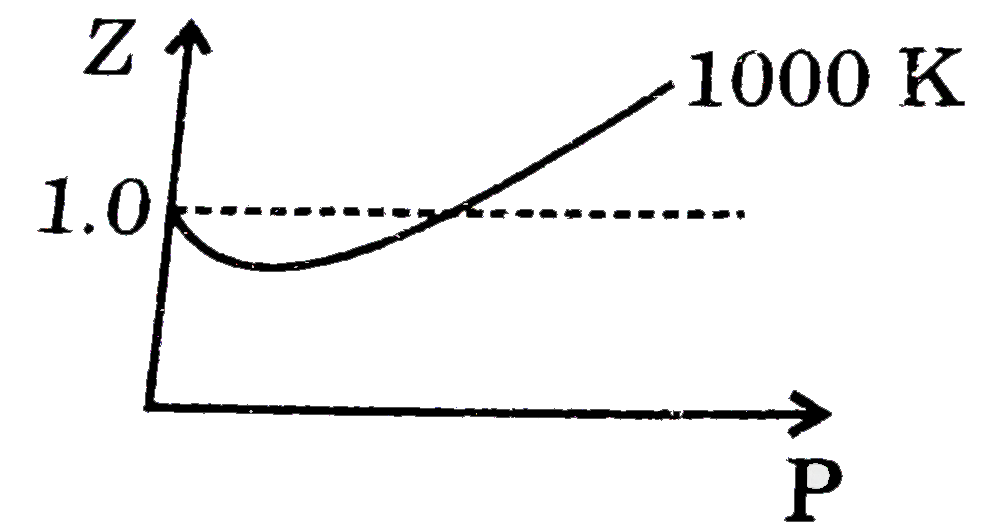
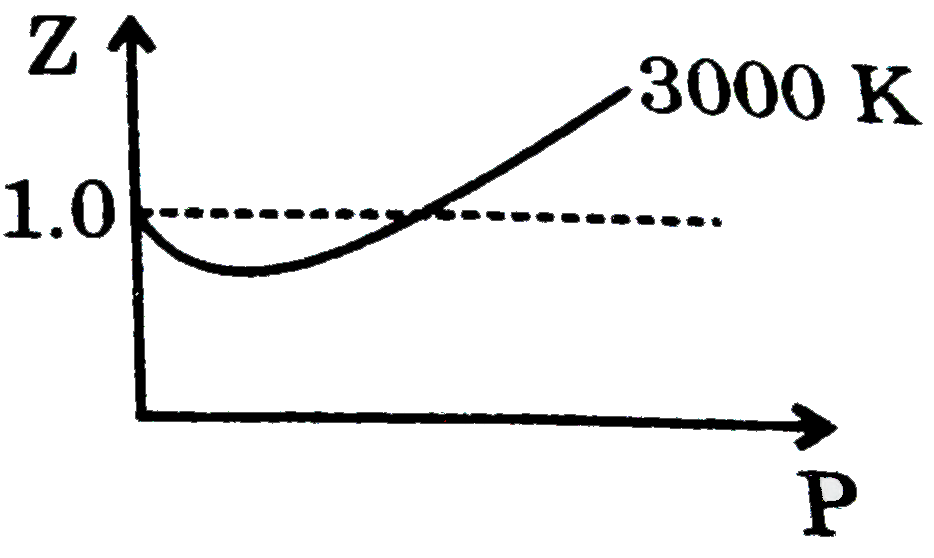
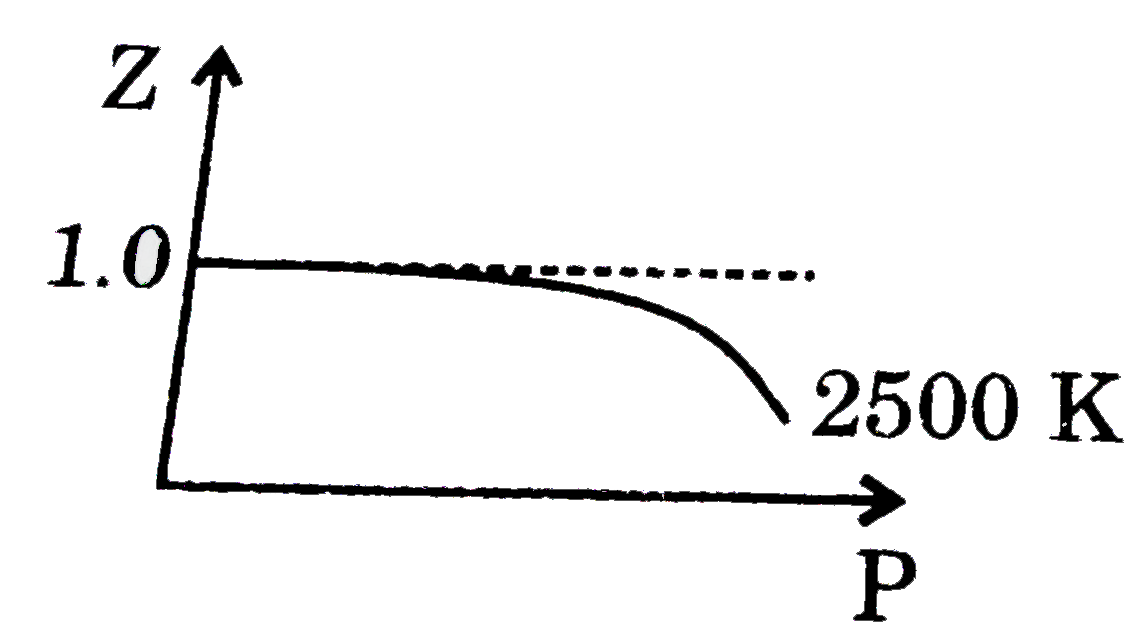
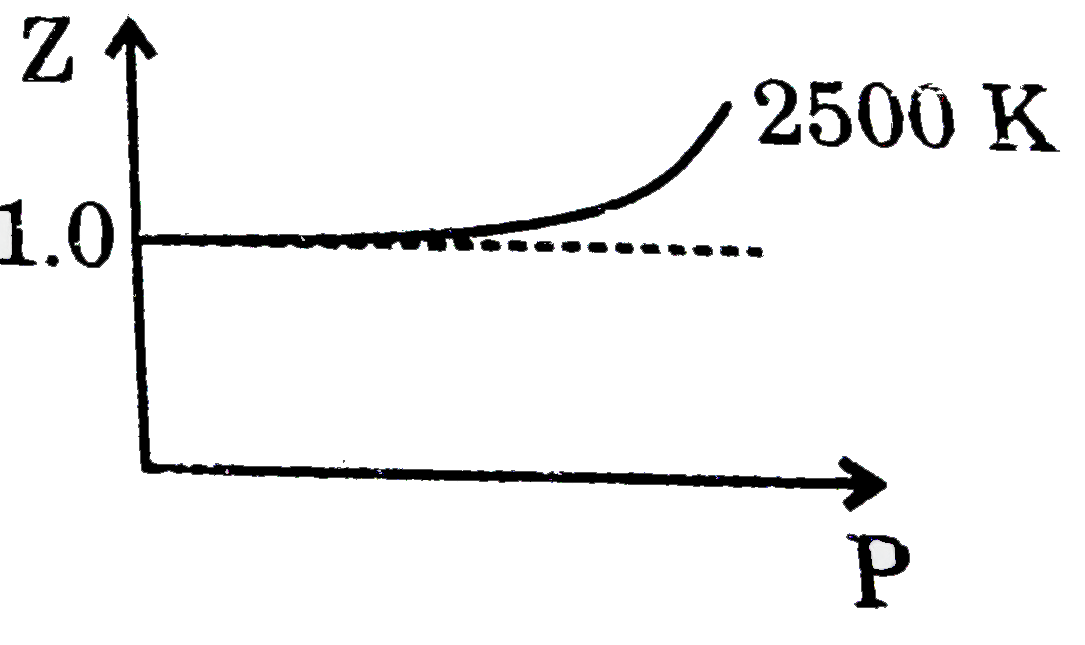
For a van der Waals' gas, a = 4 atm-l^(2)//"mol"^(2) and b = 0.02l//"mol". Select the correct possible graph (s). [Given: R = 0.08 L-atm//"mol'-L] |
|
Answer»
|
|
| 15. |
For a third order reaction the ratio of t_(1//3) "and"t_(2//3) is T [t_(1//x) represents the time in which 1/xfraction of reactant get reacted]. The value of '32 T' is : |
|
Answer» |
|
| 16. |
For A to B, [A] changed from 4.4 xx 10^(-2)M to 3.2 xx 10^(-2) Min 25 min. Now (-Delta[A])/(Delta t) will be |
|
Answer» `4.8 XX 10^(-4) "min"^(-1)` |
|
| 17. |
For a thermodynamically reversible reaction in a galvanic cell at temperature T, which one of the following is false? |
|
Answer» `-Delta G = w_(max)` Electrical work done `= nFE_(cell)` ` therefore- Delta G = nFE_(cell)` Gibbs energy for a reaction in which all reactants and products are in standard state, `Delta G^@`is RELATED to the EQUILIBRIUM constant as, ` Delta G^@- 0RT ln K_c` when `Delta G^@`is ZERO, process does not occur. ` Delta G = Delta H -T Delta S = 0 , therefore Delta H = T Delta S` |
|
| 18. |
For a system at equilibrium which of the following are correct |
|
Answer» `((d"In"K_p)/(dP))_r=(-d)/(dP)((DeltaG)/(RT))_r` `therefore ((d"In"K_p)/(dP))_T=-d/(dP)((DeltaG)/(RT))_T` Hence (A) is the CORRECT option. Also, `DeltaG=DeltaH-TDeltaS=-2.303 RT log K` `therefore log K=1/(2.303)(DeltaS-(DeltaH)/T)` Hence (B) is correct option. In endothermic reaction changing temp. K changes and not Q . Hence ( C ) is the correct option. |
|
| 19. |
For a system in equilibrium, /_\G = 0 under conditions of constant ...... |
|
Answer» temperature and pressure |
|
| 20. |
For a system in equilibrium, DeltaG = 0 under conditions of constant : |
|
Answer» TEMPERATURE and PRESSURE |
|
| 21. |
For a system in equilbrium DeltaG=0 under conditions of constant |
|
Answer» TEMPERATUREE and pressure |
|
| 22. |
For a substance undergoes sequential first order reaction calculate ratio calcualate ratio of number of atoms of B to C when steady state is obtained. Aoverset(K_(1))toBoverset(K_(2))toCoverset(K_(3))toD where K_(1)=(In2)/(10), K_(2)=10In2, K_(3)=10^(4)In 2 |
| Answer» ANSWER :B | |
| 23. |
For a system at equilibrium |
|
Answer» `((dellnK_(p))/(delP))=-(del)/(delP)((DeltaG)/(RT))_(T)` `implies((dellnK_(p))/(delP))_(T)=-(del)/(delP)((DeltaG)/(RT))_(T)` HENCE statement (a) is true At equlibrium `G_(p)=G_(R)` i.e., free energy of products and reactants are equal. `impliesDeltaG=G_(p)-G_(R)=0implies` Statement (B) and(c) are CORRECT. At equlibrium, the free energy of system is minimum. Statement (d) is correct. |
|
| 24. |
For a system A+2B hArr 2C the equilibrium concentration are[A]=0.06, [B] = 0.12 and [C]=0.216 The K_c for the reaction is : |
| Answer» Answer :A | |
| 25. |
For a standard cell, Cu(s)|Cu^(2+)(0.01M)||Ag^(+)(0.02M)|Ag(s) E_(Cu^(2+)|Cu)^0=+0.34V,E_(Ag^+//Ag)^0=+0.80V Write the reactions taking place at the electrodes. |
|
Answer» Solution :ANODE REACTION: `CU(s) `:.` CELL reaction: `Cu(s)+2Ag^+(aq)toCu^(2+)(aq)+2Ag(s)` |
|
| 26. |
For a stable molecule the value of bond order must be |
|
Answer» zero = (no. Bonding electrons) -(no. Of antibonding electrons)/(2) The electrons in the bonding MOLECULAR orbital leads to lowering in energy and hence stability whereas in antibonding molecular orbital leads to destability. (i) (-ve) bond order `Rightarrow` greater number of electrons in antibonding molecular orbital than bonding molecular orbital.Therefore molecule is less stable compared to the separated atoms. 0 bond order `rightarrow` number of bonding molecular orbital = number of antibonding molecular orbital.Therefore there is no gain in energyy in forming the molecule. (+ve) bond order `rightarrow` number of electrons in bonding molecular orbital is more than those in antibonding molecular orbital.Therefore ther is a gain in enrgy while the bonding TAKES place. |
|
| 27. |
For a springly soluble salt A_PB_q the relationship between its solubility product (L_s)and its solubility (S) is : |
|
Answer» `L_S = S^(p+q) p^p q^q` |
|
| 28. |
For a spontaneous reaction theDeltaG) equilibrium constnat (K)and E_("Cell")^(@) eill be respectively |
|
Answer» `-ve GT 1, -ve` `(DeltaG =-2.303 RT log K_(e), If K _(C)=1` then `DeltaG=0, If K_(c)lt 1` then `DeltaG =+ ve).` Again `Delta G=-nFE_(cell)^(@)` `E _(cell)^(@)` must be + ve have `Delta G-vc.` |
|
| 29. |
For a spontaneous reaction the DeltaG, equilibrium constant (K) and E_(cell)^(o) will be respectively |
|
Answer» `-ve,GT1,+ve` |
|
| 30. |
For a spontaneous reaction, the DeltaG, the equilibrium constant (K) and E_("cell")^(@) will be respectively ………. . |
|
Answer» `-ve , GT 1 , +ve` |
|
| 31. |
For a spontaneous reaction the DeltaG , equilibrium constant (K) and E_("cell")^(0) will be respectively . |
|
Answer» `-ve, GT 1, +ve` |
|
| 32. |
For a spontaneous reaction DeltaG^(@), Equilibrium constant (K) and E_(cell) will be respectively. |
|
Answer» `-ve GT 1 gt +ve` |
|
| 33. |
For a spontaneous reaction, DeltaG, equilibrium constant (K) and E_(cell)^(@) will be respectively: |
|
Answer» `-ve, LT 1, - ve` |
|
| 34. |
For a spontaneous reaction, Delta G should be : |
|
Answer» POSITIVE |
|
| 35. |
For a spontaneous process, the correct statement(s) is |
|
Answer» `(Delta G_(system))_T,PGT 0` (i) `Delta G_(system) lt 0` (ii) `Delta G_("TOTAL") = Delta S_("univ") = Delta S_(sys) + Delta S_(surr) gt 0` This is a king of the mathematical expression of the 2nd law of thermodynamics . |
|
| 36. |
For a spontaneous reaction, Delta G, equilibrium constant (K) and E_(cell)^(@) will be respectively. |
|
Answer» `- ve, GT 1, + ve` `DELTA H = - ve, K gt 1 and E_("cell")^(@) = + ve` |
|
| 37. |
For a spontaneous process the correct statement is - |
|
Answer» ENTROPY of the SYSTEM ALWAYS increases |
|
| 38. |
For a spontaneous process :- |
|
Answer» `DeltaG=0` |
|
| 39. |
Fora spontaneous endothermic reaction : |
|
Answer» `DELTA G GT 0` |
|
| 40. |
For a spontaneous change, free energy change DeltaG is |
|
Answer» POSITIVE |
|
| 41. |
For a sponaneous reaction, the free energy change must be negative, Delta G=Delta H-T Delta S, Delta H is the enthalpy change during the reaction. T is the absolute temperature, and Delta S is the change in entropy during the reaction. Consider a reaction such as the formation of an oxide M+O_(2) to MO Dioxygen is used up in the course of this reaction. Gases have a more random structure (less ordered) than liquid or solids. Consequently gases have a higher entropy than liquids and solids. In this reaction S (entropy or randomness) decreases, hence Delta S is negative. Thus, if the temperature is raised then T Delta S becomes more negative,Since, TDelta S is substracted in the equation, then Delta G becomes less negative. Thus, the free energy change increases with the increase in temperature. The free energy changes that occur when one mole of common reactant (in this case dioxygen) is used may be plotted graphically aginst temperature for a number of reactions of metals to their oxides. The following plot is called an Ellingham diagram for metal oxide. Understanding of Ellingham diagram is extremely important for the efficient extraction of metals. Free energy change of Hg and Mg for the convertion to oxides the slpe of Delta G vsT has been changed above the boiling points of the given metal because : |
|
Answer» above the BOILING point of the METAL entropy is increased |
|
| 42. |
For a sponaneous reaction, the free energy change must be negative, Delta G=Delta H-T Delta S, Delta H is the enthalpy change during the reaction. T is the absolute temperature, and Delta S is the change in entropy during the reaction. Consider a reaction such as the formation of an oxide M+O_(2) to MO Dioxygen is used up in the course of this reaction. Gases have a more random structure (less ordered) than liquid or solids. Consequently gases have a higher entropy than liquids and solids. In this reaction S (entropy or randomness) decreases, hence Delta S is negative. Thus, if the temperature is raised then T Delta S becomes more negative,Since, TDelta S is substracted in the equation, then Delta G becomes less negative. Thus, the free energy change increases with the increase in temperature. The free energy changes that occur when one mole of common reactant (in this case dioxygen) is used may be plotted graphically aginst temperature for a number of reactions of metals to their oxides. The following plot is called an Ellingham diagram for metal oxide. Understanding of Ellingham diagram is extremely important for the efficient extraction of metals. As per the Ellingham diagram of oxides which of the following conclusion is true ? |
|
Answer» Al reduces `Fe_(2)O_(3)`, WHEREAS MgO cannot be reduced by Al at `1500^(@)C` |
|
| 43. |
For a sponaneous reaction, the free energy change must be negative, Delta G=Delta H-T Delta S, Delta H is the enthalpy change during the reaction. T is the absolute temperature, and Delta S is the change in entropy during the reaction. Consider a reaction such as the formation of an oxide M+O_(2) to MO Dioxygen is used up in the course of this reaction. Gases have a more random structure (less ordered) than liquid or solids. Consequently gases have a higher entropy than liquids and solids. In this reaction S (entropy or randomness) decreases, hence Delta S is negative. Thus, if the temperature is raised then T Delta S becomes more negative,Since, TDelta S is substracted in the equation, then Delta G becomes less negative. Thus, the free energy change increases with the increase in temperature. The free energy changes that occur when one mole of common reactant (in this case dioxygen) is used may be plotted graphically aginst temperature for a number of reactions of metals to their oxides. The following plot is called an Ellingham diagram for metal oxide. Understanding of Ellingham diagram is extremely important for the efficient extraction of metals. Which of the following elements can be prepared by heating the oxide above 400^(@)C ? |
|
Answer» Hg |
|
| 44. |
For a spontaneous cell reaction, the DeltaG should be .................... . |
| Answer» SOLUTION :NEGATIVE | |
| 45. |
For a sparingly soluble salt A_(p)B_(q), the relationship of its solubility product (L_(S)) with its solubility (S) is |
|
Answer» <P>`L_(S) = S^(p+q).p^(p).q^(q)` `L_(S) = (pS)^(p).(qS)^(q) = p^(p).q^(q).S^(p+q)`. |
|
| 46. |
For a solution of weak triprotic acid H_(3)A(K_(a_(1))gtgtK_(a_(2)),K_(a_(3)):K_(a_(2))=10^(-8),K_(a_(3))=10^(-13),[A^(3-)]=10^(-17)M.Determine pH of solutions. Report your answer as 0 if you find data insufficient. |
| Answer» Solution :`{:(,HA^(2-),HARR,H^(+),+,A^(3-),,,K_(a_(3))=10^(-13)),(t=eq,,10^(-8),,,,10^(-17),):}` | |
| 47. |
For a solvent K_(b)=5 kg mol^(-1) using this solvent, the solution records the elevation of boiling point of 0.5 ^(@)C The molality of the solution is |
|
Answer» 0.25 `:. m=(Delta T_(b))/K_(b)=0.5/5 = 0.1` |
|
| 48. |
For a sparingly soluble salt A_(p)B_(q) the relationship between its solubility product (L_(S)) and its solubility (S) is : |
|
Answer» <P>`L_(S)=S^(p+Q)p^(q)q^(q)` |
|
| 49. |
For a solution of two liquids A and B it was proved that P _(S)=x_(A)(p_(a)^(@)-p_(a)^(@)+ P ^(@)B. The recsulting solution will be |
|
Answer» <P>Non-idcal `p _(s) =P_(A)^(@)xx X_(A)- p_(B)^(@)xx X_(A) + p_(B)^(@)` `p _(s)=p_(A)^(@)xx x_(A)+p_(B)^(@) (1-x_(n)) +p_(a)^(@)` `THEREFORE p_(s) =p_(A)^(@) xx x_(A) + p_(B)^(@) xx x_(B).` This is condifion for ideal solution. |
|