

Saved Bookmarks
This section includes 7 InterviewSolutions, each offering curated multiple-choice questions to sharpen your Current Affairs knowledge and support exam preparation. Choose a topic below to get started.
| 2. |
Draw the structures of the following :(i)H_(2)S_(2)O_(8)(ii) HClO_(4)(b)How would you account for the following :(i) NH_(3)is a stronger base than PH_(3).(ii) Sulphur has a greater tendency for catenation than oxygen.(iii) F_(2) is stronger oxidising agent than Cl_(2). |
Answer» Solution :(a)`H_(2)S_(2)O_(8)`(Peroxodisulphurc acid )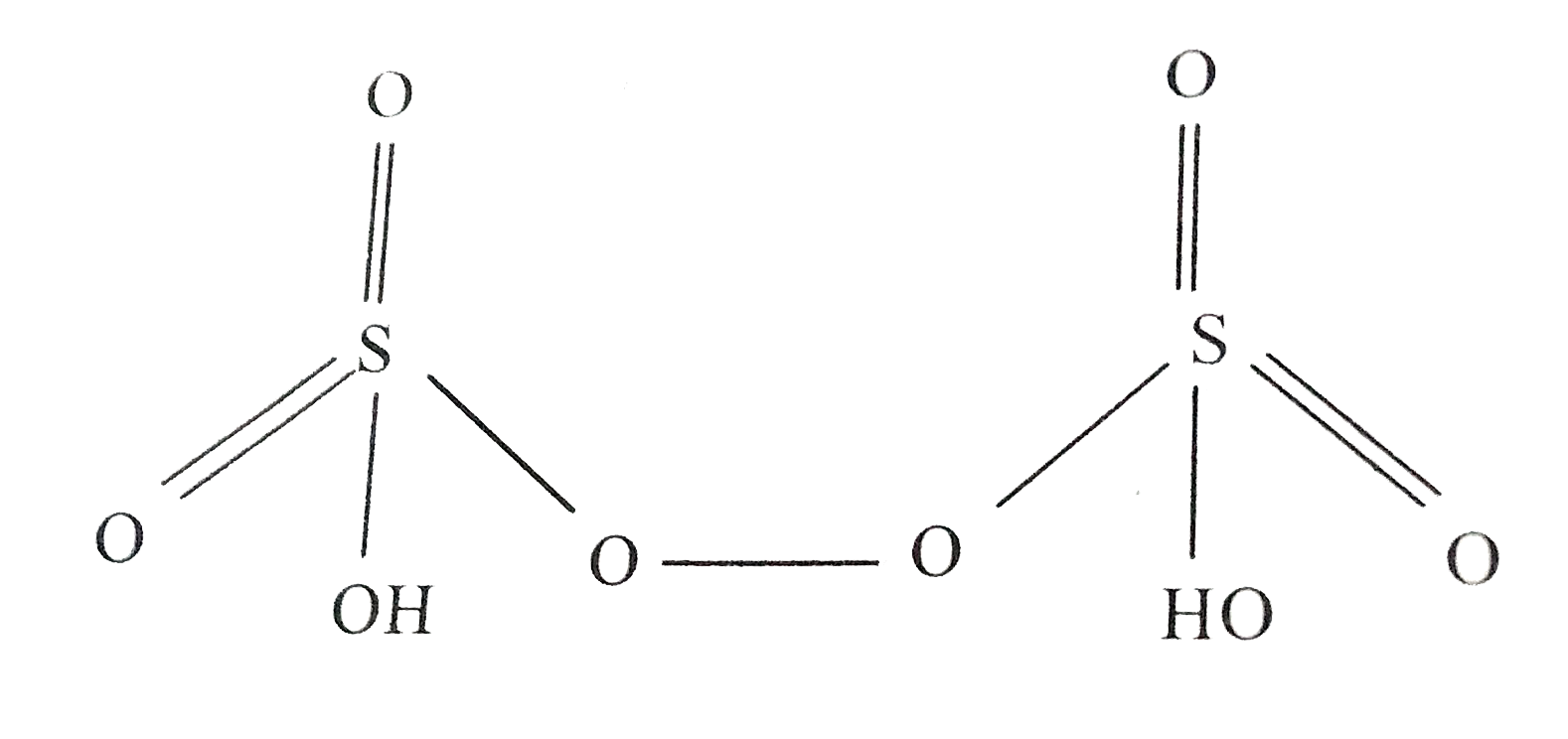 (ii) `HClO_(4)`(Perchloric acid) 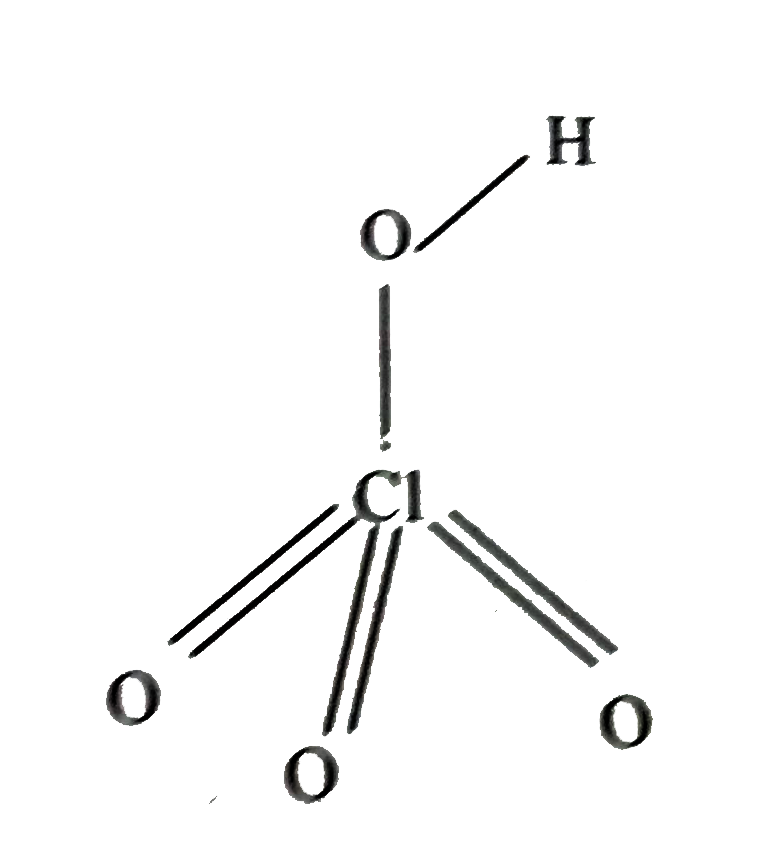 (ii)The property of catenation depends upon the ELEMENT - element bond. Since sulphur S-S bond STRENGTH is muchmore than O-O bond strength . Sosulphur has greater tendency for catenation than oxygen. (iii)Since the OXIDISING power of halogens decreases from `F_(2)` to `I_(2)`.Therefore `F_(2)` is the stronger oxidising agent than `Cl_(2)`due smaller size and absent ofd- orbital. |
|
| 3. |
Draw the structures of the following: (i) H_2S_2O_8 (ii) XeF_6 |
Answer» SOLUTION :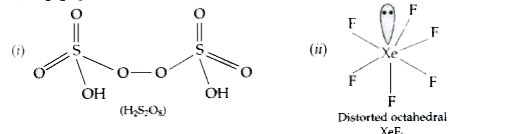
|
|
| 4. |
Domestic waste mostly constitutes: |
|
Answer» non-biodegradable pollutants |
|
| 5. |
Draw the structures of the following : (i) Pentaamminenitrito-N-cobalt (III)(ii) Hexamethyldialuminium. |
Answer» SOLUTION :
|
|
| 6. |
Draw the structures of the following : (i) H_(2)S_(2)O_(7)(ii) HClO_(3)(b)Explain the following observations :(i)In the structure ofHNO_(3) the N-Obond(121 pm) is shorter thanthe N-OH bond (140 pm).(ii) All the P- Cl bonds in PCl_(5) are not equivalent.(iii) ICl is more reactive than I_(2) . |
Answer» Solution :(a) (i) Structure of`H_(2)S_(2)O_(7)`(OLEUM)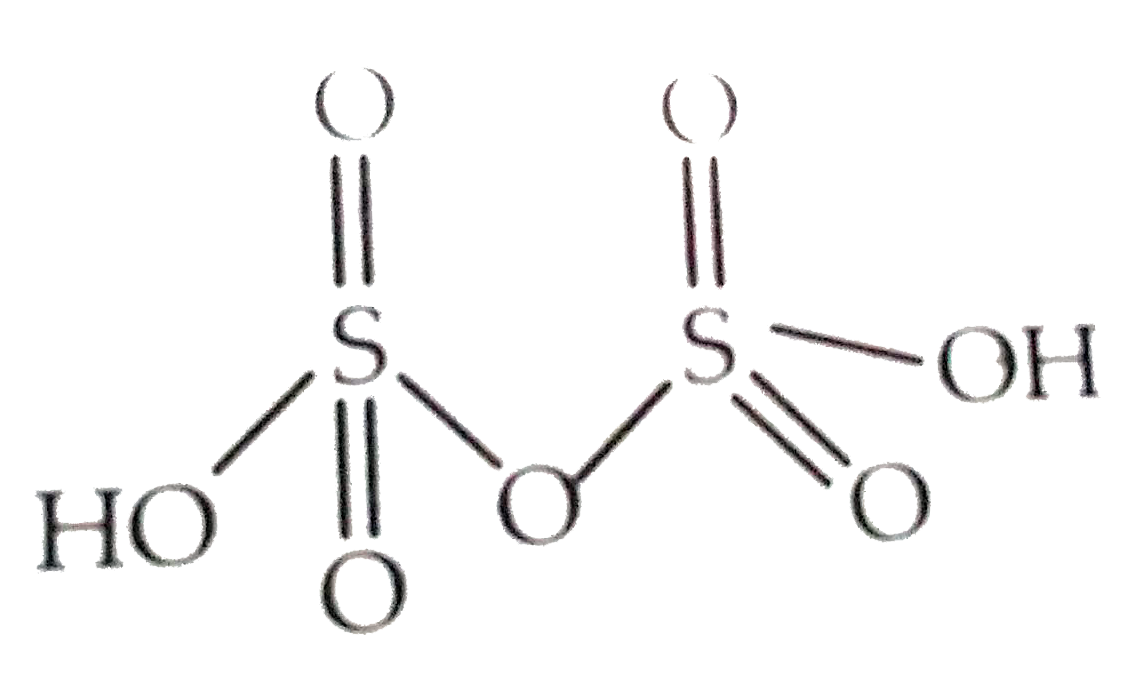 (ii)`HClO_(3)`(CHLORIC acid) 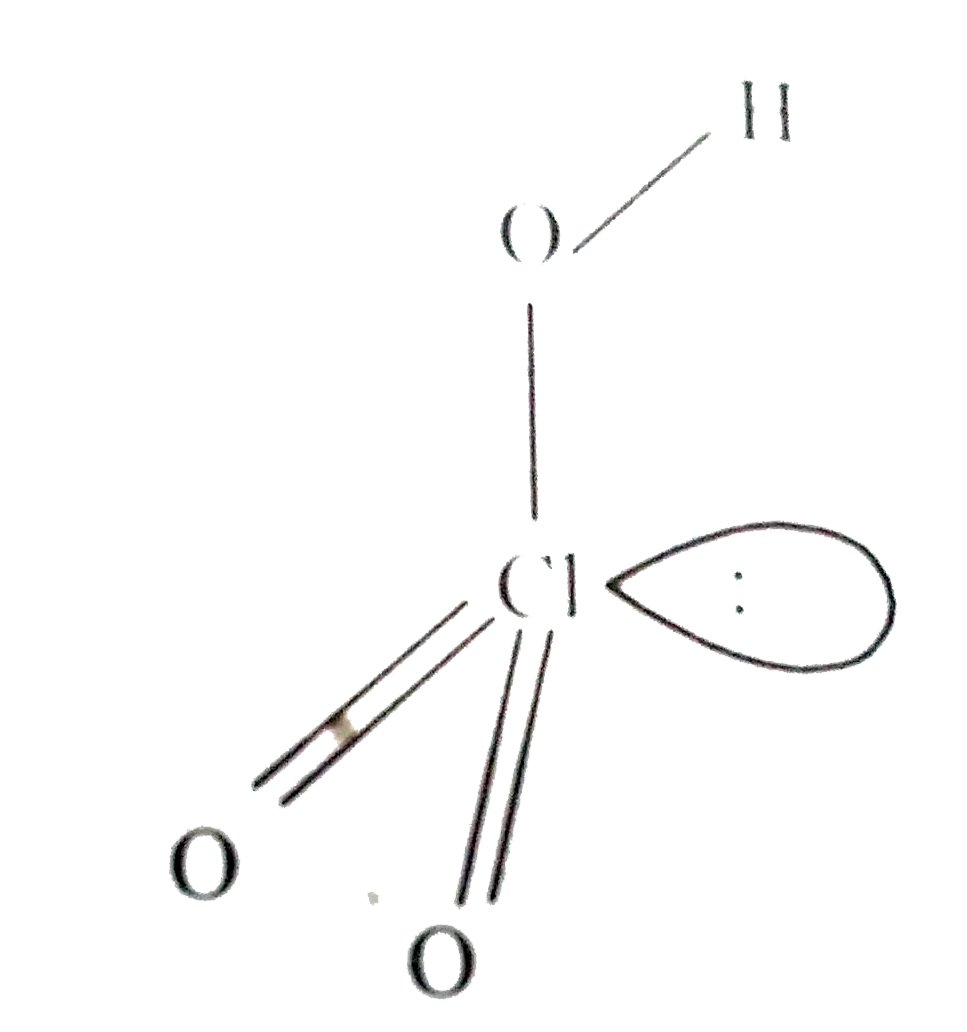 (b)(i)Dueto DOUBLE bond choracter of N- O bond the length is shorter. (ii)All theP- Cl bonds in `PCl_(5)` are not equivalenet due to the fact that the axial bond pairs suffer more repulsion as compared to equatorial bond pairs. (iii) IClismore reactive than `I_(2)`(EXCEPT `F_(2))` . Because X-X' bond in INTERHALOGENS is weaker than X-X bond in halogens except F-F bonds.Thus , I- Clbondis weaker thanI-I bondSoIClis more reactive than `I_(2)`. |
|
| 7. |
Domestic waste contains |
|
Answer» Non-BIODEGRADABLE POLLUTANTS |
|
| 8. |
Draw the structures of the following: (i) 3-Methylbutanal (ii) 4-chloropentan-2-one |
|
Answer» Solution :(i) `underset("3-Methylbutanal")(overset(4)(C)H_(3)-overset(CH_(3))overset(|)(.^(3)C)H-overset(2)(C)H_(2)-overset(1)(C)HO)` (II) `underset("4-Chloropeentan-2-one")(overset(5)(C)H_(3)-overset(Cl)overset(|)(.^(4)C)H-overset(3)(C)H_(2)-overset(O)overset(||)(.^(2)C)-overset(1)(C)H_(3))`. |
|
| 9. |
Draw the structures of the following: (i) ClF_3 (ii) XeF_4 |
Answer» SOLUTION :(i) STRUCTURE of `ClF_3 ` 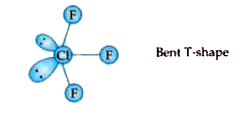 (II) Structure of `XeF_4` 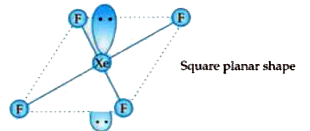
|
|
| 10. |
Domesticcooking gasconsistsof moslty: |
|
Answer» methane and ETHANE |
|
| 11. |
Draw the structures of the following compounds : (i) N-isopropylaniline (ii) t-butylamine |
Answer» SOLUTION :
|
|
| 12. |
Dollucite is an ore of : |
|
Answer» LI |
|
| 13. |
Draw the structures of the following compounds : (i) 3-Methylbutanal "" (ii) p-Nitropropiophenone (iii) p-Methylbenzaldehyde"" (iv) 4-Methylpent-3-en-2-one (v) 4-Chloropentan-2-one""(vi) 3-Bromo-4-phenylpentanoic acid (vii) P, p'-Dihydroxybenzophenone"" (viii) Hex-2-en-4-ynoic acid . |
|
Answer» Solution :Structures of compounds are given as under: (i) `overset(4)(C )H_3-underset(CH_3)underset(|)overset(3)(CH)-overset(2)(C )H_2-""^(1)overset(O)overset(||)(C )-H` (II)  (III)  (iv) `overset(1)(C )H_3-underset(O)underset(||)overset(2)(C)-overset(3)(C)H=underset(CH_3)underset(|)overset(4)(C )-overset(5)(C)H_3` (v) `overset(1)(C )H_3-underset(O)underset(||)overset(2)(C)-overset(3)(C)H_2-underset(Cl)underset(|)overset(4)(C )H-overset(5)(C)H_3` (vi) `overset(5)(C )H_3-underset(C_6H_5)underset(|)overset(4)(CH)-underset(Br)underset(|)overset(3)(CH)-overset(2)(C)H_2-underset(O)underset(||)overset(1)(C )-OH` (vii)  (viii) `overset(6)(C)H_3-overset(5)C-=overset(4)(C )-overset(3)(C )H=overset(2)(C)H-""^(1)overset(O)overset(||)(C )-OH`. |
|
| 14. |
Draw the structures of the following compounds: (i) 3-Methylbutanal, (ii) p-Nitropropiophenone, (iii) p-Methylbenzaldehyde, (iv) 4-Methylpent-3-en-2-one, (v) 4-Chloropentan-2-one. (vi) 3-Bromo-4-phenylpentanoic acid, (vii) p,p'-Dihydroxybenzophenone, (viii) Hex-2-en-4-ynoic acid. |
Answer» SOLUTION :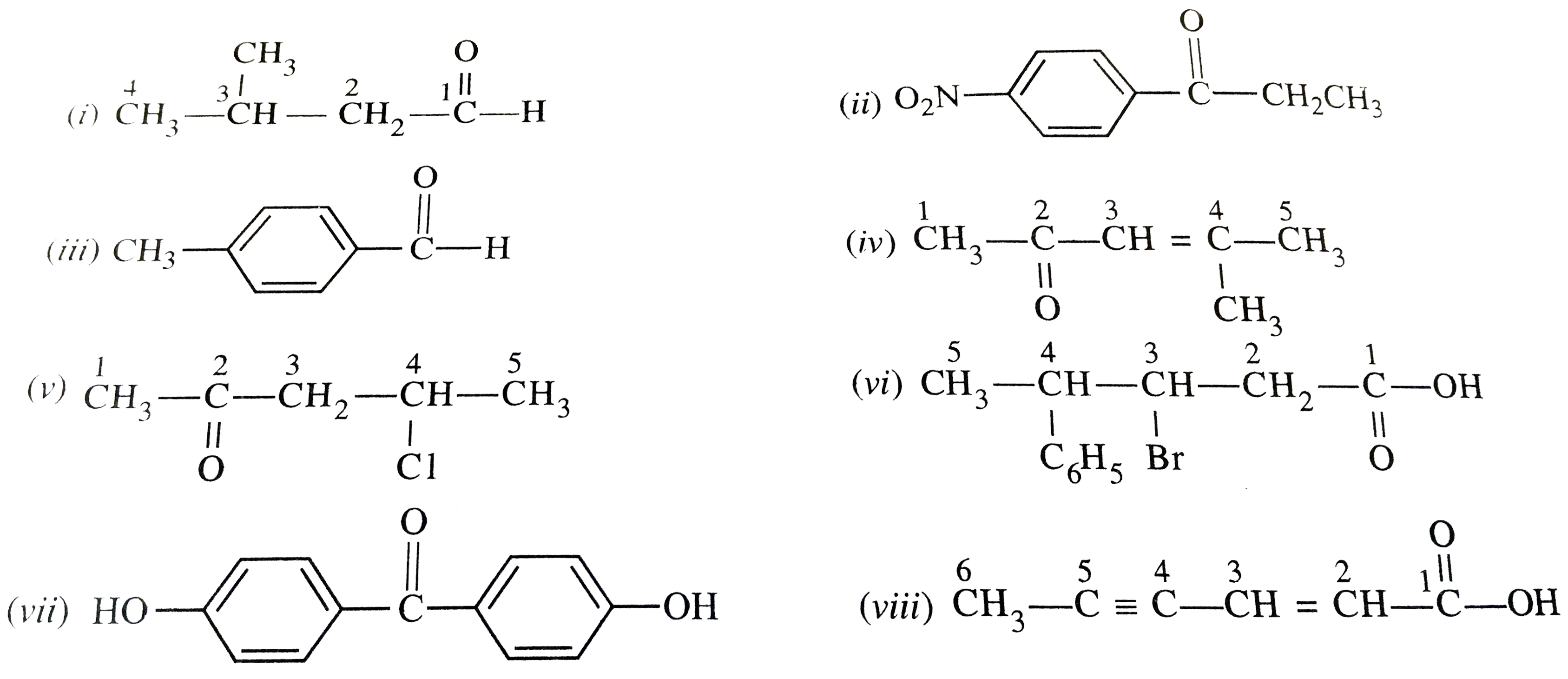
|
|
| 16. |
Draw the structures of the following compounds : |
Answer» SOLUTION :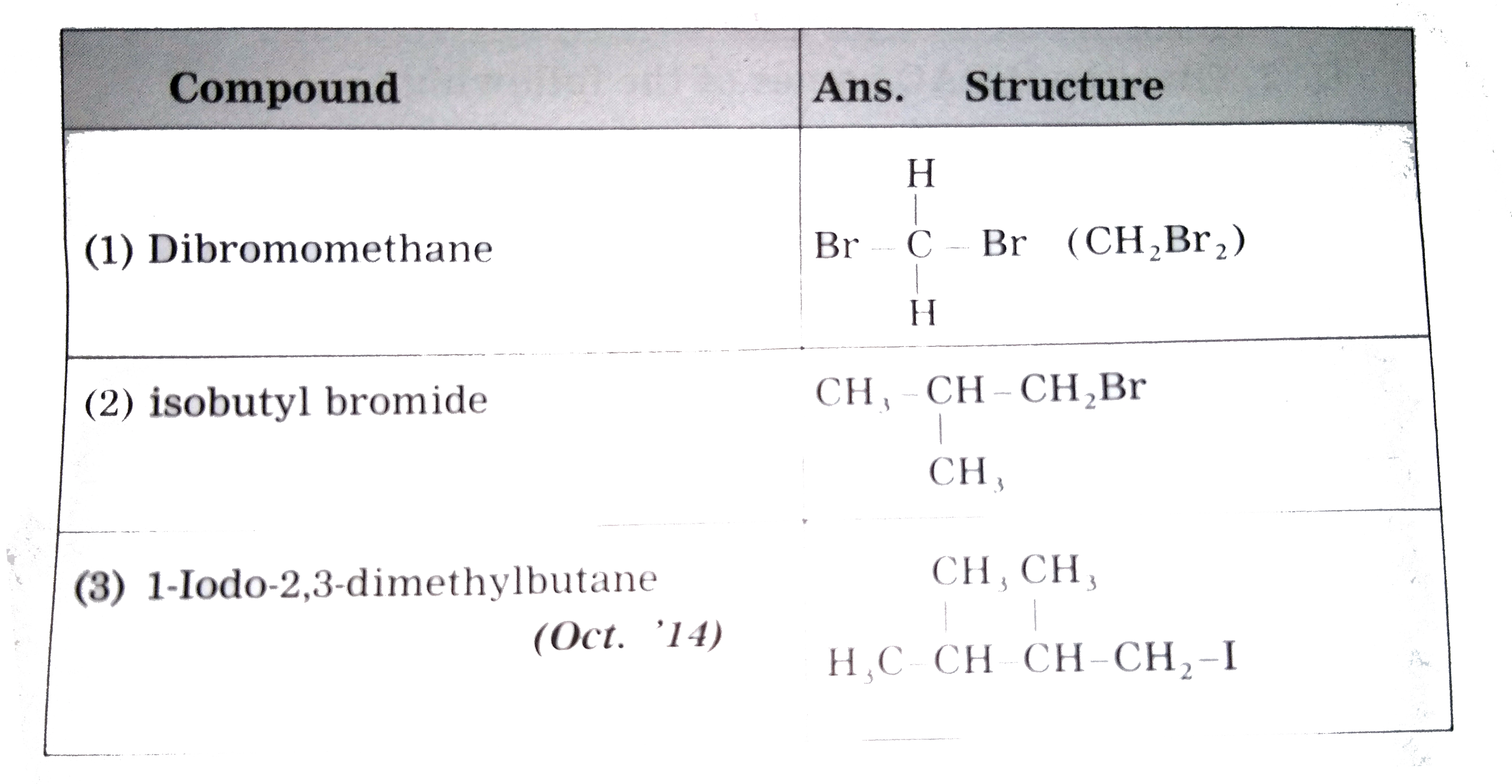 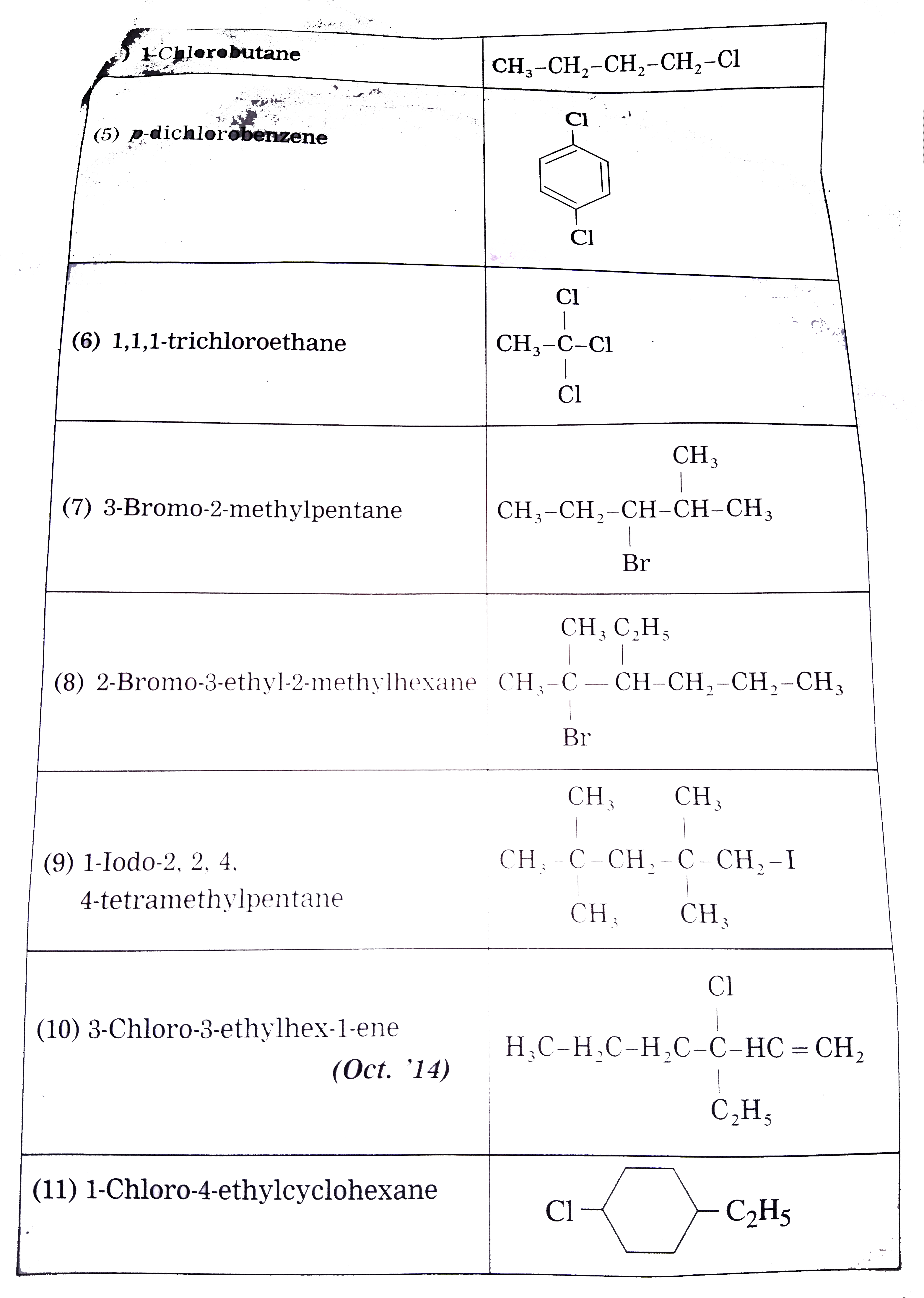
|
|
| 17. |
Dolomite can also be treated to get MgCI_(2) which in turn is electrolyzed to get Mg (Dow's natural brine process). Give reactions of this process. |
|
Answer» Solution :`{:(MgCO_(3).CaCO_(3),underset(Delta)RARR,MgO + CaO + 2CO_(2) UARR),(,," "darr HCI darr),(MgCl_(2)+CaCO_(3) darr,overset(CO_(2))rarr,MgCI_(2) + CaCI_(2)):}` On passing `CO_(2)` into aq. `MgCI_(2) and CaCI_(2)` solution, `CaCO_(3)` is precipitated leaving `MgCI_(2)` soluble. |
|
| 18. |
Draw the structures of the following : |
Answer» SOLUTION :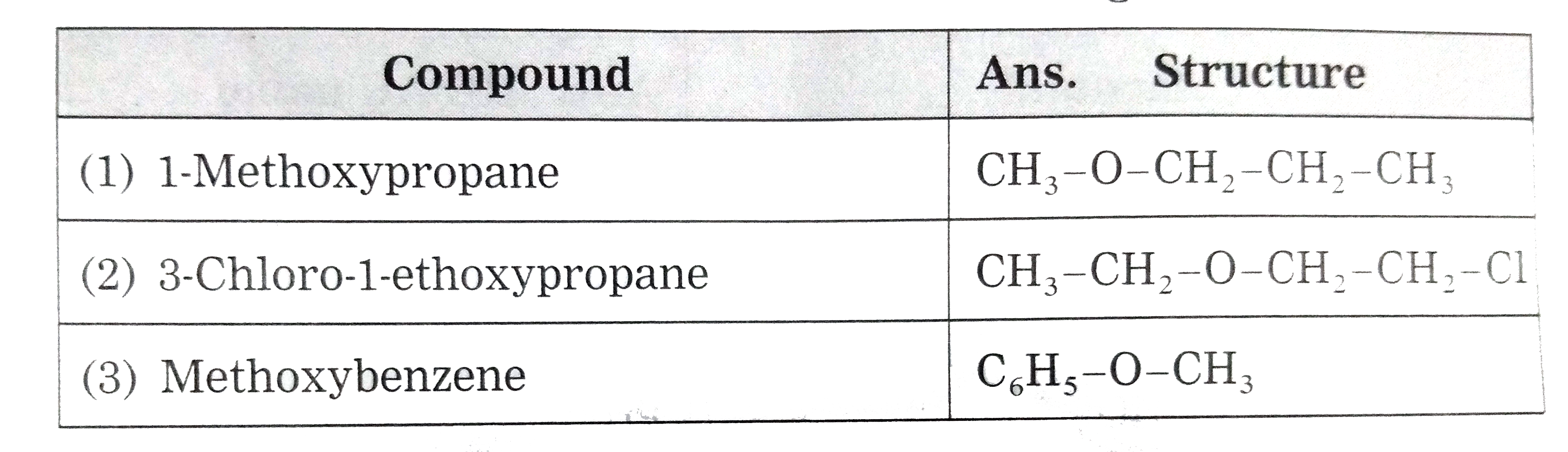 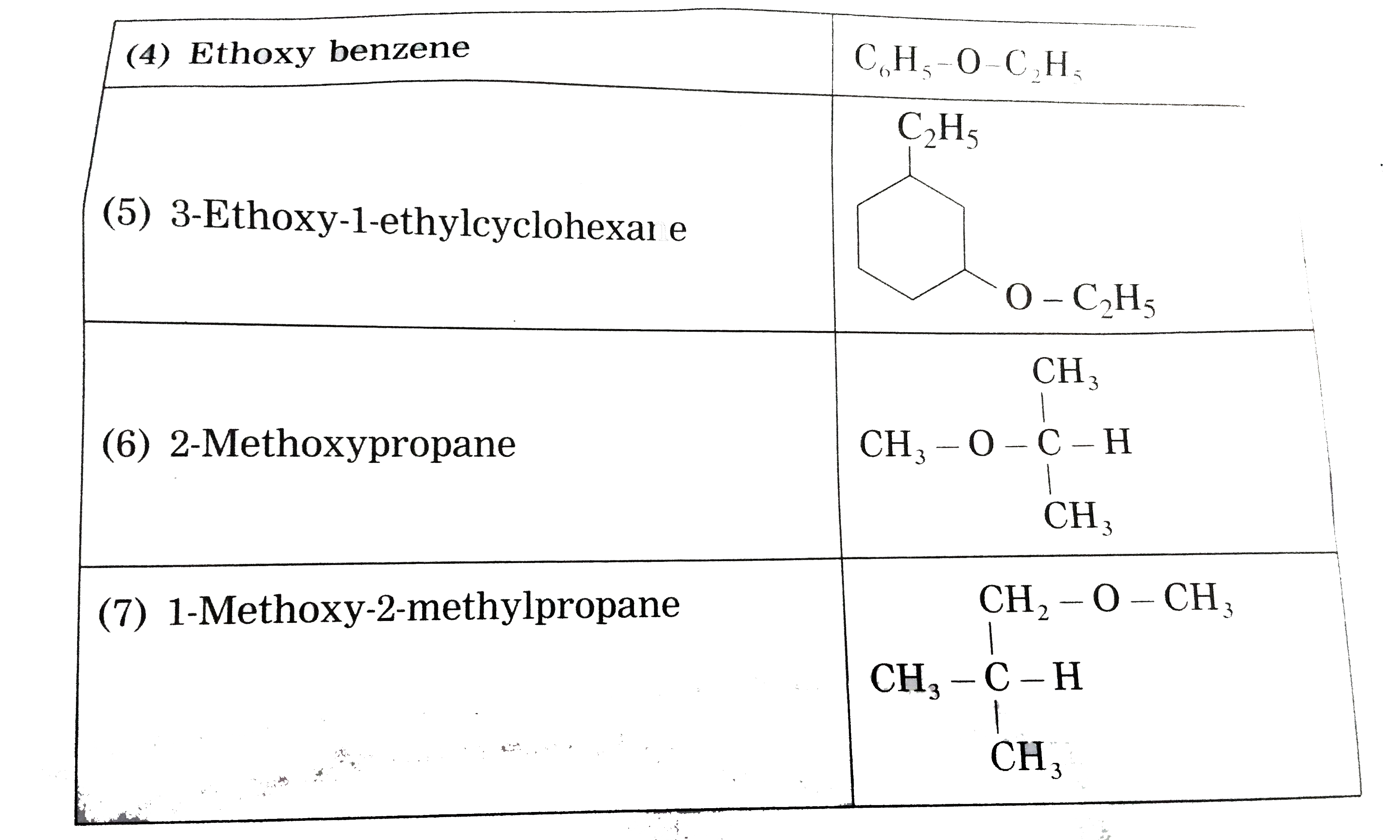
|
|
| 19. |
Draw the structures of optical isomers of (i) [Cr(C_(2)O_(4))_(3)]^(3-) (ii) [PtCl_(2)(en)_(2)]^(2+)(iii) [Cr(NH_(3))Cl_(2)(en)]^(+) |
Answer» SOLUTION :(II) Only cis-form will SHOW OPTICAL ISOMERISM : 
|
|
| 20. |
Pollucite is an ore of : |
|
Answer» LI |
|
| 21. |
Draw the structures of optical isomers of : [PtCl_(2)(en)_(2)]^(2+) |
Answer» SOLUTION :Only cis-form will SHOW OPTICAL ISOMERISM as SHOWN below : 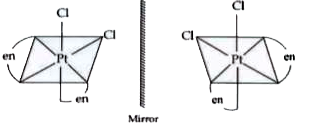
|
|
| 22. |
Does the soluybility of CO_(2) in water increases with rise in temperatuer ? |
| Answer» SOLUTION :No. it DECREASES. | |
| 23. |
Draw the structures of optical isomers of : [Cr(NH_(3))_(2)Cl_(2)(en)]^(+) |
Answer» SOLUTION :Both CIS and trans forms will show OPTICAL isomerism `cis-[ CR(NH_(3))_(2)Cl_(2)(en)^(+)` 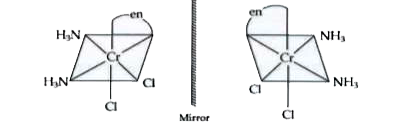 trans-`[Cr(NH_(3))_(2)Cl_(2)(en)^(+)` 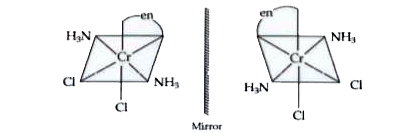
|
|
| 24. |
Draw the structures of major products in each of the following reactions |
Answer» SOLUTION :
|
|
| 25. |
Does the solution of oil and water repersent a ture solution.? |
| Answer» SOLUTION :No. It is not a TRUE solution | |
| 26. |
Draw the structures of optical isomers of : [Cr(C_(2)O_(4))_(3)]^(3-) |
Answer» SOLUTION :Structure of optical ISOMERISM of `[CR(C_(2)O_(4))_(3)]^(3-)` is given below: 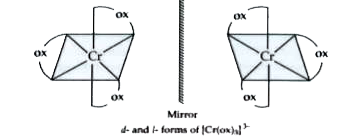
|
|
| 27. |
Draw the structures of major monohaloproducts in each of the following : CH_3CH_2Br + NaI rarr |
| Answer» SOLUTION :`CH_3CH_2I` | |
| 28. |
Does the hydrolysis of XeF_6 lead to a redox reaction ? |
| Answer» Solution :No, the products of hydrolysis are `XeOF_4` and `XeO_2F_2` where the OXIDATION STATES of all the ELEMENTS REMAIN the same as it was in the reacting STATE. | |
| 29. |
Draw the structures of major monohaloproducts in each of the following : |
Answer» SOLUTION :
|
|
| 30. |
Draw the structures of major monohaloproducts in each of the following : |
Answer» SOLUTION :
|
|
| 31. |
Does the excess of NH_(4)Cl affect the precipitation of group V cations by (NH_(4))_(2)CO_(3)? |
| Answer» Solution :Yes, the concentration of `CO_(3)^(2-)` is DECREASED because the common ION `NH_(4)^(o+)` suppresses the ionisation of `(NH_(4))_(2)CO_(3)`. | |
| 32. |
Draw the structures of major monohaloproducts in each of the following : |
Answer» SOLUTION :
|
|
| 33. |
Draw the structures of major monohalo products in each of the following reactions :CH_(3)CH_(2)Br+NaI to |
|
Answer» Solution :FINKELSTEIN reaction. `underset("Ethyl Bromide")(CH_(3)CH_(2)Br)+NaI rarr underset("Ethyl iodide")(CH_(3)CH_(2)I)+NaBr` |
|
| 34. |
Does the hydrolysis of XeF_(6) lead to a redox reaction ? |
|
Answer» Solution :Complete hydroysis of `XeF_(6)` gives `XeO_(3)` `overset(+6)(XeF_(6))+3H_(2)O rarr overset(+6)(XeO_(3))+6 HF` On the other hand, partial HYDROLYSIS of `XeF_(6)` gives `XeOF_(4) and XeO_(2)F_(2)` `overset(+6)(Xe)overset(-1)(F_(6))+overset(+1)(H_(2))overset(-2)(O) rarr overset(+6)(Xe)overset(-2)(O)overset(-1)(F_(4))+overset(+1)(2H)overset(-1)(F),""overset(+6)(Xe)overset(-1)(F_(6))+overset(+1)(2H_(2))overset(-2)(O) rarr overset(+6)(Xe)overset(-2)(O_(2))overset(-1)(F_(2))+overset(+1)(4H)overset(-1)(F)` Since the oxidation STATES of all the elements in the products of hydrolysis and reactants remain the same, therefore, it is not a redox reaction. |
|
| 35. |
Draw the structures of major monohaloproducts in each of the following : |
Answer» SOLUTION :
|
|
| 36. |
Does the molal elevation constant depend on nature of the solute? |
|
Answer» Solution :(1) The molal ELEVATION constant `K_(b)` is given by, `K_(b)=(RT_(0)^(2))/(1000xxDeltaH_(ex))`, where R is a GAS constant, `T_(0)` is boiling point of a PURE solvent having latent heat of EVAPORATION `DeltaH_("ev")`. (2) Hence `K_(b)` depends only on the nature of the solvent. (3) `K_(b)` does not depend on the nature of the solute. |
|
| 37. |
Draw the structures of major monohaloproducts in each of the following : |
Answer» SOLUTION :
|
|
| 38. |
Draw the structures of major monohalo products in each of the following reactions : |
Answer» SOLUTION :REACTION FOLLOWS Markovnikov.s ADDITION.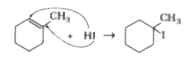
|
|
| 39. |
Does the adsorption of a gas on the surgace of a solid increase or decrease with rise in temperature ? |
| Answer» SOLUTION :ADSORPTION DECREASES with RISE in TEMPERATURE . | |
| 40. |
Draw the structures of major monohalo products in each of the following reactions : |
Answer» Solution :BROMINATION occurs at ALLYLIC carbon in PRESENCE of LIGHT or heat.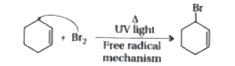
|
|
| 41. |
Draw the structures of major monohalo products in each of the following reactions : |
Answer» Solution :SUBSTITUTION TAKES PLACE at benzylic CARBON.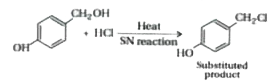
|
|
| 42. |
Does formaldehyde undergo aldol condensation? Justify your answer. |
|
Answer» Solution :(i) FORMALDEHYDE does not undergo aldol CONDENSATION. (ii) Aldol condensation reaction is the characteristic of CARBONYL compounds having `alpha` - hydrogen atom. So this reaction does not TAKE place in formaldehyde. |
|
| 43. |
Draw the structures of (i) Sulphanilamide (ii) p-nitro benzoic acid |
Answer» SOLUTION :(i) SULPHANILAMIDE:(II) p-nitro BENZOIC ACID: 
|
|
| 44. |
Does a zero order reaction have molecularity equal to zero? |
| Answer» SOLUTION :No, MOLECULARITY of a REACTION can NEVER be ZERO. | |
| 45. |
Draw the structures of major monohalo products in each of the following reactions : |
Answer» SOLUTION :The `OH^(-)` is nuclephile and `CL^(-)` is a LEAVING GROUP.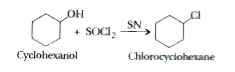
|
|
| 46. |
Draw the structures of major monohalo products in each of the following reactions : |
Answer» Solution :In presence of LIGHT or heat, the BROMINATION takes PLACE on BENZYLIC CARBON.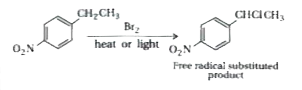
|
|
| 47. |
Draw the structures of isomers of [Pt(NH_(3))_(2)Cl_(2)] |
| Answer» SOLUTION :TWO GEOMETRICAL ISOMERS | |
| 48. |
Draw the structures of geometrical isomers of the following coordination complexes : [Co(NH_(3))_(3)Cl_(3)] and [CoCl_(2)(en)_(2)]^(+) |
Answer» Solution :Geometrical ISOMERS of `[CO(NH_(3))_(3)Cl_(3)]`  Geometrical isomers of `[CoCl_(2)(en)_(2)]^(+)` 
|
|
| 49. |
Doctors detect diabetes disease by testing the presence of glucose in urine with: |
|
Answer» NESSLER's reagent |
|
| 50. |
Draw the structures of following oxoacids of phosphorus : (i) Orthophosphoric acid (H_(3)PO_(4)) (ii) Pyrosphosphoric acid (H_(4)P_(2)O_(7)) (iii) Orthophosphorus acid (H_(3)PO_(3)) (iv) Hypophosphorus acid (H_(3)PO_(2)) (v) Cyclotrimetaphosphoric acid (HPO_(3))_(3) (vi) Polymetaphosphoric acid (HPO_(3))_(n) |
|
Answer» Solution :In OXOACIDS, PHOSPHORUS is tertrahedrally surrounded by other atoms. All these acids contain atleast one P = O bond and one P-OH bond. The oxoacids in which phosphorus has oxidation state less than (+5) contain either P-P bond or P-H bond in addition to P-OH and P = O BONDS but not both. 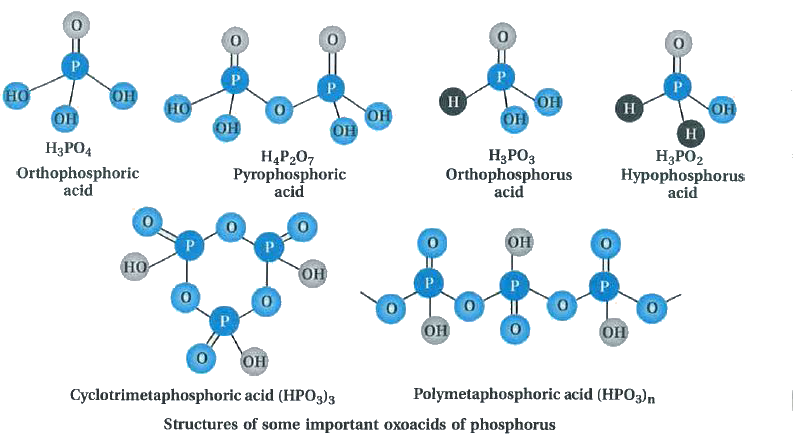
|
|