Saved Bookmarks
This section includes 7 InterviewSolutions, each offering curated multiple-choice questions to sharpen your Current Affairs knowledge and support exam preparation. Choose a topic below to get started.
| 1. |
Consider the followingstatementandidentifythe incorrect one. (i) Pu belongs tolanthanide series (ii)NDechibits+ 3 , +4 ,+2oxidationstates (III)Actinidecontractionis dueto imperfectshieldingof 4felectrons. |
|
Answer» onlyiii |
|
| 2. |
Consider the following statement about chirility |
|
Answer» molecule which are NON super imposable on their MIRROR image are CHIRAL. |
|
| 3. |
Consider the following standard reduction potential data to answer the next three questions Half-reactions. E^(@)(V) NO_(3)^(-)+4H^(+)+3e^(-)rarrNO(g)+2H_(2)O(l) 0.955V NO_(3)^(-)+3H^(+)+2e^(-)rarrHNO_(2)+H_(2)O(l) 0.940V O_(2)+4H^(+)+4e^(-)rarr2H_(2)O 1.23V Pt^(2+)+2e^(-)rarrPt 1.18V V^(3+)+e^(-)rarrV^(2+) -0.255V V^(3+)+2e^(-)rarrV -1.20V What is E^(@) for VrarrV^(3+)+3e^(-)? |
|
Answer» 1.38V |
|
| 4. |
Consider the following standard reduction potentials Fe^(3+)(aq) + e^(-) iff Fe^(3+) (aq) , E^(@) = 0.77 V , H_2O_2(aq) + 2e^(-) iff 2OH^(-)(aq) , E^(@) = 0.88 V For the voltaic cell reaction below , calculatethe Fe^(2+) concentration ( in M) that would be needed to produce a cell potential equal to 0.16 V at25^@ Cwhen [OH^(-)] = 0.1 M , [Fe^(3+)] = 0.5 M and [H_2O_2]= 0.35M 2Fe^(2+)(aq) + H_2O_2(aq) iff 2Fe^(3+) (aq) + 2OH^(-) (aq) |
|
Answer» `0.3 M` `E=E^(0) + (0.0591)/(2) LOG ""([Fe^(+2)]^(2)[H_2O_2]^(1))/([Fe^(+3)]^(2) xx [OH^(-)]^(2)), 0.16 = 0.11 + (0.0591)/(2) log""[((Fe^(+2))^(2) xx (0.35)^(1))/((0.5)^(2) xx (10^(-1))^(2))]` `[log""([Fe^(+2)]^(2) [0.35])/(0.25 xx 0.01) ] = (0.05 xx 2)/(0.0591) = log""[([Fe^(+2)]^(2)(0.35))/(0.00875)]=1.6920` `([Fe^(+2)]^(2)(0.35))/(0.00875) = 50 , (Fe^(+2)) = SQRT((50 xx 0.000875)/(0.35)) = sqrt((0.04375)/(0.35)) = 0.35355 = 0.354M` |
|
| 5. |
Consider the following standard reduction potential data to answer the next three questions Half-reactions. E^(@)(V) NO_(3)^(-)+4H^(+)+3e^(-)rarrNO(g)+2H_(2)O(l) 0.955V NO_(3)^(-)+3H^(+)+2e^(-)rarrHNO_(2)+H_(2)O(l) 0.940V O_(2)+4H^(+)+4e^(-)rarr2H_(2)O 1.23V Pt^(2+)+2e^(-)rarrPt 1.18V V^(3+)+e^(-)rarrV^(2+) -0.255V V^(3+)+2e^(-)rarrV -1.20V Consider the following galvanic cell: V|V(NO_(3))_(2)(0.01M)||NO_(3)^(-)(0.01).H^(+)|NO(g) 1.0 atm, Pt. If emf of the above cell is 1.94V, pH of the cathode chamber is closest to |
|
Answer» 0 |
|
| 6. |
Consider the following standard reduction potential data to answer the next three questions Half-reactions. E^(@)(V) NO_(3)^(-)+4H^(+)+3e^(-)rarrNO(g)+2H_(2)O(l) 0.955V NO_(3)^(-)+3H^(+)+2e^(-)rarrHNO_(2)+H_(2)O(l) 0.940V O_(2)+4H^(+)+4e^(-)rarr2H_(2)O 1.23V Pt^(2+)+2e^(-)rarrPt 1.18V V^(3+)+e^(-)rarrV^(2+) -0.255V V^(3+)+2e^(-)rarrV -1.20V What is the E^(@) of cell? NO(g)+H_(2)O+O_(2)(g)rarrNO_(3)^(-)+H^(+) |
|
Answer» 2.185V |
|
| 7. |
Consider the following species O(Me)_(2), N(SiH_(3))_(3), CO, O(SiH_(3))_(2), CCl_(2)("singlet"), CCl_(3)^(-), H_(4)SiO_(4), OCl_(2), MeNCS. Then calculate the number of species which have (p_(pi)-p_(x)) back bond or (p_(pi)-d_(pi) back bond. |
|
Answer» |
|
| 8. |
Consider the following species and find out total number of species which are polar and can act as Lewis acid C Cl_(4),CO_(2),SO_(2),AlCl_(3),HCHO,SO_(3),SiCl_(4),BCl_(3),CF_(4) |
|
Answer» |
|
| 9. |
Consider the following species (1)RCH^+ CH_3 , (2) RCH_2CH_2^+ , (3)RCH_2CH_2O^(+)H_2 In the dehydration of straight chain 1^@ alcohols, the correct sequence of formation of the species involved is |
|
Answer» 2,1 |
|
| 10. |
Consider the following species (1)o-nitrophenol (2)p-nitrophenol (3)o-bromophenol Intramolecular hydrogen bonding can takes place in |
|
Answer» only 3 |
|
| 11. |
Consider the following S_(N^2)j reactions I. RX+Y^(-)toR-Y+X^(-) II. RX+Y^(-)toR-Y^(+)+X^(-) III. RX^(+)+Y^(-)toR-Y+X IV. RX^(+)+YtoR-Y^(+)+X In which reactions there is large increase and large decrease in rate of reaction respectively with increase in polarity of the solvent. |
|
Answer» II and III For III : Reactants are more stabilised than transition state. HENCE, RATE of reaction is affected accordingly. |
|
| 12. |
Consider the following sic changes (i)NO to NO^(+)(ii)O_(2)^(-) to O_(2)^(2-)(iii) O_(2) to O_(2)^(+)(iv)NO^(+) to NO^(-)(v) NO^(+) to NO^(2+)(vi) CO to CO^(+) Then calculate value of "c^(2)-b^(2)-a^(2)", where a, b and c are total number of transformation in which magnetic property will be changed, bond increase and bond order decrease respectively. |
|
Answer» |
|
| 13. |
Consider the following solutions of equal concentrations {:(A= NH_(4)Cl,,B = CH_(3)COONa),(C = NH_(4)OH,,D = CH_(3)COOH):} A buffer solution can be obtained by mixing equal volumes of |
|
Answer» C and D (i) By mixing a weak acid with its salt of a strong base. e.g. `CH_(3)COOH + CH_(3)COONA` (ii) By mixing a weak base with itssaltof a strong acid. e.g. `NH_(4)OH + NH_(4)Cl`. |
|
| 14. |
Consider the following sets of quantum numbers: Which of the below setting is not permissible arrangement of electrons in an atom? |
|
Answer» 400`-(1)/(2)` Thus , for `l=2`, m can not have a value of -3 |
|
| 16. |
Consider the following sequence of rections. The end product (B) is |
|
Answer»
|
|
| 17. |
Consider the following sequence of reactions. The white solid A is a |
|
Answer» `1`. CHLORIDE |
|
| 19. |
Consider the following sequence of reactions. The solution D and the residue E respectively contain |
|
Answer» `Hg_(2), S_(2)O_(3)` and `Hg_(2)S` |
|
| 20. |
Consider the following sequence of reactions The end product Y has structure : |
|
Answer»
|
|
| 21. |
Consider the following sequence of reactions. The change from B to C involves the reaction |
|
Answer» `[Hg(NH_(3))_(4)]^(2)+ 2H^(+) +Cr^(-) to Hg(NH_(2))CI darr +3NH_(4)^(+)` |
|
| 22. |
Consider the following sequence of reactions Identify the A,B ,C and D |
|
Answer» `-F,-COOH,-COCH_3 , -OCH_2 CH_2 CH_3` |
|
| 23. |
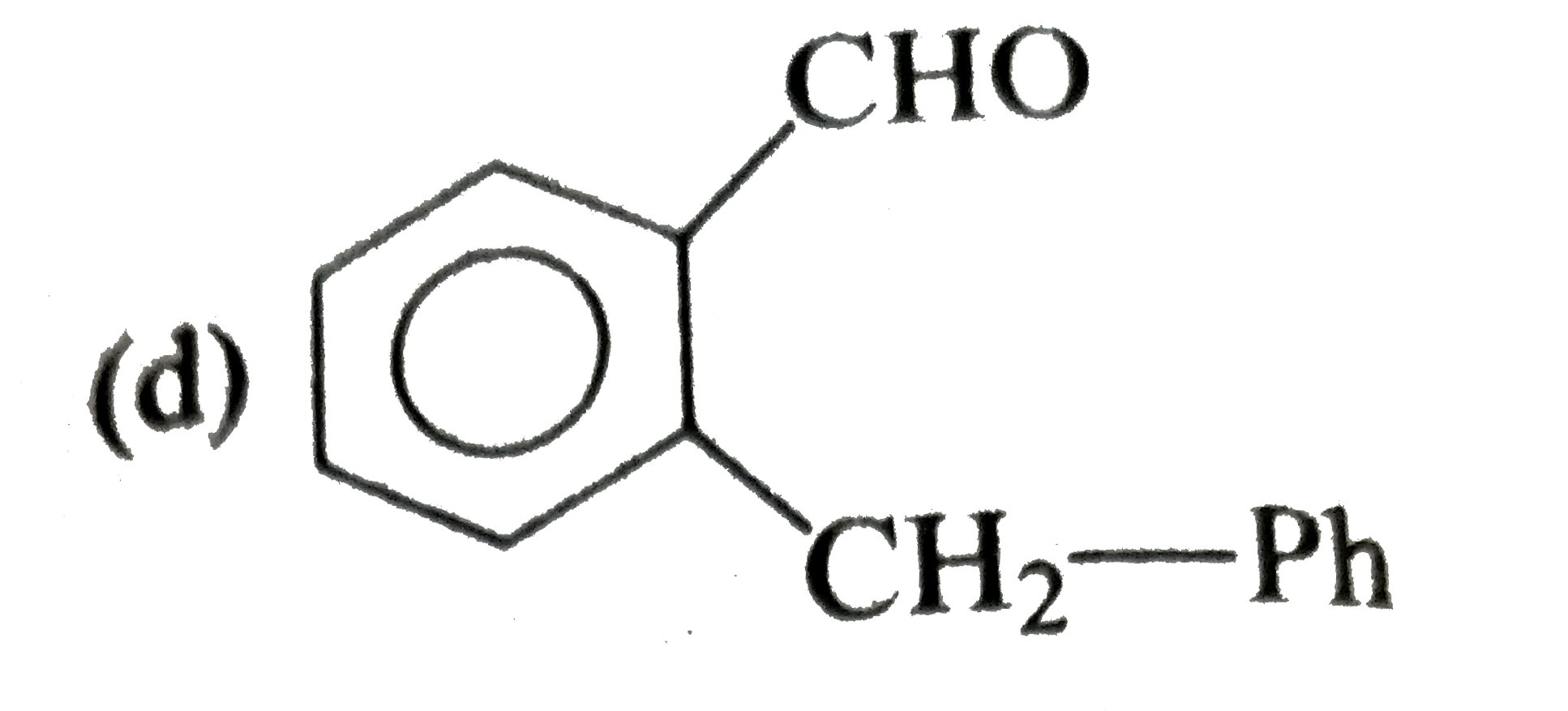
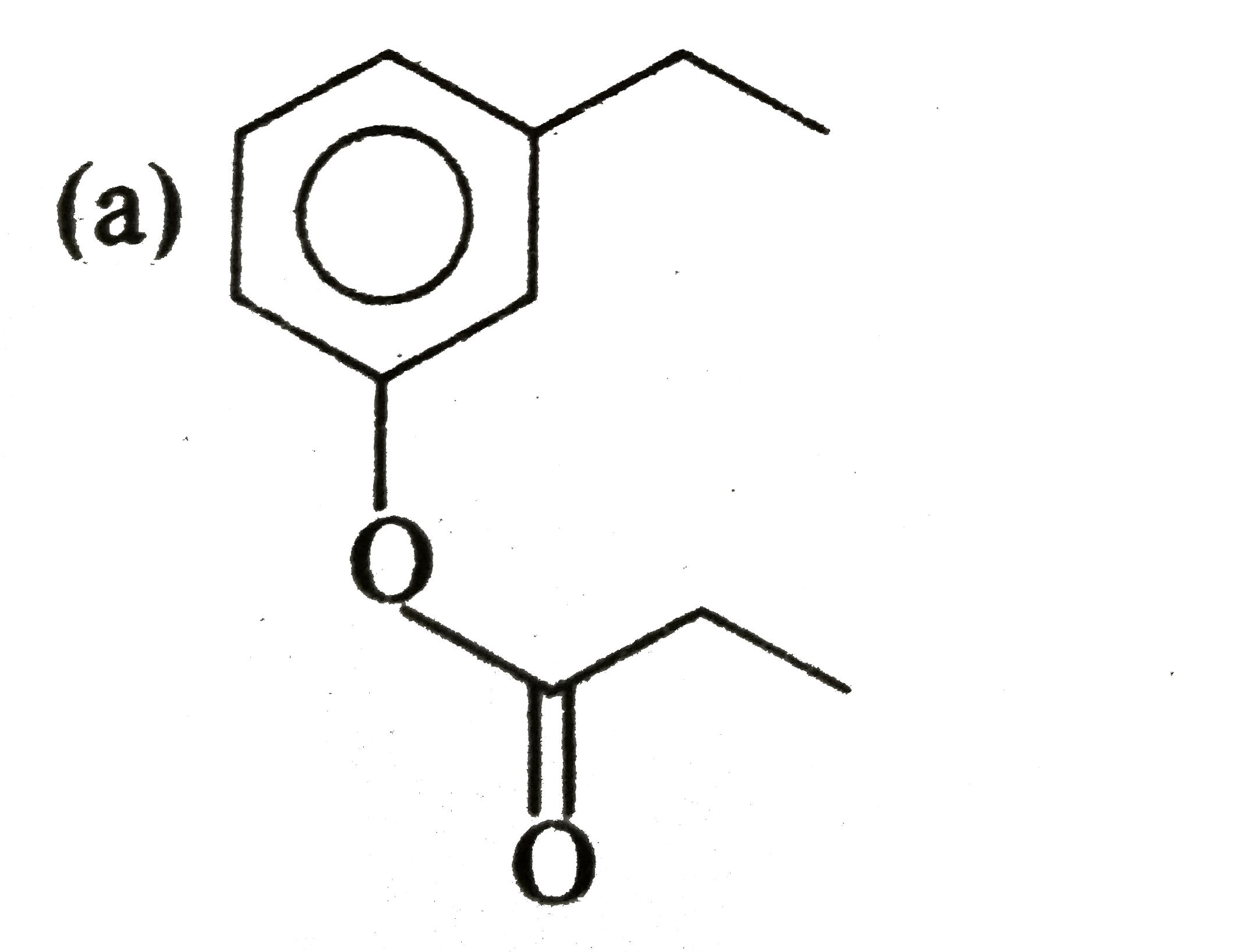
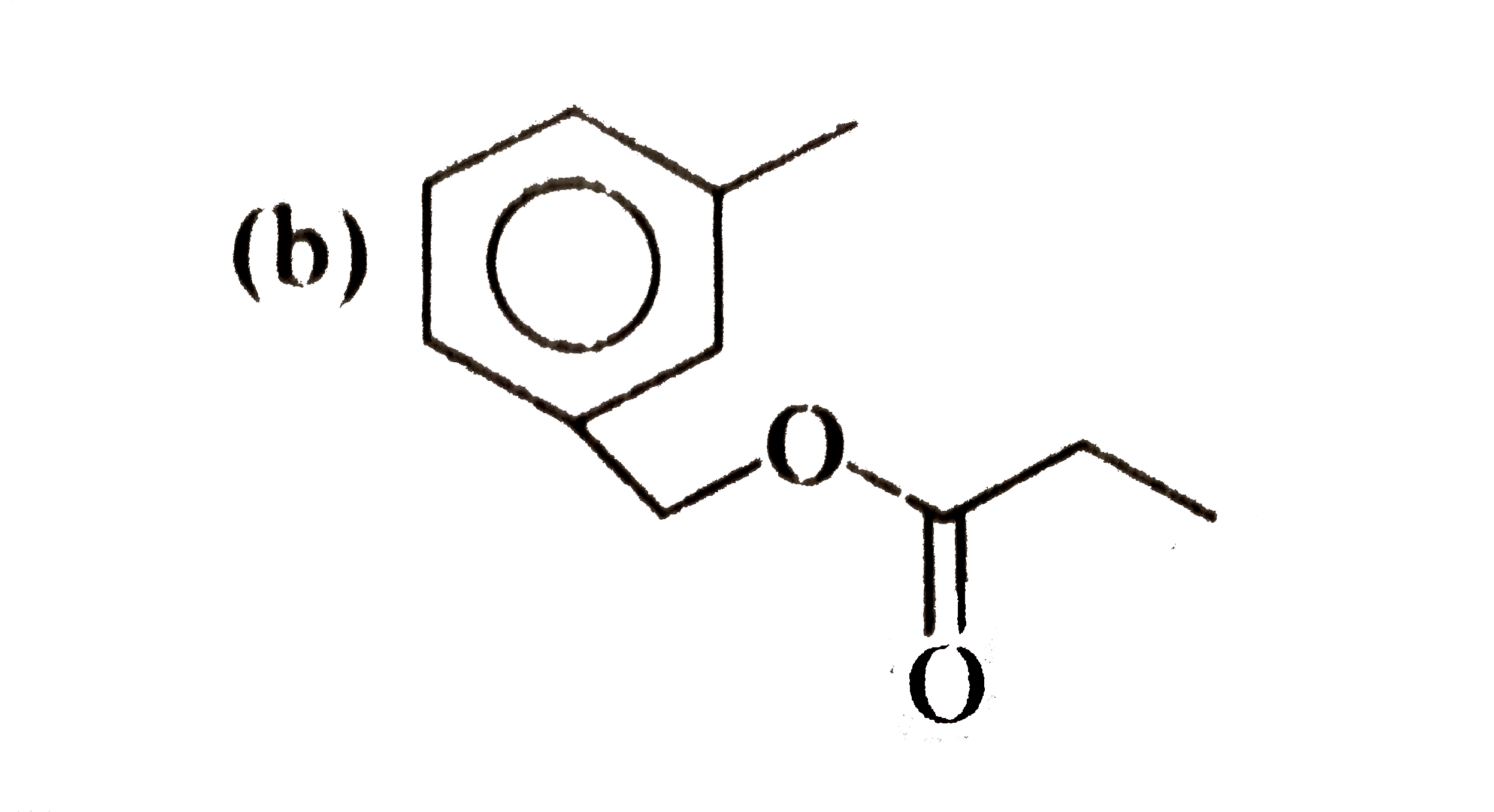
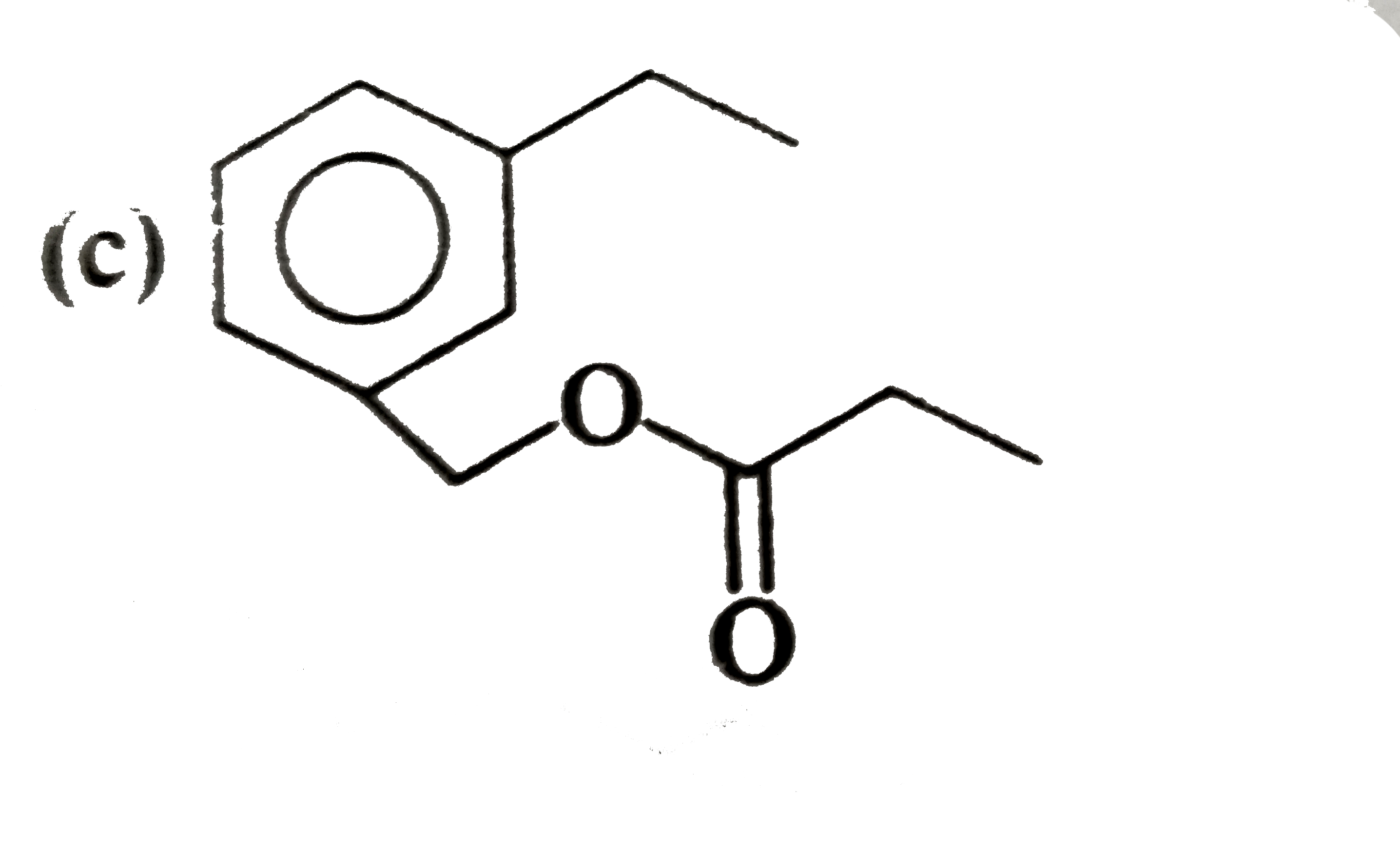
Consider the following sequence of reactions : Identify E. |
|
Answer»

|
|
| 24. |
Consider the following sequence of reactions: B_(2)O_(3)+CaF_(2)+H_(2)SO_(4) to (A) + (B) + H_(2)O (A)+ LiAlH_(4) to ( C) (g) +(D) + LiF ( C)+H_(2)O underset(Delta)to (D) +H_(2) uarr (D) + Na_(2)CO_(3) to (E) + NaBO_(2) + CO_(2) uarr (E)+NH_(4)Cl to (F) +B_(2)O_(3) + NaCl+ H_(2)O What is the empirical mass of compound (F)? |
|
Answer» `4BF_(3)+3LiAlH_(4) to underset(( C))(2B_(2)H_(6)uarr)+underset((D))(3AIF_(3))+3LiF` `B_(2)H_(6)+H_(2)Ooverset(Delta)to H_(3)BO_(3)+H_(2)uarr` `overset((C))(H_(3)BO_(3))+Na_(2)CO_(3)to overset((D))(Na_(2)B_(4)O_(7))+NaBO_(2)+CO_(2)` `underset((E))(Na_(2)B_(4)O_(7))+2NH_(4)Cl to underset((F))overset((E))(2(BN)_(x))+B_(2)O_(3)+2NaCl+4H_(2)O` Empirical formula mass of `BN=10.8+14=24.8~~25` |
|
| 25. |
Consider the followingsequence of reactions CH_(3) CH = CH_(2) overset (Cl_(2)) underset (700 K) to Aoverset (Na_(2)CO_(3)) underset ( 420 K , 12atm)to B overset ((i) HOCl) underset ((ii) NaOh) to C Compound'C' is |
|
Answer»
|
|
| 26. |
Consider the following sequence of reactions: H_(2)C=CH-CH=CH_(2)overset(Br_(2)("1Mole"))underset("CCl"_(4))toA overset("1.KCN(excess)")underset(2.H_(2),Ni)toB. The end product (B) is : |
|
Answer» `H_(2)N-(CH_(2))_(2)-CH=CH-(CH_(2))_(2)-NH_(2)`<BR>`H_(2)N-(CH_(2))_(6)-NH_(2)` |
|
| 28. |
Consider the following sequence of reactions and identify the final product (Y) CH_(3)CH_(2)CH_(2)Br underset("dry ether ") overset(Mg) to X underset("dry ether") overset(CO_(2)//H_(3)O^(+)) to Y |
|
Answer» `CH_(3)CH_(2)COOH` |
|
| 29. |
Consider the following sequence of reactions: A overset(C_(2)H_(5)MgI)to X overset(H^(+)//H_(2)O)to tert - amyl alcohol. The compound A in the above sequence of reactions is |
|
Answer» 2- BUTANONE |
|
| 30. |
Consider the following sequence of reaction: Which of the following is the structure of 'C' ? |
|
Answer» `Cl^(-)OVERSET(+)NH_(3)CH_(2)- COOH` |
|
| 33. |
Consider the following sequence of reaction Ph-C-=CHoverset(Hg^(+2))underset(H_(2)SO_(4))rarrAoverset(NaN_(3))underset(H_(2)SO_(4))rarrB(Major) The structure of major product B is: |
|
Answer»
|
|
| 35. |
Consider the following sequence of reaction: If electronic configuration of element X is [Ne]3s^(1), then which of the following order is incorrect regarding given enthalpies? |
|
Answer» `|DeltaH_(4)|=|DeltaH_(5)|` (b), (c)`toDeltaH_(3) gt DeltaH_(2) gtDeltaH_(1)`[SUCCESSIVE IE always higher than PREVIOUS IE] (c) `|DeltaH_(1)|=|DeltaH_(6)|[(DeltaH_(IE))_(X)=(DeltaH_(eg))_(X^(-))]` |
|
| 37. |
Consider the following sequence of reaction: (AAK_MCP_37_NEET_CHE_E37_015_Q01) The final product, D is |
|
Answer» `(AAK_MCP_37_NEET_CHE_E37_015_A01)` |
|
| 38. |
Consider the following sequence of conversion. underset((X))ubrace(2NO+O_(2)) Leftrightarrow underset((Y))(2NO_(2)) underset("heat")overset("cool")Leftrightarrowunderset((Z))(N_(2)O_(4)) X, Y and Z can be described as |
|
Answer» `{:("X","Y","Z"),("COLOURLESS","Brown paramagnetic"," Colourless diamagnetic"):}` |
|
| 39. |
Consider the following sequence of reaction: |
|
Answer»
|
|
| 40. |
Consider the following salts: NaCl, HgCl_(2), Hg_(2)Cl_(2), CuCl_(2), CuCl and AgCl, Identify the correct set of insoluble salts in water. |
|
Answer» `Hg_(2)Cl_(2), CUCL, AGCL` |
|
| 41. |
Consider the following satements for Werner's theory : (P) Ligands are connected to the metal ions by ionic bonds Secondary valencies have directional properties Secondary valencies are non-ionisable of these statements : |
|
Answer» <P>P, Q and R are correct |
|
| 42. |
Consider the following salts which one(s) when dissolved in water produces acidic solution. (a)KHSO_(4) , (b) NaCN (c ) NH_(4)Cl , (d) KNO_(3) |
|
Answer» `a` and `B` |
|
| 43. |
Consider the following reversible system: A(g)+2B(g)hArrC(g)+2D(g) At equilibrium there are 1.0 mole of A and 2.0 moles of each B, C and D present. If 2.0 moles of B is added so that moles of A and D do not change? |
|
Answer» |
|
| 44. |
Consider the following reversible reaction at equlibrium, 2H_(2)O_((g))hArr2H_(2(g))+O_(2(g)),DeltaH=241.7 kJ Which one of the following changes in conditions will lead to maximum decomposition of H_(2)O_((g)) |
|
Answer» Increasing both TEMPERATUE and pressure |
|
| 45. |
Consider the following reversible reaction,A(g)+B(g)iffAB(g)The activation energy of the backward reaction exceeds that of the forward reaction by 2RT (in J mol^(-1)). If the pre-exponential factor of the forward reactionis 4 times that of the reverse reaction, the absolute value of DeltaG^(Theta) (in J mol^(-1)) for the reaction at 300 K is _____ (Given : ln (2) = 0.7, RT = 2500 J mol^(-1) at 300 K and G is the Gibbs energy) |
|
Answer» Solution :`A_((g))+B_((g))iffAB_((g))` `E_(ab)-E_(af)=2RT implies DeltaH=-2RT and (A_(f))/(A_(b))=4` `K_(EQ)=((K_(f))/(K_(b)))=(A_(f)e^(-E_(af)//RT))/(A_(b)e^(-E_(ab)//RT))=4(e^(2))` `DeltaG^(@)=-RTln K=-2500xxln(4xxe^(2))=-8500 J//mol` `THEREFORE` Absolute VALUE of `DeltaG^(@)=8500 J//mol`. |
|
| 46. |
Consider the following resonation structures of N_(5)^(+) ? Find the number of structures in which bond angle around nitrogen other than the centre nitrogen atom, is not eqyal to 180^(@). |
|
Answer» 3 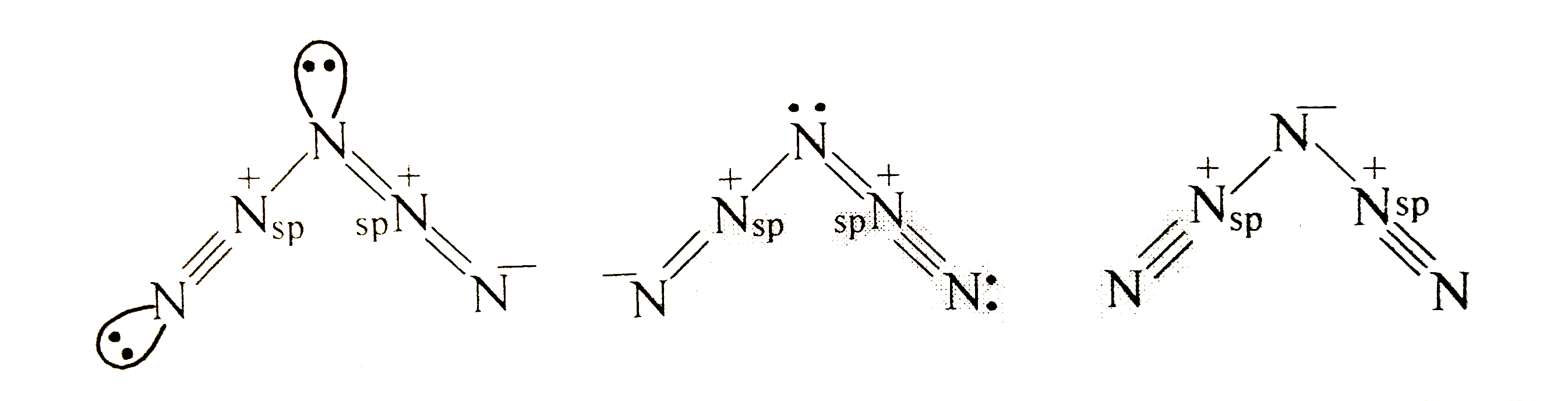 Number of structures in which bond angle around nitrogen other than the central nitrogen atom, isnot equal to `180^(@)` 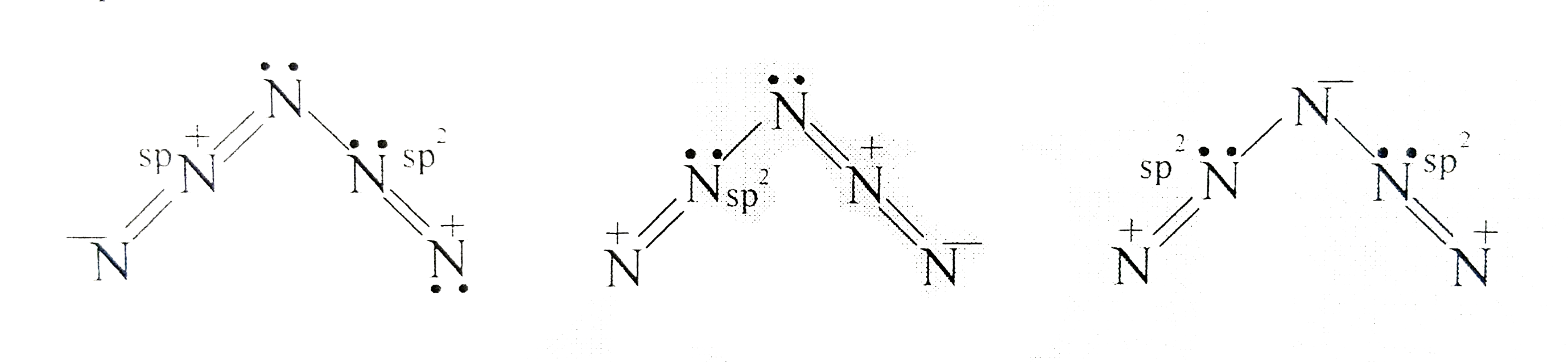
|
|
| 47. |
Consider the following representation based on long form of periodic table. Value of al four quantum number for last electron of element 'X' in their ground state is n=4,l=1,m=1 and s=-(1)/(2) and spin mutiplicity of element 'X' in their ground state is 4. Q. Which of the following statement is incorrect? |
|
Answer» Element P is radioactive |
|
| 48. |
Consider the following representation based on long form of periodic table. Value of al four quantum number for last electron of element 'X' in their ground state is n=4,l=1,m=1 and s=-(1)/(2) and spin mutiplicity of element 'X' in their ground state is 4. Q. The correct order is: |
|
Answer» Ionisation ENERGY of VGT ionisation energy of U |
|
| 49. |
Consider the following representation based on long form of periodic table. Here P, Q< R and S are up, right down the left elements with respect to the central element 'X' respectively. According to above representation the correct mathc is/are |
|
Answer» X-Ge, P-Si, Q,As, R-Sn, S-Ga |
|
| 50. |
Consider the following representation based on long form of periodic table. Value of al four quantum number for last electron of element 'X' in their ground state is n=4,l=1,m=1 and s=-(1)/(2) and spin mutiplicity of element 'X' in their ground state is 4. Q. Which of the following order is incorrect? |
|
Answer» MAGNETIC moment `U GT V gt A` |
|
_S01_379_O01.png)
_S01_379_O02.png)
_S01_379_O03.png)
_S01_379_O04.png)