

Saved Bookmarks
This section includes 7 InterviewSolutions, each offering curated multiple-choice questions to sharpen your Current Affairs knowledge and support exam preparation. Choose a topic below to get started.
| 1. |
Chemically , rust of iron is |
|
Answer» `Fe_(3)O_(4)` |
|
| 2. |
Chemically rust is |
|
Answer» `Fe(OH)_(3)` CONSIDER the rusting that occurs when a drop of water is in contact with iron. The edge of the water drop exposed to the air becomes one POLE of a voltaic CELL. At this edge, molecular `O_(2)` from air is reduced to hydroxide ion in solution. `O_(2)(g)+2H_(2)O(l)+4e^(-) rarr 4OH^(-)(aq.)` The electrons for this reduciton are supplied by the oxidation of metallic iron to the edge of the drop. Thus, the metallic iron funcations, as the ecternal circuit between the cell poles. IONS move within the water drop, completing the electric circuit, Iron `(II)` iron move outward from tghe center of the drop, and hydroxide ions move inward from the edge. The two ions meet in a doughnut-shaped region, where they react to precipitate iron `(II)` hydroxide. `Fe^(2+)(aq.)+2OH^(-)(aq.) rarr Fe(OH)_(2)(s)` This precipitate is quickly oxidized by `O_(2)` to rust (approxi-mated by the formula `Fe_(2)O_(3).H_(2)O)`. `4Fe^(OH)_(2)(s)+O_(2)(g) rarr 2Fe_(2)O_(3).H_(2)O(s)+2H_(2)O(l)` Thus rust is formed between the anode and cathode. We can REGARD rust as a mixture of `Fe_(2)O_(3)` and `Fe(OH)_(3)`. |
|
| 4. |
Chemically Herion is |
|
Answer» Morphinediacetate |
|
| 5. |
Chemically food is preserved by adding________. |
|
Answer» vinegar |
|
| 6. |
Chemically, carbohydrates are definedas …………… or …………… with a generalformula ………. . |
| Answer» Solution :POLYHYDROXY aldehydes, KETOSES `C_(N)(H_(2)O)_(n)` | |
| 7. |
Chemically amylose is a with 200-1000 alpha,-D-(+)-glucose units held by ____ glycosidic linkage |
|
Answer» long unbranched chain, C1- C6. |
|
| 8. |
Chemically bleaching powder is called |
|
Answer» CALCIUM oxy CHLORIDE |
|
| 9. |
Chemically borax is |
|
Answer» Sodium tetra borate |
|
| 10. |
Chemically borax is : |
|
Answer» SODIUM metaborate |
|
| 11. |
Chemical volcano is produced on heating |
|
Answer» `K_(2)Cr_(2)O_(7)` |
|
| 12. |
Chemical volcanois producedon heating |
|
Answer» `K_(2)Cr_(2)O_(7)` |
|
| 13. |
Chemical used in dettol |
|
Answer» ACETIC ACID |
|
| 14. |
Chemical valcano is produced on heating |
|
Answer» `K_(2)Cr_(2)O_(7)` |
|
| 15. |
Chemical used as oxidiser in rocket fuels and in the picking of steel is |
|
Answer» `NH_(3)` |
|
| 16. |
Chemical twins are preent in which of the transition series |
|
Answer» `2 ^(ND) and 3 ^(rd)` |
|
| 17. |
Chemical substances used by insects for communication are called |
|
Answer» pheromones |
|
| 19. |
Chemical reduction is used in the extraction of |
|
Answer» CHROMIUM |
|
| 20. |
Chemical reduction is not suitable for ........... |
|
Answer» Conversion of bauxite to aluminium |
|
| 21. |
Chemical reactions with very high E_(a) values are generally |
|
Answer» MODERATELY FAST |
|
| 22. |
Chemical reactions involve interaction of atoms and molecules. A large number of atoms/molecules (approximately 6.023xx10^(23)) are present in a few grams of any chemical compound varying with their atomic/molecular masses. To handle such large numbers conveniently, the mole concept was introduced. this concept has implications in diverse areas such as analytical chemistry, biochemistry, electrochemistry and radiochemistry. The following example illustrates a typical case, involving chemical/electrochemical reaction, which requires a clear understanding of the mole concept. A 4.0 molar aqueous solution of NaCl is prepared and 500 mL of this solution is electrolysed. This leads to the evolution of chlorine gas at one of the electrodes (atomic mass: Na=23, Hg=200, 1 Faraday=96500 coulombs). Q.The total (coulombs) required for complete electrolysis is |
|
Answer» 24125 Total no. of moles of `Na^(+)` discharged at cathode =2 mole `therefore` The NUMBER of electron requird for this purpose=2 mole `therefore`Total charge required=2 faraday=2`xx96500=193000` COULOMB. |
|
| 23. |
Chemical reactions involve interaction of atoms and molecules. A large number of atoms/molecules (approximately 6.023xx10^(23)) are present in a few grams of any chemical compound varying with their atomic/molecular masses. To handle such large numbers conveniently, the mole concept was introduced. this concept has implications in diverse areas such as analytical chemistry, biochemistry, electrochemistry and radiochemistry. The following example illustrates a typical case, involving chemical/electrochemical reaction, which requires a clear understanding of the mole concept. A 4.0 molar aqueous solution of NaCl is prepared and 500 mL of this solution is electrolysed. This leads to the evolution of chlorine gas at one of the electrodes (atomic mass: Na=23, Hg=200, 1 Faraday=96500 coulombs). Q. if the cathode is a Hg electrode, the maximum weight (g) of amalgam formed from this solution is |
|
Answer» 200 By electrolysis we can get a maximum of 2 mole of sodium which can combine with exactly 2 moles of mercury to give AMALGAM. `THEREFORE` The maximum WEIGHT of amalgam which can be formed from this solution =weight of 2 mole of sodium+weight of 2 mole of mercury `=2xx23+2xx200=446`g. |
|
| 24. |
Chemical reactions involve interaction of atoms and molecules. A large number of atoms/molecules (approximately 6.023xx10^(23)) are present in a few grams of any chemical compound varying with their atomic/molecular masses. To handle such large numbers conveniently, the mole concept was introduced. this concept has implications in diverse areas such as analytical chemistry, biochemistry, electrochemistry and radiochemistry. The following example illustrates a typical case, involving chemical/electrochemical reaction, which requires a clear understanding of the mole concept. A 4.0 molar aqueous solution of NaCl is prepared and 500 mL of this solution is electrolysed. This leads to the evolution of chlorine gas at one of the electrodes (atomic mass: Na=23, Hg=200, 1 Faraday=96500 coulombs). Q. The total number of moles of chlorine gas evolved is |
|
Answer» 0.5 `therefore`Number of mole of `Cl_(2)` gas evolved`=(2)/(2)=1` mole. |
|
| 25. |
Chemical reactions are invariably assocated with the transfer of energy either in the form of heat or light. In the laboratory, heat changes in physical and chemical processes are measured with an instrument called calorimeter. Heat change in the process is calculated as: q= ms DeltaT, s= specific heat = c Delta T, c= heat capacity Heat of reaction at constant volume is measured using bomb calorimeter. qv= Delta U= internal energy change. Heat of reaction at constant pressure is measured using simple or water calorimeter. q_(p) = Delta H, q_(p) = q_(v) + P Delta V, DeltaH = DeltaU + Delta nRT The amount of energy released during a chemical change depnds on the physical state of reactants and products, the condition of pressure,temperature and volume at which the reaction is carried out. The variation of heat of reaction with temperature and pressure is givenby Kirchhoff's equation: (DeltaH_(2)- DeltaH_(1))/(TT_(2)-T_(1)) = DeltaC_(P) (At constant pressure), (DeltaU_(2)- DeltaU_(1))/(TT_(2)-T_(1)) = DeltaC_(V) (At constant volume) DeltaC_(P) for a reaction is given by 0.2T cal/deg. Its enthalpy of reaction at 10K is -14.2 kcal. Its enthalpy of reaction at 100K in kcal will be |
|
Answer» `-13.21` |
|
| 26. |
Chemical reactions are invariable associated with the transfer of enery either in the form of heat or light. In the laboratory, heat energy I physical and chemical processes are measured with an instrument called caloriemter. Heat change in the process is calcualted as: q-msDeltaT,""s=specific heat =cDeltaT,""c= Heat capacity. Heat of reaction at constant pressure is measured using bomb calorimeter. q_(V)=DeltaU=Internal energy change heat of reaction at constant pressure is measrued using simple or water calorimeter. q_(P)=DeltaH q_(P)=q_(V)+PDeltaV DeltaH=DeltaU+DeltanRT The amount of energy released during a chemical change depends on the physical state of reactants and products, te conditions of pressure, temperatrue and volume at which the reaction is carried out. the variation of heat of reaction with temperature and pressure is given by kirchhoff's equation: (DeltaH_(2)-DeltaH_(1))/(T_(2)-T_(1))=DeltaC_(P),""(DeltaU_(2)-DeltaU_(1))/(T_(2)-T_(1))=DeltaC_(V). Q. The enthalpy change (DeltaH) for the reaction, N_(2)(g)+3H_(2)(g)to2NH_2(g) is -91.38 kJ at 298 K. The nternal energy change DeltaU at 298K is: |
|
Answer» `-92.38kJ` `DeltaH=DeltaU+Deltan_(g)RT` `DeltaU=DeltaH-Deltan_(g)RT` `=0 -92.38xx1000-(-2)xx8.314xx298` `=87424J=-87.424kJ` |
|
| 27. |
Chemical reactions are invariable associated with the transfer of enery either in the form of heat or light. In the laboratory, heat energy I physical and chemical processes are measured with an instrument called caloriemter. Heat change in the process is calcualted as: q-msDeltaT,""s=specific heat =cDeltaT,""c= Heat capacity. Heat of reaction at constant pressure is measured using bomb calorimeter. q_(V)=DeltaU=Internal energy change heat of reaction at constant pressure is measrued using simple or water calorimeter. q_(P)=DeltaH q_(P)=q_(V)+PDeltaV DeltaH=DeltaU+DeltanRT The amount of energy released during a chemical change depends on the physical state of reactants and products, te conditions of pressure, temperatrue and volume at which the reaction is carried out. the variation of heat of reaction with temperature and pressure is given by kirchhoff's equation: (DeltaH_(2)-DeltaH_(1))/(T_(2)-T_(1))=DeltaC_(P),""(DeltaU_(2)-DeltaU_(1))/(T_(2)-T_(1))=DeltaC_(V). Q. The specific heats of I_(2) in vapour and solid states are 0.031 and 0.055 cal/g respectively. The heat of sublimation of iodine at 200^(@)C is 6.096 kcal mol^(-1). the heat of sublimation of iodine at 250^(@)C will be: |
|
Answer» 3.8 KCAL `MOL^(-1)` `DeltaC_(P)=(0.031-0.055)xx10^(-3)xx254` `(DeltaH_(2)-DeltaH_(1))/(T_(2)-T_1)=DeltaC_(P)` `(DeltaH_(2)-6.096)/(50)=(0.031-0.055)xx10^(-3)xx254` `DeltaH_(2)=5.79` kcal `mol^(-1)`. |
|
| 28. |
Chemical reactions are invariable associated with the transfer of enery either in the form of heat or light. In the laboratory, heat energy I physical and chemical processes are measured with an instrument called caloriemter. Heat change in the process is calcualted as: q-msDeltaT,""s=specific heat =cDeltaT,""c= Heat capacity. Heat of reaction at constant pressure is measured using bomb calorimeter. q_(V)=DeltaU=Internal energy change heat of reaction at constant pressure is measrued using simple or water calorimeter. q_(P)=DeltaH q_(P)=q_(V)+PDeltaV DeltaH=DeltaU+DeltanRT The amount of energy released during a chemical change depends on the physical state of reactants and products, te conditions of pressure, temperatrue and volume at which the reaction is carried out. the variation of heat of reaction with temperature and pressure is given by kirchhoff's equation: (DeltaH_(2)-DeltaH_(1))/(T_(2)-T_(1))=DeltaC_(P),""(DeltaU_(2)-DeltaU_(1))/(T_(2)-T_(1))=DeltaC_(V). Q. The enthalpy of fusion of ice is 6.02 kJ mol^(-1). The heat capacity of water is 4.18Jg^(-1).^(@)C^(-1). What is the smallest number of ice cubes at 0^(@)C, each containing one mole of water, that are needed to cool 500 g of liquid water from 20^(C) to 0^(@)C? |
|
Answer» 1 `q=msDeltaT` `=500xx4.18xx20=41800J=41.8kJ` NUMBER of moles of water (ice) that will melt to ABSORB 41.8 kJ `=(41.8)/(6.02)~~7` `therefore` Number oc fubes of ice that will melt=7. |
|
| 29. |
Chemical reactions are invariable associated with the transfer of enery either in the form of heat or light. In the laboratory, heat energy I physical and chemical processes are measured with an instrument called caloriemter. Heat change in the process is calcualted as: q-msDeltaT,""s=specific heat =cDeltaT,""c= Heat capacity. Heat of reaction at constant pressure is measured using bomb calorimeter. q_(V)=DeltaU=Internal energy change heat of reaction at constant pressure is measrued using simple or water calorimeter. q_(P)=DeltaH q_(P)=q_(V)+PDeltaV DeltaH=DeltaU+DeltanRT The amount of energy released during a chemical change depends on the physical state of reactants and products, te conditions of pressure, temperatrue and volume at which the reaction is carried out. the variation of heat of reaction with temperature and pressure is given by kirchhoff's equation: (DeltaH_(2)-DeltaH_(1))/(T_(2)-T_(1))=DeltaC_(P),""(DeltaU_(2)-DeltaU_(1))/(T_(2)-T_(1))=DeltaC_(V). Q. What value of DeltaT should be used for the calorimetry experiment that gives the following graphical result? |
| Answer» Answer :C | |
| 30. |
Chemical reactions are invariable associated with the transfer of enery either in the form of heat or light. In the laboratory, heat energy I physical and chemical processes are measured with an instrument called caloriemter. Heat change in the process is calcualted as: q-msDeltaT,""s=specific heat =cDeltaT,""c= Heat capacity. Heat of reaction at constant pressure is measured using bomb calorimeter. q_(V)=DeltaU=Internal energy change heat of reaction at constant pressure is measrued using simple or water calorimeter. q_(P)=DeltaH q_(P)=q_(V)+PDeltaV DeltaH=DeltaU+DeltanRT The amount of energy released during a chemical change depends on the physical state of reactants and products, te conditions of pressure, temperatrue and volume at which the reaction is carried out. the variation of heat of reaction with temperature and pressure is given by kirchhoff's equation: (DeltaH_(2)-DeltaH_(1))/(T_(2)-T_(1))=DeltaC_(P),""(DeltaU_(2)-DeltaU_(1))/(T_(2)-T_(1))=DeltaC_(V). Q. The heat capacity of a bomb calorimeter is 500 J/K. When 0.1g of methane was burnt in this calorimeter, the temperature rose by 2^(@)C. the value of DeltaU per mole will be: |
|
Answer» `+1KJ` |
|
| 31. |
Chemical reactions are invariable associated with the transfer of enery either in the form of heat or light. In the laboratory, heat energy I physical and chemical processes are measured with an instrument called caloriemter. Heat change in the process is calcualted as: q-msDeltaT,""s=specific heat =cDeltaT,""c= Heat capacity. Heat of reaction at constant pressure is measured using bomb calorimeter. q_(V)=DeltaU=Internal energy change heat of reaction at constant pressure is measrued using simple or water calorimeter. q_(P)=DeltaH q_(P)=q_(V)+PDeltaV DeltaH=DeltaU+DeltanRT The amount of energy released during a chemical change depends on the physical state of reactants and products, te conditions of pressure, temperatrue and volume at which the reaction is carried out. the variation of heat of reaction with temperature and pressure is given by kirchhoff's equation: (DeltaH_(2)-DeltaH_(1))/(T_(2)-T_(1))=DeltaC_(P),""(DeltaU_(2)-DeltaU_(1))/(T_(2)-T_(1))=DeltaC_(V). Q. Matht eh List-I and List-II and select the answer from the given codes: |
|
Answer» `{:(A,B,C,D,E),(1,2,3,4,5):}` |
|
| 32. |
Chemical reaction occurs as a result of collisions between reacting molecules. Therefore, the reaction rate is given by: |
|
Answer» Total NUMBER of collisions occuring in a unit VOLUME per second |
|
| 33. |
Chemical property of Li and Mg are similar because |
|
Answer» These belong to same group |
|
| 34. |
Chemical propertiesof ethers. |
|
Answer» Solution :(1) Ethershaveequitestablelinkage , `-OVERSET(|)underset(|)C-O -overset(|)underset(|)C-` (2) Ethers arechemically INERT. (3) Underordinary CONDITIONS , ethers are notaffected by acids , bases and mostof the reducingand oxidising agents . (4) Ethers are GOOD solvents andusedas inertsolvents in MANY reactions. |
|
| 35. |
Write chemical name of Vitamin C. |
|
Answer» |
|
| 36. |
Chemical name of vitamin A is |
|
Answer» thiamine |
|
| 38. |
Chemical name of vermilion is : |
|
Answer» MERCURIC SULPHIDE |
|
| 39. |
Chemical name of the insecticide gammaexane is |
|
Answer» DDT 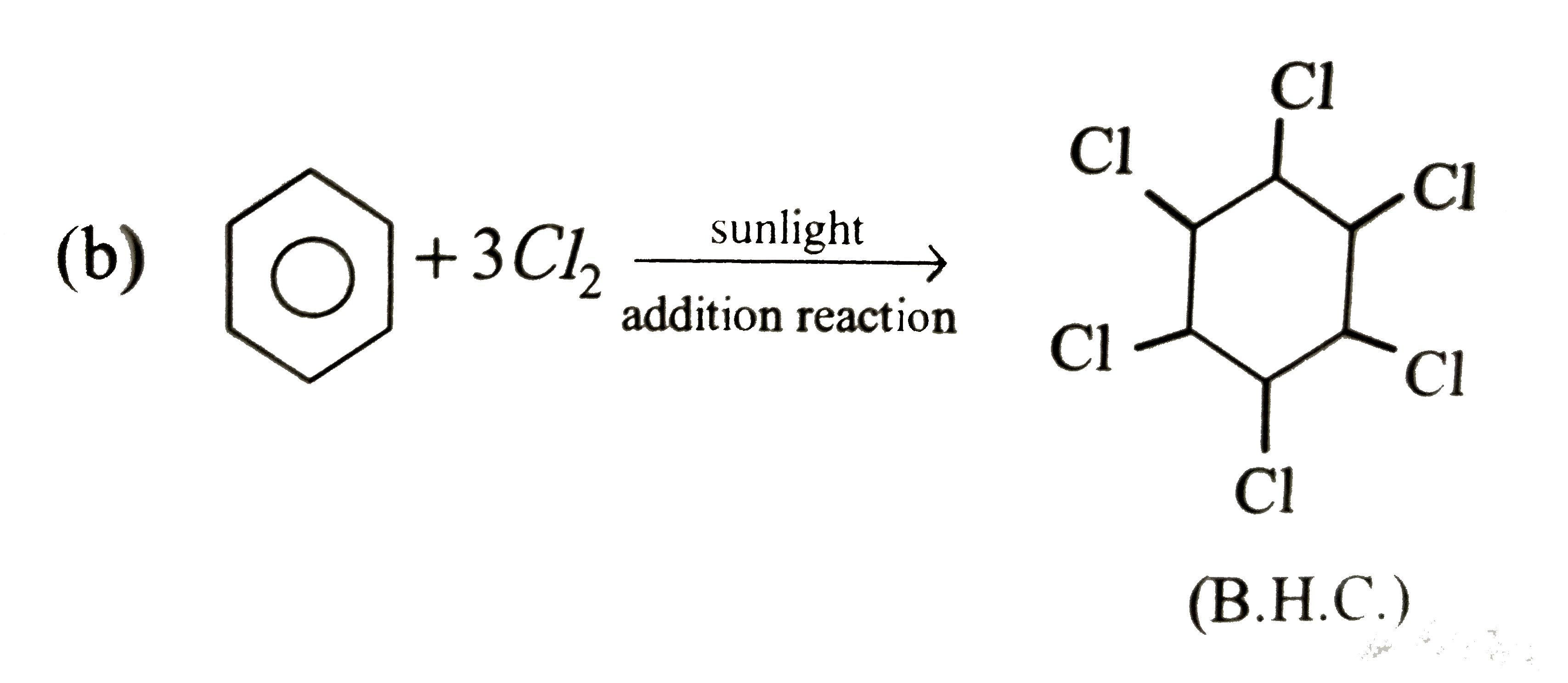
|
|
| 40. |
Chemical name of malamine is |
|
Answer» 2,4-Dimino-1, 3- 5-trizine |
|
| 41. |
Chemical name of Bleaching powder |
|
Answer» CHLORIDE of lime |
|
| 42. |
Chemical name of malamine is : |
|
Answer» 2,4-diamino-1,3,5-triazine |
|
| 43. |
Chemical name of aspirin is |
|
Answer» 3-acetoxybenzoic ACID |
|
| 44. |
Chemical name of corrosive sublimate is : |
|
Answer» Mercurous CHLORIDE |
|
| 45. |
Chemical leaching is useful in the concen-tration of |
|
Answer» COPPER pyrites |
|
| 46. |
Chemical leaching in seful in the concentration of |
|
Answer» COPPER PYRITES |
|
| 47. |
Chemical formula of phosphonium ion |
|
Answer» <P>`PH_(3)` |
|
| 48. |
Hinsberg's reagent is |
|
Answer» `C_(6)H_(5)SO_(2)H` |
|