

Saved Bookmarks
This section includes 7 InterviewSolutions, each offering curated multiple-choice questions to sharpen your Current Affairs knowledge and support exam preparation. Choose a topic below to get started.
| 1. |
Assertion: The first ionisation energy of Be is greater than that of B. Reason: 2p-orbital is lower in energy than 2s-orbital. |
|
Answer» If both ASSERTION and reason are TRUE annd the reason is the correct explanation of assertion |
|
| 2. |
Assertion: The equlibrium constant is fixed and is the charcteristic of any given chameical reaction as a specified temperaturee. Reason: The composition of the final equlibriu mixture at a particular temperaturee depends upon the starting amount of reactants. |
|
Answer» If both ASSERTION and REASON are TREU and the reason is the correct explaination of the assertion. |
|
| 3. |
Assertion : The enthalpy of reaction remains constant in the presence of catalyst. Reason : A catalyst participating in the reaction forms different activated complex and lowers down the activation energy of reactant and product remains the same. |
|
Answer» Both ASSERTION and REASON are TRUE and reason is the correct explanation of assertion. |
|
| 4. |
Assertion : The enthalpy of reaction remains constant in the presence of a catalyst. Reason : A catalyst participating in the reaction forms different activated complex and lowers down the activation energy but the difference in energy of reactant and product remains the same. |
|
Answer» Both ASSERTION and REASON are CORRECT and the reason is correct explananation of assertion. |
|
| 5. |
Assertion : The enthalpy of formation of gaseous oxygen molecules at 298 K and under pressure of 1 atm is zero.Reason : The entropy of formation of gaseous oxygen molecules under the same condition is zero. |
|
Answer» If both ASSERTION and reason are TRUE and the reason is the correct explanation of the assertion. |
|
| 6. |
Assertion : The enthalpies of neutralisation of strong acids and strong bases are always same. Reason : Neutralization is heat of formation of water. |
|
Answer» If the ASSERTION and reason are true and the reason is the CORRECT explanation of the assertion |
|
| 7. |
Assertion: The emf of a cell is related with equilibrium constant of the cell reaction as E_(cell)=(0.0591)/(n)log" "K. Reason: As E_(cell) changes with concentration of the electrodes, K of cell reaction also changes with concentration. |
|
Answer» If both assertion and reason are true, and reason is the true EXPLANATION of the assertion `E_(cell)^(@)=(0.0591)/(N)"LOG "K`. Correct R. equilibrium constant is constant at constant temperature and does not change with concentration. |
|
| 8. |
Assertion: The electron gain enthalpy of N is +ve while that of P is -ve. Reason: Smaller atomic size of N is which there is a considerable electron-electron repulsion and hence the additional electron is not accepted easily. |
|
Answer» If both assertion and REASON are true ANND the reason is the correct explanation of assertion |
|
| 9. |
Assertion: The electrolysis of auqueous NaCl solution gives hydrogen at the cathode and chlorine at the anode. Reason: Chlorine has higher oxidation potential than water. |
|
Answer» If both ASSERTION and REASON are true, and reason is the true explanation of the assertion |
|
| 10. |
Assertion : The electrolysis of aqueous NaCl gives hydrogen at the cathode and chlorine at the anode Reason : Chlorine has higher oxidation potential than water |
|
Answer» (A) and (R) are true and (R) is the correct EXPLANATION of (A) |
|
| 11. |
Assertion: The dissolution of ammonia in water does not follow henry's law. Reason: Ammonia undergoes ionisation in watrer as NH_(3)+H_(2)O hArr NH_(4)^(+)+OH^(-) |
|
Answer» If both assertion and Reason are true and the Reason is the CORRECT EXPLANATION of the assertion. |
|
| 12. |
Assertion : The dissociation ofacetic acid decreases on addition of sodium acetate. Reason : It is due to common ion effect. |
|
Answer» (A) and(R ) are CORRECT and (R ) EXPLAINS (A) |
|
| 13. |
Assertion : The dissociation of acetic acid decreases on addition of sodium acetate. Reason : It is due to common ion effect. |
|
Answer» (A) and ( R) are true and ( R) is the correct EXPLANATION of (A) |
|
| 14. |
Assertion : The Daniell cell becomes dead after sometime. Reason : Reduction potential of Zinc increases while that of copper decreases. |
|
Answer» If both ASSERTION and REASON are CORRECT and reason is correct EXPLANATION for assertion. |
|
| 15. |
Assertion. The depression in freezing point depend on the amount of the solute dissolved and not one the nature of the solute or solvent. Reason. K_(f) for both has different values. |
|
Answer» If both assertion and reason are true, and reason is the true EXPLANATION of the assertion. Correct R. For aqueous solutions of different ELECTROLYTES, `K_(f)` is same because solvent is same, i.e., water. |
|
| 16. |
Assertion: The Daniell cell becomes dead after some time. Reason: Oxidation potential of zinc anode decreases and that of copper increases. |
|
Answer» If both assertion and REASON are TRUE, and reason is the true EXPLANATION of the assertion |
|
| 17. |
Assertion : The covalence of nitrogen in N_(2)O_(5) is 5 Reason : Nitrogen can expand its covalence beyond 4. |
|
Answer» If both assertion and REASON are true and reason is the correct EXPLANATION of assertion. 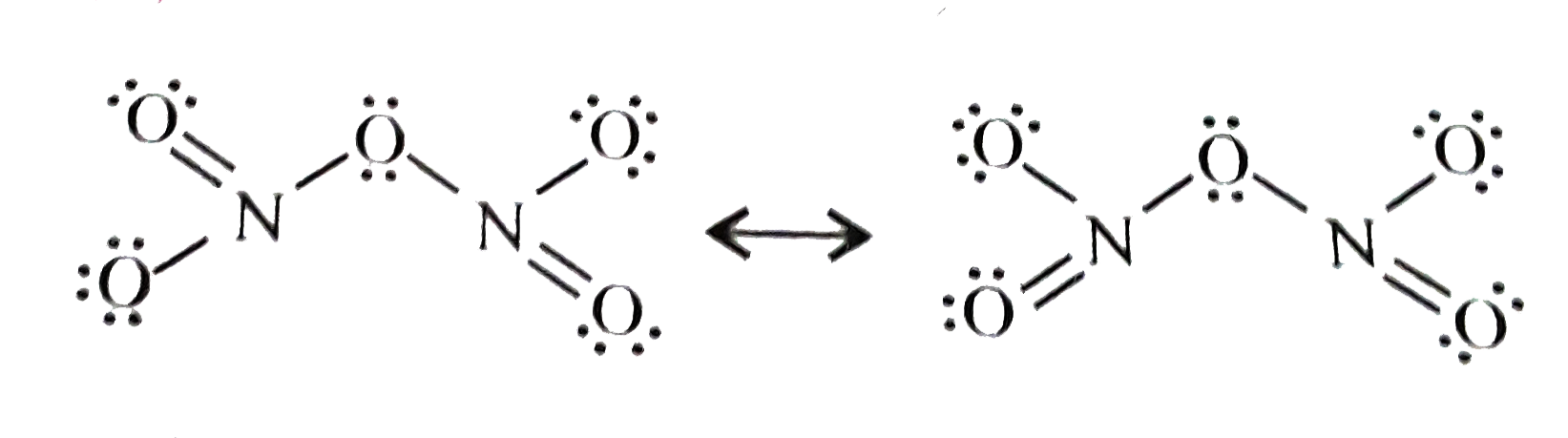 Hence, it forms 4 covalent bonds with oxygen. It cannotexpand its covalence beyond 4 DUE to the non-availabilityof d-orbital. |
|
| 18. |
Assertion : The covalency of carbon is four in excited state. Reason : The four half-filled pure orbitals of carbon form same kind of bonds with an atom as those are with hybridised orbitals. |
|
Answer» If ASSERTION is true but the REASON is FALSE |
|
| 19. |
Assertion : The correct order of increasing molecular forces in the given polymres is : Buna-S, Polythene, Nylon -6,6 Reason : The properties of polymers depends upon the molecular forces. |
|
Answer» If both assertion and reason are TRUEAND reason is the correct explanationof assertion . FIBRES ( nylon -6,6) have strong INTERMOLECULAR forces.Thermoplastic polymers ( POLYTHENE ) have intermolecular forces intermediate between elastomers and fibres. |
|
| 20. |
Assertion: The coordination entity of the type [PtCl_2(en)_2]^(+2)shows geometrical isomerism. Reason:Trans isomer of [PtCl_2 (en)_2]^(+2)shows optical activity. |
|
Answer» Both Assertion & Reason are true ,Reason is the CORRECT explanation of Assertion |
|
| 21. |
Assertion. The conversion of fresh precipitate to colloidal state is called peptization. Reason. It is caused by addition of common ions. |
|
Answer» If both assertion and reason are ture, and reason is the trure explanation of the assertion. |
|
| 22. |
Assertion : The compounds of noblegas element neon are not known. Reason : Neon does not have any vacant orbital in the valence shell of its atom. |
|
Answer» If both ASSERTION and REASON are CORRECT and reason is correct EXPLANATION for assertion. |
|
| 23. |
Assertion. The complex [Co(NH_(3))_(3)Cl_(3)] does not give precipitate with AgNO_(3). Reason. The given complex does not contain counter ions. |
|
Answer» If both ASSERTION and REASON are true, but reason is not the true explanation of the assertion |
|
| 24. |
Assertion: The complex CoCl_3. 6NH_3 gives white precipitate with silver nitrate solution. Reason: chlorine is present Outside co-ordination sphere of the complexCoCl_3 . 6 NH_3. |
|
Answer» Both ASSERTION & Reason are true ,Reason is the CORRECT explanation of Assertion |
|
| 25. |
Assertion: The cell potential of mercury cell is 1.35V which remains constant. Reason: In mercury cell, the electrolyte is a paste of KOH and ZnO. |
|
Answer» if both assertion and reason are true and the reason is the correct explanation of the assertion. As the TIME passes, the concentration of `Zn^(2+)` keeps on increasing while the concentration of `Cu^(2+)` keeps on decreasing. At the same time voltage of the cell keeps on decreasing. When there is no CHANGE in concentration of `Cu^(2+) and Zn^(2+)` IONS, VOLTMETER gives zero reading and this state is known as equilibrium. |
|
| 26. |
Assertion: The cell potential of mercury cell is 1.35 V which remains constant. Reason: In mercury cell, the electrolyte is a paste of KOH and HgO. |
|
Answer» If both assertion and reason are true, and reason is the true explanation of the assertion |
|
| 27. |
Assertion. The catalytic convertor in the car's exhaust system converts pollutin exhaust gases into nontoxic gases. Reason. Catalytic convertor contains a mixture of transition metals and their oxisde embedded in the inner support. |
|
Answer» If both assertion and reason are ture, and reason is the trure EXPLANATION of the assertion. |
|
| 28. |
Assertion: The catalytic converted in the car's exhaust system converts polluting exhaust gases into non-toxic gases. |
|
Answer» If both assertion and Reason are TRUE and the Reason is the correct explanation of the assertion. |
|
| 29. |
Assertion: The bond energy of gt C = O is less than gt C = C lt in alkenes. Reason: The carbon atom in carbonyl group is sp^(2) hybridised. |
|
Answer» If both assertion and reason are true and the reason is the correct EXPLANATION of the assertion |
|
| 30. |
Assertion : The boiling points of given compounds follow the order : CH_(3)CH_(2)CH_(2)CHO ~~CH_(3)CH_(2)CH_(2)CH_(2)CH_(3) lt CH_(3)CH_(2)CH_(2)CH_(2)OH ~~ H_(5)C_(2)OC_(2)H_(5) Reason : Boiling point dependsupon molecualr mass only. |
|
Answer» If both assertion and REASON are true and reason is the correct explanation of assertion. `CH_(3)CH_(2)CH_(2)CH_(2)CH_(3) LT H_(5)C_(2)OC_(2)H_(5) lt CH_(3)CH_(2)CH_(2)CHO lt CH_(3)CH_(2)CH_(2)CH_(2)OH` Boiling point depends upon the nature of intermolecular forces, stronger the forces, higher is the boiling point. `CH_(3)CH_(2)CH_(2)CH_(2)OH` moleculesare associated due to extensive intermolecular hydrogen bonding, `CH_(3)CH_(2)CH_(2)CHO` has stronger dipole-dipole ATTRACTIONS as compared to `H_(5)C_(2)OC_(2)H_(5) and CH_(3)CH_(2)CH_(2)CH_(2)CH_(3)` MOLECULES have onlyvan der Waals forces. |
|
| 31. |
Assertion: The boiling points of alkyl chlorides, bromides and iodies are considerable higher thaan that of the hydrocarbon of comparable molecularr mass. |
|
Answer» ASSERTION and reason both are correct and reason is correct explanation of assertion. |
|
| 32. |
Assertion: The boiling points of alkyl halides decrease in the order RI gt RBr gt RCl gt RF. Reason: The boiling points of alkyl chlorides, bromides and iodides are considerably higher than that of the hydrocarbon of comparable molecular mass. |
|
Answer» Assertion and reason both are correct and reason is correct explanaion of assertion. |
|
| 33. |
Assertion: The boiling point of alcohol is higher than those of hydrocarbons of comparable moleculal mass. Reason: Alcohol show intramolecular hydrogen banding |
|
Answer» If both assertion and reasonare CORRECT and reason is the CORRECT EXPLANATION of the assertion |
|
| 34. |
Assertion : The blueprecipitate formedby the action of K_(4)[Fe(CN)_(6)] on Fe^(3+) and by that of K_(2)[Fe(CN)_(6)] on Fe^(2+) have thesamecomposition Reasion : [Fe(CN)_(6)]^(3-)oxides Fe^(2+) to Fe^(3-) and itselfgetsreduced to [Fe(CN)_(6)]^(4-). |
|
Answer» If both (A) and (B) are CORRECT and (R ) is the correct explqanation of (A) |
|
| 35. |
Assertion: The blueprecipitate formed by the action of K_(4)[Fe(CN)_(6)] on Fe^(3+) and by that of K_(3)[Fe(CN)_(6)] on Fe^(2+) have the same composition. Reason: [Fe(CN)_(6)]^(3-) oxidises Fe^(2+) to Fe^(3+) and itself gets reduced to [Fe(CN)_(6)]^(4-). |
|
Answer» If assertion is true but the REASON is FALSE |
|
| 36. |
Assertion : The binding energy per nucleon, for nuclei with atomic mass number A gt 100, decreases with A Reason :The nuclear forces are weak for heavier nuclei. |
|
Answer» If both ASSERTION and reason are TRUE and the reason is the CORRECT EXPLANATION of the assertion |
|
| 37. |
Assertion : The basicity of hypophorus acid is two. Reason : Two hydrogen atoms are bonded to phosphorus atoms. |
|
Answer» If both ASSERTION and REASON are CORRECT and reason is correct EXPLANATION for assertion. |
|
| 38. |
Assertion :The atoms in acovalentmolecule are saidtoshare electrons, yet somecovalentmolecule are polar. Reason :In a polar covalent molecule , the sharedelectron spend moretimeon theaveragenear one of the atoms . |
|
Answer» If assertion is true but the REASON is FALSE |
|
| 39. |
Assertion : The -As=As- linkage present in arshphenamine( a Salvarsan drug ) resembles the -N=N- linkage present in azo days . Reason : The first antibacterial agent , prontosil resembles in structure to the compound salvarsan . |
|
Answer» If both ASSERTION and reason are trueand reason is the CORRECT explanationof assertion . |
|
| 40. |
Assertion: The alpha-hydrogen atom is carbonyl compounds is less acidic. Reason: The anion formed after the loss of alpha-hydrogen atom is resonance stabilised. |
|
Answer» Assertion and reason both are correct and reason is correct explanation of assertion. |
|
| 41. |
Assertion : The archeological studies are based on the radioactive decay of carbon 14 isotope Reaosn :The ratio of C -14 " to " C -12 in the animals and plants is same as that in the atmosphere |
|
Answer» If both ASSERTION and REASON are TRUE and the reason is the CORRECT explanation of the assertion |
|
| 42. |
Assertion The anode is refeeredto as an oxidation electrode while the cathode is referred to as reduction electrode. Reason When an electric current is passed through a molten electrolyte, the anions move to the anode where they lose electrons and the cations move to the cathode where they gain electrons. |
|
Answer» Both A and R are TRUE and R is the CORRECT EXPLANATION of A |
|
| 43. |
Assertion :The addition of ammonia derivatives to carbonyl compounds is carried in weakly acidic medium. Reason :In weakly acidic medium attacking nucleophile is also protonated. |
|
Answer» If both ASSERTION and reason are correct and reason is correct EXPLANATION for assertion. |
|
| 44. |
Assertion : The activity of 1 g pure uranium -235 will be greater than the same amount present as U_(3)O_(8) Reaosn : In the combined state, the activity of the radioactive element decreases |
|
Answer» If both assertion and REASON are true and the reason is the correct explanation of the assertion |
|
| 45. |
Assertion : The activiation energies for fusion reactions are very low. Reaosn : They require very low temperature to overcome electrostatic repulsion between the nuclei. |
|
Answer» If both assertion and reason are true and the reason is the CORRECT EXPLANATION of the assertion |
|
| 46. |
Assertion: Tetrahedral complexes with chiral structure exhibit optical isomerism. Reason: They lack plane of symmetry. |
|
Answer» If assertion is TRUE but the REASON is false |
|
| 47. |
Assertion : Tetrahedral complexes having two different types of unidentate ligands coordinated with central metal ion will show geometrical isomerism . Reason : Geometrical isomerism arises in homoleptic complexes due to different possible geometric arrangement of the ligands . |
|
Answer» If both ASSERTION and REASON are true and reason is the correct explanation of assertion |
|
| 48. |
Assertion. Tetracycline is bacteriostatic antibiotic. Reason. It inhibits the growth of organisms. |
|
Answer» If both ASSERTION and REASON are TRUE, and reason is the true EXPLANATION of the assertion. |
|
| 49. |
Assertion: tert-Butyl methyl ether on treatment with HI at 373K gives a mixture of methyl iodide and tert-butyl alcohol. Reason: The reaction occurs by S_(N)2 mechanism. |
|
Answer» If both ASSERTION and reason are true, and reason is the true EXPLANATION of the assertion. Correct reason. The reaction OCCURS by `S_(N)1` mechanism. |
|
| 50. |
Assertion: tert-Butyl chloride on treatment with sodium metal in dry ether gives 2,2,3,3-tetramethylbutane. Reason: tert-Alkyl halides readily undergo Wurtz reaction. |
|
Answer» If both assertionn and reason are true, and reason is the true explanation of the assertion. Correct reason. Tert-Alkyl halides do not UNDERGO Wurtz REACTION but INSTEAD undergo dehydrohalogenation. |
|