

Saved Bookmarks
This section includes 7 InterviewSolutions, each offering curated multiple-choice questions to sharpen your Current Affairs knowledge and support exam preparation. Choose a topic below to get started.
| 1. |
Amongst the various ores of a metal (M) (sulphide, carbonates, oxides, hydrated or hydroxides) two ores [X] and [Y] show the following reactivity. (i)[X] on calcination gives a black solid (S), carbon dioxide and water. (ii)[X] Dissolved in dilute HCl, on reaction with Kl gives a white precipitate (P) and iodine. (iii)[Y] on roasting gives metal (M) and a gas (G_(1)) which turns acidified K_2Cr_2O_7 solution green. (iv)[Y] on reaction with dil.HCl givesa white precipitate (Q) and another gas (G_2) which turns lead acetate solution black, and also reacts with gas (G_1) to precipitate colloidal sulphur in presence of moisture. Reaction involved: (i)CuCO_3. Cu(OH)_2oversetDeltatoCuOdarr("black")+CO_2+H_2O CuCO_3.Cu(OH)_2+4HCl to2CuCl_2+3H_2O+CO_2 (ii)2Cu^(2+)+4I^(-)toCu_2l^2 darr (P)("white")+l_2uarr (iii)2Cu_2S+3O_2to2Cu_2O+2SO_2(G_1) Cu_2S+2Cu_2Oto6Cu+SO_2 (iv)Cu_2S+2HCl to2CuCldarr(Q)("white")+H_2S(G_2) Pb^(2+)+H_2StoPbSdarr("black")+2H^(+) (v)SO_2(G_1)+2H_2S(G_2)overset("moisture")to3Sdarr+2H_2O Which of the following statements is correct about [Y] ? |
|
Answer» [Y] is converted to metal (M) by self reduction |
|
| 2. |
Amongst the various ores of a metal (M) (sulphide, carbonates, oxides, hydrated or hydroxides) two ores [X] and [Y] show the following reactivity. (i)[X] on calcination gives a black solid (S), carbon dioxide and water. (ii)[X] Dissolved in dilute HCl, on reaction with Kl gives a white precipitate (P) and iodine. (iii)[Y] on roasting gives metal (M) and a gas (G_(1)) which turns acidified K_2Cr_2O_7 solution green. (iv)[Y] on reaction with dil.HCl givesa white precipitate (Q) and another gas (G_2) which turns lead acetate solution black, and also reacts with gas (G_1) to precipitate colloidal sulphur in presence of moisture. Reaction involved: (i)CuCO_3. Cu(OH)_2oversetDeltatoCuOdarr("black")+CO_2+H_2O CuCO_3.Cu(OH)_2+4HCl to2CuCl_2+3H_2O+CO_2 (ii)2Cu^(2+)+4I^(-)toCu_2l^2 darr (P)("white")+l_2uarr (iii)2Cu_2S+3O_2to2Cu_2O+2SO_2(G_1) Cu_2S+2Cu_2O to 6Cu+SO_2 (iv)Cu_2S+2HCl to 2CuCldarr(Q)("white")+H_2S(G_2) Pb^(2+)+H_2StoPbSdarr("black")+2H^(+) (v)SO_2(G_1)+2H_2S(G_2)overset("moisture")to3Sdarr+2H_2O The metal ores [X] and [Y] are respectively : |
|
Answer» Carbonate and sulphide ores |
|
| 3. |
Amongst the various ores of a metal (M) (sulphide, carbonates, oxides, hydrated or hydroxides) two ores [X] and [Y] show the following reactivity. (i)[X] on calcination gives a black solid (S), carbon dioxide and water. (ii)[X] Dissolved in dilute HCl, on reaction with Kl gives a white precipitate (P) and iodine. (iii)[Y] on roasting gives metal (M) and a gas (G_(1)) which turns acidified K_2Cr_2O_7 solution green. (iv)[Y] on reaction with dil.HCl givesa white precipitate (Q) and another gas (G_2) which turns lead acetate solution black, and also reacts with gas (G_1) to precipitate colloidal sulphur in presence of moisture. Reaction involved: (i)CuCO_3. Cu(OH)_2oversetDeltatoCuOdarr("black")+CO_2+H_2O CuCO_3.Cu(OH)_2+4HCl to2CuCl_2+3H_2O+CO_2 (ii)2Cu^(2+)+4I^(-)toCu_2l^2 darr (P)("white")+l_2uarr (iii)2Cu_2S+3O_2to2Cu_2O+2SO_2(G_1) Cu_2S+2Cu_2Oto6Cu+SO_2 (iv)Cu_2S+2HCl to 2CuCldarr(Q)("white")+H_2S(G_2) Pb^(2+)+H_2StoPbSdarr("black")+2H^(+) (v)SO_2(G_1)+2H_2S(G_2)overset("moisture")to3Sdarr+2H_2O The white precipitate (P) is of : |
|
Answer» <P>`Cu_2I_2` |
|
| 4. |
Amongst the various ores of a metal (M) (sulphide, carbonates, oxides, hydrated or hydroxides) two ores [X] and [Y] show the following reactivity. (i) [S] on calcination gives a black soil (S), carbon dioxide and water. (ii)[X]Dissolved in dil. HCl on reaction with KI gives a whiteprecipitate(P) and iodine. (ii)[Y] on roasting gives metal (M) and a gas (G_(1)) which turns a acidified K_(2)Cr_(2)O_(7) solution green. (iv) [Y]on reaction with dil. HCl gives a whitw precipitat (Q) and another gas (G_(2)) which turns lead acetate solution black. and also reacts wiht gas (G_(1)) to precipitate collodial suphur in presence of moisture. The M,S ,[X] and [Y] gives greenish blue flame. The metal ores [X]and [Y] are respectively: |
|
Answer» CARBONATE and SULPHIDE ores |
|
| 5. |
Amongst the various ores of a metal (M) (sulphide, carbonates, oxides, hydrated or hydrixides) two ores [X] and [Y] show the following reactivity? (a) [X[] on calcination gives a black solid (S), water and a colourless gas which produces milkiness when passed through lime water. But this colourless gas does not decolorise acidified KMnO_(4). (b) [X] dissolved in diliute HCl. On reaction with KI gives a white precipitate(P) and iodine gas. (c) [Y] on roasting at high temperature gives metal (M) and gas (G_(1)) which turns starch iodate solution blue. (d) [Y] on reaction with dilute HCl gives a white precipatate (MS) and another gas (G_(1)) to precipitate colloidal sulpher in presence of moisture. M,S[X],[Y] gives greenish blue flame. The gas (G_(1)) can act as: |
|
Answer» OXIDISING agent G_(2) to H_(2)S, G_(1)to SO_(2),M to Cu, Sto CUO Y to Cu^(2+), S^(2-) |
|
| 6. |
Amongst the various ores of a metal (M) (sulphide, carbonates, oxides, hydrated or hydrixides) two ores [X] and [Y] show the following reactivity? (a) [X[] on calcination gives a black solid (S), water and a colourless gas which produces milkiness when passed through lime water. But this colourless gas does not decolorise acidified KMnO_(4). (b) [X] dissolved in diliute HCl. On reaction with KI gives a white precipitate(P) and iodine gas. (c) [Y] on roasting at high temperature gives metal (M) and gas (G_(1)) which turns starch iodate solution blue. (d) [Y] on reaction with dilute HCl gives a white precipatate (MS) and another gas (G_(1)) to precipitate colloidal sulpher in presence of moisture. M,S[X],[Y] gives greenish blue flame. Which of the following statements is correct about [Y]? |
|
Answer» [Y] is converted to metal (M) by self reduction. G_(2) to H_(2)S, G_(1)to SO_(2),M to Cu, Sto CUO Y to Cu^(2+), S^(2-) |
|
| 7. |
Amongst the various ores of a metal (M) (sulphide, carbonates, oxides, hydrated or hydrixides) two ores [X] and [Y] show the following reactivity? (a) [X[] on calcination gives a black solid (S), water and a colourless gas which produces milkiness when passed through lime water. But this colourless gas does not decolorise acidified KMnO_(4). (b) [X] dissolved in diliute HCl. On reaction with KI gives a white precipitate(P) and iodine gas. (c) [Y] on roasting at high temperature gives metal (M) and gas (G_(1)) which turns starch iodate solution blue. (d) [Y] on reaction with dilute HCl gives a white precipatate (MS) and another gas (G_(1)) to precipitate colloidal sulpher in presence of moisture. M,S[X],[Y] gives greenish blue flame. The metal ore [X] and [Y] are respectively: |
|
Answer» CARBONATE and SULPHIDE ORES |
|
| 8. |
Amongstthe trihalides of nitrogen which one has the highest dipole moment? |
|
Answer» `NF_(3)` |
|
| 9. |
Amongst the three isomers of nitrophenols, the one that is least soluble in water is _____. |
| Answer» SOLUTION :o-nitrophenol DUE to CHELATION | |
| 10. |
Amongst the given set of reactants, the most appropritate for preparing 2^(@) amine is_____ |
|
Answer» `2^(@)R-Br+NH_(3)` |
|
| 11. |
Amongst the given set of reactants the most appropriate for preparing 2^@ amine is __________________ . |
|
Answer» `(2^@ ) R-Br + NH_3 ` |
|
| 12. |
Amongst the given set of reactants, the most appropriate for preparing 2^@amine is |
|
Answer» `(2^@ ) R-Br + NH_3 ` |
|
| 13. |
Amongst the given set of reactants, the most appropriate for preparing 2_(@) amine is: |
|
Answer» `2^(@)R-Br+NH_(3)` |
|
| 14. |
Amongst the given set of reactants, the most appropriate for preparing 2^@ amine is ____. |
|
Answer» `2^@R-Br+NH_3` |
|
| 15. |
Amongst the given set of reactants, the most appropriate for preparing 2^(@) amine is ______. |
|
Answer» `2^(@)R-Br+NH_(3)` |
|
| 16. |
Amongst the given option, the compound(s) in which all the atoms are in one plane in all the possible conformations (if any), is/are |
|
Answer»

|
|
| 17. |
Amongst the given options, the compound (s) in which all the atoms are in one plane in all the possible conformations (if any) is (are): |
| Answer» ANSWER :A::C | |
| 18. |
Amongst the follwong , the total number of compound soluble in aqueous HCl is : |
Answer» 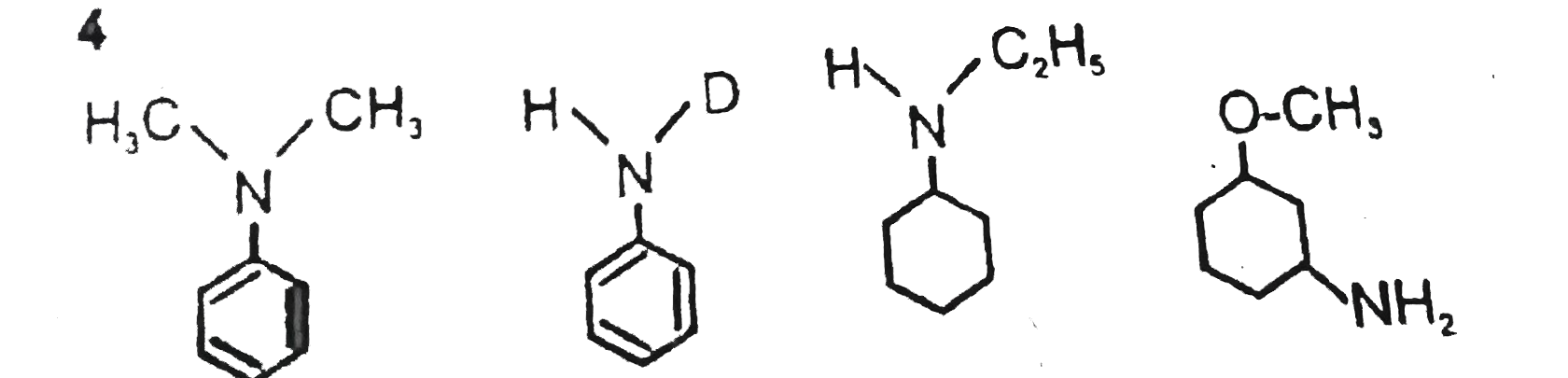
|
|
| 19. |
Amongst the following,the total number of species which are diamagnetic is ………………. . K_(4)[Fe(CN)_(6)],K_(3)[Cr(CN)_(6)],K_(3)[Co(CN)_(6)],K_(2)[Ni(CN)_(4)],[Co(NH_(3))_(6)]^(3+),K_(2)[TiF_(6)],[Pt(NH_(3))_(4)]^(2+) |
|
Answer» |
|
| 20. |
Amongstthefollowingstheoreswhich areroastedtoconvertthem into theircorrespondingmetaloxidesare : alumina,zinc blende,iron pyrites,copper pyrites,calamine,galena, chalcocite. |
|
Answer» |
|
| 21. |
Amongst the following , which is/are TRUE for S_(N)2 reaction ? |
|
Answer» The rate of reaction is independent of the concentration of the NUCLEOPHILE. |
|
| 22. |
Amongst the following trihalides, which one is least basic? |
|
Answer» `NF_(3)` |
|
| 23. |
Amongst the following, total number of compounds soluble in sodium bicarbonate are: 2,4,6-trinitrophenol, benzoic acid, salicyclic acid, acetyl chloride, acetic anhydride, trifluoroethanol, acetamide, benzenesulphonic acid. |
|
Answer» |
|
| 24. |
Amongst thefollowing, totalnumber ofmetalswhichoccurin thenativestate intheearth'scrustare:Fe, Zn, Na, Au, Ni, Sb, Sn, Pt, Hg. |
|
Answer» |
|
| 25. |
Amongst the following, total number of compounds soluble in sodium bicarbonate are: 2,4,6-trinitrophenol, benzoic acid, salicylic acid, acetyl chloride, acetic anhydride, trifluoroethanol, acetamide, benzenesulphonic acid |
|
Answer» |
|
| 26. |
Amongst the following the total number of the compounds i.e. oxide soluble in aqueous NaOH is : Ag_2O, Al_2O_3,ZnO, SnO,PbO,CuO,BeO,BaO,CaO |
|
Answer» `Al_2O_3(s)+2NaOH(aq)to2NaAlO_2(aq)+H_2O` `ZNO(s)+2NaOH(aq)toNa_2ZnO_2(aq)+H_2O` `SnO(s)+2NaOH(aq)to Na_2SnO_2(aq)+H_2O` `PbO(s)+2NaOH(aq)toNa_2PbO_2(aq)+H_2O` |
|
| 27. |
Amongst the following the total number of species which does/do not exist is : SF_6,BF_6^(3-), SF_4, OF_4, AIF_6^(3-),PH_5, PCl_5, NCl_5, SCl_6 |
|
Answer» (2)`PH_5` does not exist as there is large difference in the energies of s,p and d orbitals of P and hence it does not undergo `sp^3d` hybridisation. (3)`NCl_5` does not exist as there is no d-orbitals with N. (4)`BF_6^(3-)` does not exist as there is no VACANT d-orbitals in B and hence it cannot exceed its covalency beyond four. (5)OXYGEN cannot exceed its covalency as it does not have d-orbital. |
|
| 28. |
Amongstthefollowing ,the totalnumber ofores whichmaybeconcentratedbyfrothfloatation process is :haematite,bauxine, galena, copper pyrites, sphalerite,cassiterite, calamine, argentite , chalocite. |
|
Answer» |
|
| 29. |
Amongst the following, the total number of orders which are correct with respect to the property indicated against each is : (i)MggtAlgtSigtP: Covalent radius (ii)Na^+ltO^(2-)ltF^(-)ltN^(3-):Ionic size. (iii)Al^(3+)ltMg^(2-)ltLi^(+)ltK^+:Ionic size. (iv)CltSigtPgtN:Electron affinity value. (v)NltCltOltF:Electron affinity value (vi)FgtClgtBrgtI:Electron affinity value (vii)SigtMggtAlgtNa:First ionisation energy (viii)OgtFgtNgtC:Second ionisation energy (ix)NgtPgtSbgtAs:Third ionisation energy |
|
Answer» (VI)`ClgtFgtBrgtI` (ix)`NgtPgtAsgtSb` |
|
| 30. |
Amongst the following, the total number of dimeric halides of group 16^(th) elements which undergo disproportionation is . S_2F_2,S_2Cl_2,S_2Br_2,Se_2Cl_2,Se_2Br_2 |
|
Answer» `2SeCl_2 to SeCl_4 + 3Se` |
|
| 31. |
Amongst the following , the total number of compounds whose aqueous solutions turns red litmus paper blue is {:(KCN,K_(2)SO_(4),(NH_(4))_(2)C_(2)O_(4),NaCl,Zn(NO_(3))_(2)),(FeCl_(3),K_(2)CO_(3),NH_(4)NO_(3),LiCN,):} |
|
Answer» `{:(KCN),(K_(2)CO_(3)),(LCN):}}`, their aqueous solution will be basic due to anionic hydrolysis. |
|
| 32. |
Amongst the following, the total number of compounds soluble in concentrated NH_(3) solution is: (A)Ag_(2)CrO_(4) , (B)Cu(OH)_(2).CuSO_(4) , ( C)PbSO_(3) , (D)Al(OH)_(3) , (E)Ni(OH)_(2) (F)Zn_(3)(PO_(4))_(2) , (G)BaSO_(4) , (H)Bi(OH)_(2)NO_(3) , (I)Mn(OH)_(2) |
|
Answer» (B)`Cu(OH)_(2).CuSO_(4) darr ("blue") + 8NH_(3) to 2[Cu(NH_(3))_(4)]^(2+)+2OH^(-)` ( C)`PbSO_(3) darr ("white") +4OH^(-) to [Pb(OH)_(4)]^(2-) + SO_(3)^(2-)` Soluble in sodium hydroxide not in `NH_(3)` (D)Soluble in sodium hydroxide not in `NH_(3)` (E)`Ni(OH)_(2) darr ("green") + 6NH_(3) to [Ni(NH_(3))_(6)]^(2+) ("DEEP blue colouration") + 2OH^(-)` (F)`Zn_(3)(PO_(4))_(2) darr ("white") + 12NH_(3) to 3[Zn(NH+_(3))_(4)]^(2+) + 2PO_(4)^(3-)` (G)Insoluble in `NH_(3)` soluble appreciably in boiling concentrated `H_(2)SO_(4)` (H)`Bi(OH)_(2) NO_(3)` is insoluble in `NH_(3)` (I)Insoluble in `NH_(3)` but soluble in ammonium salts liberating `NH_(3)` |
|
| 33. |
Amongst the following, the total number of compounds soluble in concentrated NH_3 solution is: (A)Ag_2CrO_4, (B)Cu(OH)_2 .CuSO_4, (C )PbSO_3 , (D)Al(OH)_3 , (E)NI(OH)_2 (F)Zn_3(PO_4)_2, (G)BaSO_4, (H)Bi(OH)_2NO_3 , (I)Mn(OH)_2 |
|
Answer» (B)`Cu(OH)_2. CuSO_4 darr (blue )+8NH_3 to 2[Cu(NH_3)_4]^(2+)+SO_4^(2-)+2OH^(-)` (C )`PbSO_3darr(white)+4OH^(-)to[PB(OH)_4]^(2-)+SO_3^(2-)` Soluble in sodium hydroxide not in `NH_3` (D)Soluble in sodium hydroxide not in `NH_3` (E)`Ni(OH)_2darr(GREEN )+6NH_3to[ni(NH_3)_6]^(2-)`(deep blue colouration ) +`2OH^-` (F)`Zn_3(PO_4)_2darr(white)+12NH_3to3[Zn(NH_3)_4]^(2-)+2PO_4^(3-)` (G)Insoluble in `NH_3` , soluble appreciably in boiling concentrated `H_2SO_4` (H)`Bi(OH)_2NO_3` is insoluble in `NH_3` (I)Insoluble in `NH_3` but soluble in AMMONIUM salts liberating `NH_3` |
|
| 34. |
Amongst the following, the total number of compounds soluble in aqueous NaOH is : |
Answer» 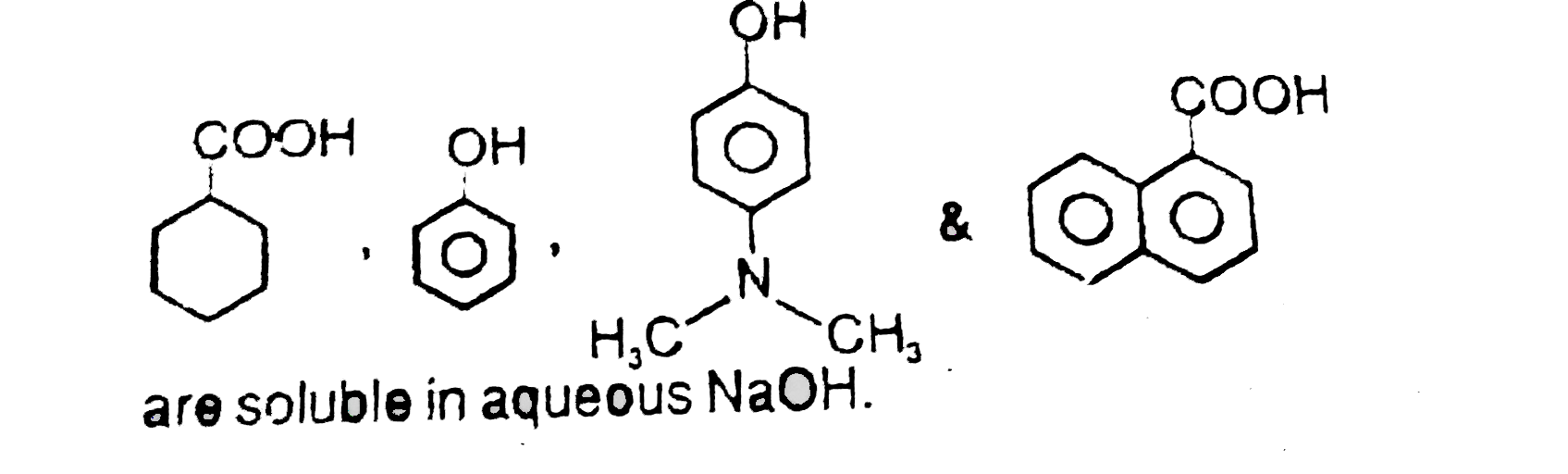
|
|
| 35. |
Amongst the following, the total number of compound soluble in concentrated NH_(3) solution is (a) Ag_(2)CrO_(4) (b) Cu(OH)_(2),CuSO_(4) (c) PbSO_(3) ltBrgt (d) Al(OH)_(3) (e) Ni(OH)_(2) (f) Zn_(3)(PO_(4))_(2) (g) BaSO_(4) (h) Bi(OH)_(2)NO_(3) (i) Mn(OH)_(2). |
|
Answer» (e) `Ni(OH)_(2)darr(green)+6NH_(3)to[Zn(NH_(3))_(4)]^(2+)("Deep blue COLOURATION"))+2OH^(-)` (f) `Zn_(3)(PO_(4))_(2)darr(WHITE)+12NH_(3) to 3[Zn(NH_(3))_(4)]^(2+)+2PO_(4)^(3-)` (g) Insoluble in `NH_(3)`, soluble appreaciable in boiling concentrated `H_(2)SO_(4)`. (h) `Bi(OH)_(2)NO_(3)` is insoluble in `NH_(3)`. (i) Insoluble in `NH_(3)` but soluble in ammonium salts liberating `NH_(3)`. |
|
| 36. |
Amongst the following, the total number of biodegradable polymers are: Nylon-6, 6, PHBV, cellulose, PVC, glyptal, dextron, nylon-2-nylon 6, PAN. |
|
Answer» |
|
| 37. |
Amongst the following, the strongest reducing agent is ............. |
|
Answer» <P>`P_(2)O_(6)^(4-)` |
|
| 38. |
Amongst the following, the strongest base is |
|
Answer» `2, 4, 6-` trinitroaniline  Three electron RELEASING alkyl groups increase electron density on N ATOM and hence increase BASIC NATURE. |
|
| 39. |
Amongst the following,the strongest base in aqueous medium is ______________ . |
|
Answer» `CH_3 NH_2` |
|
| 40. |
Amongst the following, the strongest base in aqueous medium is |
|
Answer» `CH_3 NH_2` |
|
| 41. |
Ammong the following the one which can exist in free state as a stable compound is: |
|
Answer» `C_7H_9O` n=no. of atoms of a particular type v=valency of the atom `C_7H_9O: DU=(7(4-2)+9(1-2)+1(2-2))/2 +1 =3.5` `C_8H_12O : DU=(8(4-2)+12(1-2)+1(2-2))/2 +1=3` `C_6H_11O :DU=(6(4-2)+1(1-2)+1(2-2))/2 +1=1.5` `C_10H_17O_2 : DU=(10(4-2)+17(1-2)+2(2-2))/2 +1=2.5` Molecules with fractional degree of unsaturation cannot exist with STABILITY |
|
| 42. |
Amongst the following, the number of drugs used as tranquilizers are: Brufern , diclofenac , sodium veronal, sertonin ,equanil, secronal, cispiren |
|
Answer» |
|
| 43. |
Amongst the following, the number of drugs used as tranquillizers are : Brufern, diclofenac, sodium veronal, valium, serotonin, equanil, secronal, cispiren. |
|
Answer» |
|
| 44. |
Amongst the following the most stable compound is |
|
Answer» `[Fe(H_(2)O)_(6)]^(3+)` |
|
| 45. |
Amongst the following, the most stable complex is |
|
Answer» `[Fe(H_(2)O)_(6)]^(3+)` |
|
| 46. |
Amongst the following, the most stable complex is : |
|
Answer» `[FE(H_(2)O)_(6)]^(3+)` |
|
| 47. |
Amongst the following the most reactive alkyl halide is |
|
Answer» `C_2 H_5 F`<BR>`C_2 H_5 CL` |
|
| 48. |
Amongst the following, the molecule/ion that is linear is: |
|
Answer» `SO_(2)` Hybridisation = `(1)/(2)` [No. of e in valence shell of central atom + No: monovalent atoms + Charge on anion - Charge on cation] (a) `SO_(2)` `H=(1)/(2)(6+0+0-0)=3sp^(2)` (linear shape) (B) `CO_(2)` `H=(1)/(2)(4+0+0-0)=2sp` (linear shape) `CiO_(2)` `H=(1)/(2)(7+0+1-0)-4sp^(3)` (tetrahedral) `(d) NO_(2)^(-)` `H=(1)/(2)(5+0+1-0)=3sp^(3)` (trigonal planar) `:. CO_(2)` has linear shape. |
|
| 49. |
Amongst the following the metals which become passive when dipped in conc. HNO_(3) are Sn, Pb, Fe, Cr, Zn, Ni, Hg, Al, Cu. |
|
Answer» |
|


