Saved Bookmarks
This section includes 7 InterviewSolutions, each offering curated multiple-choice questions to sharpen your Current Affairs knowledge and support exam preparation. Choose a topic below to get started.
| 1. |
Mn^(2+) compounds are more stable than Fe^(2+) compounds towards oxidation to their +3 state, because |
|
Answer» `Mn^(2+)` is more stable with high 3rd ionisation energy Thus `Fe^(2+)` is more prone to get oxidised to +3 oxidation state . |
|
| 2. |
Mn^(++) can be converted into Mn^(7+) by reacting with |
|
Answer» `SO_(2)` |
|
| 4. |
M = molarity of the solution m = molality of the solution d = density of the solution (in g. ml^(-1) )M = gram molecular weight of solute Which of the following relations is correct |
|
Answer» `m=(M)/(1000d-MM)^(1)` |
|
| 5. |
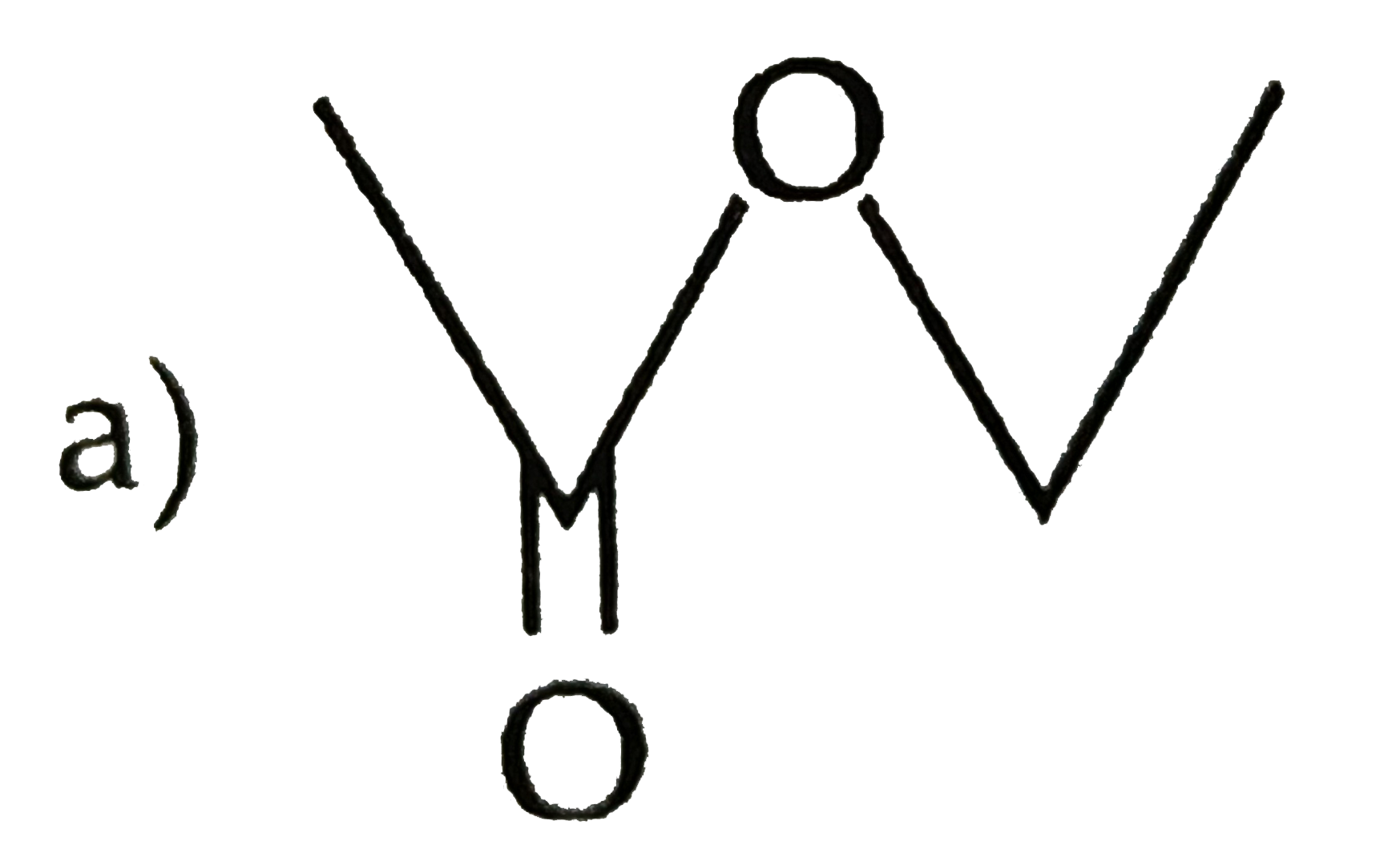
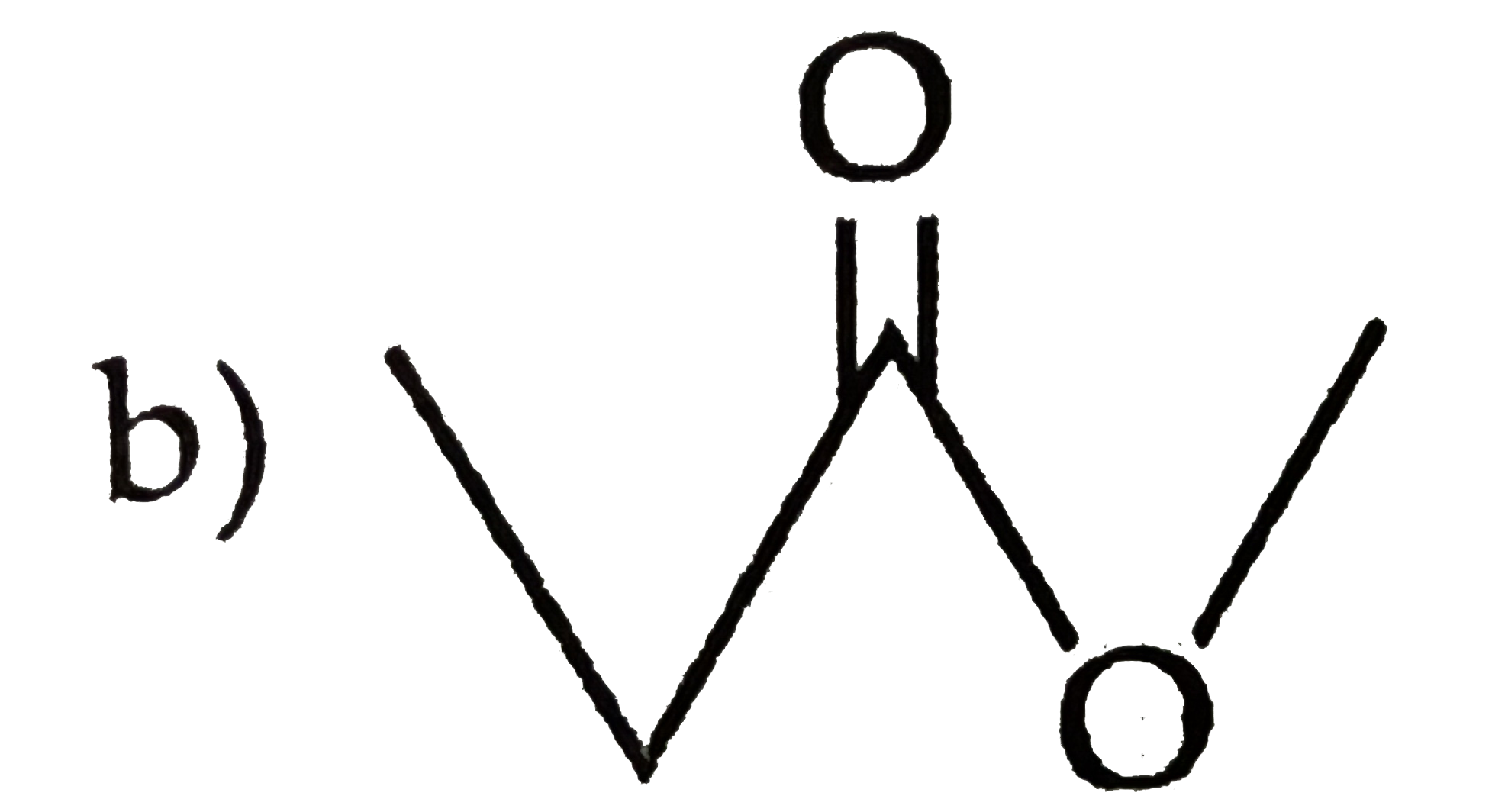
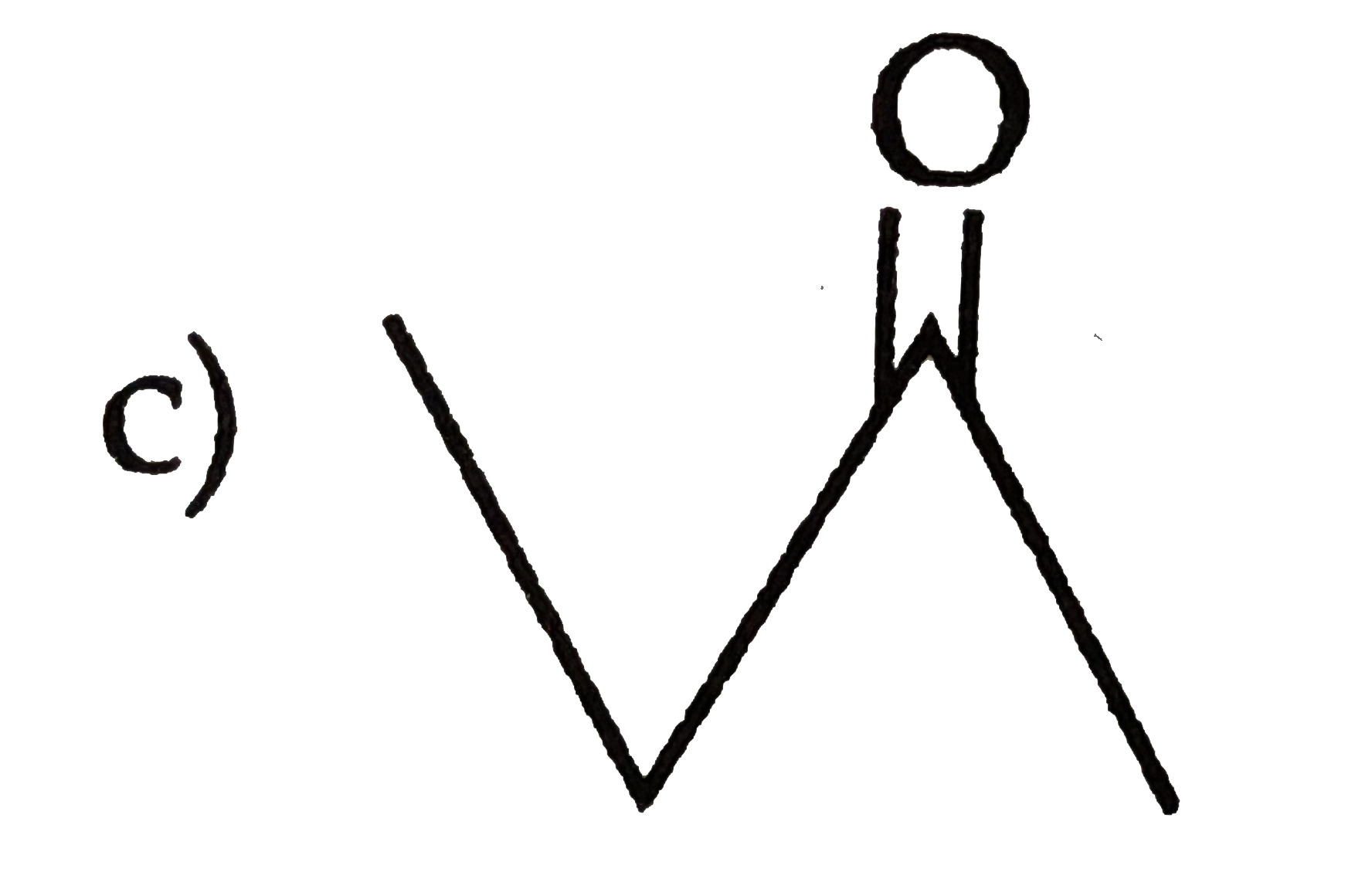
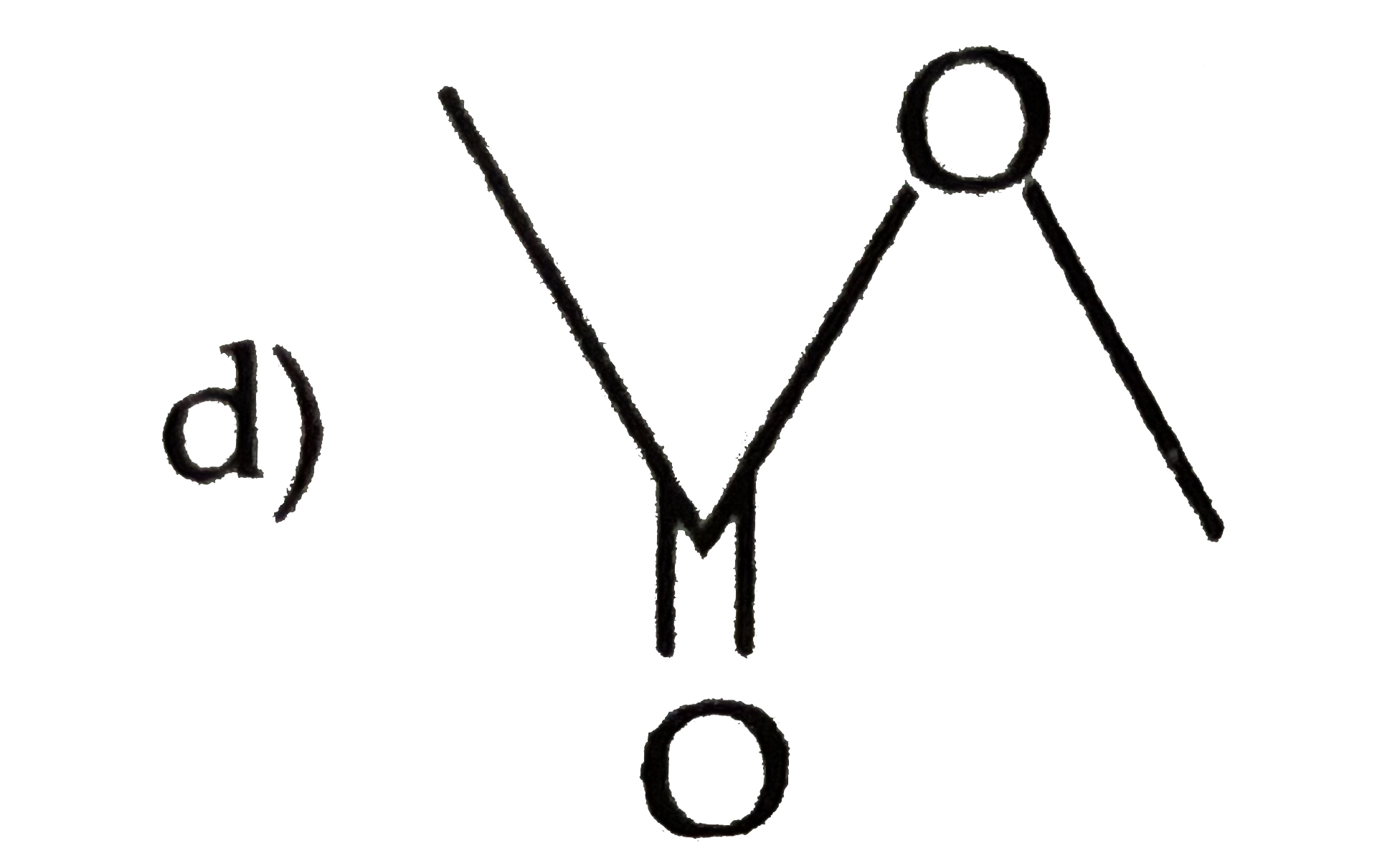
Mixture(s) showing positive deviations from Raoult's law at 35^(@)C is (are) |
|
Answer» carbon TETRACHLORIDE + methanol  = Positive deviation from Raoult's law ltbr Benzene + Toluene = Ideal solution = Positive deviation from Raoult's law ltbr Benzene + Toluene = Ideal solution  = NEGATIVE deviation from Raoult's law = NEGATIVE deviation from Raoult's law
|
|
| 6. |
Mixtures of solution. Calculate the pH of the following solution. K_(1)=7.5 xx 10^(-3)M, K_(2)=6.2 xx 10^(-8)M, K_(3)=1.0 xx 10^(-12)M 40 ml of 0.020 M Na_(3)PO_(4) + 40 ml of 0.040 M HCl, |
|
Answer» |
|
| 7. |
Mixtures of solution. Calculate the pH of the following solution. K_(1)=7.5 xx 10^(-3)M, K_(2)=6.2 xx 10^(-8)M, K_(3)=1.0 xx 10^(-12)M 40 ml of 0.050 M Na_(2)CO_(3) + 50 ml of 0.040 M HCl, |
|
Answer» |
|
| 8. |
Mixtures of solution. Calculate the pH of the following solution. K_(1)=7.5 xx 10^(-3)M, K_(2)=6.2 xx 10^(-8)M, K_(3)=1.0 xx 10^(-12)M 50 ml of 0.10 M Na_(3) PO_(4) + 50 ml of 0.10 M NaH_(2)PO_(4) |
|
Answer» |
|
| 9. |
Mixtures of solution. Calculate the pH of the following solution. K_(1)=7.5 xx 10^(-3)M, K_(2)=6.2 xx 10^(-8)M, K_(3)=1.0 xx 10^(-12)M 40 ml of 0.010 MH_(3)PO_(4) + 40 ml of 0.10 M Na_(3)PO_(4). |
|
Answer» |
|
| 10. |
Mixture X=0.02 mol of [Co(NH_(3))_(5)(SO_(4))]Br and 0.02 mol of [Co(NH_(3))_(5)Br]SO_(4) was prepared in 2 litre of solution 1 litre of mixture X + excess AgNO_(3)rarrY 1 litre of mixture X = excess BaCl_(2)rarrZ What will be the number of moles of Y and Z formed ? |
|
Answer» Solution :Only 1st complex will FORM a precipitate of AgBr and only 2nd complex will form precipitate of `BaSO_(4)` `underset(0.02mol("in 2L"))([CO(NH_(3))_(5)SO_(4)])Br+AgNO_(3)rarr[Co(NH_(3))_(5)SO_(4)]NO_(3)+underset(0.02 mol)(AgBr(Y))` `underset("0.02 mol"("in 2L"))([Co(NH_(3))_(5)Br])SO_(4)+BaCl_(2)rarr[Co(NH_(3))_(5)Br]Cl_(2)+underset("0.02 mol")(BaSO_(4))(Z)` Hence, with 1 L of the solution 0.01 mol of Y and 0.01 mol of Z will be formed. |
|
| 11. |
Mixture X= 0.02 mole of [Co(NH_(3))_(5) SO_(4)]Br and 0.02 mol of [Co(NH_(3))_(5)Br]SO_(4) was prepared in 2 litre of solution. 1 litre of mixture X + excess AgNO_(3) to Y 1 litre of mixture X + excess of BaCl_(2) to Z Number of moles of Y and Z are |
|
Answer» 0.01, 0.01 |
|
| 12. |
Mixture X of 0.02 mole of [Co(NH_(3))_(5)SO_(4)] ad 0.02mole of [Co(NH_(3))_(5)Br]SO_(4) was prepared in 2 litre of solution: 1 litre of mixture X+ excess of AgNO_(3) to Y 1 litre of mixture X+ excess of BaCl_(2) to Z. Number of moles of Y and Z respectively are: |
|
Answer» 0.01, 0.02 |
|
| 13. |
Mixture 'X' containing 0.02 mole of [Co(NH_(3))_(5)SO_(4)]Br and 0.02 mole of [Co(NH_(3))_(5)Br]SO_(4) was dissolved in water to get 2 lit of solution. If 1 lit of X+ execss AgNO_(3)toY mole of ppt. and 1 lit of X+ excess BaCl_(2)toZ mole of ppt. Number of mole of Y and Z are |
|
Answer» 0.01, 0.01 `[Co(NH_(3))_(5)SO_(4)]Br and [Co(NH_(3))_(5)Br]SO_(4)` `[Co(NH_(3))_(5)UNDERSET(0.01)(SO_(4))]Br+HgNO_(3)tounderset(0.01)(AgBr)darr+[Co(NH_(3))_(5)SO_(4)]NO_(3)` `[Co(NH_(3))_(5)underset(0.01)Br]SO_(4)+BaCl_(2)tounderset(0.01)(BaSO_(4))darr+[Co(NH_(3))_(5)Br]Cl_(2)` |
|
| 14. |
Mixture X = 0.02 mol of [Co (NH_3)_5 SO_4] BrBrand0.02 mol of[Co (NH_2)_5 Br] SO_4 was prepared in 2L of solution.1 L of mixture X + excess of AgNO_3toY 1 L of mixture X + excess of BaCl_2 toZNumber of moles of Y and Z are : |
|
Answer» 0.01 , 0.01 with excess of `BaCl_2` , 0.01 mol of `BaSO_4` i.e. Z is formed . |
|
| 15. |
Mixtureused for the tips of match stick is |
|
Answer» S+K |
|
| 16. |
Mixture used on tips of matchsticks is: |
|
Answer» S+K |
|
| 17. |
Mixture (s) showing positive deviation from Raoult's law of 35^(@)C is (are) |
|
Answer» CARBON TETRACHLORIDE `+` methanol |
|
| 18. |
Mixture of two metals having mass 2 gm (A = 15, B = 30) and are bivalent and dissolve in HCl and evolve 2.24 L H_(2) at STP . What is mass of A present in mixture ? |
|
Answer» 1 gm mole `=(x)/(15)""(x)/(15)` `B+2HClto BCl_(2)+H2` mole `=(2-x)/(30)""(2-x)/(30)` mole of `H_(2)=(x)/(15)+(2-x)/(30) =(2.24)/(22.4)=1/10` `(x)/(15)-(x)/(30)=1/10-1/15x=1` gm |
|
| 19. |
A mixture x containing 0.02 mol of [Co(NH_(3))_(5) SO_(4)]Br and 0.02 mol of [Co(NH_(3))_(5)Br]SO_(4) was prepared in 2 L of solution. 1 L of mixture X +excess AgNO_(3) rarr Y 1 L of mixture X + excess BaCl_(2) rarr Z The number of moles of Y and Z are |
|
Answer» `0.01, 0.01` `underset((0.01"mol"))(Br^(-)+AgNO_(3))tounderset((0.01"mol"))(AGBR(Y))` `underset((0.01"mol"))(SO_(4)^(2-)+BaCI_(2))tounderset((0.01"mol"))(BaSO_(4)(Z))` |
|
| 20. |
Mixture of volatile components A and B has total vapour pressure (in torr) : P=254-119X_(A) Where X_(A) is mole fraction of A in mixture . Hence, P_(A)^(0)& P_(B)^(0) are (in torr): |
|
Answer» `254, 119` |
|
| 21. |
Mixture (s) showing positive deviation from Raoult's law at 35^(@)C is (are) |
|
Answer» Phenol + aniline will SHOW negative DEVIATION. |
|
| 22. |
Mixture of solutions. Calculate the pH of the following solutions. K_1= 7.5 xx 10^(-3) M, K_2= 6.2 xx 10^(-8)M , K_3 =1.0 xx 10^(-12)M 40 ml of 0.10 M H_3PO_4 + 40 ml of 0.25 M NaOH. |
|
Answer» |
|
| 23. |
Mixture of solutions. Calculate the pH of the following solutions.K_1= 7.5 xx 10^(-3) M, K_2= 6.2 xx 10^(-8)M , K_3 =1.0 xx 10^(-12)M 50 ml of 0.12 M H_3PO_4 + 40 ml of 0.15 M NaOH , |
|
Answer» |
|
| 24. |
Mixture of solutions. Calculate the pH of the following solutions.K_1= 7.5 xx 10^(-3) M, K_2= 6.2 xx 10^(-8)M , K_3 =1.0 xx 10^(-12)M 40 ml of 0.12 M H_3PO_4 + 40 ml of 0.18 M NaOH , |
|
Answer» |
|
| 25. |
Mixture of solutions. Calculate the pH of the following solutions.K_1= 7.5 xx 10^(-3) M, K_2= 6.2 xx 10^(-8)M , K_3 =1.0 xx 10^(-12)M 50 ml of 0.12 M H3PO4 + 20 ml of 0.15 M NaOH |
|
Answer» |
|
| 26. |
(Mixture of Sn^(+2),Cu^(+2),Pb^(+2)) on allowing H_(2)S gas gives sulphide of metal (B) this mixture a solution of on allowing ammonium sulphide gives residue (C ) and Filtrate (D ). Which are is // are correct. |
|
Answer» two METAL sulphide of mixture (B ) black 
|
|
| 27. |
Mixture of O_2 and N_2O is used as: |
|
Answer» Fuel |
|
| 29. |
Mixture of MgCO_(3) &NaHCO_(3) on strong heating gives CO_(2) &H_(2)O in 3 : 1 mole ratio. The weight % of NaHCO_(3) present in the mixture is : |
|
Answer» 0.3 |
|
| 30. |
Mixture of MgCl_2 and MgO is called : |
|
Answer» PORTLAND cement |
|
| 31. |
Mixture of H- CHO and C_(6) H_(5) - CHO is treated with conc. NaOH then self redox reaction involves (1) oxidation of H - CHO (2) oxidation of C_(6) H_(5) - CHO (3)reduction of H - CHO (4) reduction of C_(6)H_(5) - CHO |
|
Answer» `1, 3` |
|
| 32. |
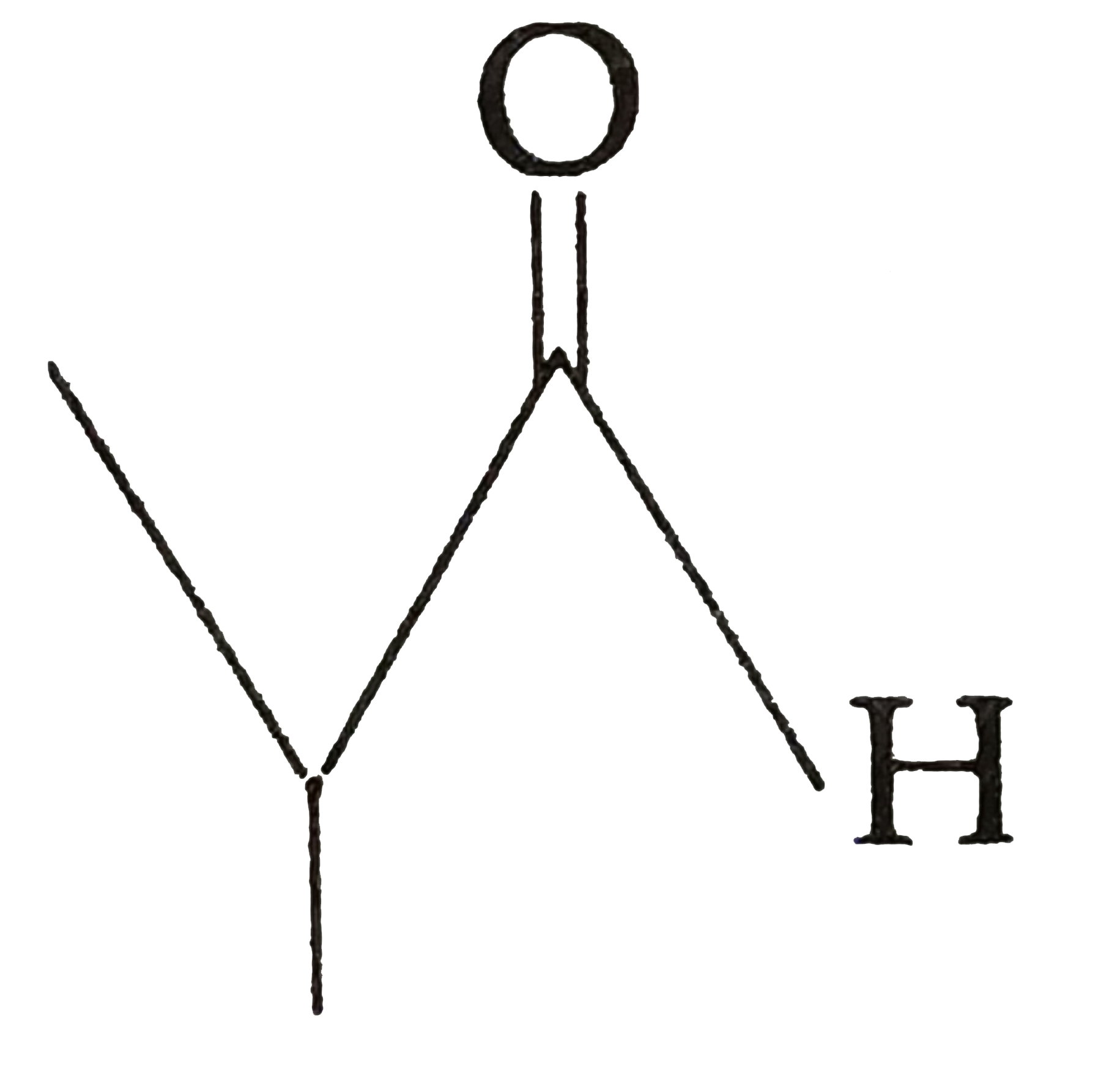
Mixture of methanol and ethanol is obtained from catalytic hydrogenation of |
|
Answer»
|
|
| 33. |
Mixture of ethanal and propanal is subjected to aldol condensation, theproduct formed are |
|
Answer» 1 |
|
| 34. |
Mixture of conc. HCl and anhydrous ZnCl_2 is an important reagent which helps to distingulsh between 1^@,2^@ and 3^@ alcohols. Give one example each for 1^@,2^@ and 3^@ alcohols. |
Answer» SOLUTION :
|
|
| 35. |
Mixture of conc. HCl and anhydrous ZnCl_2 is an important reagent which helps to distingulsh between 1^@,2^@ and 3^@ alcohols. Explain how the above reagent helps to distinguish above three types of alcohols. |
| Answer» Solution :On shaking with Lucas reagent`3^@` alcohol gives immediate TURBIDITY DUE to the formation of `3^@` alky 1 halide. SECONDARY alcohol gives turbidity in about five minutes. Primary alcohol does not give turbidity at room TEMPERATURE. | |
| 36. |
Mixture of chloroxylenol and terpineol acts as |
|
Answer» Antiseptic |
|
| 37. |
Mixture of carboxylic acids oblained by the oxidation of hexan-3-one does not contain |
|
Answer» Methanoic acid |
|
| 38. |
Mixture of chloroxylenol and terpineol acts as : |
|
Answer» Analgestic |
|
| 39. |
Mixture of chloroxylenol and terpineol acts as- |
|
Answer» analgesic |
|
| 40. |
Mixture of acetic acid and propionic acid is obtained by oxidation of |
|
Answer» pentan-2-one |
|
| 41. |
Mixture of acetic acid and propionic acid is obtained from oxidation of |
|
Answer» `CH_3-COCH_3` |
|
| 42. |
Mixture of A contains |
|
Answer» `CO_(3)^(2-) , HCO_(3)^(Θ)` anions |
|
| 43. |
Mixture of 10 moles of Fe_(2)S_(3), 20 moles of H_(2)O and 30 moles of O_(2) react with 5% yield in the given reaction : Fe_(2)S_(3) + H_(2)O + O_(2) rarr Fe(OH)_(3) + S Then moles of Fe(OH)_(3) that can be produced is - |
|
Answer» `(10)/(3)` moles of `FE(OH)_(3) = (2)/(3) xx 20 xx 0.5 = (20)/(3)` moles |
|
| 45. |
Mixture of A contain: |
|
Answer» `CO_(3)^(2–) HCO_(3)^(–)` ANIONS |
|
| 46. |
Mixture is heated with dil. H_(2)SO_(4) and the lead acetate paper turns black by the evolved gases. The mixture contains |
|
Answer» Sulphite `PB(CH_(3)COO)_(2)+H_(2)S to underset("BLACK ppt.")(PbS)+2CH_(3)COOH` |
|
| 47. |
One gram equimolecular mixture of Na_(2)CO_(3) and NaHCO_(3)is reacted with 0.1 NHCl. The milliliters of 0.1 N HCl required to react completely with the above mixture is : |
|
Answer» 15.78 mL |
|
| 48. |
Mixing of two different ideal gases under isothermal reversible condition will lead to |
|
Answer» INCREASE of Gibbs FREE energy of the system |
|
| 49. |
Mixing of two different ideal gases under isothermal reversiblecondition will lead to |
|
Answer» INCREASE of gibbs FREE energy of the system |
|
| 50. |
Mixing of positively charged colloidal solution with negatively charged colloidal solution brings __________. The decreasing order of coagulating power of Na^(+), Ba^(2+) and Al^(3+)for negatively charged colloidal solution is ________ . |
|
Answer» mutual COAGULATION , `Na^(+) gt Ba^(2+) gt Al^(3+)` |
|