

Saved Bookmarks
This section includes 7 InterviewSolutions, each offering curated multiple-choice questions to sharpen your Current Affairs knowledge and support exam preparation. Choose a topic below to get started.
| 1. |
Ionic product of water at 310 K is 2.7 times 10^-14. What is the pH of neutral water at thin temperature? |
|
Answer» SOLUTION :`[H^+]=sqrtK_w=sqrt(2.7 TIMES 10^-14)=1.643 times 10^-7 M` `pH=-LOG[H^+]=-log(1.643 times 10^-7)=7-0.2156=6.78` |
|
| 2. |
IUPAC name of CH_3OC_2H_5 is: |
|
Answer» METHOXY ethane |
|
| 3. |
Ionic mobility of Ag^(+) is (lamda_(Ag^(+))=5xx10^(-4)ohm^(-1)cm^(2)eq^(-1)) |
|
Answer» `5.2xx10^(-9)` `=(5XX10^(-4))/(96,500)=5.18xx10^(-9)cm//sec` |
|
| 4. |
IUPAC name of CH_(3)N_(3)(C_(2)H_(5))_(2) is |
|
Answer» DIETHYL methyl amine |
|
| 5. |
Ionic mobility of which of the following alkali metal ions is lowest when aqueous solution of their salts are put under an electric field? |
|
Answer» Na |
|
| 6. |
Ionic mobality of which of the following alkali metal ions is lowest when aqueous solution of their salts are put under an electric field ? |
|
Answer» Na |
|
| 7. |
Ionic mobility of Ag^(+) at inifinite dilution is.(lambda_(Ag^+)^(0)=5xx10^(-3)ohm^(-1)m^(2)eq^(-1)) |
|
Answer» `5.2xx10^(-8)` `=5xx10^(-3)ohm^(-1)m^(2)"MOL"^(-1)` Ionic mobility. `mu_(Ag^(+))^(@)=(lambda_(Ag^(+))^(@))/(F)` `=(5xx10^(-3)ohm^(-1)m^(2)"mol"^(-1))/(96500C "mol"^(-1))` `(1C=Vohm^(-1)s)` `=mu_(AG^(+))^(@)=5.18xx10^(-8)m^(2)V^(-1)s^(-1)` |
|
| 8. |
Ionic hydrides are formed by: |
|
Answer» TRANSITION metals |
|
| 9. |
IUPAC name of CH_3COOC_2H_5 is : |
|
Answer» METHYL propanoate |
|
| 10. |
Ionic , covalent and coordinate bonds are present in |
|
Answer» Potassium bromide |
|
| 11. |
Ionic conductivity of solution does not depend on which of the following parameter ? |
|
Answer» NATURE of electrolyte (A) nature of electrolyte. (B) Nature of solvent. (C) Concentration of electrolyte. But conductivity of solution does not DEPEND on size of particle obtained in solution. |
|
| 12. |
IUPAC name of, CH_3CH(OH)CH_2CH_2COOH is: |
|
Answer» 4-hydroxypentanoic acid |
|
| 13. |
Ionic conductance at infinite dilution of Al^(3+) " and " SO_(4)^(2-) are 1890 ohm^(-1)cm^(2)gm" equiv"^(-1) and 1600 ohm^(-1)cm^(2)gm" equiv"^(-1) respectively. The equivalent conductance is |
|
Answer» 143 mho `CM^(2)gm" EQUIV"^(-1)` |
|
| 14. |
Ionic conductance of H^(+) and SO_(4)""( 2–) at infinite dilution are x and y S "cm"^(2)" equiv "^(–1). Hence, equivalent conductance of H_(2) SO_(4) at inifinite dilution will be: |
| Answer» Answer :A | |
| 15. |
Ionic conductance at infinite dilution of Al^(3+) and SO_(4)^(2-) are 189 and 160 mho cm^(2) "equiv"^(-1). Calculate the equivalent and molar conductance of the electrolyte Al_2(SO_4)_3 at infinite dilution. |
|
Answer» Solution :(i) MOLAR conductance, `(Lambda_m^@)_(Al_2(SO_4)_3) = 2(Lambda_m^@)_(AL^(3+)) + 3(Lambda_m^@)_(SO_4^(2-))` `=(2 xx 189) + (3 xx 160)` `= 378 + 480` `= 858` MHO `cm^(2) MOL^(-1)`. (ii) Equivalent conductance `(Lambda_(oo))_(Al_2(SO_4)_(3)) = 1/3 (lambda_(oo))_(Al^(3+)) + 1/2(lambda_(oo))_(SO_4^(2-))` `= 189/3 + 160/2` `= 63 + 80` `143` mho `cm^2 (g"equiv")^(-1)`. |
|
| 16. |
Ionic conductance at infinite dilution of Al^(3+) " and " SO_(4)^(2-) are 189 and 160 mho cm^(2)" equiv"^(-1). Calculate the equivalent and molar conductance of the electrolyte Al_(2)(SO_(4))_(3) at infinite dilution. |
|
Answer» Solution :The electrolytes is `Al_(2)(SO_(4))_(3)` Equivalent conductance at infinite dilution `lambda_(INFTY)Al_(2)(SO_(4))_(3)=1/3lambda_(infty)Al^(3)+1/2lambda_(infty)SO_(4)^(2-)` `lambda_(infty)Al_(2)(SO_(4))_(3)=189/3+160/2=63+80` `""=143 " MHO "cm^(2)" gm "equ^(-1).` Molar conductance at infinite dilution `mu_(infty)Al_(2)(SO_(4))_(3)=2 times 189+3 times 160` `""=858" mho "cm^(2)mol^(-1)` |
|
| 17. |
IUPACname of CH_(3)CH_(2)CH_(2)underset(CH_2OH)underset(|)(C)H- CH_(2)CH_(3) is |
|
Answer» 3-propylbutan-1-ol |
|
| 18. |
Ionic conductivity of electrolyte in water is not depending on which of the following ? |
|
Answer» Concentration of electrolyte It DEPENDS on (A) concentration of electrolyte, (B) temperature and (C) type of solvent and its viscosity. |
|
| 19. |
Ionic compounds in geneal do not possess : |
|
Answer» high MELTING points and non-directional bonds |
|
| 20. |
IUPAC name of CH_3CH_2CH(CH_3)NH_2 |
|
Answer» 1-methyl propane-1-amine |
|
| 21. |
Ionic compounds do not have |
|
Answer» hard and brittle nature |
|
| 22. |
Ionci radii of |
|
Answer» `Ti ^(4 +) lt Mn ^(7+)` |
|
| 23. |
Ionic and covalent bonds are present in |
|
Answer» `C Cl_(4)` `[H-OVERSET(H)overset(|)underset(H)underset(|)(N)TOH^(+)]Cl^(-)` |
|
| 24. |
Ion which has maximum complex forming tendency : |
|
Answer» `Li^(+)` |
|
| 25. |
IUPAC name of (CH_(3))_(3)C.NH_(2) is |
|
Answer» trimethyl BUTANAMINE - 1 |
|
| 26. |
Iodofrom can be prepared from: |
|
Answer» Isoamyl alcohol ALDEHYDE containg THREE `alpha-H` atoms `(CH_(3) - CHO)` and hence kenote containg three `alpha-H` atoms. `(CH_(3) - overset(O)overset(||)(C) - CH_(3))` GIVES iodoform TEST. a. 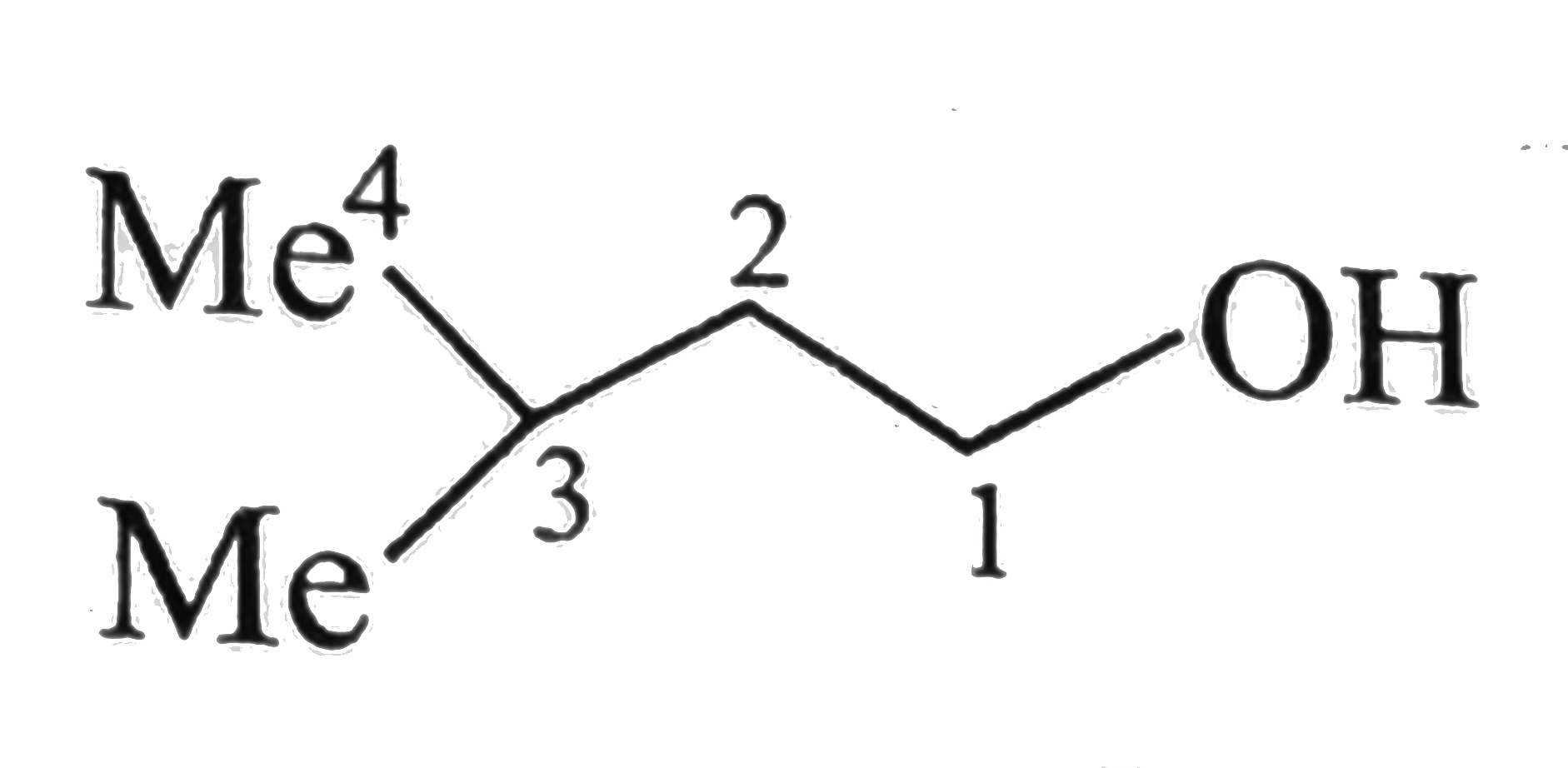 (Iso-anyl alchol ) does not contain`(CH_(3) - underset(OH)underset(|)(CH)-)` group. (Iso-anyl alchol ) does not contain`(CH_(3) - underset(OH)underset(|)(CH)-)` group. So does not give IODOFROM. (Anyl implies Five `C` atoms). c. 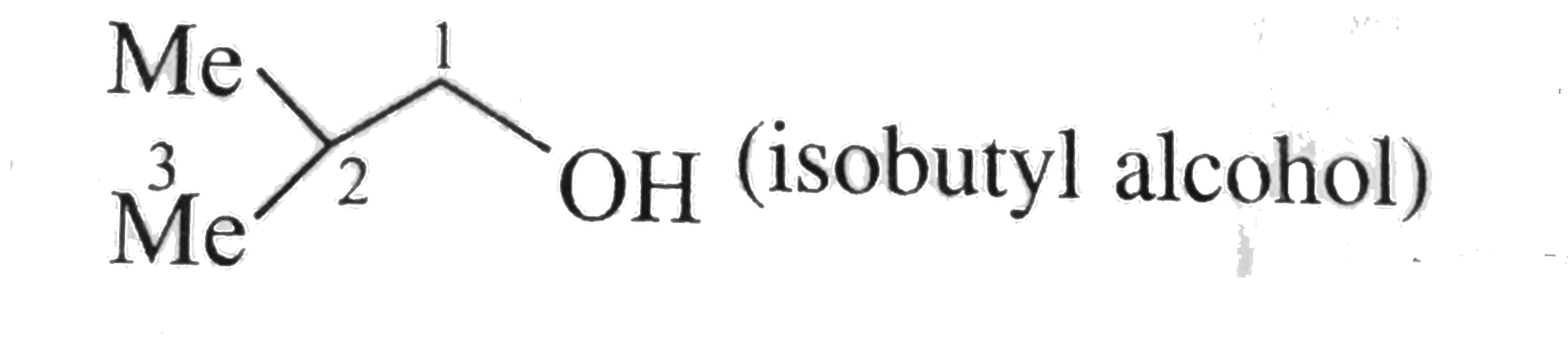 (It does not contain `(CH_(3) - underset(OH)underset(|)(CH)-)` so does not give iodorom). d. `Ph-C overset(beta)(H)_(2) - overset(alpha)(CH)_(2)OH` (It does not contain`(Me - underset(|)(CH)-OH)` group, so does not give iodoform.) |
|
| 27. |
Iodofrom is formed when ethanol is heated with : |
|
Answer» POTASSIUM IODIDE and SODIUM hydroxide |
|
| 28. |
Iodoform when heated with silver powder, forms |
|
Answer» ETHYNE |
|
| 29. |
IUPAC name of (CH_(3))_(3)C Cl is |
|
Answer» 3-chlorobutane IUPAC name : 2-Chloro-2-methylpropane. |
|
| 30. |
Iodoform was earlier used as an antiseptic but the antiseptic properties are due to the liberation of free __________and not due to iodoform itself. |
|
Answer» |
|
| 31. |
IUPAC name of (CH_(3))_(3)"CC"l |
|
Answer» 3-Chlorobutane |
|
| 32. |
Iodoform test is not shown by |
|
Answer» 2 - Butanone |
|
| 33. |
IUPAC name of (CH_3)_3C-CH=CH_2 is: |
|
Answer» 3,3,3-trimethyl prop-1-ene |
|
| 34. |
Iodoform test will not be given by: |
|
Answer» Acetaldehyde |
|
| 35. |
Iodoform testisgiven by |
|
Answer» a) `CH_3 . CH_2. CHOH. CH_3` |
|
| 36. |
Iodoform test is not given by |
|
Answer» ETHANOL |
|
| 37. |
IUPAC name of (CH_3)_2CHCH_2CH_2Br is |
|
Answer» 1-Bromo - 3 -methyl BUTANE |
|
| 38. |
IUPAC name of (CH_3)_2N-C_2H_5 IS: |
|
Answer» DIMETHYL ETHYL amine |
|
| 40. |
Iodoform test is not answered by |
|
Answer» `CH_3CHO` |
|
| 41. |
IUPAC name of (CH_3)_2 CHCH_2CH_2Br is |
|
Answer» 1-Bromo-3-methylbutane |
|
| 42. |
IUPAC name of CH_(3) - underset(underset(OH)(|))(CH) - CH_(2) - underset(underset(COOH)(|))(CH) - CH_(3) is |
|
Answer» 4-hydroxy-1-methyl pentanoic ACID |
|
| 43. |
Iodoform test is characteristic of: |
|
Answer» `Ar-OH` GROUP |
|
| 44. |
Iodoform test is not given by: |
|
Answer» Ethanol |
|
| 45. |
IUPAC name of CH_3-O-C(C_2H_5)_3 is |
|
Answer» 3-methoxy -2-ethylpentane |
|
| 46. |
Iodoform reaction is used to detect |
|
Answer» `HCO` group |
|
| 47. |
IUPAC name of CH_3-O-C_2H_5 is |
|
Answer» ethoxymethane |
|
| 48. |
Iodoform reaction is shown by |
|
Answer» `CH_(3)CH_(2)CH_(2)CH(OH)CH_(3)` 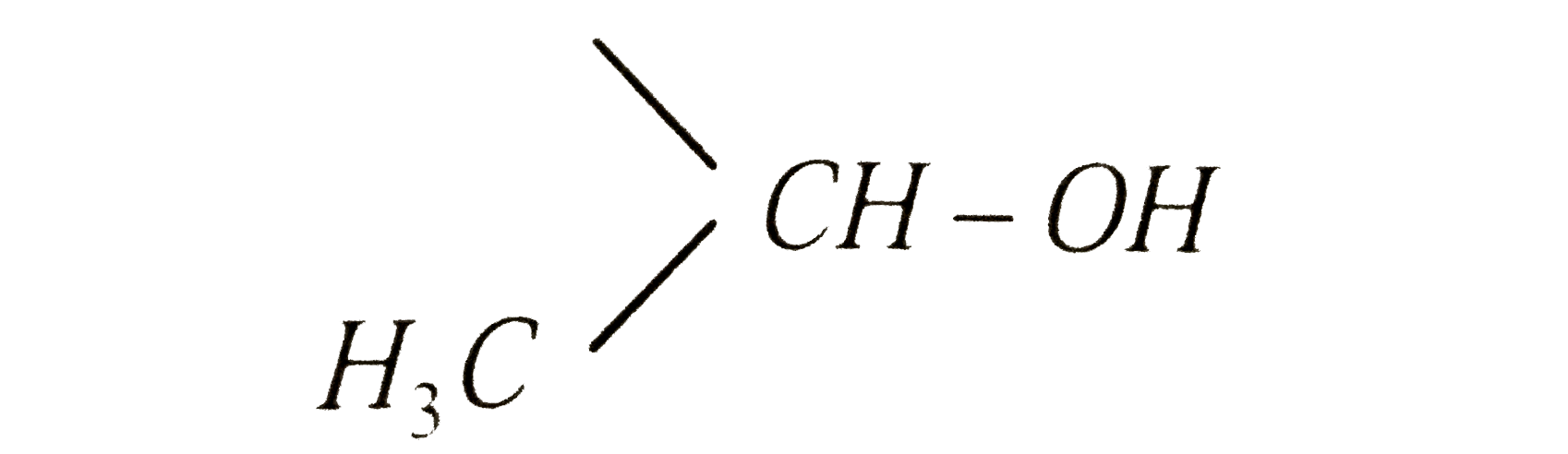
|
|
| 49. |
IUPAC name of CH_(3)-CH=CH-C-=CH is |
|
Answer» Pent-2-en-4-yne |
|
| 50. |
IUPAC name of {:(CH_(3)-CH-CHO),("|"),(""CH_(2)CH_(3)):} is |
|
Answer» Butane-2-aldehyde |
|